Archive

November 2026

Browsing

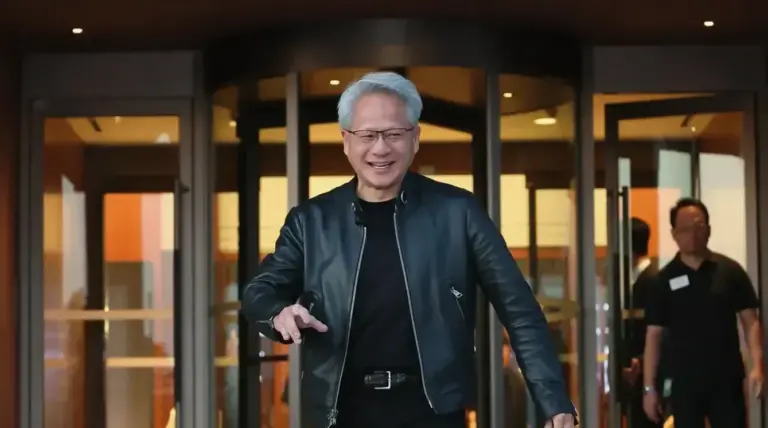
The sudden reinstatement of Jensen Huang as CEO of Nvidia has sent shockwaves through Silicon Valley, sparking a fierce debate over whether financial success grants executives immunity from ethical standards. While investors cheered the move and the company’s stock rebounded sharply on Monday, advocates for workplace culture are calling the decision unfathomable. The board’s unanimous vote follows a period of turmoil involving allegations that Huang engaged in an affair with a woman believed to be a Chinese intelligence asset, alongside accusations of an inappropriate relationship with a high ranking subordinate within the company.

For critics like Bo Young Lee, a former chief diversity officer at Uber, the situation highlights a dangerous double standard regarding power dynamics. Although Nvidia’s board admitted Huang’s behavior was inconsistent with the corporate code of conduct, his return suggests that transparency is more valuable than adherence to the rules. Lee argues that focusing on the seniority or salary of subordinates does not erase the inherent power imbalance in such relationships, claiming that the board’s leniency sends a clear signal to employees that top leadership exists above the law.

Adding fuel to the fire, President Trump celebrated Huang’s return by sharing an AI generated image on social media. The post featured Huang in a defiant pose reminiscent of Trump’s own iconic imagery from 2024, though it included provocative elements that observers described as misogynistic. This public endorsement has further polarized views on the intersection of political influence and corporate governance, leading some to believe that Silicon Valley is entering a new era where technical brilliance justifies any personal transgression.

Social impact investor Freada Kapor Klein warns that this episode marks a regression into a toxic tech bro culture that many hoped had been dismantled during previous waves of accountability. According to Klein, the current climate prioritizes profit over people, effectively stripping away diversity and inclusion efforts in favor of protecting singular talents who drive revenue. As Nvidia celebrates its recovery, those fighting for systemic change fear that Huang’s homecoming proves that as long as someone brings in enough money, they can rewrite the rules of conduct entirely.

For many homeowners living in rural Northern California, the fear of wildfire is no longer a seasonal anxiety but a permanent fixture of daily life. Beyond the immediate threat of flames, however, lies a growing economic crisis as affordable and reliable home insurance becomes nearly impossible to find. Many residents now find themselves trapped in a broken market where the most valuable asset they own could vanish in an instant, leaving them to wonder why the systems designed to protect them are failing so spectacularly.

The struggle highlights a frustrating disconnect between safety efforts and financial rewards. In a recent exploration by Planet Money, reporter Alexi Horowitz Ghazi visited specialized destruction labs where insurance giants fund research into how houses actually burn. By using house sized crash test dummies subjected to extreme heat and wind, insurers aim to identify building designs that minimize payouts. While this data allows companies to understand risk with scientific precision, that knowledge rarely translates into lower premiums for the people on the ground. Homeowners who invest thousands of dollars in ember resistant vents or metal roofs often report that such improvements barely move the needle on their monthly bills.

This gap reveals a complex economic dilemma known as moral hazard, where the existence of insurance can ironically discourage people from taking preventative measures because they know they will be compensated if disaster strikes. To combat this, economists suggest that insurers should provide significant discounts to those who harden their homes against fire. However, evidence from devastated towns like Paradise shows that current discounts remain negligible. This leaves many questioning whether the market is failing or if insurers simply believe these individual efforts aren’t enough to offset the broader communal risk of a neighborhood burning together.

Adding fuel to the fire is a regulatory environment that may have inadvertently worsened the crisis. For decades, California laws required insurers to set rates based on historical losses rather than predictive catastrophe models. Essentially, companies were forced to look at the past to price a future that was becoming exponentially more dangerous due to climate change. Experts argue this kept premiums artificially low for years, encouraging growth in high risk areas while leaving insurers unprepared for today’s reality. Now, as companies flee these markets or hike prices to unsustainable levels, homeowners are left facing a painful question: what is the true price of peace of mind in a warming world?

The mathematical community is currently grappling with a paradox where a legendary mystery has been solved, yet nobody truly knows how. Levent Alpöge, a researcher at Anthropic, recently released a proof for the Riemann hypothesis, a 167 year old puzzle regarding the distribution of prime numbers that has long been considered the holy grail of number theory. Created in collaboration with the AI model Claude, the solution consists of 17 million lines of code written in the Lean programming language. While verification groups have expressed full confidence that the logic is sound and the code compiles, the sheer scale of the output makes it nearly impossible for any human to read.

This creates a strange tension between technical correctness and actual understanding. In traditional mathematics, a proof is accompanied by a paper that explains the reasoning so others can learn from it and expand upon it. However, Alpöge’s result exists primarily as machine readable instructions rather than human narrative. Some experts described the potential printed version as an absurdly long document, leading researchers to rely on other AI tools just to translate segments of the code into digestible summaries or conference posters. Professor Abhishek Saha of Queen Mary University of London noted that the argument feels alien and counterintuitive, suggesting it is a type of logic that would never naturally emerge from a human mind.

The release has sparked a heated debate over the nature of discovery in the age of artificial intelligence. The Association for Human Mathematics criticized the move, arguing that publishing such an immense volume without an accompanying explanation fails to advance genuine mathematical understanding. They contend that providing an answer without providing insight does little for the field’s growth. Meanwhile, dozens of specialists are now using collaborative platforms and AI agents to chip away at the millions of lines, hoping to distill them into something manageable_perhaps reducing thousands of pages down to just one thousand_so they can finally grasp why the solution works.

Despite the controversy and the daunting task ahead, there is an underlying sense of awe among those attempting to decode the work. While some view it as digital noise or slop, others believe that once these foreign concepts are translated into human terms, they will reveal breathtakingly beautiful new truths about numbers. For now, mathematicians remain in an unusual position: they know for certain that one of history’s hardest problems is finished, but they must spend months acting as translators for their own discipline just to figure out what happened.

Americans woke up feeling significantly more hopeful about their financial futures this November, according to new data showing a sharp rise in consumer confidence following the midterm elections. A recent survey from the Conference Board revealed that the headline confidence index jumped to 103.3, far exceeding analyst expectations and marking an 11.4 point increase over October. This surge was driven largely by Democratic and independent voters who expressed newfound optimism, while confidence among Republicans saw a slight dip despite remaining the highest overall among the different political groups.

Much of this positivity stems from a brightening outlook on the job market. More people now describe employment opportunities as plentiful rather than hard to find, creating a wider gap in favor of those seeking work. This trend aligns with another recent study from the University of Michigan, which similarly found that consumers have grown more upbeat about the direction of the economy over the last month.

However, this wave of enthusiasm hasn’t completely erased the pain felt at the checkout counter. Many shoppers continue to struggle with high prices and rising costs, issues that remained central themes throughout the election cycle. While there is a growing sense of hope for the general economy, inflation remains a stubborn adversary that continues to hover well above the Federal Reserve’s preferred targets.

Looking ahead, experts expect these persistent price pressures to keep policymakers on edge. With inflation expectations still sitting at 5.7 percent for next year, the Federal Reserve is widely anticipated to raise interest rates again when it meets in two weeks. For many Americans, the current mood is one of cautious relief—happy with where things are heading but still wary of how much their monthly bills will cost.

Utah officials have dropped fourteen criminal charges against prediction market platform Kalshi and its co-founders, Tarek Mansour and Luana Lopes Lara, after the company agreed to stop operating within the state. The legal battle began in late October when prosecutors alleged that Kalshi was running an illegal gambling operation. This clash highlighted a broader tension between state authorities and federal regulators at the Commodity Futures Trading Commission, which claims exclusive authority over how these types of financial markets are governed.

The resolution came swiftly after Kalshi officially suspended its services for Utah residents on Monday, citing overwhelming legal uncertainty. While the charges have been dismissed, Utah Attorney General Derek Brown warned that the move is without prejudice, meaning the state can refile those same charges if the company attempts to return. Brown used the victory as a warning to other firms in the sector, stating that anyone promoting or enabling gambling in his state would be held accountable.

From their perspective, Kalshi representatives argue that simple disagreements over which government agency has jurisdiction should not lead to criminal prosecutions. General counsel Yaakov Roth expressed a willingness to collaborate with state attorneys general on interim solutions while waiting for courts to settle the regulatory debate once and for all. It remains a precarious time for the firm as it navigates different laws across various states.

Despite the retreat from Utah, Kalshi found some breathing room elsewhere this week. A judge in New York recently denied an emergency request to shut down the platform’s operations in that city, though further arguments on the legality of their business model are scheduled for January. For now, Kalshi continues to fight a fragmented legal war as it seeks legitimacy in a rapidly evolving industry.

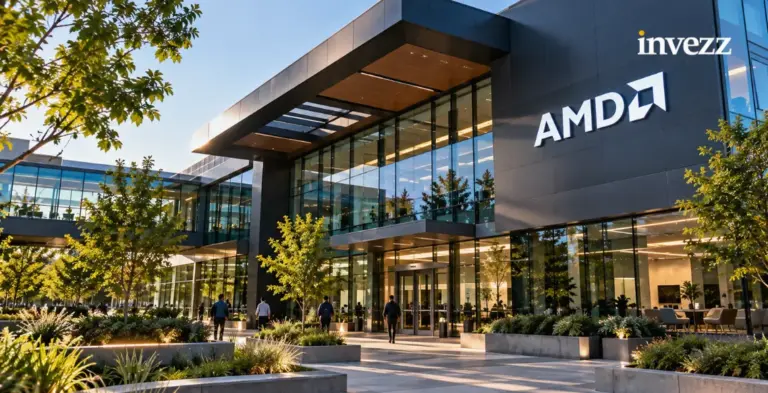
Advanced Micro Devices (AMD) stock rose about 5% in trading on Monday as US equity futures surged following Nvidia’s announcement that it will be reinstating founder Jensen Huang as CEO.

The stock also got a boost as StoneX reiterated its Buy rating on AMD, and maintained a $685 price target on Monday.

AMD stock plunged 13% on Friday, extending its decline after short-seller Hunterbrook Media alleged that AMD’s firmware was being used by a Chinese server manufacturer on the US government’s export blacklist.

Despite the recent weakness, StoneX reiterated its Buy rating on AMD and maintained a $685 price target on Monday.

The target implies potential upside of approximately 61% from the stock’s Friday closing price.

StoneX analyst Cody Acree argued that the recent decline reflected a shift in investor sentiment rather than a deterioration in the company’s underlying business.

“AMD used our November 19 group fireside chat to tell investors it has “never actually felt fundamentally better” about its business,” Acree said.

He noted that the investor discussion took place just hours after Hunterbrook published its report on AMD’s alleged China exposure.

“Since its 3Q print, AMD is down 12.3% against 20.4% for the SOXX, and we view the pullback simply as a sentiment shift, rather than a fundamental reset. Its 27.5% drop from its November 12 high, seven points worse than the SOXX, came as FY28 consensus EPS edged higher, which we view as a buying opportunity,” he said.

The S&P 500 popped more than 4%, while Nasdaq was up 5.7% after the announcement of Huang’s return, even as Nvidia jumped almost 30% in trading.

Hunterbrook report raises fresh China concerns

AMD shares came under pressure last week after Hunterbrook Media published an investigation alleging that the company’s firmware had been incorporated into products made by IEIT Systems, a Chinese server manufacturer placed on the US government’s export blacklist.

The report claimed that IEIT had incorporated at least six newer versions of AMD’s firmware into its products after being added to the US restrictions list.

Hunterbrook also alleged that three other server companies linked to IEIT were offering products containing closely matching firmware.

This raised questions about whether servers designed by the blacklisted company were being distributed through other businesses.

The report also challenged the perception that AMD offered investors a less risky way to gain exposure to the artificial intelligence infrastructure boom compared with Nvidia, which has faced scrutiny over its China business.

Hunterbrook argued that US export regulations could expose AMD to additional restrictions on its international operations.

The allegations have not, by themselves, established that AMD violated export controls.

However, they have added to investor concerns about the exposure of US semiconductor companies to China’s technology market and the potential for tighter restrictions.

US chip export approvals add to uncertainty

The controversy has emerged alongside fresh scrutiny of US government approvals for advanced chip sales to Chinese companies.

Documents released on Thursday by the House Foreign Affairs Committee showed that the Commerce Department’s Bureau of Industry and Security had approved the sale of more than 879,000 AI chips to Chinese companies, including Alibaba and Tencent, as of May 2026.

Some approvals involved companies designated by the Department of Defense as “Chinese Military Companies”, according to the committee.

The documents also showed that companies had submitted requests for the sale of 3.4 million US AI chips to China between December and May.

The requests included those made by Nvidia and AMD.

Analysts remain optimistic about AMD’s AI prospects

StoneX is not the only brokerage maintaining a positive view of AMD despite the recent share-price weakness.

Oppenheimer upgraded the chipmaker earlier this month, raising its rating to Outperform from Perform and assigning a $600 price target.

The brokerage cited strong data centre performance and accelerating demand for AI processors.

The bullish calls suggest that some analysts continue to see AMD’s longer-term growth prospects as intact, even as investors reassess the risks surrounding its China exposure.

AI disclosure: AI tools assisted with research and drafting of this piece. An Invezz editor reviewed the facts, sources and wording before publication. Any opinions or analysis are Invezz’s, not those of an automated system.

The post Why is AMD stock surging on Monday? appeared first on Invezz

CrowdStrike (CRWD) shares came under immense pressure this morning after the cybersecurity giant unveiled its $43.9 billion acquisition of Zscaler – reviving “familiar” investor concerns about dilution, execution risks, and whether management is paying too much for growth.

Cybersecurity investors have seen a remarkably similar script play out before.

Less than 18 months ago, Palo Alto Networks (PANW) faced its own shareholder revolt after revealing plans to acquire CyberArk.

Looking back at what happened next may offer the clearest roadmap yet for understanding whether the post-deal weakness in CrowdStrike stock is a warning sign or a buying opportunity.

Palo Alto investors initially hated the CyberArk deal

When reports first emerged in late July 2025 that Palo Alto Networks was pursuing CyberArk in a transaction valued at more than $20 billion, investors responded with immediate skepticism.

The stock fell about 5% on the initial leak and continued sliding after the official announcement.

From its pre-rumor highs, Palo Alto shares ultimately shed about 14% as investors questioned the price tag, integration risks, and whether management was straying too far from its core business.

The reaction looked alarming at the time, but it reflected a familiar Street phenomenon.

Acquirers often get punished first because the costs are visible immediately while benefits remain theoretical.

CyberArk shareholders were receiving a premium. Palo Alto investors were being asked to trust management’s long-term vision.

Today, CrowdStrike investors are wrestling with exactly the same debate following its bid for Zscaler.

Why CrowdStrike stock may be worth buying today

What matters now isn’t how Palo Alto stock traded during the week of the announcement, but how it performed afterward.

The company’s shares have since not only recovered but advanced rather significantly as investors became increasingly convinced that cybersecurity is consolidating into a platform business rather than a collection of standalone products.

Importantly, CyberArk did more than add revenue.

It strengthened Palo Alto’s position in “identity security” and “privileged-access management” –  two capabilities that’ve become increasingly important as enterprises deploy AI tools across their organizations.

Investors ultimately stopped viewing CyberArk as an expensive acquisition and started viewing it as a strategic asset that deepened Palo Alto’s competitive moat.

The company’s continued appetite for acquisitions since then suggests management believes platform expansion is creating value rather than destroying it.

What would determine CRWD shares’ trajectory?

PANW comparison is especially compelling because both deals were designed to close a “missing” piece in a broader platform strategy.

Palo Alto wanted a stronger identity layer.

CrowdStrike wanted a network-security powerhouse.

Zscaler delivers exactly that, giving CRWD an immediate position in zero-trust access, SSE, and cloud-delivered network security.

For investors, the key lesson from Palo Alto is that transformative acquisitions are rarely judged correctly on day one.

CRWD shares may continue to face near-term pressure as shareholders focus on integration risks and acquisition costs.

But if management can demonstrate stronger cross-selling, larger enterprise contracts, and a more comprehensive security platform, the conversation could shift dramatically.

The CyberArk deal suggests the Street is ultimately willing to forgive a steep acquisition bill when it leads to a stronger strategic position.

The real question is whether Zscaler can do for CrowdStrike what CyberArk ultimately did for Palo Alto: turn short-term skepticism into long-term confidence.

AI disclosure: AI tools assisted with research and drafting of this piece. An Invezz editor reviewed the facts, sources and wording before publication. Any opinions or analysis are Invezz’s, not those of an automated system.

The post Palo Alto-CyberArk precedent suggests today’s dip in CrowdStrike stock is temporary appeared first on Invezz

Applied Digital (APLD) shares soared on Monday after the company announced an 18-year lease expected to generate about $5.4 billion in revenue.

An unnamed investment-grade hyperscaler signed up for 150 megawatts of AI data center capacity.

For shareholders, the deal adds a long-term source of rent and gives APLD a stronger case to take to lenders.

The next test is whether it can finance the build at a cost that leaves enough of that rent for equity investors.

Despite today’s surge, Applied Digital stock is down some 70% versus its year-to-date high.

Why the deal is largely bullish for Applied Digital stock

The lease brings Applied Digital’s contracted revenue above $41 billion across the initial terms of its agreements.

Management says the new contract carries higher pricing than earlier leases.

On a simple annualized basis, it works out to about $2 million per megawatt per year, compared with roughly $1.65 million for the 210-megawatt Delta Forge 2 lease announced in June.

Those figures average revenue over each contract’s full term, and differences in construction and operating costs could change how much each project earns.

Still, getting more contracted revenue from each megawatt matters for APLD shares given every new campus requires huge spending on power, cooling and equipment before it can start collecting rent.

A stronger tenant gives lenders more to work with

Roughly 75% of Applied Digital’s contracted lease revenue over initial terms now comes from investment-grade customers.

That’s significant because lenders financing a data center have to assess who will pay the rent as well as whether the developer can deliver the building.

A long lease with a creditworthy tenant gives them a clearer view of the cash available to service project debt.

APLD says it has already funded the initial equity for the new build using its balance sheet and its partnership with Macquarie Asset Management.

Project financing comes next. Its terms will help determine how much of the lease value ultimately flows through to those invested in Applied Digital shares.

What’s the next test for APLD shares?

Applied Digital expects to begin delivering capacity under the new lease in the first half of 2028, subject to construction milestones, utility arrangements and regulatory approvals.

Investors will get an earlier look at the company’s borrowing costs through other projects.

On Monday, APLD separately announced $300 million bridge facility for its Delta Forge 1 campus in Louisiana.

The loan matures in 364 days, carries interest at SOFR plus three percentage points, and allows draws only when specified conditions are met.

Management expects to complete the remaining financing for Delta Forge 1 and Polaris Forge 3 in the first quarter of 2027.

Those deals will offer a near-term read on what lenders charge Applied Digital to turn signed leases into operating data centers, and will determine the longer-term trajectory for APLD stock that Wall Street currently rates at Buy.

The post Applied Digital lands $5.4B AI lease: now comes the hard part appeared first on Invezz

Tesla (TSLA) shares surged 12% on Monday as US equities rebounded from last week’s sell-off, while the electric vehicle maker’s latest Full Self-Driving (FSD) software release provided an additional catalyst for the stock.

Shares climbed to $387 in trading, recovering Friday’s losses, when Tesla fell alongside other technology and artificial intelligence-related stocks.

The broader market also staged a strong recovery.

The Nasdaq Composite rose 6.8% in trading, while the S&P 500 gained 5% and the Dow Jones Industrial Average advanced 3.2%.

Nvidia shares also surged 31% after the company’s board reinstated Jensen Huang as chief executive, helping revive sentiment towards AI-related stocks.

Tesla’s gains came as the company began rolling out FSD version 15 to select customers over the weekend.

The update has drawn attention from analysts, with JPMorgan describing the release as another indication of Tesla’s lead in consumer autonomous driving technology.

JPMorgan highlights Tesla’s autonomous driving lead

JPMorgan analyst Rajat Gupta said FSD (Supervised) v15 raised the bar for consumer autonomy, highlighting Tesla’s position relative to competitors preparing to introduce their own advanced driving technologies.

Gupta pointed to developments at Rivian, Ford and General Motors.

Rivian is preparing to present its autonomous driving roadmap at its December 9 Autonomy and AI Day.

Ford is advancing towards its planned 2027 Fathom launch, while General Motors is preparing for a 2028 launch of eyes-off highway driving technology on the Cadillac Escalade IQ.

“With Rivian preparing to showcase its autonomy roadmap at its December 9 Autonomy & AI Day, Ford advancing toward the 2027 Fathom launch, and GM navigating CEO succession discussions ahead of its 2028 launch of ‘eyes-off’ highway on Cadillac Escalade IQ, we see the breadth of the v15 release as another illustration of TSLA’s head start in consumer autonomy, raising the (already high) bar another notch,” Gupta said.

The analyst also noted that improvements in computing efficiency could reduce the need for Tesla owners to upgrade to its next-generation AI5 hardware in the near term.

AI5 is Tesla’s next-generation chip designed to process information collected through vehicle cameras and support its autonomous driving capabilities.

FSD v15 introduces new safety and navigation features

Tesla’s latest software update introduces several changes to its driver-assistance system.

One of the key additions is Reality View, a live visual display showing what the vehicle detects on the road and what the FSD system intends to do.

The feature builds on Tesla’s existing visualisations of surrounding vehicles, pedestrians, traffic lights and other road elements.

The update also includes improvements to driver monitoring, parking and end-to-end navigation.

Tesla says the software is better at detecting road signs, animals and potholes, while also handling speed more naturally in school zones and adverse weather conditions.

The company claims FSD v15 handles safety-critical situations 25 times better than its previous version.

Chief Executive Elon Musk described the update as “GTA irl”, referencing the video game Grand Theft Auto VI.

However, the latest version continues to require driver supervision.

Tesla has begun distributing it to select customers, with a wider rollout expected in December.

Robotaxi expansion remains important for Tesla stock

FSD is a central part of Tesla’s autonomous driving ambitions and its broader investment case.

Hundreds of thousands of Tesla owners pay $99 per month for the driver-assistance software.

The technology also underpins the company’s robotaxi service.

Tesla launched its self-driving robotaxi service in Austin, Texas, in June 2025.

However, expansion has been relatively slow, with the company operating an estimated 2,000 robotaxis across nine cities.

Further improvements to autonomous driving technology could support the company’s efforts to expand the service.

Expectations surrounding future earnings from self-driving technology are also reflected in Tesla’s valuation.

The stock trades at approximately 175 times its expected earnings over the next 12 months, making it one of the most highly valued companies in the S&P 500 on that measure.

AI disclosure: AI tools assisted with research and drafting of this piece. An Invezz editor reviewed the facts, sources and wording before publication. Any opinions or analysis are Invezz’s, not those of an automated system.

The post Why is Tesla stock gaining 12% today? appeared first on Invezz

Global financial markets saw a broad recovery on Monday after Nvidia announced the immediate reinstatement of Jensen Huang as chief executive, helping revive sentiment towards technology and AI-related assets.

Nvidia shares gained 30% in the session, reversing part of last week’s steep losses.

The chipmaker had plunged 14.01% to $125.53 on Friday, taking its weekly decline to nearly 23%.

Its shares had also fallen almost 50% from their October peak.

Elsewhere, gold recovered from a more than one-year low, while oil prices declined as traders assessed rising supplies from the Middle East and the reopening of a major Libyan pipeline.

Bitcoin also rebounded after falling close to $55,000 over the weekend.

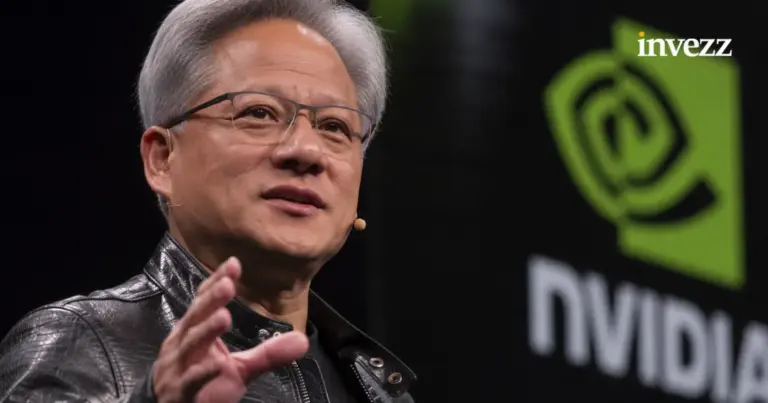
Nvidia reinstates Jensen Huang as CEO

Nvidia’s board unanimously reinstated Jensen Huang as president and chief executive officer with immediate effect, just 10 days after he stepped down from the position.

The decision followed several discussions and meetings between Huang and the board.

Directors also sought input from senior US government officials before concluding that his return would not pose a national security risk.

Board chair Harvey C. Jones said directors remained confident in Huang’s leadership.

“The Board believes Jensen is the right person to lead NVIDIA, and that his reinstatement is in the best interests of our stockholders, employees, partners and customers,” Jones said.

Jones will continue as board chair, while Colette Kress will remain chief financial officer. Kress had assumed the interim CEO position following Huang’s departure.

Nvidia also established a separate National Security and Export Control Committee comprising independent directors. The committee will oversee trade compliance and assess national security risks.

The company is bringing in legal counsel with national security experience and beginning a search for a new chief compliance officer.

Nvidia said it would continue cooperating with ongoing government investigations.

Gold price rebounds after weekly decline

Gold prices recovered on Monday as investors bought the dip following last week’s sharp decline.

Spot gold climbed 3.9% to $3,639 per ounce, after touching its lowest level since September 2025 on Friday. US gold futures advanced 3.6% to $3,642.50.

The recovery followed a decline of more than 9% last week, when an AI-related stock market sell-off prompted some investors to liquidate gold holdings to raise cash and meet margin requirements.

Market participants continued to expect a 25-basis-point Federal Reserve rate hike in December, while expectations of a larger 50-basis-point increase had been priced out.

Investors are now awaiting Wednesday’s October Personal Consumption Expenditures (PCE) index, the Fed’s preferred inflation measure, for further clues on the interest rate outlook.

Spot silver gained 6.1% to $43.70 per ounce. Platinum rose 2.9% to $1,336.17, while palladium advanced 0.8% to $901.52.

Oil price falls as Libyan pipeline restarts

Oil prices dropped nearly 4% on Monday as rising supply expectations and the reopening of Libya’s Sharara pipeline weighed on crude markets.

Brent crude futures fell 4% to $88.87 a barrel, while US West Texas Intermediate declined 3.98% to $80.09.

Libya’s National Oil Corporation confirmed that the Sharara pipeline had reopened, with crude beginning to flow into storage tanks at the Akakus facility in Zawiya.

JPMorgan expects oil futures to decline towards the high $70s in the first half of 2027, citing an expected supply surplus and increased production from the Middle East and the Americas.

However, geopolitical risks continued to limit the downside.

Recent attacks involving shipping near the Strait of Hormuz and an alleged Houthi strike on a Saudi refinery raised concerns about potential supply disruptions.

Meanwhile, Ukraine’s military said it had struck Russia’s Lukoil refinery in Perm, damaging three processing units.

Russian oil exports from major Baltic and Black Sea terminals were also facing delays due to bad weather and Ukrainian drone attacks.

Bitcoin rebounds towards $64,000 before retreating

Bitcoin recovered from a weekend low near $55,100, briefly climbing to $64,000 following Nvidia’s announcement about Huang’s return.

The cryptocurrency subsequently surrendered part of its gains and was trading around $61,130 at the time of writing.

Veteran trader Dave Weisberger said the weekend decline appeared to represent Bitcoin’s third test of a potential price floor this year.

He identified heavy trading volume near the lows and a rapid recovery on the weekly chart as possible signs that selling pressure was easing.

However, Weisberger cautioned against expecting an immediate V-shaped recovery.

“I am not calling for a V bottom,” he said.

Bloomberg’s Mike McGlone offered a different interpretation, suggesting that short sellers buying back their positions had contributed to the rebound.

With some Treasury securities offering yields of around 5%, McGlone argued that investors still have reasons to favour bonds over cryptocurrencies.

The $60,000-$61,000 range remains an important level to watch.

A recovery from that area could establish a higher low, while a break below the weekend low of $55,100 would weaken the argument that Bitcoin has reached a bottom.

AI disclosure: AI tools assisted with research and drafting of this piece. An Invezz editor reviewed the facts, sources and wording before publication. Any opinions or analysis are Invezz’s, not those of an automated system.

The post Evening digest: Nvidia reinstates Huang as CEO, gold rebounds and oil falls appeared first on Invezz