Archive

November 11, 2026

Browsing

At this year’s New Orleans Investment Conference, the conversation surrounding gold and silver shifted from celebrating wins to questioning the timing of the current market cycle. After a period of early peaks followed by an eight month slide, investors are left wondering if they are witnessing a temporary pause in a larger bull market or if the best opportunities have already passed. With silver retreating significantly and junior mining shares under pressure from year end tax loss selling, the atmosphere among traders has become cautious yet curious.

A panel of industry experts moderated by Jefferson Financial CEO Brien Lundin sought to quantify this uncertainty using a baseball analogy, asking exactly what inning the resource sector is currently in. While opinions varied on the specific number, there was a general consensus that the game is far from over. Some analysts suggested they are only in the second or third inning, viewing the recent dip as a healthy correction before another leg up. Others took a broader perspective, suggesting we are actually in the middle of a ten year supercycle driven by geopolitical instability and chronic supply shortages.

Despite the optimism regarding long term fundamentals like mineral sovereignty and hard asset demand, several panelists warned of potential rain delays. Concerns range from macroeconomic volatility and stubborn interest rates to environmental disruptions like Super El Nino, which could hinder production in key regions like Peru and Chile. There is also a lingering fear that a sudden collapse in the artificial intelligence bubble could trigger a wider market panic, dragging down commodities along with everything else in a general flight to liquidity.

Ultimately, the group viewed these risks as hurdles rather than dead ends. Even those who believe an AI crash is inevitable suggest such an event might clear the air and pave the way for a stronger rebound supported by Federal Reserve intervention. While some participants remain skeptical about an immediate reversal, most agree that compared to previous historical cycles, resources are still positioned for significant growth once the current clouds lift.

A ambitious attempt to bring Wall Street into the era of twenty four hour digital trading has hit a massive wall of corporate resistance. More than sixty major US listed companies have formally opted out of being featured on OKXICE, a new tokenized stock platform created through a partnership between crypto exchange OKX and Intercontinental Exchange, the parent company of the New York Stock Exchange. While the venture promised traders constant access to digital tokens tracking some of the world’s most valuable stocks, nearly every single one of the Magnificent Seven tech giants along with banking titans like JPMorgan and Goldman Sachs have slammed the door shut.

The mass exodus was made possible by a recent SEC rule known as the Innovation Exemption, which permits tokenized stocks to trade on non traditional venues provided they notify the affected companies. This gave corporations a thirty day window to object, and they did so in droves. As of early November, 67 firms have signed opt out notices, leaving only a handful of crypto linked entities like Coinbase and MicroStrategy willing to participate. Even Nasdaq chose to exclude its own shares from the platform, signaling a deep distrust among industry leaders regarding this specific implementation of blockchain technology.

At the heart of the conflict is a legal distinction between true ownership and synthetic replicas. Experts note that while these tokens may mirror a stock’s price movements on a screen, they often act as wrappers rather than actual shares. Unlike official equity, these tokens typically strip away essential shareholder rights such as voting power and guaranteed dividends, creating a layer of legal uncertainty that institutional investors generally find intolerable. Because these assets are managed by third party platforms rather than the companies themselves, any technical failure or hack could leave investors stranded without any direct recourse against the corporation whose stock they thought they owned.

Industry observers suggest this backlash isn’t necessarily a war on blockchain technology itself, but rather a reaction to a lack of corporate control. Many executives argue that thirty days is simply not enough time to vet the risks associated with custody and pricing in an unregulated environment. For many boards, the reputational risk of being tied to a failed digital experiment outweighs any potential benefit of increased liquidity. Until tokenized shares can function identically to traditional shares in terms of legality and governance, it appears corporate America prefers the safety of traditional exchanges over the promise of perpetual trading.

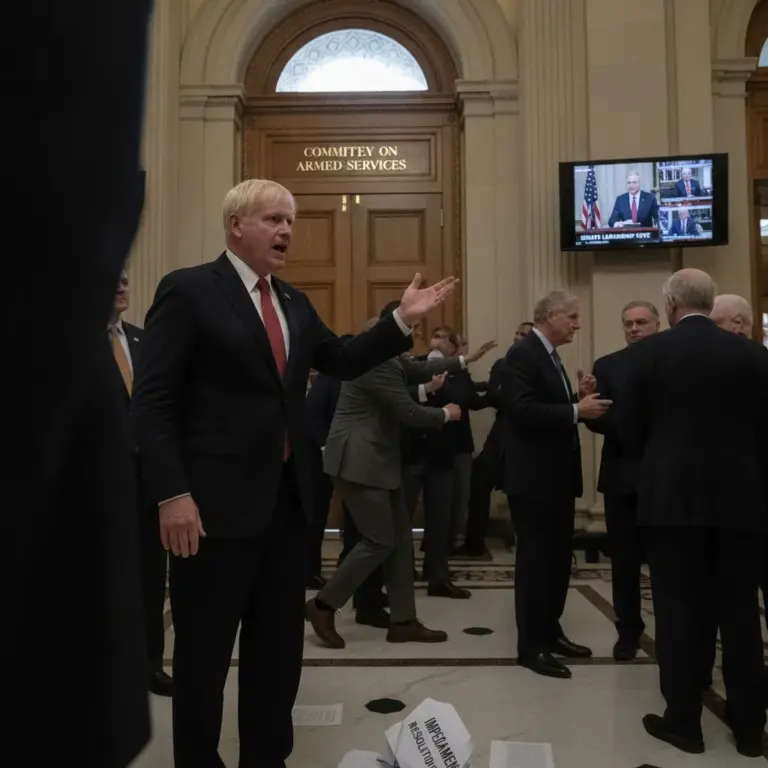
Capitol Hill is currently a theater of high tension as House Republicans scramble to protect Defense Secretary Pete Hegseth from an internal impeachment bid while the Senate wing struggles to settle its own power structure. Speaker Mike Johnson has vowed to crush the impeachment resolution brought forward by Representative Thomas Massie, dismissing the effort as a shameful quest for attention by a disgruntled colleague. While Hegseth himself blasted the proceedings as a farcical political spectacle fueled by ego and resentment, some within the party remain uneasy. Representative Don Bacon noted that while he opposes the impeachment, he believes GOP leaders must avoid becoming mere rubber stamps for President Trump.

The friction extends deep into the Senate, where a divide has emerged over whether to proceed with leadership elections immediately or pause for strategic reflection following stinging midterm losses. Senator Ron Johnson is spearheading a push to delay the vote, arguing that a stunning electoral defeat demands a fundamental shift in direction rather than business as usual. He contends that the party needs genuine soul searching and robust discussion before installing a hierarchy, though he admitted there is currently no clear alternative candidate waiting in the wings to take charge.

Not everyone agrees with the call for hesitation. Senator Mike Rounds suggested that most of his colleagues are ready to simply move forward and get their leadership in place so they can address policy goals in the coming year. However, Senator Josh Hawley has voiced sharp criticism of current leadership, comparing recent losses to the fallout of Watergate and claiming he hasn’t felt any outreach from potential leaders trying to earn his support. As both chambers navigate these identity crises, the Republican party appears caught between those wanting total loyalty to the executive branch and those warning that without checks and balances, they risk further alienation of voters.

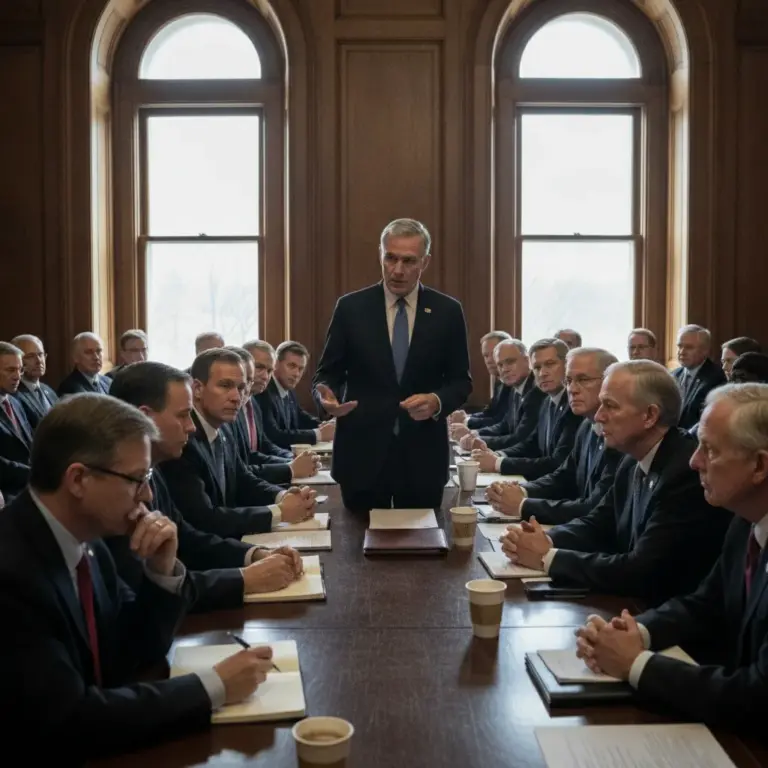
Senate Republicans gathered Tuesday for a series of high stakes meetings intended to determine the future of their party following a devastating performance in the midterm elections. With the loss of their majority and several key seats, members are grappling with whether to maintain the current leadership under Senator John Thune or pivot toward a new direction entirely. While Thune is widely expected to be reelected because he lacks an opponent and maintains strong ties with his peers, some senators argue that proceeding as usual after such a significant electoral defeat would be a mistake.

Senator Ron Johnson led the call for caution, circulating a letter requesting that the secret ballot leadership elections be delayed. He argued that the party needs period of genuine soul searching rather than simply rushing back into old habits. This sentiment was echoed by Senator Josh Hawley, who described the election results as a clear repudiation of the congressional focus over the last two years, specifically pointing to policies regarding Medicaid and rural healthcare that may have alienated voters. Other members suggested waiting until final race calls in Alaska and Mississippi are settled before finalizing who will lead them into the next session.

Despite these internal tensions, Thune remains in a relatively strong position thanks to his ability to balance party loyalty with personal diplomacy. Unlike his predecessor Mitch McConnell, Thune has focused on building broad consensus within the rank and file while maintaining a functional relationship with President Donald Trump. Although Trump has occasionally clashed with Thune over efforts to preserve certain Senate rules like the filibuster, the president recently referred to him as a fine man, leaving the ultimate decision to the senators themselves.

As these internal power struggles unfold behind closed doors, the Senate continues its public legislative agenda. Lawmakers are currently weighing critical bills concerning survivor justice and energy permitting, attempting to find bipartisan common ground before the new Congress takes office in January. For Republicans, the immediate goal is twofold: confirming as many presidential nominees as possible while figuring out how to effectively operate from the minority side of the aisle.

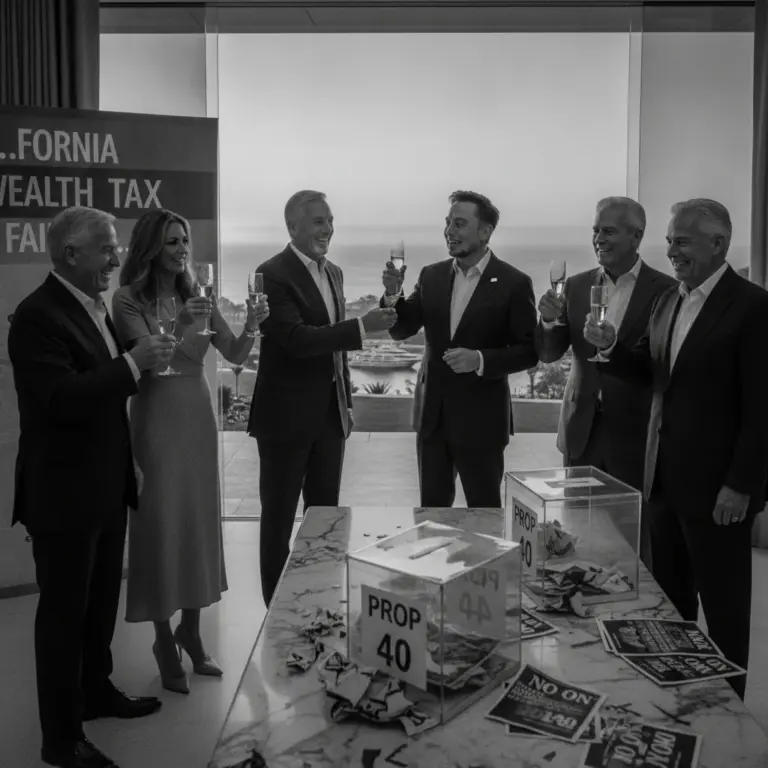
California voters have dealt a significant blow to progressive economic goals by rejecting Proposition 40, a first of its kind proposal that would have taxed the net worth of the state’s billionaires. The measure aimed to levy a one time five percent tax on individuals with assets exceeding one billion dollars, primarily to offset looming federal healthcare funding cuts and bolster education and food assistance programs. While advocates argued the move was essential to protect social services, opponents warned that such a drastic step would trigger a mass exodus of the ultra wealthy, destabilizing a state budget that relies heavily on top earners.

The battle over the ballot measure became a high stakes financial war, with the no campaign outspending supporters by roughly ten to one. Prominent tech figures led the charge against the tax, most notably Google co founder Sergey Brin, who contributed over one hundred million dollars to defeat the initiative. This massive influx of capital helped sway voters despite vocal support from national figures like Senator Bernie Sanders, who traveled across California in the final weeks of the campaign to rally people around the idea of targeting investment wealth rather than standard paychecks.

Demographic splits revealed a clear generational divide in how Californians view extreme wealth. Data suggests that young voters under thirty largely favored the tax, while those sixty five and older overwhelmingly rejected it. Middle class voters remained split, though those earning over one hundred thousand dollars annually leaned toward opposition. Even Governor Gavin Newsom joined the ranks of those against the local measure, arguing that a state level wealth tax would unfairly disadvantage California compared to other regions, even as he expressed general agreement with the need for national efforts to combat inequality.

Despite the loss, proponents of Proposition 40 insist this is merely the beginning of a longer struggle. In statements released after the results were finalized, organizers claimed that while billionaires may have purchased a temporary victory, they did not win the intellectual debate over fairness and healthcare access. Supporters are already signaling their intent to bring similar measures back to the ballot in 2028, framing this defeat as round one in an ongoing fight to redistribute resources from the wealthiest citizens to public infrastructure.

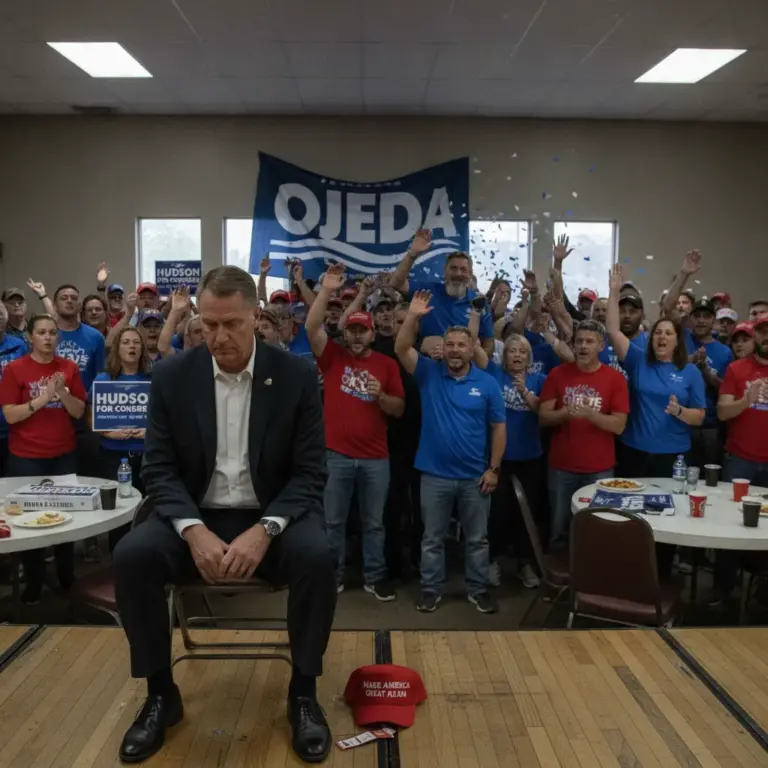
The recent election cycle delivered a series of shocks to the Republican establishment, most notably evidenced by the defeat of Representative Richard Hudson in North Carolina. As the head of the National Republican Congressional Committee, Hudson was tasked with protecting his party’s majority nationwide, yet he could not secure his own seat in the ninth district. He was unseated by Richard Ojeda, a former Army major and social media personality whose victory signaled a broader trend of Democrats penetrating deeply conservative territory. This sentiment was echoed by Democratic Congressional Campaign Committee Chair Suzan DelBene, who noted that while gaining seats is always the goal, reaching into traditionally red districts represents a significant strategic shift.

Across the country, candidates leaning into moderate identities and professional backgrounds managed to flip long-held GOP strongholds. In Colorado’s fifth district, former Army Captain Jessica Killin overcame the influence of local evangelical hubs and military installations to defeat Jeff Crank. Similarly, in Nevada’s second district, Teresa Benitez-Thompson made history as the first Democrat to win that seat, benefiting from a fractured Republican ticket where candidate David Flippo faced criticism over his military record. These wins helped Democrats achieve an unprecedented sweep of every single congressional seat in Nevada.

In the Midwest and South, unexpected victors defied historical trends and redistricting efforts designed to favor Republicans. An emergency room nurse named Mitchell Berman flipped Wisconsin’s first district, ending a streak of Republican dominance dating back to 1993. Texas saw two surprising outcomes; Katy Padilla Stout won a district that had not seen a Democrat since 2012, while Leticia Gutierrez triumphed in a newly redrawn ninth district that both parties had largely written off as a guaranteed Republican win.

The wave of upsets extended into Indiana and New Jersey as well. State Senator J.D. Ford managed to oust Representative Victoria Spartz in Indiana’s fifth district despite its heavily conservative leanings and favorable maps. Meanwhile, New Jersey’s second district saw the departure of Jeff Van Drew, who had famously switched from the Democratic to the Republican party during Donald Trump’s first term. Together, these results suggest a volatile political climate where traditional partisan boundaries provided less protection than incumbents had anticipated.

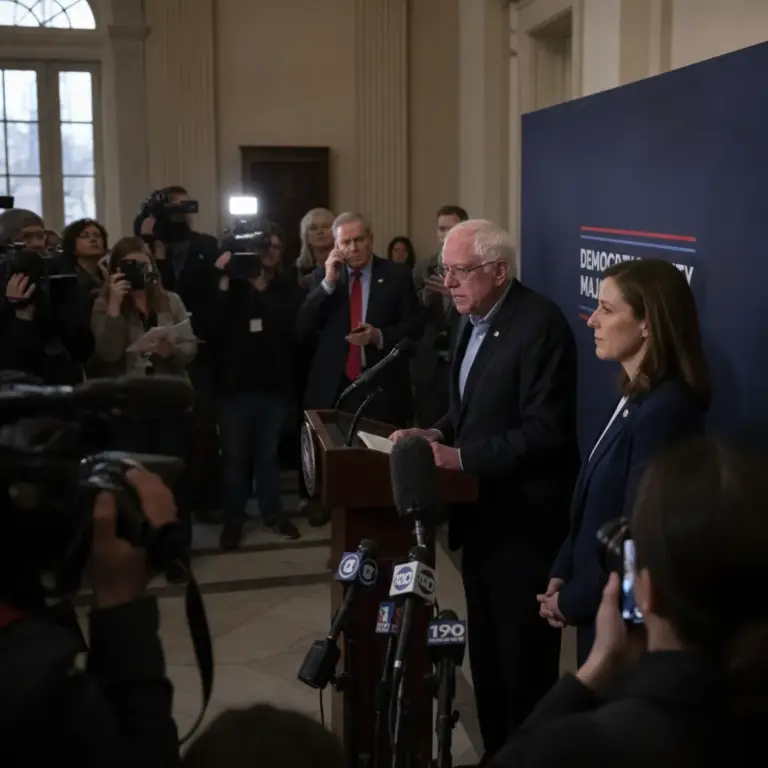
The victory celebration following the Democratic sweep of the midterm elections has quickly turned into an internal power struggle. In a move that sent shockwaves through the Capitol on Tuesday, Senator Bernie Sanders announced that he will not support Senator Chuck Schumer for reelection as the Democratic majority leader. Standing alongside Senator Elissa Slotkin of Michigan, Sanders argued that the current political moment demands a generational shift in leadership and a fundamental debate regarding where the party should head next.

This public break comes at a precarious time for Schumer, who is facing pressure from a rising tide of progressives within his own ranks. While Schumer can point to the overall success of the midterms, several newly elected senators are echoing Sanders’ sentiment. The tension stems partly from primary battles where progressive candidates defeated Schumer’s preferred picks, suggesting that the grassroots base is moving further left than the existing leadership may be comfortable with.

Senator Slotkin added to the uncertainty by stating she cannot offer her support to any candidate until she sees a comprehensive plan detailing specific priorities for the new majority. This openness to alternatives has already emboldened others; Senator Chris Van Hollen of Maryland is reportedly weighing a bid for the leadership role and has begun reaching out to colleagues to gauge his level of support among the caucus.

Despite the mounting opposition and calls for fresh blood, Schumer remains resolute. The New York senator expressed confidence in his ability to retain his position, emphasizing that his primary focus remains on legislative productivity rather than internal skirmishes. He received strong backing from Senator Kirsten Gillibrand, who praised his contributions toward securing the majority. As Republicans finalize their own leadership decisions, Democrats now enter a volatile period of negotiation that could redefine the party’s identity heading into the new Congress.

American drivers are seeing some much needed relief at the pump this week as the national average for regular gasoline dropped below four dollars per gallon for the first time since July. According to data from AAA, prices dipped to roughly three dollars and ninety seven cents following a dramatic plunge in global oil futures. This shift comes amid a cooling of tensions regarding the conflict with Iran, fueled by comments from President Trump suggesting that further military escalation is unlikely and that there is positive momentum toward ending the war.

The sudden drop in costs follows a volatile period where oil prices plummeted thirteen percent in a single week, marking one of the steepest declines seen since the early days of the pandemic. Market analysts suggest that investor confidence shifted not only because of presidential rhetoric but also due to recent midterm election results. With Democrats securing what many are calling a blue tsunami in both the House and Senate, traders believe there will be significantly more congressional scrutiny over war funding and more pushback against economically disruptive foreign policies. Even Vice President JD Vance acknowledged on social media that the unpopularity of the war contributed to the election losses, further signaling to markets that a pivot toward diplomacy may be inevitable.

Beyond passenger vehicles, those relying on diesel are also seeing slight decreases, though commercial fuel remains staggeringly high compared to earlier this year. Economists note that these fluctuations often trickle down into higher grocery bills and retail prices because diesel is essential for shipping goods across the country. While current trends provide temporary breathing room for consumers heading into the holiday shopping season, experts warn that stability is fragile. Risks remain including ongoing attacks on energy infrastructure in Ukraine and the fact that U.S. strategic petroleum reserves are at their lowest levels since 1982.

Looking ahead, Citigroup analysts caution that a lame duck window exists before the new Congress takes office in January, leaving open the possibility for either rapid diplomatic breakthroughs or unexpected escalations. Additionally, political uncertainty surrounding Israeli Prime Minister Benjamin Netanyahu continues to cast a shadow over regional stability. For now however, motorists can enjoy a rare break in pricing as geopolitical bets lean toward deescalation rather than renewed conflict.

The Food and Drug Administration is requiring manufacturers of widely used GLP-1 medications, including household names like Ozempic and Wegovy, to add new warning labels to their packaging following reports of a rare but serious side effect. The agency warns that these treatments for obesity and diabetes may be linked to a condition known as non-arteritic anterior ischemic optic neuropathy, which restricts blood flow to the optic nerve and can result in permanent blindness.

This safety directive follows an extensive review conducted by FDA scientists who analyzed data from 126 clinical trials involving more than 134,000 patients. Their meta-analysis revealed that users of GLP-1 drugs experienced the eye condition at a slightly higher rate than those taking placebos or alternative glucose-lowering medications. Specifically, researchers found about six cases per 100,000 patients annually, suggesting a nearly 68 percent increase in risk for those on these specific drugs.

Despite the warnings, federal health officials emphasized that the actual occurrence of this complication is extremely low, affecting only about 0.01 percent of participants in certain studied groups. Determining a direct cause remains challenging because many people prescribed these medications already suffer from high blood pressure, sleep apnea, and diabetes, all of which are independent risk factors for vision loss. Consequently, the FDA noted that while there is a correlation, they have not yet established a definitive causal link between the medicine and the injury.

For those currently using these injectables or pills, doctors say the condition typically affects adults over age 50 and manifests as sudden, painless vision loss in one eye upon waking up. Patients might notice blind spots, distorted colors or general blurring. While some individuals see partial spontaneous improvement over time, there is currently no proven medical treatment to fully reverse the damage once it occurs.

American car buyers are facing a daunting financial landscape as the average transaction price for a new vehicle has climbed to a record breaking 51,109 dollars. According to recent data from Kelley Blue Book and Cox Automotive, this latest peak edges past previous records by about 500 dollars. While prices remain stubbornly high following years of pandemic era supply chain disruptions, analysts note that the rate of increase is finally beginning to cool. The current yearly rise of 2.1 percent actually falls below the general rate of inflation and is significantly lower than the annual growth seen between 2012 and 2021.

Several factors are converging to keep these prices elevated. Beyond the lingering effects of chip shortages, manufacturers are grappling with higher costs for raw materials like copper and steel due to increased tariffs and competition from data center construction. Simultaneously, consumer preferences have shifted toward larger, more luxurious vehicles. Pickup trucks and SUVs now dominate showrooms while affordable compact sedans have largely vanished because they offer thinner profit margins for automakers. Most buyers are also opting for mid to upper trim levels packed with high tech features like parking assist and climate control, further inflating the final bill.

The burden isn’t limited to those shopping for brand new models, as used car prices have also surged to an average of nearly 27,000 dollars. This creates a particularly difficult environment for first time buyers who lack a trade in vehicle to offset the cost. To cope with these heights alongside high interest rates from the Federal Reserve, many consumers are turning to risky financing options. Data indicates an explosion in ultra long term loans stretching beyond eight years, combined with smaller down payments, leaving drivers trapped in cycles of debt where a larger portion of their monthly payment goes toward interest rather than the actual value of the car.