Archive

November 13, 2026

Browsing

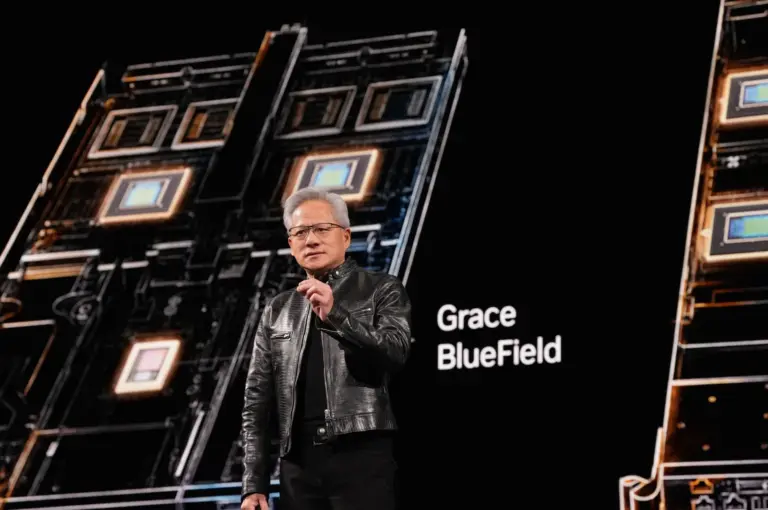
Nvidia’s outgoing Chief Executive Officer Jensen Huang will testify before Congress ahead of the Thanksgiving holiday later this month.

The development was confirmed by House Foreign Affairs Committee Chairman Brian Mast soon after Huang was sacked as Nvidia’s boss on Thursday.

Huang, who had been Nvidia’s president and CEO since co-founding the company in 1993, stepped down after attracting immense scrutiny following reports of him being romantically involved in an extramarital affair with a Chinese businesswoman who has been identified as an intelligence asset of Beijing by US authorities.

Nvidia stock was down 5.77% at the time of writing.

Huang’s troubles keep rising

“I don’t want to see anything hurt in Nvidia, but he has some very serious questions to answer.”

House Foreign Affairs Committee Chairman
Brian Mast

Huang had been summoned by a trio of House Republicans last week, when the matter had yet to escalate to this extent.

The then-Nvidia CEO had been asked to appear before the committee for a closed-door briefing on November 18 regarding the allegations.

Alongside Mast, John Moolenaar, Chairman of the Select Committee on the Chinese Communist Party, and Rick Crawford, Chairman of the House Permanent Select Committee on Intelligence, have also summoned Huang.

A Reuters report on Wednesday confirmed that Mast was willing to issue a congressional subpoena if Huang chose not to respond to the summons.

A subpoena is a formal, legally binding order that compels a person to provide testimony.

On Thursday, hours after Huang’s exit as CEO, Mast confirmed that the outgoing Nvidia boss had agreed to testify.

The date is still being worked out, but it is expected to be before the Thanksgiving holiday.

“He has agreed to come,” Mast told reporters. “We’re in negotiations for which day.”

He also said that the meeting is expected to be held over video and transcribed.

“Jensen and I have been very at odds as some of you already know on export controls, but Nvidia is a very important company to the United States of America,” Mast said.

Huang has been one of the faces of the AI buildout and had also built a close relationship with President Donald Trump.

Trump has continued to back Huang publicly despite the concerns.

Huang exits

The announcement of Huang’s exit caps a turbulent week for Nvidia and its founder after he acknowledged being unfaithful to his wife, although he did not name the suspected Chinese agent.

The Information reported that Huang’s affair had helped facilitate at least $7.5 billion in Nvidia chip shipments to Chinese companies.

While the board initially expressed confidence in Huang following the reports, fresh revelations emerged on Wednesday, further worsening the situation for the outgoing Nvidia boss.

The New York Times reported that Huang had also been romantically involved with Kimberly Powell, Nvidia’s vice president of healthcare.

Nvidia has appointed Colette Kress, the company’s current executive vice president and chief financial officer, as interim CEO.

Kress will continue to serve as executive vice president and CFO while taking on the interim CEO role until a permanent successor is appointed.

AI disclosure: AI tools assisted with research and drafting of this piece. An Invezz editor reviewed the facts, sources and wording before publication. Any opinions or analysis are Invezz’s, not those of an automated system.

The post Jensen Huang agrees to face Congress before Thanksgiving over Chinese spy links appeared first on Invezz
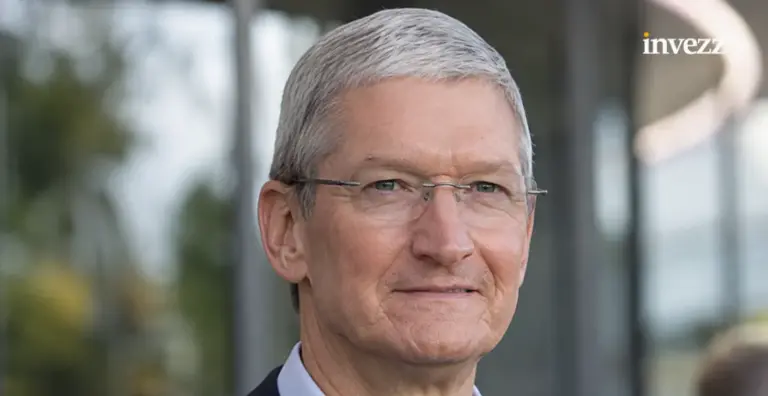
US President Donald Trump has thrown his support behind former Apple CEO Tim Cook as a potential successor to Jensen Huang at Nvidia, shortly after the chipmaker announced Huang’s resignation following revelations about his relationships with two women, one of them allegedly a Chinese spy.

Nvidia has named CFO Colette Kress as interim chief executive and initiated a search for a permanent replacement.

The company said it would consider both internal and external candidates.

“NOW THAT Nvidia CEO JENSEN HUANG, who has done a fantastic job, has resigned, there is only one man to take his place – TIM COOK of Apple. A Legend replaces a Legend!” Trump wrote on Truth Social.

Even before Trump’s endorsement, Cook was being discussed as a possible external candidate, alongside Rene Haas, chief executive of UK-based chip designer Arm Holdings.

“Nvidia is likely to favour an internal appointment initially but could look externally for a more permanent replacement,” said Jun Bei Liu, founder and lead portfolio manager at Ten Cap, as reported by the BBC.

Liu said Cook could be an interesting choice given his experience managing global supply chains, although she questioned whether he would leave Apple, where he currently serves as executive chairman.

Why Tim Cook could be a contender

According to Saxo chief investment strategist Charu Chanana, Cook’s experience succeeding Steve Jobs, managing global supply chains and overseeing a successful leadership transition could reassure Nvidia investors.

“Having already stepped back from day-to-day management at Apple, he is an interesting external possibility. However, Nvidia’s competitive advantage depends heavily on semiconductor innovation, so Cook would need strong technical leadership alongside him. His willingness to take on another demanding CEO role also remains uncertain,” she said.

Cook led Apple through a period of extraordinary expansion, taking it past the $1 trillion, $2 trillion and $3 trillion market capitalisation milestones.

During his tenure as CEO, Apple’s shares gained more than 2,200%, the company sold over 3 billion iPhones and returned nearly $900 billion to shareholders through stock buybacks.

His strength, however, extended beyond managing product demand and financial performance.

Cook built an extensive global supply chain and oversaw the integration of Apple’s growing portfolio of products and services.

His experience navigating geopolitical tensions could also appeal to Nvidia, which faces its own challenges over access to the Chinese market and US export restrictions.

Cook maintained relationships with both Trump and Chinese President Xi Jinping during their trade conflict, securing an exemption for iPhones from US tariffs last year.

Apple also shifted a substantial portion of its manufacturing away from China towards countries including India and Vietnam, while continuing to attract Chinese consumers.

Cook remains actively involved in Apple’s global political and diplomatic engagement as executive chairman, a role that could complicate any move to Nvidia.

Internal candidates remain in focus

Prediction market Kalshi has also highlighted potential internal successors.

Traders assign Ian Buck, the vice president overseeing Nvidia’s hyperscale and high-performance computing business, a 35% chance of replacing Huang.

Kress, who is currently serving as interim CEO, has a 29% probability, according to Kalshi traders.

Huang’s departure has also drawn attention to Trump’s unusually close relationship with the Nvidia founder, who had become an influential voice in US artificial intelligence policy.

Huang advocated preserving access to open-source AI and lobbied for allowing Nvidia to export advanced chips to China, making him an important interlocutor for the administration as Washington shaped its technology and trade policies.

AI disclosure: AI tools assisted with research and drafting of this piece. An Invezz editor reviewed the facts, sources and wording before publication. Any opinions or analysis are Invezz’s, not those of an automated system.

The post Trump wants Tim Cook to replace Huang at Nvidia: here’s what experts think about it appeared first on Invezz

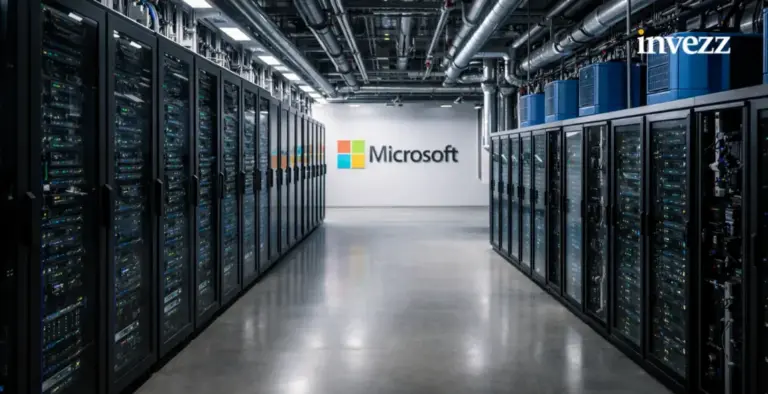
Microsoft shares MSFT gained more than 1% on Thursday, helping the technology giant overtake Nvidia to become the world’s second-most valuable publicly traded company.

The stock rose 1.33% to $528.05, while Nvidia’s shares fell 5.46%. According to Dow Jones Market data, Microsoft’s market capitalisation rose to $3.89 trillion, overtaking Nvidia’s $3.88 trillion.

The shift comes as Nvidia faces pressure following the resignation of CEO Jensen Huang, while investors reassess the outlook for artificial intelligence stocks.

Microsoft shares have also come under pressure recently, falling more than 5% from their record closing high of $555.80 on November 4.

However, Wall Street analysts see the company’s upcoming Ignite conference as a potential catalyst for renewed investor confidence.

Microsoft Ignite puts Azure and Copilot in focus

Microsoft will hold its annual Ignite conference from November 17 to November 20, with investors expected to focus on developments across its Azure cloud platform and Copilot AI assistant.

The event comes at an important time for the company, following concerns about competition in enterprise software.

Anthropic recently unveiled a spreadsheet tool that could challenge Microsoft’s Excel offering.

Citi analyst Tyler Radke expects the conference to reinforce confidence in Microsoft’s artificial intelligence growth prospects.

He maintained a Buy rating and a $680 price target, saying the opening keynote could focus on the next phase of enterprise AI adoption.

Expected areas of focus include Copilot, AI agents, Azure, security, and AI infrastructure.

Radke also expects Microsoft to demonstrate how Copilot is evolving from an assistant into a broader enterprise agent platform, with improvements in orchestration, governance and enterprise controls.

Morgan Stanley analyst Adam Wood also expressed a positive view, maintaining an Overweight rating and a $650 price target.

Wood said Microsoft’s accelerating growth and operating leverage following its latest quarterly results had strengthened confidence in its ability to monetise AI investments.

He added that Ignite could reinforce investor confidence in the durability and breadth of that growth.

AI spending and infrastructure returns remain key concerns

Despite the positive outlook, analysts will be watching for evidence that Microsoft can improve the economics of serving growing AI demand.

The company has committed substantial resources to expanding its data-centre infrastructure.

Microsoft is spending $117 billion this year on data centres supporting AI and cloud services.

Wood said investors would want further evidence that Microsoft can generate more revenue and gross profit from each dollar invested in infrastructure.

Failure to demonstrate improving returns could increase concerns about the sustainability of its AI spending.

However, strong revenue growth, particularly from Azure, has helped Microsoft maintain investor confidence despite its substantial investment commitments.

Microsoft pledges to fund its own data-centre growth

Microsoft has also addressed concerns about the impact of its infrastructure expansion on local communities and energy consumers.

Microsoft President of Cloud Operations Noelle Walsh said the company would not pass the costs of its data-centre growth on to other electricity customers, adding that Microsoft would pay its own way.

The company is working with Chevron on a power project in West Texas called Kilby.

However, the project has been delayed by a temporary moratorium imposed by Texas Governor Greg Abbott.

Chevron still plans to bring the project online by 2028 and have it fully operational by 2031.

Microsoft’s ability to expand its infrastructure while managing costs, regulatory challenges and community concerns will remain important to its AI growth strategy.

The upcoming Ignite conference could provide investors with further insight into how the company plans to translate that investment into sustained revenue and earnings growth.

AI disclosure: AI tools assisted with research and drafting of this piece. An Invezz editor reviewed the facts, sources and wording before publication. Any opinions or analysis are Invezz’s, not those of an automated system.

The post Microsoft stock rises as Ignite conference puts AI growth narrative in focus appeared first on Invezz

Broadcom shares AVGO rose 4.6% on Thursday as investors assessed the potential impact of Nvidia’s leadership turmoil on the broader artificial intelligence sector.

The stock’s gains came after Nvidia’s board confirmed the resignation of chief executive Jensen Huang.

The development has raised questions about whether hyperscalers that design their own chips could rely more heavily on alternative suppliers, including Broadcom, while Nvidia navigates a leadership transition.

However, market participants have so far appeared to distinguish between company-specific concerns at Nvidia and the broader outlook for AI-related stocks.

Broadcom could benefit as investors assess Nvidia turmoil

Broadcom is among the semiconductor companies that investors may consider as they assess potential alternatives to Nvidia.

Hyperscalers developing their own chips could lean more heavily on Broadcom, particularly as Nvidia works through its leadership transition.

The company also features in Anthropic’s amended S-1 filing as a buyer in a $26 billion share placement.

According to the filing, Broadcom is taking 13,513,513 Class N shares, worth approximately $1 billion at the $74 midpoint.

The placement also includes Google, Nvidia, AMD, Micron, Microsoft and TSMC.

Pepperstone analyst Chris Weston said the market appeared to be treating Nvidia’s problems as separate from the broader AI investment theme.

“The market appears to be distinguishing between a problem for Nvidia and a problem for AI. That’s an important distinction for the broader technology trade,” Weston said.

He added that, despite the interconnected nature of the AI ecosystem, market movements suggested investors were viewing the situation primarily as a company-specific risk for Nvidia.

Tom Lee maintains technology stocks have bottomed

Fundstrat’s Tom Lee also reiterated his view that technology stocks had already reached a bottom following last week’s market selloff.

“We are sticking with the thesis that Technology stocks bottomed last week,” Lee said on Thursday, in a CNBC interview. He added that Huang’s exit “does not change our view.”

Last week, Lee had identified memory, semiconductor, data centre and neocloud stocks as potential beneficiaries of a rebound following the midterm election results.

He argued that the previous week’s selloff marked a low point, pointing to heavy losses at several prominent hedge funds as evidence that an internal market bottom had formed.

Lee described the episode as a wave of selling and forced liquidations.

He also said the sharp decline was unusual because hedge funds generally operate with beta-neutral strategies and should not necessarily experience substantial losses when technology stocks fall.

According to Lee, the market’s response to negative developments is an important indicator of whether a bottom has formed.

“History shows markets bottom on bad news,” he wrote, arguing that stocks ceasing to fall despite negative headlines can signal that selling pressure has been exhausted.

Wall Street analysts maintain positive Broadcom ratings

Broadcom has also retained support from several Wall Street analysts.

Bank of America and JPMorgan maintained their Buy ratings on the stock on Wednesday.

D.A. Davidson upgraded Broadcom to Buy in a report issued on October 27, setting a price target of $400.

Barclays analyst Thomas O’Malley also maintained a Buy rating on Broadcom last week and set a price target of $500.

The combination of analyst support and potential demand from hyperscalers developing custom chips has kept Broadcom in focus as investors assess the implications of Nvidia’s leadership change.

AI disclosure: AI tools assisted with research and drafting of this piece. An Invezz editor reviewed the facts, sources and wording before publication. Any opinions or analysis are Invezz’s, not those of an automated system.

The post Broadcom stock surges 4%: is there more upside to the stock? appeared first on Invezz

Markets faced fresh uncertainty on Thursday as Nvidia’s leadership change rattled technology stocks, while Nebius shares tumbled despite strong quarterly revenue growth.

Oil prices recovered as tensions around the Strait of Hormuz and fading hopes of a US-Iran agreement raised supply concerns.

Gold extended its decline to a more than one-year low as rising energy prices and expectations of higher interest rates weighed on demand for the precious metal.

Jensen Huang resigns as Nvidia chief, agrees to testify before Congress

Nvidia CEO Jensen Huang has resigned as the company’s president, chief executive and a member of its board, following reports about his alleged romantic relationships with two women, including a Chinese businesswoman reportedly suspected by US intelligence agencies of having links to China’s Ministry of State Security.

The company appointed its current Chief Financial Officer Colette Kress as interim CEO.

Kress will retain her CFO responsibilities until a permanent successor is appointed.

Nvidia’s board has begun searching for a replacement, considering both internal and external candidates.

Harvey C. Jones has also been appointed as the company’s first-ever board chairman.

The leadership change followed reports that Huang had been romantically involved with Alice Huang, an executive at Singapore-based data centre company Megaspeed.

The New York Times reported that US intelligence agencies had identified her as having been recruited by China’s Ministry of State Security.

The Information reported that the relationship helped facilitate at least $7.5 billion in Nvidia chip shipments to Chinese companies.

Huang has also agreed to testify before Congress ahead of the Thanksgiving holiday.

House Foreign Affairs Committee Chairman Brian Mast confirmed the development, saying the date was still being negotiated.

The testimony is expected to take place over video and be transcribed.

Nvidia shares were down 5.64% at the time of writing.

Nebius stock falls despite strong third-quarter revenue

Nebius shares dropped around 17% in trading on Thursday, despite the AI-focused cloud provider reporting third-quarter revenue above analyst expectations.

Revenue surged 571% year over year to $980.8 million, exceeding estimates of approximately $907.5 million.

Adjusted EBITDA reached $465.8 million, while the net loss from continuing operations narrowed to $37.5 million, or 13 cents per share.

However, investors focused on the company’s outlook and rising infrastructure costs.

Nebius expects 2026 revenue to reach the lower end of its previously stated $3 billion to $3.4 billion range.

It also raised its 2026 capital expenditure forecast to approximately $27 billion, from an earlier range of $20 billion to $25 billion.

For 2027, the company expects capital expenditure of $40 billion to $45 billion.

It aims to break even on a pre-tax basis by the end of 2027.

The decline followed a rally of more than 15% in the previous session, when stronger results from CoreWeave had lifted sentiment across the neocloud sector.

Oil prices rise as Strait of Hormuz tensions persist

Oil prices advanced on Thursday as disruptions to shipping through the Strait of Hormuz and geopolitical tensions offset pressure from rising crude production.

Brent crude futures rose 3.5% to $96.04 a barrel, while US West Texas Intermediate gained 2.88% to $89.

President Donald Trump’s comments that the US no longer needed an agreement with Iran revived concerns about the prospects for a diplomatic resolution.

Iran’s military also said four oil tankers were hit by explosions in the Strait of Hormuz.

Meanwhile, Ukraine continued attacks on Russian energy infrastructure, including the Ust-Luga port area.

Higher OPEC+ production and rising US crude inventories provided some counterweight to supply concerns.

Gold falls to a more than one-year low

Gold prices dropped for a third consecutive session, with spot bullion falling 2.55% to $3,885.68 an ounce. Prices touched their lowest level since October 2025 during the session.

US gold futures for December delivery settled 2.81% lower at $3,887.80.

Rising oil prices have fuelled inflation concerns and strengthened expectations that the Federal Reserve could keep interest rates higher for longer.

Traders see an 87% probability of a 25-basis-point rate hike in December.

A stronger US dollar, which reached a near 19-month high, and hawkish comments from Fed officials also weighed on bullion.

Silver fell 3% to $50.12 an ounce, while platinum declined 1.2% to $1,518.49. Palladium dropped 3.1% to $995.91.

AI disclosure: AI tools assisted with research and drafting of this piece. An Invezz editor reviewed the facts, sources and wording before publication. Any opinions or analysis are Invezz’s, not those of an automated system.

The post Evening digest: Huang exits Nvidia; Nebius falls despite Q3 revenue beat appeared first on Invezz

At the recent New Orleans Investment Conference, a group of seasoned market experts gathered to tackle a pressing question facing modern investors: has the process of buying into precious metals become unnecessarily convoluted? Moderated by Kerry Stevenson, the panel featuring Dana Samuelson, Alasdair Macleod, Rich Checkan and Omar Ayales explored whether the current noise surrounding gold prices is obscuring its primary purpose as a reliable store of value.

While many newcomers treat gold like any other volatile stock to be traded for quick profits, Alasdair Macleod argued that this mindset is where things get overly complicated. According to Macleod, gold remains essentially constant; it is the purchasing power of paper currencies that fluctuates and erodes. By reframing gold as money itself rather than just an asset class, investors can ignore short-term swings and focus on preserving their wealth against a backdrop of decaying fiat currencies.

However, the path forward isn’t without obstacles. Technical analysts on the panel offered more cautious perspectives regarding immediate price action. Dana Samuelson noted significant technical setbacks for both gold and silver, while Omar Ayales cautioned that we might be entering a period of downward consolidation that could last a year or two. This dip is partly driven by a strong US dollar supported by high oil prices, creating a temporary headwind for metals that usually thrive when the greenback weakens.

Despite these near-term hurdles, the consensus among the panelists was rooted in a deep skepticism toward global fiscal policy. Rich Checkan pointed to the staggering scale of US government debt—now around 40 trillion dollars—as an insurmountable problem for politicians to solve through spending cuts alone. With debt-servicing costs reaching astronomical levels, the panel suggested that traditional safe havens like government bonds may no longer offer the protection they once did. In this climate of systemic risk and persistent inflation, treating gold as essential wealth insurance appears less like a complex strategy and more like a common sense necessity.

The pharmaceutical landscape currently finds itself in a complex tug of war. While the industry is grappling with aggressive government price caps and a cooling demand for pandemic era vaccines, deeper systemic drivers continue to fuel growth. With the prevalence of chronic illnesses and cancer on the rise, the United States remains the global epicenter for medical breakthroughs, continuing its streak of dozens of FDA approvals annually. Though big pharma typically dominates the headlines, a select group of smaller players on the NASDAQ are carving out significant niches through high risk, high reward innovation.

Leading this charge is AN2 Therapeutics, which has seen a massive surge in share price thanks to its specialized boron based medications. Their lead candidate is making waves in the fight against stubborn lung infections and rare blood cancers, recently securing FDA clearance for pivotal trials across three continents. Similarly, Turn Therapeutics is redefining how we treat inflammatory skin conditions by focusing on localized surface treatments rather than systemic drugs. Recent phase two data suggests their eczema treatment could significantly reduce symptom severity within just a month, signaling a potential shift in dermatological care.

Other innovators are pushing the boundaries of genetic medicine and organ transplantation. Korro Bio is pivoting toward RNA editing to fix cellular messaging without altering DNA, while Opus Genetics is showing promising results in restoring vision for patients with rare retinal diseases. Meanwhile, Eledon Pharmaceuticals is working to revolutionize transplant medicine with antibodies designed to prevent organ rejection more effectively than current standards. Together, these firms demonstrate that despite broader economic volatility, targeted scientific breakthroughs remain a powerful engine for investor interest and patient hope heading into 2027.

The latest collection of political cartoons released today offers a sharp look at the current state of governance through the lens of satire. Featuring works from renowned artists like Steve Kelley and Drew Sheneman, these illustrations distill complex policy debates and legislative clashes into single, punchy images that challenge viewers to think critically about their leaders. By stripping away the noise of talking points, these creators highlight the absurdities often found within the halls of power.

These visual commentaries serve as an essential counterbalance to the traditional news cycle, providing a visceral reaction to events that words sometimes fail to capture. Whether focusing on partisan gridlock or specific diplomatic tensions, the work distributed by Creators Syndicate and Tribune Content Agency reflects a broader trend of using humor as a tool for civic engagement. In an era where information is consumed rapidly, a well placed caricature can often spark more conversation than a thousand word editorial.

For those looking to step outside their typical media bubbles, such artistic interpretations offer a window into how different segments of society perceive national crises. This blend of art and activism encourages audiences to examine the contradictions inherent in modern politics while finding common ground in laughter. As these cartoons circulate across digital platforms and print editions, they continue to play a vital role in holding public figures accountable through wit and irony.

Tensions between Paris and Jerusalem reached a new peak this week after French authorities denied entry to Yossi Dagan, a prominent figure in the movement to expand Israeli settlements in the occupied West Bank. Dagan, who is affiliated with Prime Minister Benjamin Netanyahu’s Likud party, reported that he was pulled aside for questioning at a Paris airport before being informed of an administrative ban on his presence within French territory. The French ministry justified the decision by stating that Dagan’s leadership role in promoting settlement activity directly contradicts international law and threatens the viability of a two state solution.

The Israeli foreign ministry reacted swiftly to the incident, labeling the ban completely unacceptable and claiming that France acted on purely political and ideological motivations. In a formal statement, Israel indicated it would seek a detailed explanation from the French government and evaluate potential responses. For his part, Dagan remained defiant despite the ordeal, asserting that he remains proud of his efforts to build what he describes as the historic homeland of the Jewish people.

This confrontation is not an isolated event but rather part of a broader pattern of deteriorating relations over territorial disputes in the Palestinian territories. France has recently intensified its stance against settlement expansion, joining several other nations in restricting trade related to these outposts. A French parliamentary committee also recently moved forward with legislation aimed at banning imports of goods and services produced in areas considered illegal under international law.

The diplomatic freeze extends beyond individual travel bans, as France previously barred high ranking members of Netanyahu’s own cabinet, including far right ministers Itamar Ben Gvir and Bezalel Smotrich. With hundreds of thousands of settlers now living across more than 160 unauthorized sites in the West Bank and East Jerusalem, Europe continues to push back against policies they argue make peace impossible, setting the stage for further volatility in Franco Israeli relations.

The political landscape of Texas underwent a seismic shift last week as a historic Democratic wave swept several high profile Republicans out of office, including Lieutenant Governor Dan Patrick. In a poetic turn of events, Patrick had previously dared voters to remove him if they disagreed with his hardline stance against marijuana legalization. Now, with the seats flipped and a new legislative session beginning, Democrats are moving quickly to transform the state into the twenty fifth jurisdiction in the country to permit recreational cannabis use.

On the very first day of the bill filing period, lawmakers introduced multiple pieces of legislation that would allow adults aged twenty one and older to possess small amounts of cannabis and grow a limited number of plants for personal use on their own property. These proposals include various limits on possession and concentrates, alongside requirements for retail licensing. Supporters point to the victory of Lieutenant Governor elect Vikki Goodwin as a turning point, noting that her commitment to reforming hemp laws was central to her upset win over Patrick.

Despite the momentum, significant obstacles remain before these bills can become law. While Goodwin will now hold substantial power over the Senate’s agenda, she must navigate a chamber that still maintains a Republican majority. There are also internal debates regarding the specifics of the proposed laws. Advocacy groups like the Texas Cannabis Policy Center warn that current tax proposals could make legal weed too expensive, inadvertently fueling the illicit market rather than replacing it.

Beyond simple legality, advocates are pushing for comprehensive decriminalization to run parallel with any new regulations. They argue that existing penalties for concentrated marijuana products are overly harsh and continue to clog the judicial system. As Representative John H Bucy III introduces measures to ease these criminal penalties, Texas stands at a crossroads where ideological battles over drug policy meet a newfound appetite for systemic reform in Austin.