Archive

November 28, 2026

Browsing

US stocks have experienced a meaningful rebound in recent sessions as buyers returned to names that had given them the most trouble.

Nasdaq 100 is up significantly at writing versus its low early on Nov. 25. The bounce demonstrated that investors remain willing to aggressively load up on AI stocks after a steep decline.

But the sustainability of the latest surge depends on whether artificial intelligence companies can turn their spending on chips and data centers into enough profit to justify premium multiples.

And recent research gives investors reason to question how much they are paying.

A sharp bounce can leave most of the damage intact

Nvidia gained 4.7% in Friday’s premarket, but its last closing price was still more than 37% below its October record. A stock down that far needs to rise roughly 60% just to get back to its old high.

That gap helps explain how a rally can look dramatic on a trading screen while leaving the broader selloff largely intact.

The S&P 500 and Nasdaq were still on course for their worst November since 2008, even as both headed for their best week since August.

“The questions that caused the market panic are still unanswered,” XTB research director Kathleen Brooks told Reuters.

Friday’s shortened session could also mean lighter trading, leaving the rebound to face a fuller test next week.

The bubble study’s most telling finding goes beyond 97%

Researchers at “London Business School” and the “University of Cambridge” used nearly 796,000 articles from The Economist to build a gauge of speculative excess.

One model put the odds that AI shares were in a bubble at 97%, while two others put them near 40%.

The wide gap shows how much the estimate depends on the model. The finding that matters more for the rebound is what happened after the gauge rose historically.

Nasdaq returns tended to be weaker over the following year, even after accounting for valuations.

That leaves room for sharp rallies along the way. But it also suggests that shares can look cheap compared with their October highs while still offering disappointing returns from here.

The next test is whether AI spending pays for itself

A data center can be valuable to customers while delivering a thin return to the company that paid to build it.

The amounts that cloud providers spend on chips, electricity and financing will matter alongside how much customers actually pay for AI services.

If usage grows but providers have to cut prices to fill capacity, revenue can climb while profit margins shrink.

Borrowing adds pressure, especially with traders already pricing in a December Federal Reserve rate hike. That makes the next round of earnings a more consequential test than Friday’s rebound.

Investors will get to see whether the companies committing billions to AI are generating enough cash from it to support that spending.

AI disclosure: AI tools assisted with research and drafting of this piece. An Invezz editor reviewed the facts, sources and wording before publication. Any opinions or analysis are Invezz’s, not those of an automated system.

The post Why the recent market rebound may only be temporary appeared first on Invezz
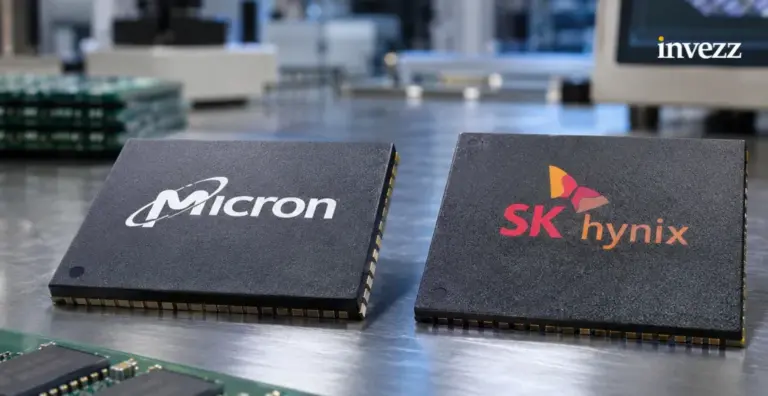
Micron Technology, SK Hynix and SanDisk shares rebounded on Friday as investors returned to technology and artificial intelligence-linked stocks, bringing some relief after a volatile week for the semiconductor sector.

Micron shares MU rose about 1.2% in early trading, while South Korea’s SK Hynix gained around 6% and SanDisk advanced nearly 5.3%.

The recovery extended across the AI trade, with Nvidia, Intel and Advanced Micro Devices (AMD) all climbing higher at open.

Nasdaq opened over 1.5% higher.

However, Friday’s gains came after a steep monthly decline.

Micron has lost more than 35% over the past month, while SK Hynix is down about 24% and SanDisk has fallen 55%.

The recent weakness reflects growing investor anxiety over whether the enormous investment in AI infrastructure will generate sufficient revenue and profits to justify the spending.

Concerns about a Democratic sweep of Congress and the possibility of tighter scrutiny of data centre construction have added to uncertainty around future chip demand.

For memory manufacturers, the central question is whether the current supply shortage and elevated prices can persist as data centre projects face potential delays and customers reconsider how much memory they need.

Analysts warn of mounting memory oversupply risks

BNP Paribas downgraded Micron to Neutral from Outperform earlier this week, warning that the risk of an “oversupply scenario is mounting” in the memory market.

Analyst Karl Ackerman also slashed his price target to $775 from $1,700.

Ackerman expects memory demand to peak earlier than previously anticipated, potentially setting the stage for excess supply as manufacturers bring additional capacity online.

He highlighted permitting delays affecting data centre construction as a significant risk.

The memory and storage industry is “heavily reliant” on data centre projects, with servers accounting for at least half of demand for dynamic random-access memory (DRAM) and NAND flash memory.

If construction is delayed, spending on servers and associated memory could also be postponed.

That would give manufacturers more time to increase supply, potentially narrowing the gap between demand and available capacity.

Another concern is that rising memory prices are prompting technology vendors to reduce the amount of memory used in their products.

Ackerman pointed to Nvidia’s decision to reduce high-bandwidth memory content in its new Vera Rubin Ultra architecture, as well as reductions in memory specifications across personal computers and mobile devices.

The consumer market presents an additional challenge because long-term volume and price agreements are uncommon in the PC and mobile segments.

That makes it harder for memory manufacturers to secure favourable pricing and protect margins when demand weakens.

GF Securities cuts 2027 DRAM price forecasts

Fresh concerns emerged on Friday after GF Securities lowered its forecast for DRAM contract prices in 2027, citing order reductions among Chinese customers.

The Hong Kong-based investment firm now expects quarterly contract price increases of 6%, 3%, 0% and 0% across the four quarters of 2027.

Its previous estimates were 10%, 7%, 5% and 3%, respectively.

The revision reflects weaker demand signals from Chinese cloud service providers, according to data from TrendForce.

In a report published on Friday, TrendForce warned that uncertainty surrounding data centre investment could weigh on DRAM demand over the next two years.

Its base-case scenario sees conventional DRAM contract price increases narrowing throughout 2027, with prices potentially stabilising in the second half before declining in 2028.

A more pessimistic scenario suggests prices could begin falling as early as the fourth quarter of 2027 if server manufacturers reduce procurement and inventories.

TrendForce cited lower server DRAM demand from Chinese cloud providers, potential restrictions on data centre development and expanding production capacity among memory manufacturers.

“The shortage of GPU has led to the server DRAM order cut from Chinese CSPs, affecting ~1% of total DRAM demand, which can be absorbed by US [cloud service providers],” GF analysts wrote in a note to clients.

“Besides, consumer DRAM demand is softer due to the order cut of eSSD and spec downgrade of consumer electronics, which will place downward pressure on consumer DRAM pricing, especially for DDR4.”

Supply constraints could support Micron and SK Hynix

Despite the downward revisions, GF Securities does not expect the memory market to move immediately into a prolonged supply glut.

The firm believes DRAM supply could remain tight until 2028, partly because manufacturers are allocating more capacity towards high-bandwidth memory used in AI systems.

That could encourage major suppliers, including Micron, SK Hynix and Samsung Electronics, to remain cautious about expanding conventional memory production.

“If demand weakness persists and prices roll over, the potential production cut is under consideration, which can better support the LTA floor price,” the analysts added.

“We remain constructive on main DRAM vendors including Micron, SK Hynix and Samsung Electronics, as we see the downward revision more limited and potential production cut to maintain price,” the analysts explained.

The contrasting outlooks leave memory investors weighing near-term demand risks against the possibility that disciplined production and continued AI infrastructure spending will keep supply constrained.

Friday’s rebound suggests buyers are still willing to return to the sector, but the durability of the recovery will depend on whether memory prices and data centre investment can withstand the emerging headwinds.

AI disclosure: AI tools assisted with research and drafting of this piece. An Invezz editor reviewed the facts, sources and wording before publication. Any opinions or analysis are Invezz’s, not those of an automated system.

The post Micron, SK Hynix, SanDisk stocks rise but what’s the verdict on demand outlook? appeared first on Invezz

US stocks opened sharply higher on Friday as investors returned from the Thanksgiving holiday and bought beaten-down technology and artificial intelligence shares.

The Dow Jones Industrial Average rose 507 points, or 1%, at the opening bell. The S&P 500 gained 1.2%, while the Nasdaq Composite jumped 1.5% to kick off a shortened trading day.

All three major benchmarks were headed for strong weekly gains, despite mid-week volatility.

Technology stocks led the advance, with Nvidia rising 3% at the opening bell. Anthropic kicked up 5% in early trading.

AMD, Broadcom and other major AI-linked companies are also sharply recovering some of their recent losses.

The rebound follows a turbulent week on Wall Street, with the Nasdaq 100 briefly touching bear-market territory on Wednesday before recovering.

The week began with a strong rally, with Jensen Huang returning as the CEO of Nvidia. However, the gains soon fizzled as the AI trade continued to unravel.

Concerns about the enormous cost of AI infrastructure, rising borrowing requirements and the ability of companies to generate sufficient returns have weighed on investor sentiment.

“The recovery in stocks seems technical. The questions that caused the market panic are still unanswered,” Kathleen Brooks, research director at XTB, told Reuters. “If these gains can be sustained on Friday, it would suggest that enthusiasm for the AI trade is back.”

“(Investors) felt that the selloff that we saw going into last Friday was overdone. It would be more of a steady push up from here, possibly,” said David Morrison, senior market analyst at Trade Nation.

Asian tech stocks lead global recovery

The buying interest was already visible across international markets before Wall Street reopened.

South Korea’s Kospi surged 4.3% on Friday, supported by strong gains in semiconductor stocks.

Japan’s Nikkei 225 added 2.1%, while China’s Shanghai Composite rose 3.7%.

European markets were also trading higher, with the FTSE 100 up around 0.7%.

The global recovery has offered some encouragement to US investors, although the shortened Black Friday trading session could result in relatively thin volumes.

Fed rate hike bets remain a concern

Meanwhile, markets are still contending with the prospect of another Federal Reserve interest rate increase.

Fed funds futures are pricing in approximately 99% odds of a 25-basis-point hike at the December 9-10 meeting, which would take the target range to 4%-4.25%.

Persistent inflation and stronger-than-expected economic growth have strengthened expectations of further monetary tightening, potentially limiting the scope for a sustained stock market recovery.

Torsten Slok, chief economist at Apollo Global Management, believes the market turmoil provides a strong argument for caution.

“If they look at inflation, they should be hiking. But if you look at the outlook for AI, they should maybe be cutting,” Slok told the Financial Times.

Oil prices are another concern.

Brent crude was trading around a three-week high in the session before paring some gains to reach $95.88 a barrel, while West Texas Intermediate was up over 1% near $84.54.

Prices have gained over several sessions amid attacks on tankers in the Strait of Hormuz and energy infrastructure in Saudi Arabia.

Investors are also assessing the implications of fresh tariff proposals from the Trump administration.

The US has proposed additional duties on imports from 14 trading partners, including China, Japan, India and the European Union, citing concerns over excess industrial capacity.

AI disclosure: AI tools assisted with research and drafting of this piece. An Invezz editor reviewed the facts, sources and wording before publication. Any opinions or analysis are Invezz’s, not those of an automated system.

The post Nasdaq opens 1.5% higher as US equities head for weekly gains despite volatility appeared first on Invezz

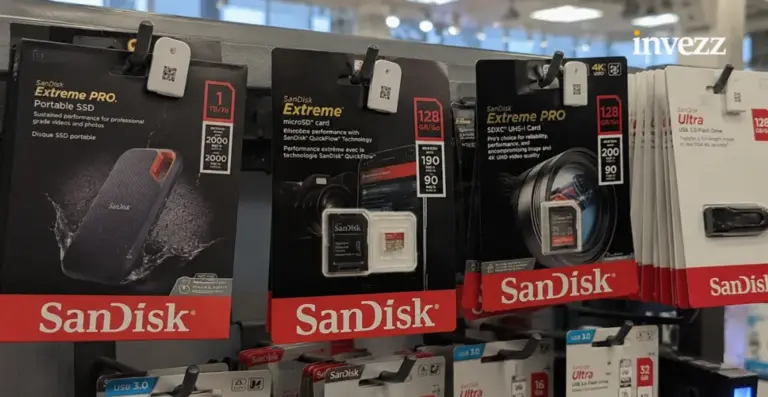
SanDisk (SNDK) shares are pushing higher on Friday after its flash manufacturing partner, Kioxia, showed how solid-state drives could help Nvidia’s AI systems work with much larger datasets.

The November 27 rebound followed a 5.6% drop on Wednesday – which was the last US trading session before Thanksgiving.

What caught investors’ attention was the prospect that AI servers could use more NAND flash to process data, adding another source of demand for the chips SanDisk makes.

SanDisk stock is currently down more than 70% versus its year-to-date high.

Here’s what is behind SanDisk stock’s surge

Kioxia equipped an Nvidia GB200 NVL72 rack with 144 NVMe solid-state drives (SSDs), giving it roughly 1.1 petabytes of raw flash capacity.

Nvidia’s software lets GPUs tap that extra capacity when a dataset is too large to fit in their high-bandwidth memory.

Kioxia estimates the setup could handle up to 2 trillion vectors, numerical representations that AI systems use to find related information.

For SanDisk, the potential opportunity lies in how much NAND flash AI infrastructure could require as workloads grow.

The company shares manufacturing joint ventures with Kioxia, whose agreements run through 2034.

However, the Nvidia demonstration does not establish additional orders for SanDisk.

A broader adoption of SSD-based memory expansion could create another source of NAND demand, but the commercial implications will depend on future deployments and supply agreements.

SNDK shares could rebound sharply in 2027

At Friday’s early price, SanDisk shares were still roughly 42% below their November 2 close on a “split-adjusted” basis.

Its latest earnings give investors a reason to revisit that selloff.

Data-center sales jumped 61% from the prior quarter to $4.8 billion – and SanDisk expects overall revenue to reach at least $12.2 billion in its fiscal second quarter, up from $11 billion.

Management also said long-term agreements cover about half of its planned flash volume for fiscal 2027 and two-thirds for fiscal 2028.

If those commitments translate into shipments at healthy prices, investors could regain confidence in how much of SanDisk’s recent earnings growth it can sustain.

What to look for moving forward?

Kioxia and Nvidia are still evaluating the technology, so the demonstration’s effect on SanDisk’s sales remains uncertain.

The clearest evidence will come from additional supply agreements with large cloud providers and from how much of SanDisk’s revenue growth comes from shipping more flash.

Management said higher prices accounted for about 40% of the latest quarter’s sequential revenue increase, with higher volumes accounting for the rest.

That matters because weaker NAND prices could blunt the earnings benefit even if data centers buy more drives. A sustained recovery into 2027 would be easier to justify if SanDisk Corp keeps growing shipment volumes while protecting its margins.

Note that Wall Street currently has a consensus “Buy” rating on SNDK stock with a bullish mean price target of nearly $264, indicating massive upside potential from here.

The post What’s driving SanDisk stock higher today? appeared first on Invezz

Tesla (TSLA) shares jumped nearly 5% higher in Friday’s trading after Germany’s antitrust regulator disclosed a filing for the electric-vehicle maker to acquire assets from EMAG – a German supplier of precision manufacturing equipment.

The proposed transaction offers a clue to how the EV maker might tackle one of the toughest parts of commercializing Optimus, its humanoid robot.

The same gearing that lets a prototype move smoothly has to work “reliably” across thousands of machines, at a cost customers can justify. EMAG makes equipment designed to help manufacturers do that.

Tesla stock is currently down some 9% year-to-date.

Why EMAG matters for Tesla stock

Germany’s Federal Cartel Office listed the Nov. 23 filing as an asset acquisition under review. The public entry leaves the price and the specific assets involved undisclosed.

EMAG’s specialty is equipment that cuts, shapes and finishes metal parts to exacting tolerances, including the gears and screws used in actuators, the mechanisms that move a robot’s joints.

Bringing some of that expertise in-house could let Tesla’s engineers adjust a part and test how well it can be manufactured without waiting for an outside supplier to retool.

For investors, that offers a practical way to shorten development cycles and gain more control over a critical part of the Optimus supply chain.

How EMAG strengthens long-term case for TSLA

Tesla said in its latest quarterly filing that it was preparing for large-scale Optimus production.

EMAG’s equipment could help with the economics of that ramp. A humanoid robot needs multiple actuators, so a modest saving on each can add up across an entire machine.

Tighter control over machining could also reduce the number of parts that need to be scrapped or reworked, improving factory output without a proportionate increase in spending.

Those gains could give Tesla more room to price Optimus competitively.

The financial payoff still depends on how quickly Tesla can integrate the assets and whether customers find enough work for the robots to justify buying them in volume.

An EU driving vote is the next date to watch

Friday’s rally in TSLA shares also came as a draft European Commission agenda pointed to a possible Dec. 15 vote on Tesla’s supervised driving system.

Approval could widen the market for the software across the European Union, giving Tesla a nearer-term commercial opportunity while Optimus ramps up.

The prospect of a Tesla-SpaceX merger also remained in the background. Both companies have disclosed special committees, and the Financial Times reported this week that advisers are modeling a possible all-stock deal.

For investors following EMAG specifically, the next detail worth watching is which assets Tesla would acquire. That will help establish how much manufacturing capability Tesla could bring in-house and how much it would still need to build.

AI disclosure: AI tools assisted with research and drafting of this piece. An Invezz editor reviewed the facts, sources and wording before publication. Any opinions or analysis are Invezz’s, not those of an automated system.

The post Why Tesla shares jumped 5% on Friday? appeared first on Invezz

Jim Thorne, the chief market strategist at Wellington-Altus, is advising investors to move away from cash and lean heavily into tangible assets as he looks toward the horizon of the U.S. economy. According to Thorne, the current landscape suggests a strong setup for gold stocks, urging those looking for long term growth to position their portfolios now rather than waiting for the peak.

The strategy focuses on a broader shift toward real assets, which Thorne believes will be the most critical place for capital to reside by the early to middle part of 2027. While precious metals like gold and silver are central to this thesis, his outlook extends beyond traditional mining, including industrial staples such as copper in his vision for stability and growth.

Interestingly, Thorne does not limit his definition of hard assets to physical commodities alone. He suggests that cryptocurrency should be thrown into that same basket of protective investments, viewing digital assets as a complementary piece of a diversified portfolio designed to weather economic shifts over the next few years.

As gold and silver prices undergo a period of correction, many mining stocks have followed suit, sliding into territory that some investors view as a prime buying opportunity. While the dip may look attractive on paper, the volatility makes it difficult for newcomers and seasoned traders alike to distinguish between high potential projects and those destined for failure. To address this challenge, industry experts recently gathered at the Gold Advisor Network Summit to provide a roadmap for navigating the current downturn.

Jeff Clark led a panel featuring ten junior mining executives who broke down the essential criteria for picking winners in a crowded field. Rather than focusing solely on raw data, the group emphasized the importance of looking at the people behind the operation. According to the speakers, an investor’s success often depends on evaluating the management team’s track record, their overarching vision for the company, and whether their timeline aligns with realistic production goals.

Among those contributing their insights were leaders from various firms including Newcore Gold, Auro Metals, and Bullfrog Gold. Other perspectives came from representatives at Cascadia Minerals, Dryden Gold, American Pacific Mining, Skyharbour Resources, Scorpio Gold, Visionary Metals, and Pacifica Silver. Together they argued that while geological reports are vital, the ability of a leadership team to execute its plan during lean times is what ultimately separates successful miners from the rest of the pack.

By shifting focus toward operational competence and strategic timing rather than just market hype, investors can better identify which discounted stocks are truly on sale and which are simply reflecting poor fundamentals. As precious metals fluctuate, these executive takeaways serve as a reminder that due diligence remains the most effective tool for mitigating risk in the unpredictable world of resource exploration.

Jared Kushner recently offered a striking assessment of Russian President Vladimir Putin during an appearance on the MD Meets podcast. Speaking with host Mathias Döpfner, the former White House advisor suggested that Putin has demonstrated significant restraint throughout the conflict in Ukraine by opting not to deploy nuclear weaponry. According to Kushner, the Russian leader has provided assurances that such escalation is not his intention, describing the avoidance of nuclear strikes as a major factor in the current state of the war.

Beyond the tactical aspects of the invasion, Kushner spoke highly of Putin’s personal capabilities and strategic mind. He characterized the Russian president as a historic figure and a grand master of politics, noting that regardless of whether one approves of his actions, there is no denying how well prepared he is for high stakes diplomacy. These comments follow several meetings between Kushner and Putin conducted under the umbrella of efforts to mediate an end to the fighting.

Looking toward future diplomatic relations, Kushner indicated that both he and Trump envoy Steve Witkoff believe Putin is genuinely interested in pursuing peace and resetting ties with the United States. While acknowledging that these intentions may be uncertain or difficult to realize, Kushner argued that progress requires a willingness to sit down with adversaries. He maintained that engaging with people you disagree with is the only viable starting point for bringing about meaningful geopolitical change.

Four months into his premiership, Andy Burnham is testing the patience of nearly every political faction in Britain. From pro-EU activists and climate campaigners to fossil fuel lobbyists and welfare advocates, there is a palpable tension as the country waits for the prime minister to commit to definitive moves. Those closest to him call it Andy time, a reference to his penchant for letting conversations drift and pushing back crucial deadlines. Even the unveiling of his cornerstone ten year plan has been repeatedly delayed, leaving critics to wonder if the man leading the country is simply a charming procrastinator.

However, viewing Burnham through the lens of hesitation misses half the picture. While he lingers on grand strategies, he has shown a capacity for sudden, decisive bursts of energy. Within five days of taking office, he established No 10 North in an aggressive move toward decentralizing power. He has simultaneously reopened dormant debates on everything from social care reform to the pensions triple lock while launching quick fire micro policies to address the cost of living crisis. This duality leaves his opponents in a strange position; figures like Kemi Badenoch often find themselves oscillating between accusing him of inertia and claiming he is attempting too much too quickly.

This rhythmic shift appears to be a deliberate rejection of what Burnham calls the ministerial merry go round. Having spent nearly a decade as mayor of Greater Manchester, he watched from the sidelines as Westminster collapsed into a cycle of brief premierships and rushed policies that led only to chaos and spiraling costs. In his view, the frantic pace of recent British politics has been mistaken for productivity when it was actually dysfunction. By treating governance as a journey or a work in progress, Burnham is betting that voters are exhausted by the manic certainty offered by the right wing and are instead craving a more reflective approach.

Whether this deliberateness works depends entirely on the urgency of the problem at hand. To journalists accustomed to daily dramas, his preference for informal brainstorming sessions over immediate declarations can feel maddeningly vague. More critically, some argue that pragmatism is an insufficient response to existential threats like the climate crisis, where gradual steps may not keep pace with rising temperatures and public health emergencies. Still, as Labour maintains its lead in the polls, it seems there is an appetite for this slower gear, suggesting that after years of political whiplash, Britain might finally be ready for someone who takes their time thinking before they act.

Inside a small family run grocery store in the village of Rioja, the air is thick with tension and political disagreement. Between shelves of cured meats and canned goods, three generations of the same family represent the fractured state of the Spanish electorate. While one relative plans to cast a blank ballot out of cynicism toward all politicians and another remains undecided, eighteen year old Alfonso Duque sees only one path forward. For him, the far right Vox party is the only viable option because things simply cannot get any worse.

This sentiment reflects a dramatic transformation in Andalusia, a region that served as a stronghold for the Socialist party for over thirty years. Once defined by its agricultural roots and marginalized working class, the south has pivoted toward a coalition of the conservative People’s Party and Vox. This shift began around 2018 when corruption scandals eroded trust in the Socialists, allowing conservatives to break a longstanding taboo by partnering with the far right to take power. Experts suggest this local alliance normalized Vox’s presence in government, effectively erasing the red line that previously kept ultraconservative narratives on the fringes.

Now, as Spain heads toward national snap elections, Andalusia serves as a blueprint for what may happen across the country. Polls indicate that while the People’s Party leads, they are unlikely to secure an outright majority, leaving them dependent on Vox to govern. The partnership is fraught with ideological friction, particularly regarding women’s rights and gender based violence laws, but for many voters in regions like Andalusia, these concerns are secondary to their desire to oust Prime Minister Pedro Sanchez.

Vox has successfully tapped into widespread anxiety over immigration and establishment politics, accusing the current administration of enabling a migrant invasion. As millions more foreign born residents have settled in Spain during Sanchez’s tenure, Vox has positioned itself as the protector of Spanish identity. Even traditional conservatives now find themselves hardening their own rhetoric to prevent supporters from defecting further to the right. In villages like Rioja, where hope for change outweighs fear of extremism, this alignment feels less like a risk and more like a necessity.