Archive

November 28, 2026

Browsing

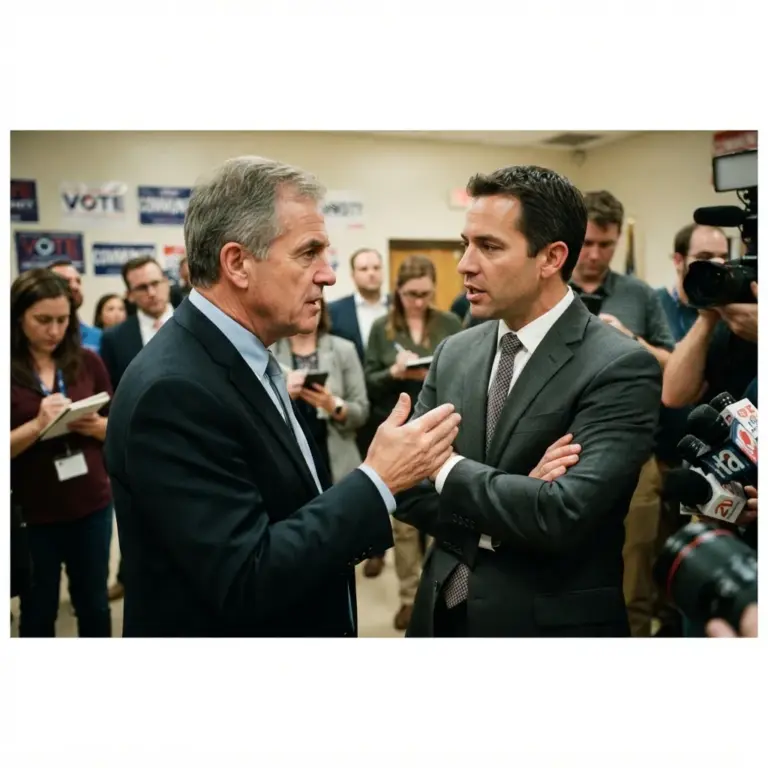
The race for mayor in Alexandria has transformed into a high stakes showdown between two men who once shared a classroom at Southern Law School. Jacques Roy, the incumbent seeking an unprecedented fifth term, finds himself locked in a tight battle with City Council member Malcolm Larvadain. While the two have remained friends over the decades, their visions for the city’s recovery differ sharply, setting the stage for a December 12 runoff that will decide whether the city sticks with established leadership or pivots toward a fresh start.

Roy entered the runoff with momentum after finishing first in the November primary with 48 percent of the vote, narrowly missing the threshold needed to avoid a second round. He is campaigning on a platform of stability and progress, pointing to rising sales tax receipts and a growing budget surplus as evidence that he has cleaned up the municipal mess he inherited four years ago. From expanding the police academy to proposing a transformation of the local mall into an experience driven town center, Roy argues that every major metric of city health is moving upward under his watch.

However, Larvadain believes that familiarity has bred stagnation and that Alexandria requires new perspectives to solve lingering issues. Despite being outspent roughly ten to one during the primary, Larvadain captured 41 percent of the vote, signaling significant appetite for change among the electorate. His campaign focuses on the idea that old problems require new eyes, challenging Roy’s narrative of success especially in light of recent national reports ranking Alexandria poorly regarding crime risks.

The contest carries deep personal and historical weight for both candidates, whose fathers were prominent legal figures in Central Louisiana. For Larvadain, whose family pioneered integration efforts in the city amidst violent opposition, the race is about continuing a legacy of progress. Meanwhile, Roy views his tenure as a successful rescue mission for a city struggling since the closure of England Air Force Base decades ago. With early voting beginning this Saturday, residents must now decide if they prefer Roy’s proven track record or Larvadain’s promise of renewal.
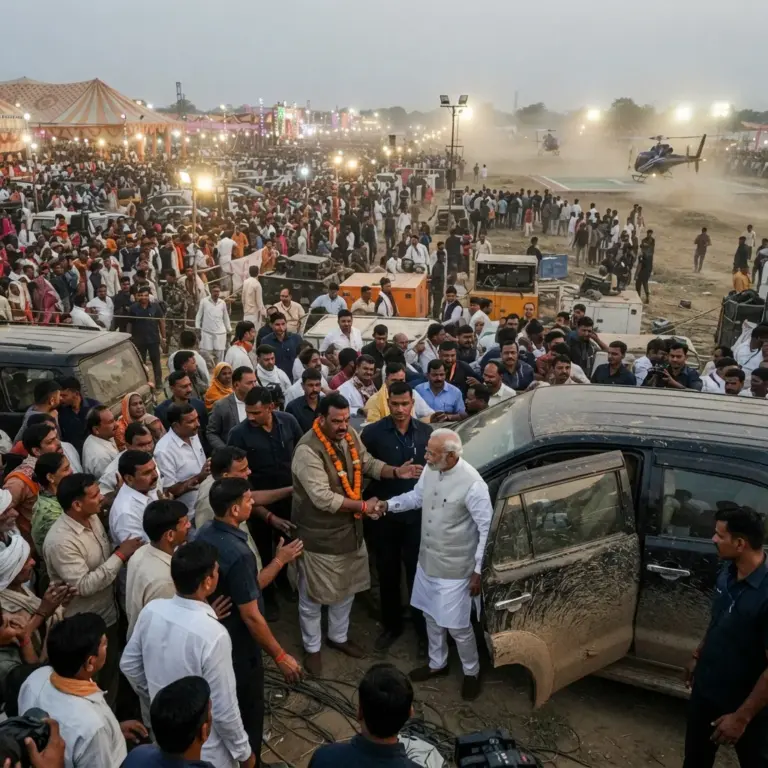

The quiet village of Nadawa was transformed into a sprawling carnival this week as Anant Singh, a powerful and controversial legislator, hosted an opulent wedding for his daughter, Shivangi Singh. The celebration reached a fever pitch on Wednesday, drawing an estimated half a million guests including national politicians and the speaker of the state assembly. To accommodate the massive influx of visitors to the remote area near Patna, six helipads were installed in the village and hundreds of cooks worked tirelessly to prepare over 150 different dishes and millions of pieces of traditional sweets.

The extravagance extended beyond the catering to include cinematic arrivals and high stakes competitions. While Shivangi arrived in a Land Cruiser, her groom, Rishikesh Kumar, was escorted by a staggering convoy of 151 cars. Even the bride’s father managed to steal the spotlight, emerging through the sunroof of an SUV amidst a crowd of cheering supporters. Plans for a grand horse race featuring 52 horses had to be delayed due to overcrowding, though anticipation remained high following promises of luxury SUVs and motorcycles as prizes for the winners.

However, the sheer scale of the nuptials has sparked significant backlash given that Bihar remains one of India’s poorest states. Critics and political rivals have questioned how such an immense fortune could be spent on a single event, with some calling for official investigations into the source of the funds. Reports suggest the groom received gifts totaling millions of rupees in vehicles and precious metals, further fueling discussions about inequality in a region where poverty remains widespread.

Much of the public fascination stems from Anant Singh himself, known locally as Chhote Sarkar or Little Lord. Described as a bahubali or strongman, Singh is as famous for his flamboyant personality—often seen twirling his mustache—as he is for his legal troubles. Despite facing numerous criminal charges ranging from extortion to murder and having served time in prison for weapons offenses involving an AK-47, he maintains a grip on power in his Mokama constituency. As he celebrates his daughter’s union, Singh continues to navigate a precarious balance between political influence and ongoing judicial scrutiny.

Authorities in New Mexico are scouring the region for Rebecca Taylor, a pregnant inmate who managed to flee custody during a routine transfer on Wednesday morning. Taylor, who is facing several theft and burglary charges, was being driven back to the Western New Mexico Correctional Facility in Grants following a prenatal medical appointment in Albuquerque. The escape occurred around 11:35 a.m. when the transporting officers reportedly stopped at a Whataburger restaurant for a meal break.

According to reports, Taylor seized the opportunity while the guards were distracted, unbuckling her restraints and sliding into the driver’s seat of the Dodge Journey SUV used for transport. She sped away from the scene, leaving behind another inmate who was also in the vehicle; that individual quickly exited the car and remains in official custody. While police eventually tracked the stolen SUV via GPS to Albuquerque’s Alamosa neighborhood, Taylor had already abandoned the vehicle and disappeared into the city.

The search intensified late Wednesday after investigators discovered Taylor’s orange prison jumpsuit discarded at an intersection on the west side of town. Law enforcement agencies are now coordinating efforts to track her movements, focusing heavily on Greyhound buses, Amtrak trains, and other forms of public transit. Officials noted that since Taylor has known connections to both Albuquerque and Texas, they are expanding their perimeter beyond state lines.

Public safety officials have urged residents to remain vigilant but cautioned against attempting to apprehend Taylor themselves. Because fugitives can be unpredictable when cornered, anyone who believes they have spotted her is instructed to avoid contact and immediately notify emergency services by calling 911.

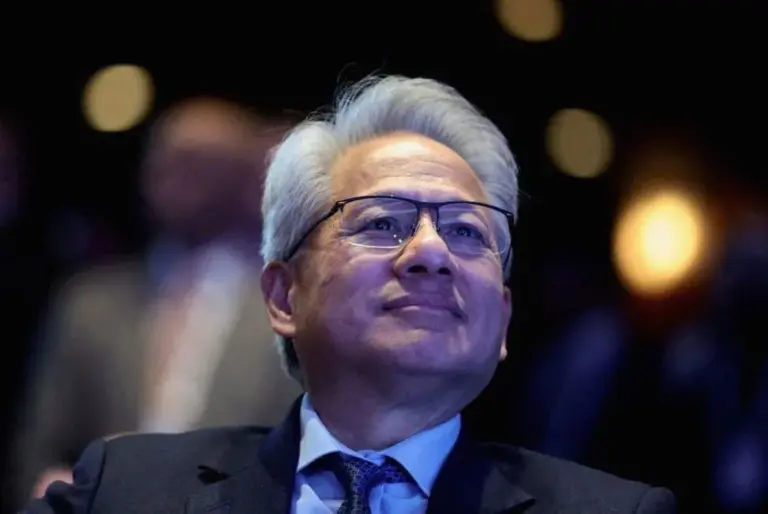
The sudden reinstatement of Nvidia CEO Jensen Huang has ignited a fierce debate over whether the world’s most powerful executives are effectively above the law. Only a short time ago, Huang stepped down after admitting to violating company policy through an extramarital affair with a woman suspected of being a Chinese spy, alongside reports of another relationship with a subordinate. In an era where CEOs from companies like McDonald’s were ousted for similar consensual lapses, Huang’s unanimous return via a board vote marks a startling departure from recent corporate standards.

The comeback was propelled by an intense pressure campaign involving high profile tech allies and President Donald Trump. While the Nvidia board cited government assurances that Huang posed no national security risk, they notably avoided mentioning the sexual misconduct allegations during the announcement. President Trump leaned into the controversy with characteristic flair, suggesting that sex sells and posting a provocative parody image of Huang. This public endorsement has led critics to argue that such rhetoric validates a culture where power serves as a shield against accountability.

Advocates for workplace equity and legal experts say this move signals a dangerous regression toward pre MeToo norms. Attorney Cheyenne Hunt noted that reinstating a leader under these circumstances sends a chilling message to female employees that boundaries can be ignored if the man in charge is influential enough. Professors of organizational behavior warn that because relationships between supervisors and subordinates often involve inherent coercion, ignoring these violations undermines years of progress in creating safe work environments.

Inside Nvidia, the reaction remains deeply polarized. Some employees welcomed Huang back with chants and petitions, driven by fear that the company’s stock and AI dominance depended solely on his singular vision. During a livestreamed meeting, Huang apologized for his mistakes and mentioned he is attending therapy, while simultaneously cautioning staff that others should not expect similar forgiveness for code violations. Despite these pleas for humility, observers suggest the event confirms that in the cult of tech genius, technical brilliance outweighs ethical consistency.

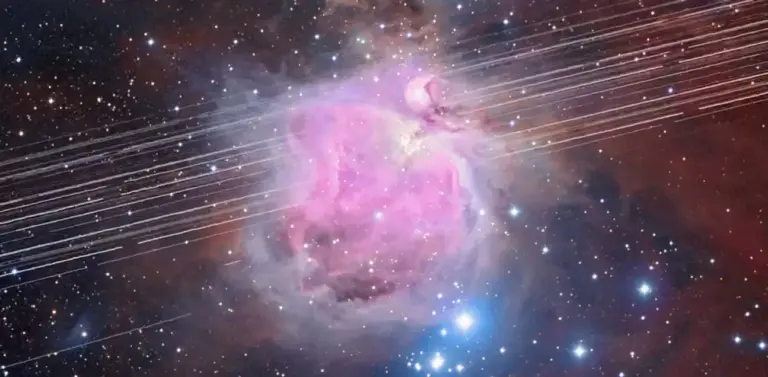
The federal government has given SpaceX a green light that could fundamentally alter the appearance of the night sky and the chemistry of our atmosphere. In a move reflecting a shift toward lighter environmental oversight under the Trump administration, the Federal Communications Commission has approved plans for Starmind, a massive network of one million artificial intelligence data center satellites. By moving heavy computing tasks off planet Earth and into solar powered orbital hubs, Elon Musk aims to solve the resource drain associated with terrestrial data centers, though critics argue he is simply trading one set of environmental problems for another.

Astronomers warn that the sheer scale of this project would dwarf existing constellations like Starlink. To maintain such a fleet, SpaceX would need to launch and subsequently decommission roughly 500 satellites every single day. This creates a daunting logistical cycle where tons of aluminum, titanium, and lead would regularly burn up upon reentry. Experts are particularly concerned about alumina deposits in the upper atmosphere, which could potentially deplete the ozone layer and increase the amount of harmful ultraviolet radiation reaching the ground.

Beyond the atmospheric risks, the visual impact on humanity’s relationship with the cosmos would be profound. With millions of seventy five meter wide structures orbiting overhead, observers would likely see hundreds of bright streaks crossing the horizon at any given moment, erasing the pristine darkness enjoyed by previous generations. There is also the looming threat of Kessler Syndrome, a catastrophic chain reaction where colliding satellites create clouds of debris that trigger further crashes, potentially rendering low Earth orbit impassable for decades.

Despite these concerns, the FCC appears eager to embrace the vision, even citing science fiction concepts like becoming a Kardashev II civilization in its justifications. However, skeptics question whether the laws of physics and economics will allow Starmind to ever fully materialize. Cooling high performance processors in a vacuum is notoriously difficult, often requiring significant downtime to shed heat. Coupled with an AI market that many believe is currently in a speculative bubble, some wonder if this ambitious celestial architecture will remain a theoretical exercise rather than an orbital reality.

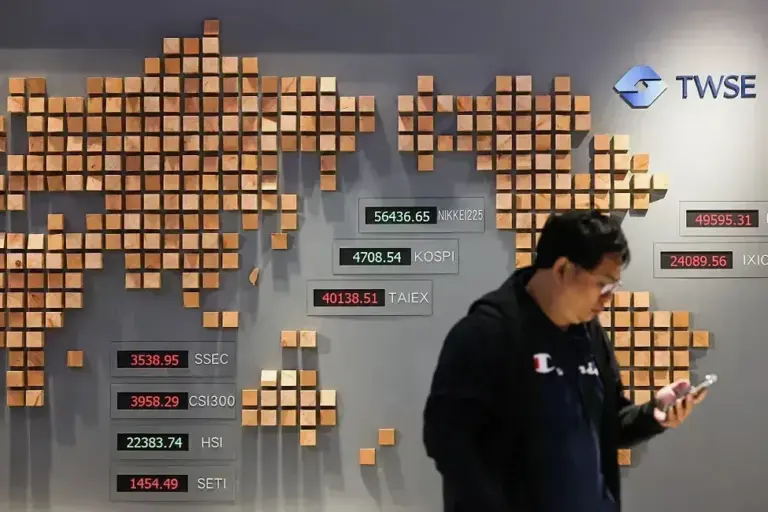
Nvidia has instructed its primary manufacturing partners, including industry heavyweights Dell and Super Micro, to immediately halt the shipment of servers to several Southeast Asian nations. This sudden freeze affects deliveries heading into Malaysia, Singapore, Thailand, and Indonesia while the company conducts a thorough internal assessment of whether its regional partners are strictly adhering to United States export laws.

The move comes as Washington tightens its grip on high end artificial intelligence hardware to prevent sensitive technology from reaching Chinese hands. For some time, firms in China have bypassed direct trade restrictions by accessing Nvidia chips remotely through data centers located across Southeast Asia. This strategic workaround created a significant loophole that allowed Beijing to maintain its momentum in the global AI race despite official sanctions.

Earlier this month, the US Commerce Department moved to close this gap, though reports suggest the decision was made with some hesitation. The scale of the issue is substantial, with figures from the Institute for Progress suggesting that these remote hubs provide roughly twenty four percent of all AI computing power currently available within China.

By pausing shipments now, Nvidia appears to be attempting to get ahead of potential regulatory penalties and ensure full compliance with federal mandates. While the duration of the hold remains unspecified, the disruption signals a hardening stance toward third party distribution channels that may inadvertently serve as conduits for restricted technology transfers.

While the public usually sees them through the lens of stock prices and product launches, some of the world’s most powerful business leaders spent this Thanksgiving stepping away from the spreadsheets to share a more human side. From social media posts on X to reflections on LinkedIn, CEOs and investors swapped corporate jargon for messages of kinship and relief, proving that even those at the top of the economic ladder find their greatest value in things money cannot buy.

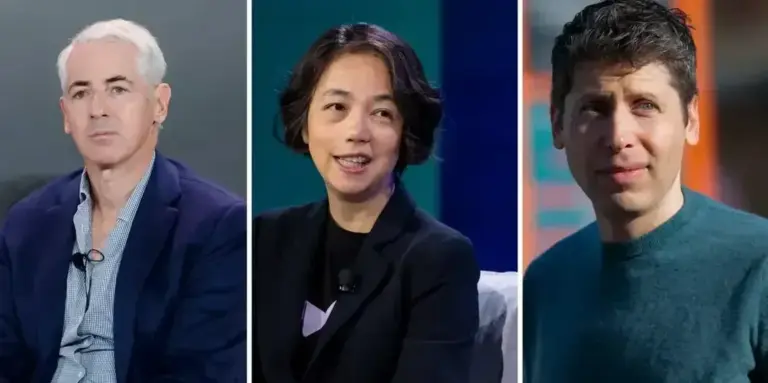
For many, the focus was squarely on family and health. OpenAI CEO Sam Altman reflected on the simple joys of fatherhood, noting that while most activities lose their luster over time, spending mundane evenings with his children only gets better. In a more poignant tribute, billionaire investor Bill Ackman used the occasion to thank healthcare workers who saved his daughter after she suffered a severe brain hemorrhage earlier this year, praising the immense personal sacrifices made by medical professionals.

The spirit of gratitude also extended toward the workforce and innovation. Coinbase CEO Brian Armstrong described current times as a golden age for builders, expressing his thanks for the rapid evolution of technology. Meanwhile, AMD CEO Lisa Su shared a festive photo with her turkey alongside praise for her global team and partners. Even Elon Musk joined in, crediting Tesla’s success directly to its customer base, while Apple’s Tim Cook focused on the employees and friends who sustain him.

Adding a touch of levity to the digital wave of sentiment, Apple cofounder Steve Wozniak shared a photograph of dinner with early investor Mike Markkula. True to form for a man synonymous with one of history’s biggest brands, Wozniak joked that the dessert choice was naturally apple pie. Whether reflecting on spiritual faith like former Intel CEO Pat Gelsinger or emphasizing human connection amidst global turmoil like Ray Dalio, these leaders highlighted a universal truth that transcends industry status during the holidays.