Archive

November 15, 2026

Browsing

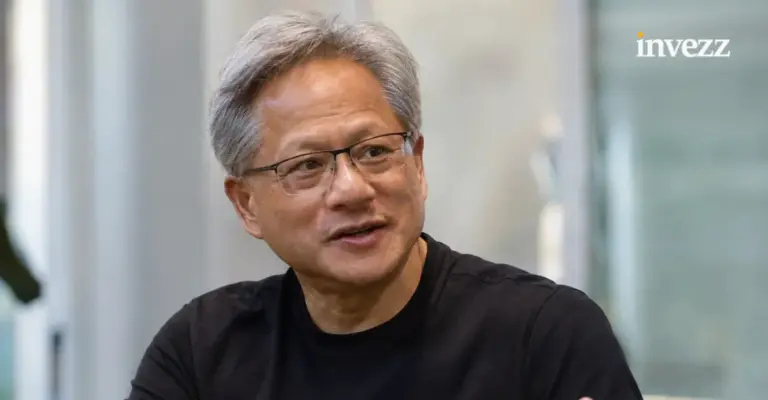
Nvidia NVDA shares edged higher in premarket trading on Friday, recovering slightly after a sharp selloff tied to the abrupt resignation of longtime CEO Jensen Huang.

The stock was up 2% ahead of the opening bell after closing Thursday at $166.19, down 4.3%.

That followed deeper losses earlier in the week as the leadership crisis intensified.

Trading has been volatile, with the stock hitting lows near $149 in the previous session before recovering.

Investors have been rattled by uncertainty over succession and the broader implications for Nvidia’s dominant position in artificial intelligence chips.

Colette Kress, the company’s former finance chief, has taken over as interim CEO while the board searches for a permanent replacement.

The premarket bounce suggests some dip-buying after the heavy selling, although shares remain well below recent highs.

The broader market was also in green in futures trading, with technology stocks continuing to reflect caution around the AI sector.

Opinions divided over Nvidia’s short-term recovery

Wall Street analysts have responded with caution, with several warning that the leadership turmoil could weigh on the stock even as Nvidia’s underlying business remains strong.

“Nvida’s competitive advantage and customers don’t disappear overnight,” Seth Hickle, chief investment officer at Mindset Wealth Management, told Reuters.

“The market is trying to determine whether this is a temporary leadership crisis or something that fundamentally changes the AI investment thesis.”

Hickle said implied volatility would likely remain elevated until Nvidia’s earnings report and subsequent conference call provide more clarity about the company’s plans following the leadership change.

Lior Prosor, managing partner at deep-tech venture capital and private equity fund Deep33, also expects continued uncertainty in the near term.

“In the short term, we expect the market to remain jittery. Investors will want clarity on permanent leadership and several quarters of evidence that NVIDIA continues to execute against its roadmap and delivery expectations,” Prosor told Yahoo Finance.

“Until then, even if the stock looks increasingly cheap on fundamentals, it may take time before buying that discount becomes an easy trade.”

Ryan Zurrer, founder and director of investment firm Dialectic, sees the selloff differently and considers the lower valuation an opportunity.

“You’re buying this thing at 10 times forward-looking earnings for a company that, for all intents and purposes, seems irreplicable in the global AI infrastructure base,” Zurrer was quoted as saying by Yahoo Finance.

Analysts downgrade Nvidia

Several analysts have either downgraded Nvidia shares or reduced their price targets following the latest developments.

Bernstein analyst Stacy Rasgon cut his price target from $400 and downgraded the stock from Market Outperform.

However, he maintained that the company’s underlying business remained strong despite the leadership turmoil.

“Fundamentals of the business (if not the leadership) are clearly still intact with numbers that remain massive (and probably still headed higher). We don’t think the company should have huge issues operating while engaged in a search for new leadership. And (of course) the shares are almost absurdly cheap (and getting cheaper as we speak); clearly there is a lot of bad news getting priced in here,” he said.

He nevertheless cautioned against making a large investment in the stock at this stage.

“On the other hand, we find it hard to advocate stepping in here in size as there will no doubt be more allegations to come,” he said.

William Blair’s Sebastien Naji downgraded Nvidia to Market Perform from Outperform, citing concerns about the potential impact of the controversy on the company’s shares.

Naji believes the developments could remain a significant overhang on Nvidia stock in the near term.

“Meanwhile, the potential for a slower AI buildout and more intense competition from other chipmakers will only add to execution risk…governance and regulatory pressure, the potential for more serious fallout, and a sudden change in management are likely to muddle both execution and sentiment,” he said.

Oppenheimer analyst Rick Schafer also downgraded Nvidia to Perform from Outperform.

“While we see upside to the F3Q (Oct.) print and F4Q (Jan.) outlook, we expect fundamentals to take a backseat near term. The departure of Mr. Huang could, in our view, translate to a lingering share overhang,” Schafer said.

Despite the downgrades and price target reductions, analysts continue to highlight Nvidia’s strong AI product pipeline and long-term demand as supporting factors, even as they flag near-term governance and succession concerns.

Allegations keep coming

Alice Huang, an executive at Singapore-based Megaspeed whom US authorities have suspected of links to Chinese intelligence, was reported to have connections with China’s Huawei, which has been blacklisted due to security concerns.

Jensen Huang was reportedly involved in a romantic relationship with the suspected Chinese agent.

Additional reports have emerged of a second relationship with Kimberly Powell, Nvidia’s vice president of healthcare, who reported to Huang.

On Thursday, Reuters reported that Huang had an intimate relationship with yet another Nvidia employee, citing people familiar with the situation.

Huang will be testifying before Congress ahead of the Thanksgiving holiday.

Nvidia is scheduled to report fiscal third-quarter earnings on 17 November, having previously forecast revenue of approximately $108 billion.

The post Nvidia shares edge up on Friday: is the worst over? appeared first on Invezz

Palo Alto Networks shares surged 3% in premarket trading on Friday after KeyBanc Capital Markets upgraded the cybersecurity company, citing expectations of stronger security spending and its position in the market for artificial intelligence protection.

KeyBanc raised its rating on Palo Alto Networks (PANW) to Overweight from Sector Weight and assigned a price target of $380.

The upgrade comes ahead of the company’s fiscal first-quarter earnings report, scheduled for November 18.

The new target implies approximately 18% upside potential from Thursday’s closing price.

The upgrade follows a roughly 20% decline in Palo Alto Networks shares over the past month.

KeyBanc said the pullback, alongside positive checks on the company’s first-quarter performance, had created an attractive entry point.

KeyBanc sees stronger cybersecurity spending through 2027

KeyBanc analyst Eric Heath said the firm expects security budgets to accelerate through 2027, which could benefit Palo Alto Networks.

In a note to clients, Heath said the company was well positioned to benefit from the trend towards consolidation in cybersecurity, supported by its product offerings in areas including AI security.

He also pointed to the growing need for businesses to defend against threats associated with the accelerating adoption of artificial intelligence.

Heath said Palo Alto Networks was executing better than many of its cybersecurity peers, adding that the firm’s positive first-quarter checks supported the decision to upgrade the stock.

The analyst also highlighted the recent share-price decline as a factor behind the improved investment opportunity.

Investors await Palo Alto Networks’ quarterly results

Investors will now focus on Palo Alto Networks’ fiscal first-quarter results, due on November 18, for further indications of demand across its cybersecurity business.

Analysts expect the company to report earnings of $0.97 per share on revenue of $3.31 billion, according to consensus estimates cited by Seeking Alpha.

The results could provide further insight into the company’s ability to benefit from increased security spending and demand for solutions that protect businesses as they adopt AI technologies.

Palo Alto Networks provides network, cloud, and security operations solutions.

The company serves more than 80,000 enterprise customers worldwide, including over 75% of the Global 2000.

Its position across several areas of cybersecurity has also attracted attention from market commentators.

CNBC’s Jim Cramer recently expressed confidence in Palo Alto Networks and CrowdStrike Holdings, saying he preferred the two companies over Netskope, another cloud security platform.

Cybersecurity stocks remain in focus

The KeyBanc upgrade comes as investors assess which cybersecurity companies are best positioned to benefit from changing enterprise security requirements.

The increasing use of AI creates opportunities for security providers, while also introducing new threats that businesses need to address.

KeyBanc’s outlook rests partly on the expectation that companies will increase their security budgets through 2027 and that Palo Alto Networks will continue to execute ahead of many of its peers.

However, investors will be looking for confirmation of these trends in the company’s upcoming results.

The November 18 earnings report will therefore be an important near-term event for the stock, as investors assess revenue performance, earnings, and management’s outlook against expectations for stronger cybersecurity spending.

AI disclosure: AI tools assisted with research and drafting of this piece. An Invezz editor reviewed the facts, sources and wording before publication. Any opinions or analysis are Invezz’s, not those of an automated system.

The post Palo Alto Networks stock rises as KeyBanc upgrades shares to Overweight appeared first on Invezz

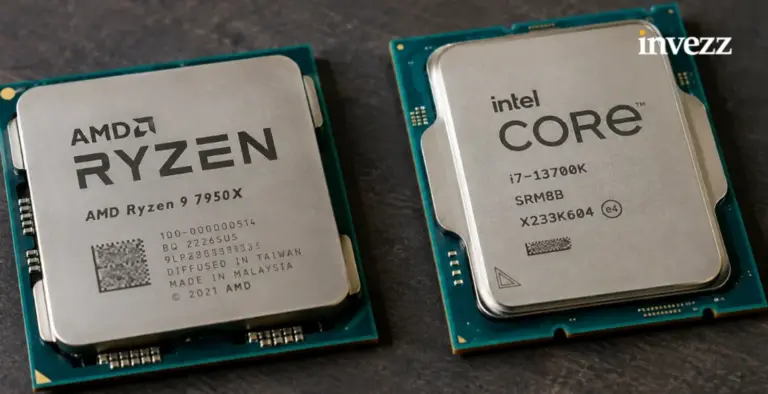
AMD and Intel shares fell sharply on Friday as technology stocks came under pressure, with investors assessing inflation data and uncertainty surrounding Nvidia’s leadership.

AMD shares plunged more than 9%, while Intel declined around 6%.

Nvidia shares also dropped 3%, contributing to broader market losses.

The S&P 500 fell around 0.73%, while the Nasdaq Composite declined over 1.2%.

Despite the selloff, analysts remain constructive on AMD’s competitive position in the artificial intelligence (AI) chip market, pointing to its growing product portfolio, expanding data-center business and opportunities arising from Nvidia’s leadership uncertainty.

Inflation data initially lifts equities before reversal

US equities initially moved higher after October’s producer price index (PPI) report showed wholesale prices increasing 0.3% month over month, below the 0.4% increase expected by economists polled by Dow Jones.

However, the report also showed producer prices rising 6.5% year over year, marking the largest annual increase since November 2022.

The inflation figures added to an uncertain backdrop for technology stocks, which subsequently reversed their initial gains.

Nvidia’s leadership uncertainty also remained in focus following reports surrounding the potential departure of CEO Jensen Huang.

The development raises questions about the company’s strategic investments, including its $5 billion investment in Intel in September 2025.

Nvidia formed a partnership with Intel to integrate the latter’s central processing units (CPUs) with its own graphics processing units (GPUs).

Based on Intel’s Thursday closing price of $61.20, Nvidia’s investment is now worth more than $13.14 billion.

Although the investment has generated substantial gains, Nvidia is not under immediate pressure to sell its stake.

A potential divestment could also attract scrutiny from the Trump administration, which views Intel as an important player in US semiconductor manufacturing.

Recent analyst calls on the company have been mixed. Bank of America, RBC Capital and Barclays all kept hold ratings on the stock in recent updates.

Bank of America slashed its target price from $100 to $80.

Analysts see AMD gaining ground against Nvidia

Despite AMD’s share price decline, Seaport Research analyst Jay Goldberg sees the company as an increasingly credible competitor to Nvidia.

Speaking to CNBC on Friday, Goldberg said AMD now offers “formidable products” that compete more effectively with Nvidia.

Goldberg believes uncertainty surrounding Nvidia could accelerate efforts by customers to diversify their chip suppliers.

While he stopped short of suggesting that Nvidia had lost its dominant position, he argued that AMD had progressed beyond simply establishing a foothold in the market.

Prime Capital Financial CIO Will McGough also sees opportunities for AMD and Broadcom as Nvidia navigates its leadership transition.

Speaking to CNBC on Friday, McGough highlighted Anthropic’s use of AMD chips and said the market was reassessing Nvidia’s competitive advantage as alternative suppliers improve their offerings.

He also pointed to Alphabet’s Google, Amazon, and Chinese chipmakers developing their own silicon, potentially creating additional competition for Nvidia while opening opportunities for AMD.

Data-center growth could support AMD’s expansion

Counterpoint Research’s latest analysis also highlighted AMD’s growing position in the data-center market.

Counterpoint expects the data center segment to contribute more than 80% of AMD’s revenue in 2027, with estimated data-center revenue reaching approximately $77 billion.

The firm also noted that AMD’s fourth-quarter revenue guidance of around $17 billion was approximately $800 million above consensus estimates.

Data-center revenue is expected to increase around 50% sequentially.

Counterpoint expects AMD’s server business to roughly double in 2027, while AI-related data-center revenue could more than double.

The research firm said AMD’s current advantage over Intel in data centers primarily comes from AI GPUs and racks rather than CPUs.

However, it expects meaningful gains in x86 server market share in 2027.

AMD has also secured supply from Taiwan Semiconductor Manufacturing Company to support its projected expansion.

AI disclosure: AI tools assisted with research and drafting of this piece. An Invezz editor reviewed the facts, sources and wording before publication. Any opinions or analysis are Invezz’s, not those of an automated system.

The post AMD falls 9%, Intel drops 6% as chip stocks slide on Friday appeared first on Invezz

The artificial intelligence investment boom has developed a familiar pattern: a new threat emerges, technology stocks sell off, and investors soon begin buying the dip.

DeepSeek’s arrival in January 2025 challenged assumptions about the cost of developing advanced AI.

Nvidia fell nearly 17% in a day, losing about $593 billion in market value, before recovering around 8% the next session.

During the tariff turmoil in April 2025, the Nasdaq-100 suffered its fourth-worst two-day loss since 2007, before recording its second-best single-day gain over the same period on April 9, after the White House announced a 90-day pause in reciprocal tariffs.

More recently, the Nasdaq Composite fell 5.5% on November 5 as investors worried that Democratic victories in the US midterm elections could slow data-centre construction.

The index rebounded 2.7% on November 9, although falling oil prices also helped lift broader markets.

The rebounds have not erased all losses.

But the sequence captures the trade’s central tension: investors believe AI could transform businesses while questioning the valuations and financing behind it.

Why does the AI trade keep coming back?

For Louisa Loran, an executive adviser and global business strategist who previously worked at Google, the answer begins with demand.

“The AI investment boom has faced several existential threats, but none of them has touched what investors are actually betting on, which is use,” she said.

DeepSeek’s low-cost models raised concerns that cheaper systems could undermine the economics of US AI developers and reduce demand for high-end chips.

Loran argues that lower costs could instead encourage wider adoption.

“DeepSeek made AI cheaper, and lower access cost has always increased uptake in an industry, so it strengthened the case for adoption rather than weakening it,” she said.

Adoption, however, is not yet translating consistently into corporate profits.

A McKinsey survey published in August 2026 found that 80% of respondents said AI had improved individual productivity, while 37% reported at least some contribution to their organisation’s earnings before interest and taxes.

Loran said she had seen this lag while working with Google customers.

“Infrastructure scales at the speed of capital, while returns arrive at the speed at which organisations change how they work and make decisions,” she told Invezz.

Companies may build infrastructure before redesigning processes and training staff to capture its benefits.

Harry Hamann, founder of investment research firm InvestWealth, offered a financial explanation.

He said the market scares had not broken the revenue and cash-flow engines funding the largest technology companies.

The biggest spenders, he argued, have financed much of the build-out from existing businesses, allowing infrastructure orders to continue despite falling share prices.

Hamann separates short-term market movements from longer-term fundamentals.

“Over days, it is mostly positioning: crowded holdings, leverage and options hedging turn a headline into a 5% to 15% move. Over quarters, fundamentals decide, which is why every dip so far has been bought,” he told Invezz.

While Hamann’s framing relies on broad market mechanics rather than a quantitative decomposition of each pullback, it highlights a key divide between short-term trading and long-term capital allocation.

Why are trillion-dollar companies swinging so violently?

The dollar sums involved can make moves appear unprecedented.

A 5% decline in a company valued at $5 trillion erases $250 billion in market value.

But market capitalisation is the share price multiplied by all outstanding shares; a fall in that figure does not mean an equivalent amount of cash has left the stock.

The percentage moves still matter. Franklin Templeton Institute estimated that hyperscalers and AI-adjacent companies together made up nearly 46% of the S&P 500’s market value as of September 30, 2026.

The figure includes companies supplying or adopting AI, not just businesses that sell AI products.

That concentration means a change in sentiment towards AI can affect a significant share of the broader market.

It can also magnify crowded trades, momentum strategies and leveraged positions.

The Bank of England’s July 2026 Financial Stability Report said high concentration, correlated momentum-driven positions and increased leverage could amplify a fall in AI-related share prices if investors reassessed the sector’s earnings prospects.

Options-market data provide a clearer picture of how investor positioning changed as technology stocks came under pressure.

In a November 2 analysis, Cboe Global Markets found that the proportion of stocks among the S&P’s top 100 showing inverted call skew — a sign of unusually bullish options sentiment — had fallen from 44% in early October to 10%.

At the same time, retail put buying in mega-cap technology stocks on Cboe’s exchanges reached a year-to-date high, accounting for 34% of retail opening trades, compared with an average of 24%.

The figures suggested that investors were moving away from bullish bets on further gains and increasingly seeking protection against potential declines.

That shift became more pronounced during the November 5 sell-off.

In a follow-up analysis published on November 9, Cboe found that increases in S&P 500 put skew and put convexity accounted for 5.5 points of the 11.5-point increase in the VIX that day.

Yet the rise in hedging demand did not translate into widespread expectations of a broader market sell-off.

Cboe’s COR1M implied correlation index reached just 22% on November 5, compared with a historical average of around 70% on days when the S&P 500 fell 4% in a session over the previous two decades.

Five of the 11 S&P 500 sectors also finished the week higher.

Cboe said the options market was still pricing a rotation out of AI and technology stocks rather than a broader market contagion.

The data point to a sharp change in investor positioning and demand for downside protection, but do not establish that options trading caused the underlying share-price declines.

These mechanics help explain why a headline can produce a larger move than the immediate change in earnings outlook.

Still, explaining the market mechanics behind violent swings does not prove that underlying valuations are safe from fundamental shocks.

On November 12, Nvidia shares tumbled as much as 14.3% intraday following CEO Jensen Huang’s sudden resignation amid an internal conduct and security probe.

Yet the stock recovered to close down just 4.3% after CFO Colette Kress was named interim CEO—while rival chipmakers AMD and Broadcom surged roughly 6% on the day.

That intraday reversal underscored how quickly governance uncertainty can be repriced in a central AI stock without breaking broader appetite for the sector’s hardware.”

Nor are large percentage declines in major indices unprecedented. The Nasdaq Composite fell 12.3% on March 16, 2020, during the Covid-19 market shock.

What makes today’s moves striking is the enormous market value attached to a concentrated group of AI-linked companies, not proof that markets have entered an entirely new category of volatility.

When does volatility become dangerous?

A share-price fall is not automatically a financial-stability event.

The risk grows if an AI repricing undermines debt used to finance data centres and chips, or spreads losses to lenders.

Professor Iwa Salami, professor of financial law and regulation at the University of East London, said both business concerns and investor behaviour contribute to volatility.

Worries about profits can trigger selling, while crowded ownership, borrowing and rapid efforts to reduce risk can intensify declines and affect the wider market.

Salami said a more serious warning would be companies spending heavily on AI for years without generating sufficient returns.

“Falling profits, mounting debt or a lasting drop in AI investment would be more worrying than a short-term fall in share prices. Regulators should also watch whether losses spread to banks and other financial institutions,” the professor told Invezz.

That concern is reflected in official assessments.

A survey of 20 market contacts included in the Federal Reserve’s May 2026 Financial Stability Report identified concerns about AI-related equity valuations and capital expenditure increasingly funded by debt.

The report clarified that these responses reflected the views of survey participants, not those of the Federal Reserve Board or the New York Fed.

The Bank of England said AI-related companies’ use of credit markets had accelerated rapidly, spanning public markets, private credit, leveraged finance and structured finance.

It described the pace of investment as historically unprecedented, although it found little evidence so far that AI financing was crowding out other borrowers.

It warned that declining hyperscaler free cash flow and increasingly complex financing arrangements could create risks if earnings disappoint or refinancing conditions worsen.

The Bank for International Settlements said financial-stability risks from the AI boom appeared moderate, but warned that its sustainability hinged on companies meeting high earnings expectations.

It also noted that equity prices had moved considerably ahead of debt-market valuations.

The AI trade has so far survived shocks to assumptions about model costs, trade policy and political support for infrastructure.

But resilience should not be confused with immunity.

AI may become more widely used even if some companies have overbuilt, borrowed too heavily or paid too much for infrastructure.

The technology can succeed while particular investments fail.

For investors, the question is whether companies financing AI’s expansion can earn returns that justify the capital committed.

For regulators, it is whether the debt links built around it could transmit a correction into the wider economy.

The next scare may pass, as previous ones have. The test will be whether the cash flows and financing behind the build-out remain intact.

AI disclosure: AI tools assisted with research and drafting of this piece. An Invezz editor reviewed the facts, sources, and wording before publication. Any opinions or analysis are Invezz’s, not those of an automated system.

The post Why the AI trade is hard to kill, but easy to frighten appeared first on Invezz

Walmart and Target will report quarterly earnings next week, giving Wall Street a closer look at how American households are spending as holiday shopping gathers pace.

Shoppers face familiar choices: switch to cheaper groceries, postpone buying a household appliance or wait for a discount before purchasing gifts. Those decisions can lift sales while squeezing profit on each purchase.

Target reports on Wednesday, 18 November, followed by Walmart on Thursday, 19 November.

Investors will be watching not simply how much consumers spend, but who is spending, what goes into their baskets and how much money retailers keep.

More spending does not always mean stronger households

A larger checkout bill is not necessarily a sign of prosperity. Prices can rise while customers buy fewer products, and stronger spending by wealthy households can conceal weaker demand elsewhere.

Alvarez & Marsal’s consumer survey, released on 12 November, illustrates that divide.

The consultancy surveyed over 2,000 US consumers in late August and early September, finding that higher-income households planned to spend more over the holidays while lower-income respondents expected cuts across every holiday category.

“Dollars are likely to rise with prices and affluent spending, even as most households plan to do less,” the firm’s Fall 2026 Consumer Sentiment Survey concluded.

That is a forecast about shopping intentions, not a measure of purchases already made. It also helps explain why two retailers reporting growing sales might be serving very different customers.

The survey found that 49% of respondents wait for promotional events such as Black Friday or Cyber Monday, at least for big-ticket items.

Among shoppers trying to reduce grocery expenditure, 39% planned to switch to cheaper brands within their usual store.

The same shopper poses different tests for Walmart and Target

Walmart’s previous quarter offered one useful starting point. US comparable sales excluding fuel increased 2.6%, supported by 1.5% more transactions and a 1.1% higher average ticket.

The question next week is whether customers keep visiting and add toys, clothing and other discretionary goods alongside everyday essentials.

Target’s latest comparable sales grew 3.8%, driven mainly by a 3.6% rise in traffic rather than substantially bigger baskets.

Investors will look for repeat visits, demand across its merchandise categories and evidence that promotions are driving profitable purchases.

Comparable sales broadly capture growth from established stores and relevant online sales, rather than expansion through new outlets.

Each retailer has its own definition, making traffic, ticket size and the mix of products important alongside the headline percentage.

The discount that wins a shopper can prove costly. Gross margin measures the proportion of sales remaining after the cost of merchandise.

Aggressive markdowns might bring customers through the door while leaving less profit behind, particularly if retailers also carry excess inventory.

“Consumers are making discretionary trade-offs and starting their holiday shopping earlier,” said Mark Chambers, EY Americas retail sector leader.

Early promotions might encourage additional purchases. Equally, they could simply pull December spending into November, making holiday sales difficult to interpret until the full season has passed.

Walmart and Target therefore face a shared test of profitability, not an identical test of demand. Walmart needs to show that its value proposition produces earnings growth.

Target must demonstrate that more visits and appealing offers translate into sustainable margins.

A resilient consumer can still disappoint Wall Street

Caution does not mean Americans have stopped shopping.

“People express frustration and anger and disappointment — and then they go out and shop,” Eric Fisch, HSBC’s US head of retail and apparel, told Vogue Business.

That gap between mood and behaviour helps explain the National Retail Federation’s October forecast: holiday sales would rise 4.2% to $1.013 trillion during November and December.

The estimate excludes automobile dealers, petrol stations and restaurants, and concerns dollar sales, not the number of items bought.

Nor is every purchase an endorsement of a retailer’s pricing power.

Shoppers might spend on food and seasonal necessities while delaying furniture or electronics, or buy premium gifts only after sacrificing everyday extras. Changing categories can matter as much as the total bill.

Stock investors face expectations. A retailer could deliver solid growth yet disappoint if its share price already anticipates stronger results.

Another could rally on modest improvement if investors had feared worse.

Next week’s earnings will provide clues through comparable sales, transaction counts, gross margins, inventory and holiday guidance.

Management comments on promotions will matter especially: are retailers winning additional business, or paying too much to secure it?

The post Wall Street’s next big test is hiding in America’s shopping trolley appeared first on Invezz

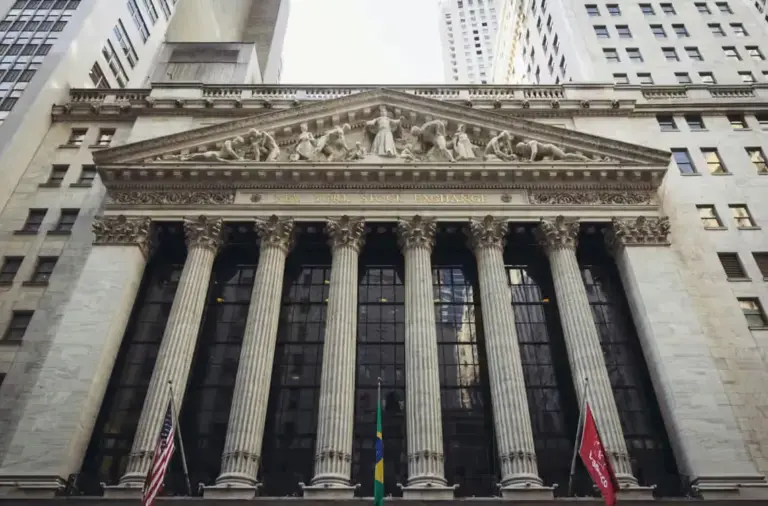
Barrick Mining has taken a significant step forward in its strategic restructuring by officially naming its North American spinoff American Barrick Gold. The company revealed on Tuesday that it has filed a registration statement with the U.S. Securities and Exchange Commission to pursue an initial public offering on the New York Stock Exchange, where it intends to trade under the ticker ABGC. A powerhouse group of financial institutions including Goldman Sachs, BofA Securities, Citigroup, and RBC Capital Markets will handle the distribution of the preliminary prospectus to investors.

While the official filing marks a milestone, potential shareholders will have to be patient regarding specific details. Barrick has not yet disclosed a definitive pricing strategy or a strict timeline for the debut, though previous guidance suggested the process could stretch toward the end of 2026. There is also some lingering ambiguity surrounding exactly which assets will fall under the new banner and what percentage of ownership will be offered to the public, although early indications suggest Barrick may retain a controlling majority stake.

The path to this IPO was not without friction, particularly involving industry giant Newmont. The two partners previously clashed over the diversion of joint venture resources toward the Fourmile discovery in Nevada, leading Newmont to attempt to block the spinoff entirely. That dispute was settled in August through a deal worth nearly two billion dollars paid to Barrick, resulting in Fourmile being integrated into Nevada Gold Mines rather than remaining a standalone asset within the spin-off structure.

This corporate maneuver comes at a time of strong financial momentum for Barrick. Recent quarterly reports show a dramatic surge in free cash flow, which jumped from 141 million dollars in the second quarter to 642 million dollars in the third. This growth was driven largely by increased production at sites like Cortez and Carlin, along with steady output from operations in Mali. Chief Executive Mark Hill noted that these results represent a full year of consistency as the company works to restore its reputation for operational discipline and excellence.

Altius Minerals is significantly broadening its reach into the critical metals sector with a deal to acquire TNR Gold. This move allows the company to secure key royalties tied to major operations in Argentina, specifically focusing on copper and lithium. By absorbing TNR Gold, Altius gains access to the promising Los Azules copper project managed by McEwen Copper and the active Mariana lithium brine operation run by Ganfeng Lithium.

The acquisition values the junior firm at approximately 122 million US dollars, representing a substantial sixty percent premium over its recent trading price. Under the terms of the agreement, TNR shareholders will receive a combination of Altius shares and stakes in a newly created entity called TNR SpinCo. This spin off is designed to house the Shotgun gold project located in Alaska, ensuring that while Altius pivots toward battery metals, the Alaskan asset remains distinct although Altius will maintain a minority ownership stake and a small royalty there.

Looking ahead, the timing of these acquisitions aligns with aggressive growth targets for the underlying projects. The Los Azules site is eyeing a final investment decision by mid 2027 with hopes of starting production by 2030, potentially delivering massive amounts of copper cathode annually for two decades. Meanwhile, the Mariana project is already operational and currently scaling up its lithium carbonate output, providing Altius with immediate exposure to an operating stage asset during a period of high demand for energy transition minerals.

This deal comes amidst a broader wave of consolidation across the mining industry throughout 2026. From multi billion dollar mergers in North America to strategic shifts in Australia, companies are increasingly rearranging their portfolios to maximize efficiency and resource security. For Altius, this latest transaction reinforces its strategy of diversifying away from traditional assets and leaning heavily into the materials essential for global electrification.

The latest collection of political cartoons released for November 14 offers a biting look at the current state of global affairs through the lens of satire. By distilling complex legislative battles and diplomatic tensions into single, provocative images, these artists provide a necessary emotional outlet for a public often overwhelmed by the relentless cycle of breaking news. This particular set focuses heavily on the friction between governing bodies and the perceived disconnect between policymakers and their constituents.

Many of the featured illustrations lean into irony, highlighting the contradictions inherent in recent campaign promises versus actual policy implementation. Whether tackling economic volatility or environmental disputes, the sketches manage to capture a sense of shared frustration that words alone sometimes fail to convey. The strength of today’s selections lies in their ability to challenge viewers to think critically about power dynamics without needing a thousand words of exposition.

Beyond simple mockery, these works serve as an essential archive of our cultural moment, reflecting how we perceive leadership during times of uncertainty. As readers navigate various media echoes and competing narratives, these visual commentaries offer a brief but sharp pause for reflection. They remind us that laughter is often the most effective tool for exposing truth when traditional discourse becomes stalled in partisan gridlock.

Stephen Miller has wasted no time in carving out a distinct and aggressive identity during his first week as President Donald Trump’s chief of staff. In a series of rapid maneuvers, Miller has worked to dismantle the operational framework left behind by his predecessor, Susie Wiles, signaling a pivot toward a more combative and accelerated version of the MAGA agenda. By consolidating power and streamlining decision making processes to run directly through his office, Miller is sending a clear message to the West Wing that the era of cautious coordination is over.

Among the most striking changes are new directives that grant Cabinet secretaries more autonomy over their own messaging and strict new restrictions on lobbyist access. These moves are being viewed by insiders as direct repudiations of Wiles’ tighter grip on administration communications, which some officials found suffocating. While figures like Health and Human Services Secretary Robert F. Kennedy Jr. are reportedly energized by the prospect of faster policy implementation for initiatives like Make America Healthy Again, other staffers describe an atmosphere of anxiety, claiming they feel as though they are walking on eggshells amid potential personnel purges.

Despite the internal push for efficiency, the transition hasn’t been entirely seamless. Even as Miller attempts to clamp down on unauthorized disclosures, the administration spent much of its first week embroiled in chaos following reports regarding Nvidia CEO Jensen Huang. This tension highlights a growing divide between those who prefer the structured alignment provided by Wiles and those who believe Miller’s high octane approach is necessary to achieve Trump’s goals before the clock runs out on his presidency.

As Miller continues to refine his inner circle—with some pointing to the influential role played by his wife, Katie, in securing his appointment—the overarching goal remains acceleration. Having previously used this playbook to drive hardline immigration policies, Miller is now applying that same pressure across all federal agencies. Whether this shift will lead to a more effective execution of populist goals or simply revive the volatile infighting characteristic of Trump’s first term remains the primary question haunting the halls of power in Washington.

Alaska voters have once again signaled their support for the state’s unconventional electoral process by rejecting a ballot measure that sought to dismantle open primaries and ranked choice voting. This decision marks the second time in just two years that citizens have pushed back against efforts to return to traditional partisan primaries. Beyond the voting mechanics, the failed measure also attempted to roll back specific campaign disclosure rules designed to increase transparency regarding election spending.

Supporters of the current system argue that these reforms empower voters by offering more diverse choices and requiring candidates to appeal to a wider spectrum of the electorate rather than just the fringes of their own party. Many observers believe this shift has fostered a more moderate atmosphere within the state legislature, where bipartisan coalitions have become increasingly common. Ruth Hall, a spokesperson for the campaign opposing the repeal, noted that the result confirms Alaskans value the freedom to select qualified leaders regardless of their political label.

The push for repeal drew significant attention from high profile critics, including former President Donald Trump and billionaire Elon Musk, who argued that ranked choice voting is overly complex and confusing for the average voter. Despite this influence and funding, the movement could not sway enough residents to overturn a system that was first adopted in 2020 and implemented in 2022. Under these rules, all candidates share a single primary ballot, with the top four advancing to a general election where voters rank their preferences.

While some established political parties have tried to manipulate outcomes by pressuring lower ranking candidates to withdraw before the final vote, those tactics did not undermine public faith in the overall framework. For now, Alaska remains an outlier in American politics, maintaining an experimental approach to democracy that prioritizes broad consensus over strict party loyalty.