Archive

November 21, 2026

Browsing

Anthropic (ANT) priced its Nasdaq IPO at $83, opened at $111.50 on Nov. 19 and gave back most of that opening gain by Friday morning.

If you missed the offering, three familiar stocks already have a financial stake in what happens next.

Nvidia can benefit when cloud providers buy chips to run Claude.

Amazon and Alphabet own Anthropic shares and sell it computing capacity.

For investors deciding among the three, the distinction is where the payoff comes from: hardware sales, cloud revenue or appreciation in Anthropic’s stock.

Nvidia sells the hardware behind Claude

Nvidia Corp (NVDA) was among seven companies that bought Anthropic shares in a $26 billion private placement that closed Friday at the IPO price.

Its hardware exposure reaches further.

Anthropic’s prospectus identifies Nvidia-powered capacity under agreements with SpaceXAI and Nscale, alongside its work with Microsoft Azure.

That gives Nvidia several routes to benefit if Claude needs more computing power, even when Anthropic rents that capacity from someone else.

The distinction matters: a cloud provider’s contract value includes services beyond the GPUs, and Anthropic also uses rival chips from Amazon and Google.

For Nvidia shareholders, the number to watch is how much of Claude’s next wave of demand turns into orders for Nvidia systems.

Amazon has an equity stake in Anthropic

Amazon Inc (AMZN) combines an ownership stake with one of Anthropic’s clearest spending commitments.

The IPO prospectus says Anthropic agreed to spend at least $110 billion with Amazon from May 2026 through April 2036, with a provision to pay the shortfall if actual spending falls below the minimum, subject to certain exceptions and adjustments.

The partnership also puts Amazon’s in-house Trainium chips to work training and deploying Claude, while AWS customers can access the models through Bedrock.

For those invested in AMZN shares, the spending floor makes the commercial tie easier to quantify than the equity upside. What ultimately matters to earnings is how much AWS keeps after paying to build and operate the capacity.

Alphabet offers exposure through a stake, chips, and cloud

Alphabet Inc (GOOGL) bought $10 billion of Anthropic’s nonvoting shares in Friday’s private placement, funding part of a prior investment commitment.

Alphabet also benefits through Google Cloud, which offers Claude to enterprise customers through Vertex AI, and through Google’s custom tensor processing units, or TPUs.

Anthropic’s expanded agreement with Google and Broadcom calls for several gigawatts of next-generation TPU capacity expected to start coming online in 2027.

That gives Google shareholders an immediate exposure through the stake and an operating payoff that builds as capacity comes online.

It also gives Alphabet Inc. a large outside customer for its chips – a business opportunity that can grow even when Anthropic’s share price has a rough day.

AI disclosure: AI tools assisted with research and drafting of this piece. An Invezz editor reviewed the facts, sources and wording before publication. Any opinions or analysis are Invezz’s, not those of an automated system.

The post These 3 stocks are must-own for investors who missed Anthropic IPO appeared first on Invezz

PayPal stock PYPL fell 4% on Friday after the payments company announced a series of leadership changes as part of its turnaround efforts under CEO Enrique Lores.

The appointments include a new chief financial officer and executives overseeing consumer financial services, payments and artificial intelligence operations.

The company said the changes follow several months of strategic planning aimed at clarifying priorities across its core businesses, simplifying its operating model and strengthening leadership accountability.

However, the management overhaul comes as investors remain cautious about PayPal’s ability to revive growth and regain market share.

PayPal has lost about 7% over the past 12 months.

The stock has also fallen approximately 82% from its all-time closing high of $308.53 reached on July 23, 2021.

PayPal appoints new CFO and business heads

Claire Bramley, currently CFO of cloud-based accounting software provider Xero, will join PayPal as executive vice president and CFO on February 1, 2027.

She will replace Jamie Miller, who has served as chief financial and operating officer.

Bramley will work with Miller during February to support the transition.

Bramley previously held senior finance positions at HP, where her tenure overlapped with Lores.

PayPal also appointed Kartik Mani as president and head of Consumer Financial Services and Venmo.

Mani joins from American Express, where he was president of Global Network and Partner Services. Venmo general manager Alexis Sowa will continue in her role and report to him.

Suzan Kereere, who currently leads PayPal’s Global Markets business, will become president and head of Payment Services and Crypto.

She will succeed Jeff Pomeroy, who had been serving as interim head and will continue leading Payment Services and Platforms, reporting to Kereere.

Juan Rio will join the company on November 30 as executive vice president of AI Business Transformation and Operations.

He previously worked at Brightstar.AI as managing director and chief delivery officer. Rio will oversee AI initiatives, cost simplification and enterprise operating effectiveness.

Separately, PayPal announced that Chief Risk Officer Aaron Webster would leave the company.

Ratinder Bedi, senior vice president of Credit and Fraud Risk, will serve as interim head of the risk organisation while PayPal searches for a permanent replacement.

Board appointment and investor concerns

PayPal also appointed Brian J. Lee to its board of directors, effective November 30, 2026.

Lee served as Goldman Sachs’ chief risk officer from 2019 to January 2025 and most recently chaired its Risk Council through October 2026.

The leadership changes come as Wall Street analysts remain divided over PayPal’s prospects.

Of the 45 analysts covering the stock, 31 have a Hold rating, seven recommend selling, and seven have a Buy rating.

Monness Crespi Hardt analyst Gus Galá recently downgraded PayPal to Sell from Neutral and set a $48 price target.

He cited market-share losses and unfavourable business trends, including a year-over-year decline in third-quarter transaction revenue from PayPal’s products and services.

Analysts at Freedom Broker, Cleveland Research and Bank of America have also recently downgraded the stock.

Analysts assess PayPal’s growth engines

Not all analysts are negative on the company. Susquehanna analyst James Friedman maintains a Positive rating and a $67 price target.

Friedman believes PayPal’s growth prospects should not depend entirely on its traditional branded checkout business.

He identified buy now, pay later services, Venmo, and Braintree’s value-added merchant tools as three newer growth engines, each of which has recorded double-digit growth.

He argued that the traditional checkout business may only need to achieve modest growth of 2% to 3% to support overall profit expansion.

Friedman also expects PayPal to treat 2027 as an investment year, directing spending towards these three growth areas while using internal cost savings to keep overall earnings steady.

The turnaround, which Lores has led since joining in March, has focused on cost reductions and greater adoption of artificial intelligence.

PayPal’s fourth-quarter results, expected in early February, will provide investors with an opportunity to assess management’s progress.

Forward guidance and updates on the turnaround strategy are likely to remain central to the market’s assessment of the company’s new leadership team.

AI disclosure: AI tools assisted with research and drafting of this piece. An Invezz editor reviewed the facts, sources and wording before publication. Any opinions or analysis are Invezz’s, not those of an automated system.

The post PayPal stock falls 4% as leadership shake-up tests turnaround strategy appeared first on Invezz

Intel shares INTC fell on Friday as a broader selloff in semiconductor stocks intensified, with investors reassessing the outlook for artificial intelligence spending and the profitability of the industry.

The stock was down 5.36% by 1:06 AM ET, trading at $52.74. Intel’s stock has seen a sharp dip since its earnings on Oct 29, after which it lost close to 29% in the next session.

On Friday, though, the weakness was not limited to just Intel.

Nvidia, AMD, Micron and Broadcom also declined as the technology sector faced another bout of selling. Anthropic shares, which had enjoyed a blockbuster stock market debut on Thursday, also reversed course.

The pressure on chipmakers has also spread across international markets, with Asian semiconductor stocks facing heavy losses.

For Intel, however, the broader market weakness is only part of the problem. The company is dealing with several challenges of its own, ranging from slowing PC demand and manufacturing difficulties to legal action and changes in its investor base.

Chip stocks face broader AI concerns

The latest selling comes as investors become increasingly cautious about the AI trade following weeks of volatility.

Concerns over data center spending, financing requirements and the time required to generate returns have weighed on semiconductor companies.

Nvidia’s recent leadership controversy and questions surrounding its financial relationships across the AI ecosystem have added another layer of uncertainty.

Anthropic’s IPO was expected to bring some relief to the struggling AI trade, but sentiment failed to improve even after the Claude maker delivered a blockbuster Nasdaq debut on Thursday.

Anthropic itself led the broader tech sector decline on Friday, falling more than 12%.

Intel has been particularly vulnerable because its turnaround depends on both recovering its traditional PC business and establishing itself as a major contract chip manufacturer.

Nvidia reduces Intel stake as PC concerns grow

A regulatory filing revealed that Nvidia reduced its Intel holding by 25% during the third quarter, cutting its reported position from 214.8 million shares to approximately 161.1 million.

Nvidia had invested $5 billion in Intel in December 2025, supporting its manufacturing ambitions. Although it retains a substantial position, the reduction has raised questions about the investment relationship.

Intel is also facing a proposed shareholder class-action lawsuit filed in federal court in California.

The lawsuit, led by Michigan’s City of Southfield Fire and Police Retirement System, alleges that Intel executives failed to disclose the impact of slowing PC sales and excess inventory on the company’s financial performance.

The allegations follow Intel’s warning that PC demand could remain weak through the first half of 2027.

Higher memory prices and supply shortages have increased computer costs, while manufacturing bottlenecks have limited Intel’s ability to meet demand for some data center processors.

The company’s fourth-quarter revenue forecast of $15 billion to $16 billion also fell short of Wall Street expectations of approximately $17 billion.

Fresh layoffs add to Intel’s challenges

Intel’s restructuring efforts are continuing under CEO Lip-Bu Tan as the company attempts to lower costs and streamline operations.

It has begun another round of layoffs within its global information technology organization, although the number of affected employees has not been disclosed.

Intel’s reported workforce has fallen by approximately 27,800 employees since the end of 2024. The company said it regularly reviews its staffing requirements to ensure resources are aligned with its business priorities.

However, even this effort has not been able to win back investors, with broader market sentiment refusing to improve.

Some good news: Intel wins new customers

Despite the pressure, Intel has secured two important customer developments that could support its manufacturing ambitions.

CEO Lip-Bu Tan announced Thursday that the company had signed its first external customer for its advanced 18A-P chip manufacturing process.

Intel has not disclosed the customer’s identity, but the agreement marks progress in its effort to compete with Taiwan Semiconductor Manufacturing Co.

Separately, Microsoft became the first publicly named customer for Intel Foundry’s EMIB advanced packaging technology, which will be used for Microsoft’s Azure first-party silicon.

The companies also expanded their collaboration through multi-year agreements covering Intel Xeon processors and future Azure infrastructure.

AI disclosure: AI tools assisted with research and drafting of this piece. An Invezz editor reviewed the facts, sources and wording before publication. Any opinions or analysis are Invezz’s, not those of an automated system.

The post Why Intel shares are falling over 5% on Friday? appeared first on Invezz

Michael Burry, the investor made famous by The Big Short, has taken profits on part of his bearish bets against Nvidia and the semiconductor sector following a sharp technology sell-off this week.

In a Friday update to subscribers of his Cassandra Unchained Substack, Burry said he sold 50% of his put options on Nvidia (NASDAQ: NVDA) and the VanEck Semiconductor ETF (SMH), locking in what he described as substantial gains.

He retained the remaining half of both positions.

Put options increase in value when the underlying shares decline, allowing investors to profit from falling stock prices.

Burry also reduced some of his bullish exposure, selling roughly one-third of his call options on animal health company Zoetis (NYSE: ZTS) to secure gains.

However, he left his bearish April 2027 put options on the Nasdaq 100 untouched, maintaining his longer-term negative outlook on large-cap technology stocks.

Burry increases MercadoLibre stake

Alongside the profit-taking, Burry increased his position in Latin American e-commerce company MercadoLibre (NASDAQ: MELI) by 20%.

He also pointed to what he described as “absolute relative strength” in several stocks, including healthcare companies Molina Healthcare (NYSE: MOH) and HCA Healthcare (NYSE: HCA), software company Adobe (NASDAQ: ADBE) and grocery retailer Sprouts Farmers Market (NASDAQ: SFM).

The portfolio changes indicate that Burry is adjusting some of his positions following the recent market moves while retaining his bearish exposure to the Nasdaq 100.

His decision to lock in part of his Nvidia and semiconductor ETF gains came as chip stocks endured a difficult week, with Nvidia extending its losing streak despite reporting strong quarterly results.

Nvidia shares extend losing streak

Nvidia shares fell for a seventh consecutive session on Friday and were on track for their worst weekly performance since November 2018.

The decline came despite the chipmaker reporting record quarterly revenue of $115.8 billion, more than double the year-earlier figure.

Net profit increased 109% to $64.9 billion, beating Wall Street forecasts.

Interim CEO Colette Kress also provided a strong outlook, forecasting fourth-quarter revenue of $130 billion and raising the company’s fiscal 2028 revenue growth outlook to 75%.

However, the earnings performance did little to support the stock as investors continued to assess concerns surrounding the company and the broader technology sector.

Nvidia has also faced scrutiny over allegations involving the potential diversion of advanced chips to China.

Two House Democrats reportedly opened an inquiry into whether the company sought to influence the Commerce Department’s investigation of Megaspeed, a Singapore-based cloud company suspected of illegally diverting advanced chips to China.

Separately, Representative Brett Guthrie, chairman of the House Committee on Energy and Commerce, sent a letter to Kress requesting that Nvidia officials appear before the panel by December 2.

Semiconductor sell-off weighs on technology stocks

Nvidia’s decline spread across the wider semiconductor sector, adding to pressure on technology stocks as investors questioned whether substantial spending on artificial intelligence infrastructure would generate sufficient returns.

The Invesco QQQ ETF (QQQ), which tracks the Nasdaq 100, fell 9% over the week.

Other major chipmakers also recorded steep losses on Friday.

Advanced Micro Devices (NASDAQ: AMD) dropped more than 11%, while Micron Technology (NASDAQ: MU) declined over 13%.

The declines reflected broader concerns about valuations and supply chains across the semiconductor industry.

AI disclosure: AI tools assisted with research and drafting of this piece. An Invezz editor reviewed the facts, sources and wording before publication. Any opinions or analysis are Invezz’s, not those of an automated system.

The post Michael Burry takes profits on Nvidia puts as chip stocks extend sell-off appeared first on Invezz

US markets remained under pressure on Friday as Anthropic shares fell over 10% in their second trading session, adding to concerns about the artificial intelligence trade.

Bitcoin dropped below $60,000 for the first time since July as record outflows from BlackRock’s spot ETF and broader risk aversion weighed on cryptocurrencies.

Gold prices slid to a 14-month low and headed for their steepest weekly decline in eight months amid expectations of further Federal Reserve rate increases.

Oil prices also fell, with Brent crude on track for a third consecutive weekly decline as strong Middle Eastern exports outweighed concerns about disruptions in the Strait of Hormuz.

Anthropic stock falls nearly 10% on second trading day

Anthropic shares extended their decline on Friday after failing to sustain the gains from their blockbuster Nasdaq debut.

The stock fell 10.52% to trade at $86.95. The stock remained slightly above its IPO price of $83.

The decline followed a volatile debut on Thursday, when Anthropic opened at $111.50, reached a high of $115.10 and closed at $97.17.

More than 846 million shares changed hands during the first session.

The weakness reflects broader concerns about AI-related investments rather than company-specific developments alone.

Investors had hoped Anthropic’s record listing would restore confidence in AI stocks, which have faced pressure over the scale and profitability of data centre and chip spending.

Anthropic’s underwriters exercised their option to purchase all 147 million additional shares, bringing the total offering to $93.5 billion.

The stock remained above its IPO price, but its early gains had narrowed considerably.

Bitcoin price falls below $60,000

Bitcoin dropped below $60,000 on Friday for the first time since early July, extending a broad cryptocurrency selloff.

The largest cryptocurrency traded at $58,261, down 7.1% over 24 hours. It is now approximately 53% below its record high of $126,296 reached on October 6, 2025.

Selling pressure also affected other major cryptocurrencies.

Ether fell below $1,700 for the first time since July 3, trading at $1,604, while XRP and Solana declined 5% and 5.5%, respectively.

Outflows from US spot Bitcoin exchange-traded funds added to the pressure.

BlackRock’s iShares Bitcoin Trust recorded $541.1 million in net outflows on November 19, its largest single-day withdrawal on record, according to Farside Investors.

US spot Bitcoin ETFs collectively lost $582.3 million that day and approximately $3.47 billion so far in November.

More than $700 million in cryptocurrency positions were liquidated over 24 hours, mostly bullish bets, according to CoinGlass.

Gold price hits 14-month low

Gold extended its decline on Friday, with spot prices falling 2.69% to $3,524.29 an ounce after touching $3,513.54, the lowest level since September 2025.

Bullion was down approximately 9.2% for the week, its steepest weekly decline since March.

US gold futures for December delivery fell 4.2% to $3,530.40 an ounce.

A stronger dollar and expectations of higher US interest rates have weighed on the precious metal.

Markets were pricing in a 96% probability of a 25-basis-point rate increase in December, according to CME’s FedWatch tool.

The selloff in AI-linked equities may also have prompted investors to liquidate gold positions to cover losses elsewhere in their portfolios.

Silver fell 3.6% to $41.23 an ounce, while platinum and palladium declined 2.6% and 2.1%, respectively. All four precious metals were heading for a second consecutive weekly decline.

Oil prices head for third weekly decline

Oil prices were mixed on Friday but remained on track for a third consecutive weekly decline as strong exports from the Middle East helped ease supply concerns.

Brent crude futures gained 0.22% to $92.17 a barrel, while US West Texas Intermediate December futures rose 0.83% to $83.90.

Brent was heading for a weekly loss of nearly 5%, while December WTI was set to fall 5.8%.

Crude shipments through the Strait of Hormuz have returned to roughly pre-war levels, strengthening expectations of a potential supply surplus.

However, geopolitical risks remain.

The Iran-aligned Houthi movement threatened Saudi Arabia’s Red Sea ports after launching missile attacks on Riyadh.

Iran’s Revolutionary Guards Navy also said two oil tankers had struck naval mines in the Strait of Hormuz and were burning.

The market is also monitoring OPEC+ discussions scheduled for November 29, when ministers will consider the group’s 2027 output policy.

AI disclosure: AI tools assisted with research and drafting of this piece. An Invezz editor reviewed the facts, sources and wording before publication. Any opinions or analysis are Invezz’s, not those of an automated system.

The post Evening digest: Anthropic slides after record debut, Bitcoin slips below $60k appeared first on Invezz

The world is witnessing a dramatic pivot back toward nuclear power as geopolitical instability forces nations to rethink their energy security. According to the latest World Energy Outlook from the International Energy Agency, a massive supply shock centered on the Strait of Hormuz has acted as a catalyst for an industry revival reminiscent of the oil crises seen in the 1970s. With cumulative losses of billions of barrels of oil and record breaking diesel prices, officials warn that there is no returning to the old status quo.

Projected growth figures suggest a significant climb in global capacity, potentially reaching 886 gigawatts by 2050 under certain policy frameworks. This surge is being driven largely by heavy investments in China, Europe, and the United States, with some estimates suggesting that nuclear output could actually grow faster than overall electricity demand. China currently leads the charge, accounting for over forty percent of all capacity under construction and poised to become the world leader in operating capacity within several years.

Beyond traditional large scale plants, there is a burgeoning interest in small modular reactors. These compact systems are attracting attention from over fifty countries and are increasingly sought after by American tech firms looking to provide reliable power for hungry data centers. In fact, dozens of gigawatts of these smaller reactors are already linked to various procurement deals as industries seek stable alternatives to volatile fossil fuel markets.

While the IEA frames this movement as a resurgence, leaders at the World Nuclear Association argue that atomic energy never truly left; rather, it has always been a pillar of decarbonization that is finally receiving proper recognition. Whether viewed as a comeback or a long overdue realization of value, the sheer volume of current construction across seventeen different nations suggests that nuclear energy will play a central role in the future global grid.

Panama is stepping back to the negotiating table with Vancouver based First Quantum Minerals in an effort to restart the Cobre Panama mine. Once a powerhouse in the global copper market, the site has been dormant since late 2023 after a wave of intense national protests led the country’s Supreme Court to declare its operating contract unconstitutional. To lead these delicate discussions, President José Raúl Mulino has appointed an interministerial team headed by Minister of Commerce Julio Moltó, tasked with finding a path forward that satisfies both corporate interests and public demand.

President Mulino has made it clear that any return to operation will look very different from the previous arrangement. He has established five core pillars for the negotiations, focusing heavily on national sovereignty, strict environmental protections, and ensuring that mineral resources remain under Panamanian ownership. Rather than granting another traditional mining concession, the government aims to build a fresh legal framework that maximizes economic returns for the nation while remaining strictly compliant with constitutional law.

For First Quantum, the stakes are high given that Cobre Panama once accounted for roughly 1.5 percent of global copper production. The company believes reviving the project could bring back thousands of jobs and support thousands of local suppliers who were displaced by the shutdown. While they have expressed a willingness to work constructively within Panama’s legal systems, they are also advocating for a transparent public consultation process so that citizens can be fully informed before any final deal is signed.

As part of this transition, Panama is exploring more aggressive ownership models. There is talk of creating a state owned mining company to partner with First Quantum or implementing significantly higher taxes and royalties to capture more value. Analysts suggest the government may push for up to half of the mine’s economic benefits. These efforts come on the heels of a recent environmental audit intended to ensure that any potential restart meets rigorous ecological standards and resolves long standing arbitration disputes between the firm and the state.

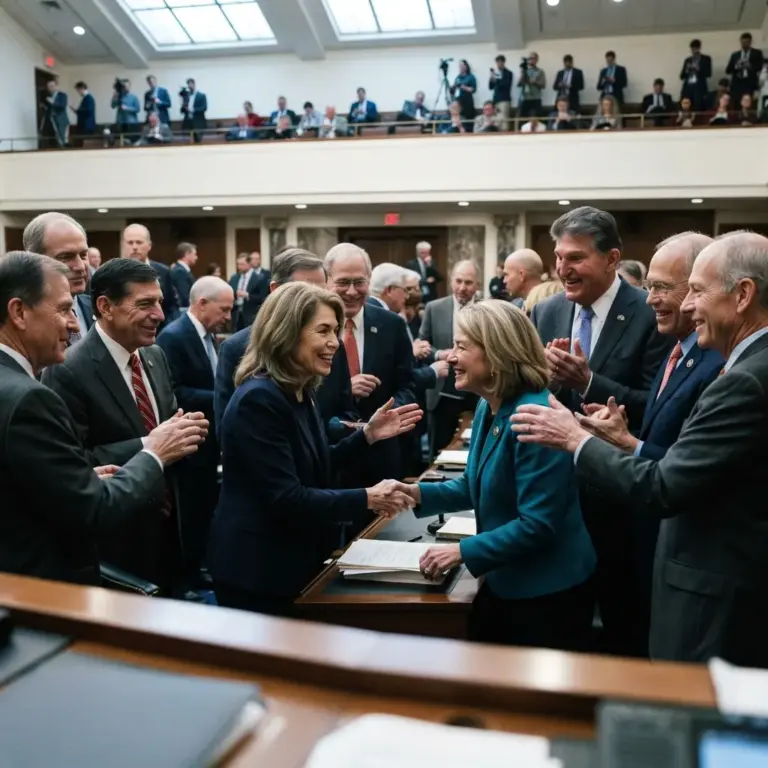
In a rare moment of legislative synergy, the Senate has advanced the Bipartisan American Affordability and Jobs Act of 2026, a comprehensive piece of legislation designed to dismantle the bureaucratic hurdles slowing down national infrastructure. By streamlining environmental reviews and limiting the scope of legal challenges that often freeze multi-billion dollar investments, the bill aims to accelerate everything from traditional oil and gas pipelines to renewable energy arrays. Lawmakers argue that these reforms are essential to curb inflation and secure American energy independence in an increasingly volatile global market.

Senator Alan Armstrong of Oklahoma, drawing on his experience as a former CEO, emphasized that endless litigation has become a primary barrier to progress. He noted that while the United States possesses vast natural resources, outdated permitting processes frequently allow court battles to stall critical projects indefinitely. For proponents of the bill, this shift represents a transition toward proactive governance where infrastructure can be built efficiently without abandoning core environmental protections.

Beyond raw energy production, the legislation takes aim at the exploding growth of artificial intelligence and its associated power demands. A key compromise led by Senator Martin Heinrich ensures that massive data centers cannot offload their immense electricity costs onto average residential ratepayers. Under the new rules, high-demand facilities must provide financial guarantees for infrastructure upgrades and cover their own power requirements by law rather than mere suggestion, protecting consumers from price hikes driven by corporate tech expansions.

Despite the victory in the Senate and backing from the White House, the path forward remains uncertain as the bill heads to the House of Representatives. While much of the language reflects previous work done in the lower chamber, concerns remain regarding whether enough members will mobilize to ensure its passage. If successful, however, supporters believe the act will trigger a surge in job creation and significantly lower utility costs for millions of Americans.

A federal judge handed down a sentence of nineteen and a half years in prison on Friday to Nikhil Gupta, an Indian national who admitted to participating in a deadly conspiracy to kill a political dissident in New York City. The sentencing marks a significant conclusion to a case that sparked international tension, as prosecutors alleged Gupta was recruited by a former Indian intelligence official named Vikash Yadav to carry out the assassination. While Gupta faced justice in a U.S. courtroom after pleading guilty to murder-for-hire and money laundering charges, Yadav remains in India where he faces similar criminal allegations.

The dangerous scheme fell apart when Gupta unknowingly reached out to a confidential source working with the Drug Enforcement Administration. This critical mistake allowed authorities to intercept the plot before it could be executed against Gurpatwant Singh Pannun, a dual citizen of Canada and the United States who leads the group Sikhs for Justice. Pannun is a fierce critic of Prime Minister Narendra Modi’s administration and spends much of his time advocating for Khalistan, an independent state for Sikhs within India’s Punjab province.

This legal battle unfolds against a backdrop of deep diplomatic friction between India, Canada, and the United States. Last year, Canadian officials claimed there was credible evidence that Indian agents were involved in the killing of Hardeep Singh Nijjar, another high profile Sikh separatist shot dead outside his temple in British Columbia. While India has consistently denied these accusations and labeled men like Pannun as terrorists, supporters of the movement argue such claims are merely attempts to silence political dissent through violence and intimidation.

For Pannun, the resolution of this trial does not mean an end to his fear. In a statement provided to the court, he described the mental toll of living under constant surveillance and expensive private security for over three years. He told the judge that intelligence warnings suggest threats against his life remain active, leaving him worried not only for his own safety but for anyone unlucky enough to be standing beside him during an attack.

President Donald Trump held a sprawling ninety minute press conference on Friday, using the platform to address everything from the recent Republican collapse in the midterm elections to his personal rapport with global autocrats. Facing questions about Vice President JD Vance’s assertion that the GOP losses were fueled by the ongoing war with Iran, Trump described the assessment as fine and actually quite accurate. While acknowledging that the conflict drove up fuel prices, the president doubled down on his foreign policy, stating he would pursue the same path again to prevent Iran from obtaining nuclear weapons.

The mood of the event shifted between defiance and bravado as Trump distanced himself from the electoral defeat, reminding reporters that he was not on the ballot. He suggested that if he had been running, the outcome would have been entirely different, blaming fellow Republicans for failing to pass his desired agenda. Looking ahead to a divided government, Trump outlined a confrontational strategy for dealing with the incoming Democratic majority in Congress, promising a cycle of endless vetoes until lawmakers agree to his specific terms.

In a moment of internal theater, Trump introduced his new chief of staff, Stephen Miller, calling him the most powerful man in the room and jokingly asking if Miller wanted to run for president. This praise came at the expense of JD Vance and Marco Rubio, whom Trump claimed were surpassed by Miller. The president also touched upon domestic chaos, dismissing recent widespread tech outages as routine upgrade glitches while simultaneously pushing for more federal funding for air traffic systems despite previous billion dollar investments.

Turning toward international affairs and corporate scandals, Trump praised Vladimir Putin and Xi Jinping, arguing that his strong personal bonds with them keep America safe. He specifically noted Putin’s nuclear arsenal as a source of strength rather than concern. In an unusual pivot to business, Trump advocated for the reinstatement of ousted Nvidia CEO Jensen Huang. Despite Huang’s ties to a suspected Chinese operative through an extramarital affair, Trump urged the company to overlook those mistakes in favor of Huang’s brilliance.