Archive

November 6, 2026

Browsing

Shares of major cloud technology companies rose on Wednesday despite Democratic victories in the US midterm elections, raising the prospect of tighter restrictions on artificial intelligence data centres.

Amazon stock AMZN climbed more than 7% to $271.49 in morning trading, leading gains among the major cloud providers.

Microsoft, Alphabet and Meta Platforms also traded higher, while smaller cloud infrastructure companies, including CoreWeave, moved lower.

Democrats won control of both chambers of Congress and secured key gubernatorial victories, including in Texas, Georgia and Ohio.

Opposition to the rapid expansion of AI data centres was a major campaign issue, raising concerns about potential construction restrictions.

However, analysts said tighter regulatory barriers could benefit established cloud providers by making it harder for smaller competitors to expand capacity.

Regulatory barriers could strengthen hyperscalers

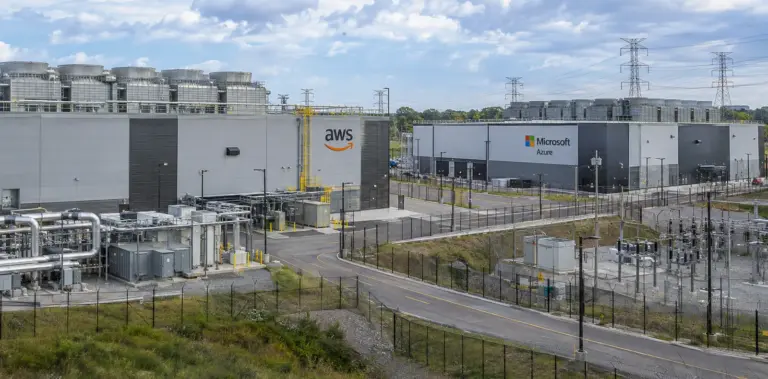
Large technology companies, commonly known as hyperscalers, have invested heavily in building and operating data centres to support AI services.

Needham analyst Laura Martin said higher regulatory barriers could strengthen existing players while increasing the risks and required returns on investment for new entrants.

Amazon, Microsoft, Alphabet and Meta already operate extensive cloud infrastructure, giving them an advantage if new data-centre construction becomes more difficult.

A slowdown in industry-wide capital expenditure could also ease pressure on the established companies’ finances.

Their existing infrastructure would remain available to generate revenue, while lower spending requirements could improve returns on invested capital.

Martin noted that investors and politicians were increasingly aligned in wanting slower capital spending growth, although their motivations differed.

Baird Private Wealth Management strategist Michael Antonelli said in a WSJ report that hyperscalers “already have compute. They have the data centers. So if you’re pulling up the drawbridge, you’re giving them their moat.”

Existing data centres and computing capacity could become a competitive advantage if the expansion of new facilities slows.

AI spending concerns remain in focus

The potential slowdown comes as investors question whether the largest technology companies can sustain their spending on AI infrastructure.

Amazon, Meta, Microsoft and Alphabet shares came under pressure after reporting their September-quarter results late last month.

Their rising capital expenditure has also pushed free cash flow at Amazon, Meta and Alphabet into negative territory.

The companies have increasingly turned to a combination of debt and equity financing to support their infrastructure investments.

A slowdown in spending could therefore address some investor concerns about the financial risks associated with the AI race.

Lower capital expenditure could improve free cash flow and reduce the pressure to invest aggressively in additional capacity.

Yorkville Ives analyst Dan Ives described the election outcome as a potential positive for some technology investors if it encourages large companies to moderate their spending.

However, he also warned that Democratic control of Congress would create significant challenges for the broader AI and technology industry.

Smaller cloud providers face potential pressure

While established hyperscalers advanced, smaller cloud infrastructure providers faced a weaker market reaction.

Companies such as CoreWeave have expanded rapidly to compete with larger cloud providers by building data centres and offering computing capacity for AI workloads.

New restrictions on data-centre construction could make it more difficult for these businesses to expand, while established providers would retain access to their existing infrastructure.

The election results could also lead to negotiations between technology companies and lawmakers over future AI legislation.

Ives said the Trump administration could oppose major regulatory measures, but congressional pressure may still push technology executives towards compromises.

AI disclosure: AI tools assisted with research and drafting of this piece. An Invezz editor reviewed the facts, sources and wording before publication. Any opinions or analysis are Invezz’s, not those of an automated system.

The post Why are Amazon, Microsoft stocks surging 6% today? appeared first on Invezz
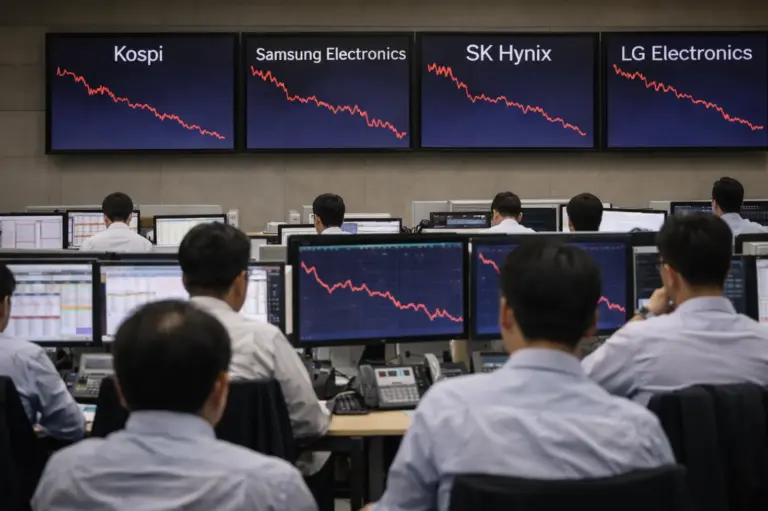
South Korean stocks plunged on Thursday as a sharp selloff in semiconductor shares dragged the benchmark Kospi lower.

The Kospi fell over 5% during the session, slipping briefly below 5,350 after opening at 5,580.

The selling triggered a temporary suspension of program trading on the main exchange, while the tech-heavy Kosdaq also activated a sell-side sidecar around noon as the index dropped below the 700 mark.

Foreign investors were the biggest sellers, offloading nearly 2 trillion won ($1.4 billion) worth of shares on the main board alone.

The selling was concentrated in semiconductor manufacturers, chip equipment suppliers and power infrastructure companies.

Investors are worried that Democratic victories in the US midterm elections could bring tighter restrictions on artificial intelligence infrastructure and data-center development.

Samsung, SK Hynix lead semiconductor selloff

Major chipmakers bore the brunt of the decline as investors reassessed the outlook for AI infrastructure spending following Democratic gains in the US elections.

Samsung Electronics fell around 8%, while SK Hynix dropped more than 10%, leading the selloff.

Semiconductor equipment and components manufacturers also came under pressure, with Hanmi Semiconductor and Samsung Electro-Mechanics recording significant declines.

The weakness followed a drop of more than 3% in the Philadelphia Semiconductor Index overnight, even as the broader US stock market closed higher.

Investors are concerned that Democratic control of Congress, alongside victories in key data-center states such as Texas and Georgia, could result in stricter oversight of AI infrastructure projects.

Proposals for greater scrutiny of electricity and water consumption, environmental impact and permitting requirements could delay new data-center construction.

South Korea is particularly exposed to such concerns because memory chips and semiconductor equipment account for a substantial share of its exports and stock market capitalization.

Qualcomm, Arm results add pressure

Mixed earnings developments from US semiconductor companies added to the negative sentiment.

Qualcomm shares fell after the company reported that handset chip revenue declined 26% to $5.14 billion, missing Wall Street expectations.

Rising memory prices have increased smartphone manufacturing costs, prompting concerns about device demand and weighing on Qualcomm’s core business.

Arm Holdings also struggled despite reporting record quarterly revenue of $1.44 billion, up 27% year over year.

Its results offered little relief to investors amid broader weakness in semiconductor stocks and concerns about the sustainability of AI-related valuations.

Defense stocks struggle

Defense companies also faced heavy selling as investors anticipated that Democratic lawmakers could seek to restrain military spending and increase pressure on the administration to reduce its involvement in the Iran conflict.

LIG Defense & Aerospace fell 16%, Hanwha Systems declined 11.45%, and Hanwha Aerospace lost over 8%.

However, the selling was not uniform across the South Korean market.

“Still, more than 400 stocks are advancing even after the sell-side sidecar was triggered, which shows sector rotation is taking place,” Kang Jin-hyuk, an analyst at Shinhan Securities, told the Seoul Economic Daily.

The Korean won also weakened slightly against the US dollar.

Elsewhere in Asia, Japan’s Nikkei 225 slipped around 1.86%, while China’s Shanghai Composite edged lower. Hong Kong’s Hang Seng Index bucked the regional trend, gaining nearly 3%.

The post Why South Korea’s Kospi has plunged over 5% on Thursday? appeared first on Invezz

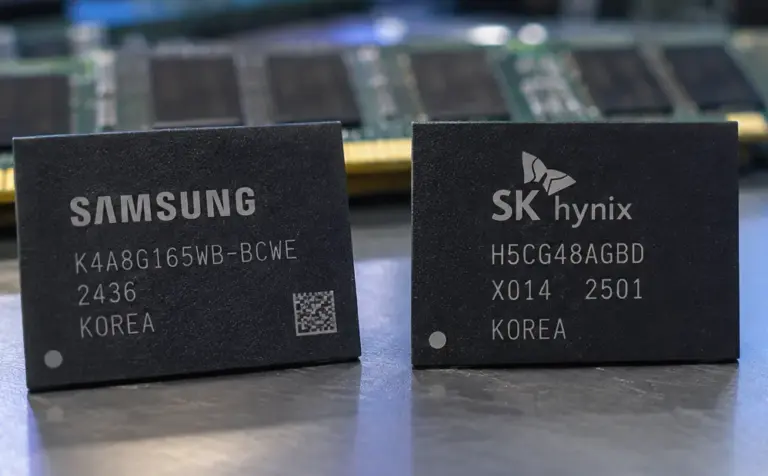
Samsung Electronics and SK Hynix shares plunged on Thursday, dragging South Korea’s benchmark Kospi lower as semiconductor stocks faced renewed pressure following Democratic victories in the US midterm elections.

The Kospi index fell more than 5%, triggering a temporary suspension of program selling during early trading.

Samsung shares dropped more than 7.5%, while SK Hynix dropped close to 9.5% as investors reassessed the outlook for AI infrastructure spending and chip demand.

The two semiconductor giants together account for roughly half of the Kospi’s total market capitalization, making their movements particularly influential for the broader index.

Their combined market value had reached around 50% of the benchmark ahead of Thursday’s selloff.

US election results deepen AI concerns

Democrats won control of both the House of Representatives and the Senate in Wednesday’s midterm elections, raising expectations of closer scrutiny of the rapidly expanding AI infrastructure industry.

Investors are concerned that greater oversight of energy and water consumption, stricter permitting requirements and potential restrictions on data-center construction could slow the pace of investment in the US.

That could have implications for Samsung and SK Hynix, which are major suppliers of high-bandwidth memory (HBM) used in AI accelerators and data-center systems.

Any slowdown in infrastructure expansion could affect future demand for advanced memory chips.

The Philadelphia Semiconductor Index also fell around 3% on Wednesday, while mixed results from US chipmakers Qualcomm and Arm added to concerns.

Qualcomm reported handset chip revenue of $5.14 billion, below expectations, while Arm’s record revenue failed to satisfy investors seeking stronger growth signals.

SK Hynix’s US expansion faces regulatory hurdle

SK Hynix is also facing uncertainty over its expansion plans in the US after Washington held up approvals for American chipmaking equipment needed to expand production at its Dalian facility in China.

According to Reuters, the company is seeking export licenses from the US Commerce Department, arguing that additional production in China would generate revenue to help finance its proposed NAND manufacturing facilities in Marcy, New York.

The investment could initially involve around $45 billion, with the potential to reach $100 billion over time.

Executives from SK Hynix subsidiary Solidigm have reportedly held nearly 10 meetings with Commerce Department officials since late August, but approval remains pending.

Samsung expands HBM plans

Separately, Samsung is preparing to use its second foundry facility in Taylor, Texas, to manufacture base dies for HBM chips supplied to Nvidia and AMD, according to a Maeil Business Newspaper.

Construction is expected to formally begin this month, with mass production targeted for 2030.

Most of the facility’s reported output has already been secured through customer orders, with AMD accounting for the larger share. Samsung has yet to officially confirm the report.

Samsung is also facing changes in its labor structure, with employees filing an application to establish a sixth labor union amid reported disagreements within existing unions over compensation and wage negotiations.

The post Why Samsung and SK Hynix shares declined heavily on Thursday? appeared first on Invezz

Micron Technology MU has suspended construction plans for a $4.5 billion memory-chip manufacturing facility in Taiwan following an escalating labor dispute with its employees, Bloomberg reported on Thursday.

The proposed facility in Taoyuan, northern Taiwan, was expected to become an important production base for dynamic random-access memory (DRAM) and high-bandwidth memory (HBM), two critical components used in artificial intelligence data centers.

Its shares fell around 7% on Wednesday and declined another 2% in premarket trading Thursday as investors assessed the potential implications for its manufacturing expansion.

The American chipmaking giant has already been under pressure with questions around the sustainability of the AI boom, especially after the Democratic victories in the midterm elections.

Why has Micron halted construction?

Micron executives in Taiwan have effectively paused construction at the planned facility, Bloomberg reported, citing people familiar with the matter.

The company has reportedly informed Taiwanese officials and a supplier about the decision.

The project, known as Fab 11E, was previously scheduled to begin production in 2028.

Micron had budgeted between $3 billion and $4.5 billion for the facility, including purchases of advanced equipment from ASML.

The company is concerned about uncertainty surrounding its labor negotiations and the possibility that an agreement previously reached with one of its unions could be challenged.

Micron told Bloomberg that its existing operations in Taiwan continue normally and that it remains confident in maintaining business continuity for customers.

The company also said it was looking forward to reaching an agreement with the protesting union.

Workers demand 15% of operating profits

Micron has been one of the biggest beneficiaries of the AI boom, with its memory chips in high demand and prices shooting up.

In its recent Q3 results, revenue more than quadrupled year-over-year with gross margins in the mid-80s.

The spat between Micron and its Taiwanese workers has been a bone of contention as employees demand higher compensation.

Workers have been seeking an arrangement under which 15% of the company’s global operating profits would be distributed among employees, similar to profit-sharing measures at rivals Samsung Electronics and SK Hynix.

Micron reached an agreement with its larger Taichung union in October, but the separate Taoyuan union remains dissatisfied with the terms.

Some employees are seeking to reopen negotiations, while Micron believes the existing agreement is legally binding.

The Taoyuan union has said it was not notified about the reported construction suspension, although it hopes the company and employees can reach a consensus.

Taiwan’s Ministry of Economic Affairs said it supports the legal agreement reached between the company and the union and would work with local authorities to resolve the differences.

“The government supports the legal agreement the company has reached with the union, and will shoulder and share responsibilities with the local government to help resolve the differences and create a win-win outcome,” the ministry told Bloomberg.

AI disclosure: AI tools assisted with research and drafting of this piece. An Invezz editor reviewed the facts, sources and wording before publication. Any opinions or analysis are Invezz’s, not those of an automated system.

The post Micron slips in premarket as report says $4.5B Taiwan factory plan suspended appeared first on Invezz

OpenAI could be ready to go public in 2027, President and co-founder Greg Brockman said on Wednesday.

Speaking at ⁠a Wall Street Journal tech conference in Napa, California, Brockman offered the clearest indication yet of the ChatGPT maker’s plans for a potential stock market debut as it accelerates enterprise growth and seeks fresh funding.

Brockman expressed confidence in the company’s financial position and its ability to compete with rival Anthropic, which is preparing for a potential public listing before the end of this year.

Asked whether OpenAI would be ready for an initial public offering next year, Brockman responded: “I think so.”

Enterprise business drives OpenAI’s recovery

Brockman said OpenAI’s performance during the first half of 2026 had been difficult as Anthropic gained ground in the enterprise market and attracted greater attention for its AI coding products.

“Q1 was pretty rough, Q2 was pretty rough. It felt like in many ways we were not even in the conversation,” he said, referring to the company’s position in the competition with Anthropic.

OpenAI’s Codex coding tool had failed to attract significant attention initially, but the company continued developing its products and expanding its business offerings.

That strategy began producing results in the third quarter, as per Brockman.

He said OpenAI recorded 70% quarterly growth in annualized revenue, while its enterprise business surged during the period.

“It wasn’t an accident but we worked hard on it,” he said.

The shift has also changed OpenAI’s revenue mix.

The company, once primarily viewed as a consumer-focused business because of ChatGPT, now generates the majority of its revenue from enterprise customers, Brockman said.

Year ago we were not really in the enterprise game. We were perceived as a consumer company but it is so so different today. Now we are somewhere around majority enterprise.

President OpenAI
Greg Brockman

The expansion of business sales is particularly important as OpenAI competes with Anthropic for corporate customers seeking AI tools for coding, productivity and other workplace applications.

OpenAI secures $11 billion

OpenAI has secured approximately $11 billion in commitments for its latest funding round, falling well short of its original $30 billion target, according to a Wall Street Journal report published October 30.

The funding round values the ChatGPT maker at approximately $1.25 trillion, below the $1.4 trillion valuation it had initially sought.

Investor appetite has weakened amid growing concerns over the sustainability of massive artificial intelligence investments and a broader selloff in technology stocks.

OpenAI has told shareholders that it plans to seek additional funding in the coming weeks, targeting family offices and high-net-worth individuals.

The company is now aiming to raise as much as $20 billion, WSJ reported.

Anthropic competition adds urgency

OpenAI’s fundraising and IPO preparations come as Anthropic moves toward a potential public listing before year-end.

The two AI companies are competing for enterprise customers as well as investor capital, making revenue growth and commercial adoption increasingly important measures of their long-term prospects.

Brockman’s comments suggest OpenAI believes its recent enterprise momentum has helped restore its competitive position after a difficult first half of the year.

Anthropic is likely to make its debut this year, with a November listing being speculated.

AI disclosure: AI tools assisted with research and drafting of this piece. An Invezz editor reviewed the facts, sources and wording before publication. Any opinions or analysis are Invezz’s, not those of an automated system.

The post OpenAI ready for 2027 IPO as president Brockman says enterprise revenue surging appeared first on Invezz

The mining industry is facing a looming crisis centered right in its own backyard, according to a new risk assessment from EY. The consultancy warns that operational complexity has become the primary threat heading into 2027, largely driven by the reality of aging mines and declining ore quality. As high-grade deposits vanish, companies are forced to deal with volatile mineral concentrations and fewer viable alternatives when disruptions occur, creating a precarious environment where small errors lead to massive financial losses.

These pressures are already manifesting in corporate balance sheets through soaring production costs. Major players like First Quantum Minerals and Codelco have seen their cash costs climb due to everything from equipment failures and seismic events to currency fluctuations. In the gold sector, physical instability is proving just as costly, evidenced by recent wall failures at Agnico Eagle Mines that could slash annual output by hundreds of thousands of ounces over the coming years. This fragility is further compounded by an unstable global supply chain for essential reagents like sulfuric acid.

To combat these headwinds, many operators are turning toward larger inventory stockpiles and enhanced digital tracking tools to gain better visibility over their supplies. While there is significant government funding pouring into critical minerals—reaching an estimated sixty five billion dollars for 2025—investors remain cautious, preferring stable jurisdictions and strategically vital materials over speculative ventures.

However, the rush toward modernization brings its own set of dangers. While AI promises higher productivity, experts warn that fragmented systems often create expensive organizational silos. Furthermore, as mines become more connected, they become more vulnerable to cyberattacks; current data suggests that two thirds of mining assets sit in a danger zone regarding security visibility. Combined with tightening environmental regulations and a growing need for community trust, the industry finds itself navigating a narrow path between technological ambition and fundamental geological decay.

Mining magnate Frank Giustra believes that regardless of who wins in Washington, the United States is spiraling toward a fiscal breaking point. Speaking recently at the 2026 New Orleans Investment Conference, the Fiore Group CEO argued that neither political party has shown the courage to tackle an unsustainable national debt that now exceeds forty trillion dollars. According to Giustra, the cycle of relentless deficit spending and soaring interest costs has created an inescapable trap, leaving policymakers with little choice but to lean on aggressive monetary interventions like quantitative easing.

This eroding confidence in the U.S. dollar is driving a global pivot toward hard assets, with gold emerging as a cornerstone of a shifting world order. Giustra noted that central banks across China and the Global South are aggressively stockpiling gold to insulate themselves from Western financial volatility and reduce their dependence on the greenback. This trend is backed by recent data showing record quarterly purchases by official institutions, fueling hopes for a parallel financial system where physical gold serves as the primary mechanism for settling international trade surpluses.

For those looking to protect their wealth, Giustra offered blunt advice regarding ownership, stating that anything other than physical gold is essentially worthless. While he views silver as a strong play for speculators due to its industrial utility, he sees gold as the ultimate long term sanctuary during periods of financial repression and currency devaluation. He even suggested that Canada should rethink its lack of official reserves by purchasing its own domestically produced gold rather than exporting every ounce to foreign markets.

Beyond precious metals, Giustra highlighted copper as the standout opportunity for mining investors today. He pointed to a perfect storm of systemic underinvestment and declining ore grades that have left the market starved for supply just as global demand continues to climb. In his view, copper represents one of the most obvious structural opportunities available because the timeline to develop new mines simply cannot keep pace with current needs, making it a critical asset in an evolving economy.

The once predictable ascent of Vice President JD Vance toward the presidency has hit a sudden and sharp detour following a bruising performance by Republicans in Tuesday’s midterm elections. While Vance previously seemed like the natural heir to Donald Trump’s legacy, the scale of the GOP losses has sparked an immediate internal crisis regarding the party’s direction. Recognizing the shifting winds, Vance spent Wednesday attempting to carve out a distinct identity, using social media to distance himself from certain unpopular foreign policy choices and framing his future priorities around domestic affordability and a reassessment of American involvement abroad.

Despite these pivots, high profile figures within the party are already suggesting that the road to 2028 is wide open. Former Speaker Newt Gingrich noted that the magnitude of the defeat stripped away much of Vance’s perceived momentum, while grassroots leaders in key early states like Iowa warn that the upcoming cycle could mirror the chaotic and crowded primaries of 2016. Strategists suggest that running as a mere extension of a third Trump term may be too risky given current voter sentiment, leaving room for alternative candidates to argue they are better equipped to modernize the party’s appeal.

Florida Governor Ron DeSantis has been among the quickest to capitalize on this instability. After seeing his political stock dwindle following his failed 2024 bid, DeSantis is now positioning himself as a corrective force. He has launched stinging critiques of the current administration’s handling of immigration and government corruption, even taking swipes at tech industries closely tied to Vance. By describing the midterms as an extinction level event while highlighting Florida’s relative resilience, DeSantis is signaling to donors and activists that he remains a viable option for those seeking a departure from the status quo.

Vance still holds significant structural advantages, including deep ties to major donors and an expected endorsement from Donald Trump. However, those assets are being tested as other ambitious Republicans join the fray. Senator Ted Cruz has begun emphasizing economic pain that he claims was ignored by leadership, while Georgia Governor Brian Kemp is calling for a return to traditional conservative principles. As these factions begin to mobilize, what looked like a coronation for Vance has transformed into an unpredictable scramble for control over the future of the Republican Party.

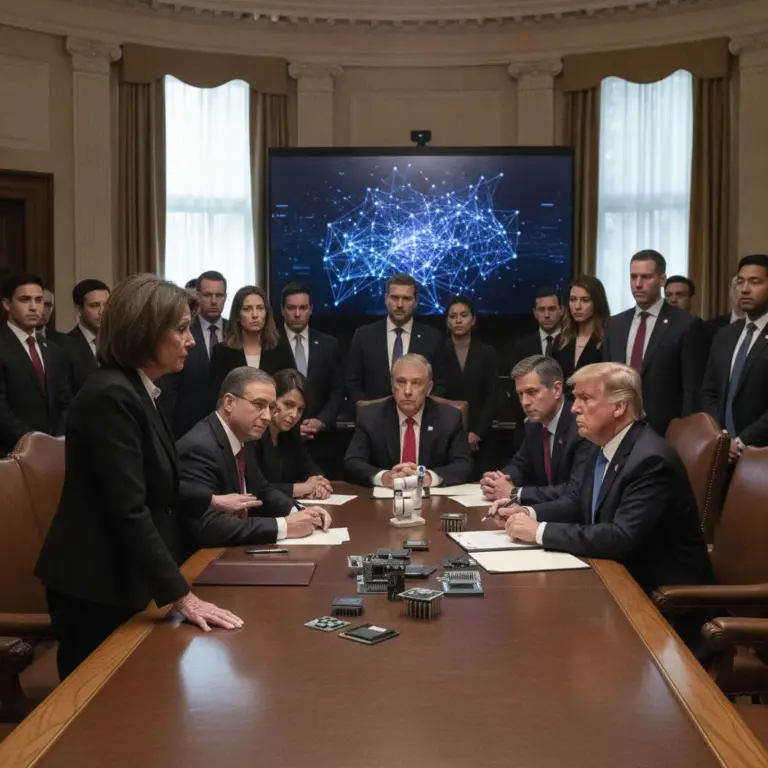
The recent midterm elections have handed Democrats control of both the House and Senate, creating a complex new dynamic for the rapidly expanding artificial intelligence sector. While President Trump continues to prioritize what he calls superintelligence through executive action and retains the power to veto federal laws, the shift in congressional leadership signals a move toward much stricter scrutiny. Policymakers are now focusing heavily on the hidden costs of the AI boom, specifically regarding massive energy consumption from data centers, cybersecurity risks, and the long term effects on the American workforce.

This tension is perhaps most visible at the state level, where Democratic wins in key regions could physically slow down the buildout of AI infrastructure. In places like Texas, where Democrats flipped several high profile offices, there are growing concerns that data center construction could face temporary pauses or increased demands to fund grid upgrades. Analysts suggest these regional hurdles might put a significant portion of projected capacity growth at risk over the next few years, potentially impacting semiconductor firms and cloud computing giants.

Despite these emerging roadblocks, industry experts believe that a total freeze on investment is unlikely because AI remains a critical strategic asset for both political parties. Companies are finding themselves caught between a desire to scale quickly and an evolving patchwork of state regulations concerning safety, bias, and copyright law. Rather than stopping their momentum, many business leaders argue that firms must establish their own rigorous internal governance standards to navigate this era of political volatility without halting innovation entirely.

Ultimately, while Democratic gains introduce fresh headwinds for tech providers and land developers, the broader appetite for AI integration appears resilient. Investors expect capital spending to remain robust through 2027, even as companies grapple with tighter credit markets and supply chain constraints. The coming months will likely be defined by a tug of war between an executive branch pushing for unchecked acceleration and a legislative body determined to impose guardrails on the digital frontier.

Los Angeles is entering a new political era after CNN’s Decision Desk projected that city councilmember Nithya Raman has defeated incumbent mayor Karen Bass. The victory marks a significant shift toward the left for the nation’s second largest city, joining New York in being led by a democratic socialist. Raman secured her path to the mayor’s office after navigating a competitive nonpartisan primary where she edged out Republican Spencer Pratt, setting the stage for a clash between the party’s insurgent wing and its established leadership.

At forty five years old, Raman represents a growing trend within the Democratic Party where progressives are successfully capturing key urban centers. Her win follows similar victories for democratic socialists in Seattle and Washington DC, signaling an ideological evolution among voters in deep blue hubs. Upon taking office, Raman intends to tackle the city’s most pressing crisis by vowing to reduce street homelessness by half before the eyes of the world turn toward Los Angeles for the 2028 Olympics.

The loss is a stinging rebuke for Karen Bass and the traditional political machinery of Los Angeles. As a seventy three year old pillar of the establishment and a trailblazing former speaker of the State Assembly, Bass enjoyed broad support from major labor unions. However, that support was not enough to overcome voter frustration over housing costs and her administration’s handling of the devastating 2025 wildfires. The appetite for change was evident early on, as outside candidates combined for more than half of the total vote during the primary cycle.

Beyond local governance, this result sends ripples through the national political landscape just as preparations begin for the 2028 presidential primaries. The battle fought in Los Angeles serves as a case study for whether these progressive platforms can translate from municipal successes into national viability. For now, however, the focus remains on City Hall and whether Raman’s ambitious goals can resolve long standing issues that have plagued previous administrations.