Archive

November 5, 2026

Browsing

Oil prices plunged nearly 9% as investors assessed the implications of the US midterm elections for the war in Iran and the outlook for energy supplies.

Gold climbed more than 3%, supported by a weaker dollar and expectations of potential changes to the Federal Reserve’s policy outlook.

SpaceX and Tesla shares fell as Democratic election victories raised concerns about political and regulatory risks facing Elon Musk’s businesses.

Meanwhile, Alphabet expanded its voluntary employee buyout programme to five more countries as it seeks to manage costs while investing heavily in artificial intelligence infrastructure.

Oil prices fall 8% as markets assess Iran war outlook

Oil prices dropped sharply on Wednesday, with Brent crude falling 8.8% to $94.47 a barrel and US West Texas Intermediate futures declining 8.74% to $87.70.

Brent fell below $100 and touched its lowest level since September 4 as investors weighed the potential implications of the US midterm elections for the conflict involving Iran.

Democrats won control of both the House of Representatives and the Senate, while President Donald Trump said the US had no immediate plans to strike Iran.

The election outcome raised expectations that political pressure could encourage Washington to pursue a diplomatic solution.

However, uncertainty remained over the prospects for a peace deal, with a senior Iranian official indicating that Tehran and Washington remained far from an agreement.

Qatar stepped up mediation efforts to prevent further escalation.

Meanwhile, Yemen’s Houthis claimed to have targeted King Khalid International Airport in Riyadh, although Saudi authorities had not confirmed the reported attack.

Energy supply data also remained in focus.

Gulf exports of crude, condensate and refined products averaged 17.1 million barrels per day in October, below September’s 18.9 million bpd but still around three-quarters of pre-war levels.

In the US, crude inventories fell by 865,000 barrels to 409.8 million barrels in the week ended October 30, according to the Energy Information Administration.

Gold price jumps as dollar hits a one-month low

Gold prices advanced more than 3% on Wednesday, with spot bullion rising 3.34% to $4,059.39 an ounce. US gold futures for December delivery also settled 3.36% higher at $4,072.30.

The rally put gold on track for its biggest daily gain since mid-August and pushed spot prices back above the $4,000 level.

The metal had fallen to $3,869.85 on October 30, its lowest level since October 2025.

A weaker US dollar provided support by making dollar-priced bullion cheaper for overseas buyers.

The dollar fell to a more than one-month low after Democrats secured control of Congress, prompting investors to reassess the economic and policy implications of the election results.

Attention also turned to upcoming US employment data.

Investors are awaiting Friday’s nonfarm payrolls report for clues about the Federal Reserve’s interest rate outlook.

Traders were pricing in an 83% chance of a rate increase in December, according to CME Group’s FedWatch tool.

Other precious metals also advanced.

SpaceX and Tesla stocks fall after Democratic election gains

Shares of SpaceX and Tesla fell in trading as Democratic victories raised concerns about tighter scrutiny of AI companies and uncertainty surrounding Musk’s business expansion plans.

SpaceX shares dropped more than 4.9%, while Tesla declined over 2.3%, even as Dow Jones rose nearly 3%.

The results were a setback for Musk, who contributed approximately $474 million to Republican candidates and political groups during the election cycle.

Several candidates he supported, including Ken Paxton in Texas and Vivek Ramaswamy in Ohio, lost their respective races.

Texas is particularly important to Musk’s businesses, hosting Tesla’s largest US vehicle factory and SpaceX’s Starbase launch facility.

The victory of Democrat Gina Hinojosa in the gubernatorial race could create challenges for new projects, given her opposition to corporate subsidies and support for tighter restrictions on data centres.

Investors are also assessing the potential impact of greater congressional scrutiny on Musk’s companies and a possible merger between SpaceX and Tesla.

Google extends voluntary buyouts to five more countries

Alphabet has expanded its voluntary employee buyout programme to Canada, France, Germany, Japan and Switzerland as it seeks to manage operating costs while increasing AI investment.

The company confirmed that it extended voluntary exit offers to employees in the five countries in June.

However, the number of workers who accepted the packages remains unclear.

The latest expansion follows earlier voluntary exit programmes introduced across some Google teams in 2025 and subsequently extended to selected employees in the US and UK.

The move comes as major technology companies reassess workforce costs while committing substantial capital to AI infrastructure.

Microsoft, Meta, Amazon and Oracle have also undertaken workforce reductions or voluntary exit initiatives.

Alphabet’s cost management efforts come amid growing investor scrutiny of its AI spending.

The company recorded $51.4 billion in capital expenditure in the third quarter, more than double the year-earlier figure.

Free cash flow turned negative at $9.1 billion, reflecting heavy infrastructure investment, inventory buildup for its TPU systems, and a European Commission-related payment.

AI disclosure: AI tools assisted with research and drafting of this piece. An Invezz editor reviewed the facts, sources and wording before publication. Any opinions or analysis are Invezz’s, not those of an automated system.

The post Evening digest: oil falls 8%, gold rallies after Democrats’ election victory appeared first on Invezz
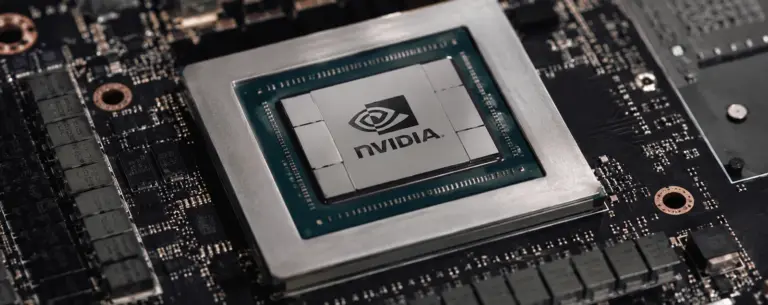
Nvidia shares NVDA fell on Wednesday as part of a broader sell-off in semiconductor stocks after Democratic victories in the US midterm elections raised concerns that data centre construction could slow down or become more expensive.

Nvidia was down about 1.5% around 1:38 pm, while other chipmakers also came under pressure.

Micron Technology shares fell more than 5%, Intel declined around 3.7%, and Broadcom lost more than 1%.

The Philadelphia Semiconductor Index was down over 3%.

Meanwhile, broader markets rallied, with Dow Jones gaining close to 3%, and S&P 500 and Nasdaq gaining about 1.8% each.

Investors had been concerned ahead of the elections that a Democratic sweep could weigh on companies linked to the artificial intelligence infrastructure boom by bringing tougher restrictions on data centre construction.

The victory of Democrat Gina Hinojosa in the Texas gubernatorial race intensified those concerns, given her pledge to impose an immediate moratorium on new data centre projects in the state.

Hinojosa defeated Republican incumbent Greg Abbott in a major upset on Tuesday.

During the final weeks of her campaign, she repeatedly criticised the rapid expansion of large server facilities and called for a statewide moratorium, vowing to “stop the data center takeover.”

Texas is central to the US data centre expansion, accounting for about 27% of planned capacity, according to Wells Fargo.

Texas and Ohio victories raise concerns for AI infrastructure

Dan Ives, partner at Yorkville Ives & Co., said the election results could slow the pace of data centre construction across the country.

“For tech investors the big focus is will these mid-term elections slow the pace of the planned 800 to 1,000 data centers across the US fueling the AI Revolution…the answer in our view is a clear YES,” Ives wrote in a note to clients.

“There is no way to sugarcoat that Democrats taking control, especially over the Senate, will create some major hurdles for AI and tech legislation in the Beltway over the next 2 years. While Trump will likely veto any major draconian AI safety or regulatory laws, this will force the tech industry (Big Tech CEOs) to the negotiating table to try to come up with compromises around legislation in Congress surrounding AI-related legislation.”

Ives described the Texas result as the “biggest worry” for technology investors and the AI trade, given that the state could account for around 25%-30% of planned data centre capacity.

Ohio has also emerged as a potential source of delays.

Morgan Stanley analysts said the election of Democrat Amy Acton as governor creates a significant risk of project delays in the state, including a 10-gigawatt development involving Nvidia that would be Ohio’s largest data centre project.

Nvidia has agreed to invest as much as $105 billion to support one of the world’s largest data centres, which is being built in Ohio and will be leased to OpenAI.

The state had already imposed a moratorium earlier this year on considering new applications for data centre tax exemptions.

Goldman Sachs economists also warned that political changes could affect infrastructure investment.

“Democratic wins at the state and local level are likely to lead to short-term data center moratoria, potentially affecting about 45% of planned US data center capacity expansion,” they said in a note.

Higher construction costs could affect Nvidia’s growth outlook

A slowdown in data centre construction could eventually temper demand for Nvidia’s graphics processing units (GPUs), which are essential for training and running AI models.

However, Ives argued that the change could result in a more measured expansion rather than derail the industry’s long-term growth prospects.

“We have always said 5%-10% of data centers might not get built from the political backlash, but the Street still is way underestimating the future revenue growth and profitability that AI will bring to the tech world (and other industries) over the next few years,” he added.

“Now it will happen at a more measured pace, which is likely a good thing in the eyes of many investors…and the market will digest this news and move forward.”

DA Davidson analyst Gil Luria told MarketWatch that the election results could also make data centres more expensive to build.

In some states, the additional costs could become “prohibitively expensive”, he said.

Luria explained that data centre projects are generally negotiated at the local level, allowing individual municipalities to determine the terms of agreements with developers.

“Overall, the additional hurdles for data centers may act to slow down the buildout in the US, which could limit the deployment of the chips that go into those data centers,” he said.

For Nvidia investors, the concern is that even if demand for AI computing remains strong, delays in securing approvals, higher infrastructure costs and local opposition could affect the pace at which new capacity comes online.

AI disclosure: AI tools assisted with research and drafting of this piece. An Invezz editor reviewed the facts, sources and wording before publication. Any opinions or analysis are Invezz’s, not those of an automated system.

The post Why is Nvidia stock falling while broader markets rally on Democratic midterm win? appeared first on Invezz

Novo Nordisk shares NVO rallied on Wednesday after the Danish drugmaker reported stronger-than-expected third-quarter results, driven by demand for its Wegovy weight-loss pill, and raised its full-year outlook for the third time this year.

The company’s American depositary receipts rose as much as 5.36% to $42.36, recovering some ground after falling more than 20% this year through Tuesday’s close.

The results offered investors some reassurance as Novo attempts to regain market share from US rival Eli Lilly in the increasingly competitive obesity drug market.

Novo reported adjusted sales of 79.2 billion Danish kroner for the third quarter, up 6% from a year earlier.

Adjusted operating profit increased 27% to 31.72 billion kroner at constant exchange rates, beating analyst expectations.

Wegovy pill sales exceed analyst expectations

The Wegovy pill was the main contributor to the earnings beat.

Sales of the oral treatment reached 5.39 billion kroner ($810 million) in the third quarter, compared with analyst expectations of 4.62 billion kroner, according to Reuters.

The figure represented a 53% increase from the previous quarter.

Launched in the US in January, the pill is now available in eight markets, including Germany, the UK and the United Arab Emirates.

The oral treatment is considered an important growth opportunity for Novo because it could attract patients who prefer not to use injectable weight-loss drugs.

The company said manufacturing output and faster regulatory approvals had enabled it to accelerate the rollout.

It now plans to launch the pill in more than 20 countries by mid-2027, bringing forward its previous target of the end of 2027.

Novo said the pill holds around 80% of the US oral obesity drug market across reimbursed, cash-pay and telehealth channels.

It also reported market shares of approximately 90% in the UK and 80% in the UAE.

US demand received support from a government programme that allows eligible seniors to access obesity drugs for $50 a month.

Novo’s US head said the programme was largely responsible for an approximately 20% quarterly increase in Wegovy pill volumes.

Novo raises outlook as it seeks to regain market share

Novo raised its 2026 forecast for adjusted sales and operating profit growth to between a 2% decline and 2% growth at constant exchange rates.

Its previous outlook had projected flat growth to a decline of 6%.

The company attributed the improved outlook to stronger volumes, particularly for obesity treatments, in both the US and international markets.

It expects international sales to grow while US sales decline.

The revised forecast marks the third time Novo has raised its outlook this year, offering a sign of progress after a period of declining sales and management changes.

However, competition remains a significant challenge.

Eli Lilly recently raised its own revenue outlook following strong demand for its injectable weight-loss treatments and is also gaining traction with its rival oral drug, Foundayo.

Novo Chief Executive Mike Doustdar said the company had maintained its position despite Lilly’s entry into the pill market. “We’ve been able to hold the baton,” he told Reuters.

He also acknowledged the competitive threat, saying Lilly was working hard to reverse the current market position.

Leadership changes and competition remain in focus

Novo’s recovery comes after its shares fell more than 70% from their peak, while Lilly’s stock advanced.

The Danish company had become Europe’s most valuable listed company in 2023, with its market value exceeding $600 billion.

The latest results have raised hopes that the company is stabilising under its new leadership.

However, analysts continue to warn that competition in the obesity drug market is likely to intensify.

Novo also announced that Chief Financial Officer Karsten Munk Knudsen will leave at the end of December.

Luigi La Corte, currently finance chief at Galderma, will succeed him.

Investors will be watching whether the Wegovy pill can sustain its growth and help offset weakness in injectable sales as Novo seeks to narrow the gap with Lilly.

AI disclosure: AI tools assisted with research and drafting of this piece. An Invezz editor reviewed the facts, sources and wording before publication. Any opinions or analysis are Invezz’s, not those of an automated system.

The post Novo Nordisk stock jumps as Wegovy pill sales beat estimates appeared first on Invezz

Qualcomm (QCOM) shares came under pressure in after-hours trading on November 4th even after the chipmaker delivered quarterly revenue and earnings that topped Wall Street expectations.

The company posted adjusted earnings per share of $2.17 on revenue of $10.32 billion – narrowly beating consensus estimates, but investors focused on management’s muted guidance.

Qualcomm now sees current-quarter earnings to fall between $2.15 to $2.35 per share on revenue of at least $10.4 billion.

QCOM stock is currently down some 30% versus its year-to-date high.

Smartphone business still an overhang for QCOM shares

At first glance, Qualcomm’s report looked like a classic earnings winner.

Sales topped estimates, adjusted earnings edged past expectations, and several “growth initiatives” continued to gain traction.

Yet investors quickly zeroed in on a more concerning detail: the company’s core handset business remains under pressure.

Handset chip sales came in at $5.14 billion during the quarter, below Wall Street expectations.

According to management, rising memory prices are forcing smartphone manufacturers to raise prices, creating demand challenges across the industry.

That matters because smartphones are QCOM’s largest profit engine – and even modest weakness in that segment can overshadow gains elsewhere.

For investors, the takeaway is that Qualcomm is no longer being judged simply on whether it can beat quarterly estimates.

The market wants evidence that the smartphone cycle is improving.

Until that happens, every earnings report risks becoming a referendum on the health of global handset demand rather than the company’s overall execution.

The real story for Qualcomm stock goes beyond phones

While smartphone weakness dominated the immediate reaction in Qualcomm shares, the more important long-term development may be happening outside the handset market.

Chief Executive Officer Cristiano Amon has spent years trying to diversify Qualcomm’s business, and the latest quarter offered evidence that the strategy is gaining momentum.

Automotive revenue surged 89% year-on-year to $1.99 billion, comfortably ahead of expectations.

Meanwhile, the company continues expanding into AI infrastructure and data-center connectivity, a market that’s become one of the most closely watched opportunities in the semiconductor industry.

Management disclosed that data-center-related revenue reached about $650 million during the quarter and reiterated ambitions for significantly larger contributions going forward.

Qualcomm also highlighted a recently announced tech partnership with SpaceX, underscoring how its connectivity expertise is opening new markets beyond smartphones.

For long-term shareholders, these developments matter because they reduce dependence on a single industry.

A broader revenue base could eventually make Qualcomm less vulnerable to the boom-and-bust cycles that have historically defined the smartphone market.

How to play Qualcomm after Q4 earnings?

The market’s negative reaction illustrates a reality that many investors learn only after following earnings season for years: stocks often trade on future expectations rather than historical performance.

Qualcomm’s quarterly results were respectable.

The problem was that management’s guidance suggested the company may face a slower near-term environment than investors had hoped.

Forecasts for the current quarter implied only modest growth, and concerns about smartphone demand remain unresolved.

Still, dismissing the report as disappointing may be shortsighted.

Qualcomm appears to be navigating a difficult transition period in which its legacy smartphone business is slowing while its automotive and AI-related opportunities are accelerating.

Investors willing to look beyond the next quarter may see a company steadily repositioning itself for the next era of computing and connectivity.

Ultimately, this earnings report was not a story about a company missing numbers.

It was a story about a company caught between two narratives: a mature smartphone market that is holding back sentiment today and a collection of emerging growth businesses that could define Qualcomm’s future tomorrow.

That tension, more than any earnings beat or miss, is likely to determine where QCOM stock goes next.

AI disclosure: AI tools assisted with research and drafting of this piece. An Invezz editor reviewed the facts, sources and wording before publication. Any opinions or analysis are Invezz’s, not those of an automated system.

The post Why Qualcomm investors aren’t celebrating the Q4 earnings beat appeared first on Invezz

Wall Street stocks rallied on Wednesday after Democrats secured control of both chambers of Congress in the US midterm elections, easing political uncertainty and boosting investor appetite for equities.

A sharp decline in oil prices also supported the broader market, although concerns about tighter regulations on data centres weighed on parts of the artificial intelligence (AI) infrastructure sector.

The Dow Jones Industrial Average surged 3.03%, or 1,569.40 points, to close at 53,356.12.

It moved above the 53,000 mark for the first time since September 8 and recorded its strongest daily performance since April 9, 2025.

The S&P 500 gained 1.58% to finish at 7,688.62, while the Nasdaq Composite advanced 1.44% to 25,736.51.

Democrats’ victories in the House of Representatives and Senate are expected to create a divided government, potentially limiting the administration’s ability to advance its policy agenda.

Investors had been assessing the potential implications of the election for business taxes, tariffs, energy policy and technology regulation.

Oil prices fall as Iran war uncertainty eases

Stocks extended their gains as US crude oil futures fell more than 8%, while Brent crude futures also declined by more than 8%.

The drop followed comments from Vice President JD Vance linking the Republican Party’s election losses to the Iran war.

The election outcome increased expectations that political pressure to end the conflict could intensify, potentially reducing concerns about supply disruptions and elevated energy costs.

Lower oil prices helped support sentiment across the broader market, particularly as investors remained concerned about inflation and the impact of higher energy costs on consumers and businesses.

The US dollar weakened against most major currencies, while yields on longer-dated Treasury bonds moved lower.

AI stocks split as data centre concerns grow

Technology and AI-related shares recorded mixed performances as investors assessed the potential impact of Democratic victories on the industry’s infrastructure expansion.

Large technology companies, including Amazon, Meta Platforms and Alphabet, advanced.

Investors appeared to favour cash-rich technology companies that could benefit if a slower pace of AI infrastructure investment reduces their capital requirements.

However, data centre operators and some infrastructure suppliers came under pressure amid concerns about tighter regulation and potential delays to new projects.

The election of Democrat Gina Hinojosa as Texas governor added to these concerns.

Hinojosa has pledged an immediate moratorium on data centres in the state, which is a major hub for the industry.

Shares of IREN and Hut 8 fell sharply, while Applied Digital and Core Scientific also declined.

CoreWeave and SpaceX were among the other companies trading lower.

The Philadelphia Semiconductor Index fell to a six-month low.

AMD shares also declined despite the chipmaker forecasting faster-than-expected growth in 2027, supported by stronger data centre sales.

Investors assess divided government outlook

The election results also supported gains in companies outside the technology sector.

Walmart shares rose 4%, while Bank of America gained 3%, as investors looked towards consumer and financial stocks.

Consumer discretionary stocks led gains among S&P 500 sectors, while energy shares declined.

Solar and clean-energy stocks advanced on expectations that a Democratic-controlled Congress could help preserve federal support for clean-energy development.

Defence stocks, including Northrop Grumman, RTX and Lockheed Martin, fell as investors considered the possibility that President Donald Trump’s proposed $1.5 trillion defence budget could face greater resistance in Congress.

AI disclosure: AI tools assisted with research and drafting of this piece. An Invezz editor reviewed the facts, sources and wording before publication. Any opinions or analysis are Invezz’s, not those of an automated system.

The post Dow closes 3% higher as Democrats’ midterm victory eases Wall Street uncertainty appeared first on Invezz

Investors using X will now find it significantly easier to act on the financial chatter they see in their feeds thanks to a new partnership with Interactive Brokers. Through the social media platform’s cashtag system, users searching for tickers like Apple or Bitcoin can now access live price charts and expert commentary with a direct bridge to execution. An integrated trade button allows existing clients to jump straight into their accounts while newcomers can sign up and begin researching assets without ever leaving the app.

Tamara Makonnen, the chief marketing officer at Interactive Brokers, noted that the move aims to create a seamless path from market insight to action. By linking its expansive platform, which covers everything from traditional stocks and bonds to crypto and prediction markets, the firm hopes to capture the momentum of breaking news that typically unfolds on X. This initiative positions Interactive Brokers as one of five initial launch partners in the U.S., joining other major players like Coinbase and Kraken in an effort to monetize the intersection of social discourse and finance.

The timing of this rollout reflects a broader shift in how retail trading operates, as viral movements often dictate market volatility today. From the legendary GameStop short squeeze fueled by Reddit to recent surges in uranium and silver sparked by influential posters on X, social media has become a primary engine for retail capital flows. By removing the friction between seeing a trending ticker and placing a trade, x is effectively leaning into the phenomenon where a single meme or analysis post can send an asset soaring within hours.

While some veterans of these retail rallies remain skeptical about whether every trend carries enough weight to sustain long term growth, others see this as an inevitable evolution of digital brokerage services. As platforms continue to integrate real time data into user interfaces, the boundary between consuming content and managing a portfolio continues to blur. For millions of investors globally, the distance between reading a tip on their screen and executing a trade has just shrunk considerably.

The recent wave of elections has signaled a significant political pivot in the United States, with Democrats poised to regain control of both the House and the Senate. This shift represents a clear rejection of the Trump administration’s approach, particularly regarding the rollback of environmental safeguards and the loosening of regulations for the resource sector. As Washington prepares for a change in leadership, industry observers and investors are closely watching how this transition will impact pending legislation designed to ease the path for mining operations.

At the center of the tension is the Bipartisan American Affordability and Jobs Act, a piece of legislation that seeks to overhaul permitting processes and environmental policies for extractive industries. One controversial provision would allow companies to place mill sites on federal lands meant for mining claims to dispose of waste rock and tailings. Such a move would essentially overturn previous court rulings, like those affecting Hudbay’s Rosemont copper project in Arizona, which stalled because officials couldn’t prove valuable minerals existed where waste was being stored. While proponents see efficiency, critics warn that allowing unlimited small mill sites creates a loophole that bypasses essential permitting requirements.

Beyond waste management, the bill proposes sweeping changes to the Clean Water Act and the National Environmental Policy Act that could strip power from state governments, Indigenous groups, and the EPA. These adjustments would make it harder to veto permits in ecologically fragile regions—a move that could breathe new life into dormant ventures like Northern Dynasty’s Pebble project in Alaska. Additionally, proposed limits on legal challenges would force opponents to file suits quickly or risk losing their chance entirely, all while construction potentially continues on-site during judicial reviews.

Because these measures face stiff opposition from many Democrats, Republicans may scramble to pass the bill during the lame duck session before January takes hold. It is not the only ticking clock in Washington; the Export-Import Bank’s charter also expires at year’s end. Without a timely renewal, massive initiatives like Project Vault’s critical minerals reserve could lose their financial footing. While both parties agree on the strategic importance of securing domestic mineral supplies for national security and green energy, they remain deeply divided on how much oversight should accompany that growth.

After more than a decade of Donald Trump dominating the American political landscape, voters have finally reached a breaking point. According to the latest AP Voter Poll, a widespread sense of exhaustion and exasperation with the president played a decisive role in the Republican losses across the House and Senate this Tuesday. While the GOP hoped to maintain its grip on power, many Americans felt that Trump had become far more interested in his own luxury lifestyle and personal fortunes than in solving the daily struggles of ordinary citizens. This perception was compounded by the president’s tendency to endorse flawed candidates who struggled to connect with voters or lacked genuine loyalty, a dynamic Trump himself acknowledged in a post-election interview.

Economic pain proved to be an insurmountable hurdle for Republican candidates who found themselves unable to escape the reality of rising costs. From grocery store receipts to soaring utility bills after a brutal summer, inflation became the defining issue of the cycle. Even in traditionally red bastions like Texas, Democratic challengers gained significant ground by appealing to families facing severe financial hardship. The data suggests that voters didn’t just feel the pinch; they actively blamed Trump’s trade tariffs, his military conflicts abroad, and his failed promises to lower prices for their diminished purchasing power.

Beyond the wallet, a deep seated concern over government corruption steered millions toward Democratic candidates. Many voters were repulsed by reports of Trump soliciting corporate donations for lavish White House renovations and utilizing his office for familial business gains. For roughly two thirds of those surveyed, it became clear that the president simply did not have the right priorities for leading the nation. This sentiment created a hunger for stronger legislative oversight, as seven in ten voters believed Congress had spent too long acting as a rubber stamp for presidential whims rather than providing necessary checks and balances.

However, victory for Democrats does not necessarily signal a surge in popularity for their party. The polling reveals that swing voters often cast their ballots against Republicans rather than out of passion for Democratic platforms. A significant portion of the electorate remains skeptical of both major parties on critical issues like healthcare and immigration, viewing neither side as particularly equipped to lead. As Democrats take back control of Congress, they face high expectations from an electorate that wants an assertive legislative branch capable of reigning in an unpopular executive without alienating a still deeply divided public.

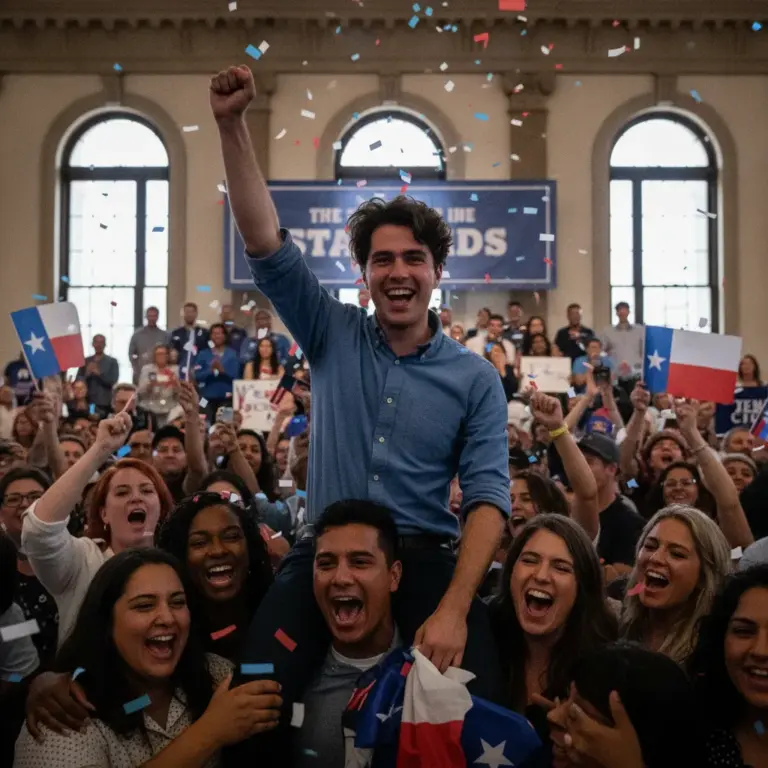
In a result that sent shockwaves through the American political landscape, James Talarico has claimed victory in the most expensive Senate race in U.S. history. By defeating Republican Attorney General Ken Paxton, the 37-year-old former state representative became the first Democrat to win a statewide election in Texas in thirty-two years. This historic win does more than just flip a seat; it brings Democrats one step closer to controlling the upper chamber of Congress and signals a potential shift in the political identity of the Lone Star State.

The campaign was defined by a clash between systemic corruption and grassroots populism. While Ken Paxton entered the race as a formidable name, he remained remarkably passive throughout the contest, avoiding debates and granting few interviews. His candidacy relied heavily on external support rather than personal outreach, culminating in a lackluster bus tour that attempted to leverage symbols like the Alamo without capturing the public’s imagination. Meanwhile, Talarico framed himself as a champion for ordinary citizens, arguing that Texas had become too influenced by big-money donors and corporate interests.

Central to the drama was the unprecedented intervention of Elon Musk, who poured at least 212 million dollars into efforts to keep Paxton in power. From aggressive attack ads claiming Talarico wanted to ban meat to social media posts warning of an end to American democracy, Musk utilized his immense wealth and ownership of X to tilt the scales. However, these attempts backfired when Talarico integrated them into his central narrative. Rather than ignoring the spending, Talarico used it as proof that billionaires were attempting to purchase seats in government like pieces of real estate.

Ultimately, Talarico managed to navigate a middle path, eschewing far-left labels while maintaining a fierce critique of oligarchic influence over land, water, and taxes. Despite being painted as an extremist by high-priced advertising campaigns, his message regarding economic fairness resonated across diverse demographics from Round Rock to San Marcos. As the dust settles on this record-breaking expenditure of capital, the verdict from Texas voters appears clear: some things remain beyond any price tag.

California has entered a new political chapter following the victory of Democrat Xavier Becerra, who defeated Republican challenger Steve Hilton in a race that mirrored a broader national shift toward the Democratic party. Becerra, a veteran politician who previously served as the U.S. Health and Human Services secretary and California’s top prosecutor, becomes the first Latino governor of the state in more than 150 years. He takes over from term-limited Gavin Newsom during a midterm cycle characterized by sweeping gains for Democrats across the United States.

The contest pitted two starkly different visions for the Golden State against one another. Steve Hilton, once a senior advisor to former British Prime Minister David Cameron and backed by Donald Trump, ran on a platform centered on dismantling bureaucracy and reversing economic decline. Despite his energetic campaign, Hilton faced an immense hurdle attempting to secure a Republican victory in one of the most liberal strongholds in the country. Pollsters had long predicted a difficult path for him, and his defeat was projected almost immediately after the polls closed on Tuesday night.

Throughout the campaign, both candidates leaned heavily into the issues plaguing California residents, specifically focusing on skyrocketing housing costs and unstable energy policies. While Hilton argued that the state needed a radical departure from its current trajectory to survive, Becerra promised to restore affordability and expand opportunities for all citizens. In his victory speech delivered in Sacramento, Becerra described his win as mission necessary after several challenging years of tension between the state and federal leadership under Donald Trump.

Acknowledging his defeat at an event with supporters, Hilton admitted that it was perhaps not the ideal year for any Republican candidate given the nationwide democratic surge that helped return full control of Congress to the left. However, he remained optimistic about the future of conservatism in California, describing it as an honor to have traveled through what he called the greatest place in the greatest nation on earth. As Becerra prepares to take office, he does so amid a landscape shaped by high stakes and historical milestones for representation in American politics.