Archive

November 5, 2026

Browsing

In a stunning reversal of political fortunes, Democrats have captured control of the House of Representatives following a night of decisive victories across the country. The shift came as Democratic candidates managed to flip several critical battleground districts, consistently outperforming the margins seen during the 2024 presidential election. Most surprising was the party’s ability to penetrate deep into traditionally Republican territory, securing wins in areas where Donald Trump had previously held a double digit lead.

According to projections from the NBC News Decision Desk, the scale of the victory is substantial. Analysis suggests that Democrats are poised to secure at least 258 seats, potentially resulting in an eighty three seat majority. While analysts continue to call individual races throughout the evening, the overarching trend points toward a significant realignment of power in Washington.

The projection model used to determine these results relies strictly on actual vote counts and historical data rather than exit polls or pre election surveys. As data continues to flow in from across the states via The Associated Press, it appears clear that voters shifted their preference toward Democratic leadership in numbers far exceeding recent expectations. This result sets the stage for a transformed legislative landscape heading into the next term.


Across the United States, the atmosphere is a volatile mix of triumph and trepidation following a historic political shift that sees Democrats taking control of both the House of Representatives and the Senate. For many voters, the result represents a hard won victory and a necessary check on executive power. Some expressed absolute happiness at the polls, viewing the outcome as a mandate for change and a way to steer the country in a different direction during the remaining years of Donald Trump’s presidency.

However, the mood is far from unanimous. In states like North Carolina, conversations among voters have centered less on partisan loyalty and more on the grueling reality of daily survival. Many questioned whether they were truly better off than they were two years ago, citing the rising cost of living as a primary driver for their frustration. While some see this legislative sweep as a beacon of hope, others viewed it with deep disappointment or skepticism, doubting whether another shift in power will translate into tangible relief for middle class families.

Despite these ideological divides, there is a common thread of cautious optimism running through the electorate. There is a pervasive sense that regardless of which party holds the gavel, the American people are tired of gridlock. The prevailing sentiment among those interviewed remains focused on functionality rather than philosophy, with many simply hoping that things finally get done in Washington. As the dust settles on the midterms, all eyes now turn to how this new congressional landscape will clash or collaborate with the White House to shape the future of the nation.

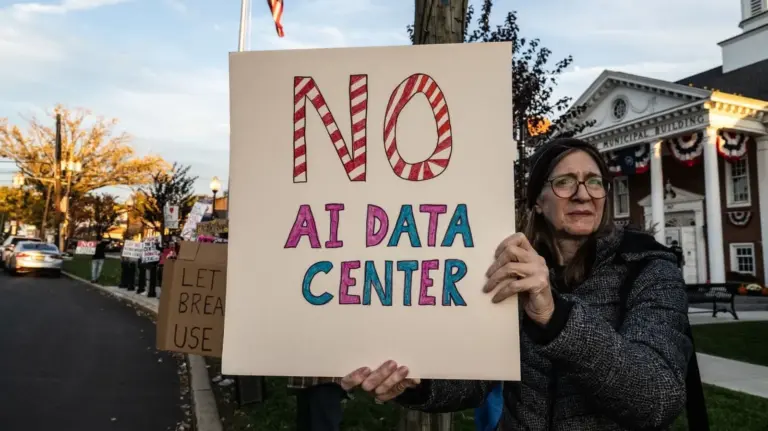
Voters across the United States sent a clear message on Tuesday by rejecting data center expansions in a wave of ballot measures that could derail the current artificial intelligence boom. In more than thirty localities spanning nine different states, residents opted for strict moratoriums and outright bans, signaling a growing grassroots resistance to the massive industrial footprints required for high-speed computing. From Florida to Ohio, citizens are pushing back against the sudden arrival of these facilities, with some cities even voting to bake permanent prohibitions directly into their municipal charters.

The political climate surrounding big tech has shifted dramatically over the last election cycle. Democratic candidates leaned heavily into anti-tech messaging in over a hundred federal and gubernatorial races, creating a ripple effect that forced even pro-industry Republicans to pivot. In Texas, Governor Greg Abbott attempted to distance himself from his previous role as an AI cheerleader by promising tighter regulations, but the strategy failed to save his seat as voter sentiment turned sour toward the rapid buildout of digital infrastructure.

This widespread opposition is now manifesting as a tangible financial risk for the banks and asset managers funding these projects. Investors who were once eager to capitalize on the AI gold rush are beginning to view local zoning battles as significant credit risks. As hyperscale providers scramble to manage the fallout, many are hiring community liaisons in hopes of repairing damaged relationships with skeptical neighbors.

In an attempt to soften their image, several tech giants have tried rebranding their sprawling warehouses as compute campuses, hoping a change in terminology would soothe public anxiety. However, early reports suggest these efforts have seen mixed results at best. With voters increasingly wary of the environmental and social costs associated with these hubs, the industry faces a daunting challenge in convincing local communities that the benefits of AI outweigh the disruption caused by its physical presence.

CVS Health is preparing to dismantle its massive corporate structure, splitting its sprawling network of retail pharmacies from its insurance and benefits operations. This strategic retreat marks a significant shift away from the trend of creating all encompassing healthcare conglomerates. Under the new plan slated for completion by 2028, the company will divide into two distinct entities. One will be known as CVS Pharmacy, overseeing approximately 9,000 stores, in store clinics, and mail order prescriptions. The remaining entity will retain the CVS Health name and manage the Aetna insurance arm alongside Caremark, the pharmacy benefits manager.

The decision follows years of mounting pressure from both regulators and lawmakers who argue that a handful of giants have stifled competition and driven up medical costs for millions of Americans. Along with UnitedHealth Group and Cigna, CVS helps control about 80 percent of the market, generating staggering revenues that have drawn accusations of monopolistic behavior. Political resistance has already manifested in states like Arkansas and Tennessee, where new laws seek to prevent single companies from controlling both prescription benefits and retail pharmacy services. Critics have characterized this concentration of power as crony capitalism that prioritizes profit margins over patient welfare.

This move represents a dramatic reversal for a company that once fought tooth and nail against breakup efforts, previously warning that such moves could leave the healthcare system vulnerable to private equity vultures. For several years, CVS pursued an aggressive expansion strategy highlighted by its seventy billion dollar merger with Aetna in 2018. However, those ambitions failed to translate into consistent investor confidence, leaving shareholders frustrated as stock prices dipped throughout much of late 2024.

Chief Executive David Joyner believes this separation is necessary to evolve with the modern landscape by focusing on affordability and accessibility. While federal legislators continue to push for broader antitrust crackdowns through bills supported by senators like Josh Hawley and Elizabeth Warren, CVS is attempting to get ahead of the narrative. By carving out its retail side from its clinical and insurance arms, the company hopes to simplify its user experience while easing the regulatory heat currently focused on healthcare gigantism.

CVS Health is preparing to dismantle its massive corporate structure, announcing plans to spin off into two separate public companies by the first half of 2028. Under the proposed arrangement, the organization will divide its expansive network of roughly 9,000 retail pharmacies from its powerhouse insurance arm, Aetna, and its pharmacy benefit manager, Caremark. This decision marks a dramatic reversal from just two years ago when the company explored a similar breakup but decided against it because the retail side of the business simply wasn’t strong enough to stand on its own.

Chief Executive David Joyner insists that this move is being made from a position of power rather than desperation. After leading an aggressive turnaround effort that included billions in cost cuts and targeted store closures, Joyner notes that the company now possesses the financial flexibility and operational stability required to execute such a complex divorce. With eight consecutive quarters of beating earnings expectations and a projected surge in cash flow for 2026, the executive argues that the current timing allows for a strategic choice rather than a forced reaction to distress.

Market analysts suggest that the landscape for neighborhood drugstores has shifted significantly in CVS’s favor. As competitors like Walgreens and Rite Aid shuttered numerous locations, CVS found itself capturing more market share while simultaneously updating how it handles prescription reimbursements through programs like CostVantage. While retail pharmacies remain low margin compared to insurance services, they have evolved into a steady engine of profit that no longer drags down the rest of the enterprise. By separating these units, investors may finally be able to see the true value of Aetna and Caremark without them being overshadowed by the slower growth of physical stores.

Beyond internal finances, external pressures may also be playing a role in the decision. Pharmacy benefit managers are currently under intense regulatory scrutiny, with some states passing laws specifically designed to prevent a single entity from owning both a PBM and a retail pharmacy chain. Although leadership denies that regulation is driving the split, experts point out that keeping these disparate businesses under one roof has become increasingly precarious legally. Despite these logical arguments for the breakup, Wall Street reacted with immediate skepticism on Wednesday, sending shares tumbling nearly twelve percent as investors digested what this means for the future of integrated healthcare.

The ambitious expansion of the artificial intelligence industry hit a formidable wall on Tuesday night as voters across ten states overwhelmingly rejected ballot measures favoring data center development. Out of forty one local initiatives designed to restrict these massive facilities, only one passed in Harwood, North Dakota. This sweeping rebuke suggests a growing public anxiety over the environmental and social costs of the AI boom, turning what was once a corporate gold rush into a volatile political liability.

Ohio emerged as the epicenter of this movement, hosting more than half of all the contested measures. The anti data center sentiment translated directly into electoral victories for Democrats in the Buckeye State, including Senator Sherrod Brown and Governor elect Amy Acton. Acton, a physician who defeated Vivek Ramaswamy, has already signaled her intent to implement a conditional moratorium on new projects unless developers guarantee union labor and cover all associated utility costs. These shifts threaten high profile ventures like the PORTS Pike Technology Campus, a project backed by OpenAI and SoftBank that aims to be the largest AI hub in history with potential costs exceeding five hundred billion dollars.

The ripple effect extended far beyond Ohio, influencing critical races in Texas where Governor Greg Abbott was unseated by Gina Hinojosa after she campaigned heavily against the rapid buildout of tech infrastructure. Despite staggering financial investments from Silicon Valley and Elon Musk, whose contributions totaled hundreds of millions of dollars, the money failed to sway a public increasingly wary of big tech’s footprint. A recent poll indicated that fifty six percent of voters viewed data centers as a primary driver in their voting decisions, highlighting a disconnect between corporate spending and community priorities.

As Democrats secure control of the House, the victory lap is quickly turning into a legal summons for tech executives. Representative Greg Casar and other progressive leaders are already calling for AI CEOs to testify under oath regarding their impact on American jobs and resources. With analysts noting that many hyperscalers have seen their cash flows turn negative due to astronomical infrastructure spending, the combination of financial strain and political hostility may force a fundamental pivot in how AI giants approach physical expansion in the United States.

E.l.f. Beauty continues to defy market trends, reporting a staggering 51 percent jump in net sales for its second fiscal quarter. This latest surge marks the company’s 31st consecutive quarter of growth, easily blowing past Wall Street projections and signaling a dominant run in the competitive cosmetics landscape. Revenue hit over 520 million dollars, fueled by a powerful combination of traditional retail success and a digital presence that has turned the brand into a household name among younger consumers.

CEO Tarang Amin credited the victory to broad strength across the entire product portfolio rather than relying on a single viral item. He specifically highlighted the brand’s massive footprint on TikTok Shop, where E.l.f. currently stands as the most searched brand overall and holds the number two spot in cosmetics. The company also noted positive contributions from Rhode, the skincare label acquired last year, suggesting that their expansion strategy is paying off as they scale their offerings globally.

While much of the current success remains rooted in the United States, Amin sees an enormous opening for international expansion since only a quarter of their business currently comes from overseas markets_ In fact, international channels saw an explosive growth rate of 165 percent this quarter alone. To keep this momentum going, the company is leveraging tariff refunds to lower prices on select items, effectively passing savings back to customers to drive higher volume and maintain their edge over pricier competitors.

Looking ahead, E.l.f. is feeling exceptionally confident about its financial trajectory and has officially raised its full year guidance across several key metrics. Net sales expectations have been bumped up toward a potential peak of over 2 billion dollars, while projected earnings per share were revised upward significantly. With a bullish outlook on the upcoming holiday shopping season, the beauty giant seems positioned to close out the year at record heights.