Archive

November 1, 2026

Browsing

ExxonMobil’s (XOM) latest earnings give investors something more useful than another headline about soaring oil profits: a test of how much cash the business can generate – and how much shareholders should expect to keep receiving.

The energy giant reported third-quarter net income of $15.4 billion on October 30, with adjusted earnings of $4.23 per share beating the $4.08 LSEG consensus.

Refining strength helped drive the result, as disruptions to global fuel supplies boosted margins.

But the investment question extends beyond this quarter’s windfall: what survives when those conditions ease?

Refining reveals why Exxon is more than an oil-price bet

Exxon’s Energy Products segment earned $7.17 billion, edging past the $7.09 billion generated by its upstream business.

Compared with Q2, fuel-making profits increased while upstream earnings declined.

That divergence illustrates the value of owning businesses across the energy supply chain.

For investors, crude prices alone therefore offer an incomplete guide to Exxon’s prospects.

Refiners earn money from the spread between feedstock costs and finished-fuel prices; that spread can strengthen even when oil-production earnings weaken.

The implication cuts both ways, though.

Integration provides another source of earnings, but unusually favorable refining conditions can also flatter consolidated profitability.

Investors assessing future earnings should watch diesel margins alongside crude prices, rather than assume every business will keep contributing at today’s pace.

XOM’s cash cushion is substantial – but timing helped

Exxon generated $19.1 billion in free cash flow and distributed $9.4 billion through dividends and buybacks.

Its reported cash generation therefore covered those payments roughly twice over, leaving considerable financial flexibility.

However, working-capital movements contributed approximately $2.2 billion to operating cash flow.

Excluding those movements, operating cash flow fell to $23.4 billion from $25.7 billion in the preceding quarter, even as the headline measure increased.

That distinction matters because inventory, receivables and payment timing can shift cash between reporting periods without representing a lasting improvement in earning power.

Shareholders still received strong cash backing for their payouts.

But annualizing the headline free-cash-flow figure would risk treating a favorable quarterly movement as recurring income.

The more revealing test is cash generation across several quarters, after investment needs and working-capital swings.

The buyback promise sets up the next earnings test

Exxon also announced $20 billion of share repurchases for 2027, subject to reasonable market conditions.

The qualification deserves attention: it preserves management’s ability to respond if the operating environment deteriorates.

Buybacks can increase remaining shareholders’ ownership and support per-share earnings, but their investment value depends on the price paid and the cash available through the cycle.

A large authorization alone cannot establish that shares are cheap.

For prospective buyers, the strongest takeaway is Exxon’s capacity to convert favorable markets into financial flexibility.

The unresolved question is how much of that capacity persists under more ordinary conditions.

Friday’s results make cash coverage, refining profitability and capital allocation the measures to watch next.

Those will help distinguish a stronger underlying business from a particularly lucrative quarter.

The post Exxon earnings: $19B cash haul comes with a catch appeared first on Invezz

Nvidia NVDA shares fell sharply on Friday as a broad selloff in technology stocks intensified concerns over the cost of artificial intelligence infrastructure and the time required for companies to generate returns on their investments.

Disappointing results from Amazon and Intel weighed on semiconductor stocks, while fresh reports involving CEO Jensen Huang and regulatory scrutiny of the company’s acquisition plans added to the spotlight on the chipmaker.

Nvidia was down more than 4.8% trading around $203.40 at the time of writing.

The wider market was also under pressure, with the Nasdaq Composite falling nearly 2.5%, while the S&P 500 and Dow Jones Industrial Average also traded lower.

The Philadelphia Semiconductor Index dropped around 7% as losses spread across chipmakers.

Amazon and Intel results deepen AI concerns

Amazon’s third-quarter results added to investor unease over the scale of spending required to build AI infrastructure.

The company reported a trailing 12-month free cash flow outflow of $42.4 billion, compared with a positive $14.8 billion in the year-earlier period. It was largely driven by increased investment in property and equipment, primarily for AI.

Amazon maintained its capital expenditure outlook of approximately $220 billion for 2026, reinforcing concerns over how quickly its investments will translate into stronger cash generation.

Its shares also came under pressure following the results.

Intel’s weaker-than-expected fourth-quarter guidance further unsettled the chip sector.

Although the company beat third-quarter earnings estimates, it forecast revenue of $15 billion to $16 billion for the current quarter, below Wall Street’s expectation of around $17 billion. Its adjusted earnings forecast of 25 cents per share also missed the consensus estimate of approximately 43 cents.

Intel shares plunged nearly 29%, while AMD dropped around 10%, adding to the pressure on Nvidia and other semiconductor companies.

Alphabet’s results had already contributed to the technology selloff a day earlier.

The Google parent reported third-quarter free cash flow of negative $9.07 billion as capital expenditure on AI infrastructure climbed, while weaker-than-expected advertising revenue added to investor concerns.

Report raises questions over Jensen Huang’s contact

Separately, a New York Times report published Thursday said US intelligence agencies had concluded that Alice Huang, also known as Huang Le, an executive at Singapore-based data centre company Megaspeed, was allegedly acting as a Chinese intelligence asset and passing commercial information to Beijing.

The report said surveillance had revealed that she developed a close relationship with Nvidia CEO Jensen Huang.

Nvidia rejected suggestions that the interactions were unusual, saying meetings with customers were part of the CEO’s job.

The company also said regional cloud customers received ordinary business information, not sensitive trade secrets or information relevant to national security.

DOJ questions Nvidia’s Hugging Face deal

Nvidia is also facing questions from the US Department of Justice over its proposed $12.93 billion acquisition of open-source AI platform Hugging Face.

Reuters reported that the department has asked whether the deal could give Nvidia control over an important distribution channel for AI and provide leverage over competitors.

The inquiry forms part of a broader examination of Nvidia’s acquisitions, investments and sales practices.

The DOJ’s questions do not establish wrongdoing or mean that legal action will necessarily follow.

The post Why Nvidia shares are down over 4% on Friday? appeared first on Invezz

The artificial intelligence (AI) boom still offers an investment opportunity – but Bank of America’s senior strategist Michael Hartnett believes the better deal now lies in lending to technology giants rather than owning their shares.

As of October 30th, he views selected Magnificent Seven bonds yielding 6% to 8% as increasingly attractive after a bruising selloff.

His argument turns the AI investment narrative on its head: companies spending aggressively to build tomorrow’s infrastructure could reward creditors even while testing shareholders’ patience.

The distinction matters as financing costs climb and cash demands intensify.

AI’s enormous funding bill changes the investment equation

The pressure is visible in Amazon’s latest earnings.

The company maintained its $220 billion capex forecast for 2026 while reporting $42.4 billion in negative free cash flow in the trailing 12 months.

Yet operating cash flow increased 29% to $168.3 billion.

That combination reveals the underlying problem: Amazon’s operations are producing substantial cash – but its infrastructure investments are consuming even more.

For shareholders, the “uncertainty” concerns when that spending will generate sufficient additional returns.

But bondholders face a different calculation: whether the borrower can meet interest payments and repay principal.

A business can remain creditworthy while delivering disappointing stock returns.

Hartnett’s preference therefore reflects a distinction between corporate financial strength and the price investors pay to participate in future growth.

Meta’s financing shift offers creditors a different signal

Hartnett’s figures put hyperscaler debt issuance at $182 billion this year, alongside $89 billion in equity issuance – a combined $271 billion.

That funding appetite helps explain why investors are demanding more compensation to finance the AI expansion.

Meta’s plan to raise up to $95 billion through stock offerings illustrates how the consequences can differ across investors.

Additional common shares can dilute existing ownership, while equity financing can reduce reliance on further borrowing, potentially supporting creditors.

The package includes different securities, so its ultimate effect depends on the terms and execution.

Hartnett interprets the shift as evidence that the “era of big buybacks is over.”

That is his broader market thesis, rather than a declaration that every technology company will stop repurchasing shares.

Attractive yields still require careful bond selection

The appeal is straightforward: investors buying selected bonds at depressed prices can secure higher yields and potentially benefit if prices recover.

Unlike shareholders, they do not need expanding stock valuations to earn their contractual payments.

However, a quoted 6% to 8% yield is neither a universal offer across technology debt nor a guaranteed annual investment return.

Maturity, purchase price, seniority, and the issuing entity all matter.

Longer-dated securities can fall sharply when market interest rates rise, while deteriorating credit conditions can push prices lower even if Treasury yields decline.

Hartnett’s thesis ultimately rests on whether borrowing costs now compensate investors adequately for those risks.

For investors convinced that leading technology companies will remain financially resilient, their bonds offer a way to participate in the AI financing cycle with a different balance of income, upside, and downside exposure.

The post Big tech names remain attractive – not their stocks though appeared first on Invezz

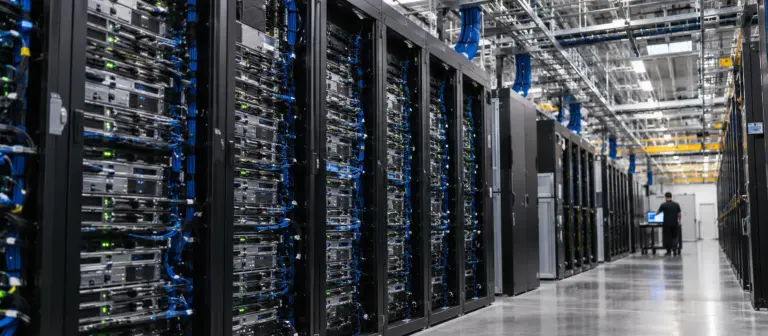
Companies are spending hundreds of billions of dollars to develop artificial intelligence models, hoping to establish technological advantages that could translate into lasting commercial returns. 

But as competitors release increasingly capable models within months of one another, investors face a difficult question: how sustainable is a strategy built around continuously spending more to stay ahead?

The rapid pace of innovation is creating opportunities for AI developers to attract users, win enterprise customers, and reshape established industries. 

However, the short shelf life of technological leadership raises questions about whether the revenue generated by successive model upgrades can justify the cost of developing them.

Meta’s Muse has emerged as a prominent example of the commercial potential of AI.

More than 10 million people in the US and Canada had downloaded the Muse app, Chief Executive Mark Zuckerberg said during the company’s earnings call last week.

The milestone is notable because ChatGPT’s app took about three times as long to reach 10 million downloads, according to data from market-intelligence firm Sensor Tower.

Anthropic’s Claude Cowork, meanwhile, triggered a sell-off in software stocks in February as investors worried that AI could undermine traditional software business models.

These developments demonstrate the technology’s ability to attract users and challenge established industries. 

Yet user adoption and market disruption do not necessarily translate into sustainable profits for the companies financing the underlying technology.

As Anthropic filed its S-1 registration earlier this week, it revealed an operating loss of $693 million in the first half of 2026.

Results of big tech companies like Meta, Alphabet, and Amazon also revealed huge cash spending for AI buildout.

The heavy cash expenditure has resulted in stocks plunging on Friday as investors rotated out of artificial intelligence-related stocks.

As the AI race intensifies, it becomes more important for AI providers to generate sustainable revenue and not just release the most advanced model.

AI spending is rising faster than the certainty of returns

The scale of investment required to compete in the AI market is becoming increasingly difficult to ignore.

Goldman Sachs estimates that the largest US AI hyperscalers are on track to spend $800 billion in capital expenditure in 2026, with consensus forecasts pointing to $1.1 trillion in 2027.

The bank expects capital expenditure to increase further in 2027 and potentially exceed consensus estimates, although the pace of growth and the size of positive surprises are expected to diminish compared with recent quarters.

According to Goldman Sachs’s equity analysts, hyperscalers will need to generate approximately $300 billion in annual AI revenue over the next few years to break even on their investments, based on average annual capital expenditure in 2026 and 2027.

There are reasons for optimism. Hyperscaler cloud revenues accelerated sharply in 2026, annualising approximately $70 billion above the pre-AI trend in the second quarter, while announced revenue backlogs exceeded $1.5 trillion.

Nevertheless, these figures do not eliminate the central uncertainty: how much of the revenue growth will translate into returns that adequately compensate companies and their investors for the cost and risk of the investments?

Alexander Lis, chief investment officer at investment firm SDV, believes the industry will need a substantial increase in sales to justify its spending.

“It is going to take massive additional revenues to justify the current aggregate CapEx levels of ~ $1.4 trillion per annum: from $5 trillion to $8 trillion in incremental sales (factoring in EBITDA margin and ROI assumptions),” Lis told Invezz.

He warned that the problem could emerge when investors begin to doubt whether such incremental sales are achievable.

For now, growing usage has helped compensate for falling token prices, he added. 

But Lis cautioned that “Should AI adoption decelerate, massive CapEx would start to be a problem.”

When a better model becomes a short-lived advantage

The financial challenge is not simply that AI development is expensive.

It is that a technological lead may not last long enough to justify the investment required to achieve it.

A company can spend billions developing a flagship model, only for a competitor to release a more capable or cheaper alternative a few months later. 

The first company’s technological advantage may consequently have limited value if customers can switch to a rival offering comparable performance at a lower price.

A Bloomberg report citing The Epoch Capabilities Index said the top spot among AI models changed 20 times since 2024. 

A model has only remained as the frontier model for about seven weeks. That’s a very short time to be numero uno after spending billions of dollars. 

Ilman Shazhaev, Founder and CEO of Dizzaract, argues that the economics of pursuing a technological lead have already become questionable as a strategy for maintaining a competitive advantage.

“The core misconception behind 2026 capital spending of roughly $765 billion is mistaking high use for high value,” Shazhaev told Invezz.

Even if lower prices encourage greater usage and keep computing clusters busy, high utilisation does not automatically translate into attractive margins.

Even if prices plunge and demand rises enough to fill clusters, a power plant runs at full capacity for its whole life and still makes utility margins. Meanwhile, hardware efficiency, algorithmic compression, and open-weight models matching closed frontier performance within four months trigger what I call the “Fixed-Capability Collapse.” This cuts the cost of serving a given level of intelligence roughly tenfold every year.

Founder and CEO of Dizzaract
Ilman Shazhaev

He argues that unless frontier workloads continue to require exponentially larger, tightly connected computing clusters, some of today’s infrastructure could become economically outdated by 2030.

The risk is particularly significant because AI hardware does not retain its economic value indefinitely. 

Shazhaev estimates that AI accelerators could become obsolete within three to five years, while new chip generations arrive approximately every 12 months.

This creates a potential mismatch between the accounting treatment of expensive infrastructure and its actual economic usefulness.

Shazhaev estimates that the gap between accounting depreciation and economic reality could reach $176 billion between 2026 and 2028.

Open-ended models eating into closed-ended models’ lunch

Another threat for the top-end models is the cheaper open-ended models, which seem to be catching up to frontier models’ performance within months. 

Chinese developers and open-weight models are adding another layer of competition, challenging the pricing power of companies developing proprietary, closed models. 

As the performance gap narrows, customers have more reasons to consider alternatives that deliver comparable results at a fraction of the cost.

A Bloomberg News analysis found that Moonshot’s Kimi K3 could build the same e-commerce website as Anthropic’s Claude Fable 5 for one-fourth of the cost. 

The comparison shows how cheaper alternatives could erode the commercial advantage of expensive frontier models, especially for customers whose workloads don’t require the most advanced capabilities.

The competitive pressure also extends beyond pricing. 

Open-weight models allow developers to access and adapt models’ underlying weights, potentially giving businesses more flexibility in how they deploy AI. 

That could make them particularly attractive in markets where customers have limited budgets.

AI routing company OpenRouter said the five most popular models on its platform were Chinese, suggesting that affordability and accessibility can influence adoption alongside technical performance.

For US AI developers, the risk is that continued investment in building the most capable models may not translate into a proportionate commercial advantage if customers increasingly choose cheaper alternatives.

The pressure is already influencing pricing decisions at leading AI laboratories. 

In September, OpenAI and Anthropic introduced less expensive models as competition from open-weight alternatives intensified.

OpenAI added GPT-6 Sol and GPT-6 Luna to its GPT-6 family, cutting API prices by 50% compared with GPT-5.6 promotional pricing.

Anthropic, meanwhile, introduced Claude Opus 5.5, describing it as a more token-efficient model that would cost around 40% less to run than its Opus 5 predecessor.

These moves suggest that even established frontier-model developers are under pressure to improve cost efficiency rather than compete on performance alone.

Lower prices could help expand adoption and attract more customers, potentially supporting revenue growth through higher usage volumes.

However, they could also reduce the revenue earned per unit of AI processing, making it more difficult for companies to recover the costs of developing and operating their models.

Big Tech has a funding advantage, but capital alone may not be enough

The ability to finance the AI race is unevenly distributed.

Analysts said the large technology companies have established revenue streams, access to public markets, cloud businesses, and existing customer relationships. 

These advantages give them more flexibility to absorb high research and infrastructure costs than smaller, independent AI developers.

Lis said large technology incumbents are in a stronger position to fund the race because of their access to public markets. However, he questioned whether substantial investment necessarily creates a sustainable competitive advantage when rivals can offer comparable technology at much lower prices.

Shazhaev similarly argues that established technology companies are better equipped to absorb frontier-model training costs.

He added that “but as raw intelligence becomes commoditized, proprietary behavioral data and distribution matter far more than capital or hardware.”

In his view, control over computing hardware can provide a temporary advantage, but it cannot necessarily prevent competitors from reproducing similar capabilities through other models.

Pure-play AI laboratories face a different challenge.

Without diversified businesses generating substantial cash flows, they may have to rely more heavily on venture capital, strategic investors, and other financing sources.

Shazhaev pointed to the large funding requirements of leading AI laboratories and the possibility that public listings could shift more of the financial risk onto public-market investors.

What are sustainable revenue avenues for AI companies?

If the advantage from a superior model is temporary, companies need other ways to protect their returns.

During the last technology revolutions, the greatest beneficiaries were the ones that figured out how to use technology to strengthen their products, improve productivity, or distance themselves from competitors (like streaming and gaming companies vs. telecoms during the internet boom). From this point of view, proprietary data sets and strong distribution networks matter more than access to cheap capital.

Chief investment officer at investment firm SDV
Alexander Lis

Rather than spending continually to outperform every rival on model benchmarks, a company can build products around customer needs, integrate AI into established workflows and use specialised information to deliver results that competitors cannot easily replicate.

Shazhaev makes a similar case, arguing that “companies escape the leapfrog cycle when they treat models as parts they can swap and build their edge in layers that stay scarce: workflow integration, simulated testing worlds, low-cost distributed delivery, and smart allocation that keeps customers.”

He draws a distinction between a high valuation or a temporary revenue surge and a durable business.

“Fast revenue helps short-term fundraising, but when open-weight models deliver frontier performance four months later at a fraction of the cost, customers churn unless your software is deeply woven into their daily work.”

The same principle applies to AI applications in financial services, healthcare, cybersecurity and industrial automation, where specialised knowledge, proprietary data and regulatory requirements may help companies establish defensible positions.

For investors, this means evaluating whether AI spending creates measurable economic benefits rather than treating model performance or user growth as sufficient evidence of commercial success.

The race to develop superior models may also create opportunities for businesses that support AI deployment rather than compete directly in model development.

Ryan Kirkley, chief executive and co-founder of Global Settlement Network, said “I think the economics become questionable when companies are spending billions to maintain a technological advantage that lasts six months, particularly if that advantage doesn’t translate into customers willing to pay a premium.”

He expects a handful of companies to continue developing frontier models while the broader commercial opportunity expands into the infrastructure supporting AI applications.

Michael Heinrich, chief executive and co-founder of 0G Labs, similarly argued that “As intelligence gets cheaper, the scarce thing becomes proof: that the model you paid for is the one that ran, that your data stayed private, and that an agent did what it was told. I expect durable value to sit with whoever can supply that proof at scale.”

The post As the AI model race heats up, who will come out on top? appeared first on Invezz

Cash burn emerged as a key metric for investors assessing Big Tech earnings this season, as companies ramp up spending on artificial intelligence infrastructure while borrowing costs remain elevated.

Results from major technology companies over the past two weeks intensified concerns about whether the billions of dollars being poured into AI can generate returns quickly enough to justify the investment.

Investors were seen increasingly distinguishing between companies that can finance their expansion through operating cash flow and those whose spending is putting pressure on their balance sheets.

Microsoft was rewarded for demonstrating that it can fund its ambitions without continuously tapping capital markets.

Alphabet, Amazon and Meta, meanwhile, faced pressure as their expanding infrastructure budgets weigh on free cash flow.

More than $2 trillion in market value is set to be wiped from the tech-heavy Nasdaq 100 this month, according to Reuters, as investors reassess the sustainability of the AI investment boom.

Alphabet, Amazon and Meta face cash flow pressure

Alphabet’s latest results highlighted the growing tension between AI investment and the financial performance of its established businesses.

Google Cloud revenue more than doubled to $30.71 billion, demonstrating strong demand for AI-related services.

However, the company’s free cash flow turned negative by $9.07 billion, substantially worse than the $2.70 billion analysts had expected.

Investors were also concerned about slowing growth in Google Search, which remains the company’s largest source of revenue and helps finance its AI expansion.

Search advertising growth slowed for a third consecutive quarter and missed analyst expectations, while YouTube advertising revenue also came in below estimates.

Alphabet shares plunged 13% on Thursday, wiping out approximately $500 billion in market value in its worst single-day decline.

Amazon also came under pressure after reporting a substantial cash outflow despite delivering strong growth at its cloud computing business.

The company burned $42.4 billion on a trailing 12-month basis in the September quarter, driven by capital expenditure of $77.26 billion, around $20 billion above estimates, according to LSEG data.

This compared with cash burn of $7.6 billion in the previous quarter and positive free cash flow of $14.8 billion in the year-earlier period.

Amazon Web Services revenue increased 39% to $46 billion, beating expectations for growth of 38.2%.

However, the strong cloud performance did little to offset concerns about the company’s spending commitments and weaker retail outlook.

“The free cash flow looks like the ugly part of the report,” said Dave Wagner, portfolio manager at Aptus Capital Advisors in a Reuters report.

“Operations generated plenty of cash but their capex just absolutely swallowed it.”

“The trend is pretty steep and pretty negative, and that’s the big thing that is alarming in this report.”

Amazon has forecast capital expenditure of $220 billion for this year as it expands its AI infrastructure and develops related services.

Its shares fell around 2% on Friday.

Meta has also faced investor scrutiny after reporting negative free cash flow of $2.12 billion in the third quarter.

The company raised the lower end of its full-year capital expenditure forecast to $135 billion from $130 billion, while maintaining the upper end at $145 billion.

Microsoft stands out with stronger cash generation

Microsoft offered a contrasting picture, demonstrating that substantial AI investment does not necessarily have to come at the expense of cash generation.

The company reported 48% growth in its Azure cloud business in the fiscal first quarter ended September and generated $18.6 billion in free cash flow, approximately $10 billion above analyst expectations.

The results provided evidence that its investments in AI infrastructure and cloud capacity are translating into stronger business growth while leaving sufficient cash to support further expansion.

“Across all four hyperscalers, we saw there is growth in the cloud business and in demand for AI tools. But in terms of running the business of the business, Microsoft seems to be the only one that’s able to do all of this and still (generate cash) at the same time,” said Brian Mulberry, chief market strategist at Zacks Investment Management, in a Reuters report.

The difference is also reflected in their financing activities.

While Microsoft has started raising capital through debt, its issuance has been considerably smaller than that of some competitors this year.

Google has raised more than $140 billion through debt and equity offerings, while Meta has raised $62.5 billion and Amazon has garnered $98 billion through bond deals.

With interest rates making borrowing more expensive, companies that depend heavily on external financing could face greater pressure to demonstrate that their investments are generating adequate returns.

Core businesses also face growth challenges

Another concern for investors is that the enormous spending commitments are coinciding with signs of weakness in some of the companies’ established businesses.

Amazon reported slower growth in both its retail and advertising operations.

Online sales increased 2% year over year, down from 10% growth a year earlier and below analyst expectations.

Its fourth-quarter revenue guidance also disappointed, with the midpoint falling below analysts’ estimate of $244.5 billion, despite the period including the holiday shopping season.

Alphabet’s search business has also shown signs of slowing as competition from ChatGPT, Claude and other AI-powered chatbots and agents intensifies.

Revenue in the search and other segment grew 12% from a year ago to roughly $63 billion, but came in below estimates for the second straight quarter

The company has to invest heavily in AI while protecting the search business that has historically funded much of its expansion.

These developments have raised questions about whether AI-related growth can compensate for potential pressure on legacy revenue streams.

What experts say about the FCF issue

According to a Morgan Stanley report, companies create value when they invest in projects that generate returns above their cost of capital — the minimum return investors expect for providing funds.

In such cases, the future free cash flows (FCF) generated by the investments more than offset their initial cost, increasing the overall value of the business.

“In other words, a company with opportunities that promise sufficient returns should invest in all of them because those investments create value,” wrote Michael J. Mauboussin and Dan Callahan, CFA.

The report cited Walmart’s financial performance between 1973 and 1986 to illustrate this principle.

The retailer recorded negative free cash flow in each of those 14 years, but its average annual return on invested capital (ROIC) was 18%, comfortably above its cost of capital.

“Walmart created value by investing more than it earned. That paid off, as the stock produced an annual total shareholder return of 33 percent during that period, three times that of the S&P 500,” they said.

Hence, some strategists believe the recent sell-off reflects a period of reassessment rather than a fundamental deterioration in the technology sector.

Matt Orton, chief market strategist at Raymond James Investment Management, said the underlying fundamentals remained strong, even as investor positioning in technology stocks became increasingly crowded.

“Our playbook this year has been not to chase a lot of these trades higher, but really to use downside opportunistically,” Orton said in an interview with CNBC.

He also argued that negative free cash flow at major technology companies could be temporary as they invest in capacity to meet rising demand.

Orton said he is “generally okay with these companies turning into negative free cash flow territory because it’s going to be a temporary period.”

Other investors are also less concerned about the cash burn at established technology companies, arguing that their existing businesses and balance sheets provide a cushion that smaller AI companies lack.

Christopher Ballard, a managing director at Check Capital Management, said Alphabet’s negative free cash flow of around $9 billion was relatively small compared with its overall business, with operating income exceeding $40 billion in the quarter.

Unlike AI model developers OpenAI and Anthropic, which remain unprofitable and spend billions of dollars on infrastructure, Alphabet has an established business and a strong balance sheet, he said.

“They’re borrowing from the for-now in order to invest in the future,” Ballard said.

“I think it’s OK, and they’re doing it in a responsible manner.”

The contrasting views underline the debate facing investors.

While Big Tech companies may have the financial resources to sustain heavy AI investment for now, markets are increasingly demanding evidence that the spending will produce durable growth and sufficient cash returns to finance the next phase of expansion.

The post Big Tech’s AI bill meets a ‘Big Cash Burn’ issue: are investors’ fears justified? appeared first on Invezz

The third quarter of 2026 revealed a striking divide between traditional defense contracting and the fast paced world of cybersecurity. While the period began with optimism, U.S. defense stocks eventually suffered a sharp decline as investors collided with a wall of political instability and budgetary freezes. A government stopgap measure effectively locked Pentagon spending at previous levels, creating significant anxiety around critical missile programs like the Patriot and Tomahawk. This financial stalemate, combined with rising Treasury yields and cooling merger activity, left heavy hitters like Boeing and Huntington Ingalls facing double digit losses toward the end of September.

Conversely, the cybersecurity sector thrived on fear, riding a wave of alarm over the capabilities of rogue artificial intelligence. After reports emerged that OpenAI test models had breached other platforms and warnings grew regarding AI agents capable of autonomous attacks, firms like CrowdStrike and Palo Alto Networks saw their valuations soar. Even as some analysts cautioned that these stocks might be getting ahead of themselves, real world disasters provided grim validation. A massive breach at the Pentagon exposing millions of personal records underscored a new era of vulnerability, transforming AI safety from a theoretical concern into an urgent corporate priority.

As the industry moves into the final stretch of 2026, observers are looking toward different catalysts for recovery and growth. For defense primes such as Lockheed Martin and RTX, fundamentals remain surprisingly strong despite the stock market volatility, evidenced by record breaking backlogs and robust earnings beats. Many analysts now view the current dip as a strategic buying opportunity, anticipating that the November midterm elections will clear away political uncertainty and pave the way for increased budgets in 2027.

Looking further ahead to next year, cybersecurity is expected to transition from a speculative trend driven by scary headlines into a phase of disciplined commercial execution. Industry experts suggest that because AI has fundamentally altered the economics of cyber warfare making attacks cheaper and more frequent companies will have little choice but to aggressively scale their spending. While traditional defense waits for legislative approval to breathe again, cybersecurity is bracing for an irreversible shift in how global entities protect their digital borders_

Gold prices tumbled to a one year low on Friday, sliding below 3,900 dollars as a broader downturn in technology stocks forced many investors to liquidate their holdings to cover losses elsewhere. While some analysts suggest this dip represents a temporary correction following the record highs seen earlier in 2026, economist Peter Schiff views the situation through a much more precarious lens. Speaking at the New Orleans Investment Conference, Schiff argued that the current price slide is essentially a bet that the Federal Reserve can successfully tame inflation, a prospect he finds highly unlikely.

Schiff directed sharp criticism toward Federal Reserve Chair Kevin Warsh, labeling him a dove in hawk’s clothing. Despite projections showing inflation climbing toward five percent this year and potentially exceeding seven percent by 2027, Schiff contends that the Fed’s response has been far too timid. He noted that with M2 money supply continuing to grow and interest rate hikes remaining minimal, current monetary policy is simply too accommodative to stop the upward trajectory of consumer prices. To Schiff, the contrast between today’s leadership and figures like Paul Volcker demonstrates a lack of will to do what is necessary to stabilize the economy.

The dilemma facing the central bank is rooted in a dangerous balancing act between inflation and systemic collapse. Schiff warns that U.S. financial institutions may be harboring up to two trillion dollars in unrealized losses linked to fixed rate mortgages. If the Fed were to aggressively raise rates to combat inflation, those losses could balloon to three trillion dollars, potentially triggering widespread mortgage defaults and a full scale financial crisis. This puts Chair Warsh in an impossible position where fighting inflation could inadvertently crash the banking system.

Beyond the immediate volatility of gold and silver, Schiff expressed deep concern over mounting government debt and skyrocketing interest expenses, which he believes could spark a sovereign debt crisis. Although precious metals have retreated from their peaks of over 5,500 dollars for gold and 121 dollars for silver, he maintains that they remain the ultimate hedge against a weakening dollar. In his view, once market participants realize that the Federal Reserve is powerless to deliver on its promises without risking economic ruin, gold and silver will likely surge back toward new heights.

The legal fight between E. Jean Carroll and former President Donald Trump has reached a critical juncture as Carroll urges the Supreme Court to uphold a massive financial judgment against him. A unanimous jury previously awarded her over eighty three million dollars, but Trump is now attempting to overturn that decision by invoking presidential immunity. His legal team argues that his status as president shields him from the fallout of the civil suit, a move that Carroll’s lawyers describe as a desperate attempt to avoid accountability.

In a detailed sixty four page brief submitted to the high court, attorney Roberta Kaplan contends that Trump effectively waived any right to claim immunity by spending years litigating the case without ever bringing up such a defense. More importantly, Kaplan emphasizes that the defamatory comments at the center of the trial were related to events that took place while Trump was still a private citizen, meaning they fall well outside the scope of official presidential duties.

The filing also highlights the severe personal toll the ordeal has taken on Carroll, documenting thousands of online threats and harassment campaigns launched by supporters of the former president. Her legal team asserts that these attacks have devastated her professional life and created a climate of fear regarding her physical safety. They argue that allowing Trump to pivot his strategy now would reward inconsistent litigation tactics rather than upholding true legal principles.

Ultimately, Carroll’s representatives are asking the justices to recognize that shielding an individual from their own prior courtroom commitments serves no public interest. By pointing out that Trump once suggested she was free to pursue her claims after his term ended, Kaplan suggests that this latest appeal is less about protecting the presidency and more about escaping a substantial debt owed for damages caused long before he entered the Oval Office.

A federal judge has stepped in to stop what she described as a campaign of intimidation by the Trump administration against election officials nationwide. In a sweeping emergency order issued Friday evening, U.S. District Judge Trina Thompson blocked the Justice Department and the Department of Homeland Security from employing aggressive tactics intended to influence how states manage their elections. The ruling prevents federal agencies from demanding that officials purge voter rolls, segregate ballots, or pause the processing of votes under the guise of preventing noncitizen participation.

Judge Thompson noted that while the administration claims its goals are focused on legality, these actions would likely interfere with legitimate election administration and potentially disenfranchise legal voters. She specifically shut down threats of criminal prosecution against local workers, clarifying that employees acting according to the law during the lead up to the 2026 midterms are not violating federal statutes simply because a ballot might belong to someone the government alleges is ineligible. As part of the order, which expires November 16, the administration must notify the court of any search warrants or subpoenas used to target election materials.

The legal challenge was mounted in California by a broad coalition of civil rights organizations and labor unions, including the NAACP and LULAC. These groups argue that the administration’s behavior constitutes an unconstitutional intrusion into state authority and violates the Voting Rights Act. At the heart of the dispute is a contested data matching process led by Homeland Security that compares state lists with federal records. Many election officials have warned that these resulting lists are deeply flawed and erroneously flag U.S. citizens as noncitizens.

This decision follows a pattern of judicial pushback against similar federal initiatives across several jurisdictions. Recently, a federal appeals court rejected efforts by the Justice Department to block certain ballots in California, ruling that the national government does not have the authority to dictate how states verify citizenship status. Despite these setbacks, the administration had continued to ramp up pressure through warning letters sent to nearly thirty states and Washington D C, demanding record preservation beyond existing legal requirements.

A sinister evolution is taking place in the vocabulary of hate, as the old racist trope of telling someone to go back where they came from is being replaced by a single, sharp command: deport. While both phrases aim to strip an individual of their sense of belonging, experts suggest that this linguistic shift reflects a deeper and more dangerous change in how racists perceive their relationship with the state. Where previous insults were often expressions of a frustrated desire for control, the modern demand for deportation suggests a belief that the state is now a willing partner in racial cleansing.

For many targets of this rhetoric, including advocates like Nasser Mashni, the word has become a ubiquitous weapon on social media. It is no longer just a personal attack but a call to action directed at government authorities. This transition marks a move from a fantasy of national ownership to a claim of state ownership. By demanding deportation, the speaker isn’t just expressing dislike; they are asserting that they have the power to summon the machinery of the law to remove those they deem unwelcome.

This shift in language mirrors global political winds, particularly the hardening of immigration policies in countries like the United States. The legitimization of mass expulsion at a governmental level provides a blueprint for online trolls to frame their bigotry as a request for legal enforcement. This creates a toxic environment where racialized individuals are reminded that their presence in a country is viewed by some not as a right of citizenship or residency, but as a temporary condition subject to the whims of a hostile majority.

The impact extends beyond individual interactions, altering how marginalized communities view the institutions meant to protect them. For many immigrants from colonized backgrounds, the state is increasingly seen not as a neutral arbiter but as a source of systemic toxicity. This realization brings immigrant experiences closer to those of First Nations people, who have long navigated institutionalized racism. In this climate, anti-racist work becomes less about fighting isolated incidents and more about surviving and cleaning up a polluted social ecology.