Archive

October 2026

Browsing

Rivian Automotive shares RIVN rose on Friday after the electric vehicle maker reported better-than-expected third-quarter results and raised its full-year delivery guidance.

Analysts highlighted the R2 electric SUV, improving production prospects, and the company’s autonomous driving technology as potential growth drivers.

Rivian (NASDAQ: RIVN) shares gained 4.76% at the time of writing, marking their biggest single-day advance in more than two months.

The earnings report prompted positive commentary from Wall Street analysts, with Jefferies upgrading the stock and Wedbush analyst Dan Ives maintaining an Outperform rating.

Jefferies upgrades Rivian stock as R2 targets market gap

Jefferies analyst Philippe Houchois upgraded Rivian to Buy from Hold while maintaining a $17 price target. The target implies approximately 45% upside from current levels.

Houchois expects Rivian’s R2 electric SUV to benefit as US electric vehicle demand begins to stabilise.

The analyst pointed to what he described as a “relatively unique position and product void” in the 45,000-55,000 price segment.

He sees an opportunity for Rivian between Tesla’s increasingly commoditised models and Ford’s upcoming electric vehicle based on its Universal Electric Vehicle platform.

However, Ford’s new platform may not experience a significant production ramp until late 2027, potentially giving Rivian an opportunity to establish its position in the segment.

Houchois also noted that Rivian shares had corrected roughly 30% over the past three months.

He considers the decline an attractive entry point as the company expands production and explores opportunities to license its autonomous driving technology.

Rivian shares reached approximately $20.20 in July before falling below $12.

Rivian raises 2026 delivery guidance after Q3 earnings beat

Rivian reported third-quarter revenue of $2.16 billion, representing 38% growth from the previous year. Its adjusted loss narrowed to $0.48 per share.

The company also improved its full-year adjusted earnings before interest, taxes, depreciation and amortisation (EBITDA) outlook to a loss of $1.75 billion to $1.85 billion.

This represents a $100 million improvement at the midpoint.

Meanwhile, Rivian lowered its capital expenditure guidance to between $1.4 billion and $1.5 billion.

The automaker raised its 2026 delivery forecast to 67,000-70,000 vehicles, compared with its previous range of 65,000-70,000.

CEO RJ Scaringe said the R2, which began deliveries in June, had already become the company’s best-selling vehicle, outperforming both its R1 models and electric delivery vans.

Rivian has also started a second production shift for the R2 at its Illinois factory.

More affordable versions of the SUV are expected to arrive through late 2026 and 2027.

Dan Ives highlights Rivian’s autonomy and software potential

Wedbush analyst Dan Ives maintained an Outperform rating on Rivian with a $20 price target following the quarterly results.

Ives described the report as the “beat-and-raise quarter the R2 story needed”, pointing to stronger-than-expected revenue, record deliveries and a narrower loss.

According to Ives, management expects the R2 to help drive the company’s automotive business towards positive gross margins by the end of the year.

The revised delivery guidance implies fourth-quarter deliveries of between 25,000 and 28,000 vehicles, the analyst noted.

He also highlighted strong R2 demand and the introduction of a second production shift at Rivian’s Normal, Illinois facility.

Beyond vehicle production, Ives pointed to Rivian’s software and autonomous driving ambitions, including its joint ventures with Volkswagen and Uber Technologies.

The Uber partnership is expected to unlock another $250 million in equity by the end of the year, supporting a planned 2028 robotaxi launch.

Ives also identified Rivian’s AI and self-driving technology as potential catalysts ahead of its December 9 Autonomy and AI Day.

He said these capabilities could represent an area of the business that investors have yet to fully value.

The post Rivian stock rises as analysts back R2 outlook after Q3 earnings beat appeared first on Invezz

Coinbase (NASDAQ: COIN) shares fell to their lowest level in more than two years on Friday as Wall Street analysts lowered price targets following the cryptocurrency exchange’s third-quarter results.

A broader sell-off in digital assets and concerns surrounding a reported $6.3 billion Binance hack added to the pressure on crypto-related stocks.

COIN shares dropped more than 14% during trading, reaching levels last seen in February 2024.

Bitcoin also came under pressure, falling as much as 4.8% over 24 hours to around $76,900.

Other cryptocurrency-linked stocks also declined.

Circle Internet Group fell 10.7%, while Strategy shares lost 8.88%, reflecting broader weakness across the digital asset sector.

Wall Street analysts lower Coinbase price targets

Needham, Rosenblatt, JPMorgan, Barclays and other investment firms lowered their price targets on Coinbase following its third-quarter earnings report.

Coinbase reported earnings of $2.51 per share, significantly exceeding the consensus estimate of $0.08, according to Koyfin.

However, revenue of $1.21 billion came in slightly below expectations of $1.22 billion.

Analysts highlighted weaker cryptocurrency trading activity, a softer revenue outlook and higher operating costs as concerns.

Barclays lowered its price target to $120 from $149 while maintaining an Underweight rating.

The firm said Coinbase’s revenue run rate heading into the fourth quarter was trending lower, while costs were expected to exceed previous estimates.

This prompted a sizeable reduction in its near-term earnings before interest, taxes, depreciation and amortisation (EBITDA) forecasts.

Needham also reduced its price target to $197 from $205 but maintained a Buy rating.

Despite the earnings beat, analysts remained cautious about the company’s near-term revenue prospects as trading activity weakened.

New products provide some support amid weak crypto trading

Coinbase’s expansion beyond conventional cryptocurrency trading has provided some support amid subdued market conditions.

Rosenblatt analyst Chris Brendler described the third-quarter results as the “clearest evidence yet” that Coinbase’s Everything Exchange strategy was working.

The analyst said newer products were absorbing some of the weakness in cryptocurrency trading that would otherwise have weighed more heavily on revenue.

Wells Fargo also highlighted prediction markets and USDC as areas helping cushion the weaker cryptocurrency environment.

However, the firm said the quarterly results did not indicate a broader acceleration in business activity.

JPMorgan analyst Kenneth Worthington noted that the transaction environment remained challenging and that assigning value to Coinbase’s expanding prediction markets business was difficult.

Goldman Sachs pointed to Coinbase’s scale, profitability, distribution, expense discipline and expansion into prediction markets and cryptocurrency derivatives as factors supporting its competitive position.

Coinbase also reported that its prediction markets business had surpassed $200 million in annualised revenue.

The exchange posted net income of $719 million, supported by approximately $715 million in gains on cryptocurrency investments.

Adjusted net income, excluding investment gains and other items, stood at $78 million. Net revenue declined approximately 34% year over year to $1.16 billion.

Binance hack adds to pressure on cryptocurrency stocks

The analyst downgrades coincided with renewed concerns about cryptocurrency security following the reported $6.3 billion Binance hack.

The incident has raised questions about cybersecurity across the digital asset industry, even as there are no specific indications that Coinbase or Circle are particularly vulnerable to a similar attack.

Needham warned that developments surrounding Binance had unsettled cryptocurrency markets and identified AI-driven hacking risks as a concern for the sector heading into 2027.

Binance said it had reserved more than $6.34 billion in company funds to cover losses, including $5 billion already held in the affected tokens.

The exchange is also working to recover approximately $3 billion in frozen assets.

The incident could have broader implications if it discourages cryptocurrency trading or reduces stablecoin usage.

Lower trading volumes would potentially affect Coinbase and Circle’s business activity.

The post Coinbase stock hits two-year low as analyst cuts and Binance hack weigh appeared first on Invezz

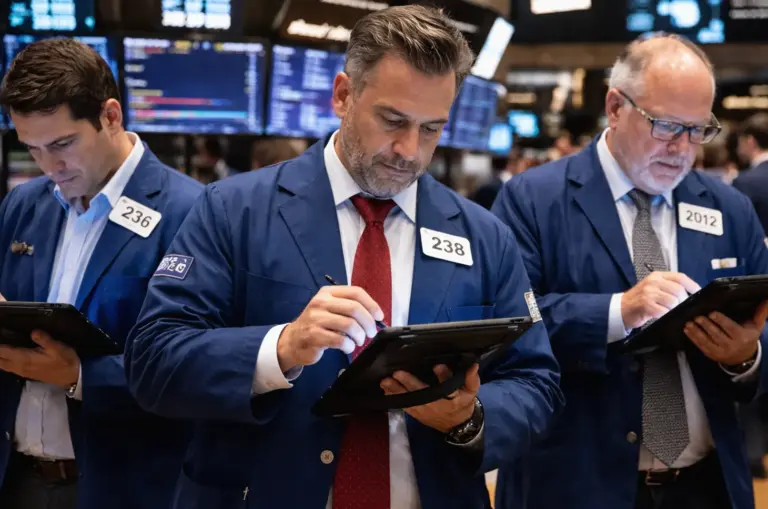
US stocks fell sharply on Friday, with the Nasdaq Composite recording its largest one-day percentage decline since June 5 as disappointing results from Intel and Amazon intensified concerns about the returns on massive artificial intelligence investments.

The technology-heavy index dropped 2.86% to 25,437, while the S&P 500 declined 1.82% to 7,580.07. The Dow Jones Industrial Average fell 1.09% to 51,770.31.

Selling pressure spread across semiconductor stocks and major technology companies as investors reassessed the outlook for AI-related spending.

The declines also reflected concerns about whether companies can generate sufficient returns from the infrastructure being built to support the technology.

All three major indexes ended the week lower. The S&P 500 and Nasdaq also recorded monthly losses in October, while the Dow finished the month higher.

Intel and Amazon results weigh on technology stocks

Intel shares plunged around 29% after the chipmaker issued a weaker-than-expected revenue forecast for the fourth quarter. The company expects revenue of $15 billion to $16 billion, below analysts’ estimates of $17.1 billion.

The forecast followed third-quarter adjusted earnings of 52 cents per share, ahead of expectations of 40 cents.

Revenue reached $16.51 billion, slightly above the $16.5 billion consensus estimate.

Amazon also came under pressure after reporting third-quarter earnings and revenue that missed Wall Street expectations.

The company reported negative free cash flow of $42.4 billion and maintained its 2026 capital expenditure forecast of $220 billion.

The weakness extended across the semiconductor sector.

The Philadelphia Semiconductor Index recorded a monthly loss, while Advanced Micro Devices fell 11%. Nvidia and Broadcom declined 4% and 5%, respectively.

SanDisk lost 13%, despite reporting better-than-expected fiscal first-quarter results.

The broader technology sell-off also affected AI infrastructure companies.

CoreWeave shares fell more than 37% in October, while Nebius posted a monthly decline of 34%. The Roundhill Memory ETF, which includes Micron and Seagate Technology, lost 20% during the month.

Investors reassess AI spending and returns

The latest declines reflect growing scrutiny of the financial commitments behind the AI boom.

Investors are increasingly focused on whether large technology companies and infrastructure providers can translate substantial capital expenditure into sustainable returns.

Alphabet shares recorded their worst day on record on Thursday after missing third-quarter earnings and revenue expectations and reporting negative free cash flow of $9.07 billion.

Meanwhile, concerns about financing have weighed on neocloud companies that provide computing infrastructure for AI data centres.

CoreWeave has faced rising bond yields, adding to investor concerns about debt levels across the sector.

Reports that Blackstone told investors Anthropic may not receive an investment-grade credit rating after its planned market debut also added to the pressure.

The shift in sentiment has prompted investors to move away from some technology stocks and towards more defensive sectors.

Consumer staples and healthcare shares advanced on Friday, with Walmart and Coca-Cola each gaining more than 1%. Merck and Amgen also rose.

October ends with mixed performance across Wall Street

Despite Friday’s losses, third-quarter corporate earnings have remained broadly positive.

Of the 299 S&P 500 companies that had reported results, 82% exceeded consensus expectations, according to LSEG data.

Analysts now expect S&P 500 earnings to grow 31.6% year over year in the quarter.

Energy companies Exxon Mobil and Chevron also beat quarterly profit expectations, benefiting from higher refining margins amid energy supply disruptions linked to the US-Israeli war with Iran and Russia’s war in Ukraine.

However, the technology-led weakness weighed on the broader monthly performance.

The Nasdaq was heading towards a 5% October decline, its steepest monthly fall since March 2025. The S&P 500 was on track to lose less than 1%, while the Dow was poised to gain around 2%.

The post Nasdaq plunges 2.8% as Intel and Amazon results deepen AI stock sell-off appeared first on Invezz

Cryptocurrency markets and technology stocks came under pressure on Friday as the $6.3 billion Binance hack renewed concerns about digital asset security, while oil prices climbed amid escalating tensions in the Middle East.

Gold and other precious metals also fell sharply as investors reassessed the outlook for technology stocks and interest rates.

Meanwhile, Intel shares plunged after the chipmaker issued a weaker-than-expected revenue forecast for the fourth quarter.

Binance hack: $6.3B crypto theft rattles markets

The $6.3 billion Binance hack has renewed concerns about cryptocurrency exchange security, triggering a broader sell-off in digital assets and crypto-related stocks.

Binance co-CEO Richard Teng said approximately $3 billion of the stolen funds had been frozen on-chain with the help of blockchain partners.

The exchange has pledged to cover customer losses through its Secure Asset Fund for Users (SAFU) and company funds.

Teng attributed the breach to a compromised DevOps engineer’s laptop, which allegedly allowed attackers to access a service container and submit unauthorised withdrawal transactions.

Binance said it had found no evidence of a private-key leak.

The incident also weighed on cryptocurrency-linked equities.

Coinbase shares fell more than 10%, reaching levels last seen in February 2024.

Circle Internet Group declined 9.5%, while Strategy lost 7.84%.

Bitcoin fell as much as 4.8% over 24 hours to approximately $76,820.

The attack has also raised questions about how stolen cryptocurrency can be recovered.

Stablecoin issuers, including Tether and Circle, have frozen funds associated with receiving addresses, while Bitcoin and Ethereum cannot be frozen through an equivalent issuer-controlled mechanism.

Binance has said customer balances remain safe and that it will cover the losses.

Investors will now watch the resumption of withdrawals and the exchange’s updated proof-of-reserves report.

Oil prices: Brent settles above $117 as Iran war tensions intensify

Oil prices climbed more than 2% on Friday, settling at their highest levels since late April as traders assessed the risk of further escalation in the Iran war.

Brent crude futures for December delivery settled 2.32% higher at $117.55 a barrel.

The contract touched an intraday high of $118 before expiring on Friday.

The more actively traded January Brent contract gained 1.56% to $112.53.

US West Texas Intermediate (WTI) crude rose 1.11%, to settle at $103.13.

For October, Brent gained 13.6%, while WTI advanced 15.2%.

Supply concerns intensified after a tanker was struck by explosive devices attached by a small boat in the Strait of Hormuz, according to the UK Maritime Trade Operations agency.

The incident highlighted risks to shipping through the strategic waterway, a major route for Gulf crude and fuel supplies.

Meanwhile, Yemen’s Iran-backed Houthi militants claimed attacks on Saudi oil facilities, including the Ras Tanura and Rabigh refineries and a production facility in Abqaiq.

Gold price: Precious metals slide as technology stocks sell off

Gold prices fell to their lowest levels in a year on Friday, while silver, platinum and palladium also recorded substantial losses.

Spot gold dropped 3.44% to $3,881.68 an ounce, its lowest level since October 2025.

US gold futures for December delivery settled 3.46% lower at $3,891.10.

Silver fell 5.8% to $49.33 an ounce, breaking below the $50 level for the first time in 11 months. Platinum declined 3.68% to $1,438.50, while palladium lost 3% to $976.08.

The sell-off coincided with a sharp decline in technology stocks as concerns about the returns on artificial intelligence investments weighed on market sentiment.

Gold has now declined approximately 30% from its January record high of $5,595, amid expectations of higher interest rates for longer and weaker demand in Asia.

Intel shares plunge as weak Q4 forecast raises concerns

Intel shares plunged 28% in trading on Friday after the chipmaker issued a disappointing fourth-quarter revenue outlook.

The company expects December-quarter revenue of $15 billion to $16 billion, below analysts’ expectations of $17.1 billion.

The forecast followed third-quarter adjusted earnings of 52 cents per share, beating estimates of 40 cents.

Revenue reached $16.51 billion, slightly above the consensus estimate of $16.5 billion.

Intel also expects PC chip revenue to decline in the mid-20% range in the fourth quarter, following a 5% drop in the September quarter.

Chief Financial Officer David Zinsner said the weakness in the PC market could persist into the first half of next year.

BofA Securities downgraded Intel to Neutral from Buy and cut its price target to $100 from $145.

Roth Capital also lowered its rating to Neutral and reduced its target to $70 from $120.

Analysts cited manufacturing constraints, weaker PC demand and competitive pressures as concerns.

However, Intel’s expanding data-centre business and foundry ambitions remain potential longer-term growth drivers.

The post Evening digest: Binance hack rattles crypto, oil rises appeared first on Invezz

Anthropic may struggle to secure an investment-grade credit rating immediately after its planned initial public offering, potentially increasing borrowing costs as the artificial intelligence company prepares for massive infrastructure spending.

Blackstone has told investors in Anthropic’s latest $63 billion chip financing deal that the AI company is likely to receive a high-yield, or junk, credit rating following its IPO, said a Financial Times report citing people familiar with the matter.

The assessment marks a shift from Blackstone’s earlier guidance that Anthropic could secure an investment-grade rating before the end of the year.

Blackstone is an anchor investor in the financing arrangement, known as Project North Star, and is working with banks involved in distributing the debt to other investors.

Anthropic filed to go public on Monday, potentially setting up one of the largest stock market listings next month.

Its prospectus outlined plans to spend more than $800 billion on computing infrastructure between now and 2045.

Anthropic’s potential junk rating raises financing concerns

Blackstone has recently indicated that Anthropic is more likely to receive a rating in the double-B range or above, based on guidance from major credit rating agencies, the people cited in the report said.

A double-B rating falls below investment grade and could restrict the company’s access to institutional capital.

Many insurance companies and pension funds face restrictions on taking large positions in borrowers with junk-rated debt.

This could reduce the pool of investors available to finance Anthropic’s infrastructure expansion.

Consequently, the company may need to continue relying on suppliers with stronger credit ratings to support its borrowing arrangements.

An investment-grade rating is important to Anthropic’s long-term financing strategy because it would allow the company to access debt at relatively lower interest rates.

Anthropic currently has more than $112 billion in cash and equivalents.

Investors also anticipate that the company could raise approximately $100 billion through its IPO.

A US technology-focused portfolio manager told the Financial Times that credit access was central to the company’s financing ambitions.

Project North Star relies on Broadcom’s credit backing

The financing concerns come as banks have completed the $63 billion Project North Star deal, which provides funding for Anthropic to lease 1.5 gigawatts of Google’s semiconductors.

More than $42 billion of the senior loans is guaranteed by Broadcom, which co-develops the chips and holds an investment-grade credit rating.

The remaining $18 billion in junior debt is backed by Anthropic’s lease payments.

Senior debt generally takes priority over junior loans in the event of a default, making it more attractive to institutional investors.

Broadcom’s high A-tier credit rating was an important factor in helping Anthropic secure the financing.

Blackstone’s funds invested $9 billion in the junior debt at a yield of more than 10%, according to the Financial Times.

Rating agencies assign different assessments to Anthropic debt

Project North Star’s $18 billion junior debt has received a double-B-plus rating with a positive outlook from Kroll Bond Rating Agency (KBRA).

This represents a modest improvement from the stable outlook assigned to a similar financing arrangement, Project Big Sky, four months earlier.

Morningstar DBRS also assigned the junior debt a double-B rating, according to people familiar with the matter.

However, Fitch, Moody’s and S&P, the three major credit rating agencies with significant influence over corporate borrowing costs, have not officially issued credit ratings for Anthropic.

Bankers representing Anthropic and rival OpenAI have reportedly lobbied major rating agencies to award the AI companies investment-grade ratings following their respective IPOs.

The uncertainty surrounding Anthropic’s credit outlook also coincided with broader weakness in technology stocks.

The Nasdaq 100 fell 3.84% in afternoon trading on Friday following an earlier sell-off triggered by concerns about the sustainability of AI spending.

As Anthropic gets closer to its public market debut, investors need to watch out for the credit ratings the company receives, as they will determine its debt load in funding its AI buildout.

Read our in-depth guides on how to invest in Anthropic and how to buy Anthropic pre-IPO.

The post Anthropic IPO: Blackstone warns AI firm may receive junk credit rating: report appeared first on Invezz

Converting high value assets like real estate, stocks, and private funds into digital tokens promises to democratize global investing, but simply putting an asset on a blockchain is not enough. While the technology allows for easier ownership transfer, it does not inherently create a thriving marketplace. Vladimir Tikhomirov, the founder of Theorem, recently pointed out that there are significant infrastructure gaps that must be filled before tokenized finance can reach its true potential.

The most pressing issue facing the industry today is a lack of liquidity. When investors buy tokenized assets without a functional secondary market, they often find themselves trapped in positions with long redemption periods. For these markets to actually work, there needs to be consistent secondary trading which enables accurate price discovery and better risk management. Relying solely on an issuer’s initial valuation isn’t sustainable; prices need to be refined through active open market competition to remain realistic.

Technical hurdles also persist regarding how these assets settle across different networks and borders. While managing multiple blockchains is becoming simpler thanks to arbitrage, navigating international regulatory frameworks remains a daunting task for many firms. At the same time, the nature of digital cash is evolving, with more participants moving away from standard stablecoins in favor of yield bearing tokenized US Treasury bills to make their capital work harder while it sits on chain.

Despite these challenges, the long term outlook for on chain markets remains optimistic because of the inherent advantages they offer over legacy systems. The ability to trade twenty four hours a day and utilize composable collateral provides a level of flexibility that traditional finance cannot match. However, this future depends entirely on whether developers can successfully build the essential lending protocols and exchange infrastructures required to support a truly liquid ecosystem.

Nova Minerals has cleared its final regulatory hurdles in Alaska, securing the necessary permits to move forward with a strategic antimony project backed by the U.S. Department of War. In a surprisingly swift turnaround, the company received approval from the Alaska Department of Natural Resources just three months after submitting its application. This green light authorizes construction and operational activities for an initial three year period, setting the stage for the company to hit its production targets by 2027.

The scope of the project is comprehensive, spanning everything from raw stibnite mining at the Styx and Stibium prospects to processing at the Whiskey Bravo concentration site and final refining at Port MacKenzie. To get there, Nova is utilizing a forty three point four million dollar grant from the Department of War to fund the first phase of development. Engineering work is already complete, with plans to produce high purity antimony metal and military grade trisulfide to bolster domestic supplies of this critical mineral.

Rather than building every piece of machinery from scratch, CEO Christopher Gerteisen opted for a pragmatic approach by acquiring modern equipment from a decommissioned facility in North America. Hundreds of tons of crushing and refining gear have already been barged from Seattle to Port MacKenzie via over forty containers. By repurposing existing industrial assets, Nova aims to accelerate its timeline and reduce costs while leveraging existing rail and deepwater port infrastructure for efficient transport.

Looking ahead, the Port MacKenzie plant is being developed as a modular hub capable of expanding beyond its initial goals into other refined products like antimony trioxide. With all critical long lead equipment now on site and permits finalized, Gerteisen noted that the company’s primary focus has shifted entirely toward execution. The project represents a significant step in reducing reliance on foreign sources for minerals essential to national security and advanced manufacturing.

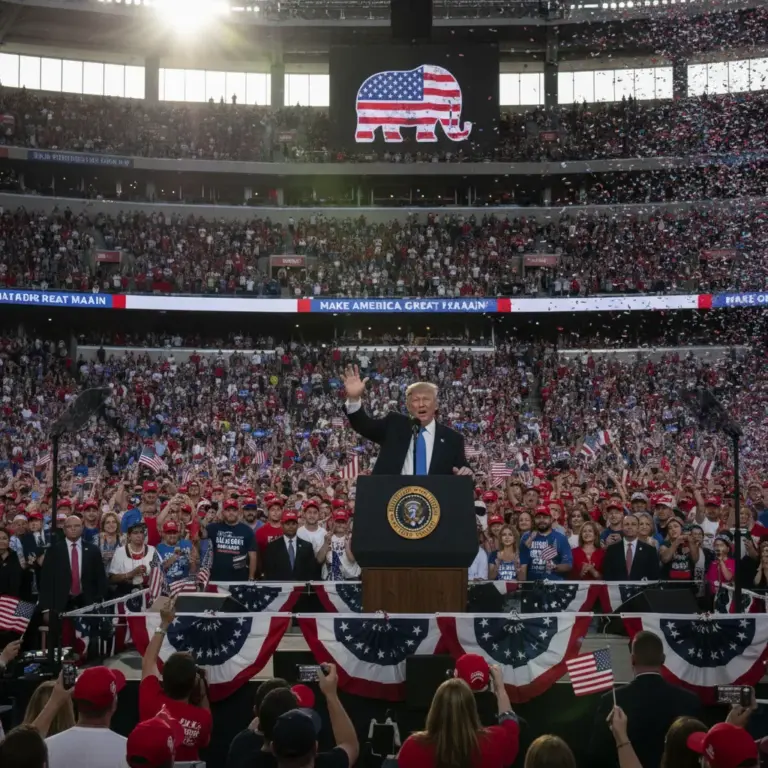
Former President Donald Trump has reversed his decision to cancel upcoming campaign stops in Kansas and Iowa, opting to appear in person this Sunday rather than hosting virtual events. While initial reports suggested a shift toward tele-rallies due to scheduling conflicts and a packed calendar, sources indicate the itinerary was simply being rearranged. The move comes as GOP candidates in both states face tight Senate races, making these high energy appearances critical for mobilizing the base ahead of the finish line.

The reversal follows a tense exchange on Thursday when Trump lashed out at a reporter who questioned if he was avoiding travel due to fatigue. Dismissing the suggestion with characteristic intensity, Trump insisted he felt perfect and criticized the journalist personally, denying any reluctance to visit Kansas despite earlier indications that the trip might be scrapped. This aggressive posture underscores his commitment to traditional stumping as a core part of his electoral strategy.

Beyond his own travels, Trump took aim at the complexities of the Alaskan ballot during a recent radio interview in Kansas. He claimed that navigating the current layout requires an exceptionally high IQ, specifically referencing the presence of two candidates named Dan Sullivan on the ticket. By suggesting that many voters struggle with basic political terms like incumbent, Trump highlighted what he views as systemic confusion designed to hinder Republican Senator Dan S. Sullivan’s reelection efforts.

These developments unfold amid broader national tension regarding election integrity and worker safety. In California, several major labor unions and civil rights organizations have filed a lawsuit against the Justice Department and Department of Homeland Security. The suit alleges that federal officials have used intimidation tactics and threats of prosecution against election workers, creating a volatile atmosphere across multiple swing regions as various campaigns scramble for every single vote.

Voters across Iowa head to the polls this Tuesday in an election cycle that could shift the balance of power in Washington and end a long era of single party dominance in Des Moines. With control of both chambers of Congress hanging in the balance, several high profile retirements have left significant openings on the ballot. The departures of Governor Kim Reynolds and Senator Joni Ernst have provided a rare window for Democrats to regain ground, specifically as they eye the governorship for the first time in sixteen years.

The race to replace Senator Ernst has become a financial battlefield between Republican Representative Ashley Hinson and Democratic state Representative Josh Turek. While Turek has significantly outpaced Hinson in direct fundraising, pulling in roughly 18 million dollars since July, Hinson remains a formidable opponent thanks to massive infusions of cash from outside super PACs tied to Senate Majority Leader John Thune. This struggle mirrors larger contests across the state, including a tight gubernatorial fight between Republican entrepreneur Zach Lahn and current state auditor Rob Sand.

Beyond the top tickets, several congressional districts are seeing intense competition. In the first district, Representative Mariannette Miller Meeks is facing a grueling rematch against Christina Bohannan following one of the narrowest finishes seen in recent history. Meanwhile, Representative Zach Nunn is fighting off a strong challenge from state Senator Sarah Trone Garriott in the third district. These local battles will likely be decided by whether Republicans can maintain their grip on rural areas or if Democrats can maximize turnout in urban hubs like Des Moines and Cedar Rapids.

As polls close at 8 p.m., political analysts will be watching bellwether regions such as Dallas and Scott counties to gauge the mood of the electorate. Though Iowa has trended sharply red over the last few cycles under Donald Trump, these specific corridors often signal broader shifts in voter sentiment. Results are expected to trickle in quickly as many counties prepare to release absentee ballots immediately after closing, providing an early glimpse into whether the state continues its rightward drift or pivots back toward competitiveness.

President Donald Trump has once again shifted gears in the final stretch of the midterms, reinstating a series of high profile rallies in Kansas and Iowa after briefly scrapping them in favor of virtual appearances. The sudden pivot came just hours after the president told reporters that he felt no need to visit certain red states where Republican candidates appeared to be performing well. While the move toward telerallies initially provided a sense of relief for some party operatives who found the physical roadshow exhausting and unpredictable, that reprieve lasted less than twenty four hours.

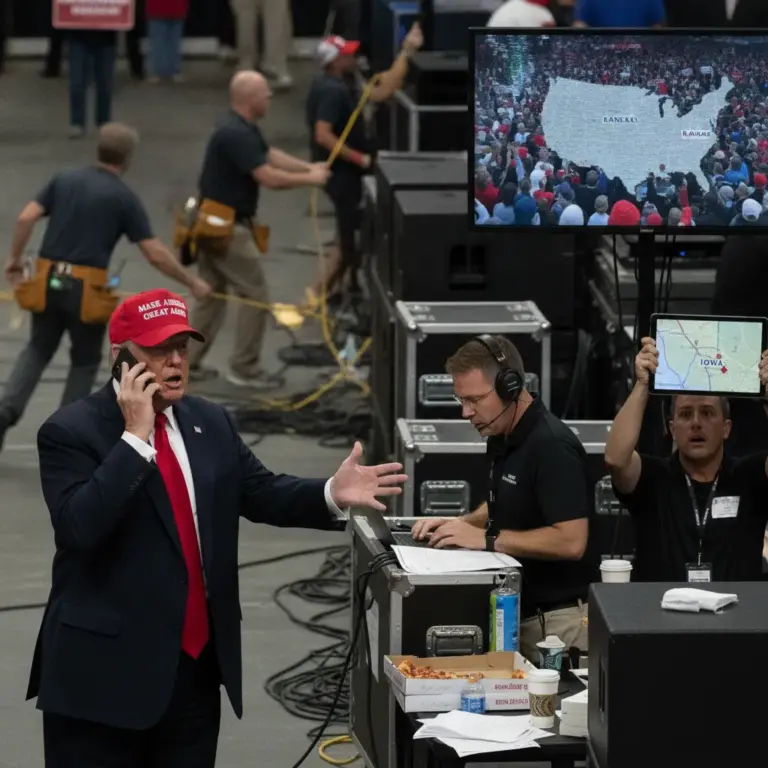
Sources close to the situation suggest that the reversal was driven largely by the president’s frustration with media reports regarding the cancellations. After returning from South Carolina, Trump grew visibly irate when questioned by press members about whether he was fatigued or ill, snapping at one reporter while insisting he felt perfect. This flash of temper reportedly led to a direct order to put the events back on the calendar, leaving staff members who had just dismantled the logistics scrambling to rebuild them for a Sunday slate.

Publicly, the president attributed the change to pleas from friends and local allies who insisted that an in person appearance would be far more effective than a phone call. He also noted that scheduling conflicts with Saturday college football games necessitated moving the events to Sunday. Despite these explanations, insiders view the episode as emblematic of a campaign strategy dictated by personal whim rather than coordinated planning, highlighting a tension between those wanting disciplined messaging and those relying on Trump’s raw appeal to energize the base.

The whirlwind sequence underscores a broader divide within the GOP over how best to utilize Trump’s influence during the home stretch. Some strategists argue that his tendency to wander into obscure topics during live speeches can distract from key candidate platforms, whereas others believe his presence is the primary engine driving voter turnout. As MAGA Inc. continues to coordinate virtual outreach across nineteen states, the return of the physical rallies ensures that the final days leading up to Tuesday will remain as volatile and fast paced as ever.