Archive

October 2026

Browsing

A federal judge in New York has ordered the government to immediately scrub three taxpayer-funded advertisements from television and social media, ruling that the spots appeared designed for political propaganda rather than public information. U.S. District Judge Jennifer L. Rochon targeted ads titled Cost of Socialism, Every Democrat Voted Against No Tax on Tips, and a particularly contentious spot claiming Americans would receive 5,000 dollars if Republicans maintain control of Congress. The ruling comes after a legal challenge led by a coalition including the watchdog group Common Cause, which argued that public funds should not be used as a campaign tool for the president’s allies.

The White House quickly pushed back against the decision, with spokesperson Lauren Bis labeling the move a lawless order from an activist judge. While the administration defended the clips as standard public service announcements intended to explain policy and rebut critics, the court found these specific ads crossed the line into partisan territory. Judge Rochon specifically directed that the content be removed from platforms like YouTube and Instagram and blocked any further distribution via third parties, including the MAGA Inc. super PAC.

Despite pulling these three ads, Judge Rochon declined to ban several others requested by the plaintiffs, noting that presidents generally have the right to inform and justify their policies to the citizenry. However, she emphasized that since elections cannot be postponed or reversed, immediate action was necessary to prevent irreparable harm while the broader legal battle continues. In a sharp exchange during the hearing, Rochon quiped that there would be no excuse for delays in removing the footage, reminding government lawyers that everyone present had heard her order clearly.

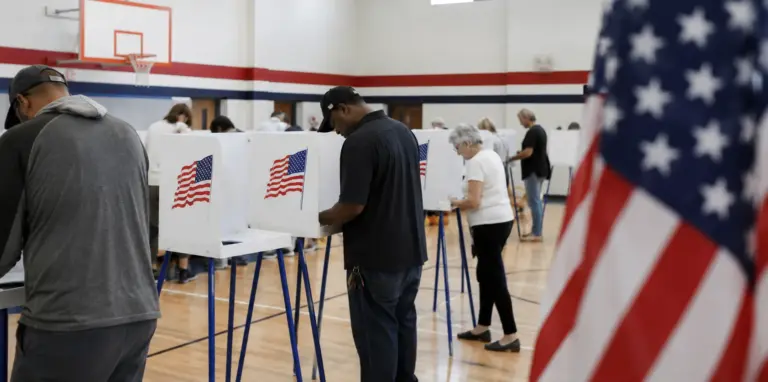
In a move that has stunned historians and diplomats alike, Pope Leo has officially cast his vote in the upcoming United States midterm elections. This marks the first time in recorded history that a sitting pontiff has participated in a political election. The Vatican confirmed on Friday that the Pope, born Robert Prevost, submitted his ballot via mail to his hometown region of New Lenox, Illinois. According to official statements, Leo views this act as an exercise of his fundamental rights as a U.S. citizen, noting that he previously voted during his tenure as a missionary in Peru.

The decision comes amid a period of significant personal and political turbulence for the American-born leader. Just ten days after requesting his mail-in ballot on October 3, Pope Leo underwent surgery to remove a cancerous tumor from his right lung. While he spent several weeks recovering in the hospital through mid-October, he has slowly returned to his duties and continues to champion the importance of civic participation in democratic processes regardless of one’s station in life.

This unprecedented political gesture takes place against the backdrop of a frosty relationship between the Vatican and President Donald Trump. The two leaders have frequently traded barbs over immigration policies, which Leo described as inhuman, and foreign interventions regarding Iran. Trump has responded with characteristic aggression, labeling the Pope weak on crime and suggesting that Leo’s ascent to leadership within the church was somehow linked to Trump’s own presence in the White House. For his part, Leo remains undeterred, stating publicly that he is not afraid of the president.

Looking ahead, the results of these midterms may dictate when the world sees another papal visit to American soil. While Archbishop Paul Richard Gallagher indicated that such a trip is likely in the near future, he hinted that the electoral outcome could push a potential visit toward 2027 or beyond. In the meantime, Pope Leo is preparing for an extensive eleven day journey across Latin America this November, continuing his mission to bridge global divides even as he maintains his ties to his native land.

The world’s largest cryptocurrency exchange has become the site of the most significant digital theft in history, with investigators pointing toward state sponsored actors from North Korea. Security researchers at TRM Labs and Elliptic have linked the breach to a notorious hacking cell known as TraderTraitor, which specializes in draining massive sums from crypto platforms to fund Pyongyang’s sanctioned weapons programs. In a lightning fast operation that lasted roughly twenty minutes, attackers managed to siphon away at least 6.3 billion dollars in digital assets.

The vulnerability reportedly began not with a systemic failure of encryption, but with a single point of human error. Binance revealed that the intruders gained entry to its network by compromising the laptop of one of its engineers. Once inside, the hackers accessed a service container that allowed them to authorize fraudulent withdrawal transactions without needing the company’s master private keys. While Binance insists that user funds remain safe and denies any widespread leak of core security credentials, the exchange has suspended all deposits and withdrawals as it works to secure its infrastructure.

Recovery efforts are currently underway, with industry partners reporting that approximately 3 billion dollars of the stolen loot has already been frozen across various blockchains. Despite these gains, the sheer scale of the loss raises urgent questions about how a single compromised device could grant access to billions of dollars in capital. Critics and analysts are now questioning whether Binance underwent rigorous third party security audits prior to the attack or if internal safeguards were dangerously insufficient.

This latest raid follows a pattern of aggressive cyber warfare conducted by North Korea against global finance. The same group associated with this heist was previously blamed for a 1.4 billion dollar theft from Bybit and another multi million dollar hit on Bitget earlier this year. As Binance promises to publish an updated proof of reserves upon completing its remediation process, the event serves as a stark reminder of the volatility and risk inherent in centralized digital asset storage when faced with nation state adversaries.

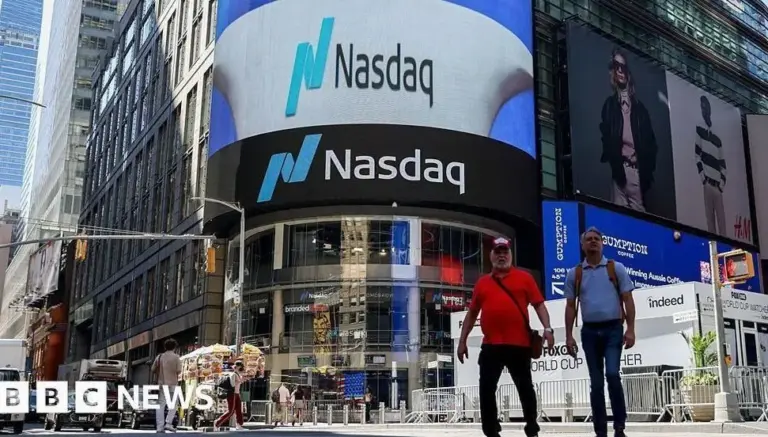
Wall Street experienced a wave of volatility this week as tech stocks plummeted for a second consecutive session, driven by mounting anxiety over the staggering costs of artificial intelligence development. The Nasdaq index took a hit, sliding more than 3.5 percent as shareholders began to question whether the massive capital injections into AI are actually yielding proportional returns. With industry giants like Meta, Alphabet, Oracle, Amazon, and Microsoft collectively pledging over 800 billion dollars toward AI by 2026, the market is increasingly wary of a potential bubble where expenses outpace profits.

The fallout was particularly severe for Alphabet and Intel. Alphabet saw its valuation plunge after admitting that its own AI search summaries were eating into core advertising revenue, all while the company prepares to spend roughly 205 billion dollars this year on AI infrastructure. Meanwhile, Intel faced devastating losses, with its market value dropping by over 130 billion dollars. Despite a slump in personal computer demand, the chipmaker signaled it would continue ramping up expensive equipment investments, leaving investors concerned about a lack of immediate cash flow.

The contagion spread beyond the biggest names to platforms like Amazon and Reddit. Amazon shares dipped after reporting earnings that missed expectations and revealing a six fold increase in spending over just three months to fund data centers and servers. Reddit suffered even more dramatically, with its stock crashing 26 percent following weak user growth and warnings that Google’s AI tools are diverting traffic away from its site. Similar trends hit gaming platform Roblox, which saw its share price tumble nearly 20 percent alongside falling active user numbers.

Market analysts suggest that investors have shifted from blind optimism to a state of ruthlessness, demanding concrete evidence of profitability rather than promises of future innovation. While most of these companies still hold higher valuations than they did a year ago, there is a growing fear that the era of easy gains from the AI hype cycle has peaked. If these tech titans cannot prove that their trillion dollar gamble is paying off soon, experts warn that traders may abandon the sector entirely in search of a new market driver.

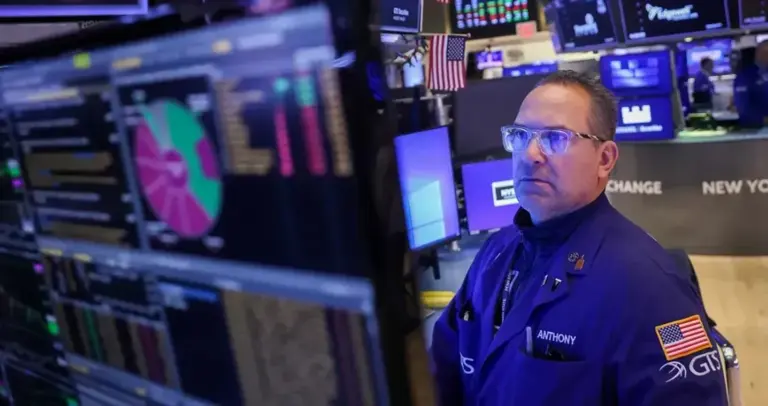
Investors shifted from excitement to anxiety on Friday as a massive sell-off erased over one trillion dollars in market value across the tech sector. The Nasdaq 100 plummeted 3.4 percent, marking its steepest single-day decline since mid-June and bringing the index dangerously close to correction territory. While the broader S&P 500 also felt the blow, dropping 1.8 percent, the technology sector bore the brunt of the damage with a tumble of more than 4.2 percent as confidence in the current AI trajectory began to waver.

The turmoil centered on a growing skepticism regarding the astronomical costs associated with building artificial intelligence infrastructure. For months, markets cheered whenever tech giants announced increased spending on data centers, but that patience is wearing thin. Investors are now demanding concrete evidence that these hundred-billion dollar investments will translate into actual returns. This shift in sentiment was evident during Amazon’s latest reporting cycle where CEO Andy Jassy warned shareholders to prepare for even higher capital expenditures through 2027, a revelation that failed to inspire the market as it once did.

Nowhere was this volatility more apparent than at Intel, which suffered its worst single-day crash since the 1980s with shares plunging 29 percent. The collapse was triggered by disappointing profit forecasts and admissions from CEO Lip-Bu Tan regarding severe supply chain bottlenecks and a memory crunch that hampered the company’s ability to meet demand. The carnage spread quickly through the semiconductor industry, dragging down heavyweights like AMD and Qualcomm, while neocloud startups focused on specialized data centers saw their valuations slide by double digits.

This retreat follows a brutal week for Big Tech, including a historic loss of half a trillion dollars in market value for Alphabet just days prior. As these corporations tap debt markets to fund their AI ambitions, they have inadvertently skewed traditional financial indicators, occasionally driving investors toward safer havens like U.S. Treasuries. What was once viewed as an inevitable gold rush is now being scrutinized as a high-stakes gamble, leaving traders wondering if the promised productivity gains can eventually justify the staggering price tag of progress.

The world’s largest cryptocurrency exchange, Binance, has become the center of a financial firestorm after a massive security breach resulted in the loss of approximately 6.3 billion dollars in client assets. This incident marks the largest heist in the history of digital currency, sending shockwaves through a market already wary of centralized storage. According to early investigations, hackers managed to penetrate the firm’s withdrawal systems to execute unauthorized transfers, though the company insists there is no current evidence that the private keys governing those wallets were compromised.

Despite the staggering scale of the theft, Binance has moved quickly to reassure panicked investors by pledging to cover all customer losses. The exchange is leaning on its Secure Asset Fund for Users, better known as SAFU, alongside over 6 billion dollars of its own corporate reserves to make clients whole. There is some immediate relief in the fact that nearly half of the stolen assets have already been frozen across various blockchain networks, potentially allowing for a significant portion of the funds to be clawed back before they can be laundered or cashed out.

This crisis serves as a stark warning about the inherent dangers of leaving digital tokens in the hands of third parties. Industry experts point out that while exchanges provide convenience and liquidity, users are ultimately betting on a company’s internal controls and balance sheet rather than owning their assets outright. Past examples like the collapse of FTX show that even explicit promises regarding asset ownership can vanish during a corporate failure, and others, such as Cryptopia, demonstrate that recovery processes following a hack can drag on for several agonizing years.

To mitigate these risks, many seasoned traders suggest a hybrid approach called self-custody, where individuals manage their own private keys via personal wallets. However, this autonomy comes with its own peril; unlike an exchange with a support team, losing a recovery phrase in self-custody means the funds are gone forever with no hope of retrieval. For most investors, the safest path forward involves keeping only active trading capital on platforms while securing long term holdings independently, balancing the ease of institutional access against total personal responsibility.

The global cryptocurrency market was thrown into turmoil this week following a staggering cyberattack on Binance, the world’s largest exchange. In what is being described as the biggest heist in the history of digital assets, hackers managed to move more than 6 billion dollars through connected wallets in a lightning fast operation that lasted only twenty minutes. While some funds have already been frozen across various platforms, analysts warn that billions in Bitcoin and Ethereum may be lost forever, dealing a severe blow to an industry already fighting for legitimacy and mainstream trust.

Despite the massive scale of the theft, Binance leadership is moving quickly to prevent a panic among its millions of users. Co-CEO Richard Teng issued a public reassurance stating that only corporate holdings were targeted and that customer assets remain secure. To back up these claims, the company revealed it has existing reserves of over 1 billion dollars and is earmarking an additional 6 billion from its vast balance sheet to ensure that users do not shoulder the financial burden of the breach. This effort to stabilize the ship comes as Bitcoin prices dipped following the news, echoing memories of past industry collapses like FTX.

Government agencies and private sector partners are currently scrambling to track the stolen loot. The Secret Service confirmed it is working alongside Binance to identify and recover funds, while President Donald Trump noted his administration is monitoring the situation closely. Although Binance has not officially named a culprit, multiple blockchain analysis firms pointed toward patterns typically associated with North Korean state sponsored actors. The vulnerability began with what appeared to be a compromised laptop but evolved into a more complex series of breaches during the afternoon hours on Thursday.

The fallout from the attack has sparked tension even among high profile figures in the tech world. When Elon Musk posted a skeptical reaction referencing similar empty promises made by FTX before its crash, Binance co founder CZ Zhao pushed back against the trolling during such a critical moment for the sector. As stablecoin providers like Tether and Circle work together to lock down illicit assets, legal experts suggest this crisis will force a long overdue conversation about systemic security and collective accountability within the volatile crypto landscape.

A clear Democratic victory in the November 3 midterms could put healthcare and retail stocks in the spotlight, according to Man Group’s election analysis.

The investment firm sees both sectors benefiting if Democrats capture the House and Senate.

But investors should distinguish an immediate relief rally from lasting earnings gains: winning Congress would strengthen Democrats’ negotiating position without handing them control of the White House.

With options markets already anticipating a relatively orderly outcome, the strongest opportunities may lie in businesses where policy compromises could protect revenues and customer spending.

Healthcare: Hospitals offer a direct play on protecting coverage

For healthcare investors, the clearest potential benefit is a stronger congressional defense of insurance coverage and hospital funding.

A Democratic Congress could push to soften Medicaid reductions and restore enhanced Affordable Care Act subsidies.

UBS identifies efforts to postpone or reverse Medicaid cuts as a likely Democratic priority, although President Donald Trump could veto legislation.

Negotiations over spending would therefore matter more than campaign promises alone.

The investment logic is straightforward: insured patients give hospitals a better chance of collecting payment.

Preserving coverage could reduce unpaid bills and ease pressure on reimbursement, supporting earnings without requiring a sudden surge in patient visits.

HCA Healthcare (HCA) and Tenet Healthcare (THC) are consequently compelling stocks to investigate for this scenario.

Their hospital businesses provide a relatively direct connection between coverage policy and operating performance.

Medicaid-focused insurers Centene (CNC) and Molina Healthcare (MOH) offer another route, although medical costs and state payment rates complicate their earnings outlook.

Note that the opportunity is selective rather than sector-wide.

Democrats could also intensify scrutiny of drug prices, insurers, and hospital consolidation.

That makes hospitals’ potential coverage benefit more useful than a blanket assumption that every healthcare stock wins.

Retail: Protecting household budgets could support spending

Retail’s potential upside starts with consumers’ ability to spend, particularly households with little financial room to absorb another squeeze.

Democrats would likely seek to postpone or reverse food-assistance cuts, according to UBS.

Separately, RSM warns that reduced purchasing power among lower-income households could particularly affect grocery, convenience, and discount channels.

Together, those assessments suggest that relief could support retailers exposed to everyday household purchases.

Walmart (WMT) stands out as a stock worth examining. Its grocery business provides exposure to essential spending, and the company accepts SNAP benefits nationwide and through eligible online services.

Protecting those benefits could help preserve customers’ purchasing power and shopping frequency.

This is an investment inference from its business exposure, rather than a stock recommendation attributed to Man Group.

The benefit could extend beyond food: money available for groceries can leave households with more room for clothing, home products and other purchases.

However, investors should avoid assuming a Democratic sweep automatically removes tariffs or lowers borrowing costs.

Walmart therefore offers a clearer mechanism for potential gains than an indiscriminate retail-sector bet. Even so, policy exposure alone does not establish that its shares are attractively valued.

A durable rally would require evidence that congressional negotiations improve spending prospects enough to support earnings expectations already embedded in the stock.

The post These 2 sectors will benefit most from a clean Democratic victory appeared first on Invezz

Oracle stock ORCL fell 4% on Thursday as a broader sell-off in large-cap technology shares weighed on the company, despite analysts responding positively to its latest artificial intelligence infrastructure plans and long-term financial targets.

The Nasdaq Composite declined 1.57%, while the S&P 500 fell 0.54%.

Oracle’s AI World and Analyst Day provided greater clarity on its infrastructure expansion, financing requirements and expected cash generation, although analysts stressed that execution remains a key risk.

BNP Paribas analyst Stefan Slowinski reiterated an Outperform rating on Oracle with a $248 price target, citing improving visibility into financing needs, free cash flow and returns from its AI infrastructure investments.

Oracle reaffirmed its fiscal 2030 targets of more than $225 billion in revenue and earnings exceeding $21 per share.

The company is also targeting approximately 10 gigawatts of infrastructure capacity as it expands its AI computing business.

Oracle outlines path to positive free cash flow

One of the key takeaways from the investor event was Oracle’s updated timeline for generating positive free cash flow.

The company expects capital expenditure to peak in fiscal 2027 and 2028 before moderating in fiscal 2029.

Oracle expects free cash flow to turn positive in the second half of fiscal 2028 and reach $30 billion in fiscal 2029.

Jefferies analyst Brent Thill said the updated outlook was a significant development for investors.

“The bigger surprise was the FCF path: ORCL now expects to turn FCF positive as soon as F2H28, more than 12 months earlier than current Street estimates,” Thill said in a Thursday investor note.

He added that the company expects capital expenditure to step down in fiscal 2029, allowing Oracle to fund more of its future investments internally rather than repeatedly accessing capital markets.

Jefferies maintained its Buy rating and $290 price target. Morgan Stanley, meanwhile, retained its Equal-weight rating and $210 target, citing the need for greater confidence in execution.

Financing plans and infrastructure economics

Oracle plans to raise $20 billion in fiscal 2027, with the financing expected to be split roughly equally between debt and equity.

The company also intends to rely more heavily on vendor financing and bring-your-own-hardware arrangements to reduce upfront capital requirements for new projects.

BNP Paribas’ Slowinski said Oracle expects no additional capital requirements beyond the planned fundraising, supported by improving cash generation as infrastructure capacity becomes operational.

Oracle has raised pricing on new five-year contracts to approximately $16 billion per gigawatt, up from around $10 billion previously.

Management believes the higher pricing could support a 28% return on invested capital.

Wells Fargo analyst Michael Turrin highlighted the economics of the infrastructure strategy, noting that vendor financing reduces near-term cash requirements, while bring-your-own-hardware arrangements can lower capital needs to about $6 billion per gigawatt or less.

Wells Fargo maintained its Overweight rating and $250 price target.

Execution risks remain despite bullish forecasts

Analysts broadly welcomed Oracle’s financial targets but cautioned that delivering the planned infrastructure expansion will be critical.

Morgan Stanley analyst Sanjit Singh said the company had provided greater visibility into its plans but that investors needed more confidence in capacity delivery and margins.

“Simply put, we walk away with the vision and the visibility but need more confidence in execution, namely capacity tracking the path to ~10GW by FY28 and margins holding near 40% through the ramp, before turning more positive,” Singh said.

Jefferies’ Thill noted that Oracle’s contracted backlog supports approximately 7 gigawatts of incremental capacity, taking total capacity to around 10 gigawatts by the end of fiscal 2028.

However, power availability, permitting, and labour constraints remain risks.

The first major tests are expected in the first half of calendar 2027, when the Shackelford, Texas, and Doña Ana, New Mexico, sites are scheduled to begin customer delivery.

The post Oracle stock falls 4%: why experts aren’t bothered appeared first on Invezz

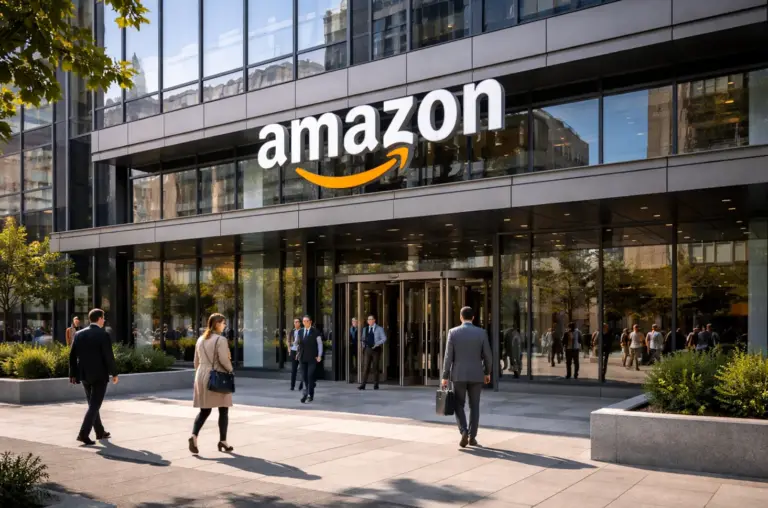
Amazon shares AMZN fell sharply in after-hours trading on Thursday after the company reported third-quarter revenue and earnings below Wall Street expectations, while its $220 billion capital expenditure plan renewed concerns about the cost of its artificial intelligence expansion.

The stock declined more than 4% after falling 4.3% during regular trading.

Amazon reported revenue of $201.9 billion for the quarter, up 12% year over year but below analysts’ expectations of $202.2 billion, according to FactSet.

Net income fell to $20.7 billion, or $1.89 per share, from $21.2 billion, or $1.95 per share, a year earlier. Analysts had expected earnings of $1.97 per share.

The results came as investors continued to assess whether major technology companies can generate sufficient returns from their substantial AI infrastructure investments.

AWS growth beats estimates as spending concerns persist

Amazon Web Services (AWS) remained a bright spot, with revenue rising 39% year over year to $46 billion, exceeding analysts’ expectations of $45.47 billion.

The growth rate also surpassed Wall Street’s forecast of 37.8%.

Chief Executive Andy Jassy defended the company’s infrastructure spending, saying in a statement that Amazon’s investments in AWS were delivering growth.

He also said the company expects AWS revenue growth of more than 40% in 2027 and 2028.

However, the company’s spending plans continued to weigh on investor sentiment.

Amazon maintained its forecast of approximately $220 billion in capital expenditure for 2026, with much of the investment directed towards AI infrastructure and data centres.

Capital expenditure reached $75.9 billion in the third quarter.

The spending contributed to a cash outflow of $42.4 billion over the trailing 12 months, compared with a cash inflow of $14.8 billion in the year-earlier period.

Amazon’s increased investment reflects the resources required to expand computing capacity as demand for AI services grows.

However, the resulting pressure on cash flow has become a key consideration for investors evaluating the company’s long-term returns.

Retail sales and profits fall short of expectations

Amazon’s North American sales increased 6% year over year to $112.9 billion, missing analysts’ forecast of $113.2 billion.

Revenue from its online stores business rose 2% to approximately $68.5 billion.

The company said the timing of Prime Day, which moved into the second quarter in several major countries, affected its third-quarter revenue growth.

Advertising revenue growth also slowed to 12%, partly because of the shift in the shopping event. Amazon expects advertising growth to rebound to the high teens in the fourth quarter.

Net income was also affected by a comparison with the previous year.

Amazon said third-quarter 2025 profit included $9.5 billion in pretax gains on its investment in AI company Anthropic.

For the fourth quarter, Amazon forecast revenue of $240 billion to $247 billion, representing growth of 12% to 16%.

The guidance includes some expected negative effects from currency fluctuations. The company also projected operating income of $28.5 billion to $33.5 billion.

Future AI investment raises cash flow questions

Although Amazon did not provide capital expenditure guidance for 2027, Evercore ISI analysts forecast spending could reach $320 billion next year, alongside negative free cash flow of $57 billion.

That outlook highlights the financial demands of the AI infrastructure race, even as AWS delivers faster growth.

Amazon’s spending strategy also comes amid broader scrutiny of data-centre expansion and the resources needed to support it.

The company has pledged more than $1 billion over five years towards communities hosting its data centres.

For investors, the central question remains whether strong cloud growth can translate into sustainable cash generation as Amazon continues to invest heavily in AI infrastructure.

The post Amazon stock falls as $220B AI spending plan weighs on earnings and cash flow appeared first on Invezz