Archive

October 30, 2026

Browsing

A clear Democratic victory in the November 3 midterms could put healthcare and retail stocks in the spotlight, according to Man Group’s election analysis.

The investment firm sees both sectors benefiting if Democrats capture the House and Senate.

But investors should distinguish an immediate relief rally from lasting earnings gains: winning Congress would strengthen Democrats’ negotiating position without handing them control of the White House.

With options markets already anticipating a relatively orderly outcome, the strongest opportunities may lie in businesses where policy compromises could protect revenues and customer spending.

Healthcare: Hospitals offer a direct play on protecting coverage

For healthcare investors, the clearest potential benefit is a stronger congressional defense of insurance coverage and hospital funding.

A Democratic Congress could push to soften Medicaid reductions and restore enhanced Affordable Care Act subsidies.

UBS identifies efforts to postpone or reverse Medicaid cuts as a likely Democratic priority, although President Donald Trump could veto legislation.

Negotiations over spending would therefore matter more than campaign promises alone.

The investment logic is straightforward: insured patients give hospitals a better chance of collecting payment.

Preserving coverage could reduce unpaid bills and ease pressure on reimbursement, supporting earnings without requiring a sudden surge in patient visits.

HCA Healthcare (HCA) and Tenet Healthcare (THC) are consequently compelling stocks to investigate for this scenario.

Their hospital businesses provide a relatively direct connection between coverage policy and operating performance.

Medicaid-focused insurers Centene (CNC) and Molina Healthcare (MOH) offer another route, although medical costs and state payment rates complicate their earnings outlook.

Note that the opportunity is selective rather than sector-wide.

Democrats could also intensify scrutiny of drug prices, insurers, and hospital consolidation.

That makes hospitals’ potential coverage benefit more useful than a blanket assumption that every healthcare stock wins.

Retail: Protecting household budgets could support spending

Retail’s potential upside starts with consumers’ ability to spend, particularly households with little financial room to absorb another squeeze.

Democrats would likely seek to postpone or reverse food-assistance cuts, according to UBS.

Separately, RSM warns that reduced purchasing power among lower-income households could particularly affect grocery, convenience, and discount channels.

Together, those assessments suggest that relief could support retailers exposed to everyday household purchases.

Walmart (WMT) stands out as a stock worth examining. Its grocery business provides exposure to essential spending, and the company accepts SNAP benefits nationwide and through eligible online services.

Protecting those benefits could help preserve customers’ purchasing power and shopping frequency.

This is an investment inference from its business exposure, rather than a stock recommendation attributed to Man Group.

The benefit could extend beyond food: money available for groceries can leave households with more room for clothing, home products and other purchases.

However, investors should avoid assuming a Democratic sweep automatically removes tariffs or lowers borrowing costs.

Walmart therefore offers a clearer mechanism for potential gains than an indiscriminate retail-sector bet. Even so, policy exposure alone does not establish that its shares are attractively valued.

A durable rally would require evidence that congressional negotiations improve spending prospects enough to support earnings expectations already embedded in the stock.

The post These 2 sectors will benefit most from a clean Democratic victory appeared first on Invezz


Oracle stock ORCL fell 4% on Thursday as a broader sell-off in large-cap technology shares weighed on the company, despite analysts responding positively to its latest artificial intelligence infrastructure plans and long-term financial targets.

The Nasdaq Composite declined 1.57%, while the S&P 500 fell 0.54%.

Oracle’s AI World and Analyst Day provided greater clarity on its infrastructure expansion, financing requirements and expected cash generation, although analysts stressed that execution remains a key risk.

BNP Paribas analyst Stefan Slowinski reiterated an Outperform rating on Oracle with a $248 price target, citing improving visibility into financing needs, free cash flow and returns from its AI infrastructure investments.

Oracle reaffirmed its fiscal 2030 targets of more than $225 billion in revenue and earnings exceeding $21 per share.

The company is also targeting approximately 10 gigawatts of infrastructure capacity as it expands its AI computing business.

Oracle outlines path to positive free cash flow

One of the key takeaways from the investor event was Oracle’s updated timeline for generating positive free cash flow.

The company expects capital expenditure to peak in fiscal 2027 and 2028 before moderating in fiscal 2029.

Oracle expects free cash flow to turn positive in the second half of fiscal 2028 and reach $30 billion in fiscal 2029.

Jefferies analyst Brent Thill said the updated outlook was a significant development for investors.

“The bigger surprise was the FCF path: ORCL now expects to turn FCF positive as soon as F2H28, more than 12 months earlier than current Street estimates,” Thill said in a Thursday investor note.

He added that the company expects capital expenditure to step down in fiscal 2029, allowing Oracle to fund more of its future investments internally rather than repeatedly accessing capital markets.

Jefferies maintained its Buy rating and $290 price target. Morgan Stanley, meanwhile, retained its Equal-weight rating and $210 target, citing the need for greater confidence in execution.

Financing plans and infrastructure economics

Oracle plans to raise $20 billion in fiscal 2027, with the financing expected to be split roughly equally between debt and equity.

The company also intends to rely more heavily on vendor financing and bring-your-own-hardware arrangements to reduce upfront capital requirements for new projects.

BNP Paribas’ Slowinski said Oracle expects no additional capital requirements beyond the planned fundraising, supported by improving cash generation as infrastructure capacity becomes operational.

Oracle has raised pricing on new five-year contracts to approximately $16 billion per gigawatt, up from around $10 billion previously.

Management believes the higher pricing could support a 28% return on invested capital.

Wells Fargo analyst Michael Turrin highlighted the economics of the infrastructure strategy, noting that vendor financing reduces near-term cash requirements, while bring-your-own-hardware arrangements can lower capital needs to about $6 billion per gigawatt or less.

Wells Fargo maintained its Overweight rating and $250 price target.

Execution risks remain despite bullish forecasts

Analysts broadly welcomed Oracle’s financial targets but cautioned that delivering the planned infrastructure expansion will be critical.

Morgan Stanley analyst Sanjit Singh said the company had provided greater visibility into its plans but that investors needed more confidence in capacity delivery and margins.

“Simply put, we walk away with the vision and the visibility but need more confidence in execution, namely capacity tracking the path to ~10GW by FY28 and margins holding near 40% through the ramp, before turning more positive,” Singh said.

Jefferies’ Thill noted that Oracle’s contracted backlog supports approximately 7 gigawatts of incremental capacity, taking total capacity to around 10 gigawatts by the end of fiscal 2028.

However, power availability, permitting, and labour constraints remain risks.

The first major tests are expected in the first half of calendar 2027, when the Shackelford, Texas, and Doña Ana, New Mexico, sites are scheduled to begin customer delivery.

The post Oracle stock falls 4%: why experts aren’t bothered appeared first on Invezz

Amazon shares AMZN fell sharply in after-hours trading on Thursday after the company reported third-quarter revenue and earnings below Wall Street expectations, while its $220 billion capital expenditure plan renewed concerns about the cost of its artificial intelligence expansion.

The stock declined more than 4% after falling 4.3% during regular trading.

Amazon reported revenue of $201.9 billion for the quarter, up 12% year over year but below analysts’ expectations of $202.2 billion, according to FactSet.

Net income fell to $20.7 billion, or $1.89 per share, from $21.2 billion, or $1.95 per share, a year earlier. Analysts had expected earnings of $1.97 per share.

The results came as investors continued to assess whether major technology companies can generate sufficient returns from their substantial AI infrastructure investments.

AWS growth beats estimates as spending concerns persist

Amazon Web Services (AWS) remained a bright spot, with revenue rising 39% year over year to $46 billion, exceeding analysts’ expectations of $45.47 billion.

The growth rate also surpassed Wall Street’s forecast of 37.8%.

Chief Executive Andy Jassy defended the company’s infrastructure spending, saying in a statement that Amazon’s investments in AWS were delivering growth.

He also said the company expects AWS revenue growth of more than 40% in 2027 and 2028.

However, the company’s spending plans continued to weigh on investor sentiment.

Amazon maintained its forecast of approximately $220 billion in capital expenditure for 2026, with much of the investment directed towards AI infrastructure and data centres.

Capital expenditure reached $75.9 billion in the third quarter.

The spending contributed to a cash outflow of $42.4 billion over the trailing 12 months, compared with a cash inflow of $14.8 billion in the year-earlier period.

Amazon’s increased investment reflects the resources required to expand computing capacity as demand for AI services grows.

However, the resulting pressure on cash flow has become a key consideration for investors evaluating the company’s long-term returns.

Retail sales and profits fall short of expectations

Amazon’s North American sales increased 6% year over year to $112.9 billion, missing analysts’ forecast of $113.2 billion.

Revenue from its online stores business rose 2% to approximately $68.5 billion.

The company said the timing of Prime Day, which moved into the second quarter in several major countries, affected its third-quarter revenue growth.

Advertising revenue growth also slowed to 12%, partly because of the shift in the shopping event. Amazon expects advertising growth to rebound to the high teens in the fourth quarter.

Net income was also affected by a comparison with the previous year.

Amazon said third-quarter 2025 profit included $9.5 billion in pretax gains on its investment in AI company Anthropic.

For the fourth quarter, Amazon forecast revenue of $240 billion to $247 billion, representing growth of 12% to 16%.

The guidance includes some expected negative effects from currency fluctuations. The company also projected operating income of $28.5 billion to $33.5 billion.

Future AI investment raises cash flow questions

Although Amazon did not provide capital expenditure guidance for 2027, Evercore ISI analysts forecast spending could reach $320 billion next year, alongside negative free cash flow of $57 billion.

That outlook highlights the financial demands of the AI infrastructure race, even as AWS delivers faster growth.

Amazon’s spending strategy also comes amid broader scrutiny of data-centre expansion and the resources needed to support it.

The company has pledged more than $1 billion over five years towards communities hosting its data centres.

For investors, the central question remains whether strong cloud growth can translate into sustainable cash generation as Amazon continues to invest heavily in AI infrastructure.

The post Amazon stock falls as $220B AI spending plan weighs on earnings and cash flow appeared first on Invezz

Intel shares plunged in after-hours trading on Thursday after the chipmaker issued a weaker-than-expected fourth-quarter outlook, overshadowing stronger earnings and rapid growth in its data-centre and artificial intelligence business.

The stock fell 17% to $75.84 after the company reported third-quarter revenue of $16.5 billion, up 21% year over year but slightly below Wall Street expectations of $16.6 billion.

Adjusted earnings per share reached 52 cents, beating analysts’ forecast of 41 cents.

Intel’s fourth-quarter guidance disappointed investors, with the company citing weaker-than-expected personal computer demand and production disruption following a fatal explosion at one of its facilities in Israel earlier this month.

The incident killed two employees and affected production, adding pressure to an outlook already challenged by weakness in the PC market.

Despite the after-hours decline, Intel shares remained up about 150% this year.

However, they had already fallen 35% from their record high on June 22 as of Thursday’s regular-session close.

Fourth-quarter guidance falls short of expectations

Intel expects fourth-quarter adjusted earnings of 25 cents per share on revenue of $15 billion to $16 billion.

Analysts had forecast earnings of 45 cents per share and revenue of $17.3 billion, according to FactSet.

The outlook reflects challenges in Intel’s client-computing business, which supplies chips for personal computers.

Revenue from the segment fell 5% year over year to $8.1 billion in the third quarter, missing analysts’ expectations of $8.9 billion.

Investors have been concerned that rising memory prices could weaken demand for laptops and other personal computers.

John Pitzer, Intel’s corporate vice president of investor relations, told MarketWatch that PC demand was weaker than anticipated.

He said the effect of rising memory prices came sooner and was deeper than the company had expected.

Pitzer also said the explosion at Intel’s Israeli facility contributed to the weaker revenue outlook.

The combination of softer PC demand and production disruption has complicated Intel’s near-term growth prospects despite strong performance in other parts of its business.

Data-centre and AI revenue surges 78%

Intel’s data-centre and AI business was the strongest performer in the third quarter, with revenue climbing 78% year over year to $7.3 billion.

The figure exceeded analysts’ expectations of $6.7 billion and represented the segment’s fastest growth rate in 15 years, according to the company.

The performance highlights the growing importance of AI-related infrastructure demand to Intel’s business.

While the company benefited from strong sales in this segment, the gains were insufficient to offset weakness in its personal-computing operations and the disappointing outlook.

The contrasting results from Intel’s two major business areas also illustrate how demand trends are diverging across the semiconductor industry.

Earnings beat fails to offset revenue and outlook concerns

Intel’s third-quarter adjusted earnings of 52 cents per share more than doubled from 23 cents a year earlier and exceeded Wall Street’s forecast.

Revenue rose to approximately $16.51 billion from the prior-year period, but narrowly missed the consensus estimate of $16.55 billion.

The earnings beat offered some evidence of improving profitability, but investors focused on the weaker outlook for the December quarter.

With expected revenue of $15 billion to $16 billion falling short of market expectations, Intel faces pressure to address both production constraints and slowing demand in its PC business.

The post Intel stock plunges 17% after weak Q4 forecast overshadows AI growth appeared first on Invezz

US stocks fell on Thursday as investors reassessed the scale of artificial intelligence spending by major technology companies and digested a fresh batch of corporate earnings and inflation data.

The declines followed the Federal Reserve’s decision to keep interest rates unchanged on Wednesday.

The Nasdaq Composite led losses, falling 1.38% to 26,184.72, as disappointing results from Alphabet weighed on technology and communication services stocks.

The S&P 500 declined 0.30% to 7,720.39, while the Dow Jones Industrial Average slipped 0.25% to 52,342.56.

In contrast, the small-cap Russell 2000 advanced, suggesting that weakness in technology stocks did not extend across the entire market.

Investors also reassessed semiconductor companies after the sector’s recent gains.

The semiconductor index ended its four-day winning streak as markets became more selective about companies’ ability to finance their AI infrastructure ambitions and generate returns from those investments.

Alphabet sell-off weighs on technology stocks

Alphabet shares plunged 13% after the Google parent missed analysts’ expectations for third-quarter adjusted earnings per share and revenue.

The company also reported negative free cash flow of $9.07 billion, highlighting the financial pressure associated with its AI investments.

Alphabet maintained its full-year capital expenditure forecast of $195 billion to $205 billion.

However, the combination of weaker-than-expected results and substantial spending reinforced investor concerns about the cost of competing in the AI market.

Other technology and infrastructure stocks also declined. Microsoft shares fell nearly 1%, reversing their initial gains despite stronger-than-expected quarterly earnings and 48% growth in its Azure cloud business.

Microsoft’s lower-than-expected capital expenditure also weighed on cloud infrastructure providers. CoreWeave shares fell 3%, while Nebius declined more than 5%, as investors considered the implications of delayed data-centre capacity deliveries.

The semiconductor and memory sectors also retreated, with the iShares Semiconductor ETF falling more than 2% and the Roundhill Memory ETF losing more than 4%.

Inflation data complicates Federal Reserve outlook

The latest market declines came a day after the Federal Reserve held its benchmark interest rate between 3.75% and 4%, as widely expected.

Policymakers said inflation remained elevated and indicated that they needed more economic information before deciding on their next move.

Thursday’s economic releases showed that US economic growth accelerated more than expected in the third quarter.

However, inflation pressures also strengthened, partly reflecting an oil supply disruption linked to the war.

The September personal consumption expenditures price index, the Fed’s preferred inflation gauge, showed that monthly price growth matched expectations, while the annual rate came in slightly below Wall Street forecasts.

The combination of resilient economic growth and persistent inflation leaves investors assessing the outlook for interest rates alongside the potential impact of higher energy costs.

Corporate earnings deliver mixed results

Corporate earnings provided a mixed picture beyond the technology sector.

Of the 253 S&P 500 companies that had reported results, 81% had exceeded analysts’ expectations, according to LSEG data.

Analysts expected aggregate third-quarter earnings growth of 31% year over year.

Caterpillar shares fell 9% despite better-than-expected quarterly revenue and earnings, as sales in its construction industries business came in slightly below estimates.

Eli Lilly shares advanced after the drugmaker raised its revenue outlook on strong demand for weight-loss treatments.

Ford gained following a third-quarter revenue beat, while Merck rose after exceeding earnings expectations on sales of Keytruda and Gardasil.

Software stocks were particularly weak, with Fortinet and ServiceNow each falling more than 20% after their quarterly results.

The post Nasdaq closes 1.38% lower on AI spending and inflation concerns appeared first on Invezz

Rio Tinto has officially launched two major lithium operations in Argentina’s Catamarca province, marking a significant milestone in the company’s aggressive push into the energy transition market. With a combined investment of roughly 1.4 billion dollars, the firm is ramping up production at both the Sal de Vida site and the expanded Fenix 1B facility. Together, these projects are expected to contribute 25,000 metric tons of annual lithium carbonate equivalent once they reach full operational capacity.

The development represents a blend of legacy infrastructure and fresh exploration. While Fenix has been a cornerstone of Argentina’s commercial lithium sector since 1997, the recent expansion boosts its overall target to around 40,000 metric tons per year. Meanwhile, Sal de Vida, located just twenty kilometers away, aims for an additional 15,000 metric tons annually. CEO Simon Trott noted that these sites are critical components of a larger global strategy to hit a production capacity of 200,000 metric tons by 2028.

Argentina remains a primary focus for the mining giant, but it isn’t the only priority on the map. In Salta, Rio Tinto is currently developing the massive Rincon project with an estimated price tag of 2.5 billion dollars, expecting first production by 2028. Beyond South America, the company is also diversifying its portfolio in North America by taking majority control of Nemaska Lithium in Quebec and pledging over 300 million dollars toward Canadian operations this year alone.

The U.S. Department of Energy is making a massive bet on the future of carbon free power with a conditional loan offer of up to 5 billion dollars for Constellation Energy. This significant financial commitment aims to boost electricity output by nearly 1.1 gigawatts across eight existing nuclear facilities located in Illinois, Maryland, and Pennsylvania. By funding critical modernization efforts and capacity uprates at sites including Braidwood, Calvert Cliffs, and Limerick, the government hopes to squeeze more efficiency out of the current national fleet.

Energy Secretary Chris Wright described the move as part of an accelerated effort to spark an American nuclear renaissance. The initiative aligns with a broader federal goal to facilitate five gigawatts of total reactor upgrades, a target the department says it has already largely identified through its recent scaling efforts. While the money is on the table, Constellation must still navigate several technical, legal, and environmental hurdles before the final financing documents are signed and the funds are released.

At the same time, progress is being made further down the supply chain as Anfield Energy moves toward restarting its Shootaring Canyon Mill in Utah. The company recently received draft licenses for radioactive materials and groundwater discharge from state regulators, marking a pivotal step for one of only three conventional uranium mills currently standing in the United States. If approved, the facility would be capped at producing three million pounds of yellowcake annually while adding new capabilities for vanadium processing.

CEO Corey Dias emphasized that restoring domestic milling capacity remains the primary objective for his firm as they look toward a planned refurbishment beginning in early 2027. With public notices expected by late 2026 followed by a standard community comment period, Anfield is positioning itself to support the growing demand for fuel that powers these upgraded reactors. Together, these developments suggest a coordinated push to secure both the generation and raw material side of the U.S. energy landscape.

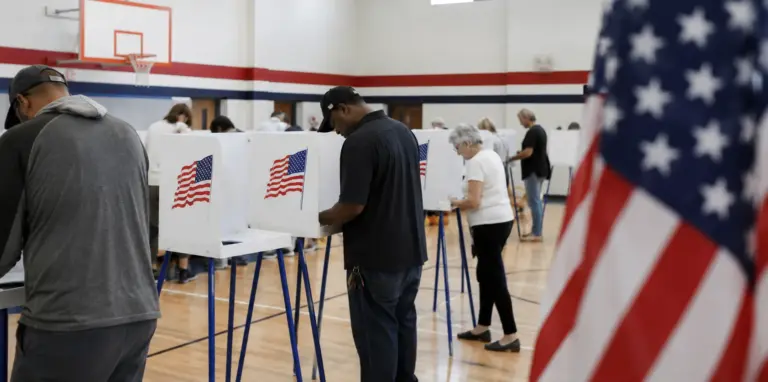
As Election Day draws closer, many voters are finding their smartphones transformed into nonstop notification hubs for political campaigning. While the influx of messages can feel overwhelming, navigating the legal landscape of these communications reveals a frustrating reality: some intrusions are easier to stop than others. The primary hurdle for most users is the realization that the National Do Not Call Registry offers virtually no protection against political outreach, as campaigns are legally exempt from those specific restrictions.

Despite the lack of registry protection, there are ways to quiet the noise, particularly when it comes to texting. According to the Federal Communications Commission, automated political texts typically require your prior consent. If you find yourself targeted by these robotexts, replying with the word STOP is often an effective way to withdraw that permission and end the stream of messages. For more suspicious or unsolicited texts, officials recommend forwarding them to 7726 or using built-in smartphone filters designed to screen out unknown senders.

Phone calls prove slightly more complicated because manual outreach and landline robocalls operate under different sets of rules. Under the Telephone Consumer Protection Act, certain prerecorded calls to landlines can be made without prior consent, though they must identify who is calling. Those receiving prerecorded telemarketing styles of campaign calls should listen for an opt-out mechanism at the beginning of the recording, which is required by law.

For those who suspect a campaign has crossed a legal line or violated FCC regulations regarding artificial voices or unauthorized automation, there is recourse available through official channels. Filing an informal complaint via the FCC website allows regulators to track abuses. Until then, blocking numbers and leveraging device settings remains the best defense for anyone hoping for a little peace and quiet before heading to the polls.

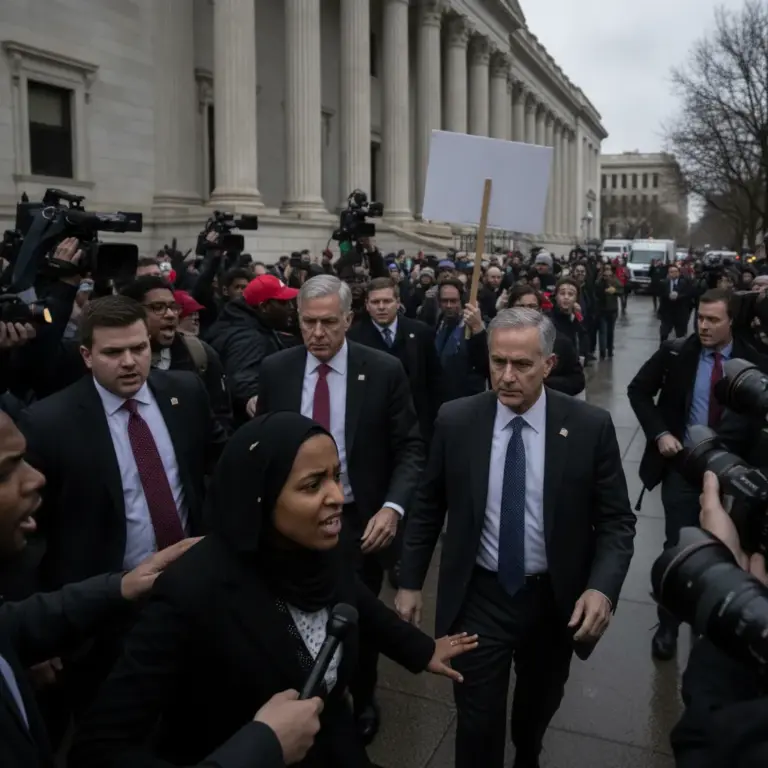
With midterm elections just days away, the Justice Department is facing intense scrutiny over a sudden wave of high profile legal actions targeting prominent critics of President Donald Trump. From searching the home of Representative Ilhan Omar to pursuing renewed charges against former FBI Director James Comey, the department has unleashed a series of aggressive maneuvers that many observers say ignore long standing traditions. Critics and defense attorneys argue that the timing and selection of these targets suggest a calculated effort to influence the political landscape rather than a neutral application of the law.

The current flurry of activity includes criminal charges against former FBI officials regarding their handling of investigations into Hunter Biden and attempts to indict a former White House aide who testified about efforts to overturn the 2020 election. To push these cases forward quickly, prosecutors have utilized unusual tactics like filing complaints instead of seeking traditional grand jury indictments in Washington, D.C., where securing such indictments has proven difficult recently. Former DOJ official David Laufman described the situation as a brazen disregard for established norms, suggesting that such politically sensitive probes are unprecedented in their execution so close to an election.

In response to the backlash, Attorney General Todd Blanche and the Justice Department have maintained that they are following evidence regardless of any political calendar. While acknowledging an informal tradition of avoiding overt investigative steps shortly before an election to prevent influencing outcomes, the department argued that this is not a hard rule and should not halt necessary legal work. Blanche has specifically pushed back against claims of interference, insisting that his office operates in service to the president and denying that recent searches or filings were timed for electoral gain.

Despite these denials, the pattern of targeting adversaries remains central to the controversy. The search of Rep. Omar’s residence and subsequent seizure of her phone occurred while she is actively campaigning for reelection in Minnesota, adding fuel to allegations that the ministry is being weaponized. As lawsuits continue to unfold in states like Alaska and California over voting procedures, opponents argue that these combined pressures represent a fundamental shift in how federal law enforcement interacts with American democratic processes.

Donald Trump entered the White House riding a wave of public frustration over border chaos and overflowing social services. For years, images of migrant caravans and sprawling tent cities served as potent political fuel, convincing millions of voters that drastic action was necessary to secure the nation. However, the transition from campaigning on border security to implementing a massive domestic deportation campaign has shifted the scene of conflict from the Rio Grande to American city streets. What began as a promise to restore order has devolved into a series of violent clashes that are now threatening to alienate the very electorate that put him in power.

The turning point arrived in Minneapolis, where the deployment of thousands of federal officers transformed neighborhoods into zones of tactical warfare. Masked agents arriving in unmarked convoys sparked widespread protests and ended in tragedy when two U.S. citizens were killed during confrontations with federal authorities. These deaths, particularly the shooting of a peaceful citizen captured on bystander video, have fundamentally altered the national conversation. While supporters argue these measures are simply the cost of doing business to end illegal immigration, critics suggest the administration has crossed a line from law enforcement into constitutional violation.

This volatility is creating a precarious situation for Republicans heading into the midterm elections. Polling indicates a surprising reversal in voter sentiment; while there remains broad support for strong borders, there is growing disapproval of the aggressive tactics used within U.S. cities. This friction has caused visible cracks within GOP ranks, pitting hardline advocates for total deportation against moderates and representatives from immigrant-heavy communities who worry about the optics and legality of current operations.

Democrats have seized on this shift to move beyond mere criticism toward active resistance, with some members calling for the defunding of ICE altogether. As stories emerge of legal residents and citizens caught in the dragnet—including cases where individuals were deported despite court orders—the narrative has pivoted from one of national security to one of government overreach. By fulfilling his hardest pledges with such intensity, Trump may be finding that his greatest policy victory is becoming his most significant electoral liability.