Archive

October 2026

Browsing

Two industry heavyweights are doubling down on their presence in South America with a massive investment aimed at boosting metal supplies. Polish mining giant KGHM and Australia’s South32 have unveiled plans to spend 725 million dollars expanding the Sierra Gorda copper and molybdenum mine in northern Chile. The ambitious move is designed to ramp up annual copper production by twenty percent, pushing the facility’s processing capacity from 48 million tons of ore up to 60 million tons each year.

The project is expected to reach completion by late 2029, with full commercial output hitting its stride in the latter half of 2030. To keep costs low and sustainability high, the partners plan to optimize their existing infrastructure, utilizing a seawater pipeline and relying entirely on renewable energy sources for electricity. This strategic upgrade comes at a time when traditional mines across South America are seeing declining ore grades, making efficiency gains critical for maintaining profitability.

Beyond just increasing current volume, the companies are looking toward the distant future through aggressive exploration in the nearby Catabela Northeast zone. Initial drilling suggests there may be billions of tons of mineral resources waiting to be tapped, which could potentially extend the lifespan of the mine for decades. For KGHM, this expansion reinforces its status as Europe’s leading copper producer and diversifies its portfolio away from domestic borders.

Meanwhile, for South32, the move fits into a broader trend of streamlining its global operations. The Australian firm has recently shed various aluminum and coal assets as part of a larger corporate pivot toward higher growth opportunities. By investing heavily in Chile alongside KGHM, both firms are positioning themselves to capitalize on an increasingly tight global copper market driven by the worldwide transition toward green technology.

A massive cargo of Belarusian potash is currently making its way across the Atlantic, marking the first time such a shipment has headed for the United States in four years. The vessel departed from Russia’s Bronka port on September 15 and is expected to dock in New Orleans by mid October. While the thirty thousand metric ton delivery may seem like a routine trade move, it arrives amid a politically charged atmosphere as President Donald Trump seeks to leverage alternative suppliers to drive down prices for American farmers who have long relied on expensive Canadian imports.

The sudden reentry of Belarus into the U.S. market follows a complex series of diplomatic maneuvers involving the release of political prisoners and a gradual loosening of sanctions against the state owned producer Belaruskali. This geopolitical thaw sent ripples through the financial sector, causing temporary stock dips for industry giants like Nutrien and Mosaic as investors worried that Canada might lose its dominant grip on the domestic supply chain. However, Trump later clarified that his goal is not necessarily to replace Canadian providers entirely but to create enough competition to secure better pricing for agricultural producers.

Despite the symbolic weight of this shipment, analysts warn that a full scale pivot away from Canada faces steep hurdles. Belarus continues to struggle with severe logistical bottlenecks caused by European Union sanctions, which have blocked traditional transit routes through Lithuania, Latvia, and Poland. Forced to reroute shipments through Russia at a significantly higher cost, Minsk must now prove it can maintain an efficient pipeline to North America while honoring existing heavy contracts with major buyers in China, Brazil, and India.

Ultimately, this inaugural voyage serves more as a trial run than an immediate market disruption. With Canada still providing nearly eighty percent of U.S. potash imports over recent years, one ship cannot dismantle an entire trade infrastructure overnight. Nevertheless, the arrival in New Orleans signals a volatile new chapter in global fertilizer trade where diplomacy and prisoner swaps are becoming just as important as soil chemistry and shipping lanes.

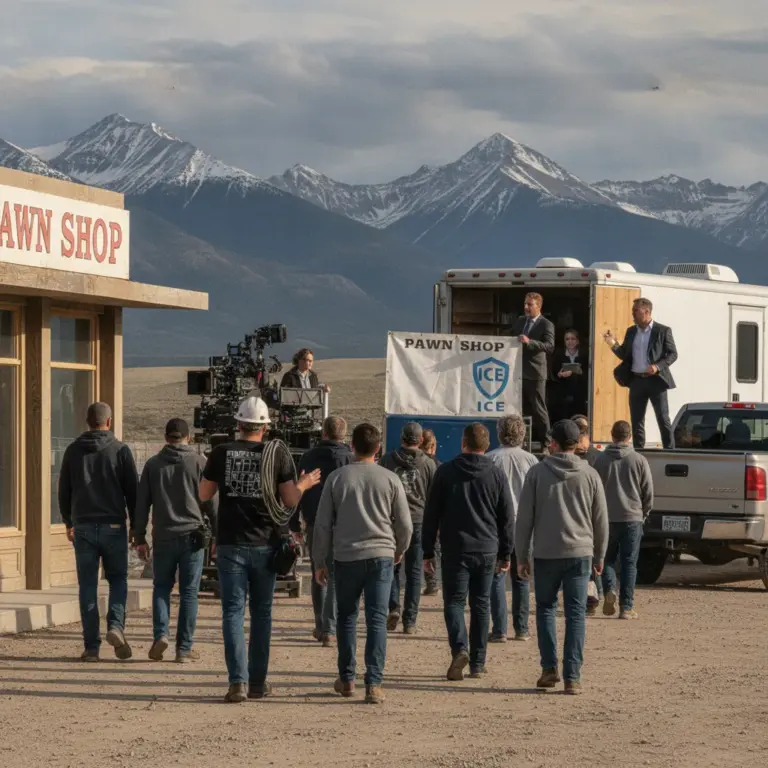
A production in Livingston, Montana, has become a lightning rod for controversy as crew members walk off the set of Pawn Shop, a new narrative feature produced by The Daily Wire. According to reports from IndieWire, several workers claim they were misled about the nature of the project, describing it initially as a fun action movie without any mention of its conservative leanings or pro-ICE messaging. One anonymous staffer expressed frustration over the lack of transparency, stating that they would never have accepted the role had they known the film’s ideological slant.

The movie features high profile talent including Danny Trejo and Harvey Keitel and centers on a federal agent taking refuge in a pawn shop amidst unrest in Minneapolis. However, specific plot points have sparked outrage among locals and former employees alike. Critics point to a scene involving an encounter between an ICE officer and a protester as a distorted retelling of the real world killing of Renee Good, a mother of three shot by federal agents earlier this year. While the actual event resulted in no officer casualties, the film depicts a scenario where an officer kills a protester after his partner is injured in a vehicle collision, leading activists to accuse the filmmakers of rewriting history.

The tension surrounding the shoot eventually spilled over into city governance when Livingston officials temporarily halted production following public outcry. Local business owners reported that this particular shoot felt more disruptive and dangerous than typical productions in the area. Though permits were quickly reissued and filming resumed shortly thereafter, Ben Shapiro slammed the interruption as purely politically motivated interference designed to stifle their creative process.

For those leaving the production, the issue was less about ideology and more about professional ethics. Some departing crew members noted that even projects dealing with emotionally heavy subject matter typically provide full disclosures so artists can decide if they are comfortable participating. By keeping the political goals hidden behind an action movie facade, critics argue that The Daily Wire acted irresponsibly toward its hired workforce.

A former donor to Donald Trump is speaking out about a startling request he claims was made by Kimberly Guilfoyle, the U.S. Ambassador to Greece. In a recent interview with CNN’s Jake Tapper, Eric Deters detailed an interaction where he alleges Guilfoyle attempted to leverage her proximity to the former president for personal financial gain.

According to Deters, the ambassador approached him with a proposal to settle a substantial personal debt. He claims that Guilfoyle asked him to pay off a credit card bill totaling 100,000 dollars, suggesting that such a payment would be rewarded with direct access to Donald Trump. This arrangement essentially framed a private debt settlement as a gateway to political influence.

The allegations raise serious questions regarding the conduct of high ranking officials and the nature of fundraising within certain political circles. While these claims paint a picture of transactional loyalty and opportunistic behavior, they add another layer of controversy surrounding those inner circle figures who maintain close ties to the Trump organization and its leadership.

Vice President JD Vance expressed uncertainty on Friday regarding the Pentagon’s controversial plan to livestream the execution of Nidal Hasan. While Defense Secretary Pete Hegseth previously announced that Hasan would face a firing squad on December 3, Vance told reporters he does not know if the broadcast portion of the event is actually going to happen. When pressed on how such a public spectacle aligns with his Christian faith, Vance distanced himself from the viewership, stating clearly that he would not be watching should the stream proceed.

Despite his reservations about the broadcast, Vance remained firm on the necessity of the punishment. He reminded critics that Hasan carried out what he described as the worst terrorist attack on American soil since September 11, emphasizing that the brutality of those murders should outweigh any arguments over the method of execution. His comments come at a time when the proposal has sparked an unusual wave of bipartisan condemnation, with many arguing that broadcasting a state killing crosses a moral line.

Within his own party, Vance is not alone in his discomfort. Several prominent Republicans have joined a growing chorus of outcry against turning a legal proceeding into a media event. Senator John Curtis of Utah warned that society begins to erode when it treats executions as a form of entertainment, while Representative Rob Bresnahan argued that the suffering of the victims deserves respect rather than being transformed into a public show.

The debate arrives amid broader turmoil and rapid shifts within the administration, including new sanctions targeting the International Criminal Court and moves to investigate Federal Reserve governor Lisa Cook. However, it is the prospect of becoming the first country to livestream a military execution that continues to draw intense scrutiny from human rights organizations and lawmakers alike, leaving the White House to navigate an increasingly volatile ethical minefield.

The Department of Justice is loosening the reins on how its highest-ranking officials engage in politics, paving the way for Attorney General Todd Blanche and other Senate-confirmed appointees to take a more active role in partisan events. According to an internal memo obtained by PBS News, the agency’s top ethics official has introduced new language that exempts these specific presidential appointees from many of the strict prohibitions that typically govern senior government staff. Under these relaxed guidelines, leaders like Blanche can now address political gatherings and openly endorse or oppose candidates.

While the administration argues that this move simply clarifies existing laws, critics suggest it represents a significant departure from decades of tradition designed to keep the nation’s chief legal body independent. Former DOJ ethics head Joseph Tirrell warned that by lowering the bar to match only the basic requirements of the Hatch Act, the department is abandoning a higher standard of conduct maintained by previous attorneys general. He argued that such a shift risks eroding public confidence in the fairness of justice department decisions, suggesting that neutrality may now be sacrificed for political loyalty.

The timing of this policy change coincides with a series of high profile appearances by Attorney General Blanche at political functions. He recently appeared at a Senate campaign rally in North Carolina to introduce President Donald Trump and attended the Republican Party’s midterm convention. These types of engagements would have likely triggered red flags under previous administrations, which generally discouraged top DOJ officials from appearing alongside partisans shortly before an election to avoid any appearance of using official power to sway voters.

In response to these concerns, a Department of Justice spokesperson stated that the updated guidance merely clarifies an existing exception within the Hatch Act for Senate confirmed officials. They noted that while appearances with partisan candidates will still undergo review by ethics officials to determine if they are official or political in nature, the overall approach reflects current administrative priorities. This marks another step in a broader trend during the second Trump administration toward dismantling stricter norms established during previous eras.

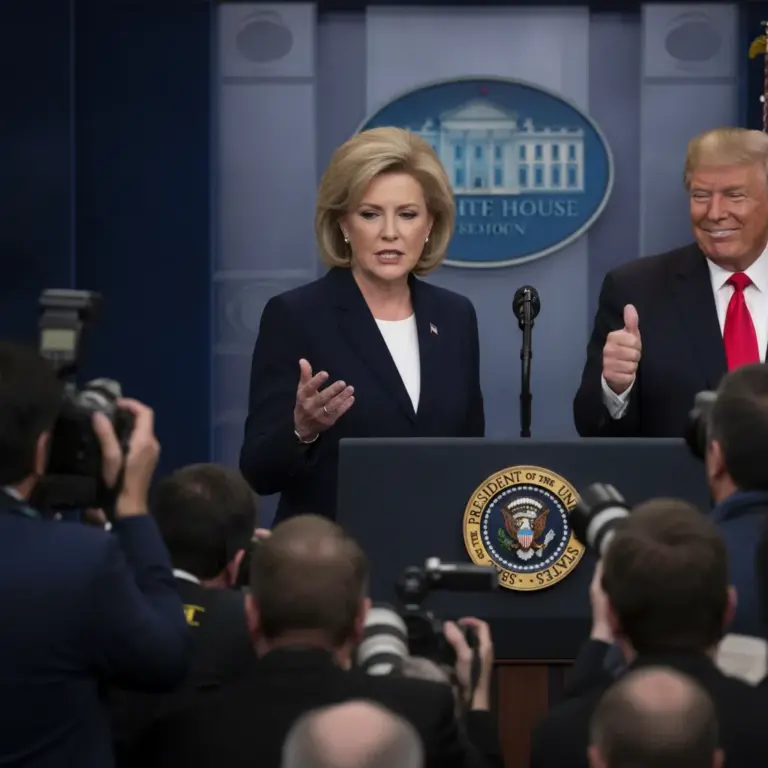
President Donald Trump has named Katie Zacharia as his next White House press secretary, selecting a loyalist whose rise to the podium happened with surprising speed. A conservative commentator known for her presence on networks like Fox and Newsmax, Zacharia took to social media on Friday to describe the appointment as the honor of a lifetime, particularly noting the significance of serving during the nation’s upcoming 250-year anniversary. The president praised her unwavering support since the start of his movement, calling her both brilliant and loyal.

The path to this appointment was reportedly fraught with challenges for the administration. According to White House officials, the search process stalled repeatedly because several high profile candidates were disqualified after records emerged showing they had previously criticized the president. This trend led Trump to lean on trusted inner circle members, including outgoing press secretary Karoline Leavitt, for advice before settling on Zacharia. Sources indicate that until just last week, Zacharia wasn’t even under serious consideration for the role.

Zacharia brings a mix of government and private sector experience to the job, having recently served as a senior communications adviser for Truth Social and the Trump Media and Technology Group. Her resume also includes a brief tenure as a senior official at the Department of Homeland Security and a role as a legal adviser for Fix California, a group linked to Richard Grenell. Though she currently resides in California with her young children—a distance that made previous commutes to D.C. difficult—she now prepares to take over one of the most visible roles in politics.

As she steps into the spotlight, Zacharia expressed eagerness to engage with the press corps and highlight what she described as the daily wins of the administration. For his part, Trump seemed optimistic about how she will handle the often contentious relationship between his office and the media. While joking that he wasn’t sure if her liking reporters was a good thing or a bad thing, he told journalists on Friday afternoon that he expects her performance to be terrific.

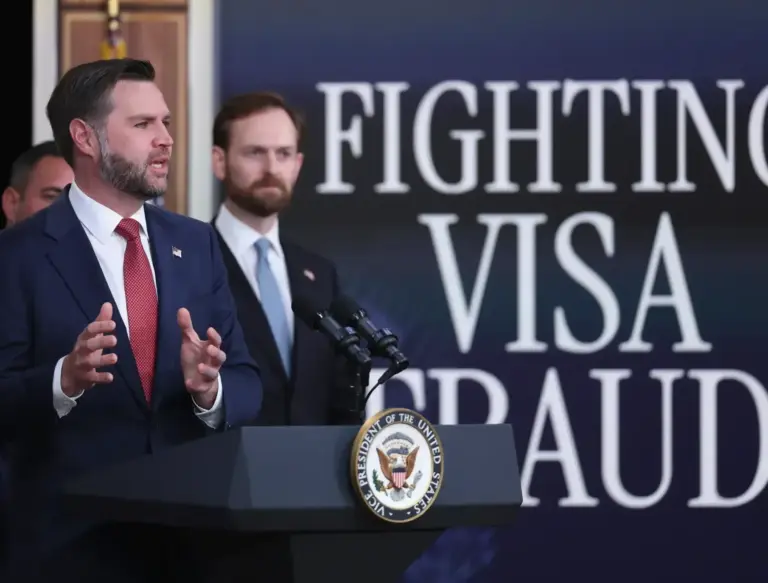
The United States government has launched a sweeping crackdown on the pathways to permanent residency for skilled foreign workers, effectively blocking several global tech giants from sponsoring employee green cards. Vice President JD Vance announced the suspension of certain companies from the Permanent Labour Certification program, claiming that the system has been manipulated to replace domestic staff with cheaper overseas labor. This move marks another escalation in the administration’s broader effort to tighten legal immigration channels and prioritize American citizens in the workforce.

Among those targeted are high profile names like Microsoft and Adobe, along with an array of major IT services firms including Infosys, Tata Consultancy Services, and Wipro. According to officials, these companies have allegedly abused the visa regime to create a class of workers described by Vance as indentured servants who are mistreated by employers and used to drive down market wages. Labor Secretary Keith Sonderling echoed these sentiments, stating that the government is shutting down a pipeline of systemic fraud that has historically allowed thousands of foreign nationals to secure permanent status at the expense of U.S. workers.

The fallout from this decision is expected to be felt most acutely by thousands of foreign professionals, many of whom are Indian nationals currently navigating massive application backlogs. For many on temporary H-1B visas, the PERM process is the only viable bridge to stability and citizenship. By freezing new and pending applications for these specific firms, the government has left countless employees in a state of professional limbo, regardless of whether they were personally involved in any corporate misconduct.

In response, Microsoft has pushed back against the narrative that it replaces Americans with foreign laborers. The company clarified that a vast majority of its recent visa filings were simply extensions or status changes for existing employees rather than new hires brought in to fill vacated roles. While other titans like Google and Amazon remain unaffected for now, this policy shift signals a volatile new era for the tech industry’s reliance on international talent and suggests that corporate sponsorship may now come under intense federal scrutiny.

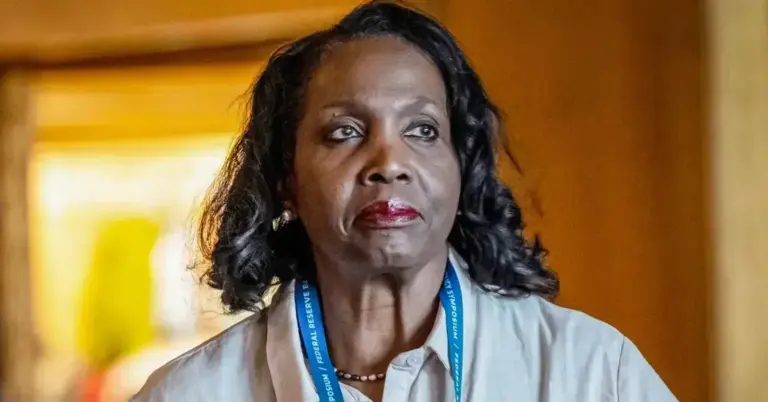
President Donald Trump has escalated his efforts to remove Federal Reserve Governor Lisa Cook by signing an executive order to create a special committee tasked with investigating her conduct. According to a presidential memorandum released on Friday, the probe focuses on allegations that Cook made false statements concerning mortgage instruments. The resulting findings will be used to determine if there is sufficient legal cause to terminate her appointment, marking an unprecedented move toward firing a top official at the nation’s central bank.

The conflict centers on accusations originally raised by Federal Housing Finance Agency chief Bill Pulte, who alleged that Cook committed mortgage fraud. While Trump has amplified these claims across social media, separate reports suggest the issue involves how certain properties were designated as residences versus vacation homes. Attorneys for Cook argue that any errors were inadvertent and point out that several high ranking members of the current administration have faced similar scrutiny over their own mortgage applications. They maintain that the proceedings are less about financial paperwork and more about political intimidation.

Legal tensions have been mounting since June when the Supreme Court ruled that while Cook could keep her job for the moment, she must be given an opportunity to defend herself against removal attempts. This new committee represents the administration’s effort to fulfill that requirement, scheduling a hearing for November 5, just two days after the midterm elections. Cook’s lawyers have expressed skepticism regarding the legitimacy of the process, describing it as a predetermined outcome rather than a genuine search for facts.

Critics of the move say this is part of a broader pattern of aggression directed at the Federal Reserve during a period of intense debate over interest rates. Senator Elizabeth Warren characterized the inquiry as a show trial designed to undermine the independence of the central bank. These attacks mirror recent criticisms aimed at Jerome Powell, suggesting a concerted strategy by the White House to reshape the leadership of the Fed through administrative pressure and public accusations of misconduct.

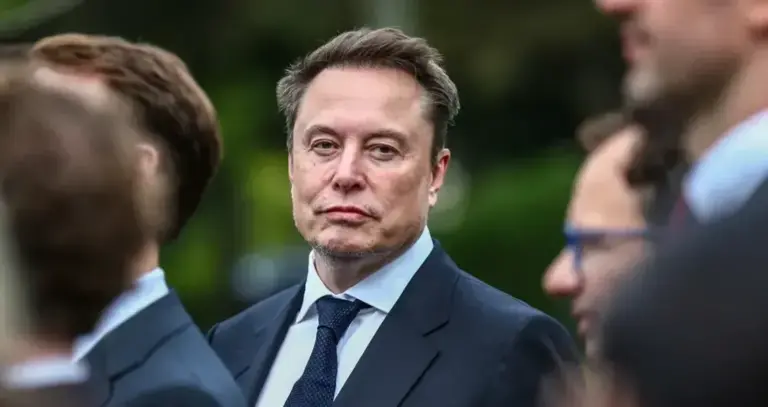
Wall Street felt the ripple effects of Elon Musk’s latest expansion on Friday as shares of AT&T, Verizon, and T-Mobile plummeted following an announcement that SpaceX intends to become a major mobile carrier in the United States. The move wiped out over 50 billion dollars in combined market value before noon, with T-Mobile seeing the steepest decline at 14 percent. This volatility comes after SpaceX revealed plans for Starlink Mobile to combine its satellite constellations with terrestrial deployments to ensure seamless connectivity across the country, bolstered by FCC approval for 15,000 new satellites.

For Musk, this venture represents another brick in a sprawling technological empire that already encompasses Tesla and xAI. While SpaceX handles everything from government rocket launches to high-speed internet via Starlink and Shield, the push into direct mobile telephony marks a strategic pivot toward the domestic consumer market. Musk described the recent acquisition of spectrum as the final piece of the puzzle necessary for providing comprehensive phone coverage throughout America, further cementing his influence over critical communication infrastructure.

Despite the immediate panic on trading floors, many industry experts remain unconvinced that SpaceX can dismantle the existing wireless hegemony overnight. Analysts from JPMorgan Chase and UBS pointed out that owning spectrum is far different from operating a functional network. They argue that without a massive investment in ground-based macro towers to penetrate buildings and urban centers, Starlink may struggle to match the reliability of legacy carriers. These skeptics suggest that while satellites are impressive, they cannot replace the physical hardware required for consistent cellular service.

Executives at the targeted telecom firms echoed these sentiments, dismissing the idea that a few thousand satellites could render their networks obsolete. Verizon noted that spectrum without infrastructure is essentially empty airwaves, while T-Mobile emphasized that building a high-performing national network requires years of painstaking engineering rather than a single regulatory victory. However, with Musk’s deep political ties and significant financial resources, investors seem wary enough to bet against stability until this celestial gamble plays out on solid ground.