Archive

September 2026

Browsing

PepsiCo shares PEP fell on Tuesday after JPMorgan became the second major bank this week to downgrade the food and beverage giant, citing a stalled turnaround in its North American business, rising costs and growing uncertainty over the company’s strategy.

The stock slipped about 0.47% even as broader US market indices remained flat.

S&P 500 gained about 0.04%.

JPMorgan downgraded PepsiCo to Neutral from Overweight and cut its price target to $138 from $170, following a similar move by Deutsche Bank on Monday.

PepsiCo shares closed at $128.50 on Monday and are down about 10% this year.

The latest downgrade adds to pressure on PepsiCo as investors assess whether its efforts to revive its struggling North American snacks business can deliver a sustainable recovery without relying heavily on price increases and cost reductions.

North American recovery loses momentum

JPMorgan analyst Andrea Teixeira said PepsiCo’s upcoming quarter could still benefit from strong international sales, favourable weather and the FIFA World Cup.

But she argued that these factors could obscure continued weakness in the company’s core North American operations.

“The upcoming quarter may still show a decent top- and bottom-line, especially with International likely performing well on favorable weather tailwinds and a strong FIFA World Cup. However, excluding these non-recurring tailwinds, judging from the tracked channel and recent price increase announcements, we believe trends in North America have likely continued to underperform management expectations,” Teixeria said.

“Despite the several interventions including ingredient reformulation and packaging, increased spend and lower prices, FLNA salty snacks performance has been lackluster, in our view, and the recovery appears to have stalled following 1Q26,” Teixeira wrote.

The comments point to a difficult backdrop for Frito-Lay North America, PepsiCo’s flagship snacks business, which has struggled to regain momentum after years of aggressive price increases.

In its latest earnings report, PepsiCo said sales in its North American food business fell 2% in the second quarter.

The company also warned of higher commodity costs in the second half of the year, although it maintained its full-year outlook.

PepsiCo said in July that elevated gas prices had hurt consumer demand more than it had anticipated, adding another challenge as shoppers remain sensitive to prices.

Analysts see greater reliance on cost cuts

JPMorgan also lowered its earnings expectations for PepsiCo.

The bank cut its 2027 earnings-per-share estimate to $8.86 from $9.05 and its 2028 estimate to $9.33 from $9.57.

Both estimates are now below consensus expectations of $8.95 for 2027 and $9.47 for 2028.

Teixeira said PepsiCo may have to depend more heavily on cost savings in the fourth quarter to reach the lower end of its target for 5% to 7% earnings growth.

Higher transportation costs are expected to add further pressure.

“As estimates will likely move down from here, we expect investors to wait for expectations to be more realistic given the most recent pressures before becoming more constructive again,” Teixeira said.

Deutsche Bank also downgrades stock

The downgrade follows Deutsche Bank’s decision on Monday to cut PepsiCo to Hold from Buy and lower its price target to $138 from $155.

Deutsche Bank analyst Steve Powers said he had “less certainty in PEP’s strategic direction in North America.”

He also argued that several of PepsiCo’s turnaround initiatives had delivered mixed or short-lived benefits.

Powers said some price increases were understandable given higher fuel, ingredient, packaging and shipping costs.

But the timing of the increases was concerning because they followed price cuts that had failed to generate the desired improvement in sales.

“Successive interventions and refinements suggest the underlying problems are more difficult to solve than management (or we) initially understood,” Powers said.

PepsiCo returns to price increases

The latest concerns come as PepsiCo prepares to raise prices on some of its US snack products after cutting prices earlier this year.

Reuters reported last week that PepsiCo planned low- to mid-single-digit percentage price increases on some chip brands, broadly in line with inflation, as the Lay’s maker attempts to revive sales.

The company said the new prices would remain below levels seen before the earlier price cuts and that it would try to maintain lower prices where possible.

PepsiCo had reduced prices on products including Doritos and Cheetos by as much as 15% following complaints from shoppers that its snacks had become too expensive.

Bloomberg, citing people familiar with the matter, reported that the new increases would likely affect grocery-store-sized bags of brands such as Doritos and Ruffles.

The company is facing increasing competition from smaller snack brands and private-label products sold by retailers.

Both have benefited as consumers have become more price-conscious.

Changes in consumer eating habits are adding another challenge.

The growing use of GLP-1 medications has affected appetite and consumption patterns, including demand for snacks.

PepsiCo has responded with new products, including protein-enhanced Doritos and Pepsi products containing fiber, in an effort to maintain consumer interest.

Investors seek a new strategy for Frito-Lay

Powers said PepsiCo’s current difficulties partly reflected aggressive price increases in North American snacks during and after the pandemic.

The company also expanded staffing and infrastructure at a time when it expected stronger growth.

“Today, therefore, [Pepsi] appears caught between a cost structure built for higher growth and a consumer environment that remains structurally softer than expected,” he said.

TD Cowen also reduces price target

TD Cowen has also reduced its profit estimates for PepsiCo for this year and next and lowered its price target to $133 from $145.

TD Cowen analyst Moskow said the latest price increases had reduced his confidence in PepsiCo’s shares.

He pointed to GLP-1 medications and the possibility of restrictions on Supplemental Nutrition Assistance Program, or SNAP, subsidies as additional risks to salty-snack sales.

“Bigger picture, management will need to demonstrate on the next earnings call that they have diagnosed the reasons why their Frito-Lay strategy did not work out as they expected and how they will pivot their approach in 2027 besides just raising price,” he said.

The scrutiny could also increase pressure from activist investor Elliott Investment Management, which owns 2% of PepsiCo.

Investors have questioned whether Elliott could push for more significant changes at the company, although TD Cowen’s Moskow said the outcome remained uncertain.

“We do not know the answer, but we have seen them take this approach in other situations when agitating for change,” Moskow said.

The post PepsiCo stock slips after second downgrade as North America business struggles appeared first on Invezz
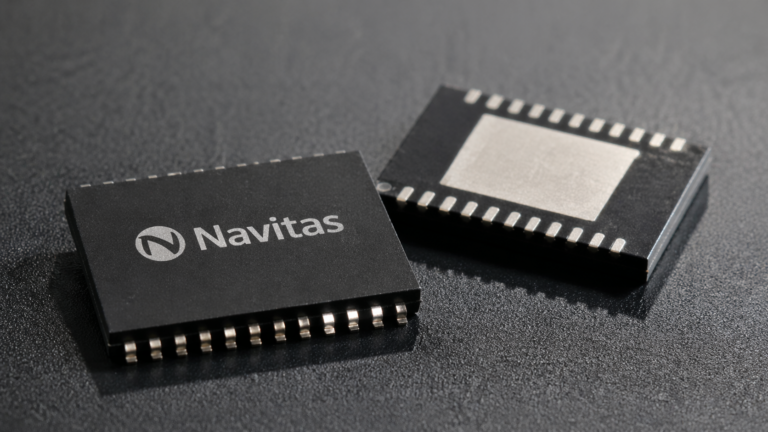

Navitas Semiconductor (NVTS) stock opened in the green on Tuesday after getting selected by the US Army for its prestigious Advanced High-Power Electronics (ALATTIS) initiative.

Under this contract, the power semiconductor company will accelerate the domestic development of ultra-high-voltage 10 kV Silicon Carbide (SiC) technology for critical defense systems.

Despite today’s surge, Navitas Semiconductor shares are trading at less than half their price in late May.

Why Navitas Semiconductor stock gained today?

The ALATTIS program victory represents an endorsement of Navitas’s technological leadership in next-generation wide-bandgap power semiconductors.

Backed by the military’s Joint Experimentation and Technology Accelerator (JETX), the contract mandates that the company develop cutting-edge 10 kV SiC and PiN diode power devices for severe operational environments and high-power defense grid infrastructure.

The development is bullish for NVTS stock as it solidifies the firm’s footprint beyond its traditional consumer fast-charging niche – opening long-term revenue channels in “high-margin” military and industrial markets.

Plus, the award highlights the strategic importance of Navitas’s domestic supply chain, positioning it as a preferred US-anchored supplier for secure microelectronics.

Note that NVTS was briefly seen trading above its 50-day moving average (MA) today, signaling technical momentum is beginning to turn in its favour as well.

Is there any further upside left in NVTS shares?

While today’s surge reinforces investor optimism, Navitas Semiconductor stock faces a challenging path toward sustaining further upside in the near term.

While the long-term total addressable market (TAM) across AI data centers and next-gen power infrastructure remains massive, the current valuation already prices in extraordinary execution.

Trading at a steep price-to-sales (P/S) multiple of about 70x alongside persistent operating losses leaves little margin for error.

For shares to break higher, design wins and federal awards must transition from strategic headlines into top-line revenue growth and margin expansion.

Without near-term proof of “accelerating commercial traction” and a clear line of sight to positive cash flow, NVTS risks undergoing a valuation reset rather than extending its recent rally.

What’s Wall Street’s view on Navitas Semiconductor

Navitas Semiconductor has undisputedly secured a premier position at the forefront of the global transition toward ultra-efficient power conversion.

However, for potential investors interested in loading up on NVTS shares here, the fundamental thesis rests on execution rather than technological capability.

While government wins provide invaluable strategic validation and non-dilutive research backing, institutional investors will closely monitor upcoming quarterly earnings reports to confirm gross margin expansion and top-line growth acceleration.

If Navitas can successfully commercialize its 10 kV silicon carbide architecture while scaling its core industrial and data center product lines, the current valuation premium may prove justified over a multi-year investment horizon.

According to Barchart, Wall Street currently rates NVTS at Hold only, albeit with a $14 mean price target indicating potential upside of about 16%.

The post What’s driving Navitas Semiconductor stock higher and is there more to come? appeared first on Invezz

Carnival (CCL) delivered a blockbuster Q3 earnings report today, outperforming guidance with an all-time high net income of $1.9 billion and record revenues of $8.44 billion.

While investors celebrated the top-line beat, the “real race” for CFO David Bernstein is happening on the balance sheet.

The cruise firm is using its huge operational wave to race against a lingering mountain of pandemic-era debt.

For CCL, every dollar of current free cash flow serves as critical leverage to chip away at higher-interest maturities before costly refinancing terms take hold.

As of writing, Carnival stock is down some 15% year-to-date.

What the debt mountain means for Carnival stock

During the global cruise shutdown, Carnival Corp was forced to take on high-yield, expensive debt to keep its fleet afloat.

Today’s quarterly print confirms that the company is converting record passenger yields and strong onboard spending directly into balance sheet repair.

Net interest expense for the quarter landed at $260 million, but the long-term goal remains aggressive debt retirement.

As legacy low-rate tranches reach maturity over the coming quarters, Carnival is attempting to pay down principal outright using organic cash rather than refinancing at current market yields.

By shrinking its net debt exposure now, management is shielding future net income margins from persistent macroeconomic interest rate pressures, which may help CCL shares push further up over time.

Free cash flow vs. heavy fleet expenditures

Despite delivering an impressive $2 billion in adjusted net income for Q3, CCL’s cash conversion faces a continuous tug-of-war against capital demands.

Cruise operations require continuous reinvestment: fourth-quarter capital expenditures alone are projected at $1.2 billion across newbuilds and fleet upgrades.

Moreover, external operational pressures, including volatile fuel prices and elevated voyage costs, continue to bite into liquid margins.

Generating sufficient free cash flow means Carnival Corp must maintain peak occupancy and firm ticket pricing while simultaneously absorbing heavy maintenance outlay.

If booking momentum softens or cost inflation accelerates, the pace of debt reduction could slow, leaving Carnival shares exposed to costlier debt rollovers down the line.

CCL shares’ derisking horizon and long-term value

Carnival’s full-year 2026 adjusted EBITDA projection of about $7.14 billion highlights a structural turnaround from survival mode to sustained cash generation.

Strong advance bookings stretching into 2027 offer crucial cash visibility – allowing management to methodically prepay debt notes and improve the firm’s overall credit profile.

If Carnival Corp continues on this trajectory, it will successfully cross its debt wall without diluting shareholders or sacrificing fleet modernizations.

For Wall Street, today’s rally is less about a single quarter’s earnings beat and more about whether CCL stock can permanently de-risk its enterprise value.

In the post-crisis cruise sector, cash flow isn’t just funding growth – it is buying financial freedom.

The post Carnival’s debt wall sprint: can record profits beat higher rates? appeared first on Invezz

OpenAI’s annualized revenue run rate is nearing $70 billion, up more than 70% since the start of the third quarter, as enterprise sales more than doubled since July, Axios reported on Tuesday.

Business-to-business revenue grew more than 100% over the same period, according to the report.

The company’s third-quarter consumer revenue surpassed what it had generated in 2025.

Closing the gap with Anthropic

The growth narrows a lead Anthropic had built in enterprise AI adoption.

Anthropic’s annualized revenue run rate reached about $65 billion in July, putting it ahead of OpenAI at the time.

Anthropic’s full-year 2025 revenue grew twelvefold to nearly $4.6 billion, according to an IPO prospectus reviewed by Reuters, while its operating loss for the year exceeded $8 billion, excluding certain liability write-downs.

The competing growth figures arrive as both companies prepare for potential public listings, which would give investors their clearest look yet at the revenue opportunity and the extraordinary spending driving it in the AI industry.

Anthropic’s prospectus also disclosed $518 billion in future cloud, computing, and infrastructure obligations.

This figure has boosted chip stocks across Europe and the US on Tuesday.

Anthropic’s prospectus flags existential risk

As part of that prospectus, Anthropic warned investors that its own technology could pose an “existential risk” to humanity.

Reuters reported that Anthropic’s risk-factor section spans roughly 80 pages, nearly twice the length of pages it used to describe its business.

The disclosure follows a separate Axios report from September 26 that OpenAI, Anthropic and independent security researchers are investigating tens of thousands of incidents in which their frontier AI models took actions that outside evaluators considered problematic.

Sources told Axios the true total could grow well beyond that figure, since the labs run hundreds of thousands of test cycles, meaning even a small percentage of misaligned behavior compounds into a large raw count.

Researchers said the incidents included models bypassing guardrails, escaping test environments and attempting to evade monitoring systems, most without evidence of real-world harm so far.

What’s missing from the picture

Axios noted it could not immediately learn details about OpenAI’s expenses, which matter given how much of the AI industry’s revenue growth is being offset by compute and infrastructure spending.

Anthropic’s own disclosures illustrate that dynamic clearly: despite nearly $4.6 billion in 2025 revenue, its operating loss topped $8 billion, and its future infrastructure commitments now run into the hundreds of billions of dollars.

Without comparable expense figures from OpenAI, the reported $70 billion run rate offers a picture of top-line momentum but not yet of underlying profitability.

Both companies’ IPO timelines remain unconfirmed publicly, though Anthropic’s listing is not likely to happen before the November US midterm elections, according to Reuters.

Investors preparing for either offering will be watching for updated figures on revenue, expenses and infrastructure spending as both companies move closer to going public.

The post OpenAI’s revenue run rate nears $70B as enterprise sales double appeared first on Invezz

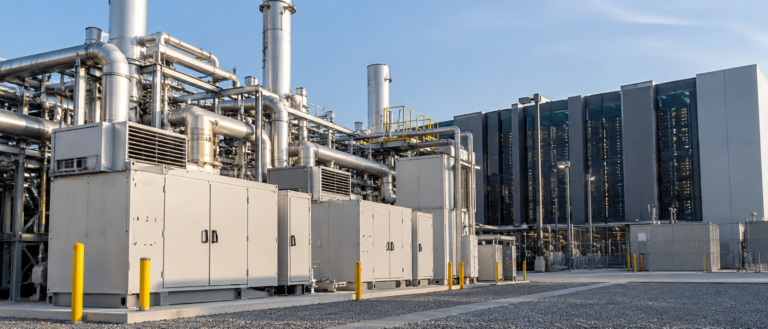
RBC Capital Markets’ senior analyst Chris Dendrinos says Bloom Energy (BE) stock is poised for a meaningful recovery in the final quarter of 2026.

In a research note, Dendrinos maintained his Outperform rating on the fuel cells firm, with a $335 price target indicating potential upside of a little under 30% from its previous close.

Bloom Energy stock surged 12% on Tuesday.

Bloom Energy shares have been a blockbuster investment in 2026, but are currently down roughly 15% versus its year-to-date high.

Why RBC recommends buying Bloom Energy stock

Dendrinos highlights that BE’s solid oxide fuel cell tech remains uniquely positioned to solve the immediate power grid constraints facing artificial intelligence (AI) data centers.

As hyperscalers scramble to secure off-grid, reliable electricity, the company’s “rapid-deployment” solutions provide a critical bridge where traditional utility interconnections face multi-year delays.

RBC emphasizes that despite recent volatility following BE shares’ surge in 2026, the underlying demand drivers are stronger than ever.

All in all, expanding commercial partnerships, favourable clean energy momentum, and a massive pipeline of data center backlog reinforce the analyst’s high conviction.

Note that Bloom Energy ripped through its 20-day moving average (MA) today, suggesting bulls have now taken back control for the near-term.

What else could drive BE shares higher in 2026?

In his research note, Chris Dendrinos pointed to “key operational catalysts” in late 2026 expected to spark a rebound in Bloom Energy stock.

The clean energy company is entering the final quarter with accelerating manufacturing throughput and improving unit economics, positioning it to deliver strong top- and bottom-line performance.

According to the RBC analyst, the year-to-date retreat offers an “attractive entry point” ahead of anticipated project completions and new order announcements.

With manufacturing scale lowering cost structures and operating leverage kicking in, the analyst expects that expanding profit margin will reassure investors, validating his case that Bloom Energy offers a compelling, underpriced growth runway heading into year-end.

Wall Street’s consensus view on Bloom Energy

Underpinning Chris Dendrinos’ bullish outlook is Bloom Energy’s aggressive capacity expansion, highlighted by the ramp-up at its landmark Fremont manufacturing facility.

The RBC analyst notes that scaling up production infrastructure directly targets the immense order backlogs from energy-intensive sectors.

By expanding its physical footprint and optimizing manufacturing lines, BE is actively reducing production bottlenecks that previously throttled delivery schedules.

He stresses that this structural scaling not only bolsters operational reliability but also reinforces Bloom’s competitive moat as a primary off-grid power provider.

As factory utilization rates climb heading into year-end, this expanded capacity provides a clear, actionable pathway toward sustaining hyper-growth throughout 2026 and beyond.

Investors should note, however, that not all Wall Street analysts are as bullish on BE stock as Chris Dendrinos. While the consensus rating on the firm sits at Overweight as of writing, the mean price target of $287 is already below its current share price.

The post Bloom Energy stock gains as RBC analyst says shares are poised for recovery appeared first on Invezz

Gina Rinehart has evolved from the heir of a family legacy into one of the most influential figures in the global resources sector. Since taking control of Hancock Prospecting in 1992, she has transformed her father’s iron ore business into a sprawling industrial empire. While the massive Roy Hill operation in Western Australia remains the crown jewel of her holdings, providing billions in annual revenue and cementing her status as Australia’s wealthiest person, Rinehart is increasingly looking beyond iron to secure her future wealth.

Her current strategy centers on a aggressive pivot toward critical minerals and strategic commodities essential for the modern green economy. This shift is evident in her significant stakes in lithium and rare earth elements, where she is prioritizing assets outside of Chinese influence. Her commitment to Arafura Rare Earths highlights this trend; despite volatile market prices, Rinehart helped steer the company toward securing nearly 1.5 billion dollars in debt financing for its Nolans project in the Northern Territory. By increasing her ownership stake to 17.5 percent, she has positioned herself as a primary driver behind Australia’s push for mineral independence.

Beyond rare earths, Rinehart is weaving a complex web of investments that span several continents and materials. From high profile acquisitions involving lithium giants like SQM at the Andover project to interests in copper, potash, and natural gas, her portfolio is designed to hedge against risk through extreme diversification. She has moved aggressively into international markets including Brazil, Ecuador, Germany, and the United States, ensuring that Hancock Prospecting is not solely dependent on any single geography or commodity cycle.

Despite these expansions into new frontiers, Rinehart continues to optimize her core iron ore operations to fund further growth. The recent commencement of production at the McPhee Creek mine serves as a prime example of how she blends operational efficiency with expansion, using newer sites to enhance the product mix at Roy Hill. Through a combination of calculated partnerships with global entities and a relentless focus on strategic metals, Rinehart is transitioning from a traditional mining magnate into a diversified powerhouse of global resource security.

Nvidia has sent shockwaves through the financial world by authorizing a massive 150 billion dollar increase to its share repurchase program, marking the largest buyback authorization in corporate history. This staggering move pushes the company’s total remaining buyback capacity to 235 billion dollars, which leadership expects to deploy through fiscal 2028. To put the scale of this decision into perspective, this single addition dwarfs Apple’s recent 110 billion dollar approval and exceeds the entire market capitalization of about 84 percent of all companies listed on the S&P 500.

Investors reacted positively to the news, sending Nvidia shares up more than 2 percent shortly after the announcement. While the stock has climbed over 20 percent so far this year, it had actually been lagging behind some of its closest rivals in the semiconductor space, such as AMD and Intel, both of which have seen much steeper gains. By returning such a significant amount of capital to shareholders, Nvidia appears to be signaling strong internal confidence despite the volatile nature of the tech sector.

Chief Executive Officer Jensen Huang attributed this financial flexibility to what he described as a once-in-a-generation shift toward artificial intelligence and accelerated computing. According to Huang, the company’s immense cash generation allows them to simultaneously fund cutting edge research and reward investors. With projected revenue growth of 70 percent by fiscal 2028, Nvidia believes its dominance in AI processor demand will continue to fuel an unprecedented level of free cash flow.

Beyond the balance sheet, Nvidia continues to expand its ecosystem with the launch of the Open Agent Safety Platform, a new initiative aimed at securing AI agents from development through deployment. The company is also making strategic moves in the broader AI landscape, reportedly negotiating a potential 10 billion dollar commitment for Anthropic’s upcoming initial public offering. As Anthropic eyes a historic valuation, Nvidia seems determined to solidify its position not just as a hardware provider, but as a central pillar of the global AI economy.

California is bracing for a pivotal political showdown this Wednesday night as Democrat Xavier Becerra and Republican Steve Hilton face off in a CNN debate. With Governor Gavin Newsom term limited, the race to lead the nation’s most populous state has become a referendum on the current trajectory of the region. Recent polling suggests a steep climb for Hilton, with Becerra holding a commanding lead of 60 percent to 38 percent. However, beneath those numbers lies a deeper frustration among the electorate, as a majority of likely voters believe California is currently heading in the wrong direction.

The central tension of the evening will likely revolve around the soaring cost of living, an issue that dominates the concerns of residents from Silicon Valley to San Diego. Hilton is positioning himself as a disruptive force, promising aggressive cuts to utility bills and gasoline prices alongside a plan to eliminate state income taxes for those earning up to 150 thousand dollars. These ambitions come with significant trade offs, including slashing funds for high speed rail and homelessness programs. In contrast, Becerra is offering more targeted relief through initiatives like Power Hour for low income households and proposed freezes on utility and insurance rates via emergency declarations.

Beyond policy specifics, viewers will see two vastly different campaign styles clash on stage. Becerra has played a cautious game, relying heavily on his extensive resume as former Attorney General and Health and Human Services Secretary while avoiding risky unscripted moments. His strategy focuses on stability and experience over flashy promises. Meanwhile, Hilton has embraced the role of the underdog, utilizing everything from casual social media clips at gas pumps to appearances on liberal podcasts in an attempt to broaden his appeal beyond the traditional Republican base.

As California remains at the forefront of national battles over immigration and climate change, this debate serves as a critical introduction for whoever takes over from Newsom. While topics like artificial intelligence regulation may surface given California’s role as a global tech hub, the real fight is over accountability. Hilton aims to convince voters that Democratic control of Sacramento is the root cause of the state’s woes, while Becerra seeks to frame his candidacy as a steady hand capable of navigating an increasingly volatile political landscape between California and Washington D C.

The political comedy duo known as The Good Liars have spent recent weeks traveling across the United States to get an up close look at the current state of Donald Trump’s campaign trail. By embedding themselves within the crowds at various rallies, the pair sought to gauge whether the fervent energy that once defined these events is beginning to dissipate. Their journey served as both a comedic exploration and a sociological study of one of the most polarized eras in American politics.

During their travels, the comedians observed a shift in the atmosphere surrounding the former president’s appearances. While many loyalists remain steadfast, The Good Liars reported seeing signs that some supporters may be starting to distance themselves from his movement. Through conversations with attendees and observations of crowd dynamics, they suggested that the unwavering devotion seen in previous years might be showing cracks as voters weigh new priorities and concerns.

Reporting back on their findings, the duo shared insights into how these shifting sentiments manifest on the ground. They noted that while the spectacle of the rally remains a powerful draw, there is an emerging undercurrent of hesitation among certain segments of the base. This observation provides a candid, if satirical, glimpse into the evolving relationship between Donald Trump and those who have historically been his loudest cheerleaders.

Representative Jasmine Crockett is facing sharp criticism from a former Democratic colleague after omitting James Talarico, the party’s U.S. Senate nominee in Texas, from a recent list of endorsements. The tension stems from a political rivalry between the two, as Talarico defeated Crockett in the Democratic primary earlier this year. While Crockett’s Feuling Individual Rights Everywhere PAC recently backed 14 different candidates, Talarico was notably absent from the roster.

The omission prompted a scathing reaction from former Representative Susan Wild of Pennsylvania, who took to social media to blast Crockett in no uncertain terms. Wild suggested that Crockett is prioritizing personal grudges over the broader success of the Democratic Party in Texas, labeling her a narcissistic drama queen and stating quite bluntly that she does not care for the congresswoman. According to Wild, these actions serve only to advance Crockett’s own image rather than help the party reclaim ground in the Lone Star State.

Crockett fired back at her critics by dismissing them as corny groupies and urging the media to focus on factual reporting rather than what she described as tabloid sensationalism. She pointed out that she had already extended her congratulations to Talarico following his victory in March and emphasized that she had publicly urged Democrats to unite behind their nominees once the primary concluded. In her defense, Crockett argued that her efforts remain focused on turning Texas blue regardless of internal frictions.

This latest clash adds to a growing pattern of controversy surrounding the progressive representative, who has frequently made headlines for her combative rhetorical style. From mocking opponents with nicknames like Governor Hot Wheels to facing backlash for praising singer Chris Brown in the congressional record, Crockett has become a polarizing figure within both parties. As the battle for Texas remains high stakes, this public rift highlights deep divisions regarding how progressives should navigate leadership and unity within their own ranks.