Archive

September 2026

Browsing

Amanda Seyfried is stepping into a new kind of spotlight, moving beyond the screen to advocate for the political empowerment of mothers. During a recent Moms Night Out event in Manhattan, the Mamma Mia star joined forces with Vote Mama, a political action committee aimed at increasing the influence of Democratic mothers in government. Speaking exclusively with USA TODAY, Seyfried explained that motherhood provides a unique lens through which to view the world and argued that the perspectives of parents are vital for effective governance. She noted that without proper representation, the needs of women and families continue to be neglected by those in power.

While some celebrities avoid political discourse to protect their public image, Seyfried admits she cannot remain silent. She believes it is impossible to ignore how women are often misunderstood or mistreated within society. This conviction follows a period of controversy last year when she faced backlash for criticizing conservative figure Charlie Kirk after his death, comments she later refused to apologize for. For Seyfried, speaking out is not about celebrity posturing but about addressing systemic failures that impact millions of families across the country.

On a more personal note, the actress opened up about the complexities of balancing her high profile career with the demands of parenting. Though she always knew she wanted children, she admitted her first child with Thomas Sadoski was unplanned. Despite their separation earlier this year, Seyfried says they remain close and committed to co-parenting their children together. While she acknowledges the struggle of being in multiple places at once as an artist and an activist, she insists that her children will always be her primary priority.

When the cameras stop rolling and the political rallies end, Seyfried finds solace in a surprisingly quiet hobby. To unwind after a long week, she spends her evenings listening to audiobooks and crocheting. While she claims she would happily crochet almost anything, her current focus is on crafting purses during those late night hours after putting her son to bed. It is a grounding ritual that allows her to recharge before returning to the whirlwind of motherhood and fame.


Democratic lawmakers are sounding the alarm after a Supreme Court decision cleared the way for the U.S. government to resume deporting immigrants to third-party countries. The conservative-led high court granted an emergency request from the Trump administration to lift previous restrictions on these removals, though it has agreed to hear the broader legal merits of the issue this coming December. This move allows officials to send individuals to nations other than their own, a practice often used when a person’s home country refuses to accept them back.

The reaction from Capitol Hill was swift and sharp, with several Democrats labeling the court’s decision as indefensible. Representative Rob Menendez argued that taxpayers should not be funding the process of tearing people away from the only homes they have ever known through what he described as fast-tracked, unilateral deportations. Lawmakers expressed deep concern that without strict safeguards, individuals could be shipped off to dangerous regions where they might face torture or death without having a fair chance to present their case.

Representative Lois Frankel echoed these sentiments on social media, calling for immediate congressional intervention to ensure basic due process. She emphasized that no one should be removed to a foreign land without a meaningful opportunity to voice legitimate fears for their personal safety. While Democratic leaders push for tighter legislative protections and formalize steps to prevent human rights abuses, the administration continues to defend the strategy as a practical necessity for managing removals when diplomacy with origin countries fails.

The Dow Jones Industrial Average faced downward pressure during Tuesday trading as investors reacted to a volatile mix of economic indicators and surging government debt costs. Markets felt the weight of a key Treasury yield climbing to its highest level in twenty four years, creating an environment of uncertainty that dragged down the blue chip index even as other major benchmarks remained mixed heading into the closing bell.

Much of the day’s movement was driven by fresh data regarding consumer confidence and the state of the labor market, leaving traders to weigh whether current trends signal resilience or overheating. While the Dow struggled to maintain its footing, it did manage to recover slightly from its intraday lows, suggesting some late session support despite the overarching headwinds caused by rising yields.

Amidst the broader volatility, specific growth names continued to attract attention from active traders looking for strategic entry points. Tech giant Nvidia and energy player Bloom Energy both emerged as notable equities testing levels that could offer attractive buying opportunities for those betting on long term artificial intelligence and green energy trends.

As Wall Street digests these latest shifts, all eyes remain fixed on upcoming corporate catalysts including earnings reports from semiconductor heavyweights like Micron. These results are expected to provide further clarity on whether the appetite for AI hardware can continue to offset the macroeconomic pressures exerted by shifting interest rates and treasury fluctuations.

Former Transportation Secretary Pete Buttigieg is sounding the alarm over the Trump administration’s decision to roll back fuel economy standards, arguing that the move could ultimately cost drivers more money and weaken the standing of American automakers on the world stage. In a recent conversation with NPR, the Democrat challenged the official narrative from the Transportation Department, which suggests that easing these requirements will lower the upfront sticker price of new vehicles by roughly thirteen hundred dollars.

Buttigieg pointed out a critical flaw in those calculations, noting that while buyers might save initially, they stand to lose significantly more at the pump. According to government estimates, drivers could face sixteen hundred dollars in additional fuel costs over the lifetime of a vehicle. He argued that these projections likely underestimate the true financial burden on consumers, especially when factoring in volatile gas prices and potential tariffs impacting the automotive sector.

The debate centers on Corporate Average Fuel Economy standards, which mandate that manufacturers hit specific efficiency benchmarks across their entire fleet of cars. While many American automakers have praised the rollback as a way to better align production with current consumer preferences, Buttigieg reminded listeners that the industry has a long history of resisting stricter regulations only to adapt successfully once they are implemented.

Beyond the immediate cost to consumers, Buttigieg warned that loosening these rules creates a strategic vulnerability for the United States. By reducing the pressure to innovate and transition toward more efficient technology, he believes the U.S. is effectively handing a competitive edge to China. As Beijing aggressively expands its electric vehicle industry and seeks a dominant share of the global market, any slowdown in American innovation could prove costly for domestic manufacturing in the long run.

OpenAI has officially entered the race for autonomous personal assistants with the unveiling of Dots, a suite of always-on AI agents introduced during the company’s DevDay 2026 event in San Francisco. Powered by the new GPT-6 Astra model, these agents move beyond the traditional back-and-forth nature of chatbots to act as proactive digital companions. Represented visually as customizable blobs, Dots are designed to handle multi step projects independently by crawling the web and integrating data from a user’s connected applications to learn their preferences over time.

The practical utility of these agents was highlighted through demos showing Dots managing real world logistics without constant prompting. In one instance, a Dot noticed a conflict on a user’s work calendar and proactively suggested food delivery options via GrubHub. Other examples showcased complex collaborations, such as launching entire websites. To ensure accessibility, OpenAI is integrating Dots into ChatGPT, Slack, and Microsoft Teams, while offering high tier Pro users the ability to interact with their agents directly through iMessage or RCS messaging on Android.

Beyond individual productivity, OpenAI is positioning Dots as a major play for the enterprise market. CEO Sam Altman announced specialized versions of the agents tailored for corporate functions like legal analysis, accounting, and email marketing. This push toward AI coworkers comes at a time when personal agents are seeing a massive surge in popularity following the success of Meta’s Muse. By introducing highly capable specialist bots alongside general purpose ones, OpenAI is clearly attempting to capture both the consumer excitement generated by Meta and the stability of long term business contracts.

Despite the convenience, the transition to always-on automation brings significant privacy and security concerns. Because Dots require deep access to personal data and third party apps to function effectively, there are inherent risks regarding accidental data leaks or vulnerability to online adversaries. While OpenAI has implemented safety guardrails and custom rules allowing users to set strict boundaries on sensitive actions like password changes, experts warn that exercising caution remains essential when delegating life management tasks to nascent software. For now, access begins with Pro subscribers paying one hundred dollars a month before expanding to a wider audience.

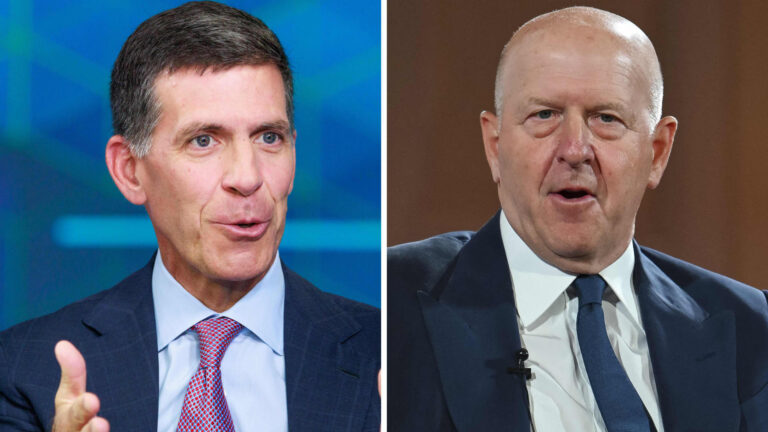
Goldman Sachs currently finds itself in a paradoxical position where record breaking success is colliding with internal uncertainty regarding its future leadership. On paper, the firm is dominating Wall Street, having advised on over a trillion dollars in mergers and generated massive equities revenue in the first half of the year. Yet, beneath these triumphs, reports suggest the board has already begun discussing whether to replace CEO David Solomon with President John Waldron as early as next year. While such a move would likely see Solomon shift into an executive chairman role, ensuring a smooth handover, the actual execution of this plan faces a significant psychological hurdle.

The primary complication lies in the reluctance of a winning leader to step aside during a period of immense growth. Having successfully steered the bank away from a failed venture into consumer banking and riding the current wave of artificial intelligence optimism, Solomon has very little reason to relinquish power. Experts note that modern executives view their mid sixties differently than previous generations did, and since Solomon chairs the board himself, he possesses considerable leverage against any attempts to push him toward retirement. Forcing out a high performing CEO whose tenure has seen shares soar could be viewed as poor governance by investors.

This creates a precarious waiting game for John Waldron, who remains the designated heir apparent but lacks a concrete timeline for his ascension. There is an inherent tension when a successor knows they are next in line but cannot set their own priorities while another person holds the crown. This friction is particularly acute given Waldron’s value; he previously drew interest from major asset managers like Apollo and Carlyle before Goldman secured him with a staggering eighty million dollar retention package designed to keep him until 2030.

Ultimately, Goldman Sachs is caught between two risks: keeping Solomon too long and risking the departure of Waldron, or pushing Solomon out prematurely while he is still delivering peak results. If Solomon decides he wants to lead through the remainder of the AI boom, Waldron may eventually find that even a massive payout isn’t enough to compensate for indefinite patience. Until the board reaches a definitive agreement on timing, the bank remains in a delicate balance where financial victory does not necessarily equal institutional stability.

Patients transitioning from injectable obesity medications to Novo Nordisk’s new Wegovy pill continue to shed weight, according to fresh real world data presented this week. The analysis suggests that moving to a tablet doesn’t just help patients maintain the progress they made on shots but may actually accelerate further weight loss. This finding offers a glimmer of hope for those weary of weekly needles, suggesting that long term weight management could eventually move away from subcutaneous injections toward more convenient daily pills.

The study utilized data from the Ro telehealth platform, tracking nearly 200 patients who had previously used either Novo’s Wegovy injection or Eli Lilly’s Zepbound. On average, those who switched to the oral version lost an additional 8.8 pounds over three months, representing roughly a 4 percent drop in total body weight. Beyond the scale, the impact was visible in lifestyle improvements, with many participants reporting that their clothes fit better and that they felt motivated to pursue healthier eating habits. About 75 percent of these patients expressed satisfaction with the switch, citing ease of use and the lack of need for refrigeration during travel.

Martin Holst Lange, Novo’s chief scientific officer, noted that while clinicians once assumed most patients were content with injections, there is now a clear and growing preference for oral treatments. He emphasized that the pill maintains a similar safety and tolerability profile to the injection while potentially offering slightly better results. However, the company cautioned that because this was a real world study relying on self reported telehealth data, the results might not be perfectly generalizable to every single patient across the broader population.

While focusing on current options, Novo also teased future breakthroughs with its next generation drug, CagriSema. New imaging research indicates this upcoming medication can reduce food noise by changing how the brain reacts to high calorie temptations. Preliminary findings suggest CagriSema may go beyond simple weight loss by improving organ health—specifically reducing fat around the liver and pancreas—and maintaining bone density even as users lose significant weight. These combined advancements signal a shift toward treating obesity as a complex systemic condition involving both brain chemistry and multi organ health.

Oracle stock ORCL gained nearly 4% on Tuesday after a report said OpenAI’s annualized revenue run rate had risen to nearly $70 billion, supported by momentum in enterprise-focused sales.

According to Axios, OpenAI’s annualized revenue run rate has increased by more than 70% since the beginning of the third quarter.

Business-to-business revenue more than doubled over the same period, the report said.

The reported growth lifted Oracle and other stocks linked to OpenAI, outweighing news that OpenAI had scrapped a release plan for its next-generation AI model.

OpenAI growth supports Oracle outlook

The reported financial performance could bolster confidence in companies that count OpenAI as a partner.

Oracle has a $300 billion cloud-computing deal with OpenAI, which is central to the software company’s AI infrastructure push.

“Oracle’s fate is largely tied to the success of OpenAI, which represents around half of its compute backlog,” Gil Luria, managing director at equity research firm D.A. Davidson, said in a Reuters report.

“OpenAI accelerating growth is a very good sign for Oracle, as it reinforces OpenAI’s ability to live up to its expectations for compute capacity,” Luria added.

Oracle’s expanding AI cloud contracts, record remaining performance obligations and accelerating cloud infrastructure revenue are strengthening its revenue visibility.

In the first quarter of fiscal 2027, Oracle booked more than $30 billion in additional AI cloud contracts, lifting its remaining performance obligations, or RPO, to a record $664 billion.

That was an increase of $209 billion from a year earlier.

Management expects around half of the RPO to convert into sales over the next 36 months, creating a substantial multi-year revenue pipeline.

AI infrastructure spending remains high

Oracle’s AI-related growth comes as major technology companies continue to increase spending on computing infrastructure.

Capital expenditures from the primary hyperscalers — Microsoft, Google, Amazon, Meta and Oracle — are expected to reach $780 billion this year. That would be almost five times the amount spent in 2023.

Bain & Company estimates that artificial intelligence-related computing demand must reach $6 trillion in annual revenue by 2031 to justify the infrastructure build-out.

The scale of spending highlights the importance of sustained demand for AI computing capacity as companies expand data-center infrastructure and deploy more GPUs.

Oracle expands data-center capacity

Oracle said it delivered 850 megawatts of additional data-center capacity and had delivered more than 300,000 GPUs since the end of the fiscal fourth quarter.

AI infrastructure utilization remained high at 97.9%. GPUs that were up for renewal were renewed or resold at an average 20% premium.

Oracle also upgraded its fiscal 2027 guidance for total revenue to at least $90 billion, representing 34% year-over-year growth.

The company’s growing AI cloud contracts and higher revenue guidance provide greater visibility into future sales, while the significant capital requirements associated with expanding AI infrastructure remain an important consideration for investors.

The post Oracle stock is gaining and it has OpenAI to thank for appeared first on Invezz

European stocks closed lower on Tuesday, reversing course after an earlier rally, as investors continued to weigh a spike in global bond yields against renewed optimism around artificial intelligence spending.

The pan-European STOXX 600 index fell 0.1%, having traded as much as 0.7% higher earlier in the session.

Germany’s DAX ended flat, while France’s CAC 40 and London’s FTSE 100 each slipped around 0.5%.

Technology and semiconductor stocks were the session’s clearest bright spot before the broader market faded.

Shares rose after Reuters reported that Anthropic’s IPO prospectus points to a sharp increase in spending on cloud, computing and infrastructure, a disclosure that has moved chip stocks across Europe and the US.

X-Fab Silicon Foundries rose 7.5% in Paris, while ams OSRAM gained 8.7% and Technoprobe climbed 6.8% in Milan.

Chip names lead, but broader gains fade

In Germany, Infineon Technologies rose 4.8%, Aixtron gained 4.3%, and Siltronic climbed 7.17%.

Amsterdam-listed ASML Holding rose 4.18%, ASM International gained 4.24%, and BE Semiconductor Industries added 4.42%.

STMicroelectronics gained 2.6%, and Soitec rose 9.08%.

In Vienna, AT&S gained 7.18%, while Brussels-listed Melexis rose 3.8%.

Eiffage shares fell 3%, and Vinci dropped 2.4% after the French government proposed a significant increase in the tax on motorway concessions and major airports.

Lindt & Sprüngli tumbled 8% after the Swiss chocolate maker cut its full-year organic sales growth forecast for the second time this year, citing subdued consumer sentiment and weak demand.

Julius Baer shares rose 7.2% after Switzerland’s financial regulator FINMA closed enforcement proceedings related to private debt loans and the bank’s client relationships with two Russian politically exposed individuals.

Legrand shares gained 6% after the French electrical and digital building infrastructure group raised its medium-term targets.

A rough month for European equities

September’s losses have snapped a six-month winning streak for the STOXX 600, which is down nearly 2% for the month and on track for its first monthly decline since March.

Equities have swung sharply throughout September, coming under pressure as sovereign bond yields touched their highest levels since the 2008 global financial crisis.

A fresh European Central Bank rate hike, persistent hawkish commentary from central bank policymakers, and warnings from AI industry figures about a potential development slowdown have all added to the selling pressure this month.

Rising sovereign yields act as the benchmark for pricing riskier assets, and as they climb, the discount rate applied to future corporate earnings expands, compressing equity valuations.

Middle East stalemate weighs on sentiment

A brief prospect of diplomatic breakthrough in the Middle East flared and quickly faded earlier this month, adding to investor fatigue.

Markets have effectively settled into a standoff following a sharp exchange of rhetoric between President Trump and Iranian leadership over the Strait of Hormuz.

With diplomacy stalled and military posture still tense, elevated energy prices continue to limit any broader relief rally in rate-sensitive sectors.

The post European stocks close lower as bond yields and oil offset Anthropic-driven tech rally appeared first on Invezz

OpenAI is seeking to raise at least $30 billion from investors in a new funding round at a valuation of about $1.4 trillion, as the ChatGPT maker delays plans for an initial public offering and steps up its competition with rival Anthropic, Bloomberg News reported on Tuesday.

The proposed valuation would be before the new capital is added and could put OpenAI above Anthropic’s latest private-market valuation.

Bloomberg previously reported that OpenAI was considering a funding round at a valuation of about $1.2 trillion.

The discussions remain at an early stage and the terms could change, according to people familiar with the matter who spoke on condition of anonymity because the information is not public, the publication said.

Investor demand is driving the fundraising effort, one of the people said.

OpenAI declined to comment.

Funding round could replace near-term IPO

The latest fundraising is expected to serve as a bridge round, giving OpenAI additional capital as it puts off a potential stock-market debut.

Chief Executive Officer Sam Altman recently said OpenAI would not go public this year, arguing that the company should concentrate on addressing concerns surrounding AI safety.

Altman described the current environment as an “ill-advised moment” for an IPO.

The company last raised $122 billion in March at an $852 billion valuation, including the money raised.

A new $30 billion-plus investment would therefore represent a substantial increase in the valuation investors are being asked to assign to the company just months later.

OpenAI and Anthropic are increasingly competing for corporate customers and revenue as both prepare for potential public listings.

Both companies have confidentially filed paperwork for IPOs, with Anthropic potentially moving ahead with a listing as soon as this fall.

OpenAI revenue accelerates

The proposed funding comes as OpenAI seeks to demonstrate that its rapid spending on artificial intelligence infrastructure can translate into sustained commercial growth.

The company’s revenue run rate surpassed $40 billion during the summer, Bloomberg reported in August.

OpenAI’s annualized revenue run rate is nearing $70 billion, up more than 70% since the start of the third quarter, as enterprise sales more than doubled since July, Axios reported on Tuesday.

OpenAI has also sought to sharpen its product strategy after facing a challenging period of competition in the AI market.

Coding-related products have emerged as an important source of renewed momentum, while the company continues to invest heavily in AI agents capable of performing more complex tasks for users.

At its developer event on Tuesday, OpenAI introduced an always-on AI agent called Dots, putting it in direct competition with products such as Meta Platforms’ Muse.

The company is also changing its subscription structure, introducing a $500-a-month premium tier offering higher usage limits and faster processing.

At the same time, it is reducing certain usage limits on its $200 plan.

Anthropic targets potentially larger IPO

Anthropic is meanwhile preparing for a potential IPO that could value the company at more than $2 trillion, according to information reported by Reuters.

Such a valuation would make the listing a significant test of how public markets value leading AI companies and could provide an important benchmark for OpenAI.

Anthropic’s IPO prospectus argues that artificial intelligence could reshape the global economy more profoundly than industrialization, electricity and the internet.

The scale of investment required to achieve that transformation is also enormous.

Anthropic reported a net loss of $42 billion in 2025 and expects to spend $518 billion on cloud, computing and infrastructure obligations in the coming years, according to the prospectus.

Revenue nevertheless increased 12-fold in 2025 to nearly $4.6 billion.

The company recorded an operating loss of more than $8 billion, excluding write-downs of liabilities largely connected with previous fundraising, Reuters reported.

The post OpenAI seeks $30B funding at $1.4T valuation as IPO plans slip: report appeared first on Invezz