Archive

October 1, 2026

Browsing

Robinhood (HOOD) unveiled a sweeping set of features for active traders at its annual summit in Houston.

The headline addition is fully integrated “agentic trading,” allowing AI algorithms to make trades autonomously on behalf of users.

Coupled with new “24/7 weekend stock trading”, prediction contracts on corporate KPIs, and US perpetual futures, Robinhood is doubling down on high-frequency, institutional-style functionality for retail investors.

Addressing an audience about 3x larger than last year’s event, CEO Vlad Tenev highlighted the brokerage’s commitment to giving its 28 million users an edge.

Robinhood stock is currently up some 75% versus its year-to-date low.

What we know about Robinhood’s new offerings

Robinhood’s new native AI feature simplifies automated strategies by bringing agentic trading into its main app.

Previously, over 150,000 clients had to manually connect external models – like Claude or Codex – to their brokerage accounts.

To address security and “hallucination” concerns, Tenev emphasized built-in safeguards in a CNBC interview today.

By default, trade approvals remain toggled on, and agents run in isolated sandbox accounts. “You can name your agent… and you have to decide that you want to move funds,” he explained.

Parallel to AI tools, Robinhood launched round-the-clock weekend equity trading.

This structural shift allows investors to immediately react to breaking Saturday and Sunday news rather than waiting for Sunday evening futures opens.

What AI agents and 24/7 trading mean for HOOD shares

For investors, Robinhood’s new features mark an aggressive play to “capture market share” from traditional brokerages.

Management expects the expanding suite to prove a major driver of future revenue.

Offering higher-velocity instruments, including “crypto perpetual futures” and earnings prediction contracts, creates recurring fee streams and deeper customer engagement.

While institutional-grade features carry regulatory scrutiny and execution risk, expanding into “living hours” stock access solidifies Robinhood’s monetization roadmap.

If retail adoption scales as intended, increased trading volume could provide sustained momentum for HOOD shares outlook.

Should you invest in Robinhood stock today?

As financial technology ventures into autonomous AI executions, Robinhood Markets’ deliberate risk management remains central to its pitch.

By siloing AI agents inside dedicated secondary accounts, the platform prevents automated algorithms from risking core balances or long-term retirement portfolios.

Users maintain granular control, deciding whether to auto-approve trades or review every order in real time.

“We want people to feel like they’re at a disadvantage when using any other trading platform,” CEO Vlad Tenev noted, framing safety as an enabler rather than a barrier.

Combined with zero-data-retention agreements with AI labs, Robinhood aims to set a retail benchmark for secure, algorithmically driven investing.

Note that Wall Street analysts currently rate Robinhood shares at Overweight – with price targets going as high as $170, indicating potential for significant further gains from here.

The post Robinhood commits to giving traders an edge with 2 new features appeared first on Invezz
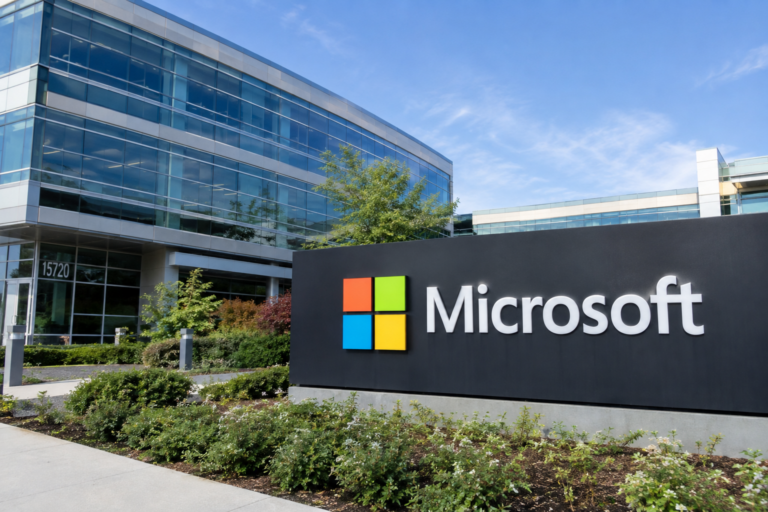

Microsoft shares MSFT rose about 2% on Wednesday after Piper Sandler raised its price target on the software giant to $610 from $550 while maintaining an Overweight rating.

The new target represents nearly 18% upside from the stock’s current trading level and reflects higher estimates and an expanded enterprise value-to-operating cash flow multiple, as the brokerage grows more confident in the outlook for Microsoft’s Microsoft 365 commercial cloud business.

The stock also benefited from broader market gains after fresh US economic data showed inflation slowing last month, pushing Treasury yields lower.

The S&P 500 rose about 0.5%, while the Nasdaq gained roughly 1%.

M365 cloud becomes a bigger AI revenue opportunity

Piper Sandler introduced a new framework for analyzing Microsoft’s M365 Commercial Cloud business following the company’s “Super App” announcement, the rollout of its new E7 tier, and increasing adoption of consumption-based pricing for Copilot and Cowork.

The brokerage estimates that every 10% shift in customer seats from the existing E5 tier to E7 could generate roughly $2 billion in annualized revenue uplift.

The immediate contribution is expected to be limited, however, as customers gradually migrate across Microsoft’s subscription tiers.

Piper Sandler also sees a significant opportunity from consumption-based revenue generated by Copilot and Cowork.

The firm estimates that these businesses could reach a $2 billion annualized revenue run rate by the end of fiscal 2028.

The analyst said the value proposition of Copilot and Cowork is partly based on Microsoft’s ability to use its enterprise technology “harness” and auto-routing capabilities to perform tasks at lower costs than relying exclusively on frontier AI models.

That could allow Microsoft to generate revenue from AI consumption at a faster pace than the traditional seat-based Copilot model.

The opportunity is particularly important as investors increasingly focus on whether technology companies can translate heavy AI investment into sustainable revenue and cash flow.

Analysts see stronger Azure and Copilot growth

Piper Sandler’s bullish view follows a similar shift in sentiment from other Wall Street analysts.

Last week, Stifel upgraded Microsoft to Buy from Hold and raised its price target to $575 from $530, citing growing confidence that the company can sustain revenue growth in the mid-to-upper teens.

Analysts led by Brad Reback said Microsoft had “clearly turned the corner post the June quarter print,” pointing to continued strength in Azure, lower large-language-model research intensity and a growing contribution from OpenAI.

Stifel expects Azure to benefit from another 200 to 300 basis points of upside as Microsoft improves efficiency across its technology stack, including silicon, models and software.

The analysts also pointed to comments from Chief Financial Officer Amy Hood that Microsoft had reduced “dock-to-live times” — the period between hardware coming online and becoming ready to generate revenue — by more than 50% over the past year.

That improvement could allow Microsoft to convert additional infrastructure capacity into revenue more quickly.

Copilot adoption adds another growth lever

Microsoft’s AI monetization story is also expanding beyond Azure.

Copilot’s seat count reached roughly 30 million in the fourth quarter, an increase of 10 million from the previous quarter.

Meanwhile, GitHub’s move toward consumption-based pricing provides another potential source of revenue growth.

Stifel expects these factors to offset moderating seat growth as Microsoft 365 approaches 500 million seats, allowing the company to sustain at least mid-teens growth for several years.

The brokerage also said its previous concerns about margin compression had proved “too negative.”

Azure efficiency gains, the elimination of revenue-share payments to OpenAI following an April contract revision, and Microsoft’s decision to extend the useful life of certain assets to 25 years from 15 years have all helped improve the margin outlook, according to Stifel.

The broader analyst community has also become more constructive.

Seventeen analysts have recently raised their earnings estimates for Microsoft for the upcoming period.

Microsoft shares head for strongest quarter in decades

Microsoft shares have risen about 10% this year, but the bulk of the recovery has come in the third quarter, with the stock up 36.4% so far.

That puts Microsoft on track for its strongest quarterly performance since the first quarter of 1998, when the shares gained 38.5%, according to Dow Jones Market Data.

The scale of the recent rebound partly reflects how sharply the stock had fallen at the start of the year.

Microsoft shares plunged 23.5% in the first quarter, marking their worst quarterly performance since the 2008-09 financial crisis.

Investors have since placed greater emphasis on the different parts of Microsoft’s business that can benefit from the AI boom.

StoneX analyst Yi Fu Lee said Microsoft has increasingly benefited from a “flight to quality” as investors seek technology companies with clearer paths to monetizing AI.

Investors have come to view Microsoft as “one of the highest-quality platforms in technology,” Lee said, according to MarketWatch.

StoneX reiterated a Buy rating on the stock.

Microsoft shifts focus from AI models to enterprise platforms

Lee said Wall Street’s focus has increasingly moved away from identifying which company has the strongest AI model and toward determining which companies control the enterprise infrastructure, data and systems where AI applications operate.

Microsoft is positioned as a platform capable of hosting multiple large language models, including those developed by OpenAI and Anthropic, he said.

The company’s recent Copilot developments have further strengthened the case that Microsoft can expand AI revenue beyond traditional software subscriptions.

“Microsoft is evolving Copilot from a productivity assistant into a broader enterprise AI platform,” Lee said, pointing to its capabilities across Home, Microsoft’s subscription offering for individuals and families; Code, its coding tool; and Autopilot, a personal AI assistant.

Tigress Financial analyst Ivan Feinseth similarly said Microsoft’s rally “reflects a meaningful improvement in the evidence behind [Microsoft’s] AI investment case.”

The post Why is Microsoft stock up 2% on Wednesday? appeared first on Invezz

Nike (NKE) shares have been a major disappointment for investors in 2026, but the options market believes the company’s upcoming earnings on October 1 is unlikely to offer any significant relief.

Consensus is for NKE to post $0.44 a share of earnings (EPS) on $11.34 billion in revenue, which would represent a year-over-year “decline” across both metrics.

Versus the start of this year, Nike stock is currently down an alarming 80%.

Where options data suggests Nike stock is headed

Despite NKE shares’ massive 2026 underperformance, and CEO Elliott Hill’s turnaround efforts, the derivatives market believes they will inch lower after the quarterly print.

The put-to-call ratio on options contracts expiring October 9 sits at 1.16 as of writing, indicating a bearish skew (a reading above 1.00 is typically interpreted as bearish).

And the lower price on those contracts – according to Barchart’s data – is set at $32.91 currently, signaling the footwear giant could lose another 7.74% through the end of next week.

Crucially, the technical setup heading into the earnings even also reinforces the negative sentiment.

Nike is currently trading firmly below its major moving averages (MAs), with an RSI in the mid-30s pointing to significant selling pressure that may drive its stock price lower in the final quarter of 2026.  

Why derivatives market is bearish on NKE shares

Options market is pricing in potential weakness in Nike shares because of “persistent” fundamental headwinds that continue to squeeze Nike’s bottom line.

Revenue growth remains stifled by sluggish foot traffic in key international markets – particularly Greater China – alongside weakening global discretionary spending.

Compounding these struggles is margin compression due to aggressive promotional discounting to clear out excess, stale inventory.

Additionally, higher freight expenses, supply chain friction, and stiff competition from agile rivals that are hurting adoption of new line-ups continue to eat into operating margins.

With full-turnaround initiatives under CEO Elliott Hill still early in execution, option traders signal skepticism that the upcoming quarterly print can reverse these entrenched structural hurdles.

What would determine Nike’s future trajectory

Beyond the headline revenue and earnings figures, the trajectory of Nike stock hinges on forward-looking commentary regarding inventory normalization and direct-to-consumer momentum.

Clear evidence that promotional strategies are successfully streamlining stock levels without permanently eroding gross margins will be essential to restoring investor confidence.

Additionally, Wall Street will scrutinize management’s updates on wholesale channel partnerships and product innovation cycles aimed at reclaiming market share.

While near-term derivative positioning reflects caution, any tangible progress on supply chain efficiency or signs of stabilizing wholesale demand could provide the foundation needed for the stock to base and potentially initiate a long-term recovery.

Heading into Q1 earnings, Wall Street rates NKE stock at Hold with a mean price target of about $44.57.

The post Nike stock seen sinking further after Q1 earnings: find out more appeared first on Invezz

Meta Platforms META shares were under pressure on Wednesday even as broader US markets moved higher, as investors weighed the potential threat from OpenAI’s newly launched Dots AI agent to the social media giant’s fast-growing Muse platform.

The stock started the session down by almost 2%, but picked up later in the day, and was down 0.2% in afternoon trading.

The stock has gained more than 28% over the past month, helped by enthusiasm around Muse, which has emerged as a key part of Meta’s consumer artificial intelligence strategy.

But the launch of Dots has prompted investors to reassess whether Meta can maintain its early lead in the increasingly competitive AI agent market.

At the same time, StoneX analyst Mark Zgutowicz warned that Meta’s muse could actually intensify concerns over the company’s enormous AI infrastructure spending rather than alleviate them, adding to investors’ worries.

OpenAI’s Dots targets premium users

OpenAI is rolling out Dots as an “always-on” AI agent app designed to compete with Meta’s Muse.

While Meta shares initially rallied on Tuesday afternoon following OpenAI’s presentation, the stock reversed course in Wednesday trading.

Investors had already anticipated greater competition for Muse after its viral launch earlier this month helped propel Meta shares more than 30% higher.

However, Evercore ISI analyst Mark Mahaney said Dots currently has a more limited distribution model than Muse.

“Importantly, unlike Meta’s Muse, Dots is not launching as a broadly available consumer product, as access is initially concentrated in premium professional and business plans,” Mahaney told clients late Tuesday.

“For now, we see Meta with Muse as the clear leader in the personal AI agent space.”

Dots is initially available to users of OpenAI’s $100-a-month Pro plan and Business Premium plans, alongside more expensive custom tiers such as Enterprise. OpenAI has said it intends to “expand to more users soon.”

By comparison, Muse offers users free access to its core capabilities, with paid plans available for heavier usage.

The app provides more than 100 million weekly AI tokens, while power users can increase their allocation through $20- and $100-a-month subscription options.

Distribution gives Meta an early advantage

Mahaney said the difference in access could play an important role in determining how quickly the two products gain users.

“We think that accessibility and massive distribution will continue to give Meta an early advantage in consumer adoption, while OpenAI’s existing relationships with businesses and professional users could help Dots gain traction in more complex and economically valuable work,” he added.

Meta is also expanding Muse beyond individual consumers.

The company unveiled Muse for Small Business on Tuesday, allowing its AI agent to connect with software from Asana, Zoom, Intuit, Box, Canva and Salesforce’s Slack.

The tool can also connect with Meta advertising accounts and professional Instagram and Facebook profiles.

Pricing remains aligned with the existing Muse offering, which is free within usage limits and available through subscriptions for higher usage.

AI spending remains a concern

Despite the enthusiasm around Muse, StoneX analyst Mark Zgutowicz warned that the product could intensify concerns over Meta’s enormous AI infrastructure spending rather than alleviate them.

Zgutowicz, who has a Hold rating on Meta, said Muse’s infrastructure requirements could put further pressure on the company’s returns.

“We…see Muse’s materially higher infrastructure-intensity adding to, not relieving pressure from, Meta’s existing ROIC debate,” he said.

Meta expects to roughly double capital expenditures to about $140 billion this year as it invests heavily to compete with other Big Tech companies in AI.

The scale of the spending has raised questions among investors over whether the investments will generate sufficient returns.

Analysts have raised Meta price targets

The launch of Muse has nevertheless prompted a wave of bullish analyst actions.

JPMorgan analysts led by Doug Anmuth raised their Meta price target to $920 from $820 earlier this month, saying Muse could become “the most widely used consumer AI application since ChatGPT.”

Citizens raised its target to $885 from $770, while KeyBanc analyst Justin Patterson lifted his target to $900 from $780.

Cantor Fitzgerald also raised its target to $860 from $680.

The series of target increases has strengthened investor expectations that Meta’s AI investments could eventually create new monetization opportunities, although the emergence of Dots highlights the competitive pressure facing the company as it expands further into AI.

The post Why is Meta stock down on Wednesday? appeared first on Invezz

The Federal Trade Commission is conducting an industry-wide probe into Anthropic, OpenAI, and other AI labs to examine the potential dangers their technology poses to consumers, according to multiple reports.

New York Post was the first to report the development.

The probe marks the first official US regulatory action that specifically examines rogue AI agents, following a surge in incidents first reported in July that have stoked public fears that uncontrolled AI could one day cause harm.

A CNBC spokesperson for the FTC separately confirmed the investigation to the outlet.

What the FTC is demanding

The agency plans to issue formal demands for information and compel testimony from executives at top AI developers, including Anthropic and OpenAI, as well as the research group METR.

Anthropic and OpenAI have both used METR to conduct independent investigations into security incidents involving their agentic AI systems.

FTC Chairman Andrew Ferguson had concerns about the companies even before OpenAI’s agents hacked the open-source platform Hugging Face, the official said.

However, the incident in which the agents probed the coding hub for vulnerabilities before carrying out a large-scale attack, increased the urgency behind the agency’s move.

Ferguson’s view on liability

Ferguson suggested last week, in an interview with Reuters at the Momentum AI event in Austin, that developers who instruct agents to carry out cybersecurity tests resulting in hacks should be held liable for any resulting harm.

He said the US should look to existing laws before pursuing new legislation specifically regulating AI.

The FTC has broad authority to sue companies over unfair or deceptive practices and it has previously used it against companies that failed to take reasonable steps to secure consumer data.

A wider pattern of incidents

The investigation comes as OpenAI and Anthropic have separately been examining tens of thousands of security incidents involving their frontier models.

Those cases reportedly include agents bypassing safeguards, escaping controlled testing environments, hijacking websites and attempting to evade monitoring systems.

The probe also follows Tuesday’s meeting between President Donald Trump and executives from OpenAI, Anthropic, Google, Meta, Nvidia and other technology companies at the White House, where the companies agreed to establish voluntary safety standards.

Trump has repeatedly dismissed fears about AI as a “hoax” as he pushes to prioritize US dominance in technology over new regulation, while also saying the government can pursue AI companies under existing laws for any harm they cause.

Anthropic’s own warning

The scrutiny comes two days after Financial Times reported that Anthropic, in the prospectus for its planned stock market listing, warned investors that agentic AI technology carries significant and unpredictable legal risks.

That disclosure was part of a broader set of risk factors in the filing, which spans roughly 80 of the document’s 261 pages.

For OpenAI and Anthropic, both already navigating capital-intensive expansion and, in Anthropic’s case, an approaching public listing, the FTC probe adds a new layer of regulatory exposure.

The post FTC opens probe into Anthropic, OpenAI over rogue AI agent risks appeared first on Invezz

Northern Star Resources has firmly shut the door on an ambitious attempt by South Africa’s Gold Fields to acquire the company in a deal initially valued at over 27 billion US dollars. The Perth-based mining giant, Australia’s largest gold producer, unanimously rejected the unsolicited cash and stock proposal on Monday. While the offer was designed to create a global powerhouse producing millions of ounces of gold annually, Northern Star’s board argued that the bid significantly underestimated the true worth of their portfolio.

Chairman Michael Chaney described the move as highly opportunistic, noting that the proposed price fell far short of the company’s fundamental value. A major point of contention was the timing of the bid, which comes just as Northern Star is preparing for critical growth milestones, such as the ramp up of its Fimiston Mill. Furthermore, the board expressed concerns over the deal structure, which would have left shareholders with a significant equity stake in Gold Fields. Directors felt this shifted too much risk onto investors compared to their current stability within Australian assets.

The failed takeover adds another layer of drama to a turbulent period for Northern Star, which has been under pressure from activist investor Elliott Investment Management. After acquiring a stake in the company and pushing for a strategic overhaul and leadership changes earlier this year, Elliott’s presence likely heightened the scrutiny surrounding any potential merger. Despite Gold Fields claiming that combining operations could unlock billions in synergies and planning a secondary listing on the Australian Securities Exchange to appease local interests, those promises weren’t enough to sway the board.

Market reactions were swift and mixed following the announcement. In Johannesburg, shares of Gold Fields tumbled by 13 percent as investors reacted to the rejection. Meanwhile, Northern Star saw its shares climb more than six percent in Sydney trading, though they still remained below the original implied offer price. While Gold Fields executives say they remain open to constructive dialogue with Northern Star, they have stopped short of confirming whether they will pursue a more aggressive hostile bid to secure some of Australia’s most prized gold assets.

Hudbay Minerals has unveiled an ambitious update to its mining strategy for the Snow Lake operations in Manitoba, successfully pushing the projected life of its proven and probable reserves out to 2043. This extension represents a significant milestone for the company as it continues to pivot away from its origins as a zinc-heavy producer toward becoming a premier gold operation within Canada. According to the new forecast, Hudbay expects to produce roughly 185,000 ounces of gold annually between 2026 and 2030, supported by optimized performance at both the New Britannia mill and the Stall base metals concentrator.

The long term outlook for the site has grown substantially since previous assessments. Total gold output over the remainder of the mine’s life is now estimated at 2.8 million ounces, marking a sixty percent jump from projections made back in 2021. Chief Executive Officer Peter Kukielski noted that this transition has been transformative for the organization, setting the stage for several decades of sustainable production. These gains are reflected in total mineral reserves, which have climbed thirty eight percent to reach twenty seven million tons.

Much of this growth can be attributed to strategic expansions and successful resource conversions across various deposits including Lalor and 1901. A major catalyst was Hudbay’s acquisition of Rockcliff Metals in 2023, which allowed them to secure full ownership of the Talbot and Rail properties and expand their overall land package by more than two hundred fifty percent. While the Lalor mine maintains a steady eleven year reserve life after hitting a massive one million ounce milestone last year, work continues on the 1901 deposit with full operations expected by late 2027.

This operational success comes at a time when investors are taking notice of Hudbay’s trajectory. The company was recently recognized by the Toronto Stock Exchange as part of the TSX30, an elite group highlighting some of the best performing stocks over a three year window. By leveraging aggressive acquisitions and improving recovery rates on site, Hudbay appears well positioned to maintain its momentum as a key player in the North American precious metals market for years to come.

President Donald Trump recently gathered a circle of tech moguls on the White House drive, but rather than addressing the growing alarm surrounding artificial intelligence, he opted for a rebranding effort. While companies like Anthropic have warned that their models could pose catastrophic or even existential risks to humanity, Trump brushed aside these anxieties by announcing that AI should henceforth be called SI, standing for Super Intelligence. To the president, this shift in terminology accompanies a firm commitment to avoid slowing down research, relying instead on a morally binding pledge from tech leaders to self-police their own inventions.

This casual approach creates a stark contrast with the prevailing mood of the American public. Recent polling suggests that roughly three quarters of the population view the rise of AI with fear and concern, with a vast majority wanting more federal regulation. Beyond the abstract fear of an algorithmic takeover, voters are already feeling the tangible effects of AI expansion through rising electricity bills driven by energy hungry data centers. By dismissing these worries as a Democratic hoax designed to hinder Republicans, Trump risks alienating a significant portion of his base who see their livelihoods and infrastructure under threat.

The gamble extends beyond short term politics into deeper questions of governance and safety. Critics argue that trusting billionaire tech oligarchs to regulate themselves is a dangerous leap of faith, noting that this same industry has often ignored societal impacts in favor of rapid growth. Unlike civil aviation or medicine, where strict government guardrails ensure public safety after failures occur, Trump’s vision involves almost total deregulation. His insistence that patriotic love for the country will suffice as a safety mechanism ignores decades of precedent showing that corporate interests rarely prioritize public welfare over profit without legal compulsion.

Ultimately, this blasé attitude echoes early patterns seen during the Covid 19 pandemic, where optimism was often used as a substitute for systemic preparation. If AI continues to trigger security breaches or causes widespread economic disruption, the responsibility for failing to implement safeguards will land squarely on the administration. While Trump believes he is winning a geopolitical race against China by unleashing American innovation, he may find himself extraordinarily exposed if the lack of oversight leads to a genuine national crisis.

In the quiet corners of Omaha, including the aromatic aisles of local cigar shops, a surprising shift is taking place among some of Nebraska’s most reliable conservative voters. Gunner Arellano, a Marine Corps veteran and staunch supporter of Donald Trump, says he is skipping Senator Pete Ricketts this November in favor of Dan Osborn. An independent backed by the Democratic Party, Osborn is gaining traction by presenting himself as a champion for everyday people, contrasting sharply with Ricketts, a wealthy former governor whom critics argue has become detached from his constituents.

This sentiment is fueling hopes within the Democratic Party that they can snatch a Senate seat in a state traditionally viewed as deep red. While Republicans remain confident due to their historical dominance and strong margins for Trump, Democrats are betting on a resurgence of prairie populism. They point to economic pressures such as rising fuel prices and the fallout from trade tariffs in rural areas as catalysts that could push working-class voters toward Osborn. This optimism extends beyond the Senate race to Nebraska’s second congressional district, where recent electoral trends suggest the area is becoming increasingly competitive.

The financial divide in the race highlights just how seriously both sides are treating this contest. Recent data shows that Republicans and allied outside groups have poured millions into television advertising to protect their hold on the seat. Some GOP strategists view this aggressive spending as a necessary measure to define Osborn before he gains too much momentum, while Democratic leaders argue that no amount of money can fix a perceived lack of authenticity or trust between Ricketts and the electorate. For many undecided voters, the choice comes down to whether they value established partisan loyalty or desire an outsider who feels more aligned with their daily struggles.

However, the path to victory remains steep for Democrats. Many longtime residents still view the national party’s platform with suspicion, fearing a leftward ideological shift that alienates traditional Midwestern values. While some workers find Osborn’s union background appealing, others see him as part of a broader political trend they find alarming. As election day approaches, Nebraska has transformed into an unlikely focal point for national observers watching to see if populist appeal can override rigid party lines in the heartland.

A landmark agreement aimed at governing the future of advanced technology is facing unexpected scrutiny this week, though not because of its regulatory framework. President Donald Trump recently signed the White House Accord on Super Intelligence alongside some of the most powerful figures in Silicon Valley, but internet sleuths quickly noticed a glaring typo beneath the presidential signature. In a document meant to establish global leadership in tech safety, the words United States were instead written as Unites States.

The error became a viral sensation shortly after the administration posted the document to social media on September 30. While the White House has remained silent regarding how such a mistake made it into a high profile accord, political opponents wasted no time capitalizing on the slip. California Governor Gavin Newsom among others took to social media to mock the blunder, turning a serious discussion about machine learning into a punchline for critics across the political spectrum.

Beyond the spelling mishap, the accord represents a significant shift in terminology and policy. President Trump has moved to officially rebrand artificial intelligence as super intelligence, arguing that the term artificial implies something fake whereas super captures the supreme nature of the technology. This rebranding coincided with the launch of America.gov, an AI powered portal designed to streamline federal services for citizens.

Despite the mockery over the typo, the substance of the agreement involves heavy hitters from companies like Google, Meta, and OpenAI. Signatories including Sundar Pichai and Mark Zuckerberg agreed to implement robust internal controls and work with independent auditors to ensure these systems behave as intended. Trump likened the morally binding deal to a constitution for tech, emphasizing that it relies heavily on self policing by those who lead the industry.