Archive

November 12, 2026

Browsing

Major silver producers have managed to secure strong third quarter profits despite a volatile market that saw the metal lose nearly half its value since a peak in January. While the price drop has created a sense of uncertainty, many miners are still benefiting from a significant pricing cushion, selling their silver for 60 to 80 percent more than they did last year. This windfall allowed several companies to double or even triple their net earnings, though analysts warn that this financial buffer is beginning to erode as macroeconomic pressures mount.

The industry is facing a challenging cocktail of headwinds, ranging from central bank policy to shifting industrial demands. A recent interest rate hike by the US Federal Reserve has put broad pressure on precious metals, while the solar energy sector is starting to pivot away from expensive materials. Leading Chinese solar panel manufacturers have begun replacing silver with copper, a trend that could lead to a nearly 20 percent drop in silver usage for solar power this year according to the Silver Institute.

Operational struggles are adding further complexity for the world’s top miners. Pan American Silver saw its net earnings jump to 357 million dollars thanks to efficient silver mine management, but it was forced to slash gold forecasts due to seismic issues and ventilation failures at its Jacobina mine in Brazil. Similarly, Fresnillo reported an 11.6 percent dip in attributable silver output as declining ore grades made extraction more difficult at key sites like Saucito and Juanicipio.

Despite these hurdles, some firms found bright spots in their portfolios. Hecla Mining Company recorded record free cash flow of 151 million dollars, largely driven by exceptional performance at its Greens Creek operation in Alaska. However, Hecla must now scale back activities at its Keno Hill mine until permitting issues regarding waste and water treatment are resolved toward the end of the decade. As global mine output remains flat and deficits loom into 2026, the industry finds itself balancing current profitability against a tightening supply chain and unstable demand.

The Canadian government is doubling down on its commitment to the mining sector with a series of strategic tax extensions aimed at fueling early stage discovery. Under the latest proposals in Budget 2026, the federal government intends to keep both the general mineral exploration tax credit and the specialized critical mineral version active through March 2032. This move is expected to inject nearly one billion dollars into the industry over five years, while also adding antimony to the list of prioritized critical minerals to attract further investment.

While these measures provide a necessary lifeline for junior explorers who rely heavily on flow through shares to secure seed money, some industry leaders argue that the support stops too soon. The Prospectors and Developers Association of Canada welcomed the extension but noted they had pushed for a much longer own term commitment to provide true stability. Meanwhile, critics like Todd Stone of the Association for Mineral Exploration warn that without expanding existing expense credits to cover feasibility and engineering studies, many promising finds will never actually become working mines.

To bridge this gap between discovery and production, Ottawa is pairing tax breaks with hundreds of millions in direct spending. The updated Canadian Critical Minerals Strategy will receive significant funding beginning in late 2027, focusing on processing technology and geoscience research, alongside renewed support for mapping efforts in Northern Canada via the GeoNorth program. There is also a clear push toward sustainability, with clean energy credits being extended well into 2040 to help mining operations reduce their carbon footprints.

Despite these incentives, there are notable omissions that may frustrate some investors. Specifically, mining firms have been left out of a new capital gains exemption designed to spur growth in other Canadian businesses. Nevertheless, the government remains optimistic about the sector’s trajectory, pointing to over forty four billion dollars in critical minerals projects currently under construction or awaiting final assessment as evidence that Canada is poised to strengthen its role in the global supply chain.

Pete Hegseth remains at the helm of the Pentagon after House Republicans blocked a resolution to impeach him on Tuesday. In a procedural vote that ended 211-204, the majority of the Republican caucus stood behind the defense secretary, effectively killing an effort led by Representative Thomas Massie of Kentucky. While Massie argued that Hegseth had committed high crimes and misdemeanors, he found himself as the lone Republican voice supporting the motion, highlighting a deep divide between the party’s fringe critics and its loyalist core.

Following the vote, Hegseth dismissed the proceedings as a political spectacle fueled by ego and resentment. During a carefully curated press appearance where he spoke primarily to friendly media outlets, he compared his situation to previous attempts to remove Donald Trump from office, asserting that such efforts were destined to fail. Critics noted that while Hegseth was quick to hold court on Tuesday, he has largely avoided traditional press briefings since May, including during recent military tragedies involving U.S. personnel overseas.

The outcome served as a stark reminder of current party dynamics within the GOP. Even Senator Ted Cruz, who had previously suggested that resignation or impeachment seemed inevitable, saw those predictions fall flat as colleagues prioritized loyalty over internal grievances. Some lawmakers admitted to having conflicts with Hegseth’s management style or policy decisions regarding conflict in Iran, yet they ultimately voted to protect him rather than risk a fracture in presidential alignment.

Meanwhile, the opposition faced its own set of embarrassments during the proceedings. A surprising number of Democrats failed to cast their votes altogether, citing traffic delays and scheduling mishaps. Among those absent was Nancy Pelosi, adding a layer of irony to an already chaotic legislative session. Though incoming Speaker-elect Hakeem Jeffries insisted this is only the beginning of the fight, many observers believe focusing on administrative mismanagement may be more effective than pursuing outdated arguments over congressional war powers.

The Kennedy family has entered a high stakes legal battle against the Trump administration, filing a federal lawsuit to halt the construction of a planned 250 foot triumphal arch in Washington, D.C. Nine members of the storied political dynasty argue that the massive structure would permanently mar the landscape and obstruct critical views of their ancestors’ gravesites within Arlington National Cemetery. Specifically, the family contends that the arch would block the visual connection between the Arlington Memorial Bridge and iconic markers like the John F. Kennedy Eternal Flame, effectively destroying an essential part of those memorials’ designs.

Describing the proposed monument as more than double the size of the Lincoln Memorial, the filing compares its scale to a twenty five story office building. The Kennedys claim that placing such a gargantuan structure in Memorial Circle would sever a historical axis meant to symbolize national unification following the Civil War. Beyond their own familial ties, the plaintiffs assert that the arch would cast literal and figurative shadows over hundreds of thousands of fallen American heroes whose resting places deserve solemnity rather than architectural interference.

This latest move sees the Kennedy family aligning themselves with several other opponents, including veterans, preservationists, and officials from both Virginia and Washington, D.C. Critics have characterized these types of ambitious urban redesigns as vanity projects aimed at reshaping the capital to fit a specific personal image. A recent National Park Service review further fueled these concerns by admitting that the project could have adverse effects on up to 42 different historic sites throughout the city.

While U.S. District Judge Tanya Chutkan recently issued a brief freeze on construction activities, President Trump remains determined to finish the monument before leaving office in two years. In response to the lawsuit, White House spokesperson Davis Ingle expressed disappointment that members of the Kennedy family had joined the litigation, maintaining that the arch is intended as a beautiful tribute to American greatness and those who served in Arlington Cemetery. For now, however, this clash between executive ambition and dynastic legacy heads toward a courtroom showdown over who truly controls the vista of American history.

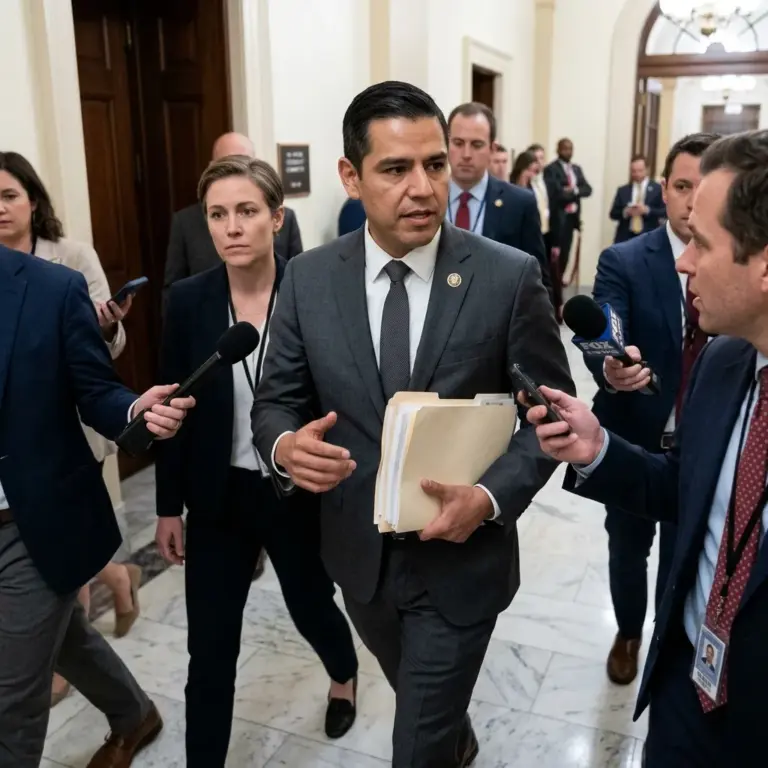
A sharp confrontation is brewing between the Trump administration and incoming Democratic leaders in the House as the White House suggests that planned congressional investigations could veer into criminal territory. In a formal warning directed toward Representative Robert Garcia, the future chairman of the House Oversight Committee, the administration cautioned that targeting executive branch officials might constitute blatant criminality. This preemptive strike sets a tense stage for January, when Democrats are expected to assume control of powerful committees tasked with probing the president and his inner circle.

Representative Garcia dismissed the warnings as an attempt at intimidation, telling reporters that those who have abused the public or acted as co-conspirators should simply hire lawyers. He argued that the American people expect Congress to push back against what he described as an authoritarian system. Similarly, incoming House Judiciary Chairman Jamie Raskin labeled the White House’s threats meaningless and embarrassing, insisting that constitutional oversight is essential for passing effective laws and maintaining transparency within the federal government.

Adding to the volatility, House Minority Leader Hakeem Jeffries slammed the administration’s claims as legally and factually inaccurate. Jeffries asserted that while previous Republican majorities may have served as rubber stamps for President Trump, a Democratic Congress intends to act as a necessary check on an out of control executive branch. He urged the White House to consult the Constitution rather than threaten lawmakers performing their official duties.

Beyond general oversight disputes, specific figures in the administration already find themselves in the crosshairs. Jeffries remained firm in his stance regarding Defense Secretary Pete Hegseth, stating clearly that Hegseth has got to go. While he stopped short of confirming immediate impeachment proceedings once Democrats hold a majority, he confirmed that senior members of the Judiciary and Armed Services committees are actively managing accountability efforts focused on the secretary.

As the United States looks toward the 2028 presidential election, voters are beginning to contemplate a landscape where Donald Trump is constitutionally barred from seeking another term. For the first time in several cycles, both parties face an unusually open road to the White House. According to a recent CNN poll conducted by SSRS, over half of Americans have already started thinking about who should lead the country next, though a significant portion remains undecided or hesitant about the prospect of another grueling campaign season.

Within the Democratic party, enthusiasm is currently split between three primary figures. When prompted with specific names, roughly equal shares of Democrats and Democratic leaning independents expressed excitement for former Vice President Kamala Harris, Representative Alexandria Ocasio Cortez, and former Transportation Secretary Pete Buttigieg. While Harris maintains the broadest base of general consideration due to her high name recognition, she also faces a notable segment of hard opposition compared to newer faces in the potential field.

Other prominent Democrats such as Governor Gavin Newsom and Senator Mark Kelly also drew positive responses from about twenty two percent of supporters, while Senator Jon Ossoff has recently generated organic momentum following a strong reelection performance in Georgia. Despite this buzz, many voters still admit they do not know enough about various gubernatorial contenders like Josh Shapiro or JB Pritzker to form a definitive opinion on their viability as a national candidate.

On the Republican side, the conversation centers heavily around Vice President JD Vance and Secretary of State Marco Rubio, both of whom command similar levels of initial excitement among GOP leaners. However, the shadow of Donald Trump continues to loom large; despite his inability to run, his eventual endorsement or decision to remain neutral could drastically shift these early numbers. As history shows that frontrunners can emerge quickly from obscurity, this current snapshot suggests a wide open contest where personality and timing will play as much of a role as existing polling data.

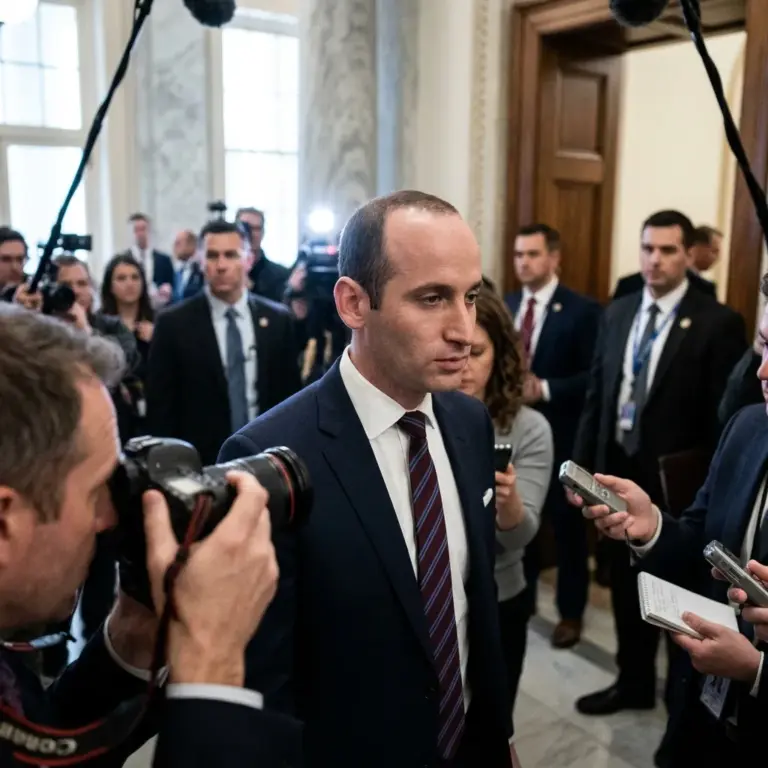
Washington is bracing for a sharp shift in tone and policy following President Donald Trump’s decision to install Stephen Miller as White House chief of staff. While the president previously hinted at a willingness to cooperate with Democrats on issues like immigration after recent midterm losses, the promotion of Miller suggests a different trajectory. Known as the architect of some of the administration’s most aggressive immigration policies, Miller arrives in his new role facing immediate hostility from Democratic leadership. Representative Hakeem Jeffries has already signaled that there is no path toward collaboration, describing Miller in blunt terms as a stone cold racist and stating he has zero interest in working with him.

The fallout extends beyond political rhetoric, as sixteen leading Latino advocacy groups are now urging the incoming Congress to subpoena Miller regarding mass deportation efforts and demanding a freeze on ICE funding until spending becomes transparent. However, not everyone in the orbit of power is dismayed. Supporters of the Make America Healthy Again movement have welcomed the change with enthusiasm, viewing Miller as a stronger champion for their specific agenda than his predecessor, Susie Wiles.

As the internal gears of the White House shift, a cinematic security scandal is simultaneously unfolding between Silicon Valley and Beijing. Questions are swirling around Nvidia CEO Jensen Huang following revelations that he may have been romantically involved with Alice Huang, a woman identified as a Chinese intelligence asset. The situation has created an awkward tension within the administration; despite warnings from National Security Adviser Marco Rubio about Huang being compromised, the tech mogul remained a close confidant of the president and accompanied him on high level diplomatic trips.

President Trump has defended Huang, claiming he believes the CEO had no knowledge of his partner’s ties to Chinese intelligence. Yet, federal investigators remain focused on whether advanced AI chips were illegally shipped to China through companies linked to Alice Huang. With Nvidia dominating the global AI market and serving as a pillar of current economic growth, there are growing concerns about stability at the company’s helm. While Nvidia maintains that no corporate secrets were leaked, investors are jittery and critics are questioning why such significant red flags failed to trigger more decisive action from the White House earlier.

As Veterans Day approaches on November 11, dozens of restaurant chains across the United States are preparing to honor service members with a wide array of free meals and special promotions. According to Alison Quinn, president of Dinova, this year’s Veterans Day Dining Guide features roughly 30 different brands ranging from national powerhouses to regional favorites. From free shrimp at Red Lobster to a complimentary burger at Red Robin, the offerings provide a tangible way for businesses to say thank you to those who served in the armed forces.

While many people associate these perks with a single day of celebration, there is a growing trend toward long term appreciation. Many establishments are now including incentives designed to bring veterans back through their doors well after the holiday has passed. For example, companies like Hofman Hospitality Group and Outback Steakhouse are pairing their immediate giveaways with bonus cards or meal offers valid for future visits, moving away from one time gestures toward more sustained relationships with the military community.

The variety of available treats is extensive this year, featuring crowd pleasers such as ten free boneless wings at Buffalo Wild Wings and a signature Bloomin’ Onion at Outback Steakhouse. These promotions serve a dual purpose, acting as both a mark of respect and practical support for active duty personnel or veterans who may be managing tight budgets. Whether it is a high end cheeseburger at Eddie Merlot’s or an All American Smash at Smashburger, the goal is to create a welcoming environment for all branches of service.

Those planning to take advantage of these deals are encouraged to keep a few logistics in mind before heading out. Because participation and specific requirements can fluctuate between individual franchises and regions, experts suggest checking with local managers first. Most participating locations will require official identification to verify veteran or active duty status, ensuring that the rewards reach those who earned them during their time in service.

In the world of high stakes counterintelligence, there is a long standing warning shared among diplomats and generals regarding the danger of the honeytrap. The premise is simple: when someone unexpectedly captivating takes a sudden interest in an ordinary person, they likely have an ulterior motive. While Jensen Huang is anything but ordinary, serving as the billionaire architect of Nvidia and a central figure in the global AI race, he appears to have fallen victim to this classic playbook regardless of his status or wealth.

Recent reports suggest that Huang became entangled in a romantic affair with Alice Huang, a former executive at Megaspeed, a Singaporean cloud provider. U.S. intelligence agencies now believe she acted as an asset for China’s Ministry of State Security. This revelation has sent shockwaves through both Silicon Valley and Washington, raising urgent questions about whether some of the world’s most sensitive semiconductor secrets were compromised during their relationship. While Nvidia’s board maintains that no national security breaches have occurred, the optics remain devastating for a company positioned at the epicenter of a geopolitical cold war over computing power.

This incident fits into a broader pattern of Chinese economic espionage designed to accelerate Beijing’s military and technological capabilities. From targeting members of Congress to utilizing LinkedIn for corporate infiltration, these operations often leverage personal relationships to gain access to protected data. For executives like Huang, who operate in an environment where even hotel rooms are suspected of being bugged and burner phones are standard equipment, the breach suggests that psychological vulnerabilities can override technical safeguards.

The fallout has already reached the highest levels of government, involving conflicting accounts from the Trump administration regarding what was known and when. Despite warnings issued by officials such as Marco Rubio months ago, Huang continued his proximity to leadership while maintaining ties to individuals linked to this alleged plot. As investigators dig deeper into the timeline between 2024 and 2025, the situation serves as a stark reminder that in the current era of chip wars, no amount of success provides total immunity from old school intelligence tactics.

Travelers flying first class between New York and Chicago can finally ditch the prepackaged snacks for something a bit more sophisticated. American Airlines announced this week that it is reintroduceding fresh food options on these key hub routes, marking the first time such an offering has returned since 2019. Starting this month, passengers will find a curated selection of small bites designed to elevate the short haul experience.

The new menu focuses on light but flavorful choices tailored to different times of day. Breakfast flyers can choose between apple cinnamon chia pudding or classic prosciutto and melon, while those traveling during lunch or dinner hours can opt for a mezze plate or a Thai noodle salad. For years, these flights had seen their premium dining reduced to basic wrapped snacks, reflecting a broader industry trend of scaling back services on shorter journeys.

This move comes as American Airlines attempts to close the gap with rivals like Delta and United, who have aggressively invested in high end amenities to attract big spending corporate and leisure travelers. While other carriers have focused on expanding their lounge networks and redesigning cabins, American is using targeted culinary upgrades to regain its footing in the luxury market.

Beyond the meal trays, the airline has been quietly rolling out several improvements meant to lure back prestige passengers. These efforts include updating existing lounges and planning the installation of seatback screens across its narrow body fleet. By adding fresh flavors back to the New York to Chicago leg, American is signaling that it recognizes the growing demand for true premium service regardless of flight duration.