Archive

November 18, 2026

Browsing

Micron Technology shares MU fell more than 2% on Tuesday as investors assessed concerns about a potential oversupply in the NAND memory market next year.

GF Securities lowered its NAND price forecasts, warning that weaker consumer demand and slower server deployments could reverse the current supply-demand balance.

The Hong Kong-based investment firm expects NAND prices to remain flat in the first quarter of 2027 before declining in the following three quarters.

Its previous forecasts had called for price increases of 6% in the first quarter, 3% in the second quarter, and no change in the final two quarters.

The revised outlook also put other memory-chip companies in focus, including SanDisk and South Korea’s SK Hynix.

GF Securities warns of NAND market oversupply

GF Securities expects weaker demand for smartphones and personal computers to weigh on NAND consumption in 2027.

The firm projects double-digit shipment declines for both product categories, putting pressure on client solid-state drives and mobile storage demand.

Analysts also pointed to constraints in the availability of graphics processing units and high-bandwidth memory, which have slowed server deployment momentum.

This has weakened procurement demand for enterprise solid-state drives, partly offsetting increased orders from US cloud service providers in September.

In a note to clients, GF Securities said these factors were easing the supply constraints that had previously supported NAND prices.

The firm also expects NAND demand bit growth to decline next year, reaching 47.8 exabytes.

It cited weaker consumer electronics demand and slower procurement of enterprise storage products in China.

On the supply side, Chinese manufacturers are continuing to expand capacity, while the share of quad-level cell (QLC) production is increasing.

GF Securities forecasts NAND supply bit growth of 21% in 2026, 28% in 2027 and 30% in 2028.

The combination of slower demand and expanding supply could result in a reversal of the market’s supply-demand balance, putting further pressure on prices.

SanDisk faces greater earnings volatility than Micron

GF Securities sees SanDisk as more exposed to the potential downturn because it is a pure-play NAND manufacturer.

The analysts expect its earnings to experience greater volatility if NAND prices weaken.

The firm maintained a more cautious view on companies with significant exposure to the NAND market, including SanDisk, Kioxia and Phison.

Micron and SK Hynix, by contrast, have greater exposure to dynamic random-access memory (DRAM) and high-bandwidth memory (HBM).

GF Securities expects the impact of weaker NAND pricing on these companies to be more limited.

The analysts said Micron, SK Hynix and Samsung Electronics could outperform if the DRAM market cycle remains relatively intact.

Micron’s investor base shifts as hedge fund cuts stake

Separately, recent regulatory filings revealed a significant change in Micron’s institutional shareholder base.

Situational Awareness, the AI-focused hedge fund run by Leopold Aschenbrenner, reported holdings of $1.58 billion as of September 30, down 92% from $20.2 billion at the end of June.

The fund sold its entire Micron position, which consisted of 4.83 million shares valued at approximately $5.57 billion at the end of the second quarter.

The unwinding of the fund’s holdings had attracted short sellers targeting its positions, The Wall Street Journal reported.

The completion of the sale could reduce some of the trading volatility associated with the fund’s exposure to memory stocks.

Meanwhile, billionaire investor David Tepper’s Appaloosa hedge fund increased its Micron stake by 28% to 1.25 million shares during the third quarter.

The position was valued at approximately $1.33 billion at the end of September, making Micron Appaloosa’s largest single holding.

However, quarterly institutional filings are reported with a 45-day delay, meaning the positions may have changed since September 30.

AI disclosure: AI tools assisted with research and drafting of this piece. An Invezz editor reviewed the facts, sources and wording before publication. Any opinions or analysis are Invezz’s, not those of an automated system.

The post Micron stock falls 2%, why this analyst cut target price appeared first on Invezz
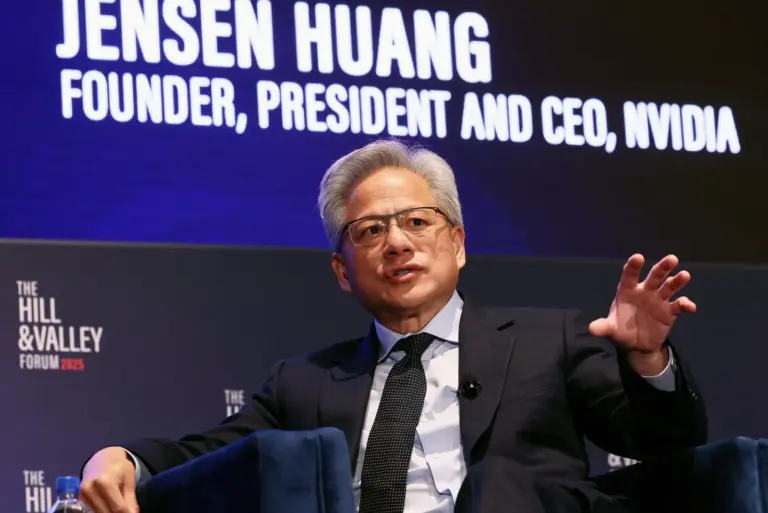
Jensen Huang has signaled that he would be willing to return as Nvidia NVDA CEO if the company’s board of directors decides that his reinstatement would be in the company’s best interest.

In his first public statement since stepping down, Huang said he took full responsibility for his personal mistakes and would cooperate with the board’s independent investigation.

The statement came hours before Nvidia was scheduled to report its third-quarter earnings following the closing bell on Tuesday.

Nvidia shares continued their descent on Tuesday, falling 1.43% at the time of writing.

The 63-year-old resigned last week after leading the chipmaker since its founding in 1993.

His departure followed reports that he had been involved in multiple extramarital relationships, including one with a woman suspected of having links to Chinese intelligence.

What Jensen Huang said

In a statement posted on X, Huang acknowledged that his personal conduct had fallen short of the standards expected of Nvidia employees and said he regretted the problems it had caused the board.

https://twitter.com/JensenHuang/status/2122726005219737649?a=mKDp8J_rLKaG576a9KM&s=20

“I did not live up to the standards expected of everyone at NVIDIA, and I have made serious mistakes in my personal life. I created problems for the Board that I deeply regret,” Huang said.

“I own my mistakes completely, and I am committed to cooperating with the Board’s independent investigation,” he added.

Huang, one of the most prominent figures in the artificial intelligence industry, also thanked employees, investors, business partners and others who had reached out to him and his family over the past week.

“Thank you to everyone who has shown kindness to my family and me. It means the world to me,” he wrote.

Huang says he would be honoured to return

The former CEO said he had received calls from Nvidia employees, investors, business partners and customers urging him to return to the company’s top position.

He added that people had continued to contact him directly as Nvidia navigated technological, competitive, market and geopolitical challenges.

“NVIDIA is a once-in-a-generation company. If the Board of Directors decides that my return is in the best interest of our shareholders, our employees, the company, and America, I would be honoured to answer these calls and return as CEO,” Huang said.

Nvidia appointed former CFO Colette Kress as interim CEO following Huang’s departure.

However, CNBC and Reuters reported on Tuesday that the board was unlikely to reinstate him.

Huang to testify on December 1

Meanwhile, Huang has agreed to appear before Congress on December 1 for a transcribed interview involving the House Foreign Affairs Committee, the House Select Committee on the Chinese Communist Party and the House Intelligence Committee.

The committees said they wanted answers about Nvidia’s role in allowing Chinese entities access to advanced US chips and the alleged involvement of a potential Chinese intelligence asset in the controversy.

“The American people need answers on Mr. Huang and Nvidia’s role in allowing dangerous PRC actors to access our most advanced chips, as well as the role of a potential Chinese intelligence asset in this scandal,” Republican committee chairmen Brian Mast, John Moolenaar and Rick Crawford said in a joint statement.

AI disclosure: AI tools assisted with research and drafting of this piece. An Invezz editor reviewed the facts, sources and wording before publication. Any opinions or analysis are Invezz’s, not those of an automated system.

The post Jensen Huang keeps door open to return as Nvidia CEO in first statement since exit appeared first on Invezz

Nvidia shares NVDA rose 2.47% in after-hours trading on Tuesday after the chipmaker delivered a stronger-than-expected revenue forecast for its January quarter, signalling that demand for artificial intelligence hardware remains robust despite leadership uncertainty and concerns about industry spending.

The company forecast revenue of $130 billion for its fiscal fourth quarter, plus or minus 3%, compared with the $125.3 billion expected by analysts tracked by FactSet.

The outlook does not include any data-centre revenue from China.

The forecast followed another record quarter for Nvidia, with revenue and earnings both exceeding Wall Street expectations.

Investors had been closely watching the results amid the departure of longtime CEO Jensen Huang, who resigned last week following reports about his personal relationships.

Nvidia delivers stronger-than-expected revenue outlook

Nvidia expects revenue of approximately $130 billion in the quarter ending in January.

The forecast exceeded analyst expectations and suggests that demand for the company’s AI chips and computing systems remains strong.

The company also expects a gross margin of around 71.5% in the quarter.

The outlook was particularly important given speculation about whether Nvidia would provide a quarterly forecast amid the uncertainty surrounding its leadership.

Nvidia’s third-quarter revenue increased 103% year-over-year to $115.8 billion, surpassing the approximately $109 billion expected by analysts.

Net income reached $65.3 billion, while earnings per share came in at $2.68, above the FactSet consensus estimate of $2.48.

Demand for Nvidia’s AI hardware remained strong during the quarter as the company began shipments of its latest Vera Rubin systems.

The results provide further evidence of continued investment in AI infrastructure, although concerns remain about whether spending across the industry can maintain its current pace.

Nvidia returns record $28.1 billion to shareholders

Nvidia returned $28.1 billion to shareholders during the quarter ended October 25 through share repurchases and dividends.

The figure exceeded the previous quarterly record of $26 billion, set in the preceding quarter.

Share buybacks accounted for $22.1 billion of the latest shareholder returns.

Nvidia has now spent $62 billion on repurchases during the first three quarters of its fiscal year, significantly more than the $40.4 billion spent during the previous fiscal year.

The company still has $227.3 billion available under its existing share repurchase programme.

The scale of the buybacks highlights Nvidia’s ability to return substantial capital to shareholders while continuing to invest in its AI hardware business.

Leadership uncertainty remains after Huang’s departure

Nvidia’s strong results came during a period of significant leadership uncertainty.

Huang resigned last Thursday following reports of multiple extramarital relationships, including one involving a company employee and another involving a woman suspected by US officials of having links to Chinese intelligence.

Former CFO Colette Kress is serving as interim CEO while Nvidia looks for a permanent replacement.

The company has also elevated board member Harvey Jones to chairman, marking the first time Nvidia has had someone in that role.

Earlier on Tuesday, Huang said he would be willing to return if the board decided that his reinstatement would be in the company’s best interests.

However, a person familiar with the board’s thinking told Wall Street Journal that it was not considering bringing him back.

Nvidia’s board has also formed a committee to oversee national security policies and compliance with US export controls.

Huang and General Counsel Tim Teter have agreed to brief three House committees in early December as lawmakers seek answers about the company’s exports to Asia.

AI disclosure: AI tools assisted with research and drafting of this piece. An Invezz editor reviewed the facts, sources and wording before publication. Any opinions or analysis are Invezz’s, not those of an automated system.

The post Nvidia stock rises after hours as revenue forecast beats estimates appeared first on Invezz

Meta Platforms shares META edged lower on Tuesday, falling 0.65%, despite receiving a bullish assessment from UBS.

Analyst Karl Keirstead initiated coverage with a Buy rating and an $815 price target, arguing that growing enthusiasm around the company’s artificial intelligence initiatives could offset concerns about rising investment costs and financing requirements.

Keirstead believes Meta’s Muse AI models and Meta Business Agents could strengthen investor sentiment as the company expands its AI strategy.

The analyst’s price target implies approximately 30% upside from Monday’s closing price.

The UBS assessment comes as Meta increases spending on computing infrastructure and AI development, raising questions about its ability to sustain investment while maintaining positive cash flow.

UBS sees upside from Meta’s AI strategy

Keirstead said Meta trades at approximately 20 times estimated 2027 GAAP earnings per share, a valuation he considers attractive given recent progress in its AI models and applications.

The analyst described CEO Mark Zuckerberg and the company’s leadership as building an “AI maximalist version of Meta” following a significant overhaul of its AI strategy over the past 18 months.

UBS plans to focus on three main areas as it evaluates the company’s progress: the development and training of Muse AI models, the rollout of Meta’s personal AI agent, and the expansion of business and enterprise applications.

The firm will also assess the computing infrastructure needed to support these initiatives, including the scale of investment and associated costs.

UBS said its existing coverage of cloud infrastructure providers would help inform its analysis of Meta’s AI spending.

These companies include Microsoft Azure, Amazon Web Services, Google Cloud, Oracle and CoreWeave.

Keirstead’s assessment suggests that the commercial potential of Meta’s AI products could become an important factor in how investors evaluate the company’s expanding investment programme.

Rising capital expenditure weighs on cash flow

Meta’s AI ambitions come with substantial infrastructure costs, which have become a key concern for investors.

The company reported third-quarter revenue of $64.6 billion, up 26% year-over-year.

Advertising remained an important contributor to growth, with impressions increasing 10% and average advertising prices rising 14%.

However, capital expenditure reached $34.91 billion during the quarter. Meta also reported negative free cash flow of $2.12 billion.

The figures highlight the financial pressure associated with the company’s investment plans.

While revenue growth remained strong, spending on infrastructure and other investments exceeded the cash generated after capital expenditure during the quarter.

UBS acknowledged that mounting capital expenditure, negative free cash flow and the potential need for additional financing could weigh on investor sentiment.

The analyst nevertheless believes enthusiasm around Meta’s AI products and applications could help counter these concerns.

Meta expects aggressive AI investment in 2027

Meta expects its capital expenditure to remain elevated as it continues expanding its AI infrastructure.

The company forecasts fiscal 2026 capital expenditure of between $135 billion and $145 billion.

It narrowed the range from its previous forecast of $130 billion to $145 billion.

Management has also indicated that investment in the core business and emerging AI initiatives will continue aggressively in 2027.

AI disclosure: AI tools assisted with research and drafting of this piece. An Invezz editor reviewed the facts, sources and wording before publication. Any opinions or analysis are Invezz’s, not those of an automated system.

The post Why this analyst sees a 30% upside for Meta stock? appeared first on Invezz

Jensen Huang has said he would be willing to return as Nvidia CEO if the company’s board considers his reinstatement to be in its best interest.

Anthropic has received its first Wall Street Buy rating ahead of its planned stock market debut, with New Street Research setting a $105 price target.

Gold prices edged higher but remained close to a 13-month low as a stronger dollar and rising Treasury yields weighed on demand.

Oil prices gained around 1% as concerns about attacks on shipping in the Middle East offset expectations of a global supply surplus.

Jensen Huang issues first statement after Nvidia departure

Former Nvidia CEO Jensen Huang has said he would be prepared to return to the company if its board of directors decides that his reinstatement would benefit shareholders, employees and the business.

In his first public statement since stepping down, Huang took responsibility for his personal conduct and said he would cooperate with an independent investigation by the board.

Huang said he had not met the standards expected of Nvidia employees and regretted the problems his actions had created for the board.

He also thanked employees, investors, business partners and others who had supported him and his family over the past week.

The 63-year-old resigned last week after leading Nvidia since its founding in 1993.

His departure followed reports of multiple extramarital relationships, including one involving a woman suspected of having links to Chinese intelligence.

Huang said he had received calls from employees, investors, business partners and customers urging him to return.

However, CNBC reported on Tuesday that Nvidia’s board was unlikely to reinstate him.

Former CFO Colette Kress has been appointed interim CEO.

Huang has also agreed to appear before Congress on December 1 for a transcribed interview involving three House committees.

Lawmakers are seeking answers about Nvidia’s role in allowing Chinese entities access to advanced US chips and the alleged involvement of a potential Chinese intelligence asset in the controversy.

Nvidia shares were down 1.6% on Tuesday ahead of the company’s third-quarter earnings report, scheduled for after the market close.

Anthropic receives first Buy rating ahead of IPO

Anthropic has received a bullish assessment from New Street Research ahead of its planned initial public offering.

Analyst Pierre Ferragu initiated coverage with a Buy rating and a $105 price target, above the company’s proposed IPO range of $70 to $78.

The analyst described the listing as a “generational IPO”, arguing that artificial intelligence could capture a growing share of corporate spending.

Ferragu compared the potential expansion of AI with cloud computing, which accounted for around 30% of incremental IT spending between 2010 and 2025.

He believes AI could spread twice as quickly across an addressable market ten times larger.

His forecasts suggest AI could account for nearly 7% of knowledge-work spending by 2030, with around 25% of incremental spending directed towards the technology through 2040.

However, the analyst’s projections relate to the broader AI market and do not establish how much of that opportunity Anthropic will capture.

Ferragu also argued that the proposed IPO valuation offers a degree of downside protection.

His $105 target implies approximately 35% upside from the top of the proposed price range.

Gold falls as dollar and Treasury yields weigh

Gold prices were mixed on Tuesday. However, they remained near their lowest level in 13 months as investors assessed the outlook for US interest rates.

Spot gold fell 0.09% to $3,852.67 per ounce, barely above Monday’s low of $3,830.74.

US gold futures for December delivery gained 0.07% to $3,856.

The US dollar remained near its highest level in 19 months, while benchmark 10-year Treasury yields climbed amid expectations of further interest rate increases.

Markets were assigning a 95.4% probability of a 25-basis-point rate hike in December, according to CME’s FedWatch tool.

Investors were also awaiting minutes from the Federal Reserve’s October meeting, due on Wednesday.

St. Louis Fed President Alberto Musalem said on Tuesday that the central bank may need several rate increases to bring inflation under control.

Rising interest rates tend to reduce gold’s appeal because the metal does not generate interest income.

Silver gained 1.3% to $47.63 per ounce, while platinum fell 1.3% to $1,428.17. Palladium rose 0.7% to $974.75.

Oil rises as Middle East tensions offset supply concerns

Oil prices advanced on Tuesday as traders monitored attacks and security risks in the Middle East alongside expectations of falling US crude inventories.

Brent crude futures rose 0.79% to $93.17 a barrel, while US West Texas Intermediate futures gained 0.35% to $86.02.

Despite the daily gains, Brent had fallen 20% during November, while WTI was down 16%.

Iranian drones attacked a US military radar system in Bahrain on Tuesday.

Separately, the crew of a vessel in the Strait of Hormuz was unaccounted for after the ship was hit twice.

Iranian media also reported an explosion on Qeshm Island in the Strait of Hormuz, citing an official who said the US had carried out an attack without damaging infrastructure.

These developments supported prices, but expectations of increased oil supply limited the gains.

The International Energy Agency said last Friday that the global oil market could return to a surplus in the fourth quarter as Middle Eastern exports recover faster than demand.

Investors were also awaiting weekly US inventory data from the American Petroleum Institute and the Energy Information Administration.

AI disclosure: AI tools assisted with research and drafting of this piece. An Invezz editor reviewed the facts, sources and wording before publication. Any opinions or analysis are Invezz’s, not those of an automated system.

The post Evening digest: Huang says he is prepared to return, Anthropic wins first buy rating appeared first on Invezz

Silver prices faced a challenging start to the week, sliding beneath the critical fifty dollar mark as a strengthening US dollar and anticipation of higher interest rates squeezed the market. Spot silver dipped to roughly forty six dollars and fifty five cents per ounce on Monday afternoon, continuing a downward trend fueled by stubborn inflation data and signals from Federal Reserve officials that more rate hikes could be on the horizon. This macroeconomic environment typically makes non yielding assets like precious metals less attractive, leaving both silver and gold struggling to maintain their footing.

Despite the immediate dip, several prominent analysts suggest that this downturn might actually create a buying opportunity for long term investors. Lobo Tiggre, CEO of IndependentSpeculator.com, indicated that while silver could drift even lower in tandem with gold, he expects a sharp eventual recovery where silver potentially outperforms its larger counterpart. Similarly, Pamela Aden of The Aden Forecast views the current pullback as a standard correction within an overarching bull market, noting that silver frequently spends years in a dormant state before experiencing explosive growth.

Other experts believe the fundamental drivers behind precious metals remain intact regardless of short term volatility. Peter Schiff argues that persistent inflation and mounting government debt will eventually erode confidence in the US dollar, forcing investors back into hard assets. Meanwhile, Tavi Costa of Azuria Capital pointed toward silver miners as a hidden gem in the sector, citing strong cash flows and low investor positioning as catalysts for a future revaluation of mining stocks.

However, some headwinds persist beyond monetary policy. Research from Metals Focus indicates a projected five percent decline in global silver demand by twenty twenty six, driven largely by a slump in jewelry sales and efforts by solar panel manufacturers to find cheaper substitutes for the expensive metal. Even with those concerns, silver held slightly higher in early Tuesday trading around forty seven dollars and twenty four cents, reflecting a tug of war between immediate economic pressures and optimistic forecasts for a rebound.

Purepoint Uranium and IsoEnergy are gearing up for an ambitious expansion at their shared Dorado project in Saskatchewan. The two companies have greenlit a massive 7,700 metre drilling campaign slated for 2027, aiming to unlock the full potential of two promising uranium zones in the eastern Athabasca Basin. This strategic push comes as part of a fifty-fifty partnership designed to capitalize on recent discoveries that suggest significant mineral wealth beneath the surface.

The operation will kick off early in the year with a concentrated effort at the Q24 target. Between January and March, teams plan to sink nine diamond drill holes totaling nearly five thousand metres. Interest in this specific area spiked following previous results that showed elevated radioactivity levels, sparking hope that they have found a substantial system spanning the unconformity. By drilling both northwest and southeast of the initial discovery, the partners hope to map out exactly how far this mineralization stretches.

Later in the summer, the focus will shift toward the Nova discovery via helicopter-supported drilling. Five additional holes will be drilled throughout July and August to test new targets identified through advanced airborne geophysical surveys. The stakes are high at Nova, where past efforts yielded impressive high grade readings, reinforcing the belief that the region could become a cornerstone of their production portfolio.

Beyond the immediate drilling goals, Purepoint and IsoEnergy are casting a wider net across their Aurora and Celeste properties using magnetotelluric surveys to find more conductive structures. Speaking recently at an investment conference in New Orleans, Purepoint CEO Chris Frostad emphasized that these efforts build on a highly active prior year of exploration. With over one hundred thousand hectares under their joint control, the pair is betting heavily on the geological similarities between Dorado and other high grade deposits nearby.

The recent democratic surge that shifted the balance of power in Congress provided many surprises, but few were as symbolic or hard fought as the victory of Abdul El Sayed. Running against Mike Rogers, a candidate backed by nearly 170 million dollars in outside spending from figures like Donald Trump and Elon Musk, El Sayed overcame a mountain of financial opposition to become the first Muslim ever elected to the United States Senate. While analysts focused on the numbers and the shifts in voting blocs, the emotional core of the evening centered on a man reclaiming his identity after months of relentless personal attacks.

Throughout his campaign, opponents attempted to weaponize El Sayed’s heritage, using his full name to paint him as an outsider or a danger to national security. However, during his victory speech, he turned those insults into a badge of honor. With clear Arabic intonation and visible pride, he pronounced his name for the cheering crowd and jokingly suggested that since Donald Trump struggled with it so much, he could simply refer to him as Senator starting in January. This moment of levity masked a deeper triumph over a calculated strategy of fear designed to make a Muslim candidate seem fundamentally unelectable.

The road to Washington was paved with organized bigotry that extended far beyond internet trolls. Reports indicate that dozens of Republican officials participated in coordinated anti Muslim campaigns involving hundreds of social media posts and legislative efforts aimed at marginalizing Islamic practice. Despite warnings from political advisors that his background would alienate voters, El Sayed leaned into his identity as both a devout Muslim and a lifelong Midwesterner. From visiting rural farmers in the Upper Peninsula to sharing meals at Rosh Hashanah dinners, he presented himself not as a foreign entity, but as an American doctor dedicated to public health and community care.

Beyond the cultural milestone, El Sayed campaigned on a platform that linked domestic struggle with international conflict. He spoke candidly about redirecting tax dollars away from foreign wars and toward local schools and healthcare infrastructure in Michigan. By centering themes of humanity and diversity while refusing to be intimidated by smears, El Sayed did more than just win a seat in the Senate; he dismantled an enduring stereotype and proved that inclusive values could prevail even against some of the wealthiest interests in American politics.

Americans seeking clear explanations for a massive nationwide ground stop were instead met with a flurry of culture war grievances from top officials in the Trump administration. While the government’s own initial reports pointed toward telecommunications equipment issues and contractor maintenance errors, the public discourse shifted rapidly away from technical malfunctions. President Donald Trump spent much of Monday attacking former Transportation Secretary Pete Buttigieg, claiming he ruined the system, while other high ranking officials pivoted toward debates over inclusive language and social policy.

Transportation Secretary Sean Duffy admitted during media appearances that the grounding likely stemmed from a network or router problem, yet he spent significant time criticizing previous efforts to modernize aviation terminology. Duffy took aim at the shift from terms like cockpit to flight deck and notice to airmen to notice to air missions, suggesting that past administrations prioritized identity politics over functional infrastructure. This pattern continued with Vice President JD Vance, who acknowledged the need for congressional funding to fix aging equipment before pivoting to accuse Democrats of an obsession with transgender athletes in sports.

Pete Buttigieg pushed back against these claims, reminding critics that his tenure included launching projects to move the FAA from obsolete copper wires to modern networks and hiring thousands of new controllers via bipartisan funding. He argued that since the current administration inherited those upgrades, they owe the public an honest accounting of how their specific execution led to the worst communications breakdown in a century. This clash reflects a recurring tension between the two sides, echoing a previous incident where Trump blamed diversity initiatives for a fatal mid air collision despite NTSB findings pointing toward systemic routing failures and controller fatigue.

Critics and advocacy groups suggest this strategy is a deliberate attempt to distract from administrative incompetence by leveraging polarizing social issues. Representative Sarah McBride and others have noted that voters are increasingly frustrated by a politics of cruelty used as a shield against legitimate questions about governance and infrastructure stability. As investigations continue into why the sky went silent on Friday, the gap remains wide between those calling for technical transparency and an administration focused on cultural combat.

A rare political storm is brewing within the Democratic caucus as Senator Chris Van Hollen launches a direct challenge to Chuck Schumer for the position of Senate leader. For the first time in thirty years, the race to helm the party has become contested, creating an atmosphere of tension just as Democrats prepare to navigate the final stretch of Donald Trump’s presidency. While Schumer has long held the reins of power, Van Hollen is positioning himself as a necessary change for a party that he believes is yearning for something beyond the status quo.

On paper, Schumer appears to hold a comfortable lead heading into the December secret ballot. The veteran New York senator has already secured fifteen public endorsements, bolstered by allies like Kirsten Gillibrand who point toward his success in securing a fifty five seat majority. Schumer has maintained a composed demeanor throughout the skirmish, quietly asserting that he possesses the necessary votes to remain in place while welcoming open discussion about the future direction of the caucus.

Despite being labeled an underdog, Van Hollen is fighting back with a high profile media blitz and accusations of procedural maneuvering. Though he only has five public supporters including progressive heavyweight Bernie Sanders, Van Hollen claims his actual numbers are much higher than they appear. He has warned colleagues against rushing into what he describes as a coronation and suggested that some members may be attempting to shift the election date specifically to stifle his momentum.

The sudden bid for leadership comes amid speculation regarding Van Hollen’s broader political trajectory. Having recently pivoted away from considering a 2028 presidential run, critics and insiders wonder if this internal fight is less about legislative strategy and more about building a national donor base. As both men scramble to reach the twenty eight vote threshold required for victory, the outcome will determine whether Senate Democrats stick with experienced stability or embrace a fresh face to clash with the White House.