Archive

November 26, 2026

Browsing

Arm Holdings shares ARM fell 8% in Wednesday trading, extending losses across the semiconductor sector as investors continued to reduce exposure to artificial intelligence-related stocks.

The stock dropped to around $148.62, erasing the remaining gains from Monday’s double-digit rally.

That advance followed the announcement that chief executive Rene Haas had agreed to remain in the role through 2033, easing uncertainty over the company’s leadership.

The latest decline came as SoftBank Group, Arm’s majority shareholder, suffered a sharp fall in Tokyo. SoftBank shares closed down approximately 14.8%, their steepest decline in months.

SoftBank decline adds pressure on Arm stock

SoftBank owns approximately 86.4% of Arm and has pledged shares representing 72% of the chip designer as collateral for a $25 billion margin loan.

The arrangement links Arm’s share price to SoftBank’s financing position, potentially amplifying pressure when the Japanese conglomerate’s shares fall.

The relationship has also raised concerns about circular financing, as SoftBank affiliates account for a meaningful share of Arm’s revenue.

Broader weakness in technology stocks added to the pressure.

Nvidia shares had surged 31.5% on Monday after the company reinstated Jensen Huang as chief executive, triggering a rally across semiconductor stocks.

However, the recovery lost momentum on Tuesday as investors booked profits and reassessed their exposure to AI-related companies. The decline has not extended to Wednesday’s session.

Expectations of tighter monetary policy also weighed on sentiment. According to CME Group’s FedWatch tool, markets were pricing in a 99.8% probability of a Federal Reserve rate hike following its December meeting.

Haas extends leadership through 2033

Arm announced on Monday that Haas had signed an agreement committing him to remain chief executive through 2033.

He will also become vice chairman of SoftBank Group from December 1.

“I’ve never been more confident about Arm’s future,” Haas said in a statement, adding that he was “wholly committed to realizing Arm’s full potential for many years to come.”

Haas has led Arm since 2022 and oversaw its return to public markets through its Nasdaq listing in 2023.

Earlier reports said Nvidia’s board had approached Haas during its search for a successor to Huang. Haas previously spent several years at Nvidia, where he rose to vice president and general manager of its computing products business before joining Arm in 2013.

Huang’s reinstatement and Haas’s contract extension have since removed the immediate leadership uncertainty surrounding both companies.

Analysts remain bullish despite market weakness

Arm’s latest financial results and growth outlook have attracted positive assessments from analysts.

The company reported fiscal second-quarter revenue of $1.443 billion, up 27% year over year and above consensus estimates.

Licensing revenue increased 50% to $773 million, while royalty revenue rose 8% to $670 million.

Adjusted earnings per share came in at $0.52, exceeding the $0.48 consensus estimate.

Non-GAAP operating margin expanded 310 basis points to 44.2%.

Rosenblatt analyst Kevin Cassidy maintained a Buy rating and a $250 price target, citing licensing momentum and growing exposure to data centres.

He said data-centre royalties had doubled year over year, supported by hyperscaler adoption.

Guggenheim analyst John DiFucci also maintained a Buy rating, with a $255 price target.

He highlighted stronger licensing revenue and growing adoption of Arm technology in data centres and physical AI applications.

However, Arm reported free cash flow of $110 million, below the $350 million analyst estimate. DiFucci attributed the shortfall to working-capital changes that he expects to reverse over the coming quarters.

Arm guided for fiscal third-quarter revenue of $1.54 billion, plus or minus $50 million, representing approximately 24% year-over-year growth at the midpoint.

AI disclosure: AI tools assisted with research and drafting of this piece. An Invezz editor reviewed the facts, sources and wording before publication. Any opinions or analysis are Invezz’s, not those of an automated system.

The post Arm stock falls 8% as SoftBank selloff and AI concerns weigh on shares appeared first on Invezz
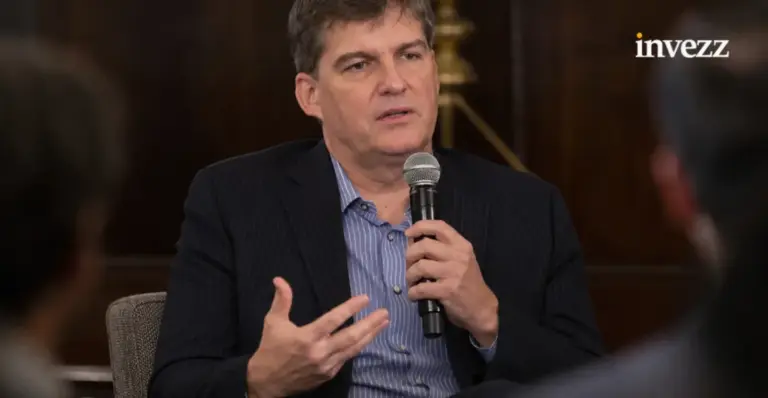
Michael Burry is considering a fresh short position in Nvidia shares near $200, maintaining his bearish outlook on the chipmaker despite Jensen Huang’s return as chief executive.

The investor, known as “The Big Short” for his bet against the US housing market before the 2008 financial crisis, said Huang’s reinstatement does not invalidate his investment thesis.

“My plan is to short Nvidia again nearer $200/share during a period of market optimism,” Burry wrote in a Wednesday post on Substack. “That time is not now.”

Nvidia shares were trading around $142, more than 30% below their early October high and well below the price level Burry identified for a potential new short.

Burry maintains Nvidia bearish thesis

Burry had previously bet against Nvidia as the artificial intelligence trade pushed technology valuations higher. However, he adjusted his position ahead of the latest volatility.

In a November 20 post, he disclosed that he had sold most of his Nvidia put options and bought inexpensive, long-dated call options.

The move came shortly before Huang’s reinstatement triggered a major rally in Nvidia shares.

Burry said on Wednesday that he continued to hold those calls, which had already doubled in value.

“I still hold the Nvidia calls I bought on Friday,” he wrote. “They are far out of the money, and I got them for a few dollars. They’ve already doubled, and I have not decided which way to go with them as yet.”

Despite the recovery following Huang’s return, Burry said investors should not interpret the rally as an all-clear signal for Nvidia.

“I believe business as usual will return soon enough,” he wrote. He added that his Nvidia short thesis remained valid because it had never depended on Huang leaving the company.

Concerns about returns on AI capital expenditure and the availability of financing for data centre expansion have also weighed on technology stocks.

Burry closes Nasdaq puts and raises cash

Burry has also reduced his broader bearish exposure as he shifts towards undervalued stocks.

In his latest Substack update, he said he had sold the remaining half of his Nasdaq-100 put options as technology shares weakened.

His only outstanding bearish options positions are now linked to Palantir Technologies and MetLife, according to his post.

Burry said he currently prefers owning stocks while continuing to evaluate potential short opportunities. Around 25% of his portfolio is held in cash.

“So for now, I am long undervalued common stocks, LEAP calls and preferred stock, with a modest cash pile,” he wrote.

International stocks dominate Burry’s holdings

Burry’s largest holdings include MercadoLibre, Temple & Webster Group and JD.com.

His exposure to JD.com also includes long-dated call options expiring as late as 2029.

He said the international focus of his portfolio reflected continued high valuations in US markets.

Other investments include Adobe, Birkenstock, Deckers Outdoor, Lululemon and PayPal.

Smaller positions in Hong Kong-listed companies such as BYD, Tencent and Meituan collectively account for slightly more than one-fifth of his portfolio.

AI disclosure: AI tools assisted with research and drafting of this piece. An Invezz editor reviewed the facts, sources and wording before publication. Any opinions or analysis are Invezz’s, not those of an automated system.

The post Michael Burry plans next Nvidia short near $200  appeared first on Invezz

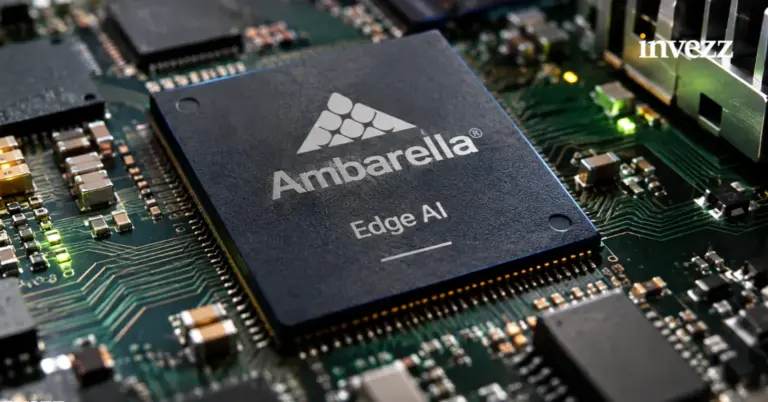
Ambarella (AMBA) stock tanked on November 25 after the chip designer warned that a worsening memory shortage was forcing customers to cut orders.

Morgan Stanley downgraded the Nasdaq-listed firm in response to “equal-weight” and reduced its price target rather significantly to $42, indicating about a 5% downside on AMBA’s previous close.

Following the post-earnings crash, Ambarella stock is trading at less than half its price at the start of 2026.

Memory shortage is hurting Ambarella stock

Ambarella reported fiscal Q3 revenue of $115.2 million, up 6.2% from a year earlier but below the $119.4 million consensus estimate.

The bigger surprise was its current-quarter guidance.

Ambarella expects revenue of $70 million to $75 million, versus about $112 million that Wall Street had called for. At the midpoint, that would mean a 37% sequential decline.

The problem starts with a component its customers buy separately.

A camera maker may have access to Ambarella’s processor – but if it can’t secure enough memory at a price that makes the finished device profitable, it has little reason to order as many processors.

Management said the disruption first started in consumer devices, but it has since spread to varying degrees across its markets.

Morgan Stanley’s bearish stance on AMBA shares

On Wednesday, Morgan Stanley cut its calendar 2027 revenue estimate for AMBA to $401 million from $485 million, a reduction of about 17%.

Analyst Joseph Moore expects memory disruption to weigh on demand for “several quarters.” His primary concern is that two businesses that could soften the blow are taking time to develop.

Automotive has progressed more slowly than Morgan Stanley expected – and the investment firm thinks it could take years for Ambarella’s sales through partners to reach meaningful scale.

That leaves the company exposed to a prolonged slowdown in its existing business.

Even if memory availability begins to improve, the speed of the recovery will depend on which customers restart production and whether the orders they pushed out are still worth filling.

Comeback depends on new chips shipping on time

CEO Fermi Wang still expects revenue to grow in fiscal 2028, with a “weak first half” giving way to higher shipments of new processors later in the year.

On the earnings call, he said delayed orders account for only a small part of that outlook.

The bigger contribution is supposed to come from chips already in engineering development, including higher-priced products such as the CV7 and CV8.

Management believes customers will reserve scarce memory for their most valuable devices, which often use Ambarella’s newer processors.

That gives the company a route back to growth even if memory stays tight. The test is whether those devices reach production on schedule.

A delay would leave fewer months of new-chip sales to make up for the weak first half. Wall Street consensus rating on AMBA stock remains at Overweight, though.

AI disclosure: AI tools assisted with research and drafting of this piece. An Invezz editor reviewed the facts, sources and wording before publication. Any opinions or analysis are Invezz’s, not those of an automated system.

The post Ambarella stock: Morgan Stanley cautions against betting on recovery appeared first on Invezz

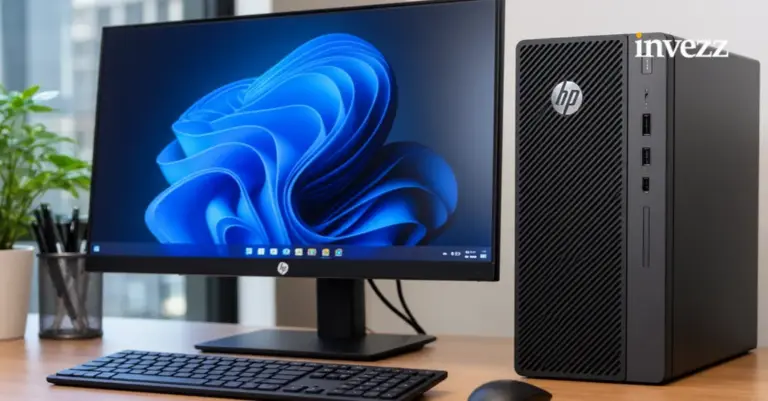
HP Inc. shares surged on Wednesday, emerging as one of the few gainers in the S&P 500 as investors focused on the company’s better-than-expected fiscal 2027 earnings outlook despite concerns about the quality of its latest quarterly results.

HP stock (HPQ) climbed 12% earlier in the session and was around 10% at the time of writing, even as broader US markets fell amid continued weakness in technology stocks and concerns about the artificial intelligence trade.

The PC and printer maker reported fiscal fourth-quarter results late Tuesday, beating Wall Street estimates for revenue and adjusted earnings per share.

However, analysts questioned how much of the earnings outperformance came from temporary benefits, including higher-than-expected tariff refunds.

The company’s fiscal 2027 guidance provided a more positive signal, although brokerages remained divided over its prospects amid weakening PC demand and rising component costs.

HP earnings beat faces tariff refund concerns

HP’s fourth-quarter results exceeded analyst expectations, but Bernstein analysts described the earnings beat as “low-quality” in a note on Wednesday.

According to the brokerage, the outperformance was largely driven by higher-than-expected tariff refunds, which are unlikely to be repeated in future quarters.

The results also highlighted weakness in the PC market, although revenue and per-share profit came in above Wall Street estimates.

HP’s performance contrasted with that of Dell Technologies, which also reported better-than-expected quarterly results and issued an upbeat outlook.

However, Dell shares fell around 5% on Wednesday.

Despite the concerns surrounding HP’s earnings quality, investors appeared encouraged by its forward guidance.

The company forecast fiscal 2027 adjusted earnings of $3.15 to $3.45 per share, putting the midpoint at $3.30. That was slightly above the $3.28 expected by analysts polled by FactSet.

UBS analysts described the guidance as “a prudent guide” but cautioned that HP shares lacked a clear near-term catalyst in either direction. The brokerage maintained a neutral-equivalent rating.

Analyst sentiment also remained cautious. Of the 21 analysts covering HP polled by FactSet, 11 had hold ratings, eight recommended selling the stock and only two had buy ratings.

Morgan Stanley flags PC demand and margin risks

Morgan Stanley maintained its Underweight rating on HP, with a $21 price target, pointing to challenges in the PC market and the company’s ability to restore profitability.

The brokerage said HP’s fiscal 2027 outlook suggested broadly flat revenue, with higher average selling prices and a premium product mix expected to offset declining PC volumes.

However, analysts warned that double-digit declines in PC shipments, rising component costs and elevated channel inventories could make the recovery difficult.

Morgan Stanley also argued that the earnings guidance appeared less impressive after adjusting for tariff refunds and changes in stock-based compensation accounting.

The brokerage’s concerns highlight the pressure HP faces as component costs rise and demand for personal computers weakens.

Wells Fargo and Citi see potential for margin recovery

Other brokerages offered a more constructive assessment of HP’s prospects, focusing on the potential for improving margins and demand for higher-value computers.

Wells Fargo said HP’s results reflected a weakening PC market alongside relatively stable printer demand.

The brokerage identified normalisation in PC channel inventories and a shift towards higher-value products as important factors for the company’s longer-term profitability.

HP has reaffirmed its confidence that Personal Systems segment operating margins bottomed at 3% in the October quarter.

The company expects sequential improvement during fiscal 2027, moving towards its longer-term target range of 5% to 7%.

Potential drivers include slower increases in component costs, pricing measures, product redesigns and a greater focus on premium PCs and AI-enabled devices.

Citigroup also maintained its Neutral rating but raised its price target to $29 from $25.

Citi analysts pointed to stronger commercial PC demand, AI PC adoption and favourable product mix as potential sources of support.

The brokerage expects HP to maintain a stable printing business while gradually recovering Personal Systems margins through fiscal 2027.

However, it also noted that HP’s expectations remained broadly aligned with industry forecasts for a high-single-digit to low-double-digit decline in PC shipments in calendar 2027.

The contrasting assessments suggest that while HP’s earnings outlook has provided near-term support for the stock, investors will continue to monitor PC demand, component costs, and the pace of margin recovery.

AI disclosure: AI tools assisted with research and drafting of this piece. An Invezz editor reviewed the facts, sources and wording before publication. Any opinions or analysis are Invezz’s, not those of an automated system.

The post Why is HP stock one of the top performing stocks in today’s session? appeared first on Invezz

US inflation accelerated further away from the Federal Reserve’s 2% target in October, while stronger-than-expected economic growth reinforced expectations of another interest rate increase in December.

President Donald Trump proposed fresh tariffs on 14 trading partners, adding to global trade tensions, while crude oil prices climbed on renewed geopolitical concerns after Yemen’s Houthis claimed an attack on Saudi Arabia’s largest oil refinery.

Gold prices, meanwhile, tumbled to their lowest level in over a year as persistent inflation strengthened expectations of higher US interest rates.

PCE inflation and GDP growth strengthen Fed rate hike expectations

The US personal consumption expenditures (PCE) price index, the Federal Reserve’s preferred inflation gauge, rose at an annual rate of 3.8% in October, matching economists’ expectations, according to data released by the Commerce Department on Wednesday.

Core PCE inflation, which excludes volatile food and energy prices, increased 3.3%, exceeding forecasts by 0.1 percentage point.

The figures suggest that inflationary pressures remain persistent despite the Fed’s efforts to bring price growth towards its 2% target.

Meanwhile, a separate Commerce Department report showed that the US economy expanded at an annualised rate of 4.3% in the third quarter, 0.9 percentage points above the initial estimate.

The stronger GDP reading reflected upward revisions to investment and consumer spending.

Personal income also increased 0.7% in October, exceeding the 0.4% estimate, while consumer spending rose 0.3%.

Markets were pricing in a 97.8% probability of a 25-basis-point rate increase at the Fed’s December 8-9 meeting.

Economists also warned that persistent inflation and resilient economic activity could leave the central bank considering further increases in 2027.

Trump proposes fresh tariffs on 14 trading partners

US President Donald Trump’s administration proposed new tariffs on 14 trading partners, targeting what Washington describes as structural excess industrial capacity.

The proposed duties follow an eight-month investigation conducted under Section 301 of the Trade Act of 1974.

China faces the steepest proposed burden, with a 20% additional tariff on most imports, potentially bringing combined duties on affected goods to around 45%.

India faces proposed tariffs of up to 25%, which could fall to 17% if the two countries reach a trade agreement.

Vietnam faces rates of up to 35%, potentially declining to 20% under a deal.

The European Union, Japan, South Korea, Switzerland and Taiwan face a combined tariff ceiling of 15%, excluding standard most-favoured-nation duties.

The 14 economies accounted for approximately $2.07 trillion in US goods imports in 2025, representing 60.5% of total imports.

The proposals will not take effect immediately.

Interested parties have until January 5, 2027, to submit comments, with public hearings scheduled to begin on January 25.

The announcement added to market concerns over global trade tensions, with major Asian equity indexes declining sharply on Wednesday.

Oil prices rise after Houthi attack claims

Crude oil prices climbed more than 1% on Wednesday after Yemen’s Iran-aligned Houthis claimed responsibility for an attack on Saudi Arabia’s Ras Tanura oil refinery and Riyadh’s financial district.

Brent crude futures rose 2.90%, to $94.14 a barrel, while US West Texas Intermediate crude gained 1.96%, to $83.66.

Both benchmarks had already advanced more than 2% on Tuesday.

The attack claims raised concerns about potential disruptions to Middle Eastern oil supplies, adding a geopolitical risk premium to prices.

However, expectations of a global supply surplus continued to limit gains.

US crude inventories increased by 1.1 million barrels to 418.9 million barrels in the week ended November 20, according to the Energy Information Administration.

Investors are also watching the November 29 OPEC+ meeting, where ministers will discuss production policies for 2027.

Gold price falls on rate concerns

Gold prices dropped more than 3% on Wednesday, falling below the $3,500-an-ounce threshold as stronger US inflation reinforced expectations of higher interest rates. The precious metal pared some of the losses at the time of writing.

Spot gold was down 0.09% to $3,550.52 an ounce. US gold futures for December delivery fell 0.42% to $3,545.82.

Persistent inflation has strengthened expectations that the Federal Reserve will raise borrowing costs again in December.

Higher interest rates typically weigh on gold because the non-yielding asset becomes less attractive compared with interest-bearing investments.

Gold has now fallen approximately 37% from its record high earlier this year.

Other precious metals also declined sharply.

Spot silver dropped 0.47% to $40.64 an ounce. Platinum fell 0.41% to $1,252.70, while palladium declined 1.77% to $845, having earlier touched its lowest level since 2017.

The latest declines came alongside a broader selloff in US equities, with the Nasdaq falling 4% amid continued pressure on AI-linked stocks and concerns over the potential returns from heavy artificial intelligence investments.

AI disclosure: AI tools assisted with research and drafting of this piece. An Invezz editor reviewed the facts, sources and wording before publication. Any opinions or analysis are Invezz’s, not those of an automated system.

The post Evening digest: US inflation rises, Trump proposes fresh tariffs on 14 economies appeared first on Invezz

Calgary-based Voyageur Pharmaceuticals is preparing to move its innovative mineral extraction technology out of the lab and into the field. The company announced it has completed a mobile pilot plant designed to pull iodine from oilfield produced water, with official field trials scheduled to kick off during the first week of December. This transition marks a critical step for the firm as it gathers necessary data to finalize a feasibility study linked to a significant financial partnership with global giant Bayer.

The operation centers around a self contained unit capable of processing up to 15,000 liters of wastewater per day. By connecting directly to existing water streams at well sites or disposal hubs, Voyageur hopes to prove that its patent pending Mueller process is superior to traditional methods. While conventional blow out towers typically require seven distinct steps, Voyageurs approach streamlines the sequence down to four and eliminates volatile organic compound emissions entirely. Earlier tests conducted in Houston showed promising results, achieving nearly 100 percent purity and high recovery rates from basin waters.

Beyond the technical achievement, there is a strong economic incentive driving the project. Much of the produced water in the United States contains valuable grades of iodine that are currently wasted through reinjection into the ground. Company leadership believes that selling this recovered iodine could help offset the costs associated with treating produce water, which is often a prerequisite for other lucrative processes like lithium recovery or desalination. To expand their testing pool, Voyageur is actively seeking partnerships with landowners and operators across Oklahoma and the Permian Basin.

The stakes for these upcoming trials are high, given the involvement of Bayer, which has already provided over one million dollars toward the current feasibility work. If the studies succeed throughout their conceptual design phases, the two companies may enter negotiations for a long term offtake agreement. The ultimate goal is ambitious but clear: establishing a central facility capable of producing 1,000 metric tons of pharmaceutical grade iodine every year, turning industrial waste into a vital medical resource.

The intersection of artificial intelligence and sustainable energy is creating a powerful catalyst for growth across Canada, as the massive power requirements of advanced computing drive a new wave of investment in clean technology. With the help of AI-driven design and enhanced data analytics, developing scalable energy solutions has become faster and more affordable than ever before. This shift has positioned Canada as a global leader in the sector, leveraging its vast natural resources and supportive government policies to propel several domestic firms toward record highs.

Leading the charge is Alberta-based Tidewater Renewables, which has seen an explosive rise in value this year. The company specializes in low-carbon fuels through its renewable diesel and hydrogen operations in British Columbia. Much of its recent success stems from federal support via the Biofuel Production Incentive, alongside operational efficiency that pushed output beyond design capacity during the third quarter. This momentum culminates in a planned merger where parent company Tidewater Midstream intends to acquire all remaining shares by mid-December.

Further east in Quebec, 5N Plus is capitalizing on the hardware side of the green transition. As a specialist in semiconductors and performance materials used in satellite solar cells and industrial sensing, the firm has reported significant revenue growth fueled by higher sales volumes. While some profit margins have normalized recently, the company continues to scale aggressively, evidenced by a major expansion of its manufacturing facilities in Utah to keep pace with surging international demand.

Rounding out the top performers is Northland Power, whose diversified portfolio spans offshore wind and battery storage globally. The company hit key milestones this year with turbine installations at major projects in Taiwan and Poland, including a strategic power agreement with semiconductor giant TSMC. Despite facing occasional technical hurdles like cable failures at certain wind farms, Northland remains on track with its financial targets and successfully launched its Jurassic battery storage facility in Alberta ahead of schedule and under budget.

A grieving Florida father and newly elected official is fighting back against suggestions that his son’s death was a tragic mistake. Joe Vinson, a county commissioner in Escambia County, insists that the killing of his nineteen year old son, Carey Washington Vinson, was an act of deliberate malice rather than a stray bullet from a careless hunter. The tragedy unfolded while Carey was on a camping trip with friends near the Blackwater River in Holt, where he was struck in the head by gunfire while inside his tent.

According to statements released by Commissioner Vinson, the attackers positioned themselves on the opposite bank of the river and intentionally aimed their weapons toward the occupied sandbar campground. He described a harrowing scene where shooters fired multiple rounds into the camp despite being close enough to see the fire and hear conversations. Most chillingly, Vinson claims that after hearing the terrified screams of campers pleading for them to stop, the assailants fired another volley of shots and laughed as they fled the scene in a vehicle.

Law enforcement officials have confirmed that deputies discovered Carey deceased at the campsite following an emergency call. Santa Rosa County Chief Deputy Randy Tifft noted that witnesses spotted a vehicle parked across the river which sped away immediately after the shooting occurred. Local authorities are now urging anyone who may have noticed suspicious activity around the area to contact investigators as they work to track down those responsible for the crime.

In a heartfelt tribute shared on social media, Commissioner Vinson remembered his son as a thoughtful history student at Florida State University with an adventurous spirit. He spoke fondly of Carey’s athleticism and love for nature, recalling trips to Mount Fuji and Giotto’s Tower. Beyond his achievements, Vinson highlighted his son’s compassionate nature toward animals and marginalized people, calling him a young man with a tender heart who will be deeply missed by his family and girlfriend.

A brief attempt to revitalize diplomatic ties between Switzerland and North Korea has ended abruptly after Pyongyang ordered the closure of the Swiss office in its capital. The sudden collapse follows a sharp disagreement over international sanctions, coming just weeks after Swiss Foreign Minister Ignazio Cassis had formally reopened the mission. In a swift escalation, North Korean authorities declared the head of the diplomatic office, Sylvain Astier, persona non grata and demanded he leave the country within forty eight hours.

The friction began when Switzerland added the Songdowon International Children’s Camp to its sanctions list. This move followed Western allegations that the facility was linked to the transfer of children from Russian occupied territories in Ukraine. North Korea reacted with fury, describing the sanction as an overtly hostile act and a violation of its sovereign rights. Kim Yo Jong, the influential sister of leader Kim Jong Un, argued that the measure unfairly denied children their right to culture and recreation.

For its part, the Swiss Federal Department of Foreign Affairs expressed regret over the decision but stood by its actions. Officials explained that their sanctions policy operates independently of their broader diplomatic efforts, noting that maintaining open channels of communication remains central to their universalist foreign policy even with states where significant disagreements exist. As a result of the expulsion, Switzerland is now coordinating for its representative to return to the embassy in Beijing.

This rupture marks a disappointing turn for one of the few remaining bridges between North Korea and Western nations. Historically, Switzerland has maintained a unique relationship with Pyongyang, bolstered by reports that both Kim Jong Un and his sister attended school in Switzerland during their teenage years in the nineties. However, these personal links appear insufficient against a backdrop of growing tension and North Korea’s deepening military alliance with Russia amidst the ongoing conflict in Ukraine.

Kilmar Ábrego García touched down in Madrid on Wednesday, marking the end of a harrowing legal battle that saw him become a global symbol of opposition to mass deportation efforts. The Salvadoran national arrived in Spain after choosing to leave the United States voluntarily, following a series of events that included a mistaken deportation to El Salvador’s notorious Cecot prison and subsequent government surveillance. For Ábrego García, the journey was more than just a flight across the Atlantic; it was a reclamation of his personal agency.

The transition to freedom became tangible moments before his departure, when Immigration and Customs Enforcement agents met him at the airport to remove his GPS ankle monitor. This gesture served as a poignant conclusion to a period defined by imprisonment and retaliatory prosecution. While he remained silent toward reporters during his arrival in Spain, raising a defiant fist as he entered a waiting vehicle, he later shared his reflections through an advocacy group, stating that he felt happy to finally be leaving with his freedom.

According to representatives from We Are CASA, Ábrego García views his successful exit as proof that justice can prevail even against the world’s most powerful government. He emphasized that despite various attempts by authorities to shame him or place obstacles in his path, he managed to secure his release. His lawyer confirmed that a federal judge ordered the government to withdraw all impediments to his travel, ensuring he was removed from no fly lists just in time for his scheduled departure.

Now reunited with family and supported by a welcoming community in Madrid, Ábrego García believes his story underscores the importance of persistence. Having previously faced severe gang threats in El Salvador—which led a court to initially bar his removal there—he spoke during a press call shortly after landing about the necessity of continuing the fight for others facing similar systemic abuses within the immigration system.