Archive

November 20, 2026

Browsing

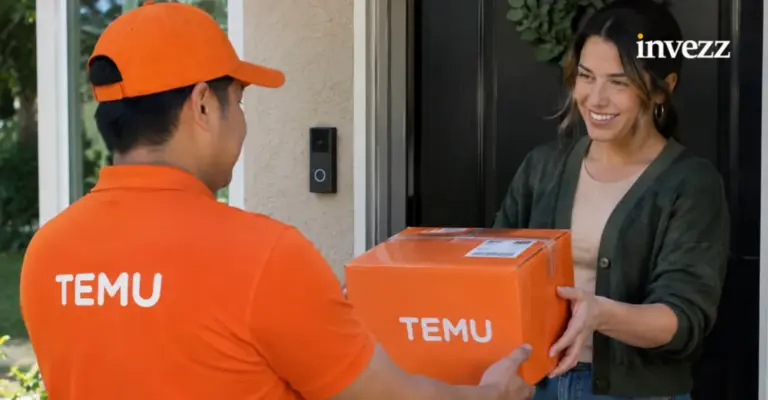
PDD Holdings (PDD) shares are soaring on Nov. 19 after the Temu owner beat third-quarter profit expectations.

The surprise came from the expense side of the ledger.

PDD spent a whopping 5 billion yuan less on sales and marketing than it did a year earlier, even as revenue held steady.

That was sufficient to spark a rally in PDD stock that had lost more than 30% for the year as of its previous close.  

The next question is whether PDD can get sales growing again while keeping more of each yuan it brings in.

PDD stock rips higher on better-than-expected quarter

PDD’s adjusted earnings of 21.04 yuan per American depositary share beat the 18.54 yuan analysts expected by about 13%.

They were nearly unchanged from 21.08 yuan a year earlier.

Wall Street consensus had priced in a more pronounced earnings decline, which helps explain why a broadly flat result could move the PDD shares so sharply.

The savings were sizable.

Excluding share-based compensation, sales and marketing fell to 23% of revenue from 28% a year earlier.

Meanwhile, research and development spending rose to 5.1 billion yuan from 4.3 billion yuan.

PDD still has room to decide where it spends, and the quarter showed how much that choice can matter to margins even when sales stall.

Temu’s cheap-parcel model faces a new test

Flat revenue masked two businesses moving in opposite directions.

Online marketing services and other revenue grew 12%, while transaction services fell 12%.

The latter is a groupwide figure that includes fees tied to Temu, making it worth watching as trade rules change the economics of selling cheap goods across borders.

In July, the European Union introduced a €3 customs duty per product category in qualifying shipments worth less than €150.

A fixed charge takes a larger bite out of a cheap item’s price, leaving less room to pass it on without weakening the bargain.

On Thursday’s call, co-CEO Lei Chen said PDD is expanding shared warehousing and logistics so merchants can stock goods closer to shoppers.

Can PDD shares sustain the post-earnings rally?

PDD ended September with 455.4 billion yuan in cash, cash equivalents and short-term investments, giving it room to fund that logistics push.

Operating cash flow, however, slipped to 43 billion yuan from 45.7 billion yuan a year earlier.

That makes cash generation worth following alongside adjusted earnings as PDD builds out its fulfillment network.

The next earnings report gives investors two concrete markers.

A smaller decline in transaction services would suggest that side of the business is stabilizing.

If the marketing bill also stays near 23% of sales, PDD would be making progress on both fronts.

That combination would give Thursday’s rally something more durable to build on.

AI disclosure: AI tools assisted with research and drafting of this piece. An Invezz editor reviewed the facts, sources and wording before publication. Any opinions or analysis are Invezz’s, not those of an automated system.

The post Temu owner just cut its marketing bill: stock is soaring appeared first on Invezz

Anthropic CEO Dario Amodei and President Daniela Amodei outlined the company’s long-term growth strategy, artificial intelligence (AI) safety priorities and path to profitability following its stock market debut on Thursday.

Speaking to CNBC after the company’s initial public offering (IPO), the siblings discussed how Anthropic intends to balance its rapid expansion with responsible AI development, rising computing costs and the expectations of public-market investors.

Anthropic sees long-term value in balancing growth with AI safety

Dario Amodei said the company’s understanding of scaling laws helped establish the potential of AI models, although the economic implications became clearer only as the technology developed.

He described the company’s approach to pacing AI development as a way to balance technological progress with safety considerations.

“We could drive at 200 miles an hour. Maybe let’s only drive at 90 miles an hour, spend time figuring out how to do that safely,” Amodei said, explaining the company’s approach to developing increasingly capable models.

He argued that this strategy could also benefit investors over the longer term, as companies that establish trust with customers and enterprises could be better positioned to succeed.

“The company that builds the safest, that has trust of the customers and the enterprises of the world, I think that is the company that’s going to be both best for society and, in the long run, I hope, best for the performance of the company,” he added.

Daniela Amodei also highlighted the company’s public benefit corporation structure, which legally requires it to balance shareholder interests with its commitment to public benefit.

She said the structure reflects the founders’ intention to build a company that generates economic value while ensuring its technology benefits society.

She added that Anthropic considers safety a central part of its mission and believes the technology carries both significant opportunities and real risks.

“Anthropic has been a safety company, a safety-first company from day one,” Daniela Amodei said. “The promise is incredible, and the risks are real.”

Frontier AI models and computing costs remain central to strategy

Discussing competition from OpenAI, open-weight models and technology companies developing their own AI systems, Dario Amodei said Anthropic believes the biggest economic opportunities remain concentrated at the AI frontier.

He argued that improvements in cognitive capabilities can unlock applications beyond chatbots, including coding, biology and robotics.

“The economic value of things further along the frontier is so much larger than things earlier in the frontier that that’s where most of the value accumulates,” he said.

He also said developing frontier models gives Anthropic an advantage in producing smaller and more efficient models that can compete on price.

As an example, he cited the company’s Haiku 5.5 model, saying Anthropic had reduced its price by four times compared with Haiku 4.5.

Meanwhile, Daniela Amodei addressed concerns about the infrastructure required to support the company’s expansion.

She said Anthropic wants local communities to have a voice in data centre development and stressed that additional electricity costs should not be passed on to consumers.

“We have already committed to matching whatever price differential might happen from an electricity grid perspective, we pay for,” she said.

Dario Amodei addresses $900B commitments and profitability

Anthropic has $900 billion in infrastructure commitments, which is expected to put pressure on its path to profitability.

Dario Amodei said the spending commitments were spread across several years and don’t look large when compared to the cash the company has and the revenue it’s making.

“If you look at the amount of cash we have on the balance sheet and the amount of revenue that we’re already making per year, suddenly, those commitments don’t seem so large,” he said.

Amodei said Anthropic generally tries to estimate its computing requirements conservatively and purchase additional capacity from the spot market when necessary.

However, he maintained that spending on research and development and training more capable models remained worthwhile because of the economic returns the company had historically generated.

“The returns to that are so high that we are willing to put in place these very large compute spends because, historically, we have seen over and over again that it pays off,” he added.

The CEO also discussed the possibility of using debt financing in the future.

He said Anthropic hoped to achieve an investment-grade credit rating and viewed debt as a financing instrument it could eventually use.

On the subject of partnerships, Daniela Amodei highlighted the company’s relationships with Nvidia, Amazon, Google and Broadcom, saying access to multiple computing partners had been a strategic advantage.

Dario Amodei also said the company was satisfied with its work with SpaceX, which provides computing capacity.

Addressing investor expectations following the IPO, the CEO said Anthropic would remain focused on its underlying business rather than short-term share price movements.

“We always want to under promise and overdeliver,” he said, describing a principle that guides the company’s internal operations and its approach to investors.

He added that the long-term fundamentals of the business mattered more than daily, weekly or monthly market movements.

Anthropic raised $81 billion in its IPO, making it the largest offering of all time.

The company priced its shares at $83 apiece, above its initial guidance range of $70 to $78.

The stock opened on Nasdaq at $111.50, under the ticker ANT.

The stock gave up some gains and was trading at $98.32 at the time of writing.

The strong debut marked an important milestone for the AI company, which has attracted significant investor interest amid growing concerns about the sustainability of technology companies’ AI spending.

Investors looking to buy the shares of the AI Lab can read our guide on how to buy Anthropic stock.

AI disclosure: AI tools assisted with research and drafting of this piece. An Invezz editor reviewed the facts, sources and wording before publication. Any opinions or analysis are Invezz’s, not those of an automated system.

The post Anthropic CEO Dario Amodei defends $900B AI spending and safety strategy after IPO appeared first on Invezz

Nvidia shares NVDA fell 1.5% on Thursday, reversing premarket gains of 1.9% and extending their losing streak to six consecutive trading sessions.

The chipmaker failed to benefit from the stock market debut of Anthropic, despite renewed interest in artificial intelligence stocks following the AI company’s blockbuster initial public offering.

Nvidia stock declined as investors continued to assess concerns surrounding AI infrastructure spending, rising debt and uncertainty following the departure of former chief executive Jensen Huang.

Anthropic shares were trading at $98.74, down from their debut price of $111.50 but still around 19% above the IPO price of $83.

The Nasdaq Composite fell 1.45%, while the iShares Semiconductor ETF, which includes Nvidia, declined 1.35%.

Anthropic debut fails to lift Nvidia shares

Anthropic’s IPO had initially raised hopes of renewed momentum across the AI sector.

The company priced its shares at $83, above its marketed range of $70 to $78, raising approximately $81.3 billion.

The listing could indirectly benefit Nvidia by providing Anthropic with additional capital to invest in computing infrastructure.

Higher spending on AI training and inference could translate into greater demand for Nvidia’s chips.

However, that potential benefit did not provide immediate support for the stock on Thursday.

Nvidia has been under pressure as investors reassess the sustainability of the AI investment cycle.

The stock has fallen 38% since reaching a record closing high of $239.24 on October 6, as concerns about infrastructure spending and financing requirements have weighed on sentiment.

The company also faces uncertainty following Huang’s resignation last week.

Reports concerning allegations involving the former CEO and a woman accused of being a Chinese intelligence asset have added to the negative sentiment surrounding the chipmaker.

Nvidia’s latest earnings and revenue forecast were strong, but the results were not enough to reverse the stock’s decline.

Hedge funds show mixed positioning in Nvidia

Institutional investor filings for the third quarter of 2026 showed that several prominent hedge funds increased or maintained their exposure to Nvidia, although some investors reduced their positions.

Tiger Global raised its Nvidia holdings to 12 million shares from 11.2 million, while Altimeter increased its position to 10.01 million shares from 9.41 million.

Senator Investment Group also expanded its stake to 444,000 shares from 337,000.

Third Point initiated a new position, acquiring 1.5 million shares, while Corvex Management maintained its holding of 16,000 shares.

However, Soros Capital reduced its Nvidia position to 10,000 shares from 77,000.

Soros Fund also cut its holdings to 859,000 shares from 1.06 million.

The mixed positioning suggests that institutional investors had differing views on the chipmaker’s prospects during the quarter.

Analyst upgrades Nvidia to Buy

Despite the recent decline, Seeking Alpha analyst Lee Bailey upgraded Nvidia to Buy from a previously more cautious stance following the company’s third-quarter results.

Bailey cited the earnings beat, improved cash conversion and a higher fiscal 2028 growth outlook.

The analyst believes the market is undervaluing Nvidia’s growth prospects.

Bailey set a 12-month price target of $235, implying approximately 50% upside.

The upgrade suggests analysts still see value in Nvidia despite recent weakness.

However, the stock’s performance suggests that strong financial results and positive analyst views have yet to outweigh concerns about the AI investment cycle and uncertainty surrounding the company’s leadership.

AI disclosure: AI tools assisted with research and drafting of this piece. An Invezz editor reviewed the facts, sources and wording before publication. Any opinions or analysis are Invezz’s, not those of an automated system.

The post Nvidia stock falls for sixth day as Anthropic debut fails to lift shares appeared first on Invezz

Aswath Damodaran, the New York University finance professor widely known as the ‘Dean of Valuation’, estimates Anthropic’s intrinsic value at approximately $76 per share, below the artificial intelligence company’s $83 initial public offering (IPO) price.

In an updated valuation published ahead of the company’s Nasdaq debut, Damodaran estimated Anthropic’s aggregate equity value at approximately $1.35 trillion.

His calculations incorporated the company’s latest financial results, higher computing costs and the possibility of tighter AI regulations.

Anthropic raised $81 billion in its IPO, making it the largest offering of all time.

The company priced its shares at $83 apiece, above its initial guidance range of $70 to $78.

The stock opened on Nasdaq at $111.50 under the ticker ANT giving it a $2 trillion valuation, before giving up some gains to trade at $96.33 at the time of writing.

Damodaran’s assessment suggests that the stock’s offering price was already above his estimated intrinsic value, while its subsequent market price represented a further premium.

Damodaran lowers Anthropic valuation over rising costs and regulatory risks

Damodaran had initially valued Anthropic’s equity at approximately $1.475 trillion in a November 2 analysis.

However, developments over the following 15 days prompted him to revise his assumptions.

The updated prospectus provided third-quarter financial information, while the US midterm election results raised questions about the future economics of the AI industry.

In particular, Damodaran expects data centres to become more expensive to build and AI regulations to become more stringent.

He reduced his assumption for sales generated per dollar of capital invested during the first five years from $3 to $2.75, reflecting higher expected infrastructure spending.

He also increased the anticipated regulatory drag on operating margins, adjusting his assumptions from 5% to 6%, with the target operating margin set at 26.5%.

Damodaran explained that these changes would increase the company’s reinvestment requirements and reduce its expected cash flows.

“I do not want to overreact to the election results, but I do think it is prudent to assume that building data centers will become more expensive,” he wrote.

Share count complicates Anthropic’s intrinsic value calculation

A significant part of Damodaran’s analysis focused on the difficulty of determining Anthropic’s actual share count.

He argued that the presence of multiple share classes, restricted stock, and employee stock options makes it difficult to arrive at an accurate per-share valuation.

According to his analysis, Anthropic’s share count could range from approximately 14.88 billion shares under the primary share method to 17.68 billion under the fully diluted approach.

The company has 1.026 billion restricted shares subject to a four-year vesting period and 1.774 billion outstanding options, of which 1.082 billion are already vested.

Damodaran argued that simply using either the primary or fully diluted share count could produce misleading results.

Instead, he favours an option-adjusted approach, which estimates the value of outstanding options and deducts that amount from aggregate equity value before dividing it by the primary and restricted shares.

“I would suggest viewing the option-adjusted value per share as the number closest to the truth,” he wrote.

His calculations produced a range of values, with the primary share approach generating a higher estimate and the fully diluted method producing a lower one.

The option-adjusted valuation stood at approximately $76 per share, compared with the $83 IPO price.

Anthropic’s growth prospects underpin long-term valuation

Despite the downward revision, Damodaran’s valuation model assumes substantial growth for Anthropic over the coming years.

His assumptions project revenue growth of 190% in the next year, followed by 42% annual growth during years two to five.

Revenue growth subsequently moderates as the company matures.

The model also assumes that operating margins will improve as the company gains pricing power from premium AI products and computing costs grow more slowly than revenues.

Damodaran expects Anthropic’s operating margin to reach 26.5% over time, while its cost of capital gradually declines as the company becomes more established.

His analysis also considers the substantial computing commitments the company has made, including lease, purchase, and infrastructure obligations.

He incorporated a 10% probability of failure into the valuation to account for the risks associated with those commitments.

Beyond the financial assumptions, Damodaran raised concerns about Anthropic’s unusual voting structure.

He noted that a founder-owned share carries 50.01% of voting rights in perpetuity.

He compared the arrangement with government-held golden shares in privatised companies, arguing that concentrating such significant voting power in a single share could create risks.

Overall, Damodaran’s analysis highlights the distinction between Anthropic’s long-term growth potential and the price investors are willing to pay for its shares.

While his model anticipates substantial revenue expansion and improving profitability, higher infrastructure costs, regulatory uncertainty, and share dilution remain important considerations in assessing its valuation.

AI disclosure: AI tools assisted with research and drafting of this piece. An Invezz editor reviewed the facts, sources and wording before publication. Any opinions or analysis are Invezz’s, not those of an automated system.

The post Aswath Damodaran values Anthropic at $76 a share, below its $83 IPO price appeared first on Invezz

Anthropic shares surged 34.3% initially after making their Nasdaq debut, pushing the AI company’s market valuation above $2 trillion.

AMD fell 8% after an investigation by Hunterbrook Media alleged that its firmware was being used by a blacklisted Chinese server maker and related businesses.

Gold dropped to a 14-month low as a stronger dollar and expectations of higher US interest rates weighed on bullion.

Oil prices recovered as reports of tanker disruptions and escalating tensions around the Strait of Hormuz raised concerns about Middle Eastern supply.

Anthropic stock jumps 34% in record IPO debut

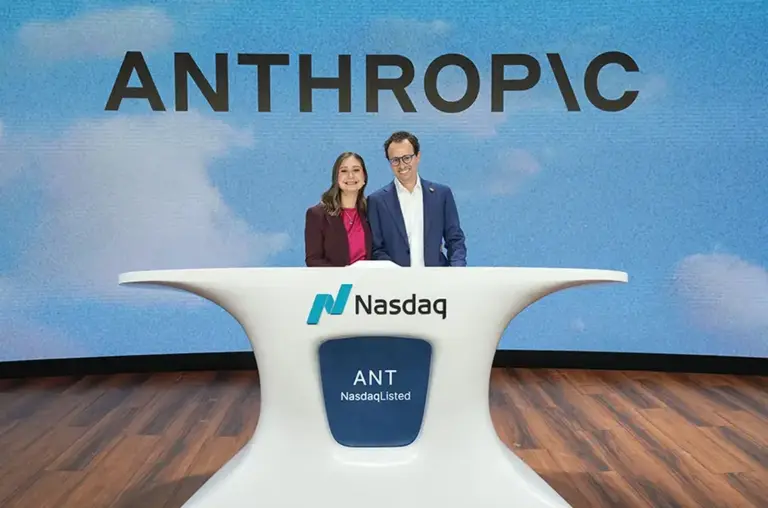
Anthropic began trading on the Nasdaq on Thursday under the ticker ANT, opening at $111.50 a share after pricing its IPO at $83.

The company raised more than $81 billion through the sale of approximately 980 million shares, making it the largest IPO on record.

Shares climbed 34.3% after opening, taking the company’s valuation above $2 trillion. This placed Anthropic behind Apple, Microsoft, Nvidia, Alphabet and Amazon in market capitalisation.

The stock pared gains and was trading 14% up at the time of writing.

The offering was led by Goldman Sachs and Morgan Stanley, with JPMorgan Chase, Citigroup and Barclays also serving as underwriters.

The debut is significant for the wider AI sector because Anthropic is the first major AI laboratory to go public.

Its shares could become a benchmark for investor appetite towards AI companies as markets assess whether substantial spending on models and computing infrastructure can generate sustainable returns.

Co-founders Dario Amodei and Daniela Amodei rang the Nasdaq opening bell.

Dario Amodei reiterated the company’s commitment to AI safety, saying it would not bend to business or political pressure.

Anthropic could also benefit from Nasdaq’s revised index inclusion rules, which allow eligible large-cap companies to qualify for fast-track inclusion in the Nasdaq 100 after 15 trading days.

Intropic estimates that index-tracking funds could purchase around 333 million shares across four dates during the first month.

AMD stock falls 8% on China exposure allegations

AMD shares declined 8% after Hunterbrook Media alleged that the company’s firmware was being used by IEIT Systems, a Chinese server maker placed on the US government’s Entity List in March 2025.

The investigation identified at least six newer versions of AMD firmware in IEIT products after the blacklisting.

It also alleged that three companies in China, Singapore and California offered servers containing closely matching firmware.

Hunterbrook said corporate filings indicated links between IEIT and some of these businesses.

The report also raised questions about AMD licensing income from two Chinese chip ventures previously blacklisted by US authorities.

The allegations have drawn attention to AMD’s exposure to export restrictions at a time when investors have viewed it as an alternative to Nvidia.

Hunterbrook disclosed that its affiliated investment firm was short AMD shares and held long positions in comparable securities.

Gold hits 14-month low as rate expectations rise

Spot gold fell 1.45% to $3,668.27 an ounce, after touching $3,667.19, its lowest level since September 2025. US gold futures settled 1.85% lower at $3,672.50.

A stronger US dollar and expectations of tighter Federal Reserve policy weighed on bullion.

The dollar index reached its highest level since April 2025, making dollar-priced gold more expensive for overseas buyers.

Markets were pricing in a 94% chance of a 25-basis-point rate increase in December and a 6% probability of a 50-basis-point move.

Higher interest rates reduce the appeal of non-yielding assets such as gold.

Silver, platinum and palladium also declined.

Oil rises as Strait of Hormuz risks return

Brent crude gained 0.29% to $92.22 a barrel, while US West Texas Intermediate rose 0.58% to $83.74.

Reports of tanker disruptions in the Strait of Hormuz supported prices after the previous session’s decline, which was driven by rising US inventories and expectations of a supply surplus.

Iran’s navy said two oil tankers hit naval mines and exploded in the strait.

Meanwhile, Houthi missile attacks on Riyadh added to regional tensions.

However, concerns about ample supply continued to limit gains.

Saudi crude exports rose nearly 21% in September to 5.38 million barrels per day, while a larger-than-expected increase in US inventories reinforced concerns about a potential surplus.

The post Evening digest: Anthropic makes historic debut, AMD falls 8% appeared first on Invezz

South Korea’s POSCO Group has solidified its role in the green energy transition by signing a comprehensive long term supply deal with Contemporary Amperex Technology, better known as CATL. This agreement ensures that the world’s largest electric vehicle battery manufacturer will have a steady stream of lithium from 2026 through 2028, though some shipments have already begun moving between the two firms. While specific details regarding pricing and exact volumes remain confidential, the partnership represents a significant win for POSCO as it leverages its industrial expertise to move beyond traditional steelmaking.

By aligning itself with CATL, which currently controls roughly forty percent of the global battery market, POSCO is strategically positioning itself within China’s massive automotive ecosystem. The company has spent years utilizing its experience in raw material sourcing to secure high quality lithium assets early on. According to leadership at POSCO Holdings, this move fits into a broader corporate vision spearheaded by CEO Chang In Hwa to build durable relationships with top tier global clients while locking in essential resource chains before competitors can react.

This latest arrangement comes amid an aggressive expansion streak for CATL, which has recently inked several other strategic deals across various sectors. From collaborating with Seres Group on large scale factory projects to developing specialized aviation batteries for Blue Vector and exploring electrified logistics with Kuehne plus Nagel, the battery giant is rapidly diversifying its footprint. For POSCO, however, this particular alliance serves as a critical anchor in Asia, reinforcing its status as a primary supplier in an increasingly competitive race to power the next generation of electric vehicles.

Gold prices tumbled to a fourteen month low on Thursday, leaving traders questioning if the metal’s recent bull run has finally lost its steam. Spot gold dipped toward 3,668 dollars per ounce as the market reacted to a surging US dollar and mounting fears that the Federal Reserve may implement another interest rate hike before the year concludes. This downward trend has extended to silver as well, which plummeted through several key thresholds to trade below 45 dollars per ounce.

The current slump represents a significant correction from the peak seen in late January when gold hit a record high of over 5,500 dollars. Much of this volatility stems from the Federal Reserve’s commitment to bringing inflation back down to two percent, with recent meeting minutes suggesting that most policymakers favor further tightening. Because gold is priced in dollars, the currency’s climb to its highest level since early 2025 has made the asset more expensive for international buyers, effectively dampening global demand.

Market strategists remain divided on where the floor currently sits. Some analysts warn that if gold breaks below certain support levels, prices could slide as far as 3,500 dollars. However, others view such a dip as an ideal entry point for long term investors, citing massive ongoing purchases by central banks in China and Poland as a stabilizing force. There is also hope among some experts that soaring government debt and expanding money supplies will eventually push prices back toward record highs by next year.

Despite the immediate pessimism fueled by rate hike expectations, observers are keeping a close eye on geopolitical risks and legislative developments within the US Congress. While short term turbulence seems inevitable given the Fed’s hawkish stance on inflation, many believe that systemic economic weaknesses and institutional buying patterns will provide a safety net for precious metals moving into 2027.

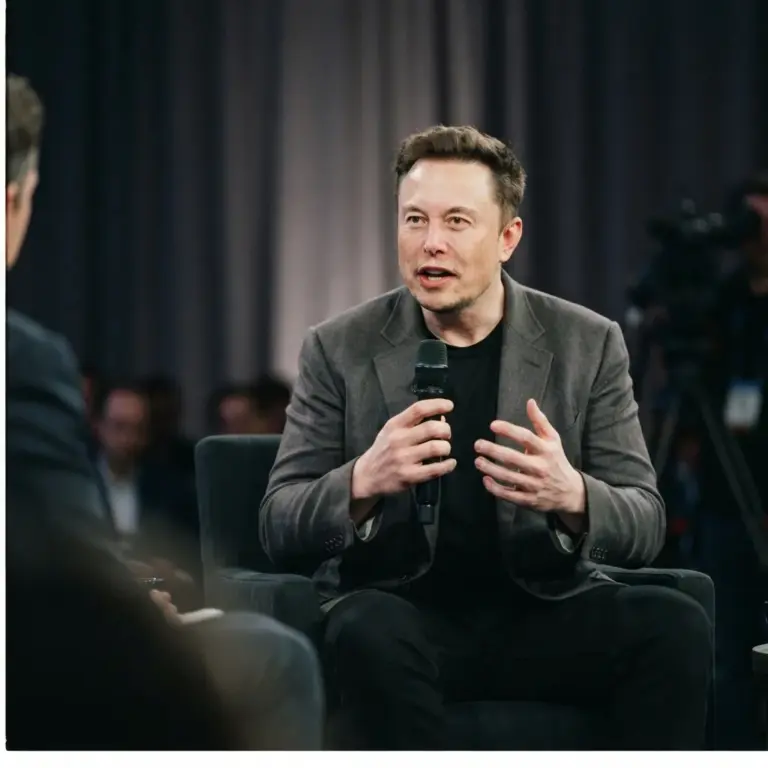
Elon Musk is attempting to redefine his political identity, claiming he lacks any blind adherence to the Republican platform despite pouring hundreds of millions of dollars into GOP coffers. Speaking during an interview for The New York Times DealBook Summit while visiting China as part of a presidential delegation, the tech mogul explicitly stated that he is not MAGA. His comments suggest a desire to distance himself from ideological extremes, even as his financial fingerprints remain all over some of the most aggressive conservative campaigns in recent history.

The billionaire admitted a sense of regret over the sheer volume of his spending, noting that he feels foolish for investing so heavily without always seeing the desired results. Musk pointed toward several high profile losses in Texas and Wisconsin as evidence that American elections cannot simply be bought. While he helped fuel a massive Republican sweep in previous cycles, his efforts were notably ineffective in his own home state, where candidates like Ken Paxton and Greg Abbott fell short. Interestingly, Musk expressed optimism about Democratic Governor elect Gina Hinojosa, describing her as moderate and suggesting that Texas would be fine under her leadership.

This pivot comes at a precarious moment for Musk, who finds himself increasingly targeted by newly elected officials. Incoming Texas Attorney General Nathan Johnson has already pledged to investigate whether SpaceX improperly benefited from state grants intended for rural broadband expansion. At the same time, other Democratic leaders have accused him of trying to treat the U.S. Senate as a personal accessory and exercising undue influence over the executive branch through his role leading the Department of Government Efficiency.

His tenure overseeing those efficiency efforts remains highly controversial, characterized by the termination of over 377,000 federal employees and the wholesale dismantling of agencies like USAID. Despite these deep ties to the current administration’s agenda, Musk continues to insist that both major parties possess significant flaws and argues that his primary motivation was maintaining a balance of power rather than securing total partisan dominance.

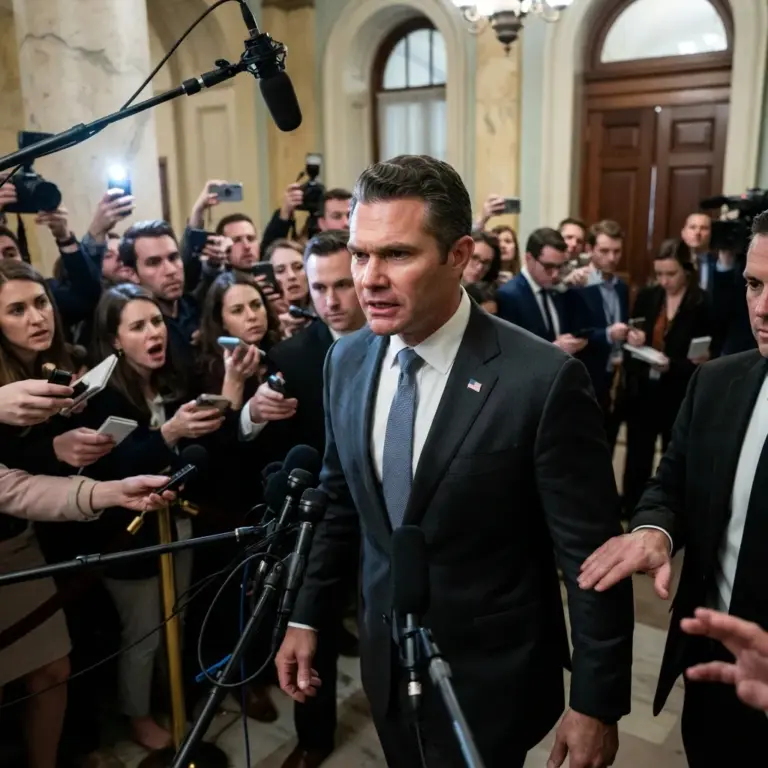
Secretary of Defense Pete Hegseth may have survived a recent bid for impeachment, but he remains firmly in the crosshairs as the political landscape shifts beneath him. While a narrow vote by the current Republican lame duck majority blocked the proceedings on November 10, the victory feels precarious. With Democrats poised to take control of both the House and Senate following a decisive midterm sweep, Hegseth enters a new era of oversight where his leadership of the war on Iran and controversial naval strikes in the Pacific will be scrutinized with renewed intensity.

The clouds gathering around Hegseth are fueled by allegations of international law violations, most notably the devastating bombing of an elementary school in Minab, Iran. Critics argue that while President Trump provides the broad strategic direction, Hegseth and his Pentagon team handle the lethal granularities, such as selecting specific targets for airstrikes. Former diplomatic officials suggest this makes him more than just an executor of orders, placing him at the center of decisions that have resulted in significant casualties and sparked widespread public backlash.

This tension is not limited to opposition parties; friction has leaked into the highest levels of the administration itself. Vice President JD Vance explicitly linked the Republicans’ poor performance in the midterms to the ongoing war effort, suggesting a growing rift over how these conflicts are managed. This internal instability mirrors historical precedents, such as when President George W. Bush replaced Donald Rumsfeld after similar midterm losses tied to unpopular foreign interventions in Iraq and Afghanistan.

Despite these pressures, Hegseth has adopted a posture of total defiance. In a recent address, he dismissed his detractors as deep state radicals engaging in political theater and vowed that neither he nor his policies would back down. By framing himself as a champion for the war fighter against bureaucratic interference, Hegseth is betting that presidential loyalty will outweigh congressional anger. However, with fresh Democratic majorities preparing to swear in soon, his survival may depend less on rhetoric and more on whether Congress decides to aggressively reassert its authority over U.S. military engagements.

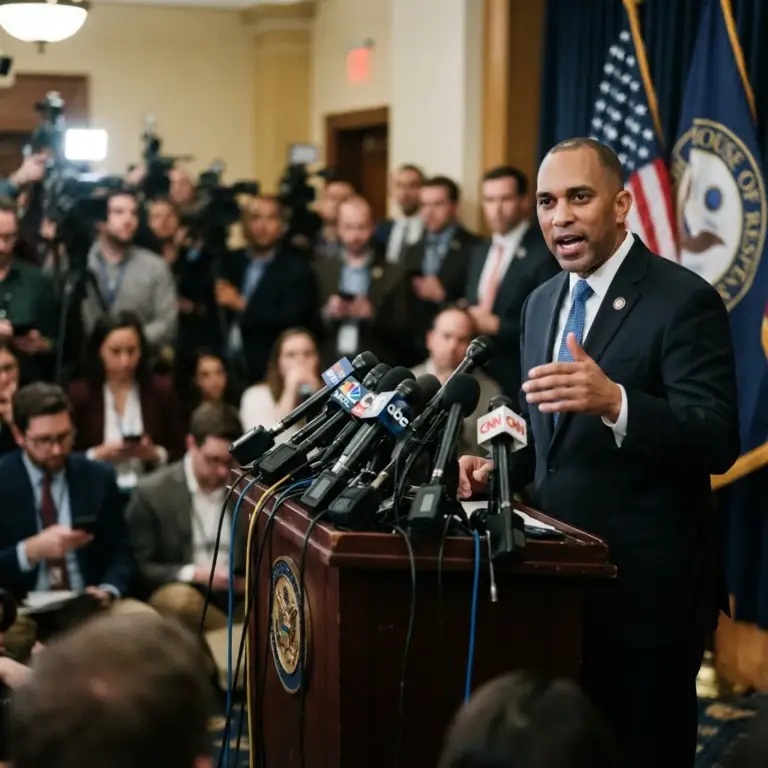
Hakeem Jeffries entered the recent election cycle with a focused, pragmatic roadmap for healthcare, primarily centered on reversing Republican Medicaid cuts and restoring Affordable Care Act subsidies. However, following sweeping Democratic victories that secured commanding majorities in both the House and Senate, the Speaker-designate is significantly broadening his horizons. During a press conference on Tuesday, Jeffries signaled that his administration intends to move beyond mere restoration and toward systemic expansion.

The newly emboldened agenda includes high-profile proposals such as lowering the eligibility age for Medicare and expanding its coverage to include essential services like dental, vision, and hearing care. Jeffries also threw his weight behind universal health coverage for children, a concept known as MediKids championed by Senator Andy Kim. While the finer legislative details remain unwritten, these additions signal a shift from a defensive posture to an offensive strategy aimed at fundamentally altering how Americans access care.

Navigating this ambitious path will require strategic maneuvering in the Senate, where the sixty vote threshold often stalls progressive legislation. When asked if he intended to utilize budget reconciliation—a tool Republicans used for their own healthcare cuts because it bypasses the filibuster—Jeffries remained cryptic but suggested it was a viable option. Even if Congress reaches a consensus, any final package would likely face a showdown with Donald Trump over potential presidential vetoes.

Beyond the legal hurdles, analysts suggest this pivot is as much about political positioning as it is about public health. By championing affordable care and expanded access, Jeffries is unifying his caucus while forcing Republicans onto the defensive ahead of future cycles. In doing so, he has established a policy benchmark that will likely define the expectations for Democratic presidential hopefuls heading into 2028. For Jeffries, returning to the previous status quo is simply not enough; he views this moment as an opportunity to push closer to the long-held goal of universal healthcare access.