Archive

November 20, 2026

Browsing

There is a curious trend sweeping through the upper echelons of Big Tech lately, where billionaires seem to treat their political identities like seasonal fashion trends. Take Alex Karp, the CEO of Palantir, who recently declared himself a lifelong Democrat and perhaps the most authentic progressive on the planet. It is a bold claim coming from a man whose company specializes in aggregating massive amounts of personal data for military and law enforcement agencies, including entities like ICE. For Karp, being a liberal apparently exists independently of whether his software facilitates government raids or predictive policing.

This sudden shift toward the center or the left isn’t isolated to Karp. Elon Musk, despite spending hundreds of millions of dollars supporting right-wing candidates and frequently embracing the aesthetics of the MAGA movement, recently claimed during a New York Times summit that he doesn’t even know what MAGA means. Similarly, Meta has begun aggressively courting Democratic insiders after Mark Zuckerberg spent years navigating a volatile relationship with Donald Trump. From Microsoft to Apple, there seems to be a coordinated effort to hire Democratic lobbyists and polish their images just as regulatory scrutiny reaches a fever pitch.

The disconnect between these executives’ self-proclaimed values and their actual business practices is staggering. While they might reference Marx in conversation or donate to specific campaigns, their corporate footprints tell a different story. Palantir describes itself as providing digital plumbing for data analysis, yet that plumbing often connects disparate streams of private citizen information directly into the hands of state surveillance apparatuses. These leaders operate in a strange paradox where they claim to hold progressive ideals while building the very tools used for systemic overreach and invasive monitoring.

Ultimately, these political pivots feel less like genuine ideological awakenings and more like strategic hedge bets designed to protect their bottom lines regardless of who holds power in Washington. By claiming every possible political identity at once, tech moguls attempt to insulate themselves from accountability while maintaining proximity to whoever signs the checks. It suggests a profound lack of respect for the public’s intelligence, operating under the assumption that we won’t notice when a champion of progress sells the machinery of surveillance to the highest bidder.


Michael LoSapio, President Donald Trump’s choice to head the Cybersecurity and Infrastructure Security Agency, faced intense scrutiny Thursday during a Senate Homeland Security Committee hearing where he refused to acknowledge Joe Biden as the winner of the 2020 election or categorize the events of January 6 as an attack. When pushed by Senator Richard Blumenthal on these foundational questions, LoSapio declined to name the victor of the previous presidential race, stating he would not answer a question about an event from six years ago while noting his only personal involvement was voting for Trump.

The exchange grew more heated when Blumenthal questioned whether the breach of the U.S. Capitol on January 6 constituted an attack. LoSapio explicitly denied it, claiming that based on what he saw in news reports, he did not believe it was an attack. This stance aligns with recent rhetoric from President Trump, who has pivoted from early descriptions of those events as acts of violence to describing them as a day of love, eventually granting pardons to hundreds linked to the unrest.

Senator Blumenthal accused LoSapio of lacking independence and objectivity, suggesting that his refusal to answer direct questions was evidence of coordination with the White House. These tensions highlight a recurring pattern among current nominees; Cody Hiland, picked for a federal appeals court seat, similarly dodged questions regarding the 2020 results just one day prior, citing concerns over potential ethical violations and political motivations.

LoSapio now awaits a committee vote to move his nomination toward a full Senate majority check. The timing is particularly urgent for the administration as Democrats are poised to take control of Congress in January. His appointment comes at a sensitive time for CISA, an agency designed to shield critical infrastructure and elections from foreign interference but which has historically been a flashpoint for conflict between Trump and intelligence officials who verified the integrity of past votes.

Gold and silver mining stocks fell sharply Wednesday as a round of hawkish comments from Federal Reserve officials lifted the U.S. dollar and rattled investors across the metals complex. The selloff hit major producers hard, with Newmont, Agnico Eagle Mines, Barrick Mining, Wheaton Precious Metals and Franco-Nevada all dropping between 4% and 7%.

Spot gold slid in a dramatic reversal, while silver, copper and platinum also came under pressure as traders reassessed the outlook for interest rates. A firmer dollar tends to make dollar-priced commodities more expensive for overseas buyers, and that dynamic quickly turned a cautious session into a broad retreat.

The move served as a reminder of how sensitive metals markets are to the Fed’s tone. Even with demand stories and supply concerns still in the background, a sudden shift in rate expectations can overwhelm those factors and force investors to unwind positions in a hurry.

For mining equities, the damage was amplified because the stocks often rise and fall with the underlying metals. With the dollar surging and prices sinking, shareholders were left looking for a reason to stay in names that have recently been among the market’s more volatile corners.

Walmart is seeing an unexpected surge in popularity among high income earners, driving a significant boost in overall sales and leading the company to raise its financial projections for the year. The retail behemoth reported a five percent increase in global third quarter revenue, reaching nearly one hundred eighty nine billion dollars. This growth suggests that inflation and economic pressures are pushing Americans from all walks of life toward discount retailers in search of better value.

Company leadership attributes much of this success to a seamless integration of physical stores and digital services. E commerce sales in the United States climbed twenty three percent during the last quarter, continuing a long streak of aggressive digital expansion. A major part of this momentum comes from store fulfilled delivery, which saw a massive forty percent jump as more customers opted for rapid shipping options that often arrive within three hours.

The shift is also visible at Sam’s Club, where younger generations are becoming a dominant force. Millennials and Gen Z shoppers now make up more than half of new memberships, with many choosing the premium Plus tier despite its higher cost. To keep these members loyal heading into the holiday season, Walmart has introduced a bundled subscription combining Walmart plus and Sam’s Club Plus at a steep discount.

Chief Executive John Furner noted that while many consumers are feeling the pinch from rising energy costs and other expenses, the company’s focus on convenience and affordability remains their strongest asset. By capturing market share across diverse income brackets through competitive pricing and faster logistics, Walmart enters the final stretch of the year with increased confidence in its profit margins and total net sales.

The landscape of global finance shifted on Thursday as Anthropic made its debut on the Nasdaq, instantly catapulting into the elite tier of the world’s most valuable corporations. With a market capitalization soaring past 2 trillion dollars, the AI laboratory has joined the ranks of tech giants like Apple and Microsoft. Trading activity was frenetic from the opening bell, with volumes quickly eclipsing those seen during SpaceX’s high profile launch in June. By midday, more than 640 million shares had changed hands, cementing Anthropic as the most actively traded stock on the exchange.

The windfall extends far beyond the company founders, sparking celebrations across Silicon Valley and Hollywood. Actor and investor Ashton Kutcher took to social media to congratulate CEO Dario Amodei and his team, marking a massive win for Kutcher’s Sound Ventures. Meanwhile, Menlo Ventures described the event as one of the greatest returns in the history of venture capital, reporting an aggregate position worth approximately 25 billion dollars. Wall Street heavyweights also walked away with significant gains, as Goldman Sachs and Morgan Stanley raked in 550 million dollars in fees for steering the offering.

While investors cheer current valuations, analysts are already looking toward what they call Act Two for the company: cybersecurity. Experts at Wolfe Research suggest that Anthropic could potentially disrupt a 500 billion dollar annual market by replacing manual security teams with autonomous AI agents capable of responding to threats at machine speed. This pivot follows the lab’s strategic efforts to protect critical infrastructure via initiatives like Project Glasswing, though some wonder if this expansion will eventually put them at odds with their existing corporate partners.

Despite its staggering valuation, Anthropic remains a bit of an outlier in terms of how it is run. Operating as a public benefit corporation, it is legally mandated to balance profit with a commitment to developing AI for the long term benefit of humanity. Power remains tightly concentrated among its seven co founders through a special holding company that controls over half of the voting rights. Additionally, an independent Long Term Benefit Trust maintains the authority to appoint or remove board members, ensuring that safety and ethics remain central even as the company scales into a global powerhouse.

Hopeful homebuyers faced another setback this week as mortgage rates climbed for the first time in over a month. According to data from Freddie Mac, the average 30-year fixed mortgage rate jumped to 7.28 percent, rising from 7.11 percent just seven days prior. This represents the sharpest weekly increase since early October and marks a significant climb from the 6.26 percent average seen during the same period last year.

The uptick is largely tied to recent economic signals, specifically a hotter-than-expected inflation report that pushed the 10-year Treasury yield higher. These figures suggest that the Federal Reserve may be forced to raise its benchmark interest rate during its upcoming December policy meeting to keep prices in check. Consequently, borrowing costs have remained stubbornly above 7 percent since late September, reaching heights not seen since 2000 with only one brief exception last year.

This financial pressure is taking a visible toll on an already sluggish real estate market. The National Association of Realtors reported that pending home sales plummeted to a record low in October, dropping nearly 17 percent compared to the previous year. With fewer buyers able to afford monthly payments, transaction volumes have cratered, leaving many potential homeowners sidelined while waiting for rates to cool down.

Lawrence Yun, chief economist for the association, noted that it is perplexing to see sales drop to levels reminiscent of thirty years ago despite massive population growth across the country. He suggested that this trend indicates either a huge amount of suppressed demand currently building up behind the scenes or a grim reality where owning a home is simply becoming unattainable for too many American families.

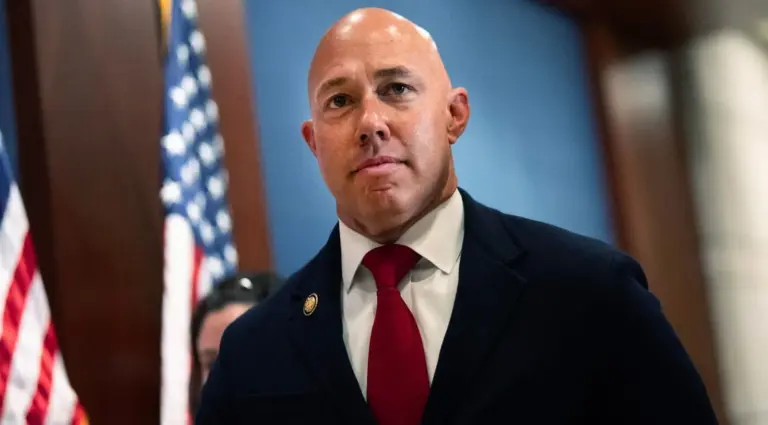
The House Foreign Affairs Committee has uncovered a staggering volume of approved artificial intelligence chip sales to China, sparking a heated debate over national security and the effectiveness of current export controls. Documents released Thursday reveal that the Commerce Department’s Bureau of Industry and Security authorized the sale of more than 879,000 high end chips to various Chinese entities, including tech giants like Alibaba and Tencent. Lawmakers expressed alarm that some of these approvals went to companies specifically flagged by the Department of Defense as military organizations, suggesting a significant lapse in enforcement.

Representative Brian Mast and other committee members highlighted particularly troubling entries in the records, pointing to firms such as Maginfra and New Matrix. According to reports, these entities may be mere smuggling fronts with empty offices used to bypass sanctions and funnel sensitive technology into the hands of adversaries. This revelation comes amidst a broader surge in demand, with millions of shipment requests filed by industry leaders like Nvidia and AMD between December and May, leaving critics wondering if the administration is prioritizing corporate profits over technological dominance.

The political fallout coincides with a swirling scandal involving former Nvidia CEO Jensen Huang, whose recent resignation followed allegations of an affair with a suspected Chinese spy. Investigators are currently probing whether this relationship facilitated the diversion of restricted hardware through foreign intermediaries like Megaspeed in Singapore. As part of the ongoing investigation, both Huang and Commerce Secretary Howard Lutnick are expected to testify soon to explain why certain loopholes remained open while thousands of powerful processors flowed across borders.

In response to the mounting pressure, the Commerce Department recently issued an emergency rule intended to stop Chinese firms from leasing computing power via third party data centers. However, many on Capitol Hill argue that reactive measures are insufficient. Both Republicans and Democrats are now pushing for sweeping new legislation that would tighten restrictions on advanced semiconductors, aiming to ensure that American innovation does not inadvertently fuel the military capabilities of global competitors.