Archive

November 17, 2026

Browsing

Disney (DIS) reports fiscal Q4 earnings before the opening bell on November 17, with Wall Street expecting earnings of roughly $1.68 per share on revenue of $25.16 billion.

That implies more than 50% EPS growth from a year ago; but investors may be asking the wrong question.

After years of focusing on streaming losses, subscriber counts, and cord-cutting fears, Disney’s upcoming report could reveal whether the entertainment giant has entered a new phase: one where streaming, parks, and capital returns work together to drive sustained earnings growth.

Why subscriber count is less significant now for Disney

The most important number for DIS shares on Tuesday may not be subscriber growth at all.

During its most recent quarter, Disney’s streaming business continued its profitability turnaround, with entertainment streaming revenue rising 11% and margin expanding into double-digit territory.

Management has repeatedly emphasized its goal of maintaining at least a 10% streaming margin, a milestone that would have seemed ambitious only a few years ago.

Investors should focus less on how many subscribers Disney adds and more on whether pricing power remains intact.

Disney has increasingly shifted from a “growth at all costs” strategy toward monetization through higher subscription prices, advertising-supported tiers, and tighter platform integration between Disney+ and Hulu.

If operating margins continue expanding, the streaming segment could become a meaningful contributor to earnings rather than merely a source of revenue growth.

That distinction matters because profitable streaming businesses generally command higher investor confidence than subscriber-chasing platforms.

Parks segment remains significant for DIS stock

While headlines often focus on Disney+, the Experiences division remains the company’s financial backbone.

In Q3, the segment generated nearly $10 billion in revenue – with domestic attendance rising 3% and per-capita guest spending increasing 4%.

Revenue from parks, cruises, and experiences came in up 10% despite broader concerns about consumer spending and travel demand.

That outperformance is particularly notable because several travel-related businesses have seen signs of softer consumer demand.

Disney, however, continues to benefit from premium pricing, cruise expansion, and strong brand loyalty.

Investors should watch management’s commentary on forward bookings and guest spending trends.

If those metrics remain resilient, Disney could further strengthen the narrative that its parks business is less cyclical and more durable than many analysts once assumed.

Options traders expect fireworks, but guidance matters more

Options analysis highlights an interesting setup ahead of the quarterly release.

Various estimates suggest traders are pricing in about a 6.2% move following the report, implying expectations for a meaningful post-earnings reaction.

Yet history suggests the headline numbers may not be the decisive factor.

Disney has beaten EPS estimates in eight consecutive quarters, meaning investors largely expect another strong print.

Instead, the real catalyst could be fiscal 2027 guidance.

Management has already raised its fiscal 2026 share-repurchase target to at least $9 billion while maintaining confidence in earnings growth and streaming profitability.

If Disney couples another earnings beat with stronger cash-flow expectations and a shareholder-friendly capital allocation outlook, investors may begin viewing the company less as a turnaround story and more as a mature compounder.

That shift in perception could prove far more important for Disney shares than any single quarter’s earnings result.

AI disclosure: AI tools assisted with research and drafting of this piece. An Invezz editor reviewed the facts, sources and wording before publication. Any opinions or analysis are Invezz’s, not those of an automated system.

The post Disney earnings preview: why subscriber count may not be most important number appeared first on Invezz
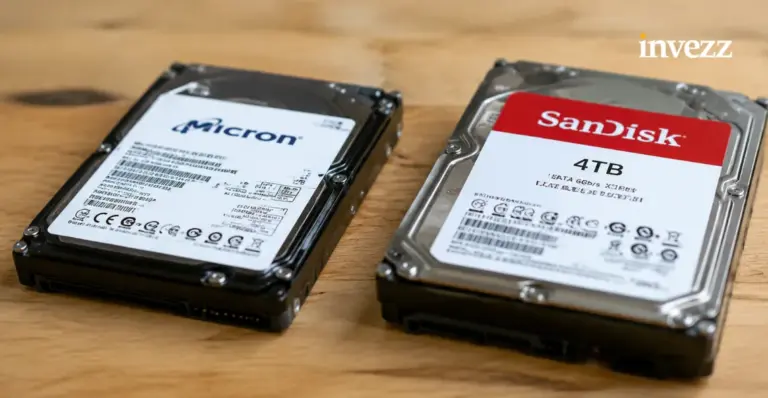
Micron Technology MU and SanDisk shares fell sharply on Monday as uncertainty surrounding Nvidia’s leadership continued to weigh on investor sentiment.

Micron shares dropped around 7.5% in early trading, while SanDisk declined 8.5% as part of a broader pullback in AI-related semiconductor stocks.

Pressure also came from a report by semiconductor research firm SemiAnalysis, which suggested that the artificial intelligence infrastructure boom could soon begin to lose momentum.

Why are Micron and SanDisk stocks falling?

The decline in memory stocks was driven partly by lingering uncertainty surrounding Nvidia following the resignation of longtime CEO Jensen Huang amid controversies involving multiple alleged affairs.

One of the reported relationships involved a Chinese businesswoman whom US authorities suspect of acting as an intelligence asset for Beijing.

Micron is a key supplier of high-bandwidth memory (HBM) and other DRAM used alongside Nvidia’s AI accelerators in data centers.

Any slowdown or shift in AI infrastructure spending linked to Nvidia’s leadership transition could therefore weigh on sentiment toward memory manufacturers.

SanDisk also plays an important role in the AI ecosystem as a supplier of NAND flash memory and enterprise solid-state drives (SSDs).

Nvidia is not just a major chipmaker but also a significant financier in the broader AI industry, making developments surrounding the company relevant to investors across the semiconductor ecosystem.

The broader market also opened lower, with the Philadelphia Semiconductor Index falling more than 3% in early trading.

Korean memory chipmakers struggled in parallel. Samsung Electronics fell roughly 4.5%, while SK Hynix dropped about 6.7% in Seoul trading, contributing to a decline of more than 3.5% in the Kospi index.

Both companies face similar questions surrounding AI demand and the uncertainty stemming from Nvidia’s leadership crisis.

SemiAnalysis cuts AI spending forecasts

Adding to the pressure, semiconductor research firm SemiAnalysis said over the weekend that the AI boom could be heading toward a slowdown.

The firm cut its estimate for global AI accelerator capital expenditure in 2028 to $758 billion from $1.054 trillion, a reduction of 28%.

It also lowered its 2030 forecast to $923 billion from $1.531 trillion, marking a reduction of approximately 40%.

SemiAnalysis cited three major reasons for the sharp revisions.

First, the firm said demand-side momentum had weakened, raising questions about the pace at which AI infrastructure investments would continue expanding.

Second, the financing environment has tightened, with both debt and equity investors showing markedly less interest in funding AI projects.

This could make it more difficult for companies building data centers and expanding computing capacity to secure the capital required for their plans.

Third, the changing political environment and increased regulatory scrutiny could slow the pace of AI infrastructure development, potentially affecting the rollout of new data centers and related projects.

The revised forecasts add to concerns that the enormous investments made by technology companies in AI infrastructure may not translate into demand at the pace previously anticipated.

Micron faces additional pressure

Adding another layer of uncertainty for Micron, a US federal judge in California on November 14 rejected a motion to dismiss a class-action antitrust lawsuit against Micron, Samsung Electronics and SK Hynix.

The lawsuit alleges that the three companies, which collectively control more than 90% of the global DRAM market, coordinated to restrict supplies of conventional memory products, including DDR4 and DDR5.

The plaintiffs allege that the companies’ actions pushed memory prices sharply higher while shifting manufacturing capacity toward high-bandwidth memory used in AI infrastructure.

With the judge rejecting the motion to dismiss, the case will now proceed, adding another potential overhang for Micron as investors weigh the broader challenges facing the memory chip industry.

AI disclosure: AI tools assisted with research and drafting of this piece. An Invezz editor reviewed the facts, sources and wording before publication. Any opinions or analysis are Invezz’s, not those of an automated system.

The post Why Micron and Sandisk stocks are falling on Monday? appeared first on Invezz

Billionaire investor Ron Baron maintains that SpaceX (SPCX) could eventually be worth as much as $30 trillion – a prediction that appears wildly ambitious at first glance.

A move from about $1.9 trillion today to $30 trillion would require extraordinary execution across several business lines.

Yet history shows investors have repeatedly underestimated scale of transformative technologies, and SpaceX stock now sits at the intersection of “multiple trillion-dollar opportunities” – spanning launch services, satellite connectivity, AI, and advanced computing infrastructure.

Why Baron is uber bullish on SpaceX stock

Based on current valuations, SpaceX would need to compound at more than 30% annually over a decade to approach a $30 trillion market cap.

Critics of Baron’s forecast are correct about one thing – sustaining that sort of annualized returns from an already massive valuation is exceptionally difficult.

On the flip side, however, investors must remember that similar skepticism surrounded companies such as Amazon, Nvidia, and Tesla during their early hypergrowth phases.

Each appeared expensive relative to contemporary earnings before new markets dramatically expanded their addressable opportunities.

The central question is not whether SpaceX can continue selling rocket launches, but whether the company can leverage its tech lead to capture multiple high-growth industries simultaneously.

If Starlink, AI infrastructure, orbital computing and next-gen launch systems all scale successfully, Baron’s forecast for SPCX shares may ultimately prove less demanding than it appears.

SPCX shares to benefit from more than space business

Baron’s thesis for SpaceX shares increasingly rests on businesses that extend far beyond aerospace.

Starlink has become a global connectivity platform, serving consumers, enterprises, governments and defense customers.

At the same time, investors are paying increasing attention to the firm’s AI ambitions following its integration with Musk’s broader artificial intelligence ecosystem.

Several analysts now view computing infrastructure as the largest long-term value driver.

Rather than relying solely on satellite revenue, SpaceX is investing heavily in terrestrial AI data centers while also advancing plans for orbital computing facilities that could become commercially viable later this decade.

This shift dramatically expands the company’s potential revenue pool.

The appeal is straightforward.

Global demand for AI compute continues to outstrip supply, creating opportunities for operators capable of deploying large-scale infrastructure.

If SpaceX successfully combines launch economics, energy access, networking capabilities and AI services under one umbrella, investors could be looking at a business model unlike anything currently represented in public markets.

That possibility helps explain why some long-term shareholders remain comfortable with seemingly aggressive valuation assumptions.

Bernstein reiterates bullish view on SpaceX

Wall Street is not universally embracing a $30 trillion future, but analysts remain bullish on SPCX stock nonetheless.

Bernstein recently reiterated its Outperform rating on SpaceX and raised its price target to $268, citing the firm’s expanding AI infrastructure strategy and faster-than-expected computing capacity buildout.

Bernstein expects SpaceX’s terrestrial computing footprint to grow substantially over the next several years while also assigning value to planned orbital data-center initiatives.

The investment firm’s updated forecasts include significantly higher revenue expectations as the company scales both AI and connectivity operations.

Importantly, the firm’s bullish thesis does not require SpaceX to achieve its most ambitious management targets or complete a merger with Tesla.

Bernstein’s target reflects confidence that investors may still be underestimating the commercial potential of SpaceX’s emerging AI ecosystem.

While risks remain substantial, including execution challenges, capital requirements, and technological hurdles, Bernstein’s outlook suggests that Wall Street continues to see meaningful upside.

For investors evaluating Ron Baron’s $30 trillion prediction, that may be the strongest evidence yet that the idea belongs in the realm of possibility rather than fantasy.

AI disclosure: AI tools assisted with research and drafting of this piece. An Invezz editor reviewed the facts, sources and wording before publication. Any opinions or analysis are Invezz’s, not those of an automated system.

The post Ron Baron’s $30T forecast for SpaceX: possibility or fantasy? appeared first on Invezz

CoreWeave stock CRWV declined 6% on Monday as technology stocks continued to fall on Monday. Nvidia’s fall also affected CoreWeave’s decline, as Nvidia holds stakes in the neo cloud company.

Fellow neo cloud company Nebius also fell 6.7% in the session after analysts cut the target price on the stock.

CoreWeave shares have come under pressure throughout 2026, falling almost 30% amid concerns about the company’s debt levels and substantial capital spending requirements.

However, Nvidia’s leadership transition has added another layer of uncertainty for investors, given the chipmaker’s financial and strategic relationship with CoreWeave.

Nvidia leadership uncertainty raises concerns for CoreWeave

Nvidia’s leadership shock has emerged as a key factor weighing on sentiment towards CoreWeave.

The decline comes days after Nvidia announced the resignation of chief executive Jensen Huang and began searching for his successor.

Huang’s departure has raised questions about Nvidia’s future hardware roadmap and its financing commitments to companies that rely heavily on its GPUs.

CoreWeave’s AI cloud business is particularly exposed to these developments because of its dependence on Nvidia hardware.

Investors are also assessing the potential implications of tighter US restrictions on advanced chip exports to China.

Nvidia is expected to report revenue of $109.08 billion and earnings per share of $2.48.

The upcoming results have become an important event for investors as they assess the company’s growth outlook following Huang’s departure.

Concerns about a potential pullback in Nvidia’s investments and expansion plans could also create financing challenges for AI cloud providers such as CoreWeave.

Goldman Sachs analyst Gabriela Borges lowered her price target on CoreWeave to $101 from $106 but maintained a Buy rating on the shares.

“We remain Buy rated and adjust our 12-month price target to $101 (from $106) based on 15x EV/EBIT to CoreWeave’s SNTM non-GAAP EBIT,” the Goldman Sachs analyst said.

Nvidia’s financial and commercial ties with CoreWeave

Nvidia has established a significant financial and strategic position in CoreWeave through a series of investments.

The chipmaker first invested in CoreWeave during its 2023 Series B funding round.

It held approximately 6% of the company when CoreWeave went public in 2025.

Nvidia subsequently invested another $2 billion in January 2026, increasing its stake to approximately 9%.

Nvidia had committed more than $40 billion to AI investments in 2026, with Huang playing an active role in those deals.

The relationship extends beyond equity investments.

Nvidia has also committed to purchasing CoreWeave’s unsold cloud-computing capacity under a multi-year agreement.

The agreement involves at least $6.3 billion in purchases through April 2032.

These commitments have helped support CoreWeave’s business model, but they also highlight the company’s dependence on Nvidia’s financial and commercial support.

Huang previously defended CoreWeave’s financing position

Huang had publicly defended CoreWeave’s financial position during its October stock and bond selloff.

At the time, he said CoreWeave did not need “a backstop or a bailout” and argued that its “cost of capital is actually decreasing.”

His comments sought to address concerns that CoreWeave’s high borrowing costs could eventually force Nvidia to provide additional financial support.

However, Huang’s departure has raised questions about whether the same level of strategic and financial support will continue under Nvidia’s future leadership.

For CoreWeave investors, the key issues remain the company’s ability to finance its substantial infrastructure expansion, manage its debt and maintain access to Nvidia’s GPUs.

AI disclosure: AI tools assisted with research and drafting of this piece. An Invezz editor reviewed the facts, sources and wording before publication. Any opinions or analysis are Invezz’s, not those of an automated system.

The post CoreWeave stock falls 6% as Nvidia leadership uncertainty weighs appeared first on Invezz

Meta Platforms META shares fell about 2.4% on Monday, extending a multiweek decline for the Facebook parent.

The stock has lost roughly 12% over the past month as investors weigh its rising debt load and growing concerns about the sustainability of the artificial intelligence boom.

The decline comes amid aggressive borrowing to finance AI investments and mounting legal pressures.

The broader market also remained under pressure, with the tech-heavy Nasdaq slipping more than 2%.

Meta continues to spend big

In early November, Meta completed approximately $25 billion in bond sales, comprising a $15 billion dollar-denominated offering and a €9 billion euro bond sale.

The borrowing comes as Meta ramps up investment in data centers and AI infrastructure, with its 2026 capital expenditure guidance standing at $135 billion to $145 billion.

The latest issuance adds to the company’s approximately $84 billion in outstanding debt as of September 30.

The concerns follow Meta’s third-quarter results, reported in October.

Revenue rose 26% year over year to $64.60 billion, but free cash flow turned negative at $2.12 billion as heavy spending continued. A large legal charge also weighed on profits.

Legal risks add to investor concerns

Legal pressures are also playing a part.

Italy’s data protection authority fined Meta €805 million, approximately $887 million, over its access to photos, videos and related metadata in the galleries of Android users through a Facebook feature.

The regulator said approximately 20 million users in Italy could be affected. Meta strongly disagreed with the findings and said it would appeal.

Separately, a coalition of nonprofits filed a lawsuit in San Francisco seeking an injunction against Meta and other major AI developers, including OpenAI, Anthropic, Google and SpaceX entities.

The complaint argues that rapid AI advancement creates catastrophic risks and seeks restrictions on the development and deployment of more advanced AI models.

The lawsuit adds to growing scrutiny of the AI industry and the potential regulatory challenges facing companies investing heavily in frontier models.

JPMorgan adds Meta to its focus list

Despite the concerns surrounding Meta’s spending and legal exposure, Wall Street remains constructive on the company’s longer-term growth prospects.

JPMorgan added Meta shares to its focus list last week, citing the potential for AI to strengthen its advertising business and create new revenue opportunities.

“We see continued strong revenue growth for Meta on AI-driven ad improvements, & we are bullish on Muse expansion & monetization potential, along w/the enterprise opportunity for Meta Model API & Muse Code,” the brokerage said.

The assessment suggests that JPMorgan sees opportunities beyond Meta’s core advertising business, particularly as it expands its AI products and enterprise offerings.

The broader technology and AI sector also remained under pressure on Monday amid continued fallout from the leadership controversy and resignation at Nvidia.

Uncertainty surrounding the chipmaker has weighed on related stocks as investors reassess AI spending plans and supply-chain risks.

AI disclosure: AI tools assisted with research and drafting of this piece. An Invezz editor reviewed the facts, sources and wording before publication. Any opinions or analysis are Invezz’s, not those of an automated system.

The post Meta shares slide over 2% on Monday: here’s why appeared first on Invezz

Gareth Soloway, the chief market strategist at VerifiedInvesting.com, is casting a wide net over the financial horizon as he reveals his specific price targets for several major assets heading into 2027. By analyzing trends across gold, silver, oil, and Bitcoin, Soloway aims to provide investors with a roadmap for navigating the volatility of both traditional commodities and digital currencies over the next few years.

While his eyes are set on the long term, Soloway remains focused on immediate technical levels for gold that could trigger significant movement. He believes that maintaining a position above 3,885 dollars per ounce is currently the most critical factor for bulls to watch. According to Soloway, breaking through that threshold along with the 3,900 dollar mark would drastically shift the probability toward further gains.

The strategist indicated that if these key resistance levels are cleared, he sees a clear path forward for the precious metal. In fact, he noted that once those markers are surpassed, he intends to become an aggressive buyer as he looks toward higher valuations. This combination of short term tactical entries and multi year projections highlights his current confidence in hard assets as hedges against broader economic uncertainty.

Canada’s biotechnology landscape is currently witnessing a surge of high stakes innovation, with several homegrown firms capturing investor attention through breakthroughs in neurology and specialized medicine. According to recent performance data from the Investing News Network, a handful of companies listed across the TSX, TSXV, and CSE have seen remarkable year over year growth as they push toward critical regulatory milestones. Leading the pack is BetterLife Pharma, which saw its value skyrocket by over 228 percent thanks to its work on non hallucinogenic derivatives intended to combat chronic migraines and cluster headaches. With a fresh infusion of 100 million dollars in capital, the firm is now pivoting toward essential human trials under the gaze of the US Food and Drug Administration.

The trend toward psychedelic medicine continues to gain momentum via PharmAla Biotech, which has successfully carved out a niche supplying clinical grade ingredients for PTSD treatments globally. By expanding its reach into Australia and New Zealand while securing key patents for cost effective manufacturing, PharmAla has positioned itself as a primary infrastructure provider for an emerging class of psychiatric care. Meanwhile, Fennec Pharmaceuticals is seeing substantial financial returns from Pedmark, a unique injection designed to protect children from hearing loss during chemotherapy. Their success isn’t limited to North America; strong second quarter sales figures have paved the way for aggressive expansion efforts into the Japanese market.

Rounding out the top performers are those focusing on precision delivery and diagnostics. Eupraxia Pharmaceuticals is drawing interest with its proprietary Diffusphere technology, which allows medication to be released slowly at a targeted site in the body—a method showing promising long term remission rates for esophageal inflammation. On the diagnostic front, Microbix Biosystems remains a steady player by providing essential proteins and antigens used by test makers worldwide. Despite some volatility in Chinese distribution markets, Microbix continues to narrow its losses and expand its footprint among global laboratory suppliers, illustrating a diverse appetite for both moonshot therapies and foundational medical tools within the Canadian ecosystem.

President Donald Trump is embarking on a high stakes tour of Asia this week, following a well worn political playbook used by American leaders for decades to shake off domestic setbacks. By stepping onto the global stage, Trump aims to pivot away from recent electoral losses and internal West Wing turmoil, utilizing the inherent prestige of the presidency to reset his public image. This strategy of seeking a geopolitical pick me up dates back to the Reagan era, serving as a reminder to both citizens and foreign rivals that despite legislative hurdles at home, the commander in chief remains the sole architect of U.S. foreign policy.

The centerpiece of the journey is an unprecedented three way summit featuring the leaders of China and Russia. In a display of sheer diplomatic theater, Trump will sit alongside figures whose absolute authority within their own borders stands in stark contrast to his current struggles with a constrained political mandate in Washington. While critics suggest these meetings might highlight his vulnerability, supporters argue that engaging directly with such powerful adversaries reinforces his standing as a global heavyweight capable of negotiating on the world’s biggest stages.

However, several complications threaten to cloud the itinerary. A brewing scandal involving artificial intelligence chips and allegations of Chinese espionage looms over his scheduled visit to Shenzhen, adding tension to his interactions with President Xi Jinping. Furthermore, ongoing conflicts in Iran and Ukraine continue to strain global markets and inflate fuel prices across Asia, ensuring that regional leaders will likely press Trump for concrete solutions regardless of whether those topics are officially on the agenda.

Beyond the diplomacy, there are lingering questions regarding Trump’s personal momentum entering this trip. Recent reports of air travel mishaps and calls from within his own party to shuffle cabinet members suggest a level of instability surrounding his inner circle. Accompanied by Elon Musk, whose massive financial investments failed to secure Republican majorities this month, Trump must now prove that he still possesses enough political capital to deliver meaningful trade deals and maintain American influence in a region often neglected by previous administrations.

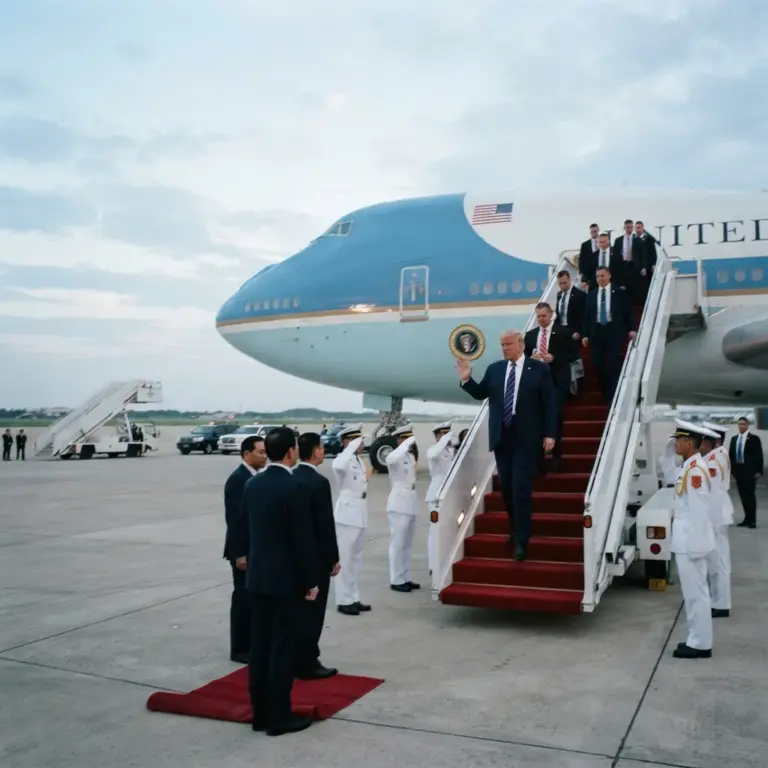
President Donald Trump departs for Asia on Monday, embarking on a diplomatic mission designed to pivot the national conversation away from a series of bruising domestic setbacks. After remaining largely out of the public eye following a chaotic period marked by nationwide air travel disruptions and significant Republican losses in the midterm elections, the president is seeking a strategic reset. His itinerary begins in Manila, where he is expected to secure a trade agreement with Thailand and reassure Southeast Asian allies of American support against regional aggression, before moving toward the high-tech landscape of Shenzhen.

However, the trip arrives amid a cloud of controversy surrounding Nvidia and its former CEO, Jensen Huang. The tech giant has come under intense scrutiny following Huang’s resignation after admitting to an affair with an alleged Chinese operative. While White House officials suggest that Trump does not intend to bring up the scandal during his meetings with President Xi Jinping, critics are questioning why the Commerce Department delayed restricting chip exports to firms linked to the suspected spy. Even Treasury Secretary Scott Bessent has hinted that a deeper investigation into Nvidia’s compliance culture is necessary, adding another layer of tension to an already volatile relationship between Washington and Beijing.

The climax of the journey will be a historic and unprecedented trilateral summit featuring Presidents Xi and Vladimir Putin. This rare gathering aims to address global nuclear stockpiles, though U.S. officials have signaled that Russia’s five-year war in Ukraine will remain off the table for these specific discussions. Despite this narrow focus, the meeting occurs against the backdrop of escalating tensions with Iran, a conflict many believe contributed to the recent electoral shift in Congress. With Elon Musk accompanying him on the trip—Musk himself becoming a primary target for investigations by the incoming Democratic majority—the tour represents a complex balancing act between securing global stability and managing deep political fractures at home.

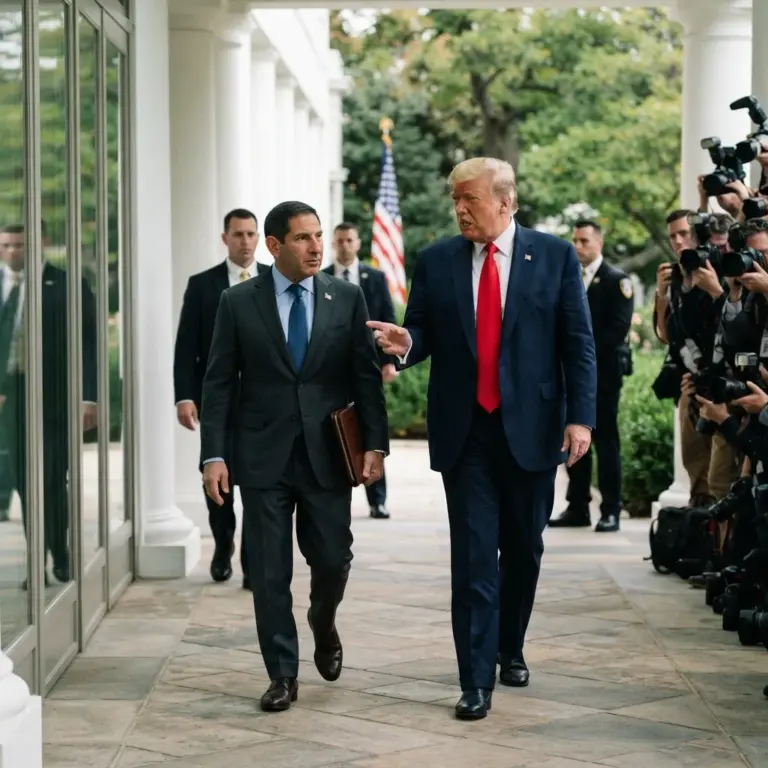
President Donald Trump signaled his unwavering support for Commerce Secretary Howard Lutnick on Monday, dismissing suggestions that the official should be removed from his post. The decision comes as political pressure mounts regarding the administration’s handling of high tech exports, specifically concerning whether Lutnick failed to implement sufficiently strict limits on the sale of advanced semiconductor chips to China.

The controversy centers on Nvidia and the broader challenge of preventing cutting edge American technology from reaching strategic adversaries. Critics have argued that a lack of aggressive oversight has left gaps in national security, suggesting that a change in leadership at the Department of Commerce might be necessary to tighten enforcement. Despite these concerns, Trump made it clear that he sees no reason to shake up his cabinet at this time.

By backing Lutnick, the president is effectively shutting down speculation about internal friction over trade policy and chip diplomacy. This public show of confidence suggests that the White House remains committed to its current strategy, even as lawmakers and industry analysts continue to debate the balance between commercial interests and geopolitical safeguards.