Archive

November 17, 2026

Browsing

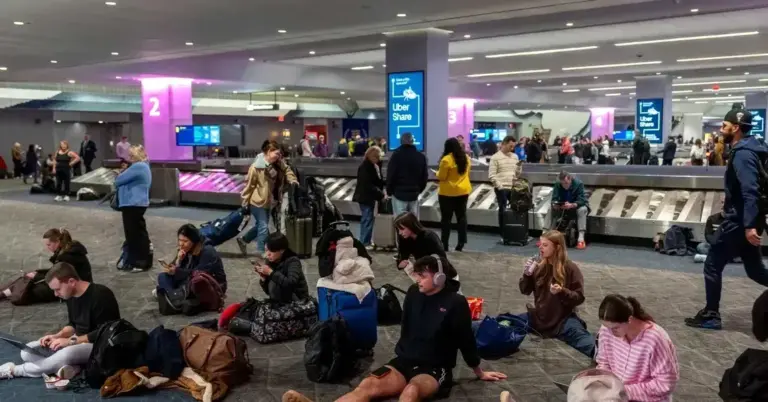
American skies began returning to normal this Monday after a catastrophic system failure left over a million passengers stranded and threw holiday travel into chaos. While flights are resuming, the aftermath has ignited a fierce political battle between the White House and congressional Democrats over how to modernize an air traffic control system that many officials admit is dangerously outdated. President Donald Trump characterized the collapse as a heart attack caused by ancient equipment, suggesting that the best path forward is to essentially blow up the current setup and start fresh with a massive infusion of federal cash.

The administration’s push for funding has quickly hit a wall with Democrats, who are wary of issuing a blank check to a White House they claim lacks a coherent plan. Transportation Secretary Sean Duffy recently hiked the requested funding from thirty billion to fifty billion dollars, yet critics argue these figures are arbitrary. Senator Chris Van Hollen pointed out that billions have already been allocated through previous legislation, questioning why so little of that money has actually been spent on improvements while the rest of the network continues to crumble.

Adding fuel to the fire are accusations that the crisis was exacerbated by internal purges within the Federal Aviation Administration. Representative Jim Himes suggested that efficiency drives led by Elon Musk stripped away essential personnel, leaving the agency unable to handle technical glitches during routine maintenance. In fact, reports indicate that the actual meltdown may have been triggered by an attempt to replace obsolete copper wiring, proving that updating the system while keeping planes in the air is a precarious balancing act.

As Thanksgiving approaches, lawmakers face immense pressure to prevent another nationwide ground stop, but trust between the executive branch and Congress is at an all-time low. With Democrats poised to take control of Congress next year, this fight over aviation safety is becoming more than just a technical dispute; it is an early indicator of how dysfunctional governance may become when a Republican president faces off against an opposing legislative majority over critical national infrastructure.
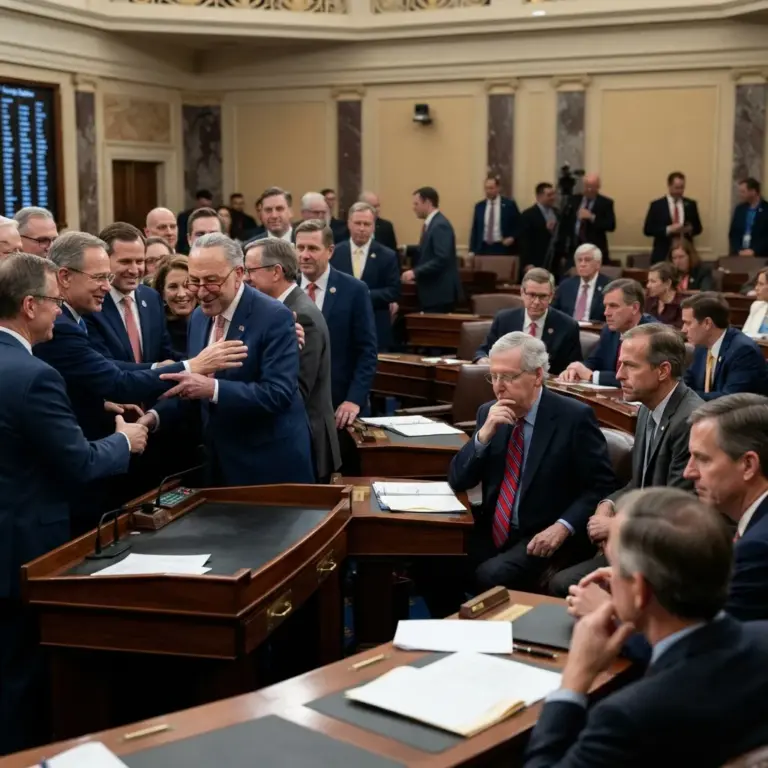
Democrats have fundamentally altered the landscape of the U.S. Senate, transforming a precarious position into a commanding lead heading into the next presidential cycle. Following a series of unexpected victories, the party is on track to secure a 56-44 majority, marking its strongest hold on the chamber since 2009. This shift places the Republicans in a steep climb, as they will now need to reclaim at least six seats to regain control, provided they do not hold the vice presidency.

The immediate battlefield centers on four critical Democratic held seats in Arizona, Nevada, Georgia, and Pennsylvania. For the GOP to mount a realistic challenge for the majority in 2028, they essentially must sweep these states. However, internal dynamics may complicate things for the incumbents. While Mark Kelly and Raphael Warnock are already being discussed as potential presidential contenders, John Fetterman faces a different struggle as his standing among Democratic voters has seen a noticeable decline. Meanwhile, Republicans face their own vulnerabilities in Wisconsin and North Carolina, where previous wins were achieved by razor thin margins.

Beyond the traditional swing states, Democrats have managed to penetrate deeply red territory, creating what analysts call an extended battleground. Unexpected competitiveness in states like Ohio and Florida suggests that a filibuster proof majority of sixty seats is theoretically possible if current trends continue. Much of this momentum was driven by a historic surge in Black voter turnout across the South, particularly in South Carolina and Mississippi. Activists attribute this energy to widespread frustration over redistricting efforts and judicial decisions that limited voting rights protections.

For Republicans to overturn this trend, they may be forced to venture into historically blue territory for the first time in years. New Hampshire appears to be their most viable target among lean-Democratic states, but moving beyond that requires winning in strongholds like Colorado or Washington—feats that proved impossible during previous cycles despite aggressive recruitment efforts. Ultimately, the political tables have turned entirely; whereas Democrats once had to hope for miracles in red states to survive, Republicans now find themselves needing breakthroughs in blue ones just to compete for control.

The massive grounding of flights that paralyzed American skies on Friday was not a freak accident, but rather the predictable result of decades of crumbling infrastructure and systemic mismanagement. Internal records and federal audits reveal that government watchdogs had been sounding the alarm for twenty years, warning that the nation’s air travel systems were becoming dangerously obsolete. Transportation Secretary Sean Duffy admitted on Sunday that the entire meltdown might be traced back to a single router that should have been replaced nearly twenty years ago, suggesting that the current crisis is rooted in failure spanning several administrations.

At the center of the controversy is L3Harris, the company tasked with maintaining the aging telecommunications backbone of the Federal Aviation Administration. Despite a track record plagued by missed deadlines and technical glitches dating back to 2002, the FAA continued to pour billions into non-competitive contracts with the firm. An audit by the Office of the Inspector General discovered that the agency improperly extended contracts ten times, essentially choosing administrative ease over quality results. This pattern resulted in hundreds of millions of wasted taxpayer dollars on projects that were eventually scrapped due to persistent failures.

The situation has reached a point where some critical hardware is so ancient that the companies originally responsible for making spare parts have gone out of business entirely. Eric Soskin, the transport inspector general, noted that much of the institutional knowledge required to fix these legacy systems may have simply vanished through retirement. While L3Harris claims it has completed most of its transition from copper wires to fiber optics and remains committed to helping the FAA investigate the crash, critics point out a troubling conflict of interest given how much money the company spends on lobbying members of Congress who oversee its funding.

Secretary Duffy described being stuck with L3Harris until a newer system can be fully implemented, lamenting a relationship where contractors take public funds while providing poor service. As passengers continue to deal with the fallout at airports like LaGuardia, it appears clear that prioritizing short term bureaucratic convenience over long term technological investment created a fragile network waiting for one old piece of equipment to finally give way.

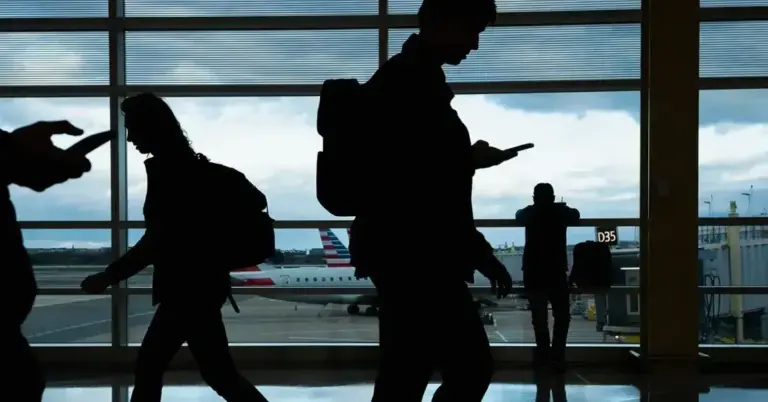
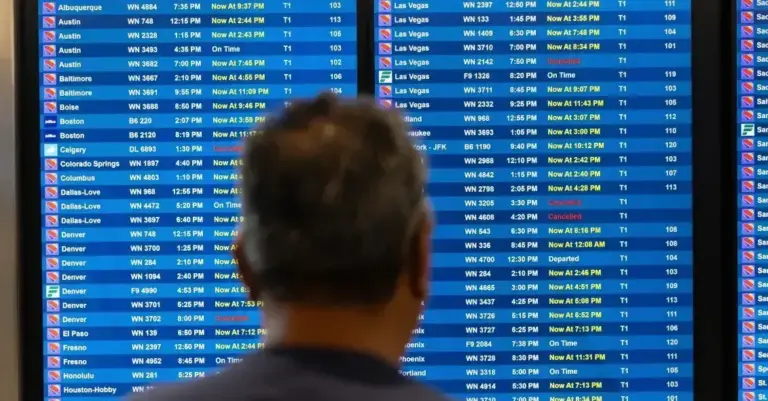
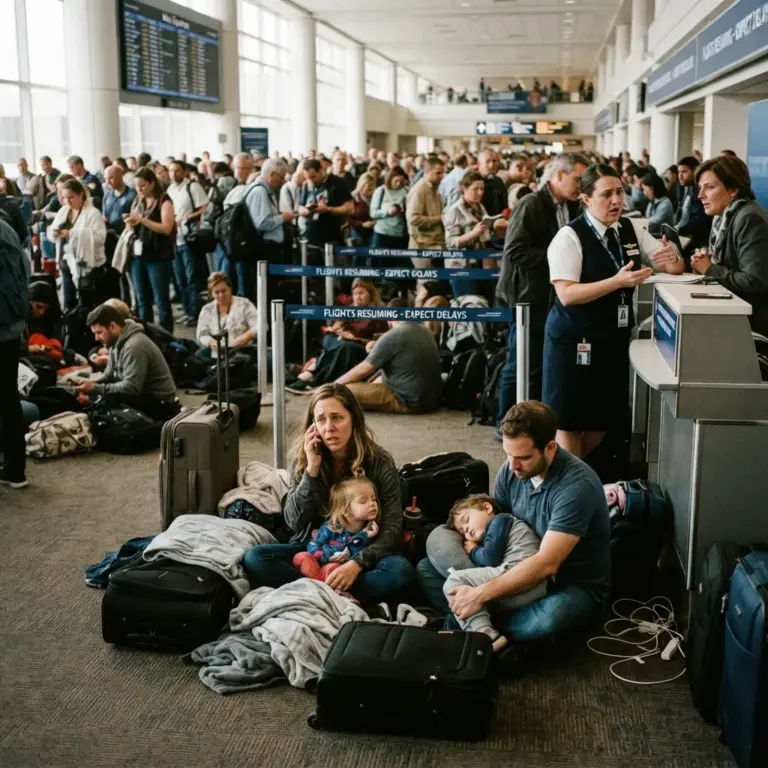
Air travel across the United States began to stabilize on Monday morning, though many passengers continued to deal with the lingering effects of a historic nationwide ground stop. After a weekend defined by chaos, flight delays and cancellations dropped significantly compared to Sunday’s peak. While major hubs like Chicago O’Hare and Dallas-Fort Worth still faced some hurdles, transportation officials expect operations to return fully to normal by Tuesday, providing some relief just ahead of the upcoming Thanksgiving rush.

The crisis began Friday when a technical failure triggered the longest nationwide halt to air travel since September 11, 2001. Thousands of frustrated travelers were left stranded in terminals for days, missing critical business meetings and family events. The disaster was traced back to routine maintenance in Arkansas where a copper-to-fiber line conversion unexpectedly overloaded routers as far away as Texas, creating a domino effect that crippled air traffic control communications across the country.

Transportation Secretary Sean Duffy defended the decision to freeze flights, arguing that the move was necessary to prevent further systemic collapse. Rather than offering an apology, Duffy pointed toward years of neglect and failed modernization efforts under previous administrations. He noted that while the current team is working rapidly to update aging infrastructure, they inherited a fragile system plagued by outdated software and staffing shortages among controllers.

Despite assurances from Homeland Security that there was no evidence of a cyberattack, the event has reignited a political battle over funding for the Federal Aviation Administration. President Donald Trump has called for increased legislative support to modernize the skies, while critics question how existing budgets have been managed. For now, investigators remain focused on why a standard hardware upgrade led to such an unprecedented breakdown in national security and transport logistics.

Warren Buffett has once again turned his attention toward philanthropy, donating approximately 5.5 billion dollars in Berkshire Hathaway shares to four different foundations. This latest contribution sees the 96 year old billionaire converting thousands of Class A shares into millions of Class B shares, which were then distributed among the foundations led by his three children, Susie, Howard, and Peter. Even after this massive gift, Buffett remains an incredibly wealthy man, holding onto assets valued at roughly 162 billion dollars.

In a concise Thanksgiving letter that echoed themes of gratitude and generosity, Buffett reflected on the intrinsic value of compassion. He noted that while kindness is costless, it is also priceless, suggesting that its positive effects compound over time at a rate superior to any financial investment he and the late Charlie Munger ever made. This sentiment served as a poignant reminder of the human element behind one of the world’s most successful portfolios, especially as Buffett acknowledged the mentors who helped him prosper early in his career.

The timing of the donation coincides with a period of exceptional growth for Berkshire Hathaway. While the broader market has faced volatility due to geopolitical risks and concerns over AI infrastructure, Berkshire shares have surged, hitting several consecutive record highs_and significantly outperforming the S&P 500 this year. Investors continue to view the company as a stable safe haven during uncertain economic times.

Beyond the numbers, Buffett used his message to express unwavering faith in the future leadership of his empire and his family. He praised CEO Greg Abel and reaffirmed his total trust in his children’s ability to manage these vast sums for worthy causes. Closing with a piece of timeless advice, Buffett encouraged readers to spend their holiday thanking selfless individuals or becoming a benefactor for someone else in their own lives.

For Amanda Khera, the announcement over the airplane intercom thirty minutes outside of Atlanta felt like a nightmare. Already exhausted from rushing her toddler to a clinic in Belize due to a high fever, she was desperate to get back to Virginia Beach. When the pilot mentioned a cascading communications issue with the FAA, fear took over. Haunted by memories of previous aviation tragedies, including a deadly midair collision over Reagan National Airport in 2025, Khera spent her descent staring out the window, wondering if the pilots were flying blind and if another catastrophe was imminent. While she eventually landed safely, she stepped off the plane into a frozen terminal where over six hundred flights had been canceled as part of a total nationwide ground stop.

The chaos began on Friday afternoon when pilots and controllers across the Midwest noticed their radios becoming garbled and unreliable. At first, those at airports in Grand Rapids and Moline thought it was a localized glitch, but within minutes, reports flooded in that Chicago Approach was going dark. By late afternoon, the FAA issued an unprecedented order halting all departures across U.S. airspace citing extraordinary circumstances. Pilots throughout the country expressed disbelief as they realized the outage wasn’t limited to a single city or region but had paralyzed the entire national air traffic control system.

The culprit behind this systemic collapse was surprisingly small: a single faulty router in El Dorado, Arkansas. As part of ongoing efforts to patch together an aging infrastructure known as the FAA Telecommunications Infrastructure or FTI, contractors replaced an old telephone switch with a newer fiber data router. However, once activated, this piece of equipment began flooding the network with hundreds of connection attempts every second. This surge created a cascading failure that overwhelmed the data backbone provided by L3Harris, which serves as the essential link between thousands of aviation facilities carrying critical voice and radar data.

Experts explain that while modern consumer apps like FaceTime can simply blur video when data is lost, air traffic control requires absolute precision and stability. Even a minor drop in data packets can lead to a complete cessation of vital feeds. Because the FTI lacks these modern redundancies and relies on rigid synchronization sources, one malfunctioning device in Arkansas managed to sever communication for seventeen of twenty-two regional control centers. With a full replacement for this fragile system not scheduled until 2028, passengers and pilots are left questioning how such an outdated architecture remains entrusted with millions of lives daily.

Thousands of JPMorgan Chase customers faced a frustrating start to their week on Monday as a widespread technical outage disrupted both digital banking and in person branch services. Many users reported being unable to access their accounts or withdraw funds, while others found themselves locked out of essential features like Zelle transfers. In a statement released late Monday, the bank clarified that the chaos was caused by a software bug within its on premise hardware systems rather than a cyberattack.

While the bank insisted that all customers still had ultimate access to their funds, they admitted that servicing those clients was taking significantly longer than usual. The ripple effect extended beyond Chase’s own doors, causing transactional slowness for other financial institutions that were processing payments involving Chase accounts. Representatives from Zelle and U.S. Bank both noted that while their own platforms remained functional, any delays were stemming directly from the instability at Chase.

This disruption comes at a particularly sensitive time for American consumers following a string of high profile tech failures over the last seven days. From a forty eight hour Microsoft Outlook blackout to an FAA grounded flight order triggered by a failed facility upgrade, public confidence in critical infrastructure has been wavering. Although there is currently no evidence linking these disparate events, the timing has amplified concerns regarding the reliability of the systems millions rely on daily.

Bank officials worked throughout Monday to patch the glitch, emphasizing that the problem was confined to retail banking operations and did not impact the broader corporate functions of JPMorgan Chase. With nearly ninety four million customer relationships and thousands of ATMs across the country, the scale of the outage highlighted just how quickly a localized hardware error can create national anxiety in an increasingly cashless society.