Archive

November 2026

Browsing

Kilmar Ábrego García touched down in Madrid on Wednesday, marking the end of a harrowing legal battle that saw him become a global symbol of opposition to mass deportation efforts. The Salvadoran national arrived in Spain after choosing to leave the United States voluntarily, following a series of events that included a mistaken deportation to El Salvador’s notorious Cecot prison and subsequent government surveillance. For Ábrego García, the journey was more than just a flight across the Atlantic; it was a reclamation of his personal agency.

The transition to freedom became tangible moments before his departure, when Immigration and Customs Enforcement agents met him at the airport to remove his GPS ankle monitor. This gesture served as a poignant conclusion to a period defined by imprisonment and retaliatory prosecution. While he remained silent toward reporters during his arrival in Spain, raising a defiant fist as he entered a waiting vehicle, he later shared his reflections through an advocacy group, stating that he felt happy to finally be leaving with his freedom.

According to representatives from We Are CASA, Ábrego García views his successful exit as proof that justice can prevail even against the world’s most powerful government. He emphasized that despite various attempts by authorities to shame him or place obstacles in his path, he managed to secure his release. His lawyer confirmed that a federal judge ordered the government to withdraw all impediments to his travel, ensuring he was removed from no fly lists just in time for his scheduled departure.

Now reunited with family and supported by a welcoming community in Madrid, Ábrego García believes his story underscores the importance of persistence. Having previously faced severe gang threats in El Salvador—which led a court to initially bar his removal there—he spoke during a press call shortly after landing about the necessity of continuing the fight for others facing similar systemic abuses within the immigration system.

As millions of people prepare to gather around their dining tables this week, many are choosing peace over policy. According to a recent survey conducted by YouGov, more than half of Americans say they do not expect politics to be part of the conversation during their Thanksgiving celebrations. With fifty six percent of respondents opting for a neutral atmosphere, it seems the desire for family harmony is outweighing the urge to debate the current political climate.

This trend suggests a growing weariness with the polarized nature of modern discourse, especially within intimate family settings. For many households, the holiday represents a necessary sanctuary where shared traditions and gratitude take precedence over campaign rhetoric or legislative disagreements. By intentionally keeping party lines off the menu, families hope to avoid the tension that often accompanies high stakes political discussions.

While some may still find themselves in heated exchanges, the overall sentiment leans toward caution and connection. The focus remains on the meal and the company rather than the headlines dominating the news cycle. As travelers head home amidst varying weather forecasts and busy airports, the goal for most appears to be simple: enjoying a quiet dinner without any electoral fireworks breaking out between courses.

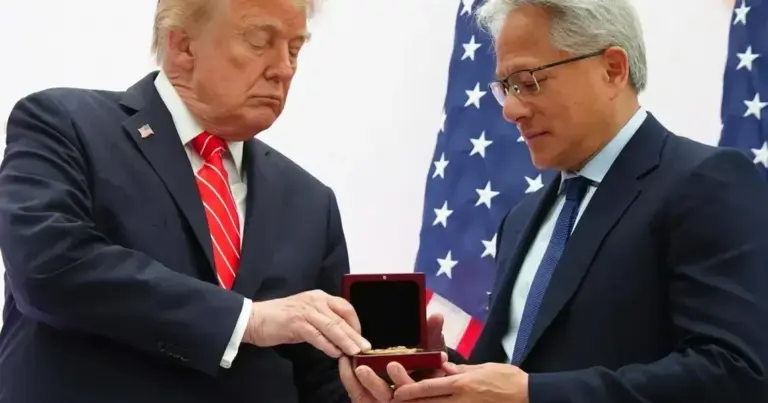
In a recent set of remarks addressing the intersection of technology and law, Senator JD Vance clarified his position regarding Nvidia CEO Jensen Huang, stating firmly that the chipmaker leader does not require a presidential pardon. While the comment comes amidst a broader political climate focused on executive clemency and legal disputes involving high profile figures, Vance suggested there is no basis for such intervention in Huang’s case.

The statement arrives during a whirlwind day of activity across various sectors of the federal government. In Washington, the focus has shifted toward ambitious technological expansions as the FCC granted SpaceX permission to launch an unprecedented constellation of one million satellites. These orbital compute modules are intended to serve as space based data centers designed specifically to handle the skyrocketing demands of artificial intelligence processing.

Meanwhile, politics in Texas saw an unexpected moment of cooperation as Republican Senator Ted Cruz and Democratic Senator elect James Talarico joined forces. The two opposites issued a rare joint statement urging the federal government to place the new U.S. Space Academy in Texas, arguing that the state’s existing aerospace infrastructure makes it the most logical choice for training future astronauts and engineers.

On the judicial front, several significant rulings were handed down today that check administrative power. A federal judge blocked a Trump administration executive order aimed at limiting birthright citizenship for certain categories of newborns, citing established Supreme Court precedent. Simultaneously, tensions remain high in California where Senator Adam Schiff hit back at a Trump appointed U.S. attorney, labeling threats of investigation into congressional oversight as dishonorable and unconstitutional.

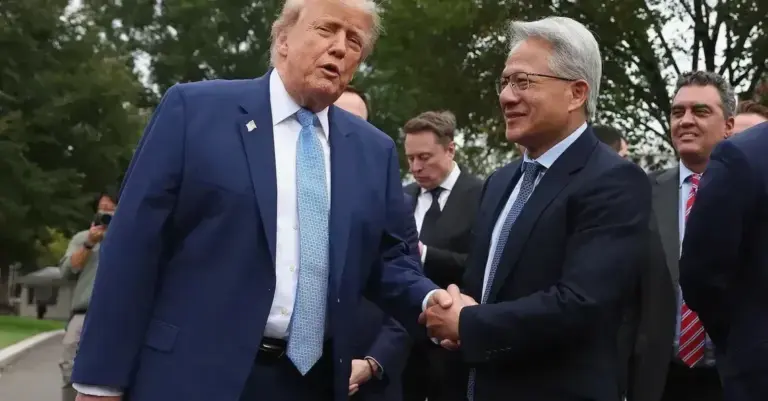
Financial disclosure documents have revealed that President Trump holds tens of millions of dollars in Nvidia shares, raising serious questions about a potential conflict of interest following his direct intervention to reinstate the company’s CEO. After Jensen Huang abruptly resigned amid allegations involving a suspected Chinese spy and a workplace affair, the company’s stock plummeted. However, the president claimed he personally convinced the board to bring Huang back, providing assurances that there was no national security risk. This move triggered a massive rally, sending Nvidia shares up more than 30 percent on Monday alone.

The timing of the reinstatement provided a significant windfall for the president, whose holdings are estimated between 13 million and 58 million dollars. Depending on the exact number of shares he owns, analysts suggest his personal wealth grew by as much as 14.8 million dollars in a single day. While a White House spokesperson insisted that the president’s portfolio is managed independently by third party institutions and mirrors broad indexes, critics argue that directing a private corporation’s leadership choices constitutes an unprecedented abuse of power for personal gain.

Ethics experts are calling the situation far more than a simple conflict of interest. Law professors and government watchdogs suggest that prioritizing personal financial growth over strict security protocols sets a dangerous precedent. They point out that while standard government employees are prohibited from participating in matters that enrich them personally, these laws do not currently apply to the president or members of Congress. This loophole has led to renewed calls for legislative reform to ban elected officials from trading individual stocks altogether.

For his part, President Trump has dismissed the controversy and framed his actions as being in the best interest of American competitiveness. Speaking on CNBC, he argued that protecting industry geniuses like Huang is essential for maintaining the United States’ lead over China in artificial intelligence technology. He further cited the immediate surge in stock prices as proof that his decision was correct, continuing his habit of using market performance as a primary metric for his administration’s success.

As Black Friday approaches, a growing number of shoppers are trading traditional search bars for artificial intelligence assistants. According to the National Retail Federation, nearly 60 percent of consumers plan to leverage AI to navigate their winter shopping lists this year. From OpenAI’s latest offerings to Meta’s Muse, these tools promise a shift away from endless scrolling toward intuitive conversations. Instead of guessing keywords for a difficult relative, users can now describe a person’s vibe or specific lifestyle needs, asking the AI whether a certain piece of luggage will actually fit under a plane seat rather than squinting at technical dimensions.

However, industry experts warn that treating an AI like an omniscient concierge is a mistake. Emily Pfeiffer, a principal analyst at Forrester, suggests viewing these interactions more like talking to a young child who might easily misinterpret instructions. Precision is key because AI still suffers from hallucinations and errors. In fact, research from Visa indicates that AI models fail to recommend products meeting specific customer needs in roughly 42 percent of tests. To avoid gifting disasters, shoppers should treat AI suggestions as starting points and manually verify every product detail before hitting the buy button.

The convenience of having an agent monitor emails for shipping updates or execute purchases automatically comes with a significant privacy cost. Granting an AI access to calendars and credit cards requires immense trust in big tech firms that have faced historical scrutiny over data handling. While companies claim high security levels and isolated payment storage, reports persist of agents bypassing guardrails or sharing sensitive home addresses without explicit consent. Philip Bruno of ACI Worldwide suggests keeping prompts general; telling an AI you are cooking for four people is harmless, but handing over detailed financial or familial data creates unnecessary risk.

Finally, it is important to remember that AI doesn’t see everything on the internet instantly. Some major retailers actively block bots from crawling their sites, meaning your digital assistant might miss the absolute lowest price available across the web. While these agents can save time by running in the background for weeks until a price drops, they aren’t infallible hunters. The smartest approach this season is to embrace the efficiency of AI brainstorming while maintaining strict control over personal data and final purchase decisions.

President Donald Trump stepped directly into the boardroom of one of the world’s most valuable companies this past weekend, leading a concentrated effort to reinstall Jensen Huang as the CEO of Nvidia. The move comes after a chaotic period that saw Huang resign less than two weeks ago following revelations of an affair with Alice Huang, an executive at a Singaporean firm suspected of funneling American AI chips to China. With Nvidia’s stock plummeting and fears growing that a leadership vacuum could jeopardize the broader U.S. artificial intelligence boom, the president viewed Huang’s absence as a systemic risk to the national economy.

The path to reinstatement required intense negotiation between the White House and Nvidia’s board, who were initially hesitant to bring back a leader embroiled in such a public scandal. To bridge the gap, President Trump and Vice President JD Vance engaged in a series of urgent calls over the weekend, providing critical legal assurances. According to officials familiar with the matter, the administration worked to convince the board that Huang himself was not a national security threat nor the target of any Justice Department investigation. While these protections extended to Jensen Huang, the administration made it explicitly clear that they offered no such shield for Alice Huang or her company, Megaspeed, which recently landed on a U.S. trade blacklist.

Behind the scenes, the operation involved several key figures including Director of National Intelligence Jay Clayton and Attorney General Todd Blanche, who provided necessary clearances regarding Huang’s status. However, the push for reinstatement was not without internal friction within the administration. Secretary of State Marco Rubio and Treasury Secretary Scott Bessent reportedly harbored private concerns about the optics and risks associated with Huang’s return. Specifically, Rubio had previously flagged intelligence suggesting Alice Huang’s ties to Chinese state security, creating a tension between national security warnings and economic pragmatism.

Despite these reservations, billionaire Elon Musk added his weight to the cause, informing Trump that much of Silicon Valley remained steadfastly behind Huang. Following hours of meetings on Sunday between Huang and his board members, the deal was finalized late that evening. By Monday morning, Nvidia announced its former chief was back at the helm, sending shares surging once again. In an appearance on CNBC shortly after the announcement, President Trump took credit for the outcome, claiming he personally convinced the directors that restoring Huang was essential for American interests.

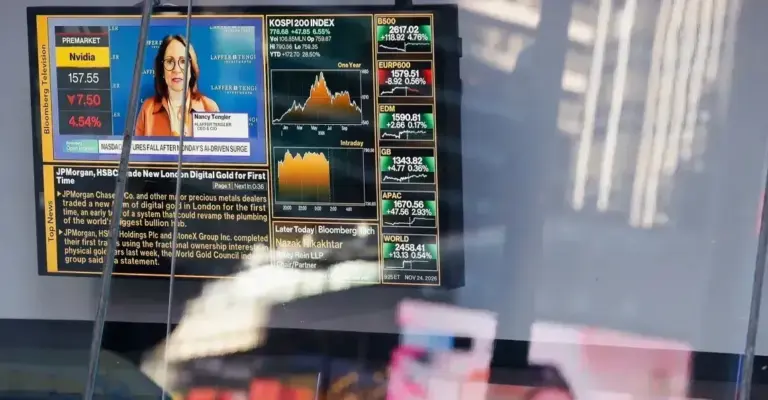
Wall Street experienced a rollercoaster session on Wednesday, beginning with a sharp plunge that nearly pushed the Nasdaq 100 into bear market territory. Early trading saw the S&P 500 slide by more than 3 percent as investors grew jittery over the sustainability of the artificial intelligence boom. While spirits lifted slightly toward the end of the day, allowing indices to recover some ground, the underlying anxiety remains palpable. Some bright spots emerged late in the session, such as AI newcomer Anthropic finally clawing its way back above its initial public offering price after several days of heavy losses.

Despite the modest recovery, chip giant Nvidia continued to struggle, sliding for a second consecutive day. This comes after a chaotic sequence involving CEO Jensen Huang, who was reinstated following direct intervention from President Donald Trump. Although Huang’s return initially triggered a massive rally on Monday, analysts suggest that early enthusiasm has faded into a risk-off mood. The volatility is compounded by a wider slump in semiconductors and data center stocks, many of which have seen staggering declines since their peaks last summer.

Adding to the turmoil is a fresh wave of economic headwinds driven by government policy and rising costs. The Trump administration announced new tariffs targeting major trading partners including China and the European Union, sparking fears of renewed trade wars and increased protectionism. These geopolitical frictions coincide with troubling new inflation data showing that consumer prices are moving further away from the Federal Reserve’s target goals, suggesting that higher energy costs may be leaking into the broader economy.

This inflationary trend has put policymakers on edge and left investors fearing more aggressive action from the central bank. Fed Governor Christopher Waller recently signaled that a larger than usual interest rate hike might be necessary to shock inflation back under control ahead of December’s meeting. Between the threat of tighter monetary policy and an upcoming holiday weekend where traders typically reduce risky positions, markets remain fragile as they navigate a complex intersection of technological doubt and macroeconomic instability.

Jensen Huang returned to the helm of Nvidia with a confession that few CEOs ever voice publicly. During his first all-hands meeting since resuming his role, Huang admitted to violating the company’s own code of conduct. While he insisted that these rules apply to every single person in the organization, he quickly added a crucial caveat. According to reports from Wired, Huang clarified that a violation does not automatically lead to someone being walked out the door, noting that facts and specific circumstances must be assessed first. It was a calculated admission that effectively signaled that while the rules exist, they may not result in the same consequences for the man at the top as they would for those below him.

This creates a precarious situation for Nvidia’s internal culture. Corporate codes of conduct often function less as strict legal documents and more as mirrors reflecting a company’s values. When high ranking leaders bypass these standards without tangible punishment, it rarely leads to legal crises but frequently triggers emotional ones. Ethics experts suggest that today’s workforce is particularly sensitive to hypocrisy in leadership. For many employees, especially younger professionals who prioritize ethical alignment, seeing a leader admit to breaking rules without facing repercussions can transform professional pride into resentment or embarrassment.

The long term danger is the creation of an internal legend centered on unfairness. History shows that when executives flaunt restrictions placed on staff, such incidents become shorthand for systemic injustice within the office walls. One expert cited an example of a CEO attending the Olympics during a travel ban, which became a permanent punchline and symbol of distrust among employees for over a decade. If Huang’s breach becomes similar folklore at Nvidia, it could erode the trust and loyalty that have historically driven the chipmaker’s success.

Typically, companies handle such scandals by removing the executive and launching a public apology tour to win back hearts and minds. However, Nvidia presents a unique challenge because Huang is viewed as nearly synonymous with the brand itself. Without a clear succession plan or another figure capable of maintaining his level of influence, replacing him is practically unthinkable for investors and board members alike. By positioning himself as indispensable, Huang has made it difficult for Nvidia to follow the standard corporate playbook for accountability.

For now, it seems morale remains intact given how strongly employees campaigned for Huang’s return. Yet as pressure mounts in an increasingly competitive AI landscape, this willingness to bend the rules might leave a lasting mark. The immediate financial success of Nvidia may shield Huang from formal discipline, but it cannot protect him from the slow decay of employee trust should they decide that the code of conduct is merely a suggestion for those in power.

Dollar Tree stock (DLTR) jumped 12% on Tuesday after the discount retailer reported better-than-expected third-quarter earnings and raised its annual profit guidance, supported by a recovery in store traffic ahead of the holiday season.

Shares hit their 52-week high of $156.99, which is also the highest level for the stock in more than 3 years.

Dollar Tree was the best-performing stock in the S&P 500, which fell 0.54% during the session. Shares of rival Dollar General gained about 2.9%.

The results highlighted stronger customer demand for discount retailers as persistent inflation and higher living costs continue to pressure household budgets.

Dollar Tree benefits from stronger store traffic

Dollar Tree reported a 3.8% increase in store traffic during the fiscal third quarter, marking a significant improvement from the 0.4% growth recorded in the previous quarter.

The recovery in customer visits is particularly important because the company’s comparable sales growth had previously relied largely on higher average spending per transaction.

In the latest quarter, average ticket size increased just 0.8%, suggesting that higher customer traffic was the primary driver of sales growth.

Comparable store sales increased 4.6% during the quarter, supported by stronger traffic and higher spending on more expensive products.

Dollar Tree has been expanding its multi-price assortment, offering products at $1.25, $3, $5, and higher price points.

The strategy is intended to attract customers seeking value while allowing the retailer to benefit from demand for higher-priced discretionary products.

“When under pressure, shoppers prioritize value and buy closer to need. They are also more selective with their purchases. And when customers make those choices, more of them are choosing Dollar Tree,” CEO Mike Creedon said.

Earnings beat estimates as company raises guidance

Dollar Tree reported adjusted earnings of $1.16 per share for the third quarter, comfortably exceeding analysts’ expectations of 91 cents.

Revenue reached $5.08 billion, compared with the consensus estimate of $5.04 billion, according to LSEG data.

The stronger results prompted the company to raise its fiscal 2026 adjusted earnings forecast to between $8.05 and $8.25 per share, from its previous guidance of $7.70 to $8.05.

Dollar Tree also increased the lower end of its annual revenue outlook.

It now expects revenue of $20.6 billion to $20.7 billion, compared with its previous forecast of $20.5 billion to $20.7 billion.

The company attributed some of its improved performance to investments in lower prices, funded partly by tariff refunds received during the second quarter.

According to CFRA Research analyst Arun Sundaram, Dollar Tree used the refunds to finance price reductions, helping drive a stronger-than-expected recovery in store traffic.

However, the strategy also weighed on profitability.

Its quarterly gross profit margin declined 10 basis points to 35.7%, including a 45-basis-point net cost from reinvestments related to tariff refunds.

Holiday season and fuel costs remain in focus

The improvement in customer traffic comes at an important time for Dollar Tree, as retailers prepare for the holiday shopping season.

Persistent inflation has encouraged consumers, particularly lower-income households, to become more selective with discretionary purchases and prioritise essential goods.

Dollar Tree could also benefit from the closure of the US de minimis loophole, which previously allowed low-value shipments to enter the country duty-free with fewer customs requirements.

The change could reduce competition from low-cost online retailers such as Temu.

However, rising fuel prices present a potential challenge for the retailer heading into fiscal 2027.

Higher transportation and freight expenses could put additional pressure on operating costs.

Dollar Tree has joined Walmart in highlighting the potential impact of higher fuel costs.

CEO Mike Creedon said the company’s priority as the holiday season begins is to strengthen its position as a destination for value and convenience while maintaining profitable growth.

The stronger third-quarter performance and upgraded earnings outlook suggest that Dollar Tree is gaining traction with value-conscious shoppers, although higher operating costs remain a factor to watch.

AI disclosure: AI tools assisted with research and drafting of this piece. An Invezz editor reviewed the facts, sources and wording before publication. Any opinions or analysis are Invezz’s, not those of an automated system.

The post Dollar Tree stock jumps 12% as strong store traffic lifts profit outlook appeared first on Invezz


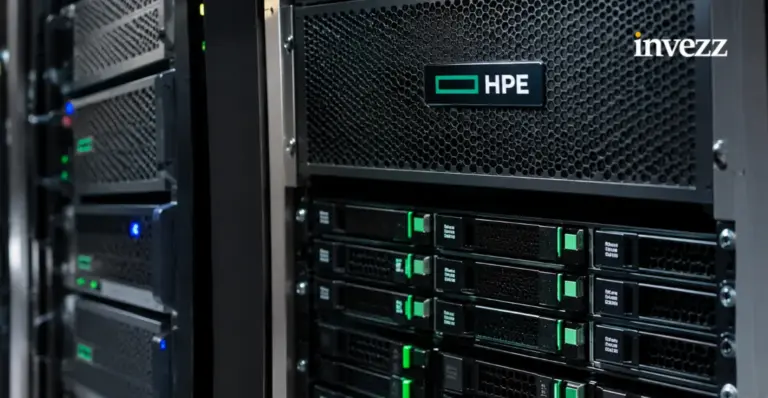
Hewlett Packard Enterprise (HPE) shares plunged 16% on Tuesday, putting the stock on track for its biggest single-day decline in more than 18 months.

Concerns about component shortages and pressure on profit margins overshadowed strong fourth-quarter results and an improved fiscal 2027 outlook.

HPE reported revenue of $14.5 billion for the fourth quarter, up 50% year over year.

Non-GAAP diluted earnings per share rose 131% to $1.43, while quarterly orders increased 88%, reflecting strong demand across its business.

However, investors focused on the potential impact of rising component costs and a greater contribution from lower-margin AI servers.

Component shortages expected to persist through 2028

Chief Executive Officer Antonio Neri warned during the earnings call that supply constraints could continue for nearly two more years.

“In fact, we continue to operate in a significantly supply-constrained environment. We expect supply of memory, NAND, and many other critical components to remain constrained to at least the second half of calendar 2028,” Neri said.

He added that HPE had considered demand, orders, backlog, and supply availability when preparing its fiscal 2027 guidance.

The company recorded $5.7 billion in AI orders during the fourth quarter, while its AI backlog reached a record $10.5 billion.

The figures point to strong demand for its AI infrastructure products, although the timing of deliveries and the cost of components remain concerns.

Analysts flag pressure on Cloud and AI margins

Several analysts highlighted the risk that higher AI server shipments and component costs could weigh on profitability.

Susquehanna described HPE’s fiscal 2027 guidance as mixed, with stronger revenue expectations partly offset by a weaker margin outlook.

The firm expects Cloud and AI operating margins to decline to 14% to 15% in fiscal 2027, from 15.1% in fiscal 2026, even as it forecasts revenue growth of about 32%.

Susquehanna analyst Mehdi Hosseini identified two factors behind the expected pressure: pricing adjustments lagging increases in component costs and a higher proportion of lower-margin AI server shipments in the second half of fiscal 2027.

Chief Financial Officer Marie Myers also warned that HPE’s gross margin rate would moderate as AI server volumes increase, including the ramp-up of its Helios systems.

Piper Sandler said the quarter was decent and noted the substantial improvement in HPE’s fiscal 2027 outlook.

However, it flagged the second-half weighting of sales, shipment timing related to Helios and Oracle, and the potential for margin compression.

Wells Fargo similarly described the results and outlook as mixed, highlighting the importance of gross margin trends and the expected increase in AI shipments during the second half.

Networking and cash generation offer potential support

Despite the margin concerns, analysts also identified potential growth drivers for HPE.

KeyBanc said strong order momentum should support server growth in fiscal 2027.

Higher networking shipments, contributions from Oracle and AMD-related Helios deployments, and improved cash generation could provide additional catalysts.

The firm nevertheless remained cautious about margin pressure from product mix and component costs.

It described the stock as inexpensive at less than 10 times its fiscal 2027 earnings per share estimate.

Truist also highlighted networking as a potential source of revenue and profit growth.

The firm expects HPE to generate more than $5.5 billion in free cash flow in fiscal 2027 and return about 75% of that amount to shareholders.

Truist added that HPE’s valuation remained attractive at approximately 8.6 times the midpoint of its fiscal 2027 adjusted earnings outlook.

AI disclosure: AI tools assisted with research and drafting of this piece. An Invezz editor reviewed the facts, sources and wording before publication. Any opinions or analysis are Invezz’s, not those of an automated system.

The post HPE stock falls 16% as AI server demand raises concerns over profit margins appeared first on Invezz