Archive

November 2026

Browsing

The landscape for cryptocurrency investing in Canada has evolved rapidly since the first Bitcoin and Ether ETFs debuted in 2021. By providing a way to hold digital assets within tax sheltered accounts like RRSPs and TFSAs, these funds bridged the gap between traditional finance and the volatile world of blockchain. The appeal lies primarily in liquidity and ease of access, allowing investors to avoid the complexities of managing private digital wallets while still gaining exposure to the price swings of the digital gold rush.

Recent years have seen a significant expansion in the variety of assets available to Canadian traders. Following the initial success of Bitcoin and Ether products, 2025 marked a turning point with the introduction of North America’s first spot ETFs for Solana and XRP. This diversification was supported by increasing regulatory clarity surrounding XRP in the United States, giving institutional players more confidence to enter the space. This wave of innovation coincided with a massive bull run where Bitcoin surged past 120,000 US dollars toward the end of 2025.

However, entering late 2026, the frenetic energy of previous years has begun to cool. While Bitcoin staged a partial recovery in August, it remains well below its October 2025 peak, leading some investors to adopt a more cautious approach. Despite this pullback, several heavy hitters continue to dominate the market in terms of assets under management. The Fidelity Advantage Bitcoin ETF leads the pack with roughly 1.81 billion Canadian dollars, closely followed by offerings from Purpose Investments and CI Galaxy.

Competition among these providers has sparked a race to lower costs for consumers. Several funds have slashed their management fees recently, with some dropping as low as 0.32 percent to attract long term holders during this period of stabilization. From established giants like iShares moving into Cboe Canada to specialized partnerships involving Galaxy Digital, Canada’s infrastructure for crypto ETFs now stands as one of the most mature globally, offering a sophisticated toolkit for those betting on the future of decentralized finance.

Daniel Turner, the founder and executive director of Power of the Future, is sounding the alarm on how ongoing political instability is crippling the development of Anwr oil. According to Turner, the constant shift in government policy has created a climate of uncertainty that makes long term energy infrastructure nearly impossible to sustain. When regulatory goals change with every political wind, the foundation required for massive industrial growth begins to crumble.

The financial risks associated with these swings are immense, as energy projects typically operate on expansive timelines often stretching eight years or more. Turner notes that private companies are understandably hesitant to commit tens of millions of dollars toward infrastructure when a sudden policy pivot could effectively pull the rug out from under them. This hesitation has left significant US energy potential stranded and untapped.

Beyond the corporate balance sheets, Turner argues that this stalemate has real world consequences for consumers at the pump. He estimates that bringing an additional two million barrels of oil per day into the market could significantly drive down current fuel prices. Until there is a predictable legislative environment, however, those savings will likely remain out of reach while critical developments stay stalled on the drawing board.

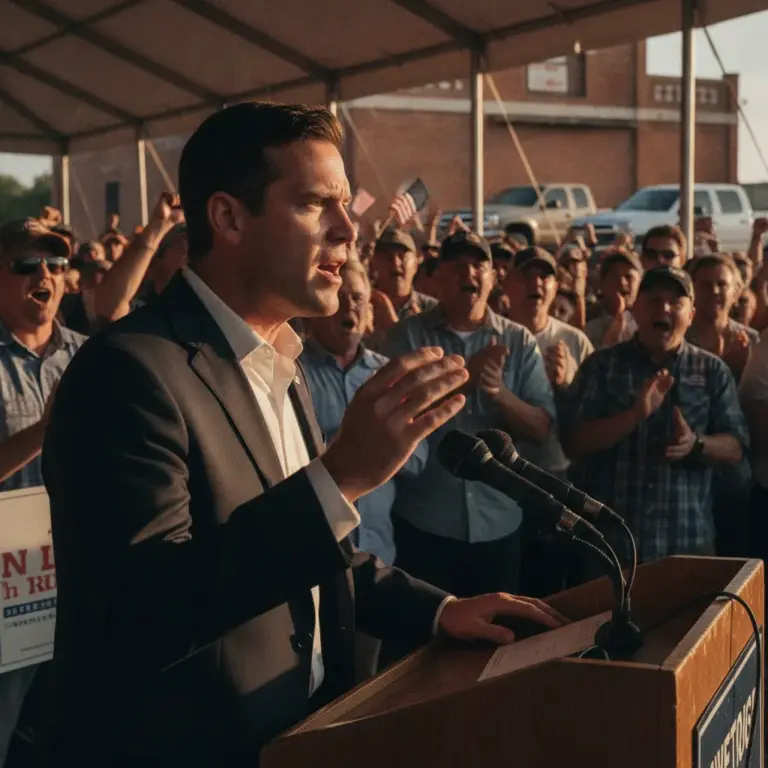
Vice President JD Vance spent much of this week hitting the campaign trail, but his efforts to bolster GOP midterm candidates feel like something more than simple party loyalty. From Texas to North Carolina, Vance has been refining a rhetorical style that blends polished political delivery with the raw, aggressive energy of the MAGA movement. Whether he is mocking a Democratic opponent’s masculinity to loud cheers in Weatherford or slipping in coarse language about the heat at a podium, Vance appears to be testing exactly how much grit he needs to maintain the base without losing his image as a disciplined statesman.

The core of Vance’s current pitch relies on a curated nostalgia for a lost American era. By invoking memories of post-9/11 unity and recounting stories of childhood football jerseys sponsored by long-gone local businesses, he frames himself as the champion of a forgotten middle class crushed by distant elites. This narrative allows him to package anti-woke cultural grievances within a broader story of economic betrayal, suggesting that his version of populism can restore a Norman Rockwell vision of community and racial harmony that predates modern identity politics.

However, navigating the baggage of the current administration remains a delicate balancing act for the Vice President. While he avoids direct mentions of controversial conflicts like the Iran War, he deftly pivots conversations about rising fuel costs toward global geopolitical instability rather than domestic policy failures. Similarly, when addressing high beef prices, he blames corporate consolidation rather than trade tensions sparked by the White House. It is a calculated strategy designed to shield himself from unpopularity while remaining firmly aligned with President Trump’s orbit.

Ultimately, Vance is leveraging his unique biography—his military service and humble beginnings in rural Ohio—to offer something Trump cannot: genuine relatability regarding poverty and struggle. Through his role leading an anti-fraud task force and frequent references to his time as a grocery store cashier, he is building a resume rooted in authenticity. The lingering question for 2028 is whether GOP voters will embrace this more articulated version of Trumpism or if they will find Vance too measured compared to the unfiltered bombast that defined the previous decade of Republican politics.

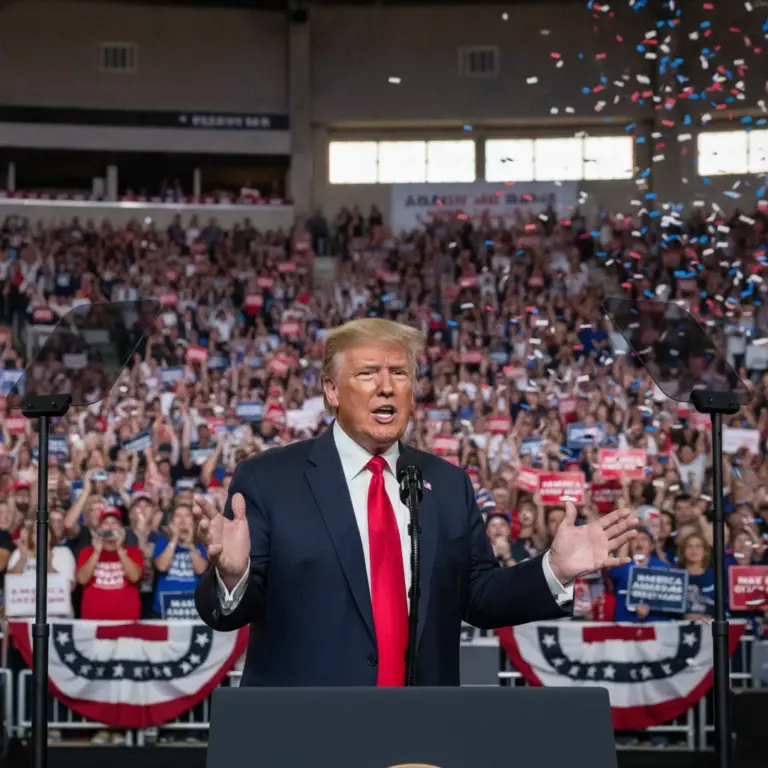
The frantic energy of the campaign trail reached a fever pitch this past weekend as candidates made their final pushes before voters headed to the polls. President Donald Trump capped off his whirlwind tour with high-energy rallies in Kansas and Iowa on Sunday, events that had briefly been scrubbed from his calendar before being reinstated on Friday. These appearances served as a critical test of the president’s enduring pull with the Republican base during an election cycle that many analysts view as a direct referendum on his administration’s record.

While Republicans remained centered around their leader, the Democratic camp faced unexpected turbulence in some key battlegrounds. A sudden rift emerged in Michigan where former Democratic Representative Haley Stevens delivered a surprising late endorsement for Republican candidate Mike Rogers. This internal fracture comes at a precarious time for Democrats who view Michigan’s Senate seat as a vital component in their strategy to regain control of the upper chamber.

With over 50 million ballots already cast through early voting and mail-in options, these last few days of campaigning offered a glimpse into the volatility of the current political climate. As both parties scramble to mobilize their remaining supporters, the contrast between Trump’s centralized GOP strategy and the fragmented dynamics within certain Democratic circles highlights the unpredictable nature of this midterm contest.

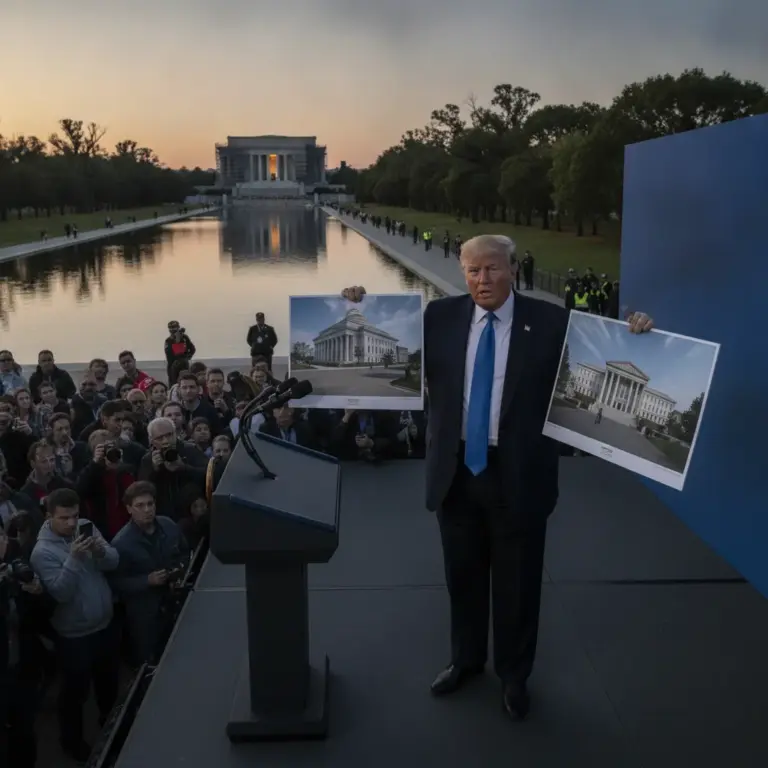
In a surprising turn for a campaign closing speech, President Donald Trump spent more than twenty minutes of his final address before the midterm elections focusing on architectural updates rather than political strategy. Speaking from the Reflecting Pool, the president held up photographs and went into extensive detail about renovations performed throughout Washington DC, shifting the tone of his message toward public works just as voters prepared to head to the polls. The unusual focus came at a time when his party is facing a challenging electoral landscape, with some forecasting agencies suggesting Republicans may struggle to maintain their House majority.

The preoccupation with city beautification stood in stark contrast to several high stakes legal and geopolitical battles currently surrounding the administration. Just hours earlier, federal courts had dealt another blow to the White House by rejecting attempts to force California to set aside thousands of ballots suspected of being cast by noncitizens. While Attorney General Todd Blanche continued to warn that violators would be prosecuted, judges have repeatedly found the administration’s lists of ineligible voters to be deeply flawed and its demands unconstitutional.

Beyond domestic disputes, the president used his remaining time to signal a potential shift in foreign policy regarding Iran. Amid plummeting approval ratings driven by skyrocketing gas prices and an unpopular war, Trump suggested via Truth Social that a settlement could happen soon. This optimistic outlook was echoed by Vice President JD Vance, who noted that progress had been made in talks despite the unpredictable nature of Iranian leadership.

As Election Day looms, Democratic hopes are rising according to recent polling showing them leading in five key battleground states. Meanwhile, internal GOP tensions are surfacing in places like Michigan, where Representative Haley Stevens faces private backlash from her own caucus after endorsing a Republican Senate candidate. With spending escalating across various districts and turnout remains uncertain, the administration seems to be balancing aggressive warnings of vetoes with unexpected pivots toward diplomacy and urban renovation projects.

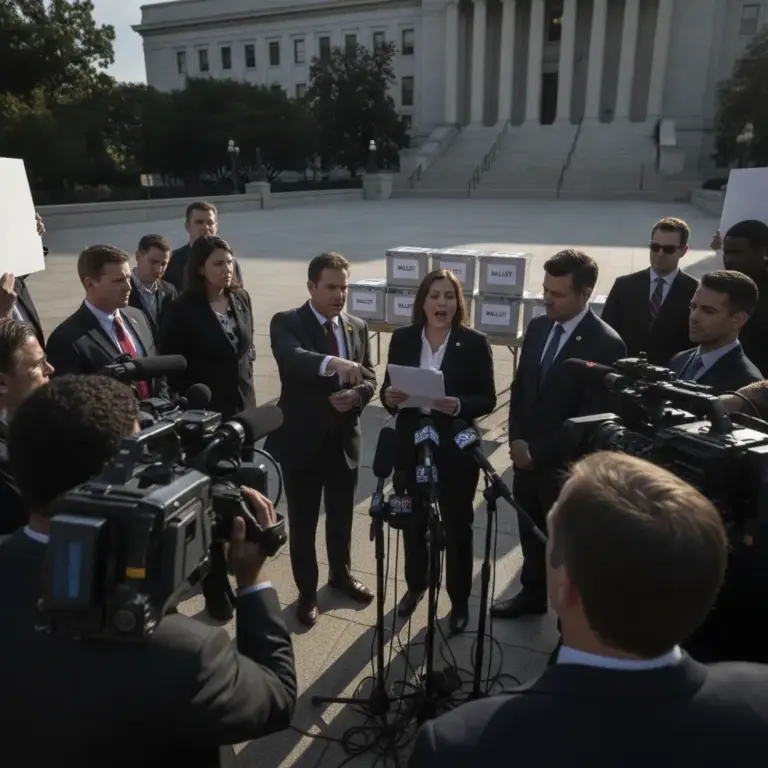
The Supreme Court swiftly dismissed an emergency request from the Trump administration on Monday, refusing to force California to isolate thousands of ballots that the Justice Department claimed may have been cast by noncitizens. In an unusually rapid response, the court issued a one sentence order denying the petition just hours after it was filed, offering no detailed reasoning or dissenting opinions. The move effectively ends a last minute attempt to interfere with the state’s ballot counting process on the eve of the midterm elections.

Solicitor General D John Sauer had argued that over 20,000 registered voters in California appeared to be noncitizens based on public records and sought what he called a modest remedy of setting these votes aside until their eligibility could be verified. However, this argument failed to gain traction in lower courts, including the 9th US Circuit Court of Appeals, which previously ruled that the federal government lacks the authority to dictate how states manage their own elections. That court suggested that any desired changes to mail in voting procedures should be addressed through Congress rather than the judiciary.

Legal experts pointed out that the timing of the appeal played a significant role in its rejection. Under a long standing legal guideline known as the Purcell principle, federal courts generally avoid altering election rules immediately before a vote to prevent chaos and confusion. With tens of millions of early ballots already cast across the country and many in California likely already processed, judges expressed concern that such an intervention would create a material risk of disenfranchising legitimate citizen voters.

While some members of the judiciary voiced concerns about protecting election integrity and enforcing laws against noncitizen voting, California officials and voting rights advocates maintained that the administration’s claims relied on shaky evidence. They argued that existing voter eligibility procedures were sufficient and that the Justice Department was overstepping its bounds. This latest defeat adds to a string of recent setbacks for the administration’s efforts to challenge state level election protocols via emergency appeals.

Global oil markets took a sharp dive on Monday morning following reports that a draft proposal aimed at ending the protracted conflict between the United States and Iran has begun circulating among key diplomats. The sudden shift in geopolitical sentiment triggered an immediate sell off, as traders bet that a resolution would stabilize energy corridors and potentially bring sanctioned Iranian crude back into the global supply chain.

The volatility was felt instantly across major exchanges, reflecting a broader relief rally among investors who have spent months bracing for escalation in the region. Analysts suggest that while the document remains a preliminary framework rather than a signed treaty, its mere existence suggests both powers are seeking an exit strategy from years of hostility. This prospect of stability effectively stripped away the risk premium that had been propping up prices throughout the quarter.

Energy giants like Exxon Mobil saw their valuations dip slightly amidst the chaos as market participants recalibrated for a world with more predictable flow through the Strait of Hormuz. Industry experts note that any formal agreement could lead to a significant surplus in available barrels, fundamentally altering the pricing landscape for months to come. For now, all eyes remain on official government channels to see if these diplomatic whispers will translate into a lasting peace.

Elon Musk is eyeing a significant expansion of his telecommunications empire as SpaceX explores a potential acquisition or partnership with Boost Mobile. According to reports from The Washington Post, discussions have already taken place between Musk and EchoStar chairman Charlie Ergen regarding how the aerospace company might leverage the budget carrier to transform Starlink into a major player in the mobile phone market. While the exact nature of the arrangement remains unclear, the strategy likely involves either buying Boost Mobile outright or securing deep access to its existing infrastructure.

This move represents a strategic shift for SpaceX as it attempts to bridge the gap between space and ground communications. By combining Starlink’s satellite-to-mobile capabilities with a traditional terrestrial network, Musk hopes to eliminate dead zones across the country. However, integrating these systems won’t be seamless, as Boost Mobile currently relies on networks operated by T-Mobile and AT&T. Any formal agreement would likely require navigation through complex permissions and regulatory hurdles involving those larger industry giants.

The push toward becoming a full-scale cellular provider is already well underway behind the scenes. Over the past year, SpaceX has aggressively collected wireless spectrum licenses from EchoStar and invested in low-band frequencies designed to help signals penetrate walls and buildings more effectively. Reports also suggest that the company is negotiating access to roughly 80,000 cell sites throughout the United States, signaling that Starlink intends to compete directly with established carriers rather than remaining a niche backup service for remote areas.

The world’s largest cryptocurrency exchange is grappling with a massive exodus of capital after security experts identified what they believe to be the biggest digital coin theft in history. In the wake of the breach, Binance users withdrew more than 4.6 billion dollars from the platform. While some confidence returned on Sunday as transactions resumed for major assets like Bitcoin and Ethereum, leading to about 1 billion dollars in new deposits, the exchange still faced a staggering net outflow of 3.64 billion dollars.

The chaos follows a devastating heist in which cybercriminals stole roughly 6.3 billion dollars in digital currency. The FBI has linked the attack to a North Korean hacker group known as TraderTraitor, which previously targeted another exchange called Bybit earlier this year. To conceal their tracks, investigators say the group attempted to convert much of the loot into Ethereum. While Binance managed to freeze approximately 3 billion dollars of the stolen assets, federal authorities are urging other private firms to block any addresses associated with the laundering operation.

Despite the scale of the theft, Binance leadership is attempting to project stability to its base of over 300 million users. Cofounder Yi He emphasized that securing the environment remains the top priority before full operations can resume. The company noted that the withdrawn funds represent only 2.1 percent of its total assets, which sit at 171 billion dollars. To prevent a total collapse of user trust, Binance has pledged to cover all losses using its own corporate funds and reported that nearly 95 percent of the impacted amount had been covered by Sunday morning.

Apple entered a new era this week as CEO John Ternus oversaw his first quarterly earnings report, delivering total revenue that surpassed Wall Street expectations despite a complicated landscape of supply chain hurdles. The tech giant reported revenue of 114.48 billion dollars, marking a 12 percent increase from the previous year. While the results provided a strong opening act for Ternus, who succeeded Tim Cook on September 1, the figures showed some volatility across different product lines, with robust iPhone and Mac sales offsetting misses in iPad and accessory revenue.

The cornerstone of the quarter remained the iPhone, which continued to drive over half of the company’s total sales. Demand stayed high even as Apple reluctantly raised prices by 100 dollars to combat rising costs for memory and critical computer components. Interestingly, these numbers only captured eight days of sales for the new iPhone 18 Pro, while the highly anticipated iPhone Duo had not yet reached consumers. This suggests significant momentum heading into the next reporting period, especially as Ternus noted that market share gains have persisted globally.

Beyond hardware, investors are closely watching how Ternus intends to monetize artificial intelligence following the release of an updated Siri AI. During conversations with reporters, the CEO hinted that AI would serve as a powerful catalyst for hardware upgrades rather than relying solely on subscription fees. He expressed confidence that the best is yet to come for Apple, pointing toward strategic expansions like HomeView and strong recovery efforts in Greater China, where business grew by 21 percent thanks to surging demand for Macs and iPhones.

Despite the overall win, there were signs of cooling in some areas. The lucrative services division experienced its slowest growth rate since 2022, expanding by less than 10 percent. Additionally, wearables and home accessories lagged behind analyst estimates as the company pivots its strategy for domestic technology. Meanwhile, Apple continues to maintain a conservative approach to infrastructure spending compared to its rivals, keeping capital expenditures significantly lower than those of other AI focused giants.