Archive

November 2026

Browsing

Meta Platforms META shares gained more than 2% on Tuesday as the company attracted strong investor demand for its latest bond offering, despite growing concerns about the cost of Big Tech’s artificial intelligence investments.

Investors placed orders worth as much as $58 billion for Meta’s US dollar bond offering, which is expected to raise at least $15 billion, Bloomberg News reported, citing people familiar with the matter.

The order book was roughly four times the size of the proposed offering, compared with an average peak order-book ratio of 3.8 times for major US dollar technology bond deals this year.

The dollar offering forms the largest part of a broader fundraising effort expected to reach at least $20 billion. Meta is also preparing its first euro-denominated bond sale, which could begin as soon as Wednesday.

Meta offers higher yields to attract bond investors

The latest transaction marks Meta’s first high-grade bond offering since April, when it raised $25 billion.

That deal attracted peak investor demand of $96 billion.

However, the company is now having to offer more attractive borrowing terms to secure demand.

Pricing on its longest-dated notes, due in 2056, tightened from initial discussions to a yield premium of 2.2 percentage points above US Treasuries.

Despite the improvement, the premium remains almost 0.9 percentage points wider than that offered on a comparable Meta bond in April.

The proposed dollar bonds have maturities ranging from five to 30 years, while the euro-denominated notes are expected to include maturities extending to nearly 38 years.

Citigroup and Morgan Stanley are leading the offering.

The wider borrowing costs reflect a shift in investor sentiment towards major technology companies.

Big Tech bonds are trading at their largest yield premium to other investment-grade debt since 2003, while the cost of protecting several US technology companies against default has approached record levels.

AI spending drives borrowing across Big Tech

Meta’s fundraising comes amid a broader wave of debt issuance by companies investing heavily in artificial intelligence infrastructure.

Oracle raised $20 billion through a bond sale on Monday, while Alphabet secured €6 billion through a euro-denominated offering.

Microsoft also returned to the US investment-grade bond market last week with a $25 billion transaction.

These companies are raising capital to finance data centres, advanced semiconductors and other infrastructure required to support AI development.

A group of hyperscalers and so-called neocloud companies tracked by Bloomberg Intelligence is expected to invest nearly $4.5 trillion over the next three years.

Meta alone is forecast to spend more than $740 billion over the period.

The scale of these commitments has increased investor scrutiny of whether the companies can generate sufficient returns from their AI investments.

Meta combines debt and equity to fund AI ambitions

Alongside its debt offering, Meta has been raising capital through equity markets to support its spending plans.

The company last week priced $25 billion in common stock and raised another $12.5 billion through an offering of preferred shares.

It has also outlined plans to raise as much as $60 billion through an at-the-market share sale programme.

Meta’s financing efforts come as it expands its AI capabilities.

The company recently launched Muse Wonder, a new AI model that its leadership described as having frontier capabilities comparable to OpenAI’s ChatGPT and Anthropic’s Claude in coding and handling financial or legal questions.

However, the growing financing requirements have raised concerns about the company’s balance sheet.

S&P Global Ratings cut its outlook on Meta last week, citing pressure from elevated AI spending.

The post Meta stock rises as $20B bond sale attracts strong investor demand appeared first on Invezz


Super Micro Computer is heading into its fiscal first-quarter earnings report with expectations for a sharp increase in revenue and profit, but investor concerns about AI spending and pressure on margins could complicate the market reaction.

The server maker is scheduled to report results after the market closes on Tuesday, November 3.

Analysts surveyed by FactSet expect adjusted earnings of $1.23 per share on revenue of $17.53 billion, compared with earnings of $0.35 per share and revenue of $5.02 billion in the same quarter last year.

The company has already indicated that revenue could exceed those expectations.

However, options pricing suggests traders are preparing for a potentially volatile session after the results.

Super Micro shares rebound ahead of earnings

Super Micro SMCI shares rose more than 4% to around $31.74 on Tuesday, attempting to recover after losing nearly 10% over the previous week.

The stock has gained 2.5% year to date, underperforming the S&P 500, which is up 10.17% over the same period.

The stock also remains 36% below its 52-week closing high of $50.17, reached on June 2.

The company benefits from demand for AI hardware as cloud providers expand data centre capacity to serve hyperscalers and AI laboratories.

Super Micro supplies server and storage solutions used in these facilities.

On October 20, the company issued preliminary results estimating quarterly revenue of between $18.5 billion and $19.5 billion.

That was above its previous forecast of $14.5 billion to $15.5 billion.

Still, the broader technology market has become more cautious about the scale of AI investment by large technology companies.

Intel’s shares fell 29% to $65.58 last Friday after the chipmaker reported mixed third-quarter results, adding to concerns about the sector.

Options market signals heightened volatility

Options expiring on November 6 imply that Super Micro shares could move approximately 12.51% in either direction following the earnings announcement.

Based on the current share price, that points to an implied trading range of roughly $27.70 to $35.62.

At-the-money implied volatility stood at 204.50%, nearly three times the stock’s historical volatility of 69.13%.

Trading activity showed a preference for calls.

The November 6 options chain recorded 39,882 call contracts traded, compared with 29,067 puts, producing a put/call volume ratio of 0.73.

The difference was wider in open interest, with 233,902 outstanding calls against 54,384 puts, resulting in a ratio of 0.23.

The $33 strike had the highest trading volume among near-term options, while the $36.50 call led in open interest.

The November 6 chain’s max pain level stood at $33, slightly above the share price. However, this measure should not be interpreted as a price target.

Margin concerns remain a risk

Beyond the headline revenue and earnings figures, investors will be watching the impact of component costs and pricing pressure on profitability.

BofA Securities analyst Ruplu Bhattacharya said the firm remained cautious about margins as the company’s product mix normalises.

He also cited pricing pressure in the AI server and rack market, rising component costs and the typically lower margins associated with large deals.

Bhattacharya rates Super Micro shares Underperform and has a $38 price target.

The earnings report will therefore test whether the company’s anticipated revenue growth can translate into results that satisfy investors.

With options pricing pointing to a substantial potential move, the market reaction may depend on both the reported figures and management’s commentary on margins.

The post Super Micro stock faces earnings test as options signal 12.5% move appeared first on Invezz

While precious metals have recently experienced some volatility, Brien Lundin believes the fundamental drivers pushing gold higher remain firmly in place. Speaking at the New Orleans Investment Conference, the editor of Gold Newsletter explained that despite short term price corrections, a combination of skyrocketing government debt and weakening currencies creates a powerful tailwind for the metal. Lundin suggests that investors should view these periodic dips as buying opportunities within what he considers a broader bull market.

A primary catalyst for this trend is the aggressive accumulation of gold by central banks. Following the freeze of Russian assets after the invasion of Ukraine, many nations began questioning the safety of holding foreign currency reserves. Recent data supports this shift, showing a significant jump in official purchases throughout late 2024 and into early 2025. Beyond sovereign states, other institutional players like stablecoin issuer Tether have also entered the fray, diversifying their holdings away from traditional fiat systems toward hard assets.

The macroeconomic picture paints a challenging road ahead for developed economies, particularly the United States. With federal debt nearing forty trillion dollars and debt to GDP ratios climbing far beyond historical norms, Lundin argues that maintaining high interest rates may become unsustainable due to soaring service costs. In his view, heavily indebted nations will eventually be forced to devalue their currencies to manage these burdens, further enhancing the appeal of gold as a store of value during a potential monetary reset.

Looking forward, Lundin envisions two parallel commodity booms occurring simultaneously: one fueled by monetary instability favoring precious metals, and another driven by scarcity in industrial materials like copper and energy minerals used for green technology. While he avoids promising a specific timeline, he notes that if current trends mirror those of previous historic rallies, gold could see massive gains reaching between six thousand and eight thousand dollars per ounce over the long haul.

Multinational mining giant Gold Fields is moving closer to breaking ground on its ambitious Windfall gold project after receiving critical environmental clearance from the Quebec government. The provincial Ministry of the Environment issued a certificate of authorization following a rigorous review process that evaluated both the ecological and social impacts of the site. Located in the Eeyou Istchee James Bay region, about 115 kilometers east of Lebel sur Quévillon, the project represents a significant expansion for the company into northern Canada.

The path to approval involved years of meticulous study and community consultation, culminating in public hearings held earlier this spring in nearby towns. Central to the project’s success was the establishment of an impact and benefit agreement signed with the Cree First Nation of Waswanipi, the Cree Nation Government, and the Grand Council of the Crees. CEO Mike Fraser noted that these agreements underscore a commitment to responsible mining rooted in transparency and shared value for all stakeholders involved.

Once fully operational, the mine is projected to yield roughly 300,000 ounces of gold every year. However, Gold Fields believes there is even more untapped potential beneath the surface, with ongoing efforts to explore deeper deposits and extend mineralization across their vast land holdings in the area. This strategic growth fits into a broader global portfolio for the firm, which currently manages eight different mines spanning five continents.

With the regulatory hurdles largely cleared, Gold Fields is now shifting its focus toward a final investment decision regarding the scale and timing of construction. While some site operations and underground work will resume in phases immediately, shareholders can expect a definitive update on those financial plans by February 2027. For now, the company remains focused on transforming this remote stretch of Quebec wilderness into one of its newest production hubs.

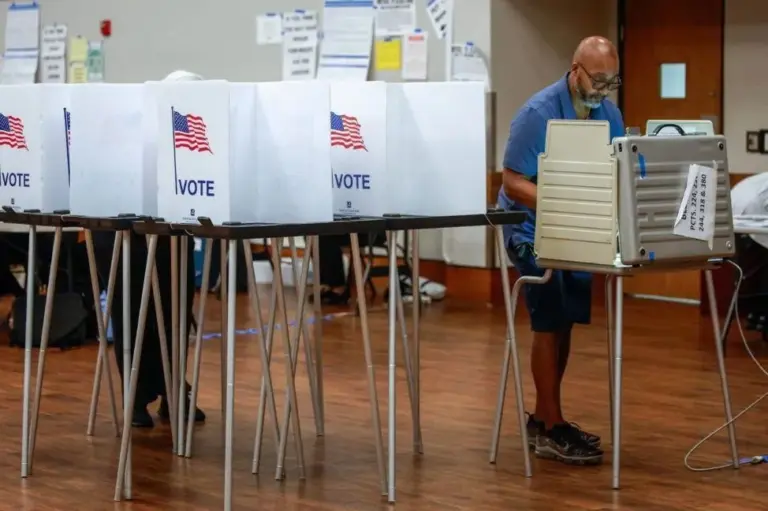
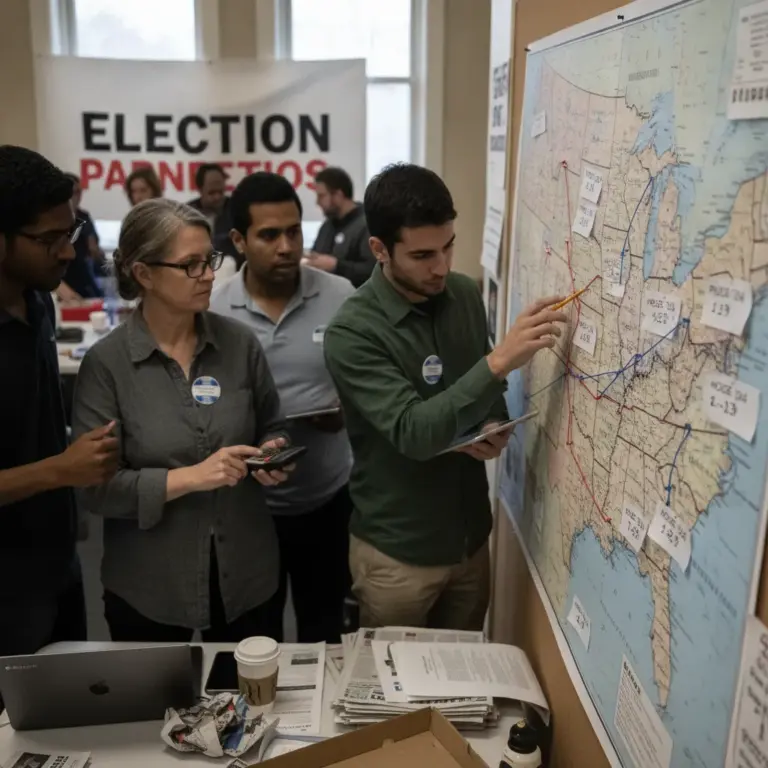
The dust has settled on the polls, but the battle for control of the House is far from over. As election officials begin the grueling process of tallying votes, several high stakes contests remain too tight to call. While some districts may see winners declared within hours, other races are expected to linger in limbo for days due to the fragmented nature of how different states handle their ballot counts.

Because every state follows its own set of rules regarding mail in ballots and provisional voting, there is no single timeline for when we will know the final makeup of Congress. In some jurisdictions, thousands of legitimate votes are still waiting to be processed, meaning small pockets of undecided ballots could easily flip a seat and change the overall balance of power.

For now, political analysts and voters alike are left watching the numbers tick upward in real time. With multiple key seats still hanging in the balance, these remaining tallies represent more than just individual wins; they are the final pieces of a puzzle that will determine which party holds the gavel for the next two years. Until those last boxes are opened and verified, the national conversation remains paused in anticipation.

The race for Michigan’s open Senate seat has reached a dramatic conclusion as voters head to the polls following Senator Gary Peters’ decision to retire. The vacancy creates a high-stakes opening in a state that proved pivotal during President Donald Trump’s 2024 victory, leaving Democrats fighting to hold onto their ground in an increasingly competitive political landscape.

Representing the Democratic ticket is Abdul El-Sayed, a former Wayne County health director who secured the nomination after a hard-fought primary battle against Representative Haley Stevens. Running on a staunchly progressive platform and bolstered by the influential support of the United Auto Workers union, El-Sayed is attempting to energize the base while appealing to working-class voters across the state.

Facing him is Republican Mike Rogers, a seasoned political veteran and former chair of the House Intelligence Committee. After narrowly losing his previous bid for this seat to Elissa Slotkin in 2024, Rogers returns with the full weight of the GOP establishment and the explicit endorsement of President Trump behind him. His campaign focuses on stability and experience, aiming to flip the seat back into Republican hands.

Adding an unexpected layer of tension to the contest was a stunning betrayal within party lines just days before the election. In a move that left Democratic leadership reeling, Representative Haley Stevens crossed over to endorse her opponent, Mike Rogers. This surprising defection has added significant uncertainty to the final tally as both camps scramble for every last vote in one of the nation’s most critical swing states.

As every seat in the U.S. House goes up for grabs, the upcoming midterm elections serve as a critical barometer for public sentiment nearly two years into President Donald Trump’s second term. To gauge where the American electorate stands, analysts are closely monitoring the delta between how individual districts voted for president in 2024 versus how they are voting for their congressional representatives now. By calculating the point difference between those margins, observers can identify whether specific regions are swinging toward Democrats or drifting further toward the GOP.

While this method provides a broad view of national trends, experts caution that it is not an exact science. Congressional races differ significantly from presidential contests because they are often shaped by local grievances, the personal popularity of incumbents, and typically lower voter turnout. However, when viewed across hundreds of different districts simultaneously, these numerical shifts offer some of the most reliable signals available regarding which way the political wind is blowing.

The ultimate redistribution of power in the House depends on these volatile swings. As results trickle in and updated maps reflect actual vote totals, certain red strongholds may flip blue or vice versa, fundamentally altering the legislative landscape. Because early returns can be deceptive and late surges often change outcomes, careful attention is being paid to districts with significant portions of their ballots already counted to ensure a clearer picture emerges on election night.

Behind closed doors, President Donald Trump is grappling with a stark duality regarding the current midterm trajectory. While he continues to express public optimism that polling might be inaccurate and that a surprise victory remains possible, sources close to the president reveal a deeper sense of apprehension. In private conversations, Trump has acknowledged that the Republican Party could be staring down a worst case scenario as the night unfolds.

This internal uncertainty stands in sharp contrast to the mood among top House Democrats, who appear increasingly confident. With only a small net gain required to seize control of the House and Senate, Democratic leaders are bullish about securing a comfortable majority. This confidence comes as early reports emerge from across the country, including logistical hurdles in New York where printer errors initially hampered ballot scanning in Westchester County.

Beyond the immediate numbers, the atmosphere remains tense over allegations of voter intimidation and fraud. Homeland Security Secretary Markwayne Mullin insisted that federal agents would not be used to intimidate voters at polling sites, though he signaled an aggressive post election push to gather data and ensure no noncitizens participated in the vote. These tensions mirror disputes seen in California and Nevada, where administration officials have pushed back against local election processes.

Meanwhile, specific regional battles are adding to the volatility of the evening. In Alaska, Senator Dan Sullivan has raised alarms over voter confusion caused by another individual with his name appearing on the ballot, calling it a calculated scandal. From record shattering turnout in South Carolina to economic anxiety playing out in Iowa, the night is shaping up to be a critical referendum on the current administration’s impact on everyday Americans.

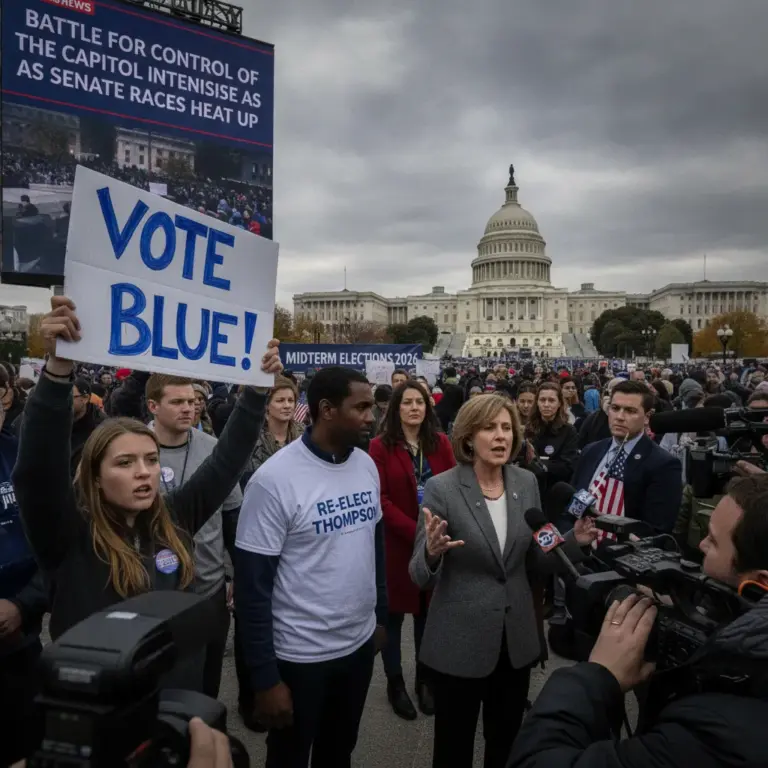
The balance of power in the United States Senate hangs in a delicate tension as voters head to the polls for the 2026 midterms. Republicans currently hold a comfortable fifty three to forty seven lead, but that cushion is facing significant pressure from an aggressive Democratic push. To reclaim control, however, Democrats face a steep uphill climb that requires flipping seats in several states where President Donald Trump secured double digit victories during his last campaign.

Much of the national attention is centered on traditional swing states such as Georgia, Michigan, and North Carolina, where narrow margins often decide the outcome. These high stakes contests serve as the primary frontline for both parties, with each side pouring resources into these volatile regions to either protect their slim advantages or carve out a path toward a new majority.

Beyond the usual battlegrounds, the political map has expanded into surprisingly unexpected territory. Campaigns are now fighting tooth and nail in states like Alaska, Kansas, Ohio, and Texas. While these areas have leaned safely red in recent presidential cycles, current polling suggests they could become competitive flashpoints, turning long shot challenges into genuine threats to Republican stability across the heartland_of America.

The American labor market showed surprising resilience in September, with job openings jumping significantly higher than economists had anticipated. According to the latest data from the Bureau of Labor Statistics, there were 7.52 million open positions across the country, marking an increase of 333,000 from August. This figure comfortably beat expectations and pushed the job opening rate to 4.5 percent of the total workforce. Currently, there are roughly 1.05 openings for every single unemployed person, suggesting a healthy demand for talent that spans several key sectors including manufacturing, professional services, and local government.

This growth in opportunity has translated into renewed confidence among employees, evidenced by a sharp spike in those choosing to leave their current roles. Quits climbed to 3.36 million in September, reaching their highest level since early last year. Economists often view these voluntary departures as a primary indicator of worker optimism, implying that people feel secure enough in their prospects to seek better pay or working conditions elsewhere. At the same time, actual hires rose while layoffs dipped to their lowest levels since March 2025, creating a positive trend of movement within the economy.

Heather Long, chief economist at Navy Federal Credit Union, noted that having more vacancies than unemployed individuals represents a significant shift from where the market stood a year ago. She suggested that this upward trajectory is particularly encouraging given the persistent pressure of inflation and high fuel costs currently facing businesses and consumers alike. It indicates that companies are gradually ramping up their recruitment efforts despite various macroeconomic headwinds slowing down other parts of the industry.

These findings provide a hopeful backdrop as investors and analysts look toward Friday’s official nonfarm payrolls report. While Wall Street expects a modest gain in employment and believes the unemployment rate will hover around 4.2 percent, the surge in openings suggests underlying strength. Adding to this optimistic mood was separate news released Tuesday showing that September factory orders for manufactured goods grew by 1.8 percent, further signaling industrial activity remains robust heading into the final quarter of the year.