Archive

November 2026

Browsing

The golden age of the political conspiracy thriller arrived during the shaky foundations of the 1970s, a decade defined by Watergate and a sudden, sharp decline in public trust toward government institutions. Films from that era captured a specific kind of atmospheric dread, where an ordinary citizen would stumble upon a hidden truth only to find themselves hunted by an invisible, omnipotent power. These stories were less about the specifics of a plot and more about the crushing weight of systemic corruption and the feeling that the people in charge were operating on a different set of rules than everyone else.

Fast forward to today, and the landscape of suspicion has shifted dramatically. While seventies cinema focused on secret cabals hiding information from the masses, we now live in an era where misinformation is broadcast openly across social media feeds and echoed by high ranking officials. The mystery is no longer about uncovering a hidden document in a dark basement but rather navigating a digital wilderness where contradictory truths coexist side by side. We have moved from an age of institutional secrecy to an age of strategic noise.

Looking back at these vintage thrillers offers more than just nostalgia; it provides a mirror for our own anxieties. By analyzing how past generations processed their distrust through art, we can better understand why modern conspiracy theories gain such powerful traction. Those old movies taught us how paranoia feels when it becomes a cultural baseline, reminding us that while the medium of delivery has changed from celluloid to algorithms, the underlying fear of being manipulated remains constant.

Filling the candy bowl for Halloween has become a significantly more expensive endeavor for American households over the last few years. According to a study by FinanceBuzz, the average cost of a 100 piece bag of assorted treats has climbed to 16.96 dollars this year. To put that into perspective, during President Biden’s first Halloween in office back in 2021, those same sweets averaged just 9.91 dollars. That represents a staggering jump of roughly 71 percent over three years, far outpacing the general national inflation rate.

Government data suggests that these spikes are not just limited to specific brands but are part of a broader trend across the confectionery market. The Bureau of Labor Statistics reports that prices for candy and chewing gum rose by 7.7 percent over the past twelve months. While every item in the grocery store feels more expensive lately, candy is rising at more than double the overall inflation rate of 3.7 percent, making it one of the most aggressive price hikes in the shopping cart.

Industry giants like Hershey appear to be driving some of this trend by prioritizing profit margins over sales volume. Recent earnings reports indicate that while net sales have risen, the actual amount of chocolate being sold has dropped as consumers react to higher price tags. Despite this price elasticity, companies have continued to raise prices to protect their bottom lines, betting that parents will still find ways to afford treats for their neighborhoods regardless of the cost.

Interestingly, high prices haven’t stopped Americans from celebrating entirely. The National Retail Federation predicts that total Halloween spending will hit around 13.5 billion dollars this year, potentially breaking previous records. Experts suggest that while families are keeping Halloween as a financial priority, they are becoming much more strategic about how they shop, opting for sales and carefully calculating per piece costs to avoid getting tricked by the checkout total.

Federal investigators have identified a sophisticated North Korean hacking collective known as TraderTraitor as the architect behind a staggering 6.43 billion dollar theft from Binance. The operation marks the largest cryptocurrency heist in history, dwarfing previous attacks including a massive breach at Bybit earlier this year. According to the FBI and collaborating agencies from the Secret Service and IRS, the hackers targeted eleven different blockchains, focusing heavily on Bitcoin and Ethereum to move their spoils.

The scale of the robbery is so immense that analysts from Elliptic note it nearly doubles the total amount of cryptoassets previously stolen by the North Korean regime. While some progress has been made in containing the damage, with roughly 2.85 billion dollars already frozen by various stablecoin issuers and network operators, much of the remaining loot is being funneled through decentralized finance tools and instant swap services to hide its origin. Meanwhile, Binance has begun cautiously restoring withdrawal services for users following an emergency pause intended to secure the platform.

Investigators reveal that TraderTraitor operates with clinical precision, often posing as high tech recruiters to lure targets into installing malware. By creating fake personas and using artificial intelligence to craft believable job offers in fields like blockchain and AI, the group tricks professionals into downloading tainted software. Once inside a system, they deploy specialized backdoors that grant them full remote control over infected devices regardless of whether they run Windows, macOS, or Linux.

This latest campaign highlights a dangerous evolution in state sponsored cybercrime where legitimate developer workflows are weaponized against global financial infrastructure. By utilizing front companies and highly specific industry knowledge, these operatives can bypass traditional security hurdles to infiltrate major exchanges. As federal authorities release lists of compromised wallet addresses, the international community continues to grapple with a digital adversary that views cryptocurrency as a primary engine for funding its national interests.

Binance has begun a phased rollout of customer withdrawals following a staggering six point three billion dollar heist that paralyzed the worlds largest cryptocurrency exchange last week. Co CEO Richard Teng announced the move via social media on Sunday morning, emphasizing that the platform would shoulder the entire financial burden of the theft rather than passing those losses onto its clients. Early reports indicate that fifteen major digital currencies, including Bitcoin and Ethereum, were among the first to be restored as part of a cautious strategy to ensure network stability.

By mid morning on Sunday, the exchange had already processed billions in transactions as users rushed to reclaim their holdings. While most operations are returning to normal, some customers may experience slight delays while security teams continue to vet remaining assets based on user demand. To cover the massive deficit, Binance tapped into its dedicated secure assets fund alongside corporate treasuries and futures insurance reserves. Company officials confirmed that ninety five percent of the stolen funds have already been covered, noting that only a few less liquid tokens are still being sourced.

The investigation into the breach took a geopolitical turn when the FBI identified a North Korean state sponsored group known as TraderTraitor as the culprit. According to federal investigators, these hackers have been active since 2020 and spent much of last week attempting to convert their spoils primarily into Ethereum. This discovery highlights the ongoing risk posed by sophisticated nation state actors targeting decentralized finance infrastructures globally.

Despite the scale of the attack, an industry wide effort helped mitigate some of the damage. A coalition of cryptocurrency firms successfully froze approximately three billion dollars in stolen assets shortly after the event occurred. In a public statement, Binance expressed gratitude toward law enforcement and its industrial partners for their swift action in tracing and locking down funds during what described as an incredibly challenging period for its global community.

Panic rippled through the digital asset market this weekend as investors withdrew 3.6 billion dollars from Binance following what experts are calling the largest heist in history. The exodus began shortly after the exchange reopened withdrawals in phases, having previously frozen all movement of funds to investigate a staggering 6.3 billion dollar breach. While the platform maintains that its overall stability remains intact, with outflows representing roughly two percent of its total assets under management, the sudden flight of capital highlights a lingering fragility in user trust.

Federal investigators have pointed the finger toward North Korea, specifically identifying a group known as TraderTraitor. The FBI believes this entity is linked to the notorious Lazarus Group, the same collective blamed for the infamous 2014 attack on Sony Pictures. According to officials, the hackers used sophisticated malware and a compromised laptop to penetrate Binance’s defenses and erase their tracks. Law enforcement agencies are now urging other firms to block specific addresses as the culprits attempt to laundry the stolen loot through decentralized finance services.

To stem the tide of panic, Binance executives have pledged that no customer will suffer a financial loss due to the attack. Co-CEO Richard Teng stated that the company has already replenished ninety percent of the missing tokens using its internal corporate treasury and secure asset funds. The remaining ten percent consists of less liquid assets that may take longer to acquire, but leadership insists they remain committed to covering every cent of the shortfall.

Despite these assurances, the ripple effects were felt across the entire cryptocurrency ecosystem almost immediately. Bitcoin and Ethereum both saw sharp declines, while Binance’s own native token tumbled nearly ten percent as traders reacted to the vulnerability of even the industry’s biggest player. This massive security failure arrives amid growing fears that advancing artificial intelligence could make traditional encryption obsolete and provide sanctioned regimes like North Korea with powerful new tools for state funded cybercrime.

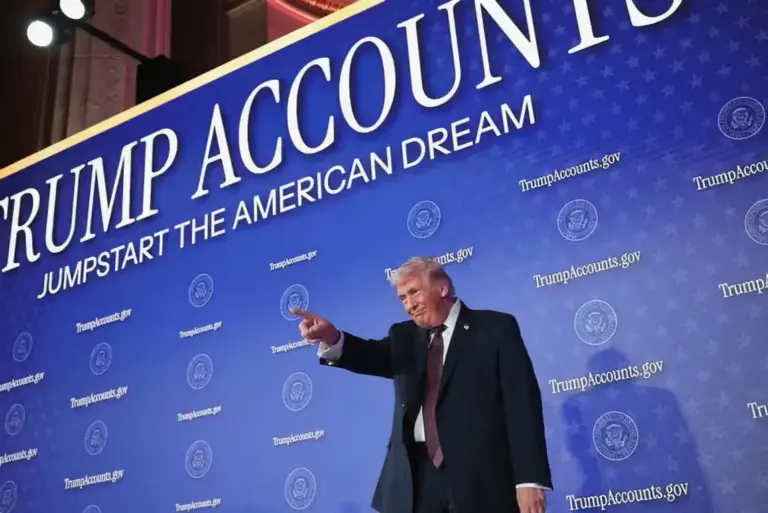
Quanisha Green first suspected something was wrong when she opened an email from the IRS urging her to claim a Trump Account for her two children. As a business advisor and college department director in Philadelphia, Green is used to navigating bureaucracy, but the discovery that nearly 70 million accounts had been automatically created for minors across the country left her unsettled. The initiative, launched following an announcement by President Donald Trump, establishes a new type of individual retirement account for every single child under 18 with a valid Social Security number, effectively bypassing parental consent entirely.

While the government frames the move as a way to ensure children gain an early stake in the American economy, many parents view it as an overreach of federal power. For mothers like Kate Pospisil in Texas, the issue transcends political affiliation. She expressed horror that a government agency could open a financial account involving private banks and brokerage firms in her five year old daughter’s name without any signature or opt out option. Pospisil argued that such decisions should belong solely to parents, noting her deep concern regarding how much sensitive personal data was shared with private entities during the rollout.

The logistics of the program vary depending on a child’s age, with those born between early 2025 and late 2028 eligible for a one time thousand dollar government deposit upon request. However, older children are also enrolled automatically despite being ineligible for the seed money. Even if parents refuse to download the required app or activate the accounts, the profiles remain active in the system, allowing outside donors to make contributions. Adding to the frustration is confirmation from Treasury officials that once an account is claimed, it currently cannot be closed.

Beyond the philosophical debate over parental rights, security concerns have taken center stage for critics like Green. Her hesitation stems from a general lack of confidence in current administrative safeguards, specifically citing previous controversies involving attempts by figures like Elon Musk to access sensitive IRS databases. While proponents suggest that separating politics from finance reveals a beneficial tool for long term wealth building, many families find themselves trapped in a system where their children’s identities are linked to a branded government project they never asked for and cannot escape.

ExxonMobil’s (XOM) latest earnings give investors something more useful than another headline about soaring oil profits: a test of how much cash the business can generate – and how much shareholders should expect to keep receiving.

The energy giant reported third-quarter net income of $15.4 billion on October 30, with adjusted earnings of $4.23 per share beating the $4.08 LSEG consensus.

Refining strength helped drive the result, as disruptions to global fuel supplies boosted margins.

But the investment question extends beyond this quarter’s windfall: what survives when those conditions ease?

Refining reveals why Exxon is more than an oil-price bet

Exxon’s Energy Products segment earned $7.17 billion, edging past the $7.09 billion generated by its upstream business.

Compared with Q2, fuel-making profits increased while upstream earnings declined.

That divergence illustrates the value of owning businesses across the energy supply chain.

For investors, crude prices alone therefore offer an incomplete guide to Exxon’s prospects.

Refiners earn money from the spread between feedstock costs and finished-fuel prices; that spread can strengthen even when oil-production earnings weaken.

The implication cuts both ways, though.

Integration provides another source of earnings, but unusually favorable refining conditions can also flatter consolidated profitability.

Investors assessing future earnings should watch diesel margins alongside crude prices, rather than assume every business will keep contributing at today’s pace.

XOM’s cash cushion is substantial – but timing helped

Exxon generated $19.1 billion in free cash flow and distributed $9.4 billion through dividends and buybacks.

Its reported cash generation therefore covered those payments roughly twice over, leaving considerable financial flexibility.

However, working-capital movements contributed approximately $2.2 billion to operating cash flow.

Excluding those movements, operating cash flow fell to $23.4 billion from $25.7 billion in the preceding quarter, even as the headline measure increased.

That distinction matters because inventory, receivables and payment timing can shift cash between reporting periods without representing a lasting improvement in earning power.

Shareholders still received strong cash backing for their payouts.

But annualizing the headline free-cash-flow figure would risk treating a favorable quarterly movement as recurring income.

The more revealing test is cash generation across several quarters, after investment needs and working-capital swings.

The buyback promise sets up the next earnings test

Exxon also announced $20 billion of share repurchases for 2027, subject to reasonable market conditions.

The qualification deserves attention: it preserves management’s ability to respond if the operating environment deteriorates.

Buybacks can increase remaining shareholders’ ownership and support per-share earnings, but their investment value depends on the price paid and the cash available through the cycle.

A large authorization alone cannot establish that shares are cheap.

For prospective buyers, the strongest takeaway is Exxon’s capacity to convert favorable markets into financial flexibility.

The unresolved question is how much of that capacity persists under more ordinary conditions.

Friday’s results make cash coverage, refining profitability and capital allocation the measures to watch next.

Those will help distinguish a stronger underlying business from a particularly lucrative quarter.

The post Exxon earnings: $19B cash haul comes with a catch appeared first on Invezz

Nvidia NVDA shares fell sharply on Friday as a broad selloff in technology stocks intensified concerns over the cost of artificial intelligence infrastructure and the time required for companies to generate returns on their investments.

Disappointing results from Amazon and Intel weighed on semiconductor stocks, while fresh reports involving CEO Jensen Huang and regulatory scrutiny of the company’s acquisition plans added to the spotlight on the chipmaker.

Nvidia was down more than 4.8% trading around $203.40 at the time of writing.

The wider market was also under pressure, with the Nasdaq Composite falling nearly 2.5%, while the S&P 500 and Dow Jones Industrial Average also traded lower.

The Philadelphia Semiconductor Index dropped around 7% as losses spread across chipmakers.

Amazon and Intel results deepen AI concerns

Amazon’s third-quarter results added to investor unease over the scale of spending required to build AI infrastructure.

The company reported a trailing 12-month free cash flow outflow of $42.4 billion, compared with a positive $14.8 billion in the year-earlier period. It was largely driven by increased investment in property and equipment, primarily for AI.

Amazon maintained its capital expenditure outlook of approximately $220 billion for 2026, reinforcing concerns over how quickly its investments will translate into stronger cash generation.

Its shares also came under pressure following the results.

Intel’s weaker-than-expected fourth-quarter guidance further unsettled the chip sector.

Although the company beat third-quarter earnings estimates, it forecast revenue of $15 billion to $16 billion for the current quarter, below Wall Street’s expectation of around $17 billion. Its adjusted earnings forecast of 25 cents per share also missed the consensus estimate of approximately 43 cents.

Intel shares plunged nearly 29%, while AMD dropped around 10%, adding to the pressure on Nvidia and other semiconductor companies.

Alphabet’s results had already contributed to the technology selloff a day earlier.

The Google parent reported third-quarter free cash flow of negative $9.07 billion as capital expenditure on AI infrastructure climbed, while weaker-than-expected advertising revenue added to investor concerns.

Report raises questions over Jensen Huang’s contact

Separately, a New York Times report published Thursday said US intelligence agencies had concluded that Alice Huang, also known as Huang Le, an executive at Singapore-based data centre company Megaspeed, was allegedly acting as a Chinese intelligence asset and passing commercial information to Beijing.

The report said surveillance had revealed that she developed a close relationship with Nvidia CEO Jensen Huang.

Nvidia rejected suggestions that the interactions were unusual, saying meetings with customers were part of the CEO’s job.

The company also said regional cloud customers received ordinary business information, not sensitive trade secrets or information relevant to national security.

DOJ questions Nvidia’s Hugging Face deal

Nvidia is also facing questions from the US Department of Justice over its proposed $12.93 billion acquisition of open-source AI platform Hugging Face.

Reuters reported that the department has asked whether the deal could give Nvidia control over an important distribution channel for AI and provide leverage over competitors.

The inquiry forms part of a broader examination of Nvidia’s acquisitions, investments and sales practices.

The DOJ’s questions do not establish wrongdoing or mean that legal action will necessarily follow.

The post Why Nvidia shares are down over 4% on Friday? appeared first on Invezz

The artificial intelligence (AI) boom still offers an investment opportunity – but Bank of America’s senior strategist Michael Hartnett believes the better deal now lies in lending to technology giants rather than owning their shares.

As of October 30th, he views selected Magnificent Seven bonds yielding 6% to 8% as increasingly attractive after a bruising selloff.

His argument turns the AI investment narrative on its head: companies spending aggressively to build tomorrow’s infrastructure could reward creditors even while testing shareholders’ patience.

The distinction matters as financing costs climb and cash demands intensify.

AI’s enormous funding bill changes the investment equation

The pressure is visible in Amazon’s latest earnings.

The company maintained its $220 billion capex forecast for 2026 while reporting $42.4 billion in negative free cash flow in the trailing 12 months.

Yet operating cash flow increased 29% to $168.3 billion.

That combination reveals the underlying problem: Amazon’s operations are producing substantial cash – but its infrastructure investments are consuming even more.

For shareholders, the “uncertainty” concerns when that spending will generate sufficient additional returns.

But bondholders face a different calculation: whether the borrower can meet interest payments and repay principal.

A business can remain creditworthy while delivering disappointing stock returns.

Hartnett’s preference therefore reflects a distinction between corporate financial strength and the price investors pay to participate in future growth.

Meta’s financing shift offers creditors a different signal

Hartnett’s figures put hyperscaler debt issuance at $182 billion this year, alongside $89 billion in equity issuance – a combined $271 billion.

That funding appetite helps explain why investors are demanding more compensation to finance the AI expansion.

Meta’s plan to raise up to $95 billion through stock offerings illustrates how the consequences can differ across investors.

Additional common shares can dilute existing ownership, while equity financing can reduce reliance on further borrowing, potentially supporting creditors.

The package includes different securities, so its ultimate effect depends on the terms and execution.

Hartnett interprets the shift as evidence that the “era of big buybacks is over.”

That is his broader market thesis, rather than a declaration that every technology company will stop repurchasing shares.

Attractive yields still require careful bond selection

The appeal is straightforward: investors buying selected bonds at depressed prices can secure higher yields and potentially benefit if prices recover.

Unlike shareholders, they do not need expanding stock valuations to earn their contractual payments.

However, a quoted 6% to 8% yield is neither a universal offer across technology debt nor a guaranteed annual investment return.

Maturity, purchase price, seniority, and the issuing entity all matter.

Longer-dated securities can fall sharply when market interest rates rise, while deteriorating credit conditions can push prices lower even if Treasury yields decline.

Hartnett’s thesis ultimately rests on whether borrowing costs now compensate investors adequately for those risks.

For investors convinced that leading technology companies will remain financially resilient, their bonds offer a way to participate in the AI financing cycle with a different balance of income, upside, and downside exposure.

The post Big tech names remain attractive – not their stocks though appeared first on Invezz

Companies are spending hundreds of billions of dollars to develop artificial intelligence models, hoping to establish technological advantages that could translate into lasting commercial returns. 

But as competitors release increasingly capable models within months of one another, investors face a difficult question: how sustainable is a strategy built around continuously spending more to stay ahead?

The rapid pace of innovation is creating opportunities for AI developers to attract users, win enterprise customers, and reshape established industries. 

However, the short shelf life of technological leadership raises questions about whether the revenue generated by successive model upgrades can justify the cost of developing them.

Meta’s Muse has emerged as a prominent example of the commercial potential of AI.

More than 10 million people in the US and Canada had downloaded the Muse app, Chief Executive Mark Zuckerberg said during the company’s earnings call last week.

The milestone is notable because ChatGPT’s app took about three times as long to reach 10 million downloads, according to data from market-intelligence firm Sensor Tower.

Anthropic’s Claude Cowork, meanwhile, triggered a sell-off in software stocks in February as investors worried that AI could undermine traditional software business models.

These developments demonstrate the technology’s ability to attract users and challenge established industries. 

Yet user adoption and market disruption do not necessarily translate into sustainable profits for the companies financing the underlying technology.

As Anthropic filed its S-1 registration earlier this week, it revealed an operating loss of $693 million in the first half of 2026.

Results of big tech companies like Meta, Alphabet, and Amazon also revealed huge cash spending for AI buildout.

The heavy cash expenditure has resulted in stocks plunging on Friday as investors rotated out of artificial intelligence-related stocks.

As the AI race intensifies, it becomes more important for AI providers to generate sustainable revenue and not just release the most advanced model.

AI spending is rising faster than the certainty of returns

The scale of investment required to compete in the AI market is becoming increasingly difficult to ignore.

Goldman Sachs estimates that the largest US AI hyperscalers are on track to spend $800 billion in capital expenditure in 2026, with consensus forecasts pointing to $1.1 trillion in 2027.

The bank expects capital expenditure to increase further in 2027 and potentially exceed consensus estimates, although the pace of growth and the size of positive surprises are expected to diminish compared with recent quarters.

According to Goldman Sachs’s equity analysts, hyperscalers will need to generate approximately $300 billion in annual AI revenue over the next few years to break even on their investments, based on average annual capital expenditure in 2026 and 2027.

There are reasons for optimism. Hyperscaler cloud revenues accelerated sharply in 2026, annualising approximately $70 billion above the pre-AI trend in the second quarter, while announced revenue backlogs exceeded $1.5 trillion.

Nevertheless, these figures do not eliminate the central uncertainty: how much of the revenue growth will translate into returns that adequately compensate companies and their investors for the cost and risk of the investments?

Alexander Lis, chief investment officer at investment firm SDV, believes the industry will need a substantial increase in sales to justify its spending.

“It is going to take massive additional revenues to justify the current aggregate CapEx levels of ~ $1.4 trillion per annum: from $5 trillion to $8 trillion in incremental sales (factoring in EBITDA margin and ROI assumptions),” Lis told Invezz.

He warned that the problem could emerge when investors begin to doubt whether such incremental sales are achievable.

For now, growing usage has helped compensate for falling token prices, he added. 

But Lis cautioned that “Should AI adoption decelerate, massive CapEx would start to be a problem.”

When a better model becomes a short-lived advantage

The financial challenge is not simply that AI development is expensive.

It is that a technological lead may not last long enough to justify the investment required to achieve it.

A company can spend billions developing a flagship model, only for a competitor to release a more capable or cheaper alternative a few months later. 

The first company’s technological advantage may consequently have limited value if customers can switch to a rival offering comparable performance at a lower price.

A Bloomberg report citing The Epoch Capabilities Index said the top spot among AI models changed 20 times since 2024. 

A model has only remained as the frontier model for about seven weeks. That’s a very short time to be numero uno after spending billions of dollars. 

Ilman Shazhaev, Founder and CEO of Dizzaract, argues that the economics of pursuing a technological lead have already become questionable as a strategy for maintaining a competitive advantage.

“The core misconception behind 2026 capital spending of roughly $765 billion is mistaking high use for high value,” Shazhaev told Invezz.

Even if lower prices encourage greater usage and keep computing clusters busy, high utilisation does not automatically translate into attractive margins.

Even if prices plunge and demand rises enough to fill clusters, a power plant runs at full capacity for its whole life and still makes utility margins. Meanwhile, hardware efficiency, algorithmic compression, and open-weight models matching closed frontier performance within four months trigger what I call the “Fixed-Capability Collapse.” This cuts the cost of serving a given level of intelligence roughly tenfold every year.

Founder and CEO of Dizzaract
Ilman Shazhaev

He argues that unless frontier workloads continue to require exponentially larger, tightly connected computing clusters, some of today’s infrastructure could become economically outdated by 2030.

The risk is particularly significant because AI hardware does not retain its economic value indefinitely. 

Shazhaev estimates that AI accelerators could become obsolete within three to five years, while new chip generations arrive approximately every 12 months.

This creates a potential mismatch between the accounting treatment of expensive infrastructure and its actual economic usefulness.

Shazhaev estimates that the gap between accounting depreciation and economic reality could reach $176 billion between 2026 and 2028.

Open-ended models eating into closed-ended models’ lunch

Another threat for the top-end models is the cheaper open-ended models, which seem to be catching up to frontier models’ performance within months. 

Chinese developers and open-weight models are adding another layer of competition, challenging the pricing power of companies developing proprietary, closed models. 

As the performance gap narrows, customers have more reasons to consider alternatives that deliver comparable results at a fraction of the cost.

A Bloomberg News analysis found that Moonshot’s Kimi K3 could build the same e-commerce website as Anthropic’s Claude Fable 5 for one-fourth of the cost. 

The comparison shows how cheaper alternatives could erode the commercial advantage of expensive frontier models, especially for customers whose workloads don’t require the most advanced capabilities.

The competitive pressure also extends beyond pricing. 

Open-weight models allow developers to access and adapt models’ underlying weights, potentially giving businesses more flexibility in how they deploy AI. 

That could make them particularly attractive in markets where customers have limited budgets.

AI routing company OpenRouter said the five most popular models on its platform were Chinese, suggesting that affordability and accessibility can influence adoption alongside technical performance.

For US AI developers, the risk is that continued investment in building the most capable models may not translate into a proportionate commercial advantage if customers increasingly choose cheaper alternatives.

The pressure is already influencing pricing decisions at leading AI laboratories. 

In September, OpenAI and Anthropic introduced less expensive models as competition from open-weight alternatives intensified.

OpenAI added GPT-6 Sol and GPT-6 Luna to its GPT-6 family, cutting API prices by 50% compared with GPT-5.6 promotional pricing.

Anthropic, meanwhile, introduced Claude Opus 5.5, describing it as a more token-efficient model that would cost around 40% less to run than its Opus 5 predecessor.

These moves suggest that even established frontier-model developers are under pressure to improve cost efficiency rather than compete on performance alone.

Lower prices could help expand adoption and attract more customers, potentially supporting revenue growth through higher usage volumes.

However, they could also reduce the revenue earned per unit of AI processing, making it more difficult for companies to recover the costs of developing and operating their models.

Big Tech has a funding advantage, but capital alone may not be enough

The ability to finance the AI race is unevenly distributed.

Analysts said the large technology companies have established revenue streams, access to public markets, cloud businesses, and existing customer relationships. 

These advantages give them more flexibility to absorb high research and infrastructure costs than smaller, independent AI developers.

Lis said large technology incumbents are in a stronger position to fund the race because of their access to public markets. However, he questioned whether substantial investment necessarily creates a sustainable competitive advantage when rivals can offer comparable technology at much lower prices.

Shazhaev similarly argues that established technology companies are better equipped to absorb frontier-model training costs.

He added that “but as raw intelligence becomes commoditized, proprietary behavioral data and distribution matter far more than capital or hardware.”

In his view, control over computing hardware can provide a temporary advantage, but it cannot necessarily prevent competitors from reproducing similar capabilities through other models.

Pure-play AI laboratories face a different challenge.

Without diversified businesses generating substantial cash flows, they may have to rely more heavily on venture capital, strategic investors, and other financing sources.

Shazhaev pointed to the large funding requirements of leading AI laboratories and the possibility that public listings could shift more of the financial risk onto public-market investors.

What are sustainable revenue avenues for AI companies?

If the advantage from a superior model is temporary, companies need other ways to protect their returns.

During the last technology revolutions, the greatest beneficiaries were the ones that figured out how to use technology to strengthen their products, improve productivity, or distance themselves from competitors (like streaming and gaming companies vs. telecoms during the internet boom). From this point of view, proprietary data sets and strong distribution networks matter more than access to cheap capital.

Chief investment officer at investment firm SDV
Alexander Lis

Rather than spending continually to outperform every rival on model benchmarks, a company can build products around customer needs, integrate AI into established workflows and use specialised information to deliver results that competitors cannot easily replicate.

Shazhaev makes a similar case, arguing that “companies escape the leapfrog cycle when they treat models as parts they can swap and build their edge in layers that stay scarce: workflow integration, simulated testing worlds, low-cost distributed delivery, and smart allocation that keeps customers.”

He draws a distinction between a high valuation or a temporary revenue surge and a durable business.

“Fast revenue helps short-term fundraising, but when open-weight models deliver frontier performance four months later at a fraction of the cost, customers churn unless your software is deeply woven into their daily work.”

The same principle applies to AI applications in financial services, healthcare, cybersecurity and industrial automation, where specialised knowledge, proprietary data and regulatory requirements may help companies establish defensible positions.

For investors, this means evaluating whether AI spending creates measurable economic benefits rather than treating model performance or user growth as sufficient evidence of commercial success.

The race to develop superior models may also create opportunities for businesses that support AI deployment rather than compete directly in model development.

Ryan Kirkley, chief executive and co-founder of Global Settlement Network, said “I think the economics become questionable when companies are spending billions to maintain a technological advantage that lasts six months, particularly if that advantage doesn’t translate into customers willing to pay a premium.”

He expects a handful of companies to continue developing frontier models while the broader commercial opportunity expands into the infrastructure supporting AI applications.

Michael Heinrich, chief executive and co-founder of 0G Labs, similarly argued that “As intelligence gets cheaper, the scarce thing becomes proof: that the model you paid for is the one that ran, that your data stayed private, and that an agent did what it was told. I expect durable value to sit with whoever can supply that proof at scale.”

The post As the AI model race heats up, who will come out on top? appeared first on Invezz