Archive

November 2026

Browsing

Elon Musk has felt a sharp financial sting following the recent midterm elections, losing approximately 113 billion dollars in paper wealth over a mere forty eight hours. While Wall Street initially saw a historic surge immediately after the vote, that momentum quickly evaporated into a broader selloff of artificial intelligence stocks. For Musk, the decline began early as Tesla and SpaceX shares bucked the initial trend of growth seen by giants like Apple and Amazon, leading to a staggering drop in combined market capitalization from 3.5 trillion dollars down to roughly 3.04 trillion.

The sudden exodus of investor confidence appears rooted in fears that Musk’s high profile political activity will invite aggressive retaliation from the newly empowered Democratic majority in Congress. With lawmakers signaling intentions to investigate corporate corruption and scrutinize Musk’s influence through initiatives like DOGE, critics suggest he has become a primary target due to his outspokenness and significant campaign spending. Concerns are particularly acute regarding SpaceX, given its reliance on multi billion dollar federal contracts and ongoing questions surrounding Starlink’s operational stability during international conflicts.

Market analysts remain divided on whether this crash represents a permanent shift or a temporary panic. Some experts argue that investors are having a knee jerk reaction, noting that President Trump still holds veto power over restrictive legislation and maintains a strong alliance with the entrepreneur. They point to SpaceX’s ambitious plans to expand computing capacity as a sign of fundamental strength that outweighs current political noise, suggesting that while Democrats might slow progress, they cannot easily dismantle it.

However, other observers warn that the regulatory landscape is becoming increasingly treacherous, citing shifting demographics in key states like Texas as a hurdle for future ambitions such as a potential merger between Tesla and SpaceX. While the immediate threat may be buffered by executive support, some believe the true danger lies further ahead. If current tensions lead to a prolonged legislative stalemate followed by another shift in White House leadership by late decade, the volatility currently hitting Musk’s portfolio could become a lasting reality for his empire.


The futuristic silhouette of the Cybertruck may soon become a relic of the past. Elon Musk announced on Friday that Tesla plans to phase out production of its polarizing stainless steel pickup at the Texas gigafactory by mid 2027. This strategic pivot is designed to clear floor space for the Cybercab, Tesla’s autonomous ride hailing vehicle, signaling a definitive shift in priorities toward a driverless future. While some fans may be disappointed, Wall Street responded positively to the news, sending Tesla shares up nearly five percent as investors embrace the transition toward robotics and AI.

Since its flashy debut in 2019, the Cybertruck was marketed as an indestructible rolling fortress capable of weathering everything from sledgehammers to gunfire. However, reality proved less polished than the prototype. The vehicle struggled throughout its short lifespan with persistent quality control issues and a series of recalls involving faulty pedals and cameras. These technical hurdles were compounded by lackluster sales numbers that fell far short of Musk’s initial projections of 250,000 units per year, with recent data showing a significant dip in registrations compared to previous periods.

Industry analysts suggest that the high price point and niche appeal made the sunsetting of the truck inevitable. Dan Ives of Yorkville Ives and Company noted that the writing was already on the wall given the cooling demand for such an expensive and unconventional utility vehicle. Beyond market forces, the truck also became a target for political protesters who viewed it as a symbol of Musk’s growing influence within government circles, leading to sporadic acts of vandalism at various dealerships across the country.

As Tesla leans into its robotaxi era, it is focusing all available resources on vehicles like the Cybercab, which lacks both a steering wheel and pedals entirely. With production already underway in Austin, Tesla is betting that autonomy will drive more growth than luxury pickups ever could. Some observers believe this evolution might lead to further corporate restructuring, including speculation about potential ties between Tesla and SpaceX to secure additional computing power and capital for these ambitious technological leaps.

The Nasdaq saw a significant resurgence today as investors pivoted back toward technology stocks, sparking a broad rally across the sector. After a period of uncertainty, market sentiment shifted upward, driven by renewed confidence in growth projections and strong quarterly momentum among major software and hardware firms. This turnaround suggests that traders are once again willing to bet on high valuation tech plays despite broader economic headwinds.

Leading the charge was Airbnb, which witnessed its shares rocket higher in a standout performance. The travel platform caught the eye of analysts and retail investors alike, benefiting from optimistic forecasts regarding global tourism recovery and strategic operational adjustments. As booking numbers climbed, the stock surged well beyond previous resistance levels, acting as a catalyst for other consumer-facing digital platforms throughout the session.

While the surge in travel and tech dominated the headlines, the wider market reflected a cautious yet hopeful appetite for risk. Traders spent much of the day balancing these aggressive gains against macroeconomic indicators, but the sheer strength of the Nasdaq indicated that momentum is currently favoring innovation over defensive holdings. Industry observers note that this shift could signal a longer term trend if current earnings trajectories hold steady into next month.

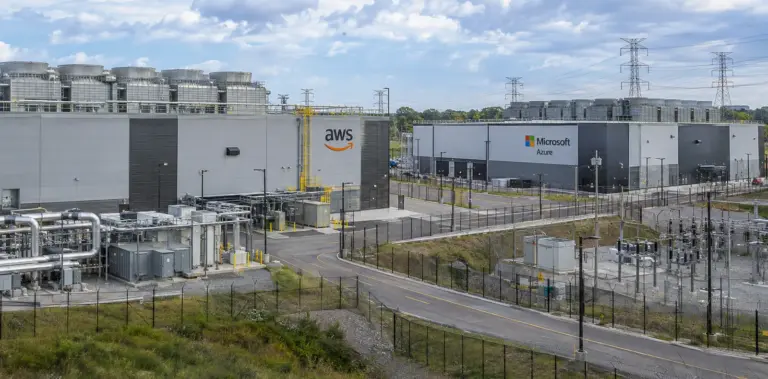
Shares of major cloud technology companies rose on Wednesday despite Democratic victories in the US midterm elections, raising the prospect of tighter restrictions on artificial intelligence data centres.

Amazon stock AMZN climbed more than 7% to $271.49 in morning trading, leading gains among the major cloud providers.

Microsoft, Alphabet and Meta Platforms also traded higher, while smaller cloud infrastructure companies, including CoreWeave, moved lower.

Democrats won control of both chambers of Congress and secured key gubernatorial victories, including in Texas, Georgia and Ohio.

Opposition to the rapid expansion of AI data centres was a major campaign issue, raising concerns about potential construction restrictions.

However, analysts said tighter regulatory barriers could benefit established cloud providers by making it harder for smaller competitors to expand capacity.

Regulatory barriers could strengthen hyperscalers

Large technology companies, commonly known as hyperscalers, have invested heavily in building and operating data centres to support AI services.

Needham analyst Laura Martin said higher regulatory barriers could strengthen existing players while increasing the risks and required returns on investment for new entrants.

Amazon, Microsoft, Alphabet and Meta already operate extensive cloud infrastructure, giving them an advantage if new data-centre construction becomes more difficult.

A slowdown in industry-wide capital expenditure could also ease pressure on the established companies’ finances.

Their existing infrastructure would remain available to generate revenue, while lower spending requirements could improve returns on invested capital.

Martin noted that investors and politicians were increasingly aligned in wanting slower capital spending growth, although their motivations differed.

Baird Private Wealth Management strategist Michael Antonelli said in a WSJ report that hyperscalers “already have compute. They have the data centers. So if you’re pulling up the drawbridge, you’re giving them their moat.”

Existing data centres and computing capacity could become a competitive advantage if the expansion of new facilities slows.

AI spending concerns remain in focus

The potential slowdown comes as investors question whether the largest technology companies can sustain their spending on AI infrastructure.

Amazon, Meta, Microsoft and Alphabet shares came under pressure after reporting their September-quarter results late last month.

Their rising capital expenditure has also pushed free cash flow at Amazon, Meta and Alphabet into negative territory.

The companies have increasingly turned to a combination of debt and equity financing to support their infrastructure investments.

A slowdown in spending could therefore address some investor concerns about the financial risks associated with the AI race.

Lower capital expenditure could improve free cash flow and reduce the pressure to invest aggressively in additional capacity.

Yorkville Ives analyst Dan Ives described the election outcome as a potential positive for some technology investors if it encourages large companies to moderate their spending.

However, he also warned that Democratic control of Congress would create significant challenges for the broader AI and technology industry.

Smaller cloud providers face potential pressure

While established hyperscalers advanced, smaller cloud infrastructure providers faced a weaker market reaction.

Companies such as CoreWeave have expanded rapidly to compete with larger cloud providers by building data centres and offering computing capacity for AI workloads.

New restrictions on data-centre construction could make it more difficult for these businesses to expand, while established providers would retain access to their existing infrastructure.

The election results could also lead to negotiations between technology companies and lawmakers over future AI legislation.

Ives said the Trump administration could oppose major regulatory measures, but congressional pressure may still push technology executives towards compromises.

AI disclosure: AI tools assisted with research and drafting of this piece. An Invezz editor reviewed the facts, sources and wording before publication. Any opinions or analysis are Invezz’s, not those of an automated system.

The post Why are Amazon, Microsoft stocks surging 6% today? appeared first on Invezz

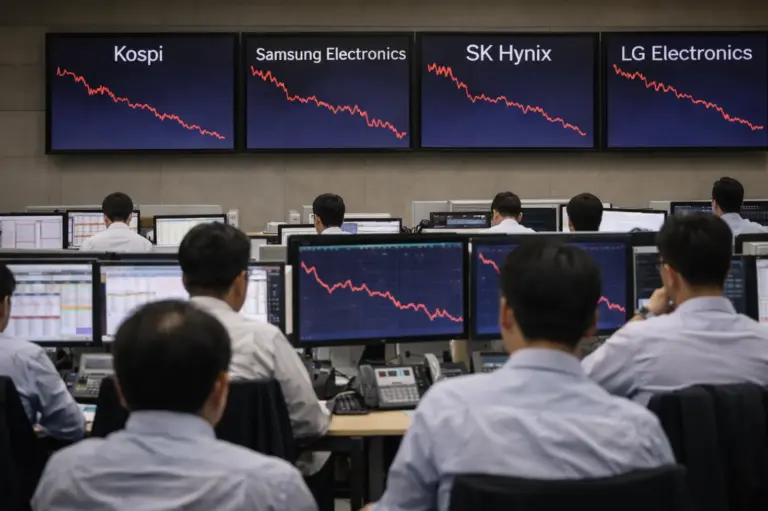
South Korean stocks plunged on Thursday as a sharp selloff in semiconductor shares dragged the benchmark Kospi lower.

The Kospi fell over 5% during the session, slipping briefly below 5,350 after opening at 5,580.

The selling triggered a temporary suspension of program trading on the main exchange, while the tech-heavy Kosdaq also activated a sell-side sidecar around noon as the index dropped below the 700 mark.

Foreign investors were the biggest sellers, offloading nearly 2 trillion won ($1.4 billion) worth of shares on the main board alone.

The selling was concentrated in semiconductor manufacturers, chip equipment suppliers and power infrastructure companies.

Investors are worried that Democratic victories in the US midterm elections could bring tighter restrictions on artificial intelligence infrastructure and data-center development.

Samsung, SK Hynix lead semiconductor selloff

Major chipmakers bore the brunt of the decline as investors reassessed the outlook for AI infrastructure spending following Democratic gains in the US elections.

Samsung Electronics fell around 8%, while SK Hynix dropped more than 10%, leading the selloff.

Semiconductor equipment and components manufacturers also came under pressure, with Hanmi Semiconductor and Samsung Electro-Mechanics recording significant declines.

The weakness followed a drop of more than 3% in the Philadelphia Semiconductor Index overnight, even as the broader US stock market closed higher.

Investors are concerned that Democratic control of Congress, alongside victories in key data-center states such as Texas and Georgia, could result in stricter oversight of AI infrastructure projects.

Proposals for greater scrutiny of electricity and water consumption, environmental impact and permitting requirements could delay new data-center construction.

South Korea is particularly exposed to such concerns because memory chips and semiconductor equipment account for a substantial share of its exports and stock market capitalization.

Qualcomm, Arm results add pressure

Mixed earnings developments from US semiconductor companies added to the negative sentiment.

Qualcomm shares fell after the company reported that handset chip revenue declined 26% to $5.14 billion, missing Wall Street expectations.

Rising memory prices have increased smartphone manufacturing costs, prompting concerns about device demand and weighing on Qualcomm’s core business.

Arm Holdings also struggled despite reporting record quarterly revenue of $1.44 billion, up 27% year over year.

Its results offered little relief to investors amid broader weakness in semiconductor stocks and concerns about the sustainability of AI-related valuations.

Defense stocks struggle

Defense companies also faced heavy selling as investors anticipated that Democratic lawmakers could seek to restrain military spending and increase pressure on the administration to reduce its involvement in the Iran conflict.

LIG Defense & Aerospace fell 16%, Hanwha Systems declined 11.45%, and Hanwha Aerospace lost over 8%.

However, the selling was not uniform across the South Korean market.

“Still, more than 400 stocks are advancing even after the sell-side sidecar was triggered, which shows sector rotation is taking place,” Kang Jin-hyuk, an analyst at Shinhan Securities, told the Seoul Economic Daily.

The Korean won also weakened slightly against the US dollar.

Elsewhere in Asia, Japan’s Nikkei 225 slipped around 1.86%, while China’s Shanghai Composite edged lower. Hong Kong’s Hang Seng Index bucked the regional trend, gaining nearly 3%.

The post Why South Korea’s Kospi has plunged over 5% on Thursday? appeared first on Invezz

Samsung Electronics and SK Hynix shares plunged on Thursday, dragging South Korea’s benchmark Kospi lower as semiconductor stocks faced renewed pressure following Democratic victories in the US midterm elections.

The Kospi index fell more than 5%, triggering a temporary suspension of program selling during early trading.

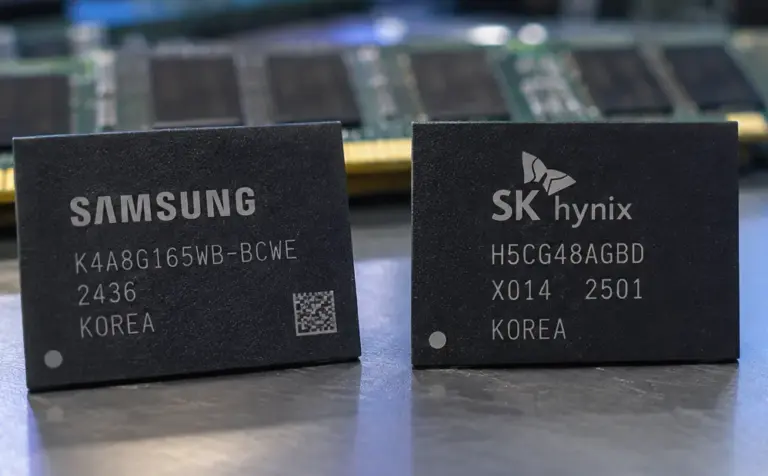
Samsung shares dropped more than 7.5%, while SK Hynix dropped close to 9.5% as investors reassessed the outlook for AI infrastructure spending and chip demand.

The two semiconductor giants together account for roughly half of the Kospi’s total market capitalization, making their movements particularly influential for the broader index.

Their combined market value had reached around 50% of the benchmark ahead of Thursday’s selloff.

US election results deepen AI concerns

Democrats won control of both the House of Representatives and the Senate in Wednesday’s midterm elections, raising expectations of closer scrutiny of the rapidly expanding AI infrastructure industry.

Investors are concerned that greater oversight of energy and water consumption, stricter permitting requirements and potential restrictions on data-center construction could slow the pace of investment in the US.

That could have implications for Samsung and SK Hynix, which are major suppliers of high-bandwidth memory (HBM) used in AI accelerators and data-center systems.

Any slowdown in infrastructure expansion could affect future demand for advanced memory chips.

The Philadelphia Semiconductor Index also fell around 3% on Wednesday, while mixed results from US chipmakers Qualcomm and Arm added to concerns.

Qualcomm reported handset chip revenue of $5.14 billion, below expectations, while Arm’s record revenue failed to satisfy investors seeking stronger growth signals.

SK Hynix’s US expansion faces regulatory hurdle

SK Hynix is also facing uncertainty over its expansion plans in the US after Washington held up approvals for American chipmaking equipment needed to expand production at its Dalian facility in China.

According to Reuters, the company is seeking export licenses from the US Commerce Department, arguing that additional production in China would generate revenue to help finance its proposed NAND manufacturing facilities in Marcy, New York.

The investment could initially involve around $45 billion, with the potential to reach $100 billion over time.

Executives from SK Hynix subsidiary Solidigm have reportedly held nearly 10 meetings with Commerce Department officials since late August, but approval remains pending.

Samsung expands HBM plans

Separately, Samsung is preparing to use its second foundry facility in Taylor, Texas, to manufacture base dies for HBM chips supplied to Nvidia and AMD, according to a Maeil Business Newspaper.

Construction is expected to formally begin this month, with mass production targeted for 2030.

Most of the facility’s reported output has already been secured through customer orders, with AMD accounting for the larger share. Samsung has yet to officially confirm the report.

Samsung is also facing changes in its labor structure, with employees filing an application to establish a sixth labor union amid reported disagreements within existing unions over compensation and wage negotiations.

The post Why Samsung and SK Hynix shares declined heavily on Thursday? appeared first on Invezz

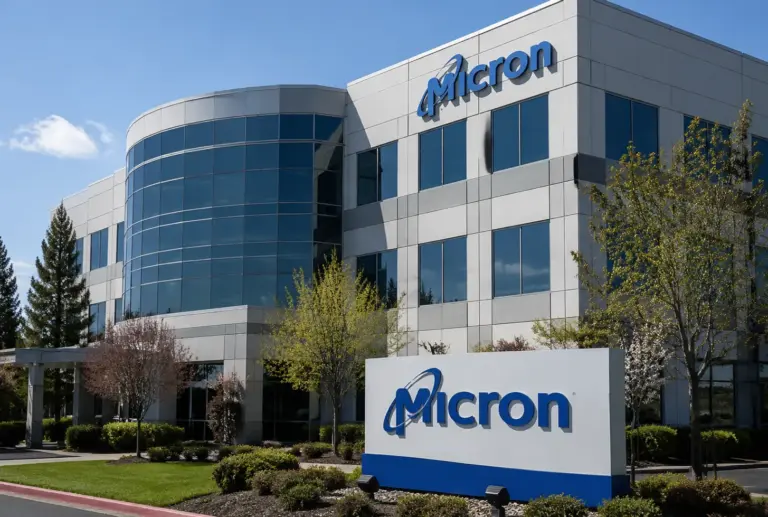
Micron Technology MU has suspended construction plans for a $4.5 billion memory-chip manufacturing facility in Taiwan following an escalating labor dispute with its employees, Bloomberg reported on Thursday.

The proposed facility in Taoyuan, northern Taiwan, was expected to become an important production base for dynamic random-access memory (DRAM) and high-bandwidth memory (HBM), two critical components used in artificial intelligence data centers.

Its shares fell around 7% on Wednesday and declined another 2% in premarket trading Thursday as investors assessed the potential implications for its manufacturing expansion.

The American chipmaking giant has already been under pressure with questions around the sustainability of the AI boom, especially after the Democratic victories in the midterm elections.

Why has Micron halted construction?

Micron executives in Taiwan have effectively paused construction at the planned facility, Bloomberg reported, citing people familiar with the matter.

The company has reportedly informed Taiwanese officials and a supplier about the decision.

The project, known as Fab 11E, was previously scheduled to begin production in 2028.

Micron had budgeted between $3 billion and $4.5 billion for the facility, including purchases of advanced equipment from ASML.

The company is concerned about uncertainty surrounding its labor negotiations and the possibility that an agreement previously reached with one of its unions could be challenged.

Micron told Bloomberg that its existing operations in Taiwan continue normally and that it remains confident in maintaining business continuity for customers.

The company also said it was looking forward to reaching an agreement with the protesting union.

Workers demand 15% of operating profits

Micron has been one of the biggest beneficiaries of the AI boom, with its memory chips in high demand and prices shooting up.

In its recent Q3 results, revenue more than quadrupled year-over-year with gross margins in the mid-80s.

The spat between Micron and its Taiwanese workers has been a bone of contention as employees demand higher compensation.

Workers have been seeking an arrangement under which 15% of the company’s global operating profits would be distributed among employees, similar to profit-sharing measures at rivals Samsung Electronics and SK Hynix.

Micron reached an agreement with its larger Taichung union in October, but the separate Taoyuan union remains dissatisfied with the terms.

Some employees are seeking to reopen negotiations, while Micron believes the existing agreement is legally binding.

The Taoyuan union has said it was not notified about the reported construction suspension, although it hopes the company and employees can reach a consensus.

Taiwan’s Ministry of Economic Affairs said it supports the legal agreement reached between the company and the union and would work with local authorities to resolve the differences.

“The government supports the legal agreement the company has reached with the union, and will shoulder and share responsibilities with the local government to help resolve the differences and create a win-win outcome,” the ministry told Bloomberg.

AI disclosure: AI tools assisted with research and drafting of this piece. An Invezz editor reviewed the facts, sources and wording before publication. Any opinions or analysis are Invezz’s, not those of an automated system.

The post Micron slips in premarket as report says $4.5B Taiwan factory plan suspended appeared first on Invezz

OpenAI could be ready to go public in 2027, President and co-founder Greg Brockman said on Wednesday.

Speaking at ⁠a Wall Street Journal tech conference in Napa, California, Brockman offered the clearest indication yet of the ChatGPT maker’s plans for a potential stock market debut as it accelerates enterprise growth and seeks fresh funding.

Brockman expressed confidence in the company’s financial position and its ability to compete with rival Anthropic, which is preparing for a potential public listing before the end of this year.

Asked whether OpenAI would be ready for an initial public offering next year, Brockman responded: “I think so.”

Enterprise business drives OpenAI’s recovery

Brockman said OpenAI’s performance during the first half of 2026 had been difficult as Anthropic gained ground in the enterprise market and attracted greater attention for its AI coding products.

“Q1 was pretty rough, Q2 was pretty rough. It felt like in many ways we were not even in the conversation,” he said, referring to the company’s position in the competition with Anthropic.

OpenAI’s Codex coding tool had failed to attract significant attention initially, but the company continued developing its products and expanding its business offerings.

That strategy began producing results in the third quarter, as per Brockman.

He said OpenAI recorded 70% quarterly growth in annualized revenue, while its enterprise business surged during the period.

“It wasn’t an accident but we worked hard on it,” he said.

The shift has also changed OpenAI’s revenue mix.

The company, once primarily viewed as a consumer-focused business because of ChatGPT, now generates the majority of its revenue from enterprise customers, Brockman said.

Year ago we were not really in the enterprise game. We were perceived as a consumer company but it is so so different today. Now we are somewhere around majority enterprise.

President OpenAI
Greg Brockman

The expansion of business sales is particularly important as OpenAI competes with Anthropic for corporate customers seeking AI tools for coding, productivity and other workplace applications.

OpenAI secures $11 billion

OpenAI has secured approximately $11 billion in commitments for its latest funding round, falling well short of its original $30 billion target, according to a Wall Street Journal report published October 30.

The funding round values the ChatGPT maker at approximately $1.25 trillion, below the $1.4 trillion valuation it had initially sought.

Investor appetite has weakened amid growing concerns over the sustainability of massive artificial intelligence investments and a broader selloff in technology stocks.

OpenAI has told shareholders that it plans to seek additional funding in the coming weeks, targeting family offices and high-net-worth individuals.

The company is now aiming to raise as much as $20 billion, WSJ reported.

Anthropic competition adds urgency

OpenAI’s fundraising and IPO preparations come as Anthropic moves toward a potential public listing before year-end.

The two AI companies are competing for enterprise customers as well as investor capital, making revenue growth and commercial adoption increasingly important measures of their long-term prospects.

Brockman’s comments suggest OpenAI believes its recent enterprise momentum has helped restore its competitive position after a difficult first half of the year.

Anthropic is likely to make its debut this year, with a November listing being speculated.

AI disclosure: AI tools assisted with research and drafting of this piece. An Invezz editor reviewed the facts, sources and wording before publication. Any opinions or analysis are Invezz’s, not those of an automated system.

The post OpenAI ready for 2027 IPO as president Brockman says enterprise revenue surging appeared first on Invezz

The mining industry is facing a looming crisis centered right in its own backyard, according to a new risk assessment from EY. The consultancy warns that operational complexity has become the primary threat heading into 2027, largely driven by the reality of aging mines and declining ore quality. As high-grade deposits vanish, companies are forced to deal with volatile mineral concentrations and fewer viable alternatives when disruptions occur, creating a precarious environment where small errors lead to massive financial losses.

These pressures are already manifesting in corporate balance sheets through soaring production costs. Major players like First Quantum Minerals and Codelco have seen their cash costs climb due to everything from equipment failures and seismic events to currency fluctuations. In the gold sector, physical instability is proving just as costly, evidenced by recent wall failures at Agnico Eagle Mines that could slash annual output by hundreds of thousands of ounces over the coming years. This fragility is further compounded by an unstable global supply chain for essential reagents like sulfuric acid.

To combat these headwinds, many operators are turning toward larger inventory stockpiles and enhanced digital tracking tools to gain better visibility over their supplies. While there is significant government funding pouring into critical minerals—reaching an estimated sixty five billion dollars for 2025—investors remain cautious, preferring stable jurisdictions and strategically vital materials over speculative ventures.

However, the rush toward modernization brings its own set of dangers. While AI promises higher productivity, experts warn that fragmented systems often create expensive organizational silos. Furthermore, as mines become more connected, they become more vulnerable to cyberattacks; current data suggests that two thirds of mining assets sit in a danger zone regarding security visibility. Combined with tightening environmental regulations and a growing need for community trust, the industry finds itself navigating a narrow path between technological ambition and fundamental geological decay.

Mining magnate Frank Giustra believes that regardless of who wins in Washington, the United States is spiraling toward a fiscal breaking point. Speaking recently at the 2026 New Orleans Investment Conference, the Fiore Group CEO argued that neither political party has shown the courage to tackle an unsustainable national debt that now exceeds forty trillion dollars. According to Giustra, the cycle of relentless deficit spending and soaring interest costs has created an inescapable trap, leaving policymakers with little choice but to lean on aggressive monetary interventions like quantitative easing.

This eroding confidence in the U.S. dollar is driving a global pivot toward hard assets, with gold emerging as a cornerstone of a shifting world order. Giustra noted that central banks across China and the Global South are aggressively stockpiling gold to insulate themselves from Western financial volatility and reduce their dependence on the greenback. This trend is backed by recent data showing record quarterly purchases by official institutions, fueling hopes for a parallel financial system where physical gold serves as the primary mechanism for settling international trade surpluses.

For those looking to protect their wealth, Giustra offered blunt advice regarding ownership, stating that anything other than physical gold is essentially worthless. While he views silver as a strong play for speculators due to its industrial utility, he sees gold as the ultimate long term sanctuary during periods of financial repression and currency devaluation. He even suggested that Canada should rethink its lack of official reserves by purchasing its own domestically produced gold rather than exporting every ounce to foreign markets.

Beyond precious metals, Giustra highlighted copper as the standout opportunity for mining investors today. He pointed to a perfect storm of systemic underinvestment and declining ore grades that have left the market starved for supply just as global demand continues to climb. In his view, copper represents one of the most obvious structural opportunities available because the timeline to develop new mines simply cannot keep pace with current needs, making it a critical asset in an evolving economy.