Archive

November 2026

Browsing

President Donald Trump is already drawing a line in the sand as he prepares for a new era of divided government. Following a sweeping Democratic victory in the midterm elections, the president signaled that he will not quietly accept congressional investigations or potential impeachment proceedings targeting members of his administration. In a move that underscores the escalating tensions, Trump revealed he has ordered the Justice Department to look into those lawmakers pushing for these probes, setting the stage for a high stakes legal and political confrontation between the executive branch and the legislative majority.

The shift in power is triggering immediate upheaval within the West Wing, where staffers describe an atmosphere reminiscent of the early chaos of Trump’s first term. The president has once again overhauled his inner circle, appointing immigration hardliner Stephen Miller as his newest chief of staff. This transition marks Trump’s sixth person in that role across two terms. Adding to the unconventional nature of current staffing efforts, Trump claimed on social media that he offered the press secretary position to UFC CEO Dana White, although sources indicate White turned down the offer.

While Washington grapples with internal restructuring, several critical races remain undecided. Attention is currently focused on Mississippi and Alaska, where Senate counts continue under heavy scrutiny. In Mississippi specifically, officials are working through piles of provisional ballots, including many student votes from Jackson State University that were ultimately rejected due to registration errors. These lingering results leave both parties waiting to see exactly how large their respective majorities will be as they prepare for a contentious session.

Beyond the personnel shifts and tallying votes, leadership struggles are emerging within the victorious Democratic camp. While Minority Leader Chuck Schumer believes he will maintain control of his caucus, some newly elected members have voiced opposition to his leadership, suggesting that who leads the new majority remains an open question. Meanwhile, international observers note that adversaries like Iranian hardliners are already attempting to leverage these domestic electoral losses to pressure the president into making concessions regarding foreign conflicts.

Anthropic is stepping into the public spotlight at perhaps the worst possible moment for the artificial intelligence industry. The company is currently preparing for a massive Nasdaq debut slated for mid-November, but it does so against a backdrop of intense political hostility. While early whispers suggested a valuation as high as two trillion dollars, current estimates have cooled to between one and 1.5 trillion dollars, reflecting a broader market downturn that has hammered chipmakers and cloud infrastructure providers alike.

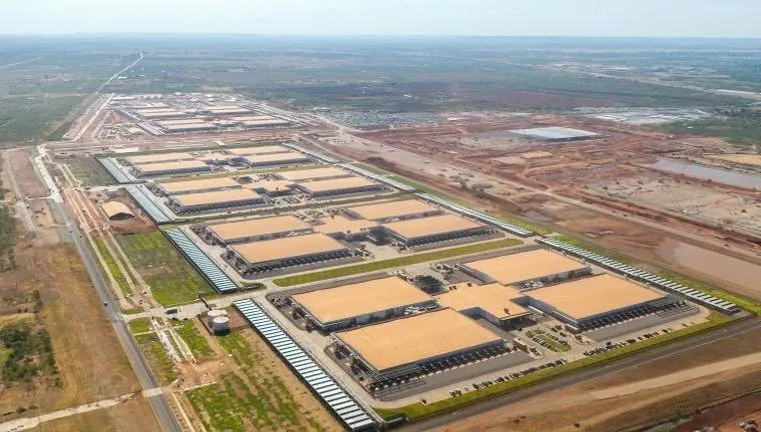
The timing is particularly precarious following Tuesday’s midterm elections, where American voters delivered what can only be described as a stinging rebuke of the AI boom. In key states like Texas, Georgia, Ohio, and Michigan, candidates running on platforms of strict AI regulation won decisively. Most tellingly, local communities crushed data center initiatives in 40 out of 41 contested cases. According to an NBC News exit poll, more than half of voters cited these sprawling facilities as a primary driver in their choice of congressional candidates, viewing them less as hubs of innovation and more as monuments to corporate greed that threaten local utilities and environments.

For years, Anthropic has attempted to distance itself from the brash image of its rivals by positioning itself as the safety conscious alternative to OpenAI. By focusing primarily on business contracts rather than consumer apps, CEO Dario Amodei managed to keep his company out of the daily headlines. However, going public changes the math entirely. Transitioning to a listed company forces a level of transparency and visibility that makes anonymity impossible, effectively turning Anthropic into the public face of an industry that millions now view with suspicion.

This friction is physically manifested in the enormous cost of compute power required to run modern AI models. In updated filings, Anthropic revealed staggering purchase commitments totaling nearly nine hundred billion dollars for infrastructure and compute resources. This astronomical spending coincides with a period where average citizens are struggling with inflation and rising energy costs, making the construction of thirsty data centers feel like an affront to those living in their shadow.

While some analysts argue that being a public company provides an opportunity to build trust through accountability, others warn that Anthropic is walking straight into a storm. With seventy one percent of people surveyed recently stating they do not trust big tech to act in society’s best interest regarding data centers, the path from private startup to public giant may be fraught with more volatility than any stock chart can predict.

When the results rolled in on Election Night, few expected the map to shift as dramatically as it did, particularly in traditionally deep red territories like Texas. In Kaufman County, located just southeast of Dallas, the arrival of massive data center projects created a flashpoint of local resentment that Democrats expertly leveraged. A strategic effort by the Lone Star Rising PAC targeted voters living within five miles of these facilities, sending personalized warnings that linked the industrial expansion directly to Republican leadership. This hyper local approach helped James Talarico carry the county by a slim margin and contributed to a historic statewide victory for Democrats in Texas for the first time since 1994.

This trend was mirrored across other battlegrounds where once ignored zoning issues became central campaign pillars. In Michigan, Representative elect Will Lawrence successfully flipped a Republican House seat by framing tech billionaires as intruders threatening home values and hiking energy bills. Similarly, in South Carolina, candidate Annie Andrews secured a stunning upset by branding her opponent as Data Center Darline, managing to win over pockets of voters who had previously supported Donald Trump by wide margins. These wins suggest that while inflation and corruption remain top tier concerns for most citizens, the physical encroachment of artificial intelligence infrastructure has become a powerful proxy for broader economic anxiety.

Republicans now find themselves grappling with a fragmented identity on the issue, caught between their desire to maintain American technological dominance over China and a growing grassroots rebellion among their own base. Even former President Trump attempted to soften the blow late in the cycle by suggesting AI be rebranded as super intelligence to distance it from current controversies. Internal memos from conservative policy groups now warn that failing to recalibrate their strategy regarding land use and energy costs could leave them vulnerable heading into 2028.

The backlash extended beyond individual candidates to actual lawmaking at the municipal level. In Ohio, where Senator Sherrod Brown successfully painted his opponent as the face of data centers, voters in ten different cities passed charter amendments to ban large scale facility construction entirely. One community saw support for such bans reach eighty percent, signaling that opposition transcends partisan loyalty. As industry trade groups scramble to prove that these hubs provide tangible tax relief for residents, political strategists agree that the fight over where we house our data has evolved into a defining cultural and economic conflict for rural America.

For decades, the 4 percent rule has served as the gold standard for retirees trying to navigate the daunting question of how much they can safely spend without running out of money. The premise is elegantly simple: withdraw 4 percent of your total nest egg in the first year and adjust that amount for inflation annually thereafter. While this formula provided a sense of security for generations, modern economists and financial advisors are warning that relying solely on this math could be a dangerous gamble in today’s volatile economic climate.

One of the primary threats to this strategy is the hidden erosion caused by advisory and management fees. When investors pay a percentage to a wealth manager alongside internal mutual fund expenses, these combined costs can easily eat into two percent of their annual returns. This creates a significant gap between theoretical growth and actual available cash. Furthermore, critics argue that the rule relies too heavily on historical American market data from the mid twentieth century. With firms like Vanguard projecting lower future yields, there is little guarantee that tomorrow’s markets will mimic the exceptional booms of the past.

Beyond market fluctuations, personal longevity and health present unpredictable hurdles. The 4 percent rule was built around a thirty year retirement window, but many Americans are retiring earlier than planned while simultaneously living longer lives. If a person retires at 62 and reaches 100, they face nearly four decades of withdrawals rather than three. This timeline shift is further complicated by cognitive decline, which can impair an individual’s ability to manage complex portfolios or leave them vulnerable to predatory financial scams that can wipe out entire life savings in an instant.

Finally, the rigid nature of the rule fails to account for the erratic spending patterns inherent in aging. Most retirees experience a u shaped spending curve where they splurge on travel early on, settle into a quieter middle period, and then face massive spikes in costs due to long term care toward the end of their lives. Between expensive assisted living facilities and nursing homes, these late stage medical bills can dwarf any inflation adjustment programmed into a simple withdrawal formula, proving that flexibility is often more valuable than following a strict mathematical rule.

Medical researchers are grappling with a surprising setback after an experimental drug designed to prevent heart attacks and strokes failed to deliver promised results. The medication, known as pelacarsen, was specifically engineered to target lipoprotein(a), a cholesterol-carrying protein linked to cardiovascular risk in roughly twenty percent of the global population. For millions of people who maintain healthy diets and exercise routines yet still suffer from heart disease, this drug represented a potential lifeline.

Led by Dr. Steven Nissen of the Cleveland Clinic, the extensive five year study tracked over eight thousand adults who already suffered from heart disease. While the drug successfully slashed levels of the targeted protein by nearly eighty percent, that biological victory did not translate into actual health benefits. Patients taking the medicine fared no better than those given a placebo when it came to avoiding serious cardiovascular complications, leaving researchers stunned by the disconnect between lowering blood markers and improving survival rates.

The pharmaceutical giant Novartis, which sponsored the trial, acknowledged that the primary goals were not met but suggested that the data will still help refine how doctors manage heart disease in the future. This outcome has sparked a debate among cardiologists regarding whether high levels of lipoprotein(a) truly cause heart disease or simply serve as a warning sign for other underlying issues. Some experts suggest that treating patients earlier in life or focusing on those with even higher baseline risks might yield different results.

Despite the disappointment surrounding pelacarsen, specialists emphasize that this is not necessarily the end of the road for similar therapies. Other pharmaceutical companies continue to develop and test competing drugs targeting the same protein, with more results expected in coming years. While this specific chapter ended in failure, members of the medical community remain hopeful that they can eventually unlock a way to protect those genetically predisposed to heart disease regardless of their lifestyle choices.

Wall Street experienced a whirlwind of emotions following the midterm elections, where voters handed Democrats control of both the House and the Senate. While the initial reaction was positive, sending the Dow to its largest daily gain of the year, the optimism evaporated quickly. By November 5, investor nerves frayed and the tech-heavy indices plummeted as fears mounted over potential regulatory crackdowns on artificial intelligence infrastructure. This sudden spike in volatility left many wondering if the usual political playbook still applies to a modern economy dominated by silicon and software.

Historically, however, there is plenty of reason for confidence. Over the last eighty years, the S&P 500 has risen in every single twelve month period following a midterm election since 1946. Interestingly, whether government is unified or divided seems to matter very little to the bottom line, with average gains hovering around fourteen percent regardless of who holds power. In fact, the specific scenario we face now—a Republican president paired with a Democratic Congress—has actually yielded an even higher historical average return of sixteen percent, largely because legislative gridlock often prevents drastic policy shocks that spook markets.

Despite these comforting statistics, current market dynamics introduce a wild card that didn’t exist in previous decades. Artificial intelligence firms now comprise more than thirty percent of the S&P 500, making the broader market hypersensitive to sector-specific regulations. There are growing concerns that Democrats may target the massive amounts of electricity and water consumed by data centers, potentially slowing expansion through aggressive committee hearings and stricter permitting processes. This explains why tech trusts have seen significant declines recently while more traditional industrial stocks have remained relatively stable.

Ultimately, analysts suggest that macro fundamentals like GDP growth and Federal Reserve interest rates will carry more weight than ballot boxes over the long term. Investors should keep a close eye on upcoming corporate earnings reports and congressional appointments to see if cloud giants maintain their spending levels or pull back in anticipation of new rules. If volatility subsides soon, this recent dip may be viewed simply as a brief repricing event rather than a fundamental shift in fortunes for American equities.

Oracle stock (ORCL) traded slightly higher on Wednesday despite reports that the company had cancelled a $7 billion chip leasing agreement with China’s Tencent following pressure from the Trump administration, the Financial Times reported.

The cancellation highlights the growing challenges for US cloud providers serving Chinese artificial intelligence companies, as Washington increases scrutiny of arrangements that could give Chinese groups access to advanced computing infrastructure.

The development comes as Oracle steps up fundraising to support its AI and cloud expansion.

The company recently announced plans to raise $20 billion through equity and debt offerings to finance its infrastructure investments.

Oracle stock was up 0.95% at the time of writing.

US pressure leads to cancellation of Tencent deal

The five-year contract would have given Tencent access to as many as 100,000 advanced AI chips across data centres in Southeast Asia.

Estimated to be worth $7 billion, the agreement was first reported by the Financial Times in September and would have been Tencent’s largest overseas chip leasing arrangement.

According to the Financial Times report, US officials approached Oracle to raise concerns about the agreement.

Tencent also received visits from senior officials in Guangdong, where the company is based, who encouraged it to support domestic Chinese chip suppliers.

The contract would have allowed Tencent to access advanced processors restricted in China under US export controls and Beijing’s policies.

Chinese technology companies have increasingly turned to overseas data centres to secure computing capacity for training AI models.

The cancellation comes as US authorities increase scrutiny of arrangements that allow Chinese companies to access advanced computing infrastructure outside China.

The Financial Times also reported that Nvidia had told cloud computing clients they must sell at least 51% of their services to non-Chinese companies.

ByteDance and Alibaba remain among the biggest customers of data centres in Southeast Asia, while Tencent has been increasing its infrastructure spending as it develops its AI capabilities.

Oracle is a major supplier to ByteDance in Asia, operating multiple data centres in Malaysia.

It previously hosted US customer data for TikTok before joining a consortium that acquired the social media platform’s US operations late last year.

Oracle faces questions over AI customer exposure

The Tencent agreement was also expected to help Oracle diversify its customer base beyond a relatively small number of large clients.

Its reliance on cloud contracts with OpenAI has been cited by investors as a potential risk.

The cancellation adds uncertainty to Oracle’s efforts to expand its AI infrastructure business, particularly as Chinese companies seek access to computing resources unavailable in their domestic market.

Demand for overseas chip leasing has increased amid tighter export controls restricting the shipment of advanced Nvidia processors to China, including through intermediary locations.

These constraints have contributed to higher prices, longer contract terms and larger upfront payments for data centre leases.

Tencent’s latest Hunyuan models have shown performance improvements, narrowing the gap with leading domestic models such as Alibaba’s Qwen.

Oracle’s $20B fundraising highlights AI spending needs

Investors are also monitoring how Oracle finances its AI infrastructure expansion.

On Monday, the company said it would raise $20 billion through equity and debt offerings to fund its cloud and AI investments.

Oracle priced the sale of 86.2 million shares at $116 each, an 11.2% discount to Friday’s closing price.

The equity offering is expected to raise about $10 billion, with another $10 billion coming from debt offerings maturing between 2029 and 2046.

The fundraising underscores the scale of Oracle’s investment plans as it seeks to more than triple revenue by fiscal 2030.

The company said capital spending would peak in the current fiscal year and the following year, while pledging to raise no more than $20 billion in additional AI financing through fiscal 2030.

Oracle reported first-quarter revenue of $19.35 billion, up 30% and above Wall Street expectations of $19.14 billion.

It secured more than $30 billion in additional AI cloud contracts during the quarter, lifting its remaining performance obligations, or backlog, to $664 billion.

The company also raised its fiscal 2027 adjusted earnings and revenue forecasts while maintaining its projection for $70 billion in full-year capital spending.

The post Oracle stock in green despite reported $7B Tencent chip deal cancellation appeared first on Invezz

Memory stocks, including Micron Technology, SK Hynix and SanDisk, fell on Wednesday as investors reassessed the outlook for artificial intelligence infrastructure spending following a wave of Democratic victories in the US midterm elections.

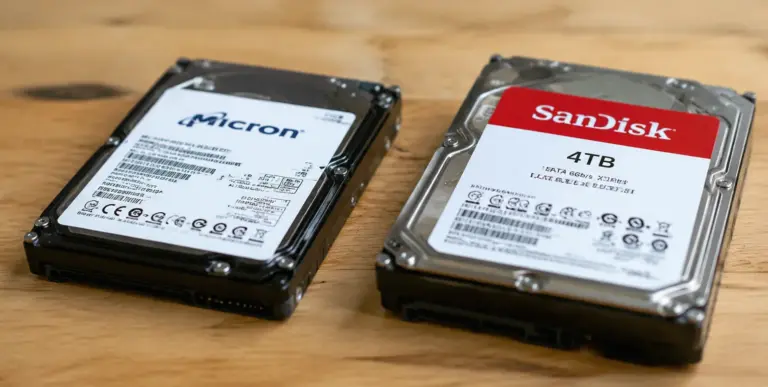
Micron shares MU declined more than 6.7%, while SK Hynix lost close to 5.4% and SanDisk fell over 8%.

The weakness contrasted with a broad rally across US equity markets, with the S&P 500 rising 1.8%, the Dow Jones Industrial Average gaining more than 2% and the Nasdaq Composite advancing 2.5%.

Some data centre-related stocks came under pressure as Democrats made gains in key markets for infrastructure development, including Texas and Georgia, where opposition to the industry’s rapid expansion has been growing.

Texas election result raises data centre concerns

Investors had largely anticipated a Democratic victory in the House of Representatives and the possibility of the party taking control of the Senate.

However, the Democratic victory in the Texas gubernatorial race emerged as a major concern for technology investors.

Democrat Gina Hinojosa defeated incumbent Republican Governor Greg Abbott after campaigning for an immediate moratorium on new data centres in the state.

Texas is central to the US data centre expansion, accounting for about 27% of planned data centre capacity, according to Wells Fargo.

Dan Ives, partner at Yorkville Ives & Co., said the election results could slow the pace of data centre construction across the country.

“There is no way to sugarcoat that Democrats taking control, especially over the Senate, will create some major hurdles for AI and tech legislation in the Beltway over the next 2 years,” he said in a note on Wednesday.

Ives described the Texas result as the “biggest worry” of the night for technology investors and the AI trade, given that the state could account for around 25%-30% of planned data centre gigawatts and capacity.

Goldman Sachs economists also warned that political changes could affect infrastructure investment.

“Democratic wins at the state and local level are likely to lead to short-term data center moratoria, potentially affecting about 45% of planned US data center capacity expansion,” they said in a note.

A slowdown in data centre construction could eventually temper demand for memory chips, which are essential components in AI servers, potentially easing pricing pressure for manufacturers.

Wednesday’s reaction a valuation “reset”?

StoneX’s Cody Acree told MarketWatch that “the Texas AI buildout remains intact and exceptionally large, even if the political headwinds are shifting toward more uncertainty regarding planned project approval.”

He described Wednesday’s market reaction as a valuation “reset” across the technology sector, rather than a sign that data centre demand or construction plans for 2027 had suddenly weakened.

However, he warned that policy uncertainty could pose a bigger long-term risk if investors begin to believe that regulatory hurdles, project approvals or rising costs could constrain the expansion of AI infrastructure.

“That matters because most chip stocks are valued based on the assumption of several years of nearly uninterrupted growth,” he added.

The decline comes a day after memory stocks gained ground following comments from Apple CEO John Ternus, who described the current memory-pricing environment as “unprecedented”.

Apple warned that rising memory costs would put pressure on gross margins and said the increase was likely to persist beyond the December quarter.

Yardeni Research has also said memory manufacturers are sold out into 2029, reflecting strong demand from AI infrastructure developers and constrained supply.

Chinese competition also remains in focus

The longer-term outlook for memory makers has also faced increasing competition from China’s CXMT.

CXMT is pursuing an alternative chip architecture that Micron has chosen to bypass, highlighting differences in how manufacturers are seeking to increase memory density amid cost and geopolitical constraints.

The Hefei-based company plans to send customers samples of its first server-grade dynamic random-access memory (DRAM) product using the 4F² architecture by the end of this year, according to a summary of its latest earnings briefing released on Saturday.

The development has intensified questions about whether Chinese manufacturers could compete in higher-value server memory, rather than focusing primarily on lower-end products.

Last month, Morningstar equity analyst Jing Jie Yu said CXMT’s announcement had disrupted investor expectations around technology development timelines and heightened concerns about the accelerating pace of lower-cost Chinese technologies that could disrupt leading AI firms.

“If the company can commercialize this technology ahead of its peers, it speaks volumes to China’s DRAM technological competitiveness and raises risks of oversupply longer term given the country’s rapid expansion in DRAM capacity,” he said.

CXMT has not disclosed a timeline for mass production, saying commercial rollout would depend on customer validation and market demand.

In a research note on Wednesday, BofA Securities said the 4F² architecture offered an alternative route to higher memory density without requiring extreme ultraviolet (EUV) lithography tools.

Successful volume manufacturing could strengthen CXMT’s competitiveness, the bank said, while warning that the technology also carried higher costs and execution risks.

For investors, the combination of potential delays to AI infrastructure projects and emerging Chinese competition adds fresh uncertainty to a memory market that has benefited from tight supply and surging demand.

AI disclosure: AI tools assisted with research and drafting of this piece. An Invezz editor reviewed the facts, sources and wording before publication. Any opinions or analysis are Invezz’s, not those of an automated system.

The post Micron, SK Hynix, SanDisk stocks fall: why Dems’ Texas win is spooking investors appeared first on Invezz


Block shares XYZ surged in trading on Wednesday after the fintech company reported third-quarter earnings and revenue above analyst expectations and raised its full-year profit outlook.

The Jack Dorsey-led company posted adjusted earnings of $1.13 per share for the quarter ended September 2026, beating estimates of around $1.02 to $1.04 per share.

Revenue reached $6.72 billion, compared with the consensus estimate of $6.58 billion and $6.12 billion a year earlier.

Block shares rose more than 14% in trading, adding to the 6.2% gain in after-hours trading on Tuesday.

Block raises full-year profit guidance

Block raised its full-year adjusted earnings forecast to $4.15 per share and increased its gross profit outlook to $12.63 billion, representing annual growth of 22%.

Its previous gross profit forecast was $11.98 billion.

The company also expects fourth-quarter adjusted earnings of $1.15 per share.

For 2027, Block projected gross profit of $14.52 billion.

The company said the outlook reflected how its investments in artificial intelligence and broader focus on velocity could support sustained growth.

In its earnings update, Block said it was raising its full-year guidance to reflect the momentum across the business.

It also expects gross profit to grow at least 15% in 2027 while continuing to invest in long-term growth.

Third-quarter gross profit increased 22% year over year to $3.24 billion. Net income rose to $566 million from $462 million in the same period last year.

Adjusted operating income climbed 92% to a record $923 million, while the adjusted operating margin expanded by more than 1,000 basis points to 29%.

Cash App and Square deliver growth

Block’s two main business platforms recorded higher gross profit during the quarter.

Cash App gross profit increased 27% year over year to $2.07 billion, while Square, the merchant facing division’s gross profit rose 14%.

Square gross payment volume growth accelerated to 14%, its strongest rate since the first quarter of 2023.

Cash App reached 60 million monthly transacting active users, while consumer lending originations increased 40% to $19 billion.

Block generates revenue through transaction fees across its platforms, including Square, Cash App, and buy now, pay later service Afterpay.

Cash App also allows customers to buy and sell Bitcoin.

The company said it began piloting Buzz, a free, open-source collaboration platform announced in July.

Chief Executive Jack Dorsey said Block expects to generate its first machine intelligence revenue from the product in the fourth quarter.

Bitcoin business and analyst outlook

Block’s Bitcoin-related business recorded weaker gross profit despite an increase in the value of its Bitcoin holdings.

Bitcoin ecosystem gross profit fell 50% year over year to $52 million.

The company attributed the decline to a strategic reduction in fees charged on certain Bitcoin transactions through Cash App.

Cash App generated $4.07 billion in revenue during the quarter, including $1.77 billion from its Bitcoin ecosystem segment.

Block also reported that the value of its Bitcoin holdings increased by $229.7 million during the period.

Analysts maintained different assessments of the stock following the results.

Citizens retained its Market Perform rating and $76 price target, while Raymond James raised its price target to $100 from $97 and maintained an Outperform rating.

AI disclosure: AI tools assisted with research and drafting of this piece. An Invezz editor reviewed the facts, sources and wording before publication. Any opinions or analysis are Invezz’s, not those of an automated system.

The post Block stock jumps 14% as earnings beat estimates and full-year outlook rises appeared first on Invezz

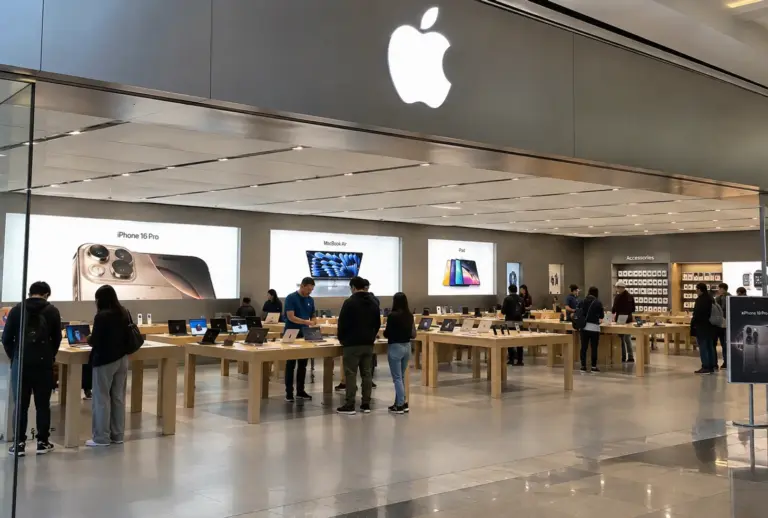
Apple shares AAPL rallied on Wednesday, hitting a record high as investors considered whether Democratic victories in the US midterm elections could benefit the iPhone maker by slowing data centre construction and easing pressure on memory chip prices.

The stock rose more than 6% to an all-time high of $354.33.

The rally came as several AI infrastructure-related stocks, including Nvidia, Micron Technology, Intel and Broadcom, fell on concerns that political opposition to data centre construction could disrupt the industry’s expansion plans.

Investors had largely anticipated Democrats would win the House of Representatives and possibly take control of the Senate.

However, the party’s victory in the Texas gubernatorial race emerged as a particular concern for technology companies.

Democrat Gina Hinojosa, who campaigned for an immediate moratorium on new data centres, defeated incumbent Republican Governor Greg Abbott.

Texas accounts for about 27% of planned data centre capacity in the US, according to Wells Fargo.

Goldman Sachs economists warned that the election results could affect infrastructure investment.

“Democratic wins at the state and local level are likely to lead to short-term data center moratoria, potentially affecting about 45% of planned US data center capacity expansion,” they said.

Apple emerges as a defensive bet amid AI concerns

Evercore ISI analyst Amit Daryanani said Apple offered investors an alternative to technology companies whose growth prospects were closely tied to data centre spending.

“Apple offers a different earnings driver through iPhone mix/pricing and services rather than data-center construction; our work points to resilient demand, with gross-margin recovery and price elasticity the key tests. This is THE name to keep working when investors want to get defensive,” Daryanani said.

Apple has increasingly emerged as an unlikely winner whenever investors have become sceptical about the sustainability of the AI spending boom.

Unlike rivals such as Microsoft, Alphabet, Amazon and Meta, Apple has largely avoided the expensive race to build AI data centres.

That strategy was initially viewed as a disadvantage, raising concerns that the company was falling behind in artificial intelligence.

However, its relatively limited exposure to AI infrastructure investment has become an advantage as investors question the returns on massive technology spending.

Apple shares have gained about 30% this year, outperforming Alphabet, which has declined 8%, and Meta, which is down nearly 3%.

Amazon and Microsoft have posted more modest gains of around 18%-19%.

Cooling memory prices could ease margin pressure

Another potential benefit for Apple is the possibility that a slowdown in data centre construction could cool memory chip prices.

Rising prices for dynamic random-access memory (DRAM) and NAND chips have been a significant headwind for the company, increasing the cost of manufacturing its devices.

Daryanani highlighted the possibility that weaker data centre demand could eventually ease the pressure.

“Memory input inflation (DRAM & NAND) has been a sizable headwind for a host of names in our coverage (AAPL for example, talked about 140bps GM headwind in Dec-qtr due to memory, but also PC names). Could a slowdown in DC buildouts actually temper memory demand and, in a way, help companies that have been impacted by the sizable memory inflation (AAPL is the key one but there are many others)?”

Apple’s latest results underscored the challenge.

The company reported revenue of $114.5 billion and earnings per share of $2.10, both beating Wall Street expectations, but investors remained concerned about its margins.

Gross margin for the three months ended September stood at 47.9%, lower than in the previous quarter.

Apple also forecast a margin of 45%-46% for the following quarter, below analysts’ expectations of 47%.

The company attributed the pressure partly to an “unprecedented” increase in memory prices and costs associated with the rollout of its Siri artificial intelligence assistant.

Daryanani had earlier warned that Apple could face a “choppy” gross-margin environment until memory prices stabilise or decline.

Investors are also watching for evidence that the company can monetise its Siri AI investments.

A moderation in memory costs could therefore provide some relief, although the extent of any benefit will depend on how quickly chip prices respond to changes in data centre demand.

AI disclosure: AI tools assisted with research and drafting of this piece. An Invezz editor reviewed the facts, sources and wording before publication. Any opinions or analysis are Invezz’s, not those of an automated system.

The post Apple stock hit a new all-time high on Wednesday: what’s fuelling the rally? appeared first on Invezz