Archive

November 2026

Browsing

The once predictable ascent of Vice President JD Vance toward the presidency has hit a sudden and sharp detour following a bruising performance by Republicans in Tuesday’s midterm elections. While Vance previously seemed like the natural heir to Donald Trump’s legacy, the scale of the GOP losses has sparked an immediate internal crisis regarding the party’s direction. Recognizing the shifting winds, Vance spent Wednesday attempting to carve out a distinct identity, using social media to distance himself from certain unpopular foreign policy choices and framing his future priorities around domestic affordability and a reassessment of American involvement abroad.

Despite these pivots, high profile figures within the party are already suggesting that the road to 2028 is wide open. Former Speaker Newt Gingrich noted that the magnitude of the defeat stripped away much of Vance’s perceived momentum, while grassroots leaders in key early states like Iowa warn that the upcoming cycle could mirror the chaotic and crowded primaries of 2016. Strategists suggest that running as a mere extension of a third Trump term may be too risky given current voter sentiment, leaving room for alternative candidates to argue they are better equipped to modernize the party’s appeal.

Florida Governor Ron DeSantis has been among the quickest to capitalize on this instability. After seeing his political stock dwindle following his failed 2024 bid, DeSantis is now positioning himself as a corrective force. He has launched stinging critiques of the current administration’s handling of immigration and government corruption, even taking swipes at tech industries closely tied to Vance. By describing the midterms as an extinction level event while highlighting Florida’s relative resilience, DeSantis is signaling to donors and activists that he remains a viable option for those seeking a departure from the status quo.

Vance still holds significant structural advantages, including deep ties to major donors and an expected endorsement from Donald Trump. However, those assets are being tested as other ambitious Republicans join the fray. Senator Ted Cruz has begun emphasizing economic pain that he claims was ignored by leadership, while Georgia Governor Brian Kemp is calling for a return to traditional conservative principles. As these factions begin to mobilize, what looked like a coronation for Vance has transformed into an unpredictable scramble for control over the future of the Republican Party.
The recent midterm elections have handed Democrats control of both the House and Senate, creating a complex new dynamic for the rapidly expanding artificial intelligence sector. While President Trump continues to prioritize what he calls superintelligence through executive action and retains the power to veto federal laws, the shift in congressional leadership signals a move toward much stricter scrutiny. Policymakers are now focusing heavily on the hidden costs of the AI boom, specifically regarding massive energy consumption from data centers, cybersecurity risks, and the long term effects on the American workforce.

This tension is perhaps most visible at the state level, where Democratic wins in key regions could physically slow down the buildout of AI infrastructure. In places like Texas, where Democrats flipped several high profile offices, there are growing concerns that data center construction could face temporary pauses or increased demands to fund grid upgrades. Analysts suggest these regional hurdles might put a significant portion of projected capacity growth at risk over the next few years, potentially impacting semiconductor firms and cloud computing giants.

Despite these emerging roadblocks, industry experts believe that a total freeze on investment is unlikely because AI remains a critical strategic asset for both political parties. Companies are finding themselves caught between a desire to scale quickly and an evolving patchwork of state regulations concerning safety, bias, and copyright law. Rather than stopping their momentum, many business leaders argue that firms must establish their own rigorous internal governance standards to navigate this era of political volatility without halting innovation entirely.

Ultimately, while Democratic gains introduce fresh headwinds for tech providers and land developers, the broader appetite for AI integration appears resilient. Investors expect capital spending to remain robust through 2027, even as companies grapple with tighter credit markets and supply chain constraints. The coming months will likely be defined by a tug of war between an executive branch pushing for unchecked acceleration and a legislative body determined to impose guardrails on the digital frontier.

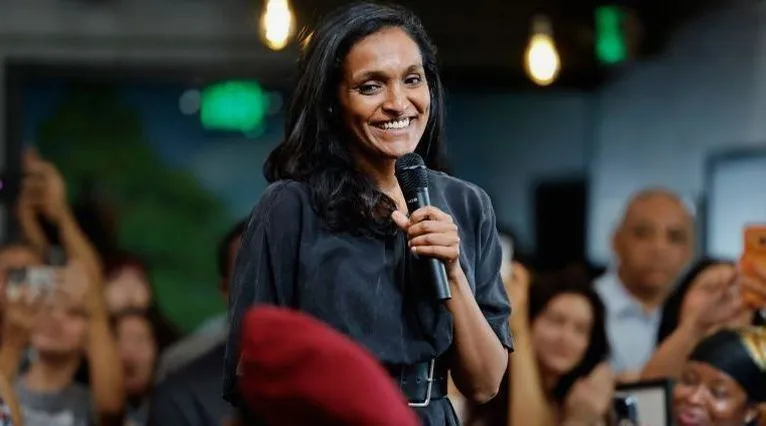
Los Angeles is entering a new political era after CNN’s Decision Desk projected that city councilmember Nithya Raman has defeated incumbent mayor Karen Bass. The victory marks a significant shift toward the left for the nation’s second largest city, joining New York in being led by a democratic socialist. Raman secured her path to the mayor’s office after navigating a competitive nonpartisan primary where she edged out Republican Spencer Pratt, setting the stage for a clash between the party’s insurgent wing and its established leadership.

At forty five years old, Raman represents a growing trend within the Democratic Party where progressives are successfully capturing key urban centers. Her win follows similar victories for democratic socialists in Seattle and Washington DC, signaling an ideological evolution among voters in deep blue hubs. Upon taking office, Raman intends to tackle the city’s most pressing crisis by vowing to reduce street homelessness by half before the eyes of the world turn toward Los Angeles for the 2028 Olympics.

The loss is a stinging rebuke for Karen Bass and the traditional political machinery of Los Angeles. As a seventy three year old pillar of the establishment and a trailblazing former speaker of the State Assembly, Bass enjoyed broad support from major labor unions. However, that support was not enough to overcome voter frustration over housing costs and her administration’s handling of the devastating 2025 wildfires. The appetite for change was evident early on, as outside candidates combined for more than half of the total vote during the primary cycle.

Beyond local governance, this result sends ripples through the national political landscape just as preparations begin for the 2028 presidential primaries. The battle fought in Los Angeles serves as a case study for whether these progressive platforms can translate from municipal successes into national viability. For now, however, the focus remains on City Hall and whether Raman’s ambitious goals can resolve long standing issues that have plagued previous administrations.

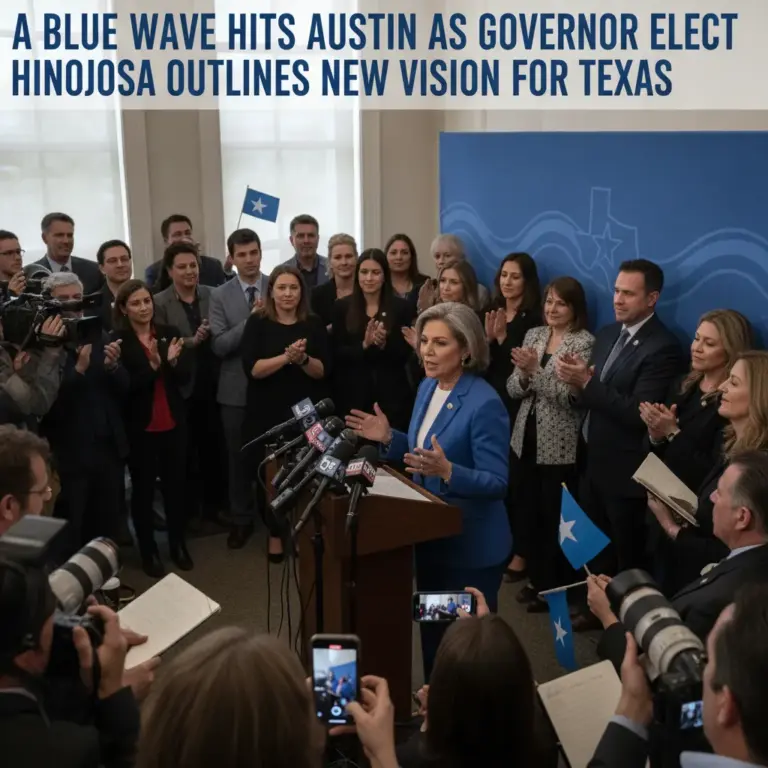
Governor elect Gina Hinojosa stepped before microphones Thursday afternoon for her first formal press conference since a historic electoral sweep handed control of several key state offices to the Democratic Party. Speaking with confidence about the road ahead, Hinojosa addressed the immediate priorities of her incoming administration following a midterm election that shattered decades of Republican dominance in Texas. While she acknowledged that a GOP majority in the state Senate remains a significant hurdle, she pointed to her new allies in high places, including Lieutenant Governor Vikki Goodwin and Attorney General elect Nathan Johnson, as essential partners in governing.

The atmosphere surrounding the announcement followed what Hinojosa described as productive initial discussions with outgoing Governor Greg Abbott. Those conversations mark a delicate handoff of power after Abbott was ousted in a stunning result that has sent shockwaves through the national political landscape. This shift represents more than just a change in leadership; it is a fundamental realignment of how Texas operates, moving away from long standing conservative policies toward a platform centered on direct social investment and systemic reform.

During her remarks, Hinojosa revisited the ambitious promises that fueled her successful campaign. Among her top goals are expanding Medicaid access and ending public school takeovers while rolling back previous efforts to implement private school vouchers. Perhaps most provocative is her plan to distribute fifteen hundred dollars to every Texas household using funds from the state savings account, a move intended to provide immediate financial relief to citizens across the Lone Star State.

Beyond these specific policy shifts, the Governor elect emphasized a commitment to cleaning up state government by purging waste, fraud, and abuse. As January approaches and Democrats prepare to officially assume their roles in both the executive branch and the Texas House, Hinojosa faces the daunting task of translating campaign rhetoric into legislation within a divided capitol. However, for now, she appears focused on maintaining the momentum of an unexpected victory that has fundamentally altered the trajectory of Texas politics.

The battle for Colorado’s 4th Congressional District remains an open question as latest vote tallies show Democrat Eileen Laubacher holding a razor thin lead over Republican incumbent Lauren Boebert. As of Thursday afternoon, Laubacher led by just under zero point seven percent, a margin of about 2,276 votes. While Boebert managed to close the gap by more than a thousand votes during the final updates on Wednesday and Thursday, the distance between the two candidates currently sits too wide to trigger an automatic recount.

This contest represents a stunning shift for a region long considered a Republican stronghold. Historically, the district anchored by Douglas County has rarely veered toward Democrats, and Boebert previously won the seat by eleven points. However, Laubacher, a retired Navy rear admiral and former National Security Council official, ran a high spending campaign centered on maturity and stability. Her team leveraged nearly fourteen million dollars in fundraising to contrast her professional military background with the public controversies that have followed Boebert throughout her tenure.

Boebert enters this count fighting to maintain her foothold in a district she entered only recently after narrowly surviving a challenge in her previous seat. Known as a firebrand supporter of Donald Trump and a staunch defender of the Second Amendment, Boebert faced significant headwinds this cycle. From reports of disruptive behavior at a Broadway play to fluctuating tensions with former President Trump himself, her national profile became both an asset for visibility and a liability among moderate voters.

Ultimately, the result reflects a volatile political climate where personal brand can clash with party loyalty. Despite the deep red leanings of the eastern plains and Loveland areas, Laubacher’s push for affordable housing and healthcare combined with targeted attacks on Boebert’s image created an unexpectedly competitive environment. For now, both camps remain in limbo while officials finalize the numbers in one of the most surprising races in the country.

The board of directors at Wendy’s has firmly shut the door on a 1.4 billion dollar attempt to take over the company, rejecting a hostile bid from a consortium of investment firms. Led by activist investor Nelson Peltz and his firm Trian Partners, alongside partners like Flynn Group LP and Sixth Street Partners, the group offered 7.35 dollars per share. However, the company’s leadership viewed the number as far too low, noting that shares were trading higher than the offer even before markets opened on Thursday.

Art Winkleblack, the chairman of the board, stated that an independent committee reviewed the proposal and found it substantially undervalued what Wendy’s could achieve on its own. In defending the current trajectory of the business, Winkleblack expressed full confidence in CEO Bob Wright and insisted that accepting the deal would not be in the best interests of those who hold shares in the company. This standoff comes as Wendy’s attempts to navigate a difficult economic climate characterized by rising beef costs and stubborn inflation.

The timing of the takeover attempt follows a rocky stretch for the fast food chain, which has seen its stock price slide nearly 14 percent over the past year. Recent financial reports highlight a dip in domestic same-restaurant sales and a slight decline in overall revenue. These struggles mirror broader trends across the industry where consumers are tightening their belts, forcing competitors like McDonald’s to pivot toward more budget friendly menu options to keep foot traffic steady.

Internally, CEO Bob Wright has been candid about why things have slipped, admitting that previous pushes for efficiency may have come at the expense of quality. He acknowledged that some of the high standards regarding fresh ingredients and preparation that once set Wendy’s apart had drifted over time due to cost cutting measures. By rejecting the buyout, Wendy’s is betting that it can fix these operational hiccups and recapture its distinct market position without handing over control to outside investors.

Wendy’s is drawing a hard line in the sand against activist investor Nelson Peltz, flatly rejecting a 1.4 billion dollar buyout bid that the company claims significantly undervalues its worth. To ensure they keep control of their own destiny, the burger chain has implemented a poison pill defense. This strategic move allows existing shareholders to buy discounted stock if any single entity acquires more than 15 percent of the company, effectively making a hostile takeover prohibitively expensive for bidders like Peltz and his Trian Fund Management.

The clash comes at a volatile time for the brand, which has been battling soaring beef costs and a fleet of aging storefronts. While Peltz argued that rising inflation and fierce competition make his offer the safest bet for shareholders, Wendy’s leadership isn’t buying it. CEO Bob Wright, who took the helm in May, told investors during a recent conference call that he is fully confident in a turnaround strategy already showing positive momentum. That confidence seems to be resonating with Wall Street, as shares ticked upward following third quarter results that beat expectations.

Behind the scenes, the company is undergoing a painful but necessary pruning process to regain its edge. Wendy’s has been aggressively shutting down outdated restaurants across the United States to prioritize higher profit margins, including hundreds of closures slated through 2026. The road hasn’t been entirely smooth; recently, one of its largest franchisees filed for bankruptcy after a dispute over their agreement ended in termination attempts by corporate headquarters.

Despite these growing pains, Wendy’s remains determined to recapture the magic of its heyday when it first challenged giants like McDonald’s with square patties and legendary advertising campaigns. Though market research shows their slice of the American burger pie has shrunk slightly since 2019 due to the rise of premium rivals like Five Guys and In-N-Out, Wright believes the current roadmap will eventually restore the chain to its full potential without needing outside intervention from activist investors.

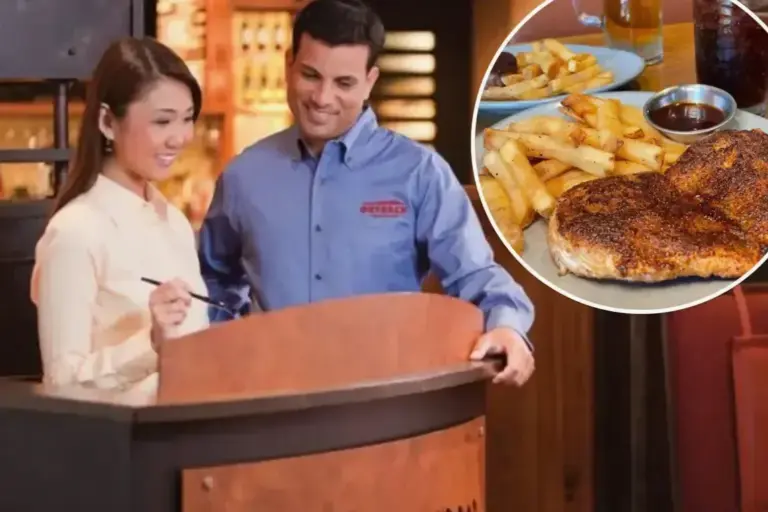
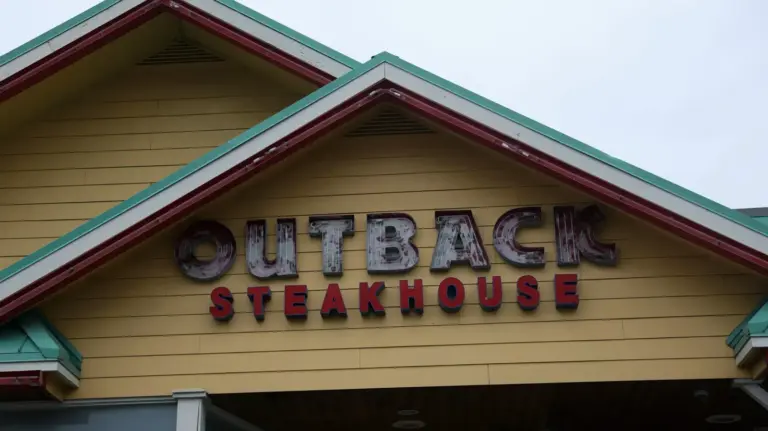
Cerca Trova Restaurant Group, one of the largest operators of Outback Steakhouse franchises, has officially filed for Chapter 11 bankruptcy protection in Delaware. The San Diego-based company is currently grappling with a massive debt load of roughly 449 million dollars, leaving it unable to sustain its portfolio of 61 restaurants across several Western states. While the group operates in Arizona, Colorado, Nevada, and New Mexico, the bulk of its footprint is in California, where executives claim the local regulatory environment played a pivotal role in their downfall.

In court documents, CEO David Goronkin pointed toward a perfect storm of converging financial pressures that became unsustainable by 2026. He specifically highlighted California’s aggressive minimum wage hikes as a primary driver of the crisis. Although Outback is not subject to the specific twenty dollar hourly mandate reserved for fast food workers, it is still bound by the state’s general minimum wage increase to nearly seventeen dollars an hour. When combined with dwindling guest traffic and rising overhead, these payroll expenses pushed the company over the edge.

The struggle wasn’t just about wages; inflation hit every corner of the menu. According to bankruptcy filings, beef prices have climbed by as much as five percent annually since 2022, making those signature steaks far more expensive to produce. This trend coincides with a wider slump in casual dining across America, mirrored by recent high profile bankruptcies like Red Lobster and True Food Kitchen. Once a powerhouse with nearly one hundred locations in 2018, Cerca Trova saw its numbers dwindle steadily until this final collapse.

As part of the restructuring process, Bloomin Brands—the parent company of Outback Steakhouse—has stepped in as the lead bidder to buy back assets for about 26.3 million dollars. To ensure stores stay open during the legal proceedings, Bloomin Brands has provided millions in bridge financing. Company spokespeople were quick to clarify that this failure is isolated to this specific franchisee and does not reflect a systemic weakness within their overall corporate operations or liquidity.

A major Outback Steakhouse franchisee serving the western United States has officially filed for Chapter 11 bankruptcy protection following a wave of recent restaurant closures. Cerca Trova Restaurant Group Holdings, known commercially as Out West Restaurant Group, submitted its filing in Delaware on November 2, placing its remaining 61 locations on the market. The move comes after a difficult stretch for the independent operator, which shuttered ten locations across Arizona, California, Colorado, and Nevada just last month due to mounting losses and insufficient revenue.

The group’s descent into insolvency was not an overnight occurrence but rather the result of a long period of instability beginning around 2018. According to court documents, the business struggled with dwindling foot traffic that was severely exacerbated by the pandemic, leading to a massive revenue drop in 2020. These struggles were compounded by skyrocketing operational costs, specifically regarding food prices and rising minimum wages in California, where the majority of their workforce is based. By the time of the filing, company debts had ballooned to roughly 449 million dollars.

In an effort to stabilize the situation and keep kitchens open, Bloomin Brands, the parent company of Outback Steakhouse, has stepped in as a stalking horse bidder with an initial offer of 26.3 million dollars to acquire Out West’s assets. To ensure these restaurants remain functional during the legal process, Bloomin Brands has also agreed to provide up to 5.5 million dollars in emergency financing. While this deal sets a baseline price for the assets, it remains subject to court approval and could be topped by other interested buyers.

It is important to note that while this specific franchisee is struggling, the broader Outback Steakhouse brand remains intact and has not filed for bankruptcy itself. If Bloomin Brands successfully completes the acquisition of Out West’s portfolio, it would significantly shift its corporate structure by taking direct ownership of more than half of all franchised locations currently operating within the United States. For now, guests visiting those remaining western sites will see little change in daily operations as the sale proceeds through the courts.

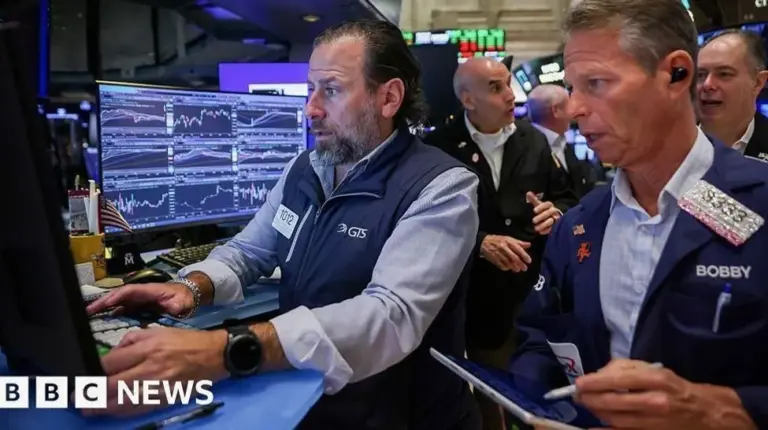
Wall Street experienced a staggering rout this week as hundreds of billions of dollars in market value vanished from the tech sector following the US midterm elections. Investors reacted sharply to Democratic victories in several key races, particularly those centered on platforms calling for a slowdown in AI expansion. This political shift triggered a massive slide for the Nasdaq composite, which plummeted more than five percent and lost roughly two and a half trillion dollars in capitalization, marking some of the worst trading days seen since 2025.

The volatility focused heavily on the hardware that powers modern computing, with semiconductor giants bearing the brunt of the collapse. Nvidia saw its valuation drop by over four hundred billion dollars as shares slid nine percent, while others like AMD and Micron tumbled even further. Even Elon Musk felt the impact of the electoral tide, as Tesla and SpaceX shares plunged amid reports that his significant financial backing of Republican candidates failed to prevent Texas from turning blue. In total, the elite group known as the magnificent seven shed a full trillion dollars in value during a single session.

Much of the anxiety stems from specific ballot measures and campaign promises aimed at curbing the growth of energy hungry data centers. For instance, Texas governor elect Gina Hinojosa pledged a moratorium on new construction within the sector, sparking fears that the physical infrastructure necessary for AI cannot be built fast enough to justify current spending levels. Market strategists suggest that these regulatory hurdles are colliding with existing doubts about whether the astronomical investments in generative AI will ever yield tangible financial returns.

Industry leaders admitted they may have underestimated public resistance to these sprawling digital hubs. Speaking at a conference in Napa, OpenAI co founder Greg Brockman noted that simply announcing the benefits of technology is no longer sufficient, emphasizing that companies must engage directly with local communities rather than relying on social media updates. Meta president Dina Powell McCormick echoed this sentiment, suggesting that tech firms now need to aggressively rewrite their narrative to convince both voters and investors that AI remains a viable path forward.