Archive

November 2026

Browsing

The window is closing rapidly for House Speaker Mike Johnson and Senate Majority Leader John Thune to leave a lasting legislative mark before their time in leadership expires. With January 3 looming as the date when control of Congress shifts to the Democrats, Republican leaders are racing against a calendar that offers very little room for error. The tension in Washington has reached a fever pitch as the remaining weeks of the session become a high stakes game of political survival.

Many within the party remain determined to push through at least one significant piece of legislation that aligns strictly with President Donald Trump’s spending priorities. This final effort represents more than just policy; it is an attempt to secure a parting victory and cement a specific fiscal legacy before they move into minority status. However, the path forward remains fraught with difficulty, as internal divisions and timing constraints make a unified front harder to maintain.

Despite these ambitions, those hopes appear to be fading by the day. As the deadline approaches, the logistical hurdles of passing a partisan bill without Democratic cooperation have proven daunting. Observers suggest that while the desire for one last win is strong, the reality of a fractured timeline may ultimately leave several key GOP initiatives stranded on the cutting room floor.

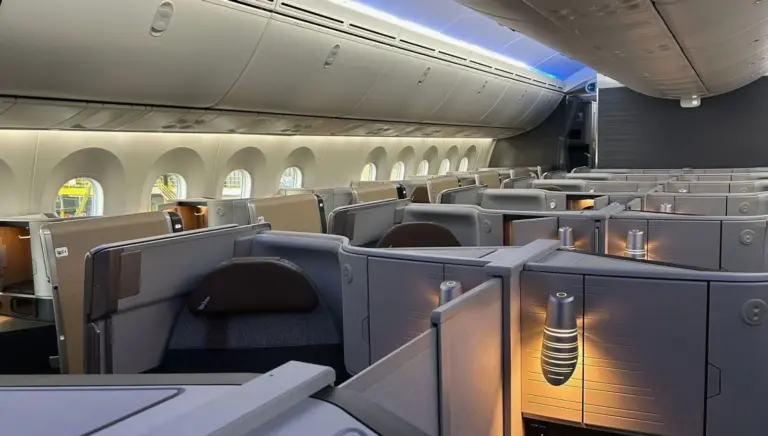
The golden age of the ultra exclusive international first class cabin has officially touched down for the final time in the United States. With American Airlines retiring its remaining eight suite sections on long haul flights, the industry has completed a sweeping transition toward a new model of travel. Instead of a tiny handful of elite berths, carriers are betting on massive, souped up business class cabins that accommodate dozens more passengers while maintaining a high level of comfort.

This shift represents a strategic move toward mass luxury, where airlines provide nearly identical perks to what once defined first class. Modern business suites now frequently feature sliding privacy doors, lie flat beds, integrated charging pads, and oversized screens. For many travelers, these enhancements have made the distinction between the two tiers almost invisible. While first class once meant seat side carvings of chateaubriand and fine bone china, today’s luxury experience is more about productivity and sleep than theatrical dining.

Industry experts suggest that this evolution is driven by both consumer behavior and corporate policy. Many companies permit employees to book business class but forbid the higher expense of first class, making a robust business cabin far more profitable for the airline. Furthermore, as fuel and landing fees climb, filling seventy business suites proves more lucrative than maintaining a small enclave of extreme opulence. When the bed already flattens to 180 degrees and the bedding is plush, adding a bowl of soup or a specific type of pillow does little to justify a massive price premium for most flyers.

As traditional first class fades into history, airlines are now looking at ways to further segment their remaining premium offerings. Much like how economy was split into basic and extra legroom options years ago, carriers like Delta and United are beginning to introduce tiered pricing within their top cabins. This means some high paying passengers may find themselves with fewer perks, such as restricted seat selection or limited lounge access, proving that even in the world of luxury aviation, efficiency and yield always win out over extravagance.

Levent Alpöge, a technical staff member at the AI powerhouse Anthropic, believes he has finally cracked the Riemann Hypothesis, a mathematical puzzle that has stumped the world’s greatest minds since 1859. In a detailed post shared on his personal website, Alpöge credited the company’s own AI tool, Claude, with helping him cross the finish line. Describing their collaboration as a partnership where the AI eventually outpaced him in speed and creativity, Alpöge claimed the breakthrough occurred late on a Sunday night, just as Anthropic was preparing for its historic entrance into the public stock market.

The Riemann Hypothesis focuses on the complex distribution of prime numbers as they stretch toward infinity and remains one of the most prestigious challenges in science. Rather than submitting a traditional academic paper, Alpöge provided his proof via seventeen million lines of Lean code, a specialized programming language used to verify mathematical theorems. While computers are famously rigid and unforgiving with logic errors, experts like Rutgers University professor Alex Kontorovich note that verifying such a massive amount of data still requires significant human effort to truly understand why the solution works.

Despite the excitement surrounding the announcement, official bodies remain cautious. The Clay Mathematics Institute, which offers a one million dollar prize for solving any of its Millennium Prize Problems, still lists the hypothesis as unsolved. Martin Bridson, president of the institute, acknowledged that while an announcement of this magnitude could transform our understanding of mathematics, moving from a digital claim to universal acceptance is a long and rigorous process. This follows a similar trend in the industry; just last month, OpenAI reported using its technology to solve another legendary physics problem involving fluid dynamics known as Navier Stokes.

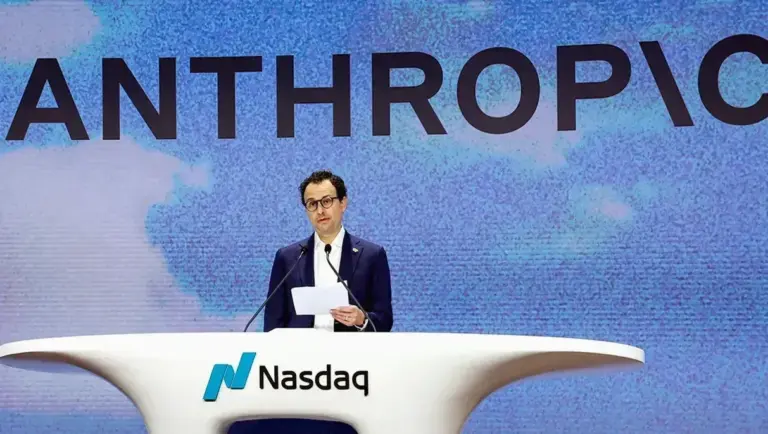
The timing of this revelation coincides with one of the largest corporate milestones in tech history. Anthropic recently completed an initial public offering that valued the company at 1.5 trillion dollars and raised eighty one billion dollars from investors. As CEO Dario Amodei steers the firm through its new life as a public entity, he continues to champion a future where artificial intelligence serves as an engine for scientific discovery while urging caution regarding its broader societal risks. For now, mathematicians worldwide are left to sift through millions of lines of code to see if humans have finally conquered primes with a bit of silicon help.

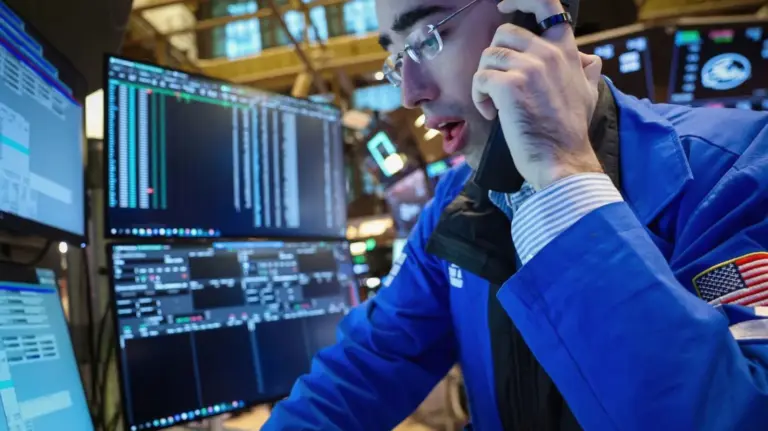
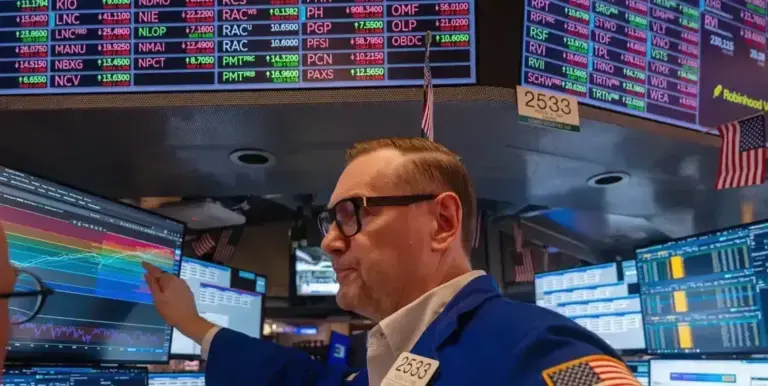
Wall Street experienced a bruising week as the S&P 500 and Dow Jones Industrial Average both slid into correction territory, dropping more than ten percent from their recent peaks. For months, investors seemed to ignore growing warning signs, but according to Wharton professor Jeremy Siegel, the market finally reached a breaking point where small pressures acted like straws that broke the camel’s back. The damage was most acute in tech heavy indices, with the Nasdaq Composite wiping out its yearly gains and the Nasdaq 100 dipping into bear market territory during intraday trading.

Much of the carnage can be traced back to a sudden cooling of the artificial intelligence boom. The massive IPO of AI leader Anthropic appeared to trigger a collective cash out for early investors, leaving retail traders feeling abandoned as shares tumbled shortly after debuting. This sentiment was compounded by a disastrous period for Nvidia, which saw its stock plummet amid reports of an SEC probe into its accounting practices. Adding to the chaos, former CEO Jensen Huang resigned following allegations involving a foreign spy and potential violations of chip export bans to China, stripping away much of the confidence that had previously buoyed the semiconductor sector.

Beyond the turmoil in AI, broader economic headwinds are pushing investors toward the exits. Persistent inflation fueled by geopolitical tensions in Iran has kept oil prices elevated and forced Federal Reserve officials to signal more aggressive interest rate hikes. With treasury yields spiking and Governor Christopher Waller suggesting a possible half percentage point increase next month, Wall Street is bracing for a central bank determined to curb rising costs at any cost. Meanwhile, technical indicators shifted negatively as the S&P 500 broke through its two hundred day moving average, triggering automated selling from institutional trend followers who accelerated the downward spiral.

Adding fuel to the fire is evidence that corporate earnings growth is losing steam. Once explosive revenue jumps for AI firms are beginning to decelerate, raising questions about whether valuations were fundamentally detached from reality. Fears regarding tighter regulations on data center construction following shifts in political control have further dampened enthusiasm for infrastructure plays like CoreWeave and Caterpillar. What began as a cautious dip has evolved into a systemic retreat as investors realize that neither technological optimism nor historical trends can shield them from current macroeconomic realities.

Wall Street endured a brutal stretch this week as the artificial intelligence trade, once seen as an unstoppable force, suffered a series of jarring setbacks. Major indexes reached grim milestones by Friday, with the S&P 500 and the Dow sliding into correction territory while the Nasdaq posted losses for the year. Even the highly anticipated IPO from AI lab Anthropic failed to spark a recovery, instead leading the charge downward after an initial surge. For many observers, the carnage suggests that the gold rush era of AI investing may have finally hit a critical turning point.

The instability was exacerbated by personal scandal at the highest levels of industry leadership. Ed Yardeni, founder of Yardeni Research, suggested that the turmoil surrounding Nvidia CEO Jensen Huang effectively burst the company’s bubble, allowing air to leak out of the broader AI sector slowly rather than in one catastrophic crash. This view is shared by skeptics like Michael Burry, whose foresight during the 2008 crisis earned him fame in The Big Short. Burry took to social media to remind investors that he had long warned against the circular financing and fragile webs connecting chipmakers and cloud providers, arguing that those attributing the slide solely to politics or scandals are missing a deeper systemic failure.

Other analysts see more mechanical reasons for the rout. Gordon Johnson of GLJ Research pointed toward a surging dollar forcing investors who traded on margin to liquidate their positions regardless of quality. Meanwhile, Michael Arouet questioned the basic logic behind trillion dollar valuations that seemed predicated on impossible growth rates. Technical strategists like Adam Turnquist note that while damage is mounting and key averages have been breached, it is not yet certain if we have entered a full bear market or simply a period of necessary stabilization.

Despite the bleeding, some voices remain defiantly optimistic. Dan Ives continues to champion a massive four trillion dollar buildout through 2027, viewing this dark chapter as a temporary dip rather than a structural collapse. Similarly, Gene Munster argues that current prices represent a buying opportunity and believes clarity will return once fourth quarter earnings reports provide concrete data on whether AI investments are actually paying off. Whether this is a healthy reset or the beginning of a prolonged winter depends entirely on which expert you trust.

The financial world is reeling from the sheer scale of Anthropic’s recent initial public offering, but while investors are focused on the staggering 1.5 trillion dollar valuation, some industry leaders see a much larger story unfolding for the average worker. Michael Rangel, the founder of small business technology platform Novo, believes this milestone marks the start of a digital gold rush specifically tailored for entrepreneurs and solopreneurs. In a conversation with Fox News Digital, Rangel suggested that those operating without employees are poised for explosive growth as AI levels the playing field, allowing individuals to handle workloads that previously required entire teams.

This shift is already visible in the data provided by Novo. Just last year, only one in every thirty four of the company’s quarter million small business clients were utilizing AI tools. Fast forward to today, and that figure has climbed to one in eight. While this indicates a rapid surge in productivity hunting and time management, Rangel notes that it also highlights a massive untapped market. With seven out of eight businesses still operating without AI assistance, there remains an enormous window of opportunity for both software giants like Anthropic and the small firms brave enough to adopt these technologies early.

Interestingly, some of the most surprising gains are happening in traditional, analog sectors where high tech once seemed out of place. Trucking has emerged as one of the fastest growing segments for AI adoption, doubling its penetration since 2025. While robots aren’t driving the rigs just yet, operators are using AI to completely overhaul their back offices by automating invoicing, scheduling, and complex accounting tasks. Similar trends are appearing in restaurants and healthcare providers who are leveraging automation to clear away mountains of clerical work and payroll headaches.

Despite his optimism, Rangel warns that we shouldn’t expect an overnight transformation across all industries. He acknowledges that changing deep seated habits and legacy systems takes significant time and effort for many small business owners. There will likely be a long tail of analog companies struggling to find the bandwidth to invest in these updates. However, for those willing to make the leap, Rangel believes AI represents a generational chance to elevate their operations to an entirely new level of efficiency.

Anthropic (ANT) priced its Nasdaq IPO at $83, opened at $111.50 on Nov. 19 and gave back most of that opening gain by Friday morning.

If you missed the offering, three familiar stocks already have a financial stake in what happens next.

Nvidia can benefit when cloud providers buy chips to run Claude.

Amazon and Alphabet own Anthropic shares and sell it computing capacity.

For investors deciding among the three, the distinction is where the payoff comes from: hardware sales, cloud revenue or appreciation in Anthropic’s stock.

Nvidia sells the hardware behind Claude

Nvidia Corp (NVDA) was among seven companies that bought Anthropic shares in a $26 billion private placement that closed Friday at the IPO price.

Its hardware exposure reaches further.

Anthropic’s prospectus identifies Nvidia-powered capacity under agreements with SpaceXAI and Nscale, alongside its work with Microsoft Azure.

That gives Nvidia several routes to benefit if Claude needs more computing power, even when Anthropic rents that capacity from someone else.

The distinction matters: a cloud provider’s contract value includes services beyond the GPUs, and Anthropic also uses rival chips from Amazon and Google.

For Nvidia shareholders, the number to watch is how much of Claude’s next wave of demand turns into orders for Nvidia systems.

Amazon has an equity stake in Anthropic

Amazon Inc (AMZN) combines an ownership stake with one of Anthropic’s clearest spending commitments.

The IPO prospectus says Anthropic agreed to spend at least $110 billion with Amazon from May 2026 through April 2036, with a provision to pay the shortfall if actual spending falls below the minimum, subject to certain exceptions and adjustments.

The partnership also puts Amazon’s in-house Trainium chips to work training and deploying Claude, while AWS customers can access the models through Bedrock.

For those invested in AMZN shares, the spending floor makes the commercial tie easier to quantify than the equity upside. What ultimately matters to earnings is how much AWS keeps after paying to build and operate the capacity.

Alphabet offers exposure through a stake, chips, and cloud

Alphabet Inc (GOOGL) bought $10 billion of Anthropic’s nonvoting shares in Friday’s private placement, funding part of a prior investment commitment.

Alphabet also benefits through Google Cloud, which offers Claude to enterprise customers through Vertex AI, and through Google’s custom tensor processing units, or TPUs.

Anthropic’s expanded agreement with Google and Broadcom calls for several gigawatts of next-generation TPU capacity expected to start coming online in 2027.

That gives Google shareholders an immediate exposure through the stake and an operating payoff that builds as capacity comes online.

It also gives Alphabet Inc. a large outside customer for its chips – a business opportunity that can grow even when Anthropic’s share price has a rough day.

AI disclosure: AI tools assisted with research and drafting of this piece. An Invezz editor reviewed the facts, sources and wording before publication. Any opinions or analysis are Invezz’s, not those of an automated system.

The post These 3 stocks are must-own for investors who missed Anthropic IPO appeared first on Invezz

PayPal stock PYPL fell 4% on Friday after the payments company announced a series of leadership changes as part of its turnaround efforts under CEO Enrique Lores.

The appointments include a new chief financial officer and executives overseeing consumer financial services, payments and artificial intelligence operations.

The company said the changes follow several months of strategic planning aimed at clarifying priorities across its core businesses, simplifying its operating model and strengthening leadership accountability.

However, the management overhaul comes as investors remain cautious about PayPal’s ability to revive growth and regain market share.

PayPal has lost about 7% over the past 12 months.

The stock has also fallen approximately 82% from its all-time closing high of $308.53 reached on July 23, 2021.

PayPal appoints new CFO and business heads

Claire Bramley, currently CFO of cloud-based accounting software provider Xero, will join PayPal as executive vice president and CFO on February 1, 2027.

She will replace Jamie Miller, who has served as chief financial and operating officer.

Bramley will work with Miller during February to support the transition.

Bramley previously held senior finance positions at HP, where her tenure overlapped with Lores.

PayPal also appointed Kartik Mani as president and head of Consumer Financial Services and Venmo.

Mani joins from American Express, where he was president of Global Network and Partner Services. Venmo general manager Alexis Sowa will continue in her role and report to him.

Suzan Kereere, who currently leads PayPal’s Global Markets business, will become president and head of Payment Services and Crypto.

She will succeed Jeff Pomeroy, who had been serving as interim head and will continue leading Payment Services and Platforms, reporting to Kereere.

Juan Rio will join the company on November 30 as executive vice president of AI Business Transformation and Operations.

He previously worked at Brightstar.AI as managing director and chief delivery officer. Rio will oversee AI initiatives, cost simplification and enterprise operating effectiveness.

Separately, PayPal announced that Chief Risk Officer Aaron Webster would leave the company.

Ratinder Bedi, senior vice president of Credit and Fraud Risk, will serve as interim head of the risk organisation while PayPal searches for a permanent replacement.

Board appointment and investor concerns

PayPal also appointed Brian J. Lee to its board of directors, effective November 30, 2026.

Lee served as Goldman Sachs’ chief risk officer from 2019 to January 2025 and most recently chaired its Risk Council through October 2026.

The leadership changes come as Wall Street analysts remain divided over PayPal’s prospects.

Of the 45 analysts covering the stock, 31 have a Hold rating, seven recommend selling, and seven have a Buy rating.

Monness Crespi Hardt analyst Gus Galá recently downgraded PayPal to Sell from Neutral and set a $48 price target.

He cited market-share losses and unfavourable business trends, including a year-over-year decline in third-quarter transaction revenue from PayPal’s products and services.

Analysts at Freedom Broker, Cleveland Research and Bank of America have also recently downgraded the stock.

Analysts assess PayPal’s growth engines

Not all analysts are negative on the company. Susquehanna analyst James Friedman maintains a Positive rating and a $67 price target.

Friedman believes PayPal’s growth prospects should not depend entirely on its traditional branded checkout business.

He identified buy now, pay later services, Venmo, and Braintree’s value-added merchant tools as three newer growth engines, each of which has recorded double-digit growth.

He argued that the traditional checkout business may only need to achieve modest growth of 2% to 3% to support overall profit expansion.

Friedman also expects PayPal to treat 2027 as an investment year, directing spending towards these three growth areas while using internal cost savings to keep overall earnings steady.

The turnaround, which Lores has led since joining in March, has focused on cost reductions and greater adoption of artificial intelligence.

PayPal’s fourth-quarter results, expected in early February, will provide investors with an opportunity to assess management’s progress.

Forward guidance and updates on the turnaround strategy are likely to remain central to the market’s assessment of the company’s new leadership team.

AI disclosure: AI tools assisted with research and drafting of this piece. An Invezz editor reviewed the facts, sources and wording before publication. Any opinions or analysis are Invezz’s, not those of an automated system.

The post PayPal stock falls 4% as leadership shake-up tests turnaround strategy appeared first on Invezz


Intel shares INTC fell on Friday as a broader selloff in semiconductor stocks intensified, with investors reassessing the outlook for artificial intelligence spending and the profitability of the industry.

The stock was down 5.36% by 1:06 AM ET, trading at $52.74. Intel’s stock has seen a sharp dip since its earnings on Oct 29, after which it lost close to 29% in the next session.

On Friday, though, the weakness was not limited to just Intel.

Nvidia, AMD, Micron and Broadcom also declined as the technology sector faced another bout of selling. Anthropic shares, which had enjoyed a blockbuster stock market debut on Thursday, also reversed course.

The pressure on chipmakers has also spread across international markets, with Asian semiconductor stocks facing heavy losses.

For Intel, however, the broader market weakness is only part of the problem. The company is dealing with several challenges of its own, ranging from slowing PC demand and manufacturing difficulties to legal action and changes in its investor base.

Chip stocks face broader AI concerns

The latest selling comes as investors become increasingly cautious about the AI trade following weeks of volatility.

Concerns over data center spending, financing requirements and the time required to generate returns have weighed on semiconductor companies.

Nvidia’s recent leadership controversy and questions surrounding its financial relationships across the AI ecosystem have added another layer of uncertainty.

Anthropic’s IPO was expected to bring some relief to the struggling AI trade, but sentiment failed to improve even after the Claude maker delivered a blockbuster Nasdaq debut on Thursday.

Anthropic itself led the broader tech sector decline on Friday, falling more than 12%.

Intel has been particularly vulnerable because its turnaround depends on both recovering its traditional PC business and establishing itself as a major contract chip manufacturer.

Nvidia reduces Intel stake as PC concerns grow

A regulatory filing revealed that Nvidia reduced its Intel holding by 25% during the third quarter, cutting its reported position from 214.8 million shares to approximately 161.1 million.

Nvidia had invested $5 billion in Intel in December 2025, supporting its manufacturing ambitions. Although it retains a substantial position, the reduction has raised questions about the investment relationship.

Intel is also facing a proposed shareholder class-action lawsuit filed in federal court in California.

The lawsuit, led by Michigan’s City of Southfield Fire and Police Retirement System, alleges that Intel executives failed to disclose the impact of slowing PC sales and excess inventory on the company’s financial performance.

The allegations follow Intel’s warning that PC demand could remain weak through the first half of 2027.

Higher memory prices and supply shortages have increased computer costs, while manufacturing bottlenecks have limited Intel’s ability to meet demand for some data center processors.

The company’s fourth-quarter revenue forecast of $15 billion to $16 billion also fell short of Wall Street expectations of approximately $17 billion.

Fresh layoffs add to Intel’s challenges

Intel’s restructuring efforts are continuing under CEO Lip-Bu Tan as the company attempts to lower costs and streamline operations.

It has begun another round of layoffs within its global information technology organization, although the number of affected employees has not been disclosed.

Intel’s reported workforce has fallen by approximately 27,800 employees since the end of 2024. The company said it regularly reviews its staffing requirements to ensure resources are aligned with its business priorities.

However, even this effort has not been able to win back investors, with broader market sentiment refusing to improve.

Some good news: Intel wins new customers

Despite the pressure, Intel has secured two important customer developments that could support its manufacturing ambitions.

CEO Lip-Bu Tan announced Thursday that the company had signed its first external customer for its advanced 18A-P chip manufacturing process.

Intel has not disclosed the customer’s identity, but the agreement marks progress in its effort to compete with Taiwan Semiconductor Manufacturing Co.

Separately, Microsoft became the first publicly named customer for Intel Foundry’s EMIB advanced packaging technology, which will be used for Microsoft’s Azure first-party silicon.

The companies also expanded their collaboration through multi-year agreements covering Intel Xeon processors and future Azure infrastructure.

AI disclosure: AI tools assisted with research and drafting of this piece. An Invezz editor reviewed the facts, sources and wording before publication. Any opinions or analysis are Invezz’s, not those of an automated system.

The post Why Intel shares are falling over 5% on Friday? appeared first on Invezz

Michael Burry, the investor made famous by The Big Short, has taken profits on part of his bearish bets against Nvidia and the semiconductor sector following a sharp technology sell-off this week.

In a Friday update to subscribers of his Cassandra Unchained Substack, Burry said he sold 50% of his put options on Nvidia (NASDAQ: NVDA) and the VanEck Semiconductor ETF (SMH), locking in what he described as substantial gains.

He retained the remaining half of both positions.

Put options increase in value when the underlying shares decline, allowing investors to profit from falling stock prices.

Burry also reduced some of his bullish exposure, selling roughly one-third of his call options on animal health company Zoetis (NYSE: ZTS) to secure gains.

However, he left his bearish April 2027 put options on the Nasdaq 100 untouched, maintaining his longer-term negative outlook on large-cap technology stocks.

Burry increases MercadoLibre stake

Alongside the profit-taking, Burry increased his position in Latin American e-commerce company MercadoLibre (NASDAQ: MELI) by 20%.

He also pointed to what he described as “absolute relative strength” in several stocks, including healthcare companies Molina Healthcare (NYSE: MOH) and HCA Healthcare (NYSE: HCA), software company Adobe (NASDAQ: ADBE) and grocery retailer Sprouts Farmers Market (NASDAQ: SFM).

The portfolio changes indicate that Burry is adjusting some of his positions following the recent market moves while retaining his bearish exposure to the Nasdaq 100.

His decision to lock in part of his Nvidia and semiconductor ETF gains came as chip stocks endured a difficult week, with Nvidia extending its losing streak despite reporting strong quarterly results.

Nvidia shares extend losing streak

Nvidia shares fell for a seventh consecutive session on Friday and were on track for their worst weekly performance since November 2018.

The decline came despite the chipmaker reporting record quarterly revenue of $115.8 billion, more than double the year-earlier figure.

Net profit increased 109% to $64.9 billion, beating Wall Street forecasts.

Interim CEO Colette Kress also provided a strong outlook, forecasting fourth-quarter revenue of $130 billion and raising the company’s fiscal 2028 revenue growth outlook to 75%.

However, the earnings performance did little to support the stock as investors continued to assess concerns surrounding the company and the broader technology sector.

Nvidia has also faced scrutiny over allegations involving the potential diversion of advanced chips to China.

Two House Democrats reportedly opened an inquiry into whether the company sought to influence the Commerce Department’s investigation of Megaspeed, a Singapore-based cloud company suspected of illegally diverting advanced chips to China.

Separately, Representative Brett Guthrie, chairman of the House Committee on Energy and Commerce, sent a letter to Kress requesting that Nvidia officials appear before the panel by December 2.

Semiconductor sell-off weighs on technology stocks

Nvidia’s decline spread across the wider semiconductor sector, adding to pressure on technology stocks as investors questioned whether substantial spending on artificial intelligence infrastructure would generate sufficient returns.

The Invesco QQQ ETF (QQQ), which tracks the Nasdaq 100, fell 9% over the week.

Other major chipmakers also recorded steep losses on Friday.

Advanced Micro Devices (NASDAQ: AMD) dropped more than 11%, while Micron Technology (NASDAQ: MU) declined over 13%.

The declines reflected broader concerns about valuations and supply chains across the semiconductor industry.

AI disclosure: AI tools assisted with research and drafting of this piece. An Invezz editor reviewed the facts, sources and wording before publication. Any opinions or analysis are Invezz’s, not those of an automated system.

The post Michael Burry takes profits on Nvidia puts as chip stocks extend sell-off appeared first on Invezz