Archive

November 2026

Browsing

Shares of Nebius Group and CoreWeave fell on Friday as optimism around Anthropic’s blockbuster IPO faded amid broader concerns about the AI trade.

Nebius dropped 11.7% by 11:45 AM ET, while CoreWeave also declined 10.7%, extending recent weakness in the neocloud sector.

CoreWeave has slipped more than 30% over the last eight sessions, while Nebius has tumbled more than 40% over the same period.

The broader market also remained under pressure, with the tech-heavy Nasdaq turning negative for 2026 after yet another day in the red.

Anthropic IPO fails to lift AI trade

Anthropic’s IPO was expected to bring some relief to the struggling AI trade, but sentiment failed to improve even after the Claude maker delivered a blockbuster Nasdaq debut on Thursday.

Anthropic itself led the broader tech sector decline on Friday, falling more than 10.5%.

Neoclouds like CoreWeave and Nebius have borne the brunt of the selloff.

Their heavy debt loads have become a major point of contention among investors, especially amid tightening credit markets and rising borrowing costs.

Both CoreWeave and Nebius play a critical role in the AI trade as specialized cloud providers, often called neoclouds.

They purchase large volumes of high-end Nvidia GPUs and other chips, then rent out the computing capacity to AI labs, enterprises and researchers that need massive processing power to train and run large language models.

Burry reminds investors of his warning

Investor Michael Burry added to the pressure with a post on X stating that he had “tried to warn” investors about CoreWeave, Nebius, Nvidia and semiconductor stocks.

https://twitter.com/michaeljburry/status/2123517225525035291?s=20

Burry, known for his “Big Short” call ahead of the 2008 financial crisis, noted that he had provided information that would prompt selling, even if he did not explicitly recommend shorting the stocks.

“I tried to warn you all. I didn’t say short. But I provided the information one would need to sell,” Burry said.

Chipmaker scrutiny and related risks

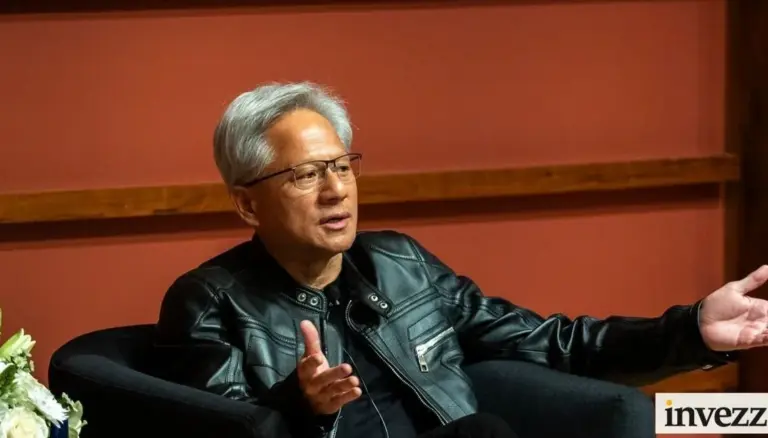
Rising legal and regulatory scrutiny around Nvidia, including probes related to former CEO Jensen Huang and potential China-linked risks, weighed on sentiment toward the broader AI supply chain.

Nvidia is a backer of both neoclouds.

Similar concerns have extended to other chipmakers, such as AMD, which was also tumbling on Friday.

With the political climate changing and major chipmakers under scrutiny, the sustainability of the AI boom is facing growing questions.

Separately, disclosures showed that the Jen-Hsun & Lori Huang Foundation, Huang’s charity, has committed $350 million to rent computing capacity from CoreWeave for research grants.

The arrangement, with more than $100 million already spent, has drawn attention to the close financial ties between Nvidia’s ecosystem and its customers, raising questions about circular financing in the sector.

CoreWeave also came under pressure, with Bernstein reiterating its Sell rating on the stock on Wednesday.

Bernstein maintains a bearish stance on CoreWeave, setting a $54 price target on November 20, 2026, after cutting its target from $74 to $51 in late October 2026.

AI disclosure: AI tools assisted with research and drafting of this piece. An Invezz editor reviewed the facts, sources and wording before publication. Any opinions or analysis are Invezz’s, not those of an automated system.

The post Why CoreWeave and Nebius stocks are falling on Friday? appeared first on Invezz

Tesla stock TSLA fell over 3% on Friday as analysts questioned the benefit of the reported merger with SpaceX.

HSBC upgraded Tesla to Hold from Reduce and raised its price target to $359 from $157, citing speculation about a possible combination with Elon Musk’s space company.

However, the new target still implies downside of about 4% from Tesla’s previous closing price.

The potential merger has introduced a new dimension to Tesla’s investment outlook, although HSBC questioned whether combining the two businesses would deliver meaningful operational benefits in the near term.

HSBC sees control as key merger motivation

HSBC analyst Michael Tyndall said the strategic rationale for combining Tesla and SpaceX was not immediately clear, given their different end markets and limited near-term operational synergies.

Instead, the bank believes control could be the main motivation behind a potential transaction, particularly because Musk has greater voting power at SpaceX.

Musk owns approximately 39% of SpaceX, with around 70% of its voting rights.

At Tesla, his ownership and voting control stand at roughly 20%.

Tyndall believes SpaceX could emerge as the surviving entity in a merger, potentially allowing Musk to retain majority voting control of the combined company.

HSBC estimates that a 33% acquisition premium could value Tesla at $507 per share.

Combining that scenario with its fundamental valuation produces a weighted target price of $359, based on equal weighting between the two valuations.

A merger could also help SpaceX reduce future equity dilution.

The company faces substantial investment requirements related to artificial intelligence and data centres, which exceed Tesla’s capital needs.

However, HSBC highlighted regulatory risks, particularly in China, where Tesla has significant manufacturing operations and revenue exposure.

The bank maintained its Hold rating on SpaceX, with a $150 price target.

Gary Black warns of potential dilution

Investor Gary Black of The Future Fund LLC has also criticised the possibility of a SpaceX-Tesla merger, focusing on the potential consequences of a stock-for-stock transaction.

In a post on X, Black pointed to the recent deal between Lumentum Holdings and Marvell Technology as an example of the risks associated with using a company’s own shares to acquire another business.

Black said Marvell’s stock had fallen 45% in just over a month, reducing the 24% premium offered for Lumentum to a 41% discount relative to Lumentum’s share price before the announcement.

He attributed the decline to dilution in the acquiring company’s stock and argued that a similar outcome could follow if SpaceX used its shares as currency to acquire Tesla.

SpaceX deal could pressure Tesla shares

Black warned that Tesla investors could initially benefit from a short-term rise following a merger announcement, only to face selling pressure as investors seek to realise gains in SpaceX shares.

He suggested that a potential 24% premium for Tesla, paid in SpaceX stock, could lose value quickly if the transaction resulted in substantial dilution.

Using a Tesla share price of $374 and an implied SpaceX-based valuation of $464 after the premium, Black estimated that the value could fall by 25% within a month to around $280 per share.

His scenario assumes dilution of as much as 50% to SpaceX shares.

The comments reflect Black’s assessment of the potential risks rather than confirmed terms of a proposed transaction.

AI disclosure: AI tools assisted with research and drafting of this piece. An Invezz editor reviewed the facts, sources and wording before publication. Any opinions or analysis are Invezz’s, not those of an automated system.

The post Why is Tesla stock falling over 3% today? appeared first on Invezz

A founder-CEO of an all-important global AI company, with a rockstar persona, admits to an affair with an alleged spy.

He is made to resign with the whole world watching and many powerful people rooting for his return, while waxing eloquent about why he is indispensable and irreplaceable.

A significant section of employees, at least a fourth of the workforce, feel wronged on his behalf, showing where their loyalties lie.

Many Shareholders want him back while the stock is in steady decline

It is in these evidently hostile conditions that a senior woman executive has been brought in to steady the ship while the company looks for a permanent successor.

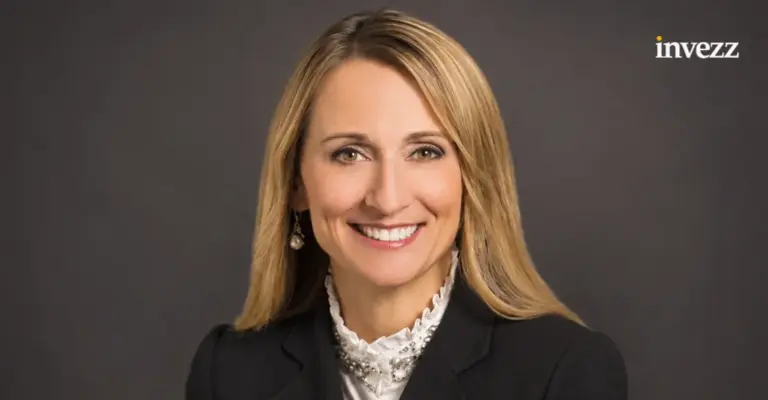
Nvidia CFO Colette Kress’s appointment as interim chief of a company seen as the linchpin of the global AI boom is among the toughest jobs in the world right now.

It has also reignited the debate around the glass cliff phenomenon.

What is the glass cliff?

The term describes the widespread practice of preferentially appointing women or other minority employees to leadership positions in times of crisis, when the chances of failure are highest.

That makes it even harder for them to perform, eventually reinforcing the perception that women cannot lead.

It was coined by British academics Michelle Ryan and Alex Haslam, who in 2004 published an extensive study of FTSE 100 companies and found that women tended to be appointed to lead failing organisations.

A pattern that runs through history

Examples abound.

Marissa Mayer became Yahoo’s CEO in 2012, when the internet major had lost substantial market share and was struggling with focus and innovation.

She was its fifth CEO in five years, a sign of how volatile the company was.

Ellen Pao at Reddit, Roz Brewer at Walgreens Boots, even Theresa May becoming UK prime minister right after Brexit: all are telltale signs of the insidious phenomenon.

In a study conducted by Alison Cook, professor of management at the Jon M Huntsman School of Business at Utah State University, and her colleague Christy Glass, professor at the university’s school of social sciences, the researchers found that in US college men’s basketball, coaches from racial minorities were more likely than white coaches to be promoted to losing teams.

In 2013, the duo analysed CEO transitions in Fortune 500 companies over 15 years.

They found that occupational minorities, defined as white women and men and women of colour, were more likely than white men to be promoted CEO of weakly performing firms.

They also found that when performance declined under occupational minority CEOs, these leaders were likely to be replaced by white men, a pattern they termed the “savior effect.”

Does Nvidia fit the picture?

Invezz asked Cook whether Kress’s appointment amounts to a glass cliff, given that Nvidia is doing exceptionally well financially and has strong prospects.

“The glass cliff isn’t only about weak performance. It’s about being appointed to a precarious situation,” Cook told Invezz.

“In my work with Dr. Christy Glass, we’ve treated firms facing a scandal, including the firing of the previous CEO, or going through major restructuring as glass cliff situations too. Nvidia fits that picture. Kress is stepping in during a national security investigation, several lawsuits, and a permanent CEO search that may not pick her,” she said.

Cook spells out the challenges Kress faces and the conditions she is leading under, which make this a compelling case of the phenomenon.

“First, the scrutiny will be enormous. Nvidia is one of the most visible companies in the world, and every decision she makes will be watched and second-guessed. Second, her authority may be challenged. She is leading while there is a very public push to bring her predecessor back, which can make it hard for anyone to lead with full support. Third, the reputational risk falls on her.”

“She is now the face of the company during a crisis she didn’t create, and if things go badly, she may be the one who wears it. So while the business itself is strong, the circumstances around her appointment fit the glass cliff mould,” she said.

Why organisations turn to women in a crisis

Sophie Williams, former global manager of production planning at Netflix, and author of The Glass Cliff: Why Women in Power Are Undermined – And How to Fight Back, has explained why organisations turn to women in moments of crisis.

“There’s a perception that when a team has gone through a hard time, what we are looking for suddenly becomes someone to make us feel better. Someone to play office mum, someone to soothe those experiences and those team members. And not necessarily make transformational change, as they say, but to just make people feel better in that experience,” she said in an earlier interview with Harvard Business Review.

“But because we are not bringing these women in with expectation of transformational changemaking, even when they are capable of it, it means that we don’t often give them either the tools or the time that are necessary to turn that perceived failure into a success before they’re exited. And so we see female leaders being 24% more likely to be fired than their male counterparts. We also see them having significantly shorter tenures in role once they are there,” she said.

The “office adult” label

Bloomberg columnist Beth Kowitt makes a similar point: “If the default for men in tech is charismatic genius, for senior women it is still way too often the office adult.”

Kowitt notes that Sheryl Sandberg, as chief operating officer at Meta Platforms Inc., played the “polished grownup” to counterbalance Mark Zuckerberg’s “hoodie-wearing, college-dropout persona.”

Linda Yaccarino, as CEO of X, had to “clean up the mess left in the wake of Elon Musk.”

The label, she says, implies “a certain kind of executive; one who ensures everyone is well-behaved and on schedule, who brings stability and credibility — but not necessarily big vision.”

“For a generation of women, that may have been the only way in the door,” she says, drawing a comparison with Kress.

Reports that Huang called Kress a “deer in the headlights”, a ‘reporting CEO’ who could not help him set strategy, have already set a lens through which to view her: as a second fiddle, not thought of much by the rockstar founder-CEO.

To be sure, as Kowitt points out, Kress was hired after Huang interviewed 22 candidates, and said he wanted her to be CFO “for as long as we shall live.”

Kress to run two of the company’s most important jobs

Those who see Kress’s appointment as a glass cliff also point out that she must now run the two most important functions at the company, a daunting task despite Kress’ credentials and expertise.

Nvidia is the unofficial financier of the AI boom, spreading its vast cash piles as investments in budding AI startups, including OpenAI and Anthropic, and in ecosystem players such as neoclouds like CoreWeave.

Her role as CFO is therefore far from that of a mere bean counter.

Kress is a seasoned executive. She has spent 13 years at Nvidia, after nearly 25 years in finance roles at major technology companies such as Cisco, Microsoft and Texas Instruments.

Even so, does holding both jobs set her up to fail?

“I wouldn’t call holding both roles a set-up on its own. Interim CEOs who keep their CFO role aren’t unheard of,” Cook said.

She pointed to HP, which in 2010 named Cathie Lesjak interim CEO in addition to her CFO role after Mark Hurd left.

Lesjak served about three months before the board went outside for its next CEO.

“What concerns me more is authority and support. My work with Dr. Christy Glass found that women CEOs often lack the support or authority to accomplish their strategic goals,” she said.

More recently, Cook said, her research with Glass and Dr Alicia Ingersoll found that women CEOs have shorter tenures than men and are more likely to be dismissed involuntarily.

The gap widens when women are appointed during weak organisational performance.

Authority, loyalty and credit

On the earnings call this week, the board ruled out bringing Huang back, after a massive campaign for his reinstatement backed by shareholders, former and current employees, and supporters including Elon Musk and US President Donald Trump.

But the decision alone will not quickly change sentiment.

Cook also points out that Huang’s family remains inside the company.

His daughter, Madison Huang, holds a senior role, and his son and son-in-law are in leadership positions too.

“If coalitions form around his return, or people simply fail to support her, she is leading without full authority,” she said.

Finally, Cook turns to the financing question.

“Sources describe Kress as potentially more conservative than Huang, and she has sometimes pushed back on deals he championed. If she pulls back and growth slows, she may get the blame. If things go well, the credit may go to the foundation Jensen built.”

“In other words, she may get the blame if things go wrong but not the credit if they go right. As one executive in our research put it, ‘If you don’t produce magic in a short period of time, then they say this isn’t working.’”

A baptism by fire

Earlier this week, Kress faced her first earnings call as interim chief rather than just as CFO.

Observers scrutinised not only what she said but also her tone of voice, an early example of the pressure she will face.

Many experts made note that she relied heavily on scripted remarks and sounded robotic and monotone, while some also wrote about her nervousness.

The sceptics

There are, of course, those who reject both the view that Kress’s appointment is a glass cliff and the phenomenon itself.

Last month, a senior McKinsey partner was removed from his leadership roles after LinkedIn posts questioning the phenomenon drew criticism.

Chris Bradley, who is based in Australia, was until recently one of a handful of directors at the McKinsey Global Institute, the consulting firm’s business and economics research arm.

He questioned whether the phenomenon existed at all.

In the now-deleted posts, he called the glass cliff “a very convenient way to always be a victim in the rain.”

On Nvidia specifically, a recent LinkedIn thread on the phenomenon drew a comment from Stan Clark, advisor at Infocrest Solutions and a former senior director at Oracle.

“Colette Kress has earned this. Thirteen years as Nvidia’s CFO, through the company’s biggest growth years. She knows the customers, the numbers, and the team,” Clark said.

“Safra Catz showed what a leader with that background can do. She took on the co-CEO role at Oracle, then led the company after Mark Hurd passed away, and she was exceptional. My bet is on Colette. Rooting for her and the whole Nvidia team.”

The CFO-to-CEO trend

Cook says her findings show that glass cliff appointments are often the culmination of a long-term, risk-centred career strategy.

“Because these leaders are highly visible as outsiders but often invisible as leaders, many deliberately take on risky, high-profile assignments throughout their careers to prove their mettle. That pays off, but it comes with what we call a risk tax: a standard of perfection where one mistake can end a career, constant fear of derailment, and real performance fatigue over time,” she says.

The growing trend of CFOs becoming CEOs may also be cited to question whether Kress’s appointment is a glass cliff.

In 2025, 10.26% of sitting CEOs at Fortune 500 and S&P 500 firms came directly from the CFO role, the highest share in a decade, according to Crist Kolder Associates’ 2025 Volatility report, released on Jan. 28.

In 2024, the figure was 7.1%.

Recent corporate moves bear this out.

Toyota this year appointed CFO Kenta Kon as president and CEO, succeeding Koji Sato.

Unilever named CFO Fernando Fernandez as CEO, succeeding Hein Schumacher.

“The CFO-to-CEO trend is real. CFO-to-CEO promotions are at a decade high, and those promotions have been internal. So on its face, an internal CFO stepping up fits current practice,” Cook says.

“My sense, though, is that tech firms, and chip companies especially, lean toward leaders with engineering and product backgrounds, so I’m less sure the CFO trend holds as strongly there.”

What happens next

Cook, however, urges a focus on what comes next.

“The bigger point is that you can’t separate the two by looking at the appointment alone. You have to look at what happens next. Is she seriously considered for the permanent role? Is she given the authority and support to actually lead? And if she is replaced, by whom and why?” she says.

“In my work with Dr. Christy Glass, we found that when firm performance declined under women and minority CEOs, they were likely to be replaced by white men, which we call the savior effect. These leaders are given fewer degrees of freedom to lead their firms out of crisis. Lesjak served as a bridge at HP and went back to the CFO role when the board brought in an outsider. Whether Kress follows that path or is genuinely in the running will tell us a lot.”

Meanwhile, Nvidia’s recruitment firm has reportedly approached Rene Haas, CEO of Arm, in its search for a new chief executive.

Haas spent seven years at Nvidia before joining Arm in 2013. He became Arm’s CEO in 2022 and has since overseen its expansion into the booming AI infrastructure market.

The post Is Nvidia’s Colette Kress standing on a glass cliff? appeared first on Invezz

A Financial Times investigation has found that Alice Huang, the businesswoman romantically linked to former Nvidia chief executive Jensen Huang, was connected to a network that supplied AI chips to China-based users. The FT says it included an alleged Cambodian criminal enterprise.

The FT says the web also took in Nvidia’s cloud partners, gaming entrepreneurs and hundreds of shell companies. Together they made billions of dollars from moving restricted chips into China, the paper says, without necessarily knowing the full picture.

Alice Huang is at the centre of US inquiries into whether Megaspeed, Nvidia’s largest client in south-east Asia, took part in the underground chip trade. Some US officials suspect she was a Chinese spy; Beijing calls that a “smear”. No charges against her have been reported.

What the investigation found

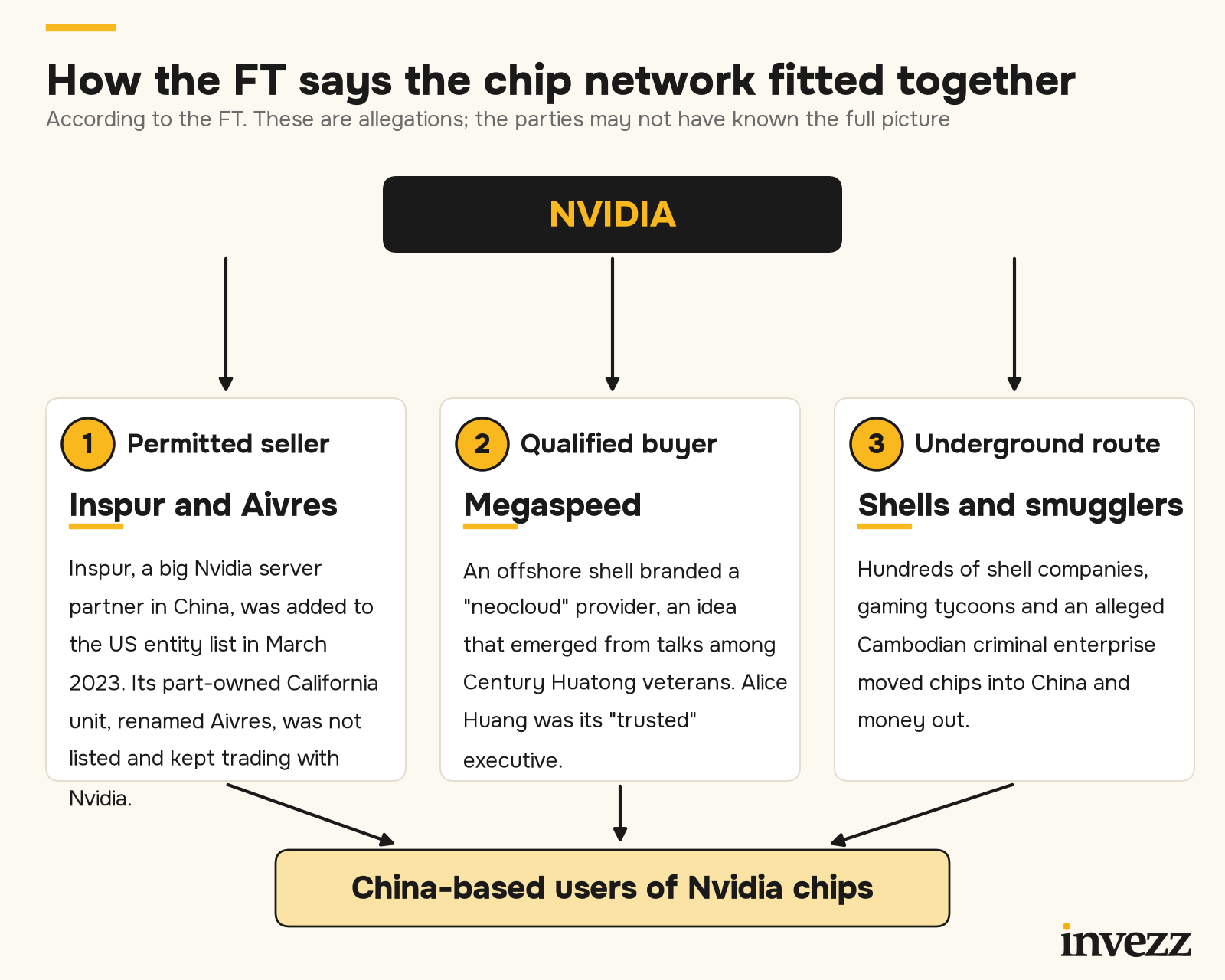
The FT spoke to over a dozen people and traced links through hundreds of corporate filings. Diverting chips, it says, takes three things: a group allowed to buy and resell them, customers that pass US checks, and an underground route for hardware and money.

The first piece, it says, was Inspur, a major Nvidia partner for building chip servers in China. Washington put Inspur on its entity list in March 2023 over alleged help for the Chinese military. Its part-owned San Jose unit was not listed.

That unit was renamed Aivres and kept trading with Nvidia. A person with direct knowledge told the FT that staff inside Nvidia questioned whether Aivres should qualify as a partner. Nvidia decided it met all compliance and export-control rules.

The second piece was a buyer able to clear Nvidia’s checks, which include three years of records and proof of non-Chinese ownership. Some Inspur clients sought help from Century Huatong, a Chinese gaming group that had become a data-centre investor.

The answer, according to the FT’s sources, was an offshore shell branded a “neocloud” provider. That shell became Megaspeed. Alice Huang was its “trusted” outward-facing executive, they said.

Diagram of the alleged AI chip supply network described by the FT: Nvidia at the top; three channels: a permitted seller (Inspur, added to the US entity list in March 2023, and its US unit Aivres, which kept trading with Nvidia), a qualified buyer (Megaspeed, an offshore shell branded a neocloud provider, with Alice Huang as its trusted executive) and an underground route (hundreds of shell companies, gaming tycoons and an alleged Cambodian criminal enterprise); all leading to China-based users of Nvidia chips. According to the FT; allegations, not proven

What the people involved say

Nvidia says its shipments were all legal and authorised by the US government, spokesman John Rizzo said this week, according to The Business Times. Nvidia said in June 2025 it placed Megaspeed on its block list.

Megaspeed says it operates “fully within the bounds” of export controls, CNBC reported, and that Alice Huang left in August 2025. Reuters has not been able to reach her.

Invezz found no public response from Century Huatong or Aivres to the FT’s findings.

China’s foreign ministry calls the spy claim “unsubstantiated” and “nothing but smears”, the Associated Press reported. Attorney General Todd Blanche said on 12 November the Justice Department had reached no conclusion on whether she was a spy.

How we got here

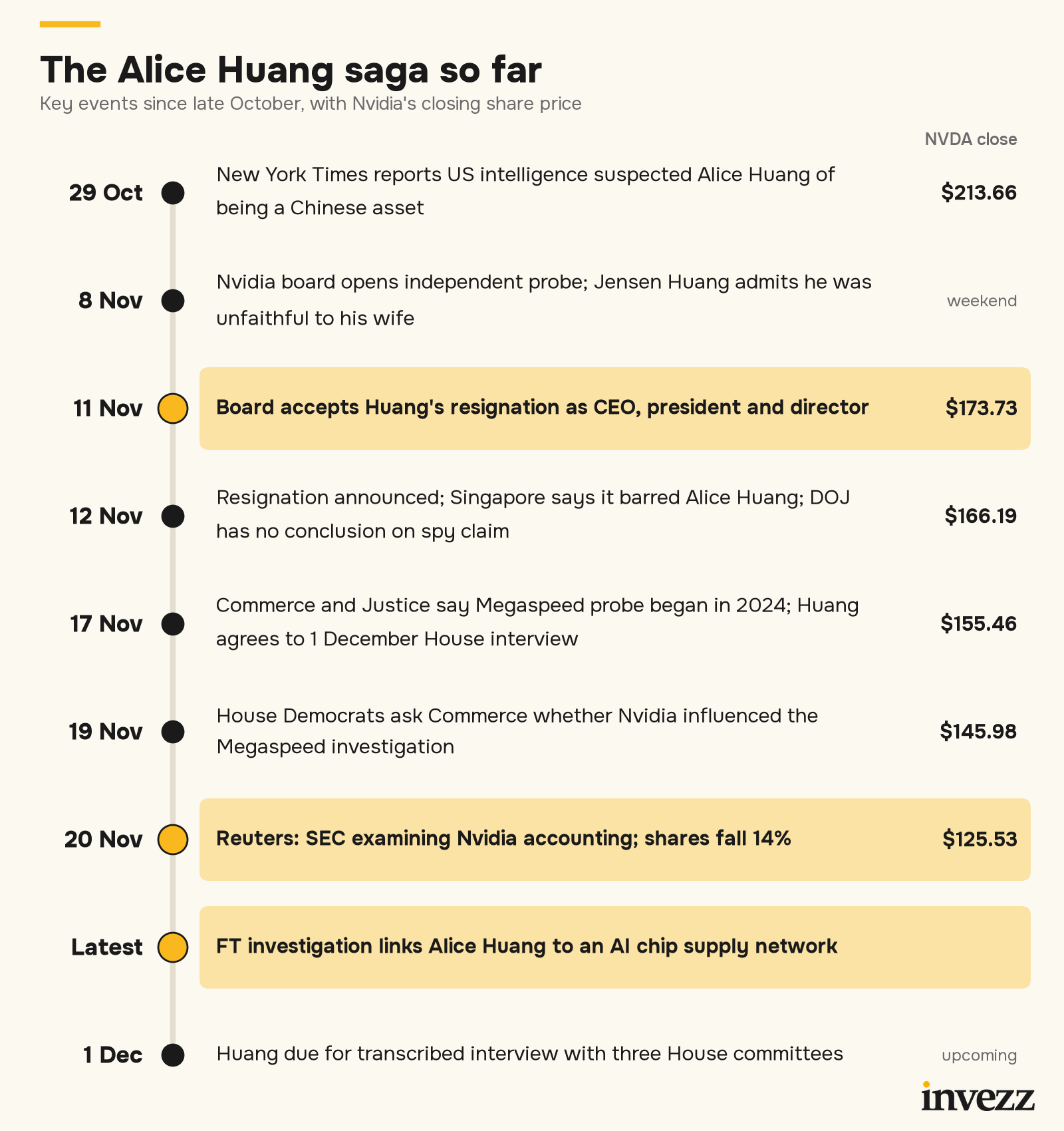
It began on 29 October, when the New York Times reported that US intelligence suspected Alice Huang, a former Megaspeed executive, of being a Chinese asset. Nvidia said Jensen Huang’s contacts with her were ordinary customer meetings.

On 8 November, Nvidia’s board opened an independent investigation into whether Huang had been the target of a foreign intelligence effort. Huang admitted he had been unfaithful to his wife, without naming the woman.

The board accepted his resignation as CEO, president and director on 11 November, according to Nvidia’s SEC filing, and announced it the next day. Chief financial officer Colette Kress became interim CEO.

Timeline from 29 October to 1 December 2026 with Nvidia closing prices: the New York Times reports US intelligence suspected Alice Huang of being a Chinese asset on 29 October ($213.66); Nvidia's board opens an independent probe and Jensen Huang admits he was unfaithful on 8 November; the board accepts his resignation on 11 November ($173.73); the resignation is announced, Singapore says it barred Alice Huang and the Justice Department says it has no conclusion on the spy claim on 12 November ($166.19); Commerce and Justice say the Megaspeed probe began in 2024 on 17 November ($155.46); House Democrats question Commerce on 19 November ($145.98); Reuters reports an SEC accounting probe and Nvidia falls 14% to $125.53 on 20 November; Huang is due before House committees on 1 December
The Alice Huang saga so far

On 12 November, Singapore said police had investigated Alice Huang over Megaspeed’s server purchases and found insufficient evidence of an offence. She got a stern warning for giving inaccurate information and was barred from returning. The probe did not concern espionage, it said.

On 17 November, the Commerce and Justice departments said they had been investigating Megaspeed since 2024 and had interviewed Alice Huang in June 2025. Jensen Huang has agreed to a transcribed interview with three House committees on 1 December.

On 19 November, House Democrats asked Commerce Secretary Howard Lutnick whether Nvidia influenced that investigation, Reuters reported. Nvidia said it looks forward to engaging with Congress.

What it means for Nvidia shares

Nvidia closed on Friday at $125.53, down 14% on the day. That is about 28% below its 11 November close of $173.73, the last before the resignation was announced (Invezz calculation).

The drop followed a Reuters report that SEC staff are examining potential accounting issues at Nvidia. Reuters noted that investigations are not evidence of wrongdoing.

It was Nvidia’s seventh straight weekly fall, the longest run since 2008. The slide began before the scandal, amid worries over AI spending and rival chips.

AI disclosure: AI tools assisted with research and drafting of this piece. An Invezz editor reviewed the facts, sources and wording before publication. Any opinions or analysis are Invezz’s, not those of an automated system.

The post FT finds Alice Huang linked to chip network with alleged Cambodian crime group appeared first on Invezz

Copper markets took a bruising hit this week, plunging to their lowest levels since April as investors abruptly walked away from high stakes bets on the artificial intelligence boom. In New York, copper futures suffered their worst single day of trading in nearly two years, marking a steep decline from the records set back in September. This sudden exodus reflects a growing nervousness among traders who had previously wagered that the massive build out of AI data centers would drive an insatiable need for the red metal.

The shift in sentiment seems tied to broader political and corporate anxiety. Market players are reportedly rattled by leadership instability at chip giant Nvidia and fears that new regulations on AI infrastructure could emerge following recent shifts in U.S. congressional power. Even seasoned bulls are switching sides, with prominent investor Stan Druckenmiller revealing that he has moved to a short position on the metal. While AI served as the initial catalyst for the selloff, analysts suggest that deeper concerns over persistent inflation and potential interest rate hikes from the Federal Reserve are truly driving the pessimism.

Data shows that hedge funds and managed money accounts have been quietly exiting their positions for weeks, slashing their long holdings significantly ahead of this latest crash. At the same time, expectations regarding U.S. tariffs on refined copper have dimmed, further eroding price support. Technical breakdowns triggered waves of automated selling, accelerating a trend that saw copper slide roughly sixteen percent from its peak just two months ago.

Interestingly, there is a stark divide between these financial paper markets and the actual physical supply of copper. On the ground, indicators remain tight; import premiums in China have surged to record highs while warehouse inventories in Shanghai have plummeted to their lowest levels since late last year. With production forecasts in Chile expected to drop significantly by 2026, some experts wonder if we are seeing a genuine collapse in industrial demand or simply a correction of an overcrowded trade where too many investors chased the same growth story.

Navigating the vast landscape of clean technology can be a daunting task for the average investor. From wind and solar farms to cutting edge carbon capture and green hydrogen, the sheer variety of subsectors makes picking individual winning stocks feel like a gamble. This complexity is why exchange traded funds have surged in popularity across North America, offering a streamlined way to gain broad exposure to the green economy while mitigating the volatile swings often associated with single company investments.

Leading the pack in terms of scale is the iShares Global Clean Energy ETF, which remains a heavyweight in the industry with 1.85 billion dollars in assets under management. By holding over a hundred different domestic and international stocks, including names like First Solar and Iberdrola, it provides a comprehensive snapshot of global utilities and renewables. Following closely behind is the First Trust NASDAQ Clean Edge Green Energy Index Fund, which takes a slightly different approach by incorporating high profile tech players like Tesla alongside specialized biofuel and battery firms.

Other notable options cater to specific niches within the sustainable transition. The Invesco WilderHill Clean Energy ETF distinguishes itself by investing not just in energy production but also in the mining companies that provide critical metals essential for green hardware. Meanwhile, the recently rebranded State Street SPDR S&P Kensho Grid Innovation ETF shifts its focus toward the infrastructure side of things, targeting companies that modernize the electrical grid through hydroelectric and geothermal advancements. Finally, the VanEck Low Carbon Energy ETF rounds out the top five, tracking a global index that balances low carbon initiatives with electric vehicle growth.

While these diversified funds offer a safer entry point than individual stock picking, financial experts remind investors that they are not entirely immune to risk. Sector specific funds still face significant pressures from broader economic headwinds and regulatory changes affecting the entire cleantech industry. However, for those looking to bet on a lower carbon future without risking their entire portfolio on one startup, these established ETFs provide a structured path forward into 2026 and beyond.

President Donald Trump has issued an executive order requiring federal contractors and their subcontractors to notify the White House before providing any information to Congress. The directive further instructs these companies to withhold materials that the administration classifies as confidential. Those who fail to follow the new rules risk having their current contracts canceled or being barred from pursuing future government business.

This move comes as a preemptive strike against incoming Democratic leadership, which is expected to take control of both chambers of Congress in January. By limiting the flow of data from private partners to lawmakers, the president appears to be building a defensive wall around his administration just as Democrats prepare a series of aggressive probes into his family’s business interests and various government operations. This latest mandate follows a separate internal memo requiring agency employees to seek White House clearance before agreeing to testify before congressional committees.

Democratic leaders are already laying the groundwork for extensive investigations into everything from immigration enforcement to potential conflicts of interest within the executive branch. Representative Robert Garcia, who will lead the House Oversight Committee, recently requested that several high profile allies and family members of the president preserve critical documents. These preparations suggest a looming collision between legislative oversight powers and an administration determined to restrict access to its inner workings.

The White House has defended the order by arguing it is essential for protecting national security and preventing the accidental leak of privileged communications. However, legal experts suggest this strategy may trigger intense courtroom battles, especially if contractors are pressured to ignore formal congressional subpoenas. While executive privilege offers some protection for presidential communications, courts often step in when there is a direct clash between a president’s secrecy claims and Congress’ constitutional duty to provide oversight.

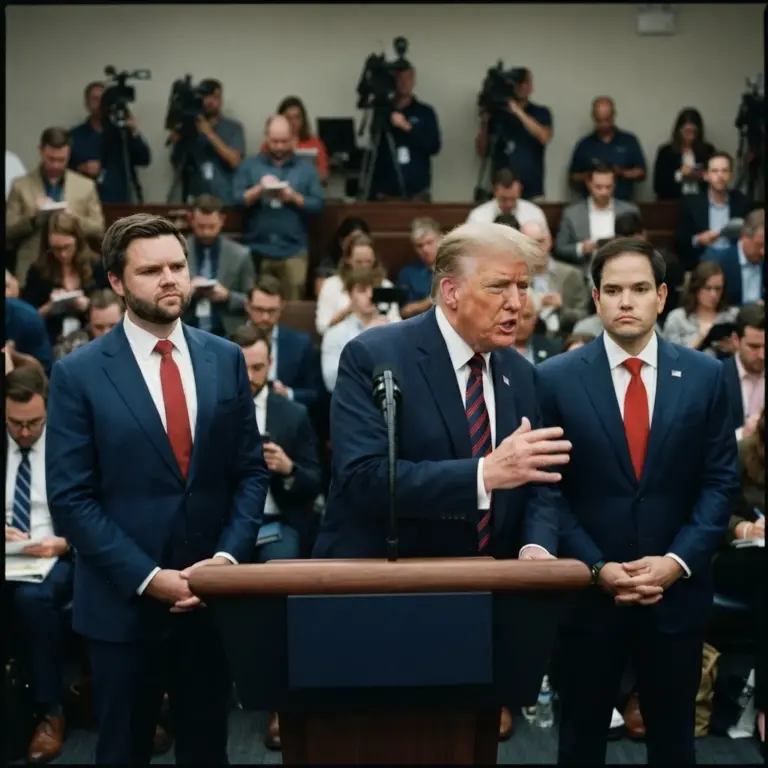
Standing nearly shoulder to shoulder in matching navy suits and red ties, Vice President JD Vance and Secretary of State Marco Rubio spent ninety minutes on Friday playing a high stakes game of political endurance. As President Donald Trump held court in the White House press briefing room, the two men remained flanking him for the duration of a marathon session that lasted longer than most State of the Union addresses. To those watching closely, it felt less like a standard government update and more like a televised audition for the 2028 GOP nomination.

The contrast between the two potential successors was evident in their body language throughout the afternoon. Vance maintained a disciplined posture, laughing at the president’s jokes while keeping a steady, serious expression. When he stepped to the lectern, he employed a touch of humor, comparing his role in holding down the fort during Trump’s overseas travels to the plot of Home Alone, albeit with better food and more gold. Rubio offered a different energy entirely, appearing restless as he adjusted his tie and reviewed notes before launching into a rapid fire defense of Trump’s meetings with foreign leaders.

While both men have publicly played down any immediate rivalry and claimed a close friendship, the tension of the succession race simmered beneath the surface. This event followed previous instances where both had filled in as press secretary to sell the administration’s agenda. Throughout the briefing, Trump seemed to relish his role as judge and jury, surveying the room to see how each man’s remarks landed with the gathered press corps without ever giving away who truly holds his favor.

True to form, Trump refused to crown a favorite when pressed by reporters on which man would make a superior president. Instead, he opted for his trademark unpredictability toward the end of the event. After calling up Chief of Staff Stephen Miller to offer praise for the administration, Trump jokingly quipped that Miller had performed better than Vance and Rubio combined, even asking Miller if he wanted to run for president himself. Whether meant as a joke or a subtle critique, it served as a reminder that in this particular competition, only one person decides who moves on to the final round.

As Democrats prepare to assume control of both the House and the Senate, they find themselves facing a daunting abundance of investigative leads. From allegations of extrajudicial killings during Caribbean drug interdiction strikes to concerns over the legality of domestic deportation tactics, the sheer volume of potential scandals is overwhelming. However, party leaders must navigate a tricky political landscape where public patience for congressional probes is wearing thin. Recent polling suggests a significant majority of Americans fear that Democrats may prioritize investigations too heavily over actual governing, creating a strategic dilemma for those wanting to hold the previous administration accountable without alienating moderate voters.

Among the highest priorities are several controversies involving national security and international relations. Lawmakers are eyeing an investigation into the inconsistencies surrounding the conflict with Iran, specifically regarding whether threats were exaggerated to justify military action and why a strike hit an Iranian elementary school. There is also deep concern regarding the intersection of private interests and state secrets, particularly concerning Nvidia and reports that the Commerce Department may have ignored warnings about Chinese espionage and illegal chip shipments to favor specific business ties. These issues represent high stakes for global stability and economic competitiveness, making them strong candidates for formal inquiry.

Domestically, investigators are expected to scrutinize what appears to be a systemic campaign of legal retribution orchestrated by the Justice Department against political foes, including former witnesses and Democratic members of Congress. This effort toward accountability extends to more personal scandals, such as lingering questions about Donald Trump’s relationship with Jeffrey Epstein and the suspicious circumstances surrounding Ghislaine Maxwell’s prison transfer. Even architectural decisions at federal landmarks and the chaotic implementation of efficiency efforts led by Elon Musk are under consideration, though critics warn that targeting wealthy figures could be framed as mere political retaliation.

Ultimately, the incoming majority faces a delicate balancing act between their duty to uncover government misconduct and the risk of appearing obsessed with grievance politics. Whether focusing on civil rights abuses during mass deportations or questioning why certain individuals received preferential treatment within the justice system, Democrats will need to select their battles carefully. By narrowing their focus to cases involving clear illegality or profound breaches of trust, they hope to provide necessary oversight while convincing a skeptical public that they remain focused on results rather than rhetoric.

The road to the 2028 presidential election is already beginning to take shape as political observers eye a potentially crowded and competitiveDemocratic primary. While the cycle remains distant, the conversation has shifted toward which figures will step forward to lead the party into its next chapter. With a wide open field ahead, strategists are closely watching several high profile names who possess both the national recognition and the ideological pull to command a campaign.

Among those at the center of speculation is Representative Alexandria Ocasio Cortez, whose rise from a grassroots challenger to a powerhouse in the House has made her a symbol for the progressive wing of the party. Her ability to mobilize young voters and dominate digital discourse makes her a formidable potential candidate. Whether she chooses to run would signal a definitive push by the left to steer the national platform toward more aggressive climate and economic policies.

At the same time, former Vice President Kamala Harris remains a focal point of discussion given her history as the 2024 nominee. Having stood at the pinnacle of party leadership, Harris possesses an institutional level of support and executive experience that few other contenders can match. Her trajectory suggests she could enter the race as a seasoned veteran capable of bridging various factions within the coalition.

As these figures weigh their options, the broader landscape suggests a period of intense internal debate over direction and identity. The coming years will likely see a series of strategic maneuvers as prospective candidates build their profiles and test their messaging against an unpredictable electorate. For now, the democratic field sits in a state of anticipation, waiting to see who will ultimately decide to make their bid for the White House.