Archive

November 2026

Browsing

President Donald Trump has issued a stark warning to Iran, suggesting that military strikes could be imminent after the new year if diplomatic efforts fail to produce a concrete agreement. In an exclusive conversation with Fox News, the president dismissed current negotiations as fundamentally meaningless, claiming that Iranian officials are merely stalling for time while simultaneously ramping up their aggression since the U.S. elections.

Trump did not mince words when describing his counterparts in Tehran, labeling the negotiators professional tap dancers who engage in endless chatter without any intention of reaching a real resolution. He characterized their diplomatic approach as deceptive and insisted that the rhetoric coming from the Iranian government lacks substance and sincerity.

The tension comes at a precarious moment as the United States continues its naval blockade of Iranian ports amidst an ongoing conflict in the Strait of Hormuz. Challenging Tehran to test the strength of the American presence, Trump suggested that any attempt by Iranian naval forces to break the siege would result in them ending up at the bottom of the sea.

While external pressures mount, internal instability is also growing within Iran through renewed anti-government protests across several cities. Addressing these domestic uprisings, Trump voiced his support for those risking their lives to challenge the regime, telling demonstrators directly to keep protesting as part of their struggle for change.

Democrats now find themselves at a crossroads following their recent success in the midterms, grappling with a fundamental question about how to wield their newfound power. The central tension lies between two competing instincts: the desire to launch aggressive investigations into the previous Trump administration and the urgent need to address an economy that is squeezing middle class families. For many lawmakers, the pull toward accountability is strong, but there is a growing fear that focusing too heavily on past grievances could look like political theater to a public struggling with inflation.

Some political strategists caution that diving deep into retrospective inquiries could be a costly mistake. Analysts such as Bill Galston suggest that when voters prioritize the price of groceries and rent over courtroom dramas, they may view extensive congressional oversight as a distraction from real world problems. From this perspective, leaning too hard into payback risks alienating a broad coalition of swing voters who care less about constitutional precedents than they do about their monthly bank statements.

On the other side of the debate, some experts argue that ignoring systemic abuses creates a dangerous precedent for American democracy. Scholars like Ruth Ben-Ghiat maintain that leaving misconduct unchecked essentially invites future leaders to push boundaries even further, potentially leading to long term democratic decay. To these observers, holding powerful figures accountable isn’t just about settling scores; it is an essential safeguard against authoritarianism.

Ultimately, the survival of this legislative strategy depends on whether Democrats can bridge the gap between high minded legal battles and kitchen table issues. The party must convince its constituents that rooting out government corruption and ending wasteful spending actually leads to lower costs for the average citizen. If they cannot connect the dots between institutional integrity and individual affordability, they may find that their quest for justice comes at a steep political price.

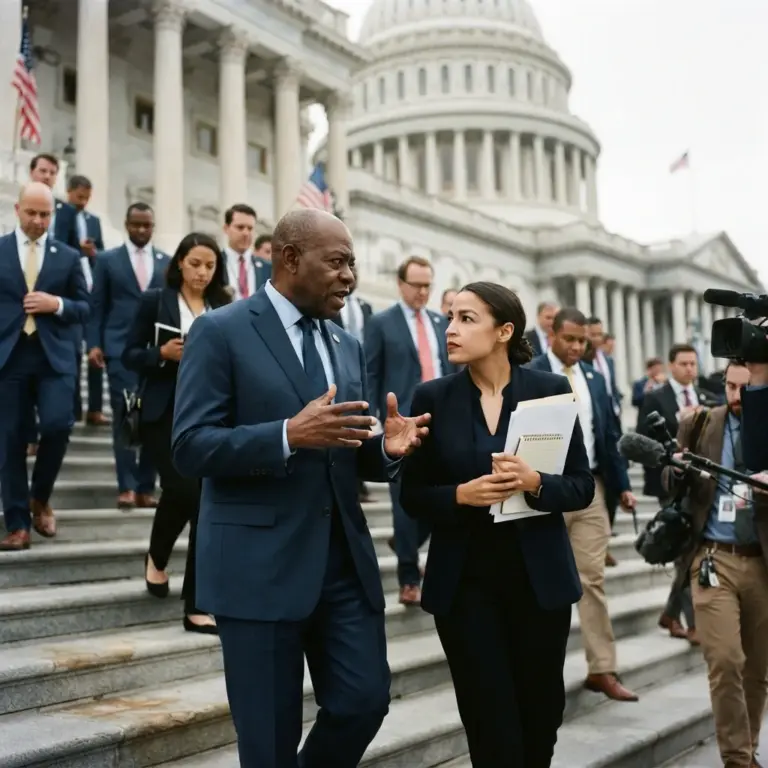
Democratic lawmakers crossed a historic threshold on Sunday, securing their 258th seat in the House and claiming the largest general election majority for any party in over three decades. The final piece of the puzzle fell into place in North Carolina, where newcomer Chuck Hubbard narrowly defeated incumbent Republican Virginia Foxx following a tense recount. With gains totaling 44 seats, the victory represents a political shift not seen since the early nineties, leaving Republicans with at least 173 seats and placing immense pressure on the incoming Democratic leadership to translate this momentum into tangible results.

The sheer scale of the win suggests a deep public dissatisfaction with the current administration, particularly regarding inflation and the rising cost of living. Exit polls indicate that voters who viewed the economy as failing overwhelmingly broke for Democrats across the Midwest and East Coast. Now holding both chambers of Congress alongside a Republican president, Democrats are framing this landslide as a direct mandate for change. Representative Alexandria Ocasio Cortez described the result as a call for systemic transformation, while others emphasize that failure to address affordability and healthcare quickly could alienate an already frustrated electorate.

Incoming leader Hakeem Jeffries, who is poised to become the first Black speaker of the House, enters January with significant breathing room that his predecessor lacked. Unlike previous narrow margins where a handful of dissenters could paralyze legislation, Jeffries can afford several defections within his own caucus while still passing his agenda. His primary goals include a fast tracked hundred day plan focused on restoring Affordable Care Act tax credits and reversing Medicaid cuts, signaling a sharp pivot toward social safety net expansions.

Beyond policy shifts, the new majority intends to utilize its oversight powers aggressively to act as a check on presidential authority. Plans are already underway for extensive investigations into President Trump’s financial dealings during his second term, though these moves have already drawn warnings from the White House characterizing such probes as politically motivated. As January approaches, the central tension will be whether this diverse coalition of progressives and centrists can remain unified long enough to fulfill their ambitious campaign promises.

The Republican Party is exiting its latest electoral battle facing a paradoxical crisis. While white evangelical Christians remained an unshakable bedrock of support, staying loyal to the GOP at rates exceeding 80 percent, that very devotion may be creating a strategic trap. As Democrats make historic gains among non-evangelical voters across the South and Midwest, the GOP finds itself increasingly reliant on a demographic that is shrinking as a total share of the American population.

This widening gap suggests a dangerous divergence in what motivates different segments of the Republican coalition. For white evangelicals, the appeal of Donald Trump’s culture war rhetoric and his vision for returning to traditional societal norms has consistently overridden concerns about inflation or governance styles. However, these same lacerating cultural messages appear to be alienating swing voters and moderate Republicans who prioritize economic stability and institutional decorum over religious warfare.

Progressive strategists warn that this trend could force the party into a corner, pushing it further to the right to satisfy its most fervent base while simultaneously shutting out the broad electorate needed to maintain power. Recent data shows that winning Democrats in historically red states like Texas and Ohio managed to capture significant portions of non-evangelical white voters, suggesting that the GOP’s current messaging lacks resonance outside of church pews.

If Republicans cannot find a way to bridge this divide without alienating their core religious supporters, the political geography of 2028 could shift dramatically. States once considered safe harbors for the GOP, including Kansas and Iowa, could suddenly become competitive battlegrounds. By leaning so heavily into a specific identity-based movement, the party risks transforming its strongest asset into a ceiling that prevents it from reclaiming the center of American politics.

Elon Musk is pivoting his empire toward artificial intelligence with a massive seventy four billion dollar investment in two supercomputing hubs located in Texas and Arizona. While the financial scale of the project is staggering, it has sparked a fierce debate over who actually foots the bill for the immense electrical and environmental costs associated with AI. In Arizona, a proposed campus in Cochise County would require six thousand megawatts of power, representing nearly two thirds of the peak demand seen by one of the state’s largest utility providers this past summer. Local officials and the state attorney general are now demanding transparency on whether taxpayers or ratepayers will end up subsidizing the necessary grid upgrades.

The tension is equally high in Texas, where SpaceX is planning a gas fired power plant and compute facility near Brownsville. To bypass a local moratorium on data centers, the company engaged in a complex series of land swaps involving the newly incorporated city of Starbase. Although SpaceX claims the facility will generate its own electricity to avoid straining the public grid, critics argue that thirty five natural gas turbines will lead to significant air pollution and water depletion. This divide reflects a broader struggle between economic optimism and ecological fear; while some residents welcome the surge in property values and job opportunities, others worry about rising rents and environmental degradation.

Beyond the local protests, these projects represent a critical shift in SpaceX’s business model. With AI services already generating more than half of its third quarter revenue through partnerships with giants like Google and Anthropic, computing capacity has become central to the company’s overall valuation. However, Musk is facing a challenging political climate as voters across the country have recently trended against data center developments in numerous local elections. From potential tax abatements being blocked by county commissioners in Texas to calls for postponed votes from Arizona authorities, the path forward depends on whether SpaceX can prove that its promise of lowered bills and new jobs outweighs the systemic strain on regional resources.

For most aspiring homebuyers, the primary focus remains locked on the sticker price and the resulting monthly mortgage payment. However, a growing gap between the dream of ownership and financial reality is emerging as the hidden costs of maintaining a home skyrocket. Recent data suggests that once you move past the principal and interest, owners are facing an additional burden of anywhere from 16,000 to 21,000 dollars per year. This effectively feels like a second mortgage payment every month, driven by a relentless surge in property taxes, utility bills and insurance premiums.

The numbers are particularly jarring when broken down. According to Zillow, insurance premiums alone have jumped 54 percent over the last five years, while general maintenance costs have climbed by 32 percent. Experts note that many buyers simply fail to price these variables into their budgets during the excitement of house hunting. In fact, some surveys show that nearly half of homeowners didn’t fully account for insurance or tax hikes before closing the deal. When combined with routine upkeep and utilities, a standard 2,000 dollar mortgage payment can easily swell toward 3,800 dollars a month.

This financial volatility is fundamentally changing how younger generations view wealth building. With high interest rates making borrowing expensive and maintenance costs unpredictable, many Millennials and Gen Z adults are abandoning the traditional American Dream in favor of the stock market. The mathematical allure of renting has also shifted; whereas breaking even against renting used to take just a few years, some urban residents may now have to wait over a decade—or even thirty years in cities like San Francisco—to see a real financial benefit from owning.

The crisis isn’t limited to first time buyers, however. Retirees living on fixed incomes are finding that paying off a thirty year mortgage does not provide the total financial freedom they expected. Even without a monthly bank payment, the soaring cost of keeping a roof overhead continues to strain elderly homeowners. Between rising tax assessments and aging infrastructure requiring costly repairs, many seniors find themselves struggling to maintain their properties long after their official debt has vanished.

Travelers facing a chaotic Sunday can finally breathe a sigh of relief as Delta Air Lines confirmed that its automated weight and balance calculation systems are back online. The technical failure forced flight crews to perform critical safety calculations by hand throughout the day, leading to widespread delays and cancellations across the network. While the airline expressed regret for the disruption, the glitch created a ripple effect that left thousands of passengers stranded at airports.

Out of approximately 5,000 scheduled flights between Delta and Delta Connection, about 70 percent of the disruptions were tied directly to this automation crisis. The remaining chaos was attributed to poor weather conditions and air traffic control restrictions in New York City and across the Northeast. To manage the backlog, Delta collaborated closely with air traffic controllers to prevent gate congestion, particularly at its massive hub in Atlanta.

To make amends for the turmoil, Delta has launched a comprehensive recovery effort focusing on rebooking displaced passengers onto the fastest available itineraries. For those stuck overnight or waiting hours for departures, the company is providing meal vouchers and hotel accommodations. In cases where flights were canceled entirely and travelers no longer wish to fly, full refunds are being offered.

Company officials emphasized that canceling flights remained a last resort as they fought to maintain their schedule amid the digital blackout. Despite the stress caused by the ground stop and subsequent delays, leadership praised employees for maintaining professionalism while utilizing tedious manual processes to keep planes moving safely until the software could be restored.

Travelers at Hartsfield-Jackson Atlanta International Airport faced a chaotic Sunday as a technical failure within Delta Air Lines’ operations triggered widespread disruptions. A malfunction in the airline’s weight and balance system, which is critical for calculating aircraft safety during takeoff, led to delays for more than 1,600 flights across the country. Nearly half of all Delta departures on Sunday were pushed back by at least fifteen minutes, leaving thousands of passengers stranded or waiting in long lines.

The timing of the outage added significant stress to an already tense travel season, coming just as millions began heading home for the Thanksgiving holiday. This incident follows closely on the heels of a separate Federal Aviation Administration ground stop caused by telecommunications issues, though officials were quick to clarify that Sunday’s turmoil was strictly internal to Delta and unrelated to broader air traffic control systems.

To keep planes moving while engineers worked on a fix, Delta crews resorted to manual calculations to ensure every flight remained safe for departure. The company eventually confirmed that the systems had returned to normal operation and explicitly ruled out any cyberattack or hacking attempt as the cause of the glitch.

In response to the disruption, Delta announced it is working to rebook affected travelers onto alternative itineraries. The airline stated it would provide meal vouchers and hotel accommodations where necessary, while offering full refunds to those whose flights were canceled and who chose not to reschedule their trips.

National Intelligence Director Jay Clayton has cautioned the public to expect further technical disruptions as the United States works to modernize its digital infrastructure for the era of artificial intelligence. Speaking on CNN’s State of the Union, Clayton suggested that recent failures affecting everything from airline schedules to email services are likely symptoms of necessary system upgrades rather than malicious activity. He noted that whenever there is a significant leap in computing power and application capabilities, some instability is inevitable during the transition.

These warnings come at a particularly sensitive time, arriving just before the Thanksgiving holiday rush when millions of travelers rely on seamless connectivity. Recent chaos included a nationwide aviation ground stop attributed to router updates and widespread issues with Microsoft Outlook caused by network capacity adjustments. While these events sparked fears of a coordinated cyberattack, government officials have largely dismissed those concerns, framing the glitches instead as side effects of essential maintenance.

The sentiment was echoed by Treasury Secretary Scott Bessent, who urged citizens not to panic about the stability of their financial institutions despite ongoing security patches designed to thwart AI threats. Comparing these software updates to a medical vaccine, Bessent argued that while users might experience temporary discomfort or minor glitches, these steps are vital for building long term resilience against future vulnerabilities. Together, the administration’s message is clear: short term headaches are the price of securing the nation’s digital future.

SpaceX (SPCX) stock is inching lower on Friday after management announced a $32 billion bond sales to finance the company’s access to Nvidia’s artificial intelligence (AI) chips.

The largest slice of that deal yielded 8.259%, well above the 5.95% for the average US investment-grade bond on Thursday.

The sale gives SpaceX a way to expand its AI business without issuing new shares.

But it also puts a price on that expansion: the company is committing to years of lease payments while the revenue those chips can generate remains uncertain.

What the 8.259% yield actually tells investors

The 8.259% yield applied to about $25.2 billion of notes, the largest of three tranches.

That was 231 basis points above the broad investment-grade average and roughly 106 basis points above where SpaceX’s own 2031 corporate debt traded Thursday.

The comparisons are imperfect because the securities differ in structure and repayment terms.

Still, the pricing shows how much return investors were offered to fund this particular buildout.

And because 8.259% is the yield on one tranche, multiplying it by $32 billion would misstate the deal’s annual interest bill.

SpaceX shareholders should focus on the lease payments the company owes and how much operating cash the equipment can generate against them.

How the bond sale helps SpaceX grow without dilution

The bullish case starts with what SpaceX gets for the money.

Under its agreement with an Apollo-managed entity, the giant expects to lease Nvidia’s next-gen Vera Rubin chips and related equipment as deliveries begin in the first half of 2027.

That lets it bring more computing capacity online for Grok and cloud customers while spreading payments over roughly five years.

CFO Bret Johnsen said in October that SpaceX was seeing payback periods of less than a year on its AI infrastructure investments.

If the new capacity comes close to that pace, existing shareholders could benefit from the expansion without giving up any of their ownership to finance it.

The test is whether those returns hold as SpaceX adds capacity on a much larger scale.

Why the terms make the pullback harder to buy

The deal is positive for SpaceX’s ability to expand, but the terms tilt the stock read bearish in the near term.

The company expects roughly $40 billion in principal payments across the broader lease arrangement, and those commitments can outlast today’s pricing for AI computing.

If customers rent fewer hours than SpaceX expects, or newer chips drive down what customers will pay, the lease payments still come due.

The strongest evidence for buying the dip would be customer contracts that secure both usage and pricing, alongside cash flow figures that show what remains after power, operating costs, and lease payments.

Until then, the bond sale gives investors more reason to model those obligations than to raise their estimates for what the AI business is worth.

AI disclosure: AI tools assisted with research and drafting of this piece. An Invezz editor reviewed the facts, sources and wording before publication. Any opinions or analysis are Invezz’s, not those of an automated system.

The post SpaceX stock slips: why its 8.26% bond yield matters appeared first on Invezz