Archive

November 2026

Browsing

US markets remained under pressure on Friday as Anthropic shares fell over 10% in their second trading session, adding to concerns about the artificial intelligence trade.

Bitcoin dropped below $60,000 for the first time since July as record outflows from BlackRock’s spot ETF and broader risk aversion weighed on cryptocurrencies.

Gold prices slid to a 14-month low and headed for their steepest weekly decline in eight months amid expectations of further Federal Reserve rate increases.

Oil prices also fell, with Brent crude on track for a third consecutive weekly decline as strong Middle Eastern exports outweighed concerns about disruptions in the Strait of Hormuz.

Anthropic stock falls nearly 10% on second trading day

Anthropic shares extended their decline on Friday after failing to sustain the gains from their blockbuster Nasdaq debut.

The stock fell 10.52% to trade at $86.95. The stock remained slightly above its IPO price of $83.

The decline followed a volatile debut on Thursday, when Anthropic opened at $111.50, reached a high of $115.10 and closed at $97.17.

More than 846 million shares changed hands during the first session.

The weakness reflects broader concerns about AI-related investments rather than company-specific developments alone.

Investors had hoped Anthropic’s record listing would restore confidence in AI stocks, which have faced pressure over the scale and profitability of data centre and chip spending.

Anthropic’s underwriters exercised their option to purchase all 147 million additional shares, bringing the total offering to $93.5 billion.

The stock remained above its IPO price, but its early gains had narrowed considerably.

Bitcoin price falls below $60,000

Bitcoin dropped below $60,000 on Friday for the first time since early July, extending a broad cryptocurrency selloff.

The largest cryptocurrency traded at $58,261, down 7.1% over 24 hours. It is now approximately 53% below its record high of $126,296 reached on October 6, 2025.

Selling pressure also affected other major cryptocurrencies.

Ether fell below $1,700 for the first time since July 3, trading at $1,604, while XRP and Solana declined 5% and 5.5%, respectively.

Outflows from US spot Bitcoin exchange-traded funds added to the pressure.

BlackRock’s iShares Bitcoin Trust recorded $541.1 million in net outflows on November 19, its largest single-day withdrawal on record, according to Farside Investors.

US spot Bitcoin ETFs collectively lost $582.3 million that day and approximately $3.47 billion so far in November.

More than $700 million in cryptocurrency positions were liquidated over 24 hours, mostly bullish bets, according to CoinGlass.

Gold price hits 14-month low

Gold extended its decline on Friday, with spot prices falling 2.69% to $3,524.29 an ounce after touching $3,513.54, the lowest level since September 2025.

Bullion was down approximately 9.2% for the week, its steepest weekly decline since March.

US gold futures for December delivery fell 4.2% to $3,530.40 an ounce.

A stronger dollar and expectations of higher US interest rates have weighed on the precious metal.

Markets were pricing in a 96% probability of a 25-basis-point rate increase in December, according to CME’s FedWatch tool.

The selloff in AI-linked equities may also have prompted investors to liquidate gold positions to cover losses elsewhere in their portfolios.

Silver fell 3.6% to $41.23 an ounce, while platinum and palladium declined 2.6% and 2.1%, respectively. All four precious metals were heading for a second consecutive weekly decline.

Oil prices head for third weekly decline

Oil prices were mixed on Friday but remained on track for a third consecutive weekly decline as strong exports from the Middle East helped ease supply concerns.

Brent crude futures gained 0.22% to $92.17 a barrel, while US West Texas Intermediate December futures rose 0.83% to $83.90.

Brent was heading for a weekly loss of nearly 5%, while December WTI was set to fall 5.8%.

Crude shipments through the Strait of Hormuz have returned to roughly pre-war levels, strengthening expectations of a potential supply surplus.

However, geopolitical risks remain.

The Iran-aligned Houthi movement threatened Saudi Arabia’s Red Sea ports after launching missile attacks on Riyadh.

Iran’s Revolutionary Guards Navy also said two oil tankers had struck naval mines in the Strait of Hormuz and were burning.

The market is also monitoring OPEC+ discussions scheduled for November 29, when ministers will consider the group’s 2027 output policy.

AI disclosure: AI tools assisted with research and drafting of this piece. An Invezz editor reviewed the facts, sources and wording before publication. Any opinions or analysis are Invezz’s, not those of an automated system.

The post Evening digest: Anthropic slides after record debut, Bitcoin slips below $60k appeared first on Invezz
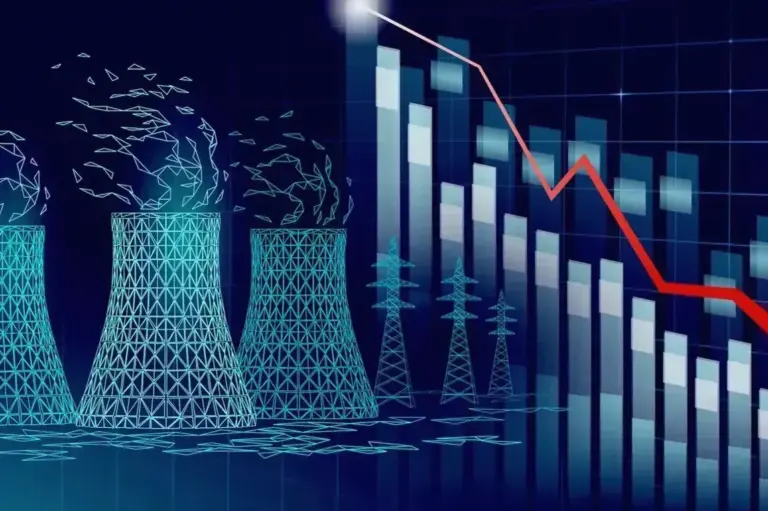

The world is witnessing a dramatic pivot back toward nuclear power as geopolitical instability forces nations to rethink their energy security. According to the latest World Energy Outlook from the International Energy Agency, a massive supply shock centered on the Strait of Hormuz has acted as a catalyst for an industry revival reminiscent of the oil crises seen in the 1970s. With cumulative losses of billions of barrels of oil and record breaking diesel prices, officials warn that there is no returning to the old status quo.

Projected growth figures suggest a significant climb in global capacity, potentially reaching 886 gigawatts by 2050 under certain policy frameworks. This surge is being driven largely by heavy investments in China, Europe, and the United States, with some estimates suggesting that nuclear output could actually grow faster than overall electricity demand. China currently leads the charge, accounting for over forty percent of all capacity under construction and poised to become the world leader in operating capacity within several years.

Beyond traditional large scale plants, there is a burgeoning interest in small modular reactors. These compact systems are attracting attention from over fifty countries and are increasingly sought after by American tech firms looking to provide reliable power for hungry data centers. In fact, dozens of gigawatts of these smaller reactors are already linked to various procurement deals as industries seek stable alternatives to volatile fossil fuel markets.

While the IEA frames this movement as a resurgence, leaders at the World Nuclear Association argue that atomic energy never truly left; rather, it has always been a pillar of decarbonization that is finally receiving proper recognition. Whether viewed as a comeback or a long overdue realization of value, the sheer volume of current construction across seventeen different nations suggests that nuclear energy will play a central role in the future global grid.

Panama is stepping back to the negotiating table with Vancouver based First Quantum Minerals in an effort to restart the Cobre Panama mine. Once a powerhouse in the global copper market, the site has been dormant since late 2023 after a wave of intense national protests led the country’s Supreme Court to declare its operating contract unconstitutional. To lead these delicate discussions, President José Raúl Mulino has appointed an interministerial team headed by Minister of Commerce Julio Moltó, tasked with finding a path forward that satisfies both corporate interests and public demand.

President Mulino has made it clear that any return to operation will look very different from the previous arrangement. He has established five core pillars for the negotiations, focusing heavily on national sovereignty, strict environmental protections, and ensuring that mineral resources remain under Panamanian ownership. Rather than granting another traditional mining concession, the government aims to build a fresh legal framework that maximizes economic returns for the nation while remaining strictly compliant with constitutional law.

For First Quantum, the stakes are high given that Cobre Panama once accounted for roughly 1.5 percent of global copper production. The company believes reviving the project could bring back thousands of jobs and support thousands of local suppliers who were displaced by the shutdown. While they have expressed a willingness to work constructively within Panama’s legal systems, they are also advocating for a transparent public consultation process so that citizens can be fully informed before any final deal is signed.

As part of this transition, Panama is exploring more aggressive ownership models. There is talk of creating a state owned mining company to partner with First Quantum or implementing significantly higher taxes and royalties to capture more value. Analysts suggest the government may push for up to half of the mine’s economic benefits. These efforts come on the heels of a recent environmental audit intended to ensure that any potential restart meets rigorous ecological standards and resolves long standing arbitration disputes between the firm and the state.

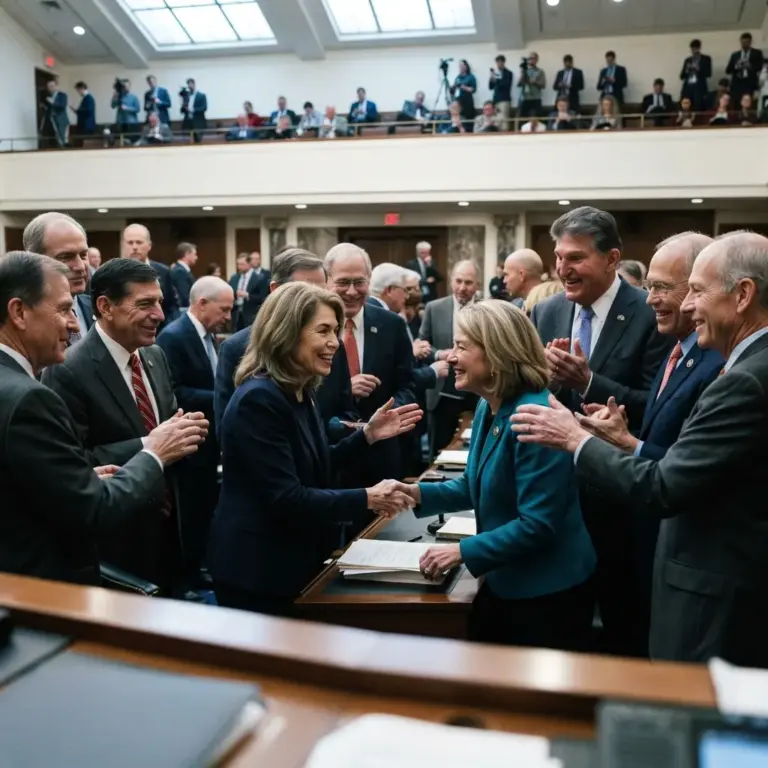
In a rare moment of legislative synergy, the Senate has advanced the Bipartisan American Affordability and Jobs Act of 2026, a comprehensive piece of legislation designed to dismantle the bureaucratic hurdles slowing down national infrastructure. By streamlining environmental reviews and limiting the scope of legal challenges that often freeze multi-billion dollar investments, the bill aims to accelerate everything from traditional oil and gas pipelines to renewable energy arrays. Lawmakers argue that these reforms are essential to curb inflation and secure American energy independence in an increasingly volatile global market.

Senator Alan Armstrong of Oklahoma, drawing on his experience as a former CEO, emphasized that endless litigation has become a primary barrier to progress. He noted that while the United States possesses vast natural resources, outdated permitting processes frequently allow court battles to stall critical projects indefinitely. For proponents of the bill, this shift represents a transition toward proactive governance where infrastructure can be built efficiently without abandoning core environmental protections.

Beyond raw energy production, the legislation takes aim at the exploding growth of artificial intelligence and its associated power demands. A key compromise led by Senator Martin Heinrich ensures that massive data centers cannot offload their immense electricity costs onto average residential ratepayers. Under the new rules, high-demand facilities must provide financial guarantees for infrastructure upgrades and cover their own power requirements by law rather than mere suggestion, protecting consumers from price hikes driven by corporate tech expansions.

Despite the victory in the Senate and backing from the White House, the path forward remains uncertain as the bill heads to the House of Representatives. While much of the language reflects previous work done in the lower chamber, concerns remain regarding whether enough members will mobilize to ensure its passage. If successful, however, supporters believe the act will trigger a surge in job creation and significantly lower utility costs for millions of Americans.

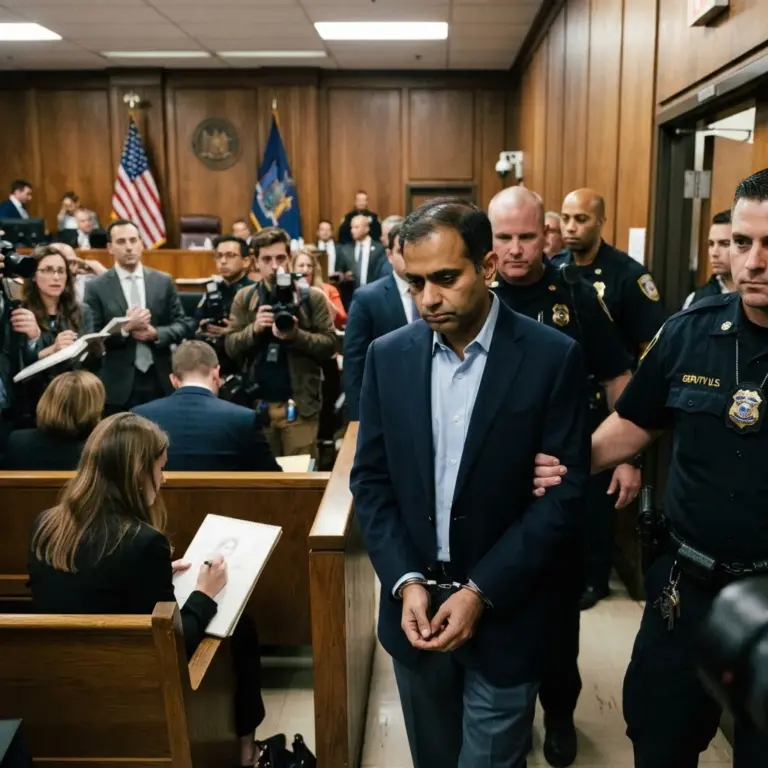
A federal judge handed down a sentence of nineteen and a half years in prison on Friday to Nikhil Gupta, an Indian national who admitted to participating in a deadly conspiracy to kill a political dissident in New York City. The sentencing marks a significant conclusion to a case that sparked international tension, as prosecutors alleged Gupta was recruited by a former Indian intelligence official named Vikash Yadav to carry out the assassination. While Gupta faced justice in a U.S. courtroom after pleading guilty to murder-for-hire and money laundering charges, Yadav remains in India where he faces similar criminal allegations.

The dangerous scheme fell apart when Gupta unknowingly reached out to a confidential source working with the Drug Enforcement Administration. This critical mistake allowed authorities to intercept the plot before it could be executed against Gurpatwant Singh Pannun, a dual citizen of Canada and the United States who leads the group Sikhs for Justice. Pannun is a fierce critic of Prime Minister Narendra Modi’s administration and spends much of his time advocating for Khalistan, an independent state for Sikhs within India’s Punjab province.

This legal battle unfolds against a backdrop of deep diplomatic friction between India, Canada, and the United States. Last year, Canadian officials claimed there was credible evidence that Indian agents were involved in the killing of Hardeep Singh Nijjar, another high profile Sikh separatist shot dead outside his temple in British Columbia. While India has consistently denied these accusations and labeled men like Pannun as terrorists, supporters of the movement argue such claims are merely attempts to silence political dissent through violence and intimidation.

For Pannun, the resolution of this trial does not mean an end to his fear. In a statement provided to the court, he described the mental toll of living under constant surveillance and expensive private security for over three years. He told the judge that intelligence warnings suggest threats against his life remain active, leaving him worried not only for his own safety but for anyone unlucky enough to be standing beside him during an attack.

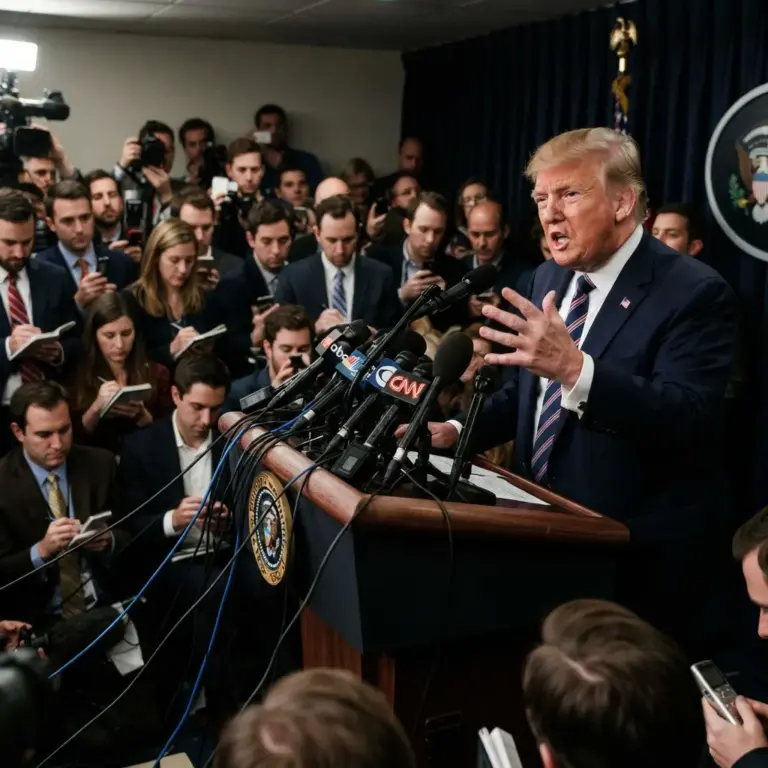
President Donald Trump held a sprawling ninety minute press conference on Friday, using the platform to address everything from the recent Republican collapse in the midterm elections to his personal rapport with global autocrats. Facing questions about Vice President JD Vance’s assertion that the GOP losses were fueled by the ongoing war with Iran, Trump described the assessment as fine and actually quite accurate. While acknowledging that the conflict drove up fuel prices, the president doubled down on his foreign policy, stating he would pursue the same path again to prevent Iran from obtaining nuclear weapons.

The mood of the event shifted between defiance and bravado as Trump distanced himself from the electoral defeat, reminding reporters that he was not on the ballot. He suggested that if he had been running, the outcome would have been entirely different, blaming fellow Republicans for failing to pass his desired agenda. Looking ahead to a divided government, Trump outlined a confrontational strategy for dealing with the incoming Democratic majority in Congress, promising a cycle of endless vetoes until lawmakers agree to his specific terms.

In a moment of internal theater, Trump introduced his new chief of staff, Stephen Miller, calling him the most powerful man in the room and jokingly asking if Miller wanted to run for president. This praise came at the expense of JD Vance and Marco Rubio, whom Trump claimed were surpassed by Miller. The president also touched upon domestic chaos, dismissing recent widespread tech outages as routine upgrade glitches while simultaneously pushing for more federal funding for air traffic systems despite previous billion dollar investments.

Turning toward international affairs and corporate scandals, Trump praised Vladimir Putin and Xi Jinping, arguing that his strong personal bonds with them keep America safe. He specifically noted Putin’s nuclear arsenal as a source of strength rather than concern. In an unusual pivot to business, Trump advocated for the reinstatement of ousted Nvidia CEO Jensen Huang. Despite Huang’s ties to a suspected Chinese operative through an extramarital affair, Trump urged the company to overlook those mistakes in favor of Huang’s brilliance.

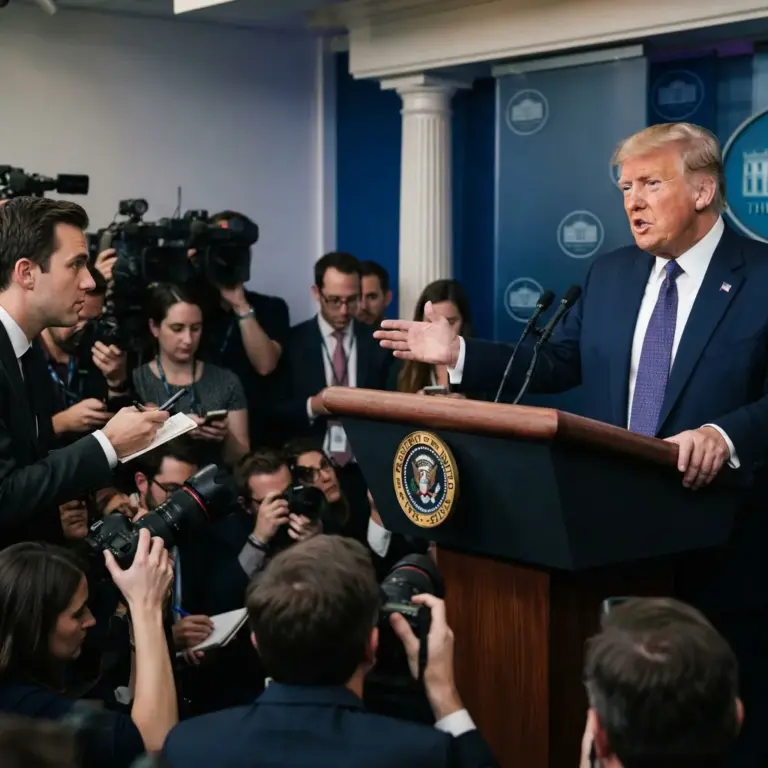
President Donald Trump remained steadfast on Friday in his characterization of Vladimir Putin as a friend, insisting that their strong personal rapport is an asset to American diplomacy. Speaking at a White House news conference following high level meetings in China, the president described his relationship with the Russian leader as very good while carefully avoiding any confirmation that Putin acts as a friend to the United States. When pressed on whether the sentiment extends to national interests, Trump simply stated he could not speak for the country before pivoting back to his own private connection with the Kremlin chief.

The president used the briefing to present himself as a necessary mediator in the war between Russia and Ukraine, suggesting that both Vladimir Putin and Volodymyr Zelenskyy are trapped in a conflict they no longer know how to resolve. Despite years of Russian aggression and recent attacks occurring just hours after his diplomatic summit, Trump claimed that Putin genuinely desires peace. He framed the ongoing violence as a result of mutual hatred between two leaders who are stuck in a stalemate, arguing that his unique ability to get along with powerful figures is what will eventually break the deadlock.

Throughout the event, Trump linked his current standing with foreign leaders to old political battles at home, dismissing previous federal investigations into Russian interference in the 2016 election as a Democratic hoax. He argued that these past accusations were unfounded and perhaps even beneficial to his initial victory. By praising both Putin and Chinese President Xi Jinping, Trump signaled a preference for personalized diplomacy over traditional institutional frictions, claiming that having such direct lines of communication makes the U.S. fortunate.

Standing alongside him, Secretary of State Marco Rubio defended this approach against critics who argue that befriending autocratic leaders undermines democratic values. Rubio emphasized that the chemistry between heads of state serves as a vital foundation for every other layer of government interaction. According to Rubio, these top level friendships set the essential tone for diplomats and trade negotiators alike, reinforcing the administration’s belief that personal loyalty among world leaders is an invaluable tool for international stability.

While the wreckage of the recent midterm elections is still being surveyed, a quiet but intense scramble for the 2028 presidential nomination has already begun within the Republican Party. Potential contenders are carefully calibrating their public personas to determine whether the path to power lies in doubling down on populist rhetoric or pivoting toward a more moderate image. Vice President JD Vance has emerged as a central figure in this balancing act, attempting to refine the Make America Great Again ethos by championing economic nationalism and industrial revitalization while subtly navigating his stance on foreign conflicts like the war with Iran.

Other ambitious Republicans are similarly testing the waters. Senator Josh Hawley recently shifted his position from having no intention of running to admitting he is giving serious thought to his political future, echoing Vance’s focus on blue collar families. However, these hopefuls face a delicate challenge in managing their relationship with Donald Trump. Despite the electoral setbacks, Trump remains the gravitational center of the party, leaving aspirants to wonder if departing from his specific vision will alienate him or provide a necessary bridge to a broader electorate.

This tension is evident not only among politicians but also among high profile allies like Elon Musk, who appears to be creating some distance from the MAGA brand after investing heavily in the cycle. Trump has already signaled that veering away from his core philosophy often leads to failure, serving as a tacit warning to anyone hoping to build a coalition independent of his influence. As figures like Senator John Kennedy weigh their options, the internal struggle between loyalty and evolution continues to define the party’s identity.

Meanwhile, much of the administrative noise surrounding election integrity has faded in the wake of the results. After years of warnings regarding widespread voter fraud and noncitizen voting, the Justice Department is quietly stepping back from several legal battles it once championed. By dropping appeals and lawsuits intended to scrutinize election certifications, the administration seems to be acknowledging that despite previous predictions of chaos, the midterms largely proceeded without significant disruption.

Anthropic has cemented its place in financial history after underwriters fully exercised their greenshoe overallotment, pushing the total funds raised in its initial public offering to a staggering 93.5 billion dollars. This final tally surpasses the previous record set by SpaceX earlier this year, marking one of the most ambitious entries into the public market ever seen. The company initially brought in 81.3 billion dollars on Wednesday before adding another 12.2 billion through the exercise of these additional share options.

The fundraising frenzy didn’t stop with the public float. In a concurrent move, Anthropic secured an additional 26 billion dollars through a private placement involving some of the biggest names in technology, including Nvidia, Google, Microsoft, and AMD. When combining the IPO and the private investment, the company’s total gross proceeds reached nearly 120 billion dollars, providing a massive war chest for the creators of the Claude AI models to continue their expansion against rivals like OpenAI.

Despite the sheer scale of the capital raise, the stock’s debut on the Nasdaq was characterized by significant volatility. While shares opened strong at 111.50 dollars, they dipped toward 97 dollars by Thursday’s close and faced further pressure on Friday amid a wider sell-off across the tech sector. Investors appeared jittery not only due to broader economic concerns regarding interest rates but also following leadership turmoil at Nvidia and political headwinds stemming from recent midterm elections.

For founders Dario and Daniela Amodei, who left OpenAI years ago to start their own venture, the milestone is viewed as a means to an end rather than a victory lap. Celebrating alongside Nasdaq CEO Adena Friedman in New York City, Daniela Amodei told reporters that while the IPO is an incredible moment for their mission, it represents just one stop on a much longer journey toward advancing artificial intelligence safely and effectively.

The U.S. government is preparing to reveal the exact trigger of a massive technical failure that paralyzed American skies last month, bringing thousands of flights to a standstill. FAA Administrator Bryan Bedford indicated that investigators are nearly finished pinpointing the root cause of the router outage that led to only the third nationwide ground stop in history. Transportation Secretary Sean Duffy is expected to present these findings in a formal press conference as early as this Friday.

The chaos began on November 13 when a sudden flood of data overwhelmed the FAA’s telecommunications infrastructure, sending roughly one thousand connection attempts through the system every few seconds. This surge created critical instability for radar feeds and communication lines at 17 of the 22 primary air route traffic control centers across the country. The resulting gridlock lasted over four hours but left a lasting wake of disruption, canceling more than twelve thousand flights on Friday alone and leaving upwards of one million passengers stranded throughout the weekend.

Preliminary evidence suggests the malfunction originated from sites in Texas and Arkansas, specifically linked to a hardware upgrade performed by private contractor L3Harris. While attempting to replace twenty five year old Cisco routers with newer Juniper Networks models, the process apparently triggered the systemic collapse. Following the event, the FAA paused all further installations and reverted several sites back to their legacy equipment to ensure stability while they investigate how a localized update could have such a catastrophic global effect.

Beyond the technical glitch, the incident has ignited a fierce debate regarding agency oversight and risk management. Representatives from the Professional Aviation Safety Specialists union claim that FAA technicians were largely excluded from these upgrades, alleging that contractors operated without direct supervision. Former agency insiders suggest that performing such high stakes work during peak operational hours was a fundamental lapse in judgment, noting that any task with such a massive potential blast radius should have been handled overnight under strict mitigation protocols to protect millions of travelers.