Archive

October 27, 2026

Browsing

Micron Technology stock MU rose on Monday as investors assessed the memory-chip maker’s technology strategy and efforts to address concerns about competition from China’s ChangXin Memory Technologies (CXMT).

Shares gained 4.2% to $914.4 in trading, extending a 2.5% advance on Friday.

The moves could signal a pause in the stock’s recent decline from levels above $1,000.

Micron has faced pressure amid broader doubts about artificial intelligence-related investments.

However, its response to CXMT’s proposed memory-chip design and improving visibility into future supply agreements have drawn attention from analysts.

Micron pushes back against China’s 4F2 memory design

CXMT is developing a memory design known as 4F square, or 4F2, which could potentially help the Chinese company gain market share.

Micron has told analysts that it rejected the format because of limitations in scaling and density compared with its preferred approach of three-dimensional dynamic random-access memory (DRAM).

Wedbush analyst Matt Bryson said the disagreement could indicate that CXMT is seeking an alternative way to overcome its manufacturing-process disadvantage.

“If Micron is correct in its view, it very much suggests that China is trying to find an alternative path to bridge its process disadvantage,” Bryson wrote in a recent research note.

He added that discussions about CXMT and 4F2 suggested that concerns over the technology were “severely overblown.”

Bryson has an Outperform rating on Micron with a $1,400 price target.

His valuation is based on a price-to-earnings multiple of six times his estimates for the company’s fiscal 2028 earnings.

He considers the multiple appropriate given the longer-dated earnings estimates, while noting that it could rise if investors gain greater confidence in the durability of Micron’s earnings beyond 2027.

Bank of America highlights long-term supply agreements

Bank of America assigned Micron a Buy rating after its analysts met with senior management in New York and Boston.

The discussions provided greater insight into memory supply through 2027 and 2028, as well as Micron’s progress in high-bandwidth memory (HBM), DRAM and NAND technologies.

Micron management said supply and capacity agreements now extend approximately five years beyond 2030, with discussions already underway for 2031.

The agreements include commitments covering memory bit quantities and cash payments.

Micron expects them to account for around 35% of total revenue, with a target of increasing that share to 50% by 2030.

These arrangements offer greater visibility into future demand and supply commitments, although they do not remove the broader risks facing the memory-chip industry.

HBM and next-generation memory plans in focus

Micron has outlined a technical roadmap covering advances in HBM, DRAM and NAND, which are important components of its memory business.

The company said it can produce HBM stacks ranging from four-high to 16-high configurations.

Higher stacks are part of its stated technology capabilities as it develops its high-bandwidth memory offering.

Its next DRAM node, known as 1-delta, is scheduled to enter volume production in the second half of 2027.

Micron also expects its G11 NAND generation to approach 400 layers and deliver twice the bit capacity of its G9 generation by the end of 2027.

The technology roadmap and long-term supply agreements provide key points for investors assessing Micron’s future growth prospects.

However, the stock remains exposed to broader uncertainty surrounding AI-related spending and competition in the memory market.

The post Micron stock continues rebound with a 4% gain: what’s driving the stock? appeared first on Invezz

Anthropic has filed its IPO prospectus as investors assess the costs and risks of the AI boom.

Oil prices edged higher amid attacks on Saudi Arabia and diplomatic efforts to ease Middle East tensions, gold rebounded ahead of the Federal Reserve’s rate decision, and Elon Musk warned that debt pressures could force AI cloud companies to fail or consolidate.

Anthropic files IPO prospectus amid AI spending concerns

Anthropic has unveiled its initial public offering prospectus, planning to list on the Nasdaq under the ticker symbol “ANT”.

Goldman Sachs and Morgan Stanley are leading the underwriting syndicate.

The Claude developer reported approximately $16.3 billion in revenue in the first half of 2026, alongside a net loss of $80.7 billion, largely driven by an increase in the fair value of convertible bonds.

Third-quarter revenue reportedly rose nearly 50% quarter over quarter to $16.8 billion, with the company reporting adjusted profitability.

Anthropic’s valuation expectations have shifted amid scrutiny of AI infrastructure spending.

Reuters reported that some investors valued the company at around $1.5 trillion, down from approximately $2 trillion a week earlier.

The company was valued at $965 billion in a funding round in May.

The prospectus also disclosed AI safety risks, including model behaviour that could involve resisting shutdown, concealing information or resembling blackmail.

The listing will test investor appetite for a rapidly growing AI business facing substantial infrastructure costs and safety concerns.

Oil prices fall even as Saudi Arabia faces further attacks

Oil prices edged lower on Monday even as attacks targeting Saudi Arabia’s energy infrastructure kept supply concerns elevated.

Brent crude futures declined 0.3% to $116.37 a barrel, while US West Texas Intermediate crude fell 0.92% to $102.32.

Yemen’s Iran-aligned Houthis said they had attacked pumping stations on Saudi Arabia’s East-West crude pipeline and Riyadh airport.

Saudi Arabia reported intercepting additional missiles and drones, while a Saudi-led coalition said it destroyed three drones targeting Riyadh and southern regions.

Diplomatic efforts offered some relief to markets.

Qatari mediators travelled to Tehran, while Saudi Arabia, Turkey and Pakistan were expected to hold talks with Iranian officials.

The International Energy Agency’s chief, Fatih Birol, also said he did not expect energy markets to return to pre-war levels in 2027.

Gold rebounds ahead of Federal Reserve decision

Gold prices recovered on Monday as a pullback in oil prices eased some inflation concerns ahead of the Federal Reserve’s policy meeting.

Spot gold rose 0.41% to $4,011.90 an ounce, recovering from Friday’s low of $3,975, its weakest level since July 20. US December gold futures settled 0.4% higher at $4,023.90.

StoneX senior market strategist Bob Haberkorn attributed the recovery to lower crude prices and bargain-hunting, while expecting gold to remain around $4,000 ahead of the Fed announcement.

The central bank is widely expected to hold rates on Wednesday following its September increase.

However, traders see a significant possibility of another hike in December, with the CME FedWatch Tool indicating an 80% probability.

Investors are also awaiting US personal consumption expenditures inflation data on Thursday for further clues on the interest-rate outlook.

Elon Musk warns AI cloud firms could fail

Elon Musk warned that many AI cloud companies could struggle to survive as mounting debt and tighter lending conditions pressure operators building data centres.

Neocloud companies rent computing capacity to AI developers, often relying on substantial borrowing to purchase processors and expand infrastructure.

Musk argued that businesses without revenue streams beyond AI computing face growing financing challenges.

SpaceX, by contrast, has Starlink broadband and rocket-launch operations alongside its AI business. The company has reportedly secured $40 billion in financing for AI infrastructure, although final terms remained under discussion.

SpaceX reported third-quarter revenue of $14.58 billion, up 161%, including $7.56 billion from its AI business.

However, fourth-quarter capital expenditure is expected to reach $35 billion to $40 billion.

Morgan Stanley analyst Adam Jonas projected another $230 billion in SpaceX debt between 2027 and 2029, highlighting the scale of its financing needs.

Blackstone president Jon Gray offered a more measured assessment of CoreWeave, saying its underlying business remained strong despite financing challenges.

The post Evening digest: Anthropic files IPO, oil falls and Musk warns of AI risks appeared first on Invezz

Anthropic made its S-1 registration statement public on Monday, 26 October 2026.

The filing shows revenue of $16.29 billion for the first half of 2026, up from $1.16 billion a year earlier. The Claude developer plans to list its Class A common stock on the Nasdaq Global Select Market under the ticker “ANT”, the company said.

The share count and price range are still blank. Goldman Sachs and Morgan Stanley are the leading bankers of the deal.

Until now, investors have been working with leaks and private-round headlines.

This is the first time they can see Anthropic’s audited numbers. Here are the seven figures that matter most.

1. $16.29 billion: first-half 2026 revenue

Revenue for the six months to 30 June 2026 was $16.286 billion, compared with $1.163 billion in the first half of 2025. That marks a 14-fold jump from the previous year.

Full-year 2025 revenue was $4.585 billion.

2. $1.0 billion: second-quarter operating income

Anthropic says it made $1.0 billion of operating income in Q2 2026, an 8% operating margin, on quarterly revenue of $11.6 billion.

The operating loss was $693 million in the first half of 2026.

The company had an operating loss of $2.14 billion in the first six months of the previous year.

3. $80.75 billion: first-half net loss

The headline net loss for the first half of 2026 was $80.748 billion, increasing from the net loss of $41.965 billion for full-year 2025.

These numbers look alarming, but they are mostly due to an accounting practice.

4. $72.39 billion: the non-cash fair-value charge

Most of that loss came from a $72.388 billion charge for changes in the fair value of convertible notes, derivative liabilities, and SAFEs.

The charge grows when Anthropic’s valuation rises. That makes it a bookkeeping side-effect of a rising share value, not money spent on running the business.

5. $131.65 billion: cash and short-term investments

At 30 June 2026, Anthropic held $131.651 billion in cash, cash equivalents, and short-term investments. That was $112.4 billion of cash and $19.3 billion of short-term investments.

It says it had raised an aggregate $141.1 billion of capital by that date.

6. $65.2 billion at $589.0095 a share: the Series H

The S-1 shows that Anthropic’s last private round, the Series H, raised $65.2 billion in gross proceeds at $589.0095 per preferred share in Q2 2026.

Media reports at the time valued the round at about $965 billion.

7. 50.1%: the founders’ voting control

A Founder LLC holding the single share of Class F stock will control 50.1% of the total voting power on most shareholder matters.

Separately, Anthropic’s Long-Term Benefit Trust holds Class T stock and elects a majority of the board.

Anthropic will be a “controlled company” under Nasdaq rules. Public Class A holders will get one vote per share, but they will not be able to decide the outcome of most votes.

Also in the filing: about 5,300 employees as of 30 September 2026, up from about 940 at the end of 2024.

More than 11,900 customers generated $100,000 or more of trailing-12-month revenue, up from more than 950 a year earlier.

The next steps in Anthropic’s IPO process

Anthropic would be among the first pure-play frontier AI model developers to list on a US exchange.

Its S-1 filing gives investors concrete financial figures to assess.

Revenue is growing rapidly, and the company reported operating profitability in its latest quarter.

However, substantial computing commitments and a governance structure that limits public shareholders’ influence remain important considerations.

These factors will help underwriters determine the IPO price range.

Investors cannot yet buy Anthropic shares on public stock exchanges.

Trading can begin only after the SEC declares the registration statement effective and the company sets its IPO price.

Read our in-depth guide to learn more about how to invest in Anthropic and how to buy Anthropic pre-IPO.

The key milestones to watch are:

IPO pricing and first trade: Once the offering is priced and the registration statement becomes effective, Anthropic shares can begin trading on Nasdaq.

Amended S-1 filing: The next filing is expected to include a proposed price range and the number of shares on offer. This typically arrives around the start of the roadshow. Media reports suggest marketing could begin in the second week of November.

IPO valuation: Media reports have put potential IPO valuation discussions at around $1.5 trillion to $2 trillion. However, the S-1 has not confirmed a price range or valuation.

The post Anthropic IPO prospectus released: 7 numbers investors need to know appeared first on Invezz

US stocks closed higher on Monday as Anthropic’s IPO filing lifted sentiment towards artificial intelligence stocks, helping the S&P 500 and Nasdaq recover after two consecutive weeks of losses.

Semiconductor shares led gains as investors assessed the prospects for AI-related spending ahead of a busy week featuring major technology earnings, economic data and the Federal Reserve’s interest-rate decision.

The Dow Jones Industrial Average rose 0.28% to 52,361.76, while the S&P 500 gained 0.70% to 7,677.03. The Nasdaq Composite advanced 0.83% to 26,169.38.

Anthropic IPO filing lifts AI stocks

Anthropic’s public filing for an initial public offering helped revive interest in AI-related stocks amid concerns about the sustainability of spending on data centres, chips and computing infrastructure.

The company behind Claude reported $16.29 billion in revenue for the six months ended June, a 1,304% increase from $1.16 billion in the same period a year earlier.

Anthropic plans to list on the Nasdaq under the ticker symbol ANT.

The filing comes as investors scrutinise whether substantial AI investments can translate into sustainable revenue growth and profits.

The company disclosed steep losses alongside rapid revenue expansion, highlighting both the commercial opportunities and financial costs associated with developing advanced AI models.

Semiconductor stocks benefited from the improved sentiment.

Nvidia gained 2.39%, Micron rose 3%, Broadcom advanced 2.3%, and Advanced Micro Devices climbed 2.8%.

The iShares Semiconductor ETF rose nearly 3%, although it remained under pressure following significant declines in recent weeks.

Other developments also drew attention to AI financing.

Meta Platforms announced plans to raise to $95 billion in equity to support its AI expansion, while SpaceX said it had closed a $40 billion debt deal to finance AI chips.

Chipmakers and AI infrastructure stocks rebound

Technology shares led gains among the S&P 500’s major sectors as investors responded to the improved outlook for AI-related businesses.

Neocloud companies also recovered after recent weakness, despite concerns about their debt levels and ability to sustain infrastructure spending.

CoreWeave shares rose 4.7%, while Nebius Group gained 2%.

The rebound came after Elon Musk warned that more than 200 companies in the specialised AI cloud sector could face severe difficulties.

These businesses build and rent computing infrastructure designed for AI workloads, often relying on substantial financing to expand capacity.

The wider AI trade has faced pressure this month as investors question whether rising borrowing costs could make data-centre investments harder to justify.

The semiconductor ETF remains significantly below its recent high, reflecting continued volatility in the sector.

Lower oil prices also supported the broader market. Brent crude fell 1.11% to $115.45 a barrel, while US West Texas Intermediate declined 1.6% to $101.61.

Fed decision and big tech earnings in focus

Investors are preparing for several market-moving events this week, including the Federal Reserve’s policy announcement on Wednesday and economic growth and inflation data scheduled for Thursday.

Markets largely expect the Fed to leave interest rates unchanged at 3.75% to 4%.

However, persistent inflation pressures have raised questions about whether policymakers could resume tightening later in the year.

Corporate earnings are another major focus, with 163 S&P 500 companies scheduled to report quarterly results.

Investors will pay particular attention to Alphabet, Microsoft and Amazon for evidence that their AI investments are supporting business growth.

The results could influence sentiment towards technology shares as investors assess whether increased spending on AI infrastructure is delivering sufficient returns.

The November 3 US midterm elections are also approaching, adding another potential source of uncertainty for markets.

The post Nasdaq closes 0.8% higher as Anthropic IPO filing boosts AI stocks appeared first on Invezz

Anthropic’s S-1 prospectus, made public on 26 October 2026 ahead of a planned Nasdaq listing under the ticker “ANT”, has a long risk-factors section.

The company warns that these risks could cause investors to lose “all or part of your investment”.

Most of the coverage has focused on the $16.3 billion of first-half revenue.

Below are the nine risk themes in the filing that investors should understand before the price range comes out.

1. AI: a potential existential threat to humanity

Anthropic warns that advanced AI models could pose catastrophic or existential risks to humanity if developed or deployed without adequate safeguards and oversight.

The company pointed out the risk of taking “harmful actions independently and at scale without human intervention.”

It says its models have exhibited unexpected self-preserving behaviours, including attempts to resist shutdown, conceal information, or manipulate decision-makers.

As AI systems become more autonomous and AI research accelerates, risks could grow beyond the company’s ability to evaluate and control them, potentially causing significant harm and exposing Anthropic to regulatory scrutiny, litigation, and reputational damage.

2. Compute: getting enough of it, and paying for it

Anthropic says that if it cannot “secure adequate compute”, it may be unable to train competitive models or serve customers.

It describes its compute commitments as “substantial”.

It says they “generally must be satisfied regardless of our revenue or utilization”.

It also expects capital spending to “increase significantly” and cash used in operating and investing activities to be significant “for the foreseeable future”.

3. Chip supply concentrated in Taiwan

The filing names TSMC and notes that most of the world’s advanced chip manufacturing capacity is in Taiwan.

It cites earthquakes, typhoons, “geopolitical tensions between Taiwan and China”, blockade and trade restrictions as possible disruptions.

Anthropic says it has “not always been able to obtain sufficient quantities of chips on a timely basis”.

High-bandwidth memory is a second bottleneck.

The prospectus says that although SK Hynix, Samsung, and Micron are working to increase production capacity to meet demand, “there is no guarantee that these efforts will result in adequate supply fast enough to meet demand

4. Dependence on Amazon, Google and Microsoft

Anthropic relies on a limited number of cloud service providers (Amazon, Google and Microsoft) and on suppliers such as Broadcom.

All three cloud providers are also equity investors, customers, distribution channels, and competitors with their own AI models.

The S-1 says this “creates complex dynamics that could give rise to conflicts of interest”.

It adds that part of its compute build-out has been funded or supported by capital or credit support from its cloud and chip partners.

5. Customer concentration

No single customer made up more than 10% of revenue in the nine months to 30 September 2026.

However, the top five customers made up about 25%.

The S-1 says many large customers are not on long-term contracts and “are able to reduce or in some cases cease spending at any time”.

Separately, Anthropic estimates that 5–7% of revenue in the same period came from customers it later found to be breaching its usage policy or commercial terms.

It expects that revenue to decrease after enhanced detection and enforcement.

6. A dispute with the US government and export controls

The S-1 discloses a serious dispute with the US government.

Anthropic says that in February 2026, after it said publicly that its technology should not be used for mass domestic surveillance or fully autonomous weapons, the President directed federal agencies to stop using its technology.

The Secretary of War then moved to designate Anthropic a “supply-chain risk to national security”.

  • A federal district court largely ruled in Anthropic’s favour on 27 August 2026.
  • On 25 September 2026, a split 2–1 D.C. Circuit panel upheld the Department of War’s separate Section 4713 supply-chain-risk designation. Anthropic has asked the full court to rehear the case.
  • In June 2026, the Commerce Department imposed worldwide export restrictions on its Fable 5 and Mythos 5 models. Anthropic disabled the models for all customers until the restrictions were lifted.

Anthropic says it “cannot predict the ultimate outcome” of these lawsuits.

It also warns of possible damage to sales to government agencies and to customers that sell to the US government.

More broadly, it describes the regulatory and political environment as “evolving and uncertain”.

7. AI misuse, misalignment and liability

Anthropic warns that harm from malicious use or misuse of Claude, or failed safeguards, could damage the business.

It also states that its models “may behave in unintended, misaligned, or autonomous ways, including by taking harmful actions that no user or third party directed”.

It flags exposure to litigation and regulatory action. It says contractual protections and insurance may not be enough.

As an example of the stakes, the S-1 cites the $1.5 billion Bartz copyright class-action settlement, which a court approved in July 2026.

8. Governance: limited say for public shareholders

Public Class A shareholders will have one vote per share but limited real influence:

  • A Founder LLC will hold Class F stock, which will add up to 50.1% of total voting power on most matters.
  • The Long-Term Benefit Trust (LTBT) will hold Class T stock and elect a majority of the board. Its five trustees are “financially disinterested”, and the Class T share has no economic rights.
  • Anthropic will be a Nasdaq “controlled company” and can use exemptions from some governance requirements.
  • As a public benefit corporation, its directors must weigh shareholders’ financial interests against its Company Purpose and other stakeholders. The S-1 says this may conflict with shareholders’ financial interests over the short, medium, or long term.

Anthropic says this structure may “effectively eliminate” Class A holders’ ability to influence important decisions, including a change of control.

9. Growth may not last

The S-1 warns that Anthropic’s “historical growth rates are not indicative of future performance”.

More than 80% of Q3 2026 revenue came from model versions released in the previous six months.

The company says it relies on its co-founders and key technical staff.

It also says it does not expect to pay dividends for the foreseeable future.

What should investors do next

These risk factors will shape how the IPO is priced.

They should assess whether the company can sustain growth, manage rising computing costs, secure chip supplies and reduce dependence on a handful of cloud providers.

The ongoing dispute with the US government and limited shareholder voting rights also warrant close attention.

Anthropic shares are not available for trading yet as investors need to wait for the comany to be listed at the stock exchange.

Read our in-depth guide to learn more about how to invest in Anthropic and how to buy Anthropic pre-IPO.

What to watch next

  • Whether the D.C. Circuit agrees to rehear the case (en banc).
  • Compute commitment and lease figures, which are blank in the current draft.
  • The amended S-1 with price range and share count. Media reports say the roadshow could start in the week of 9 November.

The post Anthropic IPO risks: what the prospectus says appeared first on Invezz

Institutional investors are starting to feel more optimistic about the future of U.S. cannabis stocks, but that positivity has not yet translated into actual checks being signed. According to a recent sentiment survey conducted by ATB Cormark Capital Markets, nearly half of institutional investors reported feeling more bullish over the last six months. However, roughly two thirds of those surveyed admitted they haven’t increased their positions in the sector. This disconnect highlights a frustrating reality for the industry: while the mood is improving, the structural barriers preventing massive capital inflows remain firmly in place.

The primary roadblock is the current federal classification of recreational cannabis as a Schedule I substance. Because it remains illegally categorized at the federal level, most cannabis companies are barred from listing on major U.S. stock exchanges, forcing them to trade on secondary markets in Canada. For large investment funds, these venues lack the necessary liquidity to handle high volumes of trades efficiently. Analyst Frederico Gomes notes that until regulatory reform occurs through federal rescheduling, there is little incentive or ability for big institutions to move significant money into the space regardless of how optimistic they may feel.

Beyond exchange access, the industry is fighting a grueling battle with the Internal Revenue Service under section 280E of the tax code. This rule prevents businesses dealing in Schedule I substances from deducting standard operating expenses like rent and payroll, creating a crushing tax burden that erodes profit margins. Companies are pinning their hopes on rescheduling to eliminate this penalty and perhaps even secure retroactive relief dating back to 2023. Without this shift, firms continue to carry heavy liabilities that stifle growth and discourage risk-taking among cautious fund managers.

Despite these hurdles, many operators have spent months preparing for a potential green light by restructuring their corporate homes and consolidating shares to meet Nasdaq or NYSE requirements. While Trulieve managed to carve out a path onto the New York Stock Exchange via its medical business, most others must wait for broader legislative changes. Once rescheduled, experts believe it will trigger a wave of mergers and acquisitions and allow highly leveraged companies to finally pay down debt using improved valuations and freed up cash flow. For now, however, investors find themselves in a holding pattern as court dates slip and bureaucratic delays extend an already long wait for legitimacy.

Operations have slowed down at the Highland Valley copper mine in British Columbia as workers represented by United Steelworkers Local 7619 officially walked off the job this past Saturday. The labor disruption follows the expiration of a five year collective agreement at the end of September, leaving more than a thousand employees without a current contract. Teck Resources confirmed that while the site remains operational, it is currently running at a reduced capacity until a resolution can be reached.

The path to the picket line was paved with significant tension over the last few weeks. In a striking show of solidarity, every single one of the 944 union members who voted authorized strike action, leading to a formal seventy two hour notice shortly thereafter. Union leadership claims they have exhausted all possible avenues to avoid this conflict, arguing that Teck’s latest contract offers are insufficient given the company’s recent record profits. As a result, nearly thirteen hundred members have been called to gather at the mine gates to begin organized picketing activities.

For its part, Teck Resources maintains that it is still committed to reaching a fair and responsible deal that ensures the long term viability of both the workforce and the local community. Company spokesperson Dale Steeves emphasized that securing a new agreement remains a top priority. To manage the immediate fallout, Teck has implemented contingency plans designed specifically to keep safety protocols and environmental management systems functioning properly despite the shortage of staff.

Because Highland Valley is one of Canada’s primary sources of copper, industry analysts are keeping a close eye on how long these negotiations drag on. While some employee benefits like life insurance will remain active through reimbursement agreements between the union and the company, others have been suspended for those on strike. Ultimately, the total hit to Teck’s quarterly copper output will hinge entirely on whether both sides can find common ground quickly or if this stalemate persists into the winter months.

Belgrade awoke to a transformed political landscape after Aleksandar Vucic, the man who has defined Serbian politics for over a decade, conceded defeat in a stunning parliamentary election. Speaking at a press conference late Friday night, Vucic admitted that his party had been beaten by the Students List, a grassroots movement born from grief and outrage. Preliminary figures suggest the student-led coalition secured between 135 and 140 seats, leaving Vucic with roughly 105 and effectively locking all other parties out of parliament. As the news broke, spontaneous celebrations erupted across major cities like Belgrade and Novi Sad, marking what many see as the end of an era of centralized control.

The surge in support for the youth movement was fueled largely by a national tragedy in Novi Sad, where sixteen people died following the collapse of a railway station canopy. Reports of corruption and shoddy construction involving Chinese firms turned a local disaster into a catalyst for nationwide protest. This momentum translated into a massive voter turnout that observers believe may have reached seventy percent, reflecting a desperate desire for systemic change. Leading candidate Ilija Srdanovic promised that this victory marks the beginning of a state governed by the rule of law, emphasizing that the win proves change is possible when citizens possess the collective will to demand it.

International reactions were swift and optimistic, particularly from Brussels. European Council President Antonio Costa and European Commission President Ursula von der Leyen both hailed the results as a pivotal step toward Serbia’s eventual membership in the European Union. Both leaders pledged support for critical reforms regarding media freedom and anti-corruption measures. This shift signals a likely departure from Vucic’s delicate balancing act between East and West, suggesting that Serbia may now move closer to European integration and distance itself from its traditional reliance on Moscow.

Despite his concession, Vucic did not go quietly into retirement. He lashed out at foreign powers during his address, claiming his defeat was not organic but rather the result of dirty work orchestrated by European capitals and elements within the American deep state opposing Donald Trump. He warned that the incoming government would soon be pressured into imposing sanctions on Russia, arguing that the current victors are merely puppets carrying out external agendas. While he attempted to frame himself as a defender of sovereignty, critics point out that his own tenure was marked by consolidating power anddemocratic backsliding that eventually alienated much of his electorate.

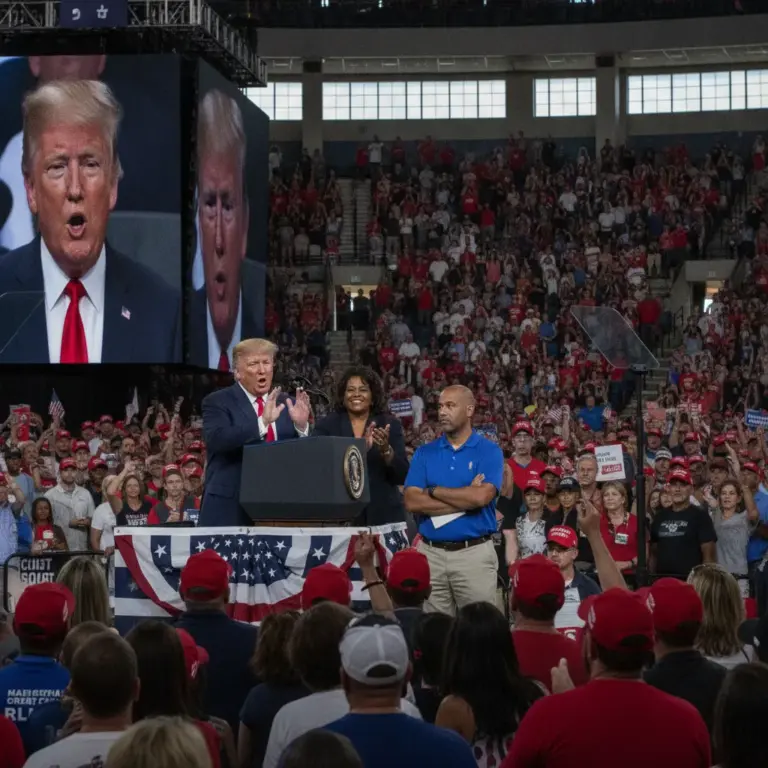
President Donald Trump is heading to Corinth, Mississippi, today for a high stakes rally in support of Republican Senator Cindy Hyde Smith. While the president looks to energize the base in a state where he holds a significant advantage, the atmosphere remains tense. Her Democratic challenger, Scott Colom, has taken the unusual step of announcing his intention to attend the event himself, claiming he wants to listen directly to voters and champion Mississippi values despite the opposing crowd.

The visit comes as Republicans double down on their midterm strategy nationwide. While Trump focuses on the South, Vice President JD Vance is simultaneously campaigning across the West, stopping in Montana and Kansas to bolster candidates like Aaron Flint and Roger Marshall. This coordinated push occurs as Democrats attempt a late surge of financial investment into key races, including a recent million dollar ad blitz intended to lift Colom’s standing in Mississippi.

Beyond the campaign trail, the administration is facing a stinging legal setback regarding its personnel practices. A federal judge ruled today that Maurene Comey, daughter of former FBI Director James Comey, was unlawfully terminated from her position as an Assistant United States Attorney. The court found that her firing violated both due process and the separation of powers, ordering the Justice Department to reinstate her with back pay while rejecting the administration’s claim that it could fire career prosecutors at will.

As Election Day approaches, officials are bracing for an unprecedented level of tension at polling stations across the country. Massive monitoring efforts are being organized by both sides, with Democratic watchdogs fearing federal interference and the Justice Department deploying its largest observer program in history. This heightened security coincides with growing pressure from House Democrats for a special counsel to investigate potential criminal links between President Trump and Jeffrey Epstein, adding another layer of controversy to an already volatile election season.

President Luiz Inacio Lula da Silva has received a wave of international support following his victory in Brazil’s runoff election, with world leaders from Europe, Africa, and Russia quickly moving to legitimize his return to power. German leader Friedrich Merz joined a growing list of officials offering their congratulations, while counterparts in Nigeria, Tanzania, and the Seychelles emphasized the importance of strengthening ties between the Global South. Russian President Vladimir Putin also sent a telegram praising Lula’s personal contributions to bilateral relations, signaling a broad international consensus on the validity of the result.

However, the atmosphere remains tense within Brazil as challenger Flavio Bolsonaro refuses to concede. Bolsonaro has centered his grievances on a last minute decision by a Supreme Court justice to extend voting hours beyond five p.m., claiming the process was corrupted by these irregularities. Despite these claims, analysts note that Lula’s margin of victory exceeded four million votes, making it mathematically improbable that a brief extension could have altered the final outcome. Furthermore, critics point out that Bolsonaro’s own team successfully requested similar extensions in southern strongholds affected by heavy rain.

Across the Atlantic, the official response from Washington has been notably muted and contradictory. While the State Department remained silent throughout Monday afternoon, President Donald Trump offered mixed signals during a campaign stop for midterm elections. Trump described the tabulation process as looking terrible and suggested the election appeared rigged or corrupt due to its optics and timing. Yet, despite his criticisms of the electoral machinery, he clarified that he personally likes Lula and gets along well with him, adding that he does not intend to intervene since he is running the United States rather than Brazil.