Archive

October 12, 2026

Browsing

Apple shares (NASDAQ: AAPL) fell around 2% in premarket trading Friday after a report said the company had asked some component suppliers to reduce orders for its latest iPhone 18 Pro and iPhone 18 Pro Max models, raising concerns about demand.

According to a report by Nikkei Asia, Apple has instructed some suppliers to cut component orders for October by at least 15%. People cited in the report estimated that the reductions could range between 15% and 20%.

The reported cuts come as Apple faces higher memory costs and as concerns grow that price increases on its latest premium iPhones may be weighing more heavily on consumers than the company anticipated.

Memory costs put pressure on iPhone demand

The softer-than-expected demand could be linked to rising memory prices, which have increased amid the artificial intelligence boom and contributed to chip shortages.

The higher costs are beginning to affect the smartphone and personal computer markets. Apple has passed on price increases to customers, potentially making its latest devices less attractive to some buyers.

Apple launched the iPhone 18 Pro and iPhone 18 Pro Max last month, raising prices for its Pro models by $100 globally when compared with the previous generation.

The reported production adjustments could signal that demand has not matched the company’s expectations following the launch, although the full extent of the slowdown remains unclear.

Concerns about iPhone 18 Pro demand also raise questions about the reception of Apple’s first foldable, the $1,999 iPhone Duo, ahead of its retail launch later this month.

An earlier report said initial production of Apple’s long-awaited foldable iPhone remained limited, with the company targeting production of 8 million to 10 million units this year.

Apple could fall short of that target if production does not accelerate, according to the report.

Citi remains bullish on Apple

Apple shares had risen for three consecutive sessions before the premarket decline and were approaching their all-time high of $345.

Earlier, Citi reiterated its Buy rating on Apple ahead of the company’s earnings, expected in early November.

Investors are also looking ahead to Apple’s plans to expand its presence in the smart home market. The company is set to unveil a new range of devices at an event in New York City next week.

The expansion comes as Apple seeks to revive its HomeKit smart home platform and use its Siri AI assistant to strengthen its broader ecosystem. The new devices are part of a broader effort to reboot Apple’s smart home strategy.

The reported iPhone production cuts introduce a new uncertainty for investors ahead of Apple’s upcoming earnings report.

The reduction in component orders could prompt investors to reassess sales expectations and Apple’s outlook for its premium smartphone business ahead of the November earnings announcement.

The post Why Apple shares are down 2% in premarket today? appeared first on Invezz
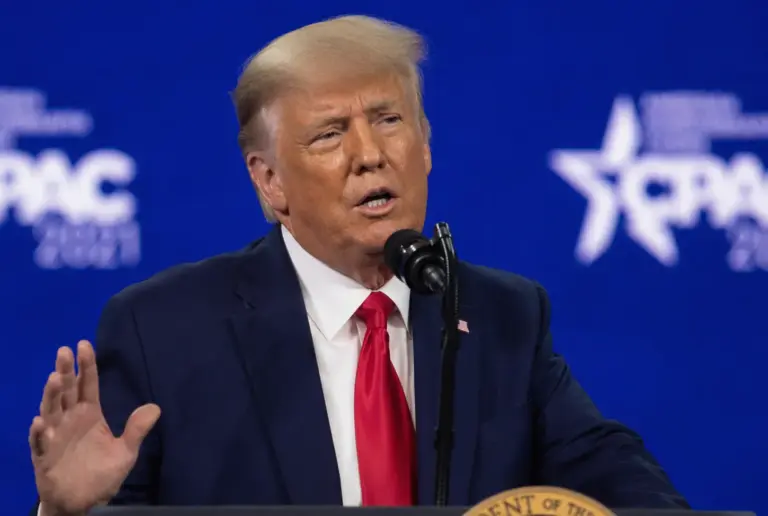
Donald Trump spent much of 2026 publicly praising Dell, but newly disclosed transactions show investments held in his name were later reduced after the stock’s extraordinary AI-driven rally.

A federal ethics disclosure released Thursday showed one of his independently managed accounts sold between $500,001 and $1 million of Dell Technologies shares on August 21, followed by another $15,001-$50,000 sale on August 28.

The trades came months after Trump repeatedly urged Americans to “go out and buy a Dell computer”.

There is no evidence Trump personally directed either sale. The White House says third-party financial institutions manage his portfolio independently, while the Trump Organization says Trump and his family do not select or approve individual trades.

Trump praised Dell before his managers started selling

Trump’s portfolio bought between $1 million and $5 million of Dell shares on February 10. Nine days later, during remarks in Rome, Georgia, he praised Michael and Susan Dell and told the audience to “go out and buy a Dell computer”.

He repeated it at a July 6 White House event linked to Trump Accounts.

However, by August, Dell had become one of 2026’s biggest stock-market winners. The new filing shows the portfolio sold $500,001-$1 million of Dell on August 21 and another $15,001-$50,000 a week later.

That sequence is striking, but it is not evidence of a personally directed trade.

White House spokesperson Davis Ingle told Reuters that “all investment decisions are made entirely by independent managers”.

The relevant contrast is therefore between Trump’s public praise and the activity of outside portfolio managers.

Dell’s AI rally gave managers a reason to take profits

The sales also make more sense against Dell’s share-price move.

Dell closed at $574.55 on Thursday, leaving the stock up about 356% in 2026. That gain reflects a dramatic rerating as AI infrastructure demand transformed expectations for the company’s server business.

Dell’s latest quarter underscored why. The company booked $60.9 billion of AI-server orders, recognised $16.4 billion of AI-server revenue and exited the period with a record $95 billion backlog. Management raised its full-year AI-server revenue forecast to $74 billion.

Yet valuation has become harder to ignore after such a rapid move.

Morgan Stanley analyst Erik Woodring described enterprise hardware spending as “undeniably strong” and said Dell was “clearly out-executing” competitors. Even so, Morgan Stanley kept an Equal Weight rating and a $511 price target.

Also read: Trump bought up to $5M SpaceX debt days before signing new space policy

Wall Street still likes Dell, but the easy upside has narrowed

Mizuho analyst Vijay Rakesh this week raised his Dell target to $650 from $600 and maintained an Outperform rating, arguing that “agentic AI adoption is accelerating”.

The view is that new AI workloads should keep supporting demand for servers and related infrastructure.

TD Cowen is more cautious. Analyst Krish Sankar raised his target to $550 from $500 but kept a Hold rating, highlighting Dell’s $95 billion AI-server backlog while warning that memory constraints could become a risk in 2027.

The broader consensus remains positive, but targets are increasingly clustering around the current share price after this year’s surge.

The post Trump asked Americans to buy Dell, then his money managers sold DELL stock appeared first on Invezz

US stock futures moved higher on Friday as investors attempted to stabilise after Thursday’s tech-led sell-off, with easing oil prices and a partial rebound in AI shares improving risk appetite.

Dow futures were up 0.17%, S&P 500 futures gained 0.4% and Nasdaq 100 futures rose 220 points or 0.72%. Nvidia climbed 1.6% premarket, while Tesla and Amazon added about 1% each.

The rebound comes after the Nasdaq fell 1.25% on Thursday, even as the Dow edged higher. Bond yields remain elevated, and several large single-stock moves are setting up a volatile open.

5 things to know before Wall Street opens

1. Oil gives equities some relief

Brent crude slipped about 1% to around $103 a barrel after Donald Trump said the US would not attack Iran before the November midterm elections. WTI also retreated towards $90.

The move helps equities after Thursday’s oil surge revived inflation concerns, but crude remains high enough to keep pressure on corporate margins and interest-rate expectations.

2. Treasury yields remain the bigger valuation test

The 10-year Treasury yield was around 5.25%, below Wednesday’s 5.364% peak but still close to a 24-year high. That leaves expensive growth stocks sensitive to any renewed bond selling.

Investors will also watch the University of Michigan’s preliminary October consumer-sentiment reading at 10 am ET, with inflation expectations likely to matter as much as the headline index.

3. AI stocks try to shake off the OpenAI scare

The sector is attempting a rebound after the Financial Times reported that OpenAI’s annualised September revenue was close to $50 billion, well below the $70 billion figure previously circulating.

A subsequent report said the company still expects to reach or exceed a $70 billion run rate by year-end, helping Nvidia and other AI-linked names recover before the bell.

4. SpaceX is forcing investors to rethink telecom valuations

SpaceX stock rose after the company agreed to buy roughly $8 billion of low-band spectrum from Grain Management, strengthening Starlink’s push into mobile services. AT&T, Verizon and T-Mobile fell sharply in premarket trading.

For investors seeking broader exposure to telecom or space-related themes through funds, it can also be useful to compare ETF platforms before deciding where to invest.

Citi analyst Michael Rollins argued that the telecom sell-off looked excessive, with a meaningful financial impact from SpaceX unlikely to emerge before at least 2029.

5. Two company stories could shape the open

Apple fell nearly 2% after Nikkei Asia reported that October component orders for the iPhone 18 Pro and Pro Max had been cut by at least 15%.

Morgan Stanley analysts said they had not detected major supply-chain changes and kept their earnings estimates broadly intact.

Humana jumped after saying 95% of its Medicare Advantage members are enrolled in plans rated four stars or higher for 2027.

The post Nasdaq futures surge 220 points: 5 things to know before Wall Street opens on Oct. 9 appeared first on Invezz

Shares of Lumentum Holdings LITE rose 6% in pre-market trading on Friday after Chief Executive Officer Michael Hurlston said demand for the company’s optical components had exceeded available supply, with orders booked through early 2029.

The company is struggling to keep pace with demand from technology firms expanding artificial intelligence data centres.

Hurlston told Bloomberg News in an interview in Tokyo that Lumentum was unable to meet a significant portion of customer demand and was working to expand production capacity.

Lumentum orders sold out amid AI data centre demand

Hurlston said Lumentum’s optical components were “completely sold out” through early 2029, adding that customers were already beginning to secure orders for 2030.

The company cannot meet around 70% of demand for some products through next year and expects to fall short of 30% of demand for certain other products through 2028, he said.

Lumentum supplies advanced indium phosphide devices used in high-speed data transmission and cloud computing.

Its technology is becoming increasingly important as AI workloads require faster connections between servers, data centre racks and computing systems.

The company’s products include lasers that encode data onto light near chips, reducing the distance that high-speed electrical signals need to travel.

Optical connections can also reduce power consumption and heat generation compared with conventional copper-based interconnects.

Hurlston said the opportunity could expand significantly as optical technologies move closer to AI accelerators.

Demand for lasers in next-generation AI systems is expected to gain traction around 2029, he added.

Nvidia investment supports expansion plans

Lumentum received a $2 billion investment from Nvidia earlier this year, alongside a similar investment in rival Coherent.

The funding highlights the growing importance of optical technologies to AI infrastructure.

To meet demand, Lumentum has increased capacity at its Sagamihara facility in Japan twelvefold over the past two years.

The company plans to invest at least $350 million in the site and a neighbouring facility, with $75 million deployed so far. It has also expanded capacity at its plant in Caswell, England.

Hurlston said Lumentum was considering purchasing a facility in Japan and could seek subsidies to support further expansion.

The company may also need to consider an acquisition over the next year to broaden its product range.

However, increasing manufacturing capacity takes time.

Hurlston said building new production facilities typically requires three to five years.

He added that hyperscalers were willing to provide funding commitments that could help suppliers manage some of the risks associated with rapid expansion.

Optical stocks gain as AI infrastructure spending grows

Lumentum and other optical component makers have benefited from the broader AI infrastructure investment boom, although concerns about rising costs, debt and competition have made some investors more cautious.

The company’s shares have gained 171% year to date. Coherent shares have risen 55%, while Applied Optoelectronics has advanced 66%.

Analyst sentiment on Lumentum remains positive overall. According to TipRanks data, 14 of 18 analysts covering Lumentum rate it a Buy, while the remaining four rate it a Hold.

Supply constraints could also affect the sector if the US restricts new Chinese optical transceiver models.

Chinese manufacturers account for roughly two-thirds of global high-speed AI optical transceiver supply, according to Counterpoint Research.

Hurlston said the US would need to balance national security concerns against the risk of disrupting supply chains.

Meanwhile, Lumentum faces the challenge of expanding production quickly enough to serve customers as demand for AI infrastructure continues to grow.

The post Lumentum stock rises 6% as AI demand fills optical orders through 2029 appeared first on Invezz

Amazon is in talks to acquire Decart, a fast-growing artificial intelligence (AI) company. According to the WSJ, Amazon is planning to buy the company in a $7 billion deal, marking a big jump from its last funding round in May, which valued it at $4 billion.

Neither side has confirmed the deal, and according to the WSJ, talks could still fall apart or another suitor can come up. 

The company has been growing fast, helped by the adequate capital from top venture capital firms like Sequoia Capital, Benchmark, Radical Ventures, Zeev Ventures, Nvidia, and Toyota Ventures. 

Decart is creating software that makes it easier for developers to switch between different AI chips, a capability that has become more popular this year. It is also known for models that generate interactive video and simulated environments as one interacts with them. These models are known as Lucy and Oasis. 

The potential acquisition comes a few months after Amazon Web Services gave Decart an early access to its Tranium chip. It was highly impressed by the founders, according to the WSJ.

The report comes at a time when Amazon is aiming to become a major player in various areas in the AI space. It is one of the biggest shareholders in Anthropic, a company that will launch an IPO at a $2 trillion valuation. 

It has also built Tranium, its chips that it hopes will be bigger competitors to those made by Nvidia. Most importantly, Amazon is becoming a major infrastructure provider for companies in the AI industry. It is in the process of spending $220 billion in capital expenditure this year. 

The report also comes at a time when large companies are scooping promising AI startups. As we reported earlier, Nvidia is in talks to acquire Reflection AI, a company that makes open-source AI models. If the deal goes through, it will be the biggest one it has executed. It recently announced a plan to acquire Hugging Face for $13 billion. 

SpaceX recently acquired Cursor for $60 billion. Meta Platforms also made a bid for Manus, before abandoning it amid regulatory concerns.  AMD recently acquired World Labs for $8.2 billion, while Stripe acquired OpenRouter for $7.2 billion.

The post Amazon plans $7 billion acquisition of Decart, a fast-growing AI startup appeared first on Invezz

Pressure is mounting against the leadership of the California High-Speed Rail Authority following revelations of financial mismanagement and wasted public funds. During a recent special board meeting, project watchdogs detailed how the agency permitted consultants to spend taxpayer money on unapproved travel expenses. While some of those consultants are currently facing disciplinary actions, critics argue that the accountability must start at the top.

Assembly Republican Leader Alexandra Macedo has formally called for the CEO of the authority to step down, citing a need for fresh leadership to steer the embattled project. The demand comes as part of a broader conversation hosted by Ashley Zavala on California Politics 360, where lawmakers expressed frustration over the recurring delays and budgetary leaks associated with the ambitious transit initiative.

Beyond the turmoil surrounding the rail project, state legislators are focusing on critical safety reforms within higher education. Assembly Member Maggy Krell is championing new legislation designed to combat sex trafficking on campuses by requiring college and university employees to undergo specialized training to recognize signs of abuse. These efforts reflect a growing push in Sacramento to tighten reporting policies and protect students across the state.

As November approaches, California voters are also weighing significant changes to campaign finance through Proposition 4, which would determine if taxpayer funds can be used in political races. With key figures like Attorney General candidate Rob Bonta entering the spotlight, these policy shifts and personnel battles continue to define an intense political season in the Golden State.

Andy Burnham has claimed that it is now clear Russia interfered in the 2016 Brexit referendum, marking a stark shift from previous official narratives. Speaking on the podcast The Rest is Politics, Burnham revealed that while visiting Downing Street, he questioned officials about Moscow’s role in the historic vote and received a definitive confirmation that interference had indeed occurred. This admission contradicts years of assertions from former Conservative administrations, which maintained there was no concrete evidence that Russian efforts successfully swayed the outcome of the poll.

Despite these claims, Burnham stopped short of providing specific details regarding who gave him this assessment or what exact evidence supported it. He also did not specify if such interference was sufficient to alter the final result of the referendum. His remarks echo criticisms leveled by a 2020 parliamentary intelligence and security committee report, which slammed successive governments for failing to launch a comprehensive investigation into Moscow’s activities. That report suggested British authorities ignored warnings about state-backed media and social media manipulation, unlike the deep dive conducted following the 2016 US presidential election.

Burnham argued that Britain must become more transparent about how hostile foreign powers attempt to destabilize domestic politics, especially as several European nations struggle with the rise of far-right movements. During a recent trip to Berlin, he discussed these threats with German Chancellor Friedrich Merz, noting shared concerns over the funding and influence of Russia within parties like the Alternative für Deutschland. By bringing these issues into the public eye, Burnham believes voters across Europe can better recognize when their political landscape is being manipulated by external enemies.

This push for openness comes at a time when Britain continues to navigate its complicated postwar identity and its fractured relationship with Europe. While current leadership has recently condemned Russian information warfare on global stages, Burnham suggests that previously keeping these vulnerabilities quiet left the public uninformed and vulnerable. As he explores various options for Britain’s future relationship with Brussels, including the possibility of rejoining the European Union, he insists that honesty about foreign disruption is essential for protecting democratic integrity.

President Donald Trump ignited a fresh diplomatic firestorm this weekend, suggesting that Ukraine needs a new leader capable of making deals after clashing with President Volodymyr Zelensky over a controversial energy agreement with Russia. Speaking to reporters at the White House, Trump criticized Zelensky’s refusal to settle the conflict and questioned his leadership, specifically citing the Ukrainian president’s insistence on continuing drone strikes against Russian diesel refineries. These attacks had reportedly frustrated the White House, leading Trump to bypass traditional channels to secure a deal directly with Vladimir Putin.

The arrangement aims to stabilize global energy costs ahead of the midterm elections by bringing hundreds of thousands of tons of Russian diesel back into the market. While Trump touted the move as a win for the global economy, Zelensky slammed the decision as an investment in a war that should be ending rather than prolonged. The timing of the announcement was particularly stinging for Kyiv, coming just as a high level Ukrainian delegation arrived in Miami for talks with representatives of the Trump administration. Zelensky described the maneuver as a weak decision made by supposed strong partners.

Despite the political fanfare surrounding the deal, industry analysts remain skeptical about its actual impact on pump prices. Experts suggest that the volume of fuel promised by Putin represents only a small fraction of global demand and may be more of a political gesture than an economic game changer. Some former officials expressed doubt that Russia even possesses enough surplus diesel to fulfill the pledge given the extensive damage caused by Ukrainian strikes on its infrastructure. Furthermore, critics warn that easing restrictions on Russian energy exports significantly undermines existing sanctions meant to starve Moscow’s war machine.

As tensions mount, Trump has gone so far as to call for new elections in Ukraine, ignoring legal prohibitions against voting during wartime. He argued that Zelensky wants to create problems for the world rather than seeking peace. Meanwhile, those casualties continue to mount on the ground in Ukraine, where recent Russian missile strikes have devastated civilian areas and killed dozens. For Zelensky and his allies, the U.S.-Russia deal feels less like a strategic pivot toward stability and more like a betrayal delivered at their most vulnerable hour.

The Prime Minister has explicitly confirmed that Russia interfered with the 2016 Brexit referendum, marking the first time a UK leader has spoken so plainly about Moscow’s attempts to sway the historic vote. Speaking on The Rest is Politics podcast, he revealed that upon entering Number 10, he specifically inquired about potential foreign interference and received a definitive yes. He admitted that the British government has been too reactive in its approach and failed to adequately warn the public about how overseas actors seek to destabilize domestic political processes.

While the Prime Minister did not offer specific details regarding the methods used during the referendum, his comments sparked immediate backlash from pro-Brexit circles. The campaign group Britain Unbound described the remarks as a crude effort to delegitimize the will of the people, arguing that while any foreign interference is unacceptable, there is no evidence it altered the final result. They further suggested that claiming voters were easily manipulated by such tactics is an insult to the electorate.

Expanding his concerns beyond British shores, the Prime Minister noted that similar patterns of disinformation are currently targeting France and Germany. During a recent trip to Germany, he discussed these threats with Chancellor Friedrich Merz, emphasizing that Russian-led misinformation campaigns are actively infiltrating European politics. By putting these facts on the record, he hopes voters across Europe will better recognize when political narratives are being manufactured by external enemies to create division.

This admission follows years of ambiguity surrounding Russian influence operations in the UK. While a 2020 intelligence report criticized previous governments for failing to properly assess these risks without reaching a firm conclusion on Brexit, later assessments indicated it was almost certain that Russia tried to interfere in the 2019 general election via fake news stories. To combat this ongoing threat, the government has announced plans for a new center dedicated to stemming the tide of disinformation and protecting democratic institutions through strengthened security laws and enhanced intelligence capabilities.

Ben Affleck may spend his days portraying a mayoral candidate in his upcoming Netflix thriller Animals, but the actor is making it crystal clear that he has zero intention of pursuing a real career in government. In a series of candid interviews, the fifty four year old described the prospect of running for public office as tawdry and depressing, suggesting that the current political landscape serves more as a cautionary tale of moral compromise than a path to genuine service.

Reflecting on his disillusionment, Affleck lamented how the systemic machinery of politics has shifted toward cruelty and superficiality. He argued that the modern environment is far too focused on fundraising, aggressive sound bites, and calculated gotcha moments rather than addressing the actual needs of citizens. According to Affleck, the system has devolved to a point where it is simpler for candidates to secure votes by appealing to the worst instincts of the electorate instead of inspiring their better nature.

While he has historically been an active supporter of figures like Al Gore and Barack Obama, Affleck admits he is now averse to the process due to rampant hypocrisy and corruption. He noted that the collective bar for leadership has dropped so low that many voters are simply desperate for someone who will speak honestly. For Affleck, the constant pressure to sacrifice personal principles for political gain makes holding office seem less like a calling and more like an awful job.

The actor even shared a lighthearted anecdote about wearing his character’s campaign gear in Los Angeles, noting that people were surprisingly receptive to his fake candidacy. Despite the positive reaction from strangers on the street, he joked that he had to warn people not to actually vote for him. To Affleck, the gap between our idealized versions of governance and its gritty reality remains too wide to bridge through a personal run for office.