
Archive

October 25, 2026

Browsing

Bloom Energy shares BE traded lower in trading on Friday despite the fuel-cell maker reporting third-quarter earnings and revenue well above Wall Street expectations, as investors weighed its aggressive spending on manufacturing expansion against concerns about cash flow.

The stock was down 9% during trading. Broader market weakness following a selloff in tech stocks on concerns that AI trade could be faltering likely also added to the pressure.

Bloom Energy reported earnings per share of 94 cents for the September quarter, up from 15 cents a year earlier and comfortably above the 69 cents expected by analysts polled by FactSet.

Revenue surged 138% to $1.24 billion, beating the consensus estimate of $1.07 billion.

The company also raised its full-year revenue guidance to between $4.4 billion and $4.6 billion, above the analyst consensus of $4.26 billion.

It maintained its adjusted gross margin outlook at 34%.

The revenue forecast has risen 41% since February, according to JPMorgan analysts, reflecting the pace of demand for the company’s power-generation systems.

Record capital spending weighs on cash flow

Despite the strong results and upgraded outlook, Bloom Energy recorded its highest-ever capital expenditure in the quarter, contributing to negative net cash flow of approximately $180 million.

The company has been investing heavily to increase factory output and expand manufacturing capacity as it works through record backlogs.

Its spending is focused on solid-oxide fuel cell systems designed to supply electricity to large-scale artificial intelligence and hyperscale data centres, including Oracle’s Project Jupiter.

The investment highlights the challenge facing Bloom Energy as it seeks to capitalise on demand for reliable on-site power while managing the costs of scaling production.

Its valuation also leaves limited room for disappointment, with the stock having gained more than 120% this year.

Investors are weighing the potential for continued rapid growth against the cash required to fund manufacturing expansion and customer deployments.

Analysts flag execution and valuation risks

BTIG lowered its price target on Bloom Energy to $250 from $295 while maintaining a Buy rating following the results.

This represents a 15% upside from Thursday’s close.

The brokerage said near-term margin pressure could emerge as the company ramps up new production capacity and accommodates accelerated customer timelines.

While management sees a path to expanding manufacturing capacity to and beyond 5 gigawatts, the timing remains unclear.

BTIG said Bloom Energy remains positioned to deliver generation capacity, but the cost of adding manufacturing facilities is weighing on margins.

Oppenheimer maintained its Perform rating, citing concerns about cash flow as the company expands its customer asset base.

The firm highlighted a $430 million increase in Customer Assets and said investors may remain cautious until the cash conversion cycle for deployments becomes clearer.

However, Oppenheimer said it remained impressed by the scope and pace of growth, supported by the advantages of faster power availability, lower emissions and modularity.

AI power demand provides a longer-term opportunity

Bloom Energy has emerged as a beneficiary of the expansion of AI infrastructure.

Its solid-oxide fuel cells generate electricity through an electrochemical process rather than conventional combustion, attracting interest from cloud providers and data-centre operators facing rising power requirements.

The shares received additional attention after SpaceX CEO Elon Musk said on Wednesday that electricity generation and cooling infrastructure, rather than chip availability, were becoming the main constraints on expanding AI computing capacity.

“I think people are starting to realize the constraint on deployment of superintelligence is more in power and cooling and infrastructure than it is in chips,” Musk said on the SpaceX earnings call.

Oppenheimer also highlighted Bloom Energy’s potential in carbon capture, citing management’s estimate of a $1 trillion total addressable market.

The brokerage said the concentrated carbon dioxide in the company’s anode exhaust could help simplify capture systems and reduce costs, potentially allowing tax credits under Section 45Q to cover a substantial portion of expenses.

The opportunity could eventually provide additional revenue streams through server sales and other offerings.

For now, investors must balance that longer-term potential against the immediate costs of expansion and the company’s ability to convert strong demand into sustainable cash flow.

The post Why is Bloom Energy stock falling on Friday despite Q3 earnings and revenue beat? appeared first on Invezz
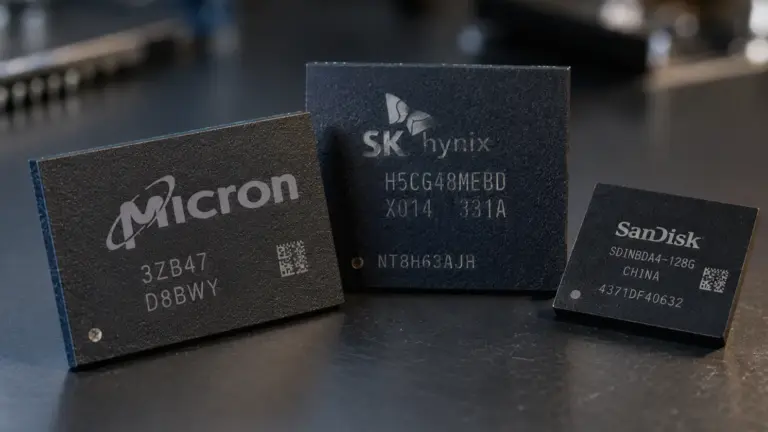

Micron, SK Hynix and SanDisk shares traded higher on Friday as a rebound in the broader semiconductor sector lifted investor sentiment following a technology-led selloff in the previous session.

Micron MU gained more than 3%, while SK Hynix rose over 4% and SanDisk advanced 1.4%.

The Philadelphia Semiconductor Index, also known as the SOX, climbed more than 1% as chip stocks recovered from Thursday’s losses.

The rebound followed a sharp pullback in technology shares on Thursday as investors assessed the implications of rising borrowing costs and heavy corporate debt issuance for artificial intelligence and other technology investments.

The SOX fell 6.7% on Thursday, its worst daily performance since June 23, while Micron lost about 6%.

SK Hynix’s decision to abandon plans for a US initial public offering of its Solidigm business also supported sentiment toward memory-chip stocks on Friday, with analysts pointing to potential implications for future NAND flash supply.

Solidigm IPO cancellation eases supply concerns

The planned Solidigm IPO had been expected to raise as much as $15 billion and value the business at roughly $150 billion.

Its cancellation was viewed as shareholder-friendly for SK Hynix because the company will retain full exposure to Solidigm’s growth potential.

The decision has also shifted investor attention toward SK Hynix’s third-quarter earnings release, due later this month, when management is widely expected to announce enhanced shareholder return commitments.

For Micron and SanDisk, the cancellation could have implications beyond investor sentiment.

According to LYNX Equity Strategies, the IPO would have provided Solidigm with capital to finance additional NAND manufacturing capacity in the United States.

That expansion could have increased global supply in three or more years, potentially putting pressure on NAND prices and competing suppliers.

In an October 23 note, the analyst team led by KC Rajkumar said the scrapped IPO removes a potential source of funding for future capacity expansion.

“The overhang of new capacity addition to the global supply of NAND flash has been eliminated,” LYNX wrote.

The firm said the development would ordinarily represent a material positive for Micron and SanDisk, both suppliers of NAND flash memory, because slower capacity growth could support industry pricing and valuations.

However, it cautioned that broader market conditions could limit the impact on share prices.

Analysts divided over semiconductor weakness

Market strategists offered differing assessments of the recent decline in semiconductor shares.

Chris Verrone, chief market strategist at Strategas, told CNBC that the weakness appeared technical rather than fundamental, suggesting any further pullback could be short-lived.

“Fundamentally, we’re seeing great strength, but technically, there’s some pressure on these semiconductors, and if the pressure continues, it could take the market on a little leg lower, which I think will be quick and a great buying opportunity,” he said.

However, John Mowrey, chief investment officer at NFJ Investment Group, took a more cautious view of memory stocks and the South Korean market, which is heavily exposed to the sector.

Micron outlook remains positive for some analysts

DA Davidson maintained a positive outlook on Micron after attending a webcast focused on the company’s upcoming innovations and competitive position in the memory market.

Managing director and technology research head Gil Luria said the company’s technological advantages were not fully reflected in its valuation.

“We see Micron as having a leadership position in memory technology, with far wider moats than are implied by the current valuation,” Luria said in a note on Wednesday.

The firm reiterated its Buy rating and $3,000 price target.

“Memory is integral to the AI product,” Luria wrote, adding that greater memory content and bandwidth could allow AI systems to operate at a higher level.

DA Davidson also highlighted Micron’s presence across three key memory technologies: dynamic random-access memory (DRAM), NAND and high-bandwidth memory (HBM).

The post Why are Micron, SK Hynix, and SanDisk stocks climbing on Friday? appeared first on Invezz

Moderna’s (MRNA) leaked cancer-vaccine trial results looked “promising” on the surface, yet the biotech stock came under intense pressure late on Thursday and was weak on Friday morning too, although the stock regained the losses and was trading higher later in the session.

In fact, MRNA slipped through its 20-day moving average (MA) this week, indicating bears have taken back control of the near-term.

Despite recent weakness, however, Moderna stock remains a blockbuster investment for 2026, currently trading at more than 6x its price at the start of this year.

Why Moderna stock keeps sliding?

The Phase 3 leaked trial data showed that “intismeran autogene” – Moderna’s personalized cancer vaccine – combined with Merck’s Keytruda reduced the risk of melanoma recurrence or death by 42% versus Keytruda alone.

It also lowered the risk of distant metastasis or death by 38%. Those are meaningful clinical gains, and the companies reported no new safety signals.

But the market had already rewarded the study’s success following August’s initial announcement.

The detailed findings therefore needed to improve expectations further.

Bloomberg reported that analysts questioned whether the melanoma results justified confidence in a much broader cancer franchise.

For MRNA shares, that distinction matters – demonstrating that one treatment works supports its development, while supporting a premium valuation requires a credible path to commercial revenue across a larger market.

Earlier trial created a difficult comparison

Another pressure point was the apparent gap with earlier research.

A smaller study showed a 49% reduction in recurrence or death and a 59% reduction in distant metastasis or death, compared with 42% and 38%, respectively, in the larger trial.

However, “different patient populations” and “follow-up periods” mean these are not really direct comparisons.

The latest findings also contain nuance that headline percentages miss.

The companies said the treatment groups performed similarly during the first six months; a prespecified analysis showed stronger benefits afterward. Overall survival data remain immature.

That makes sweeping conclusions premature. The study supports a reduction in recurrence, but it has not yet established an overall survival benefit.

Moderna investors assessing durability, treatment timing, and eventual adoption still have major questions to resolve as follow-up continues.

What’s the next test for MRNA shares?

Moderna’s next challenge is turning clinical progress into an economically attractive product.

The company is preparing to seek US approval and anticipates a potential launch in 2027.

Because the therapy is tailored to each patient’s tumor, investors will need to assess manufacturing capacity, delivery times, reimbursement, and the cost of supplying treatment.

Strong efficacy alone cannot establish the margins or sales volumes the business will ultimately generate.

Friday’s decline therefore raises a practical valuation question: how much future success does MRNA stock already assume at about 50x sales?

Regulatory progress, launch economics and evidence from additional cancer trials could help answer it.

Until then, a positive melanoma study can strengthen Moderna’s scientific credentials while still leaving shareholders vulnerable to falling expectations.

The post Moderna leaked data was positive, what’s hurting MRNA stock then? appeared first on Invezz

Investors questioning the returns on artificial intelligence (AI) spending should consider securing exposure to another sector: US homebuilders.

Housing stocks charged higher on Thursday as Treasury yields declined, offering a glimpse of how they stand to benefit from a rotation out of technology due to AI bubble concerns.

D.R. Horton, Lennar, and PulteGroup all posted “strong intraday gains” as investors reassessed an industry battered by expensive financing.

The attraction goes beyond a rotation: sustained mortgage-rate relief could improve affordability for buyers and reduce the financial concessions builders need to close sales.

Homebuilder stocks to benefit from lower mortgage rates

Housing offers a concrete way to invest in falling borrowing costs. Freddie Mac reported Thursday that the average 30-year fixed mortgage rate slipped to 7.32% from 7.40% a week earlier.

That remains rather expensive, but the direction matters for households whose purchasing decisions depend heavily on monthly payments.

For homebuilders, a sustained decline could deliver two benefits – more qualified buyers and less pressure to subsidize financing.

Mortgage-rate buydowns help move inventory, but they consume money as well that could otherwise support profitability.

The opportunity therefore extends beyond stronger sales volumes.

Homebuilders could eventually retain more profit on each closing as affordability improves.

However, one weekly decline doesn’t establish a recovery, and mortgage rates need not follow Fed policy moves precisely.

A different earnings driver can diversify an AI-heavy portfolio

US homebuilder stocks offer material exposure to household formation, employment, and housing affordability, giving investors a different set of earnings drivers from the companies financing the AI infrastructure boom.

The sector’s current difficulties also explain its recovery potential.

October’s NAHB/Wells Fargo Housing Market Index fell to 29, while 43% of builders reported cutting prices and 65% offered sales incentives.

Those figures reveal notable operating pressure that easing financing conditions could gradually relieve.

Still, investors should distinguish a rotation opportunity from a dependable hedge. An AI sell-off accompanied by widespread job losses could undermine housing demand even as bond yields fall.

The strongest backdrop would be moderating inflation and stable employment: enough economic resilience to support purchases, alongside lower borrowing costs.

Selective exposure makes more sense than assuming every housing-related business will benefit equally.

D.R. Horton stock: a top pick within US homebuilders

D.R. Horton (NYSE: DHI) stands out because its national scale and broad product offering provide multiple avenues to capture improving demand.

America’s largest builder by volume operates across 126 markets in 36 states, reducing dependence on any single local housing economy.

Its mortgage-financing business also gives it tools to address buyers’ affordability constraints.

Its latest reported quarter demonstrates resilience: fiscal Q3 closings increased 4% to 23,983 homes, generating $9.2 billion in consolidated revenue and $904.9 million in net income.

Nevertheless, cancellations increased to 20% from 17% a year earlier, underscoring continued buyer hesitation.

That combination makes Horton a credible recovery candidate with an established earnings base.

Its October 29 results will provide the next test: investors should watch incentives, cancellations, and margins before treating Thursday’s rally as evidence of a lasting turnaround.

The post Worried about AI bubble burst? Invest in this sector instead appeared first on Invezz

US stocks may have seen immense volatility lately but they are heading into the final quarter of 2026 after a strong run, with the S&P 500 on track for a fourth consecutive year of double-digit gains, according to BlackRock Fundamental Equities.

Such a streak has occurred only three times in the past 100 years, it says.

Carrie King, managing director and global chief investment officer of BlackRock Fundamental Equities, said historical patterns suggest a strong first three quarters more often precede further gains than a reversal during the final quarter.

The fourth quarter has also typically been the strongest period of the year for US equities.

However, King said investors must assess the specific economic and market conditions shaping the outlook rather than rely solely on historical trends.

Four questions are particularly relevant as investors position their portfolios for the remainder of 2026: whether artificial intelligence spending is generating returns, how long earnings growth can continue, where opportunities are emerging beyond AI and which international markets offer attractive prospects.

AI investment begins to show returns

BlackRock sees evidence that the enormous investment in artificial intelligence infrastructure is beginning to generate financial benefits.

The firm’s Global Technology team estimates that AI computing infrastructure investments by hyperscalers and AI cloud providers can now achieve payback in less than three years, compared with periods of up to four years just months ago.

Revenue growth at major cloud providers accelerated in the second quarter, with the growth rate twice that of the year-earlier period.

This suggests businesses are increasingly using AI services, helping justify continued investment in computing capacity.

The spending requirements remain substantial.

AI infrastructure investment is estimated to exceed $10 trillion by 2030 as demand for AI tokens and the computing power needed to generate them expands.

The benefits are also spreading beyond infrastructure providers.

The number of large-cap US companies citing AI-related financial improvements increased by 77% over the past year, according to the figures cited by BlackRock.

That trend suggests companies adopting AI are beginning to realise productivity gains, improve competitiveness and generate additional revenue, potentially sustaining the next phase of investment.

Earnings growth could support equities into 2027

Corporate earnings provide another source of support for the market outlook.

Consensus estimates point to the third consecutive year of double-digit earnings growth for the S&P 500 in 2026, a run not seen in two decades.

Early forecasts suggest the streak could extend into 2027.

Longer-term expectations are also elevated.

Five-year forward earnings growth estimates stand at 18%, compared with a historical average of 12%, according to BlackRock.

The outlook is constructive outside the US as well.

Europe is recording its strongest earnings growth in three years, while emerging markets are forecast to deliver earnings growth of nearly 50% in 2026.

South Korea and Taiwan, both beneficiaries of AI-related demand, are expected to contribute significantly to that performance.

The breadth of earnings growth matters because it could help reduce reliance on a narrow group of large technology companies to drive equity market returns.

Cyclical sectors offer opportunities beyond AI

BlackRock also sees a cyclical recovery developing in the US, creating opportunities in sectors that are not directly tied to artificial intelligence.

Industrials, financials and non-AI analogue semiconductors are showing signs of improvement.

While companies supplying equipment and services for AI data centres have attracted considerable investor attention, King sees improving earnings prospects in traditional cyclical businesses, including logistics, airlines and packaging.

Analogue semiconductor companies could benefit from an industrial recovery and improving inventory cycles.

Financial companies also have several potential tailwinds.

Major US banks are benefiting from investment banking, trading and capital markets activity, alongside subdued loan delinquencies and a recovery in loan growth from depressed levels.

Consumer finance companies could see earnings accelerate as credit conditions normalise, funding costs decline and consumer spending remains resilient.

These areas offer investors opportunities to participate in broader economic growth without concentrating their exposure entirely in AI-related stocks.

Japan and Europe provide diversification

Outside the US, BlackRock is particularly interested in Japan and Europe, which have delivered strong equity performance without relying on the same scale of AI investment driving US markets.

Japan’s year-to-date return stood at 21%, compared with gains of around 13% for both the US and Europe, according to the figures cited by BlackRock.

The country is undergoing structural reforms supported by government and corporate initiatives. BlackRock’s Japan team also finds that a substantial proportion of Japanese stocks continue to trade below book value, potentially creating opportunities for investors.

Specialty materials companies supplying the AI infrastructure buildout are another area of interest.

In Europe, improving earnings are being led by the energy sector.

The region has a greater share of companies positioned to benefit from rising investment in energy and infrastructure associated with AI development.

European companies also generate a significant portion of their revenue outside the continent, providing exposure to a broader range of economic drivers.

BlackRock sees European equities as a way to complement US technology-heavy portfolios, with European stocks trading at a 25% discount to their US counterparts.

BlackRock favours a risk-aware approach

Despite the constructive outlook, King cautioned that investors must remain alert to geopolitical uncertainty, Federal Reserve policy, the effects of higher interest rates on long-duration assets and the sustainability of earnings growth beyond AI.

The combination of elevated market expectations and concentrated investment in certain themes makes diversification and stock selection particularly important.

BlackRock’s position is to remain constructive on equities while acknowledging that volatility could persist through the fourth quarter and beyond.

The firm believes an active, fundamentals-driven investment approach can help investors navigate market fluctuations while seeking opportunities across sectors and regions.

The post S&P 500 eyes 4th straight year of double-digit gains, a rare feat in 100 years appeared first on Invezz

Belo Sun Mining has hit another roadblock in its quest to develop the Volta Grande gold project in Brazil. The country’s Supreme Federal Court recently stepped in to temporarily suspend the project’s installation license following a request from the Federal Public Prosecutor’s Office. This move effectively pauses the momentum gained earlier this year when a lower court had reinstated the license, citing that the company had satisfied necessary requirements regarding indigenous consultations and studies.

The current stalemate will persist until the Federal Regional Court of the 1st Region can approve a formal settlement agreement between Belo Sun and Brazil’s National Foundation of Indigenous Peoples. While the pause represents a setback, Chief Executive Officer Clovis Torres expressed optimism about the situation. He noted that discussions with indigenous representatives are well advanced and that he remains confident a resolution will be reached that serves the interests of everyone involved.

Investors reacted quickly to the news, sending shares of Belo Sun tumbling on Thursday morning. Despite the dip in stock price and the order to cease all physical work at the mine site, the company continues to push forward with behind-the-scenes preparations. They have already engaged specialists to update their feasibility study and have begun recruiting and training local workers for thousands of potential construction roles once operations are cleared to resume.

The path toward production has been fraught with litigation since 2017, characterized by a cycle of suspensions and reinstatements. Although some lawsuits have been dismissed entirely, others focusing on environmental licensing and deeper community outreach keep returning to center stage. For now, Belo Sun says it will honor its existing commitments to indigenous communities while waiting for the judiciary to give them the green light to return to the field.

Russia is increasingly leaning on its precious metal stockpiles to keep its economy afloat as the financial toll of its invasion of Ukraine mounts. According to recent data from the Bank of Russia, the nation’s gold reserves fell by another 6.2 metric tons in September, bringing total holdings down to approximately 2,264 metric tons. This marks the lowest level of reserve gold seen since 2019 and caps a ten month streak of consecutive declines.

The shrinking vaults come at a time when the Kremlin is grappling with a widening budget gap driven by massive wartime expenditures and dwindling revenues from oil and gas exports. For the first eight months of 2026, Russia’s budget deficit ballooned to 5.8 trillion rubles, far exceeding original government targets. To bridge this divide, officials appear to be tapping into assets from the National Wealth Fund, effectively liquidating long term stability for immediate military needs. Defense spending is expected to climb further, with a projected twenty seven percent increase slated for 2027.

While Central Bank Governor Elvira Nabiullina characterized these reductions as routine operations tied to fiscal rules and coin production, external indicators suggest a more urgent pivot toward Asian markets. With Western sanctions limiting traditional trade routes, Russia has shifted its gold exports heavily toward China and Hong Kong. In fact, imports into Hong Kong during the first seven months of 2026 already surpassed the entirety of last year’s totals, signaling a strategic realignment of where Russian wealth is being moved and sold.

Adding to the instability is a growing dispute over how much gold Russia is actually producing. While state ministers claim annual outputs remain near five hundred metric tons, independent analysts like Metals Focus argue that actual mine production may be nearly thirty percent lower than official reports suggest. This discrepancy highlights an increasing lack of transparency within the Russian gold sector as the government struggles to maintain its image as a global mining powerhouse while simultaneously selling off its reserves to fund a costly war.

In previous election cycles, discussing the environmental impact of industrial farming in Iowa was often dismissed as the domain of fringe activists or tree huggers. Today, however, the conversation has moved from the margins to the center stage of the state’s most heated races. With Iowa suffering from the second highest cancer rate in the nation and one of the few where those numbers are actively climbing, candidates across the political spectrum are suddenly treating public health as a cornerstone of their platforms. From gubernatorial hopefuls like Republican Zach Lahn and Democrat Rob Sand to Senate contenders Ashley Hinson and Josh Turek, politicians are now competing to see who can promise more aggressive action against chemical runoff and contaminated drinking water.

The shift is most evident in the sheer volume of campaign spending. While barely any mentions of cancer appeared in political ads during the 2022 midterms, current data shows nearly 30 million dollars poured into over 100 commercials focusing on the crisis. Much of this momentum stems from a growing alliance between rural voters and a new wave of health conscious conservatives aligned with the Make America Healthy Again movement. This coalition helped propel Zach Lahn to a surprising primary victory by framing environmental protection not as a liberal luxury, but as a necessity for survival in a state heavily dependent on corn and hog production.

Despite this newfound unity on paper, deep fractures remain regarding how to handle Big Ag without crashing the local economy. Some Democrats feel their party has played it too safe for too long, while skeptics on both sides wonder if Republican promises will survive contact with national party leadership. While state health officials point toward obesity and smoking as primary drivers of illness, many Iowans are convinced that nitrates from livestock manure are the true culprits. For these voters, the goal is no longer just winning an argument about ecology, but translating this sudden political urgency into actual legislation before more communities fall ill.

In the quiet stretches of Wisconsin’s 3rd Congressional District, where dairy farms meet small town main streets, a political battle is unfolding that may determine who controls the United States House of Representatives. Republican incumbent Derrick Van Orden and Democratic challenger Rebecca Cooke are locked in a rematch defined by familiar faces but escalating tensions. Both candidates lean heavily into their local roots to win over voters, with Van Orden highlighting his history as a Navy SEAL and family man while Cooke emphasizes her experience as a small business owner and waitress. Despite their different parties, they find rare common ground on local grievances, both opposing the construction of high voltage transmission lines and voicing skepticism toward massive data centers encroaching on precious farmland.

While they agree on protecting the backyard, they are worlds apart on the legacy of Donald Trump. Van Orden remains a steadfast ally of the former president, arguing that Trump’s patriotic resilience and economic policies, including tax breaks for seniors and tips, are fundamentally benefiting Americans. He views his bid for re-election as a necessary step to finalize critical legislation like the Farm Bill. Conversely, Cooke frames the Trump agenda as a catalyst for hardship in the district. She argues that foreign conflicts have driven up fuel and fertilizer costs for farmers and warns that previous trade tariffs damaged soybean and cranberry producers throughout the region.

Political observers suggest this specific contest serves as perhaps the ultimate bellwether for the national mood heading into November 3. David Helpap, a political science professor at UW-Green Bay, notes that while core enthusiasts remain loyal to their respective camps, the outcome hinges on fringe supporters who are weary of inflation and rising living costs. In a legislative environment where every single seat counts toward a majority, this narrow margin becomes magnified. Because Van Orden won their previous encounter by fewer than three percentage points, this race is no longer just about Western Wisconsin; it is a high stakes proxy war for national power.

The American political landscape turned into a high stakes battleground this weekend as former President Barack Obama and President Donald Trump launched simultaneous efforts to mobilize their bases ahead of the midterm elections. In a series of events that felt like a national split screen, Obama took to the stage in Cleveland to frame the upcoming vote as a critical test of the country’s moral compass. Urging voters to choose hope over fear, the former president positioned himself once again as the Democratic Party’s primary closer, targeting key swing states like Ohio and Michigan to bolster candidates struggling against a tide of political division.

Obama did not hold back during his appearance in Ohio, blending solemn warnings about national unity with sharp personal jabs at the current administration. He mocked President Trump’s preoccupation with White House renovations, jokingly suggesting that the president belonged on HGTV rather than in the Oval Office given his appetite for gold decor and lavish construction. Beyond the humor, however, Obama leveled serious criticisms at the administration’s handling of the economy and immigration policies, specifically citing federal crackdowns in major cities as evidence of a leadership style rooted in aggression rather than governance.

While Obama worked the crowds in the Midwest, President Trump prepared for his own surge of activity with a scheduled rally in Georgia followed by a trip to Michigan. This strategic overlap highlights the intensity of the fight for congressional control, where Republicans are reportedly feeling the pressure. Inside GOP circles, campaign operatives are increasingly anxious, pleading for more resources from the White House to protect incumbents in traditional red territory as they scale back attempts to flip seats elsewhere due to limited funding.

Adding to the volatility of the cycle is a contentious legal battle involving Alaska’s Senate race, where Trump has openly admitted to pushing for a Justice Department lawsuit to potentially block election certification over voter confusion between two similarly named candidates. As figures like Texas Senator Ken Paxton warn that these contests represent two irreconcilable versions of America, voters remain preoccupied with more immediate concerns. Despite the soaring rhetoric from both presidents, inflation and rising costs for gas and groceries continue to loom large over every rally, serving as a reminder that while leaders fight for ideology, citizens are fighting their monthly bills.