
Archive

October 23, 2026

Browsing

Nvidia NVDA shares fell more than 4% on Thursday as chip stocks came under renewed pressure, with investors growing increasingly concerned about the financing required to sustain the artificial intelligence boom.

The selloff extended across the technology sector, with the Nasdaq Composite down 2.5%, the S&P 500 falling 1.4% and the Dow Jones Industrial Average losing around 0.2% at around 1:10 PM EST.

The Philadelphia Semiconductor Index tumbled over 6%, reflecting mounting unease over the costs, capacity constraints and potential returns associated with AI investments.

The weakness came as a sharp rise in oil prices added another source of uncertainty. Brent crude climbed nearly 3% to above $112 a barrel, while West Texas Intermediate advanced around 2% to more than $99.

Fresh Houthi attacks in Saudi Arabia and uncertainty surrounding the possibility of renewed US and Israeli strikes against Iran heightened concerns about energy supplies and inflation, further putting equity markets under pressure.

Jensen Huang points to capital shortage

Despite the recent weakness, Nvidia CEO Jensen Huang struck an optimistic tone on demand for neocloud providers, which supply cloud infrastructure to AI companies.

He argued that the industry’s challenge is increasingly about securing the financing needed to expand capacity rather than finding customers.

“If you look at the fundamentals, the demand for the neoclouds is off the charts,” Nvidia CEO Jensen Huang told CNBC, referring to companies such as Coreweave and Nscale, which offer cloud-based storage to AI companies.

“What is missing in the middle is the working capital to fuel that growth… because there’s just so much demand across so many sectors of AI, there’s a scarcity of capital.”

“The demand for capital is much greater than the availability of capital. That’s going to get solved.”

NVIDIA CEO
Jensen Huang

Huang’s comments come as investors scrutinise the substantial funding required to expand AI computing infrastructure.

While demand for chips and cloud capacity remains strong, markets are increasingly focused on whether companies can finance their expansion without taking on excessive risks or relying on circular investment arrangements.

Circular financing concerns add pressure

Questions about interconnected investments across the AI supply chain have added to the nervousness. According to Korean media, Nvidia and Tesla are investing a combined 3.7 trillion won, or approximately $2.8 billion, in Samsung Electro-Mechanics to establish dedicated production facilities for advanced flip-chip ball grid array (FC-BGA) semiconductor substrates used in AI chips and data-center networks.

The arrangements have revived concerns about circular financing, in which companies provide funding to customers or partners that subsequently spend the money on their products.

Investors fear such practices could inflate apparent demand, encourage excess manufacturing capacity and weaken the underlying economics of the AI investment cycle.

Supply constraints highlight the industry’s challenge

Lam Research’s latest results offered evidence of continued demand, but also highlighted limits on how quickly the supply chain can respond.

The semiconductor equipment maker reported record quarterly revenue of $8.22 billion and adjusted earnings of $2.20 per share, beating expectations.

However, CFO Doug Bettinger said its quarterly revenue guidance figure of $8.6 billion “would have been a bit higher if not for some near-term supply chain constraints.”

For Nvidia, the broader market reaction underlines the tension facing the AI industry: demand for computing capacity remains substantial, but financing costs, supply bottlenecks and questions about investment returns are becoming harder for investors to ignore.

The post Why Nvidia stock is down over 4% on Thursday? appeared first on Invezz
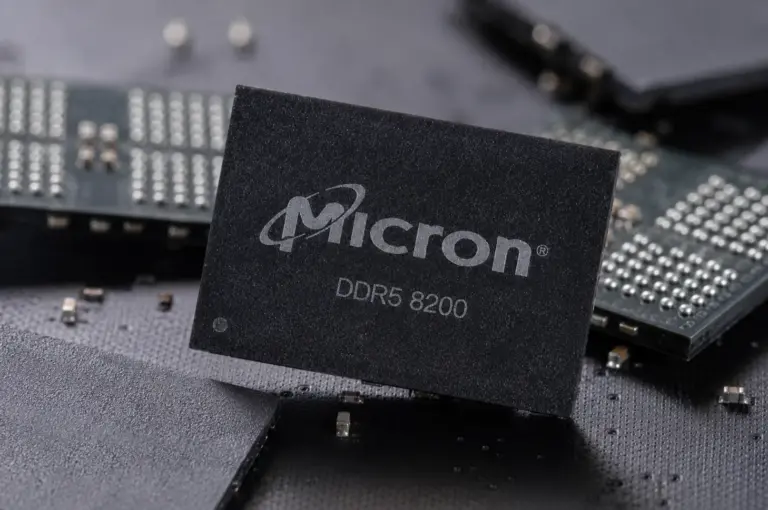
Micron Technology stock MU fell on Thursday as investors reassessed the outlook for artificial intelligence spending, even as Nvidia CEO Jensen Huang said memory demand was unlikely to ease and D.A. Davidson reiterated its bullish view on the chipmaker.

Micron shares dropped 5.5%, reversing a 2% gain in the previous session.

Other memory-related stocks also declined, with SK Hynix’s US-listed shares falling 6%, while SanDisk and Western Digital lost more than 8% and 7% respectively.

The market reaction came as Micron announced a new quarterly employee bonus programme tied to company performance, alongside additional compensation measures for workers in Taiwan following union pressure over the distribution of profits from the AI boom.

AI memory demand remains a key focus for investors

Huang told CNBC that a surplus of memory was unlikely by 2029, highlighting the continued importance of memory chips as AI systems become more advanced.

“One of the things that’s really great about memory is that you can always use more of it,” Huang said.

Memory chips are an important component of AI infrastructure, supporting systems that require greater memory capacity and bandwidth.

However, uncertainty about the sustainability of AI-related spending continues to weigh on semiconductor stocks.

D.A. Davidson managing director and technology research head Gil Luria maintained a positive outlook on Micron after attending a webcast focused on the company’s upcoming innovations and position in the memory market.

“We see Micron as having a leadership position in memory technology, with far wider moats than are implied by the current valuation,” Luria said in a note on Wednesday.

The firm reiterated its Buy rating and $3,000 price target.

With Micron closing near $914 on Wednesday, the target implied that the stock could more than triple.

“Memory is integral to the AI product,” Luria wrote, adding that greater memory content and bandwidth could allow AI systems to operate at a higher level.

D.A. Davidson also highlighted Micron’s position across three key memory technologies: dynamic random-access memory (DRAM), NAND and high-bandwidth memory (HBM).

Micron introduces quarterly employee performance payments

Separately, Micron said on Thursday it would introduce quarterly employee payments linked to company performance from fiscal 2027.

The scheme will supplement its existing annual incentive programme and apply to employees globally.

The quarterly bonus pool will be calculated using profit after tax minus projected capital spending for the following quarter, with fiscal 2026 serving as the baseline.

Half of the payment will be made in cash after results, while the remainder will be distributed in shares that vest after one year.

Micron did not disclose a fixed percentage of earnings allocated to employees or the total amount reserved for the programme.

The announcement followed an agreement reached on Wednesday with a union at the company’s larger Taichung operations in Taiwan.

Talks with a separate union in Taoyuan remained ongoing on Thursday.

The Taoyuan union has called for a transparent arrangement allocating 15% of Micron’s operating profit to employees worldwide.

It said workers should receive a greater share of the gains generated by AI demand.

Taiwan workers to receive additional benefits

Micron said it would continue discussions with the Taoyuan union while increasing the maximum payment available under its annual incentive plan.

In Taiwan, the company will raise employer retirement contributions to 10% from 8%, provide three additional paid days off, increase shift allowances and make structural salary adjustments.

From December 1, 2026, the monthly allowance for day-shift workers will increase to NT4,500(138) from NT1,500(46).

Micron said the Taiwan-specific changes were intended to strengthen its competitiveness in the local market.

The company’s approach differs from arrangements at South Korean rivals Samsung Electronics and SK Hynix.

SK Hynix has agreed to allocate 10% of annual operating profit to an employee bonus pool, while Samsung agreed to reserve 10.5% of its semiconductor division’s operating profit for special bonuses, subject to profitability targets.

Micron’s quarterly payments will also be affected by capital spending, potentially limiting bonuses while the company invests in expanding production capacity.

The post Micron stock falls 5%, why this analyst gave it a $3000 target price appeared first on Invezz

Moderna shares MRNA plunged on Thursday after partial data from its closely watched cancer vaccine trial leaked ahead of a scheduled presentation at the European Society for Medical Oncology conference, triggering a sharp sell-off despite results that analysts described as clinically meaningful.

The stock fell as much as 25% during the session, while trading was briefly halted due to volatility.

The stock recuperated some of the losses and was trading down 16% at the time of writing.

The decline followed the circulation of trial results online after oncology news website Oncology Central published information that was subsequently removed.

The European Society for Medical Oncology confirmed that the study abstract’s embargo had been breached and lifted the embargo on the full dataset later on Thursday.

The vaccine, intismeran autogene, is being developed by Moderna in partnership with Merck.

It is designed to be administered alongside Merck’s Keytruda immunotherapy to treat high-risk melanoma patients.

Cancer vaccine reduces recurrence risk by 42%

The trial results showed that adding intismeran autogene to Keytruda reduced the risk of cancer recurrence or death by 42% compared with Keytruda alone.

The combination produced a hazard ratio of 0.58 for recurrence-free survival, which measures the period until cancer returns or a patient dies.

The data also showed that approximately 82% of patients who received the vaccine alongside Keytruda were alive without their melanoma returning after two years, compared with 70% of patients treated with Keytruda alone.

The combination reduced the risk of cancer spreading to distant organs or tissues, or death, by 38% compared with Keytruda alone.

Despite the positive findings, the market reaction suggested investors had anticipated particularly strong results ahead of the detailed Phase 3 presentation scheduled for the weekend.

BMO Capital Markets analyst Evan Seigerman said in a research note that the relative reduction in recurrence or death was clinically meaningful.

He added that the stock’s reaction likely reflected elevated expectations rather than a negative assessment of the treatment’s effectiveness.

Elevated expectations weigh on Moderna shares

Several analysts had outlined expectations for the trial results before the data emerged.

UBS analyst Michael Yee had suggested that a hazard ratio of 0.65 could support a 10% to 20% rally in Moderna shares, while William Blair analyst Matt Phipps indicated that a result of 0.70 or lower would be well received.

Leerink Partners analyst Daina Graybosch had identified a figure below 0.60 as a potentially transformative outcome.

The reported hazard ratio of 0.58 was better than these thresholds, but the shares still declined sharply.

William Blair analyst Myles Minter described the move as a potential sell-the-news reaction, noting that Moderna shares had risen more than 500% this year despite Thursday’s fall.

UBS analysts also described the results as a strong dataset, suggesting that the stock reaction reflected high expectations rather than disappointing efficacy.

However, the reduction in the risk of cancer spreading to distant organs fell short of some Wall Street expectations, according to TD Cowen analyst Tyler Van Buren.

Vaccine offers potential beyond melanoma

Investors view intismeran autogene as a possible source of growth for Moderna beyond its existing vaccine portfolio, which includes products for COVID-19, influenza and respiratory syncytial virus.

Researchers are evaluating the personalised cancer vaccine across nine trials involving different solid tumours.

Positive results could also strengthen confidence in upcoming studies targeting kidney and bladder cancers.

The treatment’s manufacturing process remains a potential challenge.

Because the vaccine is personalised, production can take approximately six weeks.

Merck CEO Robert Davis said the company believes it can reduce that timeline in the future, potentially helping the treatment reach more patients.

Merck shares also declined on Thursday, falling around 1.4%, although the move was smaller than Moderna’s drop.

The sell-off leaves investors weighing the vaccine’s clinical promise against the high expectations already reflected in Moderna’s share price.

While the trial results indicate a meaningful reduction in melanoma recurrence risk, further studies and the treatment’s commercial potential will remain important considerations.

The post Why Moderna stock plunged despite positive cancer vaccine trial results? appeared first on Invezz

Oil prices climbed to a five-month high as Houthi attacks in Saudi Arabia heightened concerns about Middle Eastern energy supplies, while US Treasury yields fell sharply as investors sought safe-haven assets amid an AI-driven stock sell-off.

Meta shares slipped despite stronger-than-expected revenue as investors weighed its AI spending plans and proposed new share class, while Tesla fell after cutting its capital expenditure guidance and outlining a gradual production ramp-up for its Optimus humanoid robot.

Oil prices rise as Houthi attacks intensify supply concerns

Brent crude futures rose 4.22%, to $113.40 a barrel, while US West Texas Intermediate gained 2.47%, to $99.55 on Thursday.

Brent was on track for its highest close since May 4.

Saudi Aramco reportedly instructed staff to evacuate its headquarters in Dhahran as fighting between Saudi Arabia and Yemen’s Iran-aligned Houthis intensified.

PVM Oil analyst Tamas Varga said in a Reuters report that attacks on ships in the Strait of Hormuz and Houthi strikes on Saudi Arabia and its oil infrastructure outweighed reports that regional exports had exceeded pre-conflict levels.

Morgan Stanley analysts estimated Middle Eastern crude exports at around 17 million barrels per day last week, compared with an average of approximately 18 million bpd in the 12 months before the Iran war.

Treasury yields fall as investors seek safety

The 10-year US Treasury yield fell more than 19 basis points to 4.953%, dropping below 5% for the first time since September 23.

The two-year yield declined 17 basis points to 4.648%, while the 30-year yield fell nearly 15 basis points to 5.286%.

Investors turned to government bonds as technology stocks sold off and concerns grew over AI-related borrowing and higher energy prices.

Mitch Goldberg, president of ClientFirst Strategy, described the move as a flight to safety, pointing to investor concerns about the volume of debt being issued by AI-related companies in a CNBC report.

Larry Holzenthaler, senior portfolio manager for fixed income at Catalyst Funds, said Treasuries were regaining their safe-haven status amid weakness in technology stocks, geopolitical risks and rising oil prices.

However, Gregory Faranello, head of US macro strategy at South Street Securities, warned that persistently high energy prices could complicate the Federal Reserve’s policy decisions by increasing inflationary pressure.

Meta stock falls despite stronger revenue

Meta shares declined more than 7% on Thursday, despite reporting third-quarter revenue of $64.60 billion, up 26% year over year and above analysts’ expectations of approximately $63.3 billion.

Advertising generated $63.06 billion in revenue, while the company forecast fourth-quarter revenue of $73 billion to $76 billion.

Investors remained focused on Meta’s AI spending plans and proposed Class C non-voting shares, which are expected to take effect on January 19, 2027.

The company plans to distribute one Class C share for each outstanding Class A and Class B share, leaving existing shareholders’ voting power unchanged.

Meta also faces a $25 billion penalty ordered by a New Mexico judge in a data privacy case.

Its third-quarter diluted earnings per share were $3.83, affected by a $9.89 billion charge linked to an August settlement involving teen mental-health litigation.

Without that expense, diluted EPS would have been $7.40.

Tesla falls after cutting capital expenditure forecast

Tesla shares dropped more than 2% on Thursday after the company reduced its full-year capital expenditure forecast to approximately $20 billion from more than $25 billion previously.

The electric vehicle maker reported third-quarter revenue of $28.05 billion, slightly above analysts’ expectations of $27.88 billion.

Adjusted earnings per share reached 48 cents, exceeding the 43 cents expected by analysts.

Tesla generated $1.53 billion in free cash flow, compared with analysts’ expectations of a $4.92 billion cash burn.

Capital expenditure totalled $4.7 billion, below the $7.5 billion expected.

Chief Financial Officer Vaibhav Taneja said the company was managing capital deployment efficiently and planned to fund spending primarily through operating cash flow.

Tesla also secured the capacity to borrow up to $30 billion to support expected capital expenditure growth.

Chief Executive Elon Musk said it could take around a year or longer for the company to reach an annualised Optimus production rate of 20,000 units per week.

Tesla also declined to discuss a potential merger with SpaceX during its earnings call, leaving uncertainty around the possibility of a combination.

The post Evening digest: oil jumps to 5 month high, Treasury yield falls below 5% appeared first on Invezz

US stocks fell on Thursday as renewed concerns about artificial intelligence spending pressured technology shares, while rising geopolitical tensions in the Middle East pushed oil prices to a five-month high.

The Nasdaq Composite recorded its steepest daily decline since June, while the S&P 500 suffered its worst session since July.

Investors also moved into US Treasuries as they assessed the risks posed by rising energy prices, AI-related financing requirements and the outlook for Federal Reserve interest rates.

Nasdaq leads Wall Street lower as AI spending concerns return

The Nasdaq Composite dropped 2.60% to 26,008.86, while the S&P 500 fell 1.21% to 7,663.43. The Dow Jones Industrial Average edged up 0.02% to 52,867.98.

Technology stocks led the declines as investors reassessed the costs of expanding AI infrastructure and the financing required to support the industry’s growth.

Meta Platforms fell around 7% despite reporting better-than-expected third-quarter revenue and providing an upbeat outlook.

Investors focused on its rising AI expenditure, its first cash outflow in more than a decade, and plans to issue non-voting shares as it seeks greater flexibility to fund its expansion.

Chipmakers also came under pressure. Advanced Micro Devices fell more than 8%, Micron Technology declined 6%, and Nvidia lost 4%.

CoreWeave, a major provider of AI-focused cloud infrastructure, dropped more than 10% amid continued concerns about its debt and financing costs.

The Philadelphia Semiconductor Index also recorded a steep decline, extending its losses from its June 22 record closing high.

Despite the recent pullback, the index remained sharply higher for the year and continued to outperform the broader S&P 500.

Tesla shares also declined despite the electric vehicle maker reporting positive free cash flow for the quarter and lowering its 2026 capital expenditure plans.

Oil climbs as Middle East tensions raise supply risks

Oil prices surged after reports that the US and Israel were considering renewed strikes against Iran following next month’s US midterm elections.

Tensions increased further after Iran-backed Houthi forces launched new attacks against Saudi targets, raising concerns about potential disruptions to energy supplies.

Brent crude futures rose 3% to settle at $113.03 a barrel, while US West Texas Intermediate crude advanced 2.18% to $99.27.

Higher oil prices also raised concerns about inflation and the potential implications for Federal Reserve policy.

US jobless claims remained near multi-decade lows, suggesting labour market conditions could allow policymakers to maintain their focus on inflation.

Financial markets were pricing in the possibility of another 25-basis-point interest rate increase before the end of the year.

Treasury yields fall as investors seek safe-haven assets

US Treasury yields declined as investors sought safer assets amid volatility in technology stocks and rising geopolitical risks.

The benchmark 10-year Treasury yield fell more than 17 basis points to 4.974%, its lowest level in almost a month.

The two-year Treasury yield dropped more than 16 basis points to 4.66%.

The move marked a shift from earlier concerns about inflation and elevated borrowing costs, as investors reassessed the risks associated with AI-related financing and the outlook for energy prices.

Meanwhile, third-quarter earnings continued to provide mixed signals across the market.

Of the 111 S&P 500 companies that had reported results, 83% had exceeded analyst expectations, according to LSEG data.

Procter & Gamble shares rose after the consumer goods company beat revenue estimates, despite warning that higher commodity costs would weigh more heavily on annual profits.

Lockheed Martin gained after raising its annual sales and profit forecasts, while Spotify advanced after projecting fourth-quarter profit above Wall Street expectations.

The post Nasdaq falls 2.6% as AI spending fears hit tech stocks, oil prices jump appeared first on Invezz

The race to electrify the globe is facing a daunting logistical hurdle, as latest figures suggest the world must open a new lithium mine roughly every two months for the next twenty four years just to stay ahead of demand. According to data from Benchmark Mineral Intelligence, global requirements for lithium carbonate equivalent are expected to soar from about 2.11 million metric tons in 2026 to a staggering 7 million by 2050. Meeting this gap would require the production capacity of approximately 134 new mines and an initial investment exceeding 100 billion dollars.

While electric vehicles continue to drive the bulk of this hunger for minerals, emerging technologies like artificial intelligence are adding fresh pressure. Data centers are increasingly relying on massive energy storage systems, creating a secondary stream of demand that is projected to nearly quintuple over the next decade. However, securing the necessary funding remains a volatile gamble. Cameron Perks, a product director at Benchmark, notes that investors often hesitate when prices swing wildly, forcing lithium developers to compete for capital against high profile sectors like defense and AI.

The geography of mining is also shifting as nations scramble for resource security. While Australia currently leads global supply, its market share is expected to dip as North America aggressively expands its own mining operations to reduce dependence on China. Europe faces similar ambitions but struggles with higher costs and stricter environmental regulations that can delay project timelines. This regional shift highlights a broader struggle to balance urgent industrial needs with local ecological and community concerns.

There is some hope that circular economy practices could ease this burden, with recycling potentially providing nearly half of the total lithium supply by mid century. If recycling scales effectively, it could significantly slash the number of new mines required and lower overall capital expenditures. Yet experts warn that recycling cannot be viewed as a magic bullet because it depends entirely on when old batteries actually reach their end of life; until then, any shortfall in recycled materials must be filled by digging deeper into the earth.

Wall Street is famous for its catchy mantras, from buying the dip to selling in May. However, seasoned traders often lean on a different piece of wisdom: when the VIX is high, it is time to buy. This philosophy mirrors the legendary advice of Warren Buffett, who encouraged investors to be greedy when others are fearful. The logic suggests that once market terror reaches a fever pitch, stocks often trade at deep discounts, creating a prime opportunity for those brave enough to enter the fray.

At its core, the VIX is shorthand for the Volatility Index of the Chicago Board Options Exchange. Since its inception in 1993 and subsequent update in 2003, it has served as a barometer for expected volatility over the next thirty days. By analyzing the prices of S&P 500 index options—contracts that allow traders to bet on future price movements—the VIX provides a real-time snapshot of investor sentiment. Because it reflects the perceived risk of the broader U.S. equity market, it has earned the nickname of the fear index.

The relationship between the VIX and the stock market is generally inverse. When stock prices plummet and uncertainty rises, the VIX typically spikes, signaling that investors are bracing for turbulence. Conversely, a falling VIX often hints at returning confidence or an impending rally. While not a crystal ball, these fluctuations offer critical clues about whether market participants feel optimistic or panicked about the immediate future.

In terms of numbers, a stable investment environment usually sees the VIX hovering between 12 and 20. Values below 12 indicate extreme bullishness and optimism, while anything above 20 signals abnormally high volatility. When the index pushes past 30, it frequently marks a bear market characterized by severe risk aversion. History shows us just how dramatic these swings can be; for instance, during the depths of the COVID-19 pandemic in March 2020, the index soared to an all-time high of 82.69 as global markets spiraled into chaos.

Senator Elissa Slotkin of Michigan finds herself at the center of a growing political firestorm following comments she made during an event at the University of Chicago. During the appearance, Slotkin spoke about wanting to send a deterrence message to recent graduates contemplating roles within a potential Trump administration. She suggested that young people should view such opportunities not as exciting career moves, but as paths that could lead to significant personal and legal problems.

The remarks quickly went viral, sparking accusations that the senator was attempting to intimidate conservatives through the threat of future congressional investigations. In response, Michael Bicksel, a conservative student at the university who originally flagged the video, has escalated the matter by filing a formal ethics complaint with the Senate Select Committee on Ethics. Bicksel argues that Slotkin used her position to suggest that the legal process be used to terrorize those seeking public service regardless of whether any actual laws were broken.

In his complaint, Bicksel describes the senator’s goals as shocking and far below the standards expected of a member of the U.S. Senate. He emphasizes that while criminals should certainly be punished, targeting individuals simply for their desire to serve in an executive branch administration constitutes improper conduct. For Bicksel and his peers, the rhetoric represents an attempt to leverage state power to scare young professionals away from government employment based on political affiliation.

Slotkin has dismissed the backlash as manufactured outrage and maintains that politics in general has simply become messy. While some critics have called for Justice Department involvement, Slotkin believes these attacks are part of a coordinated effort by her opponents to silence dissenters and distract from larger economic and foreign policy issues. As the ethics committee reviews the submission, the debate continues over where legitimate oversight ends and political intimidation begins.

As the countdown to the midterms hits its final stretch, most of the public conversation has centered on a handful of high stakes battles for Congress. Billions of dollars are pouring into these few key districts and statewide referendums, creating a media whirlwind that often obscures everything else happening on the ballot. While the fight for control in Washington captures the spotlight, there is an entire ecosystem of elections occurring simultaneously that carry immense weight for everyday citizens.

Beyond the noise of federal politics, voters are preparing to decide who will occupy governors’ mansions and hold seats in various statehouses across the country. These positions often have a more direct impact on local laws, education funding, and healthcare access than many members of Congress do. From small town council seats to pivotal local ballot initiatives, these quiet races frequently determine how communities function long after the national news cycle moves on.

To shed light on these overlooked contests, a panel of political experts recently gathered to analyze the matchups that rarely make national headlines but could still shift regional power dynamics. By shifting focus away from the expensive ad wars seen on television, it becomes clear that the true landscape of American governance is shaped just as much by these low profile races as it is by the loud clashes in D.C. As early voting begins in cities like Minneapolis, millions are stepping up to influence outcomes that might never be discussed on a cable news network.

Across the rugged landscapes of Maine, from the autumn colors of Brownville Junction to the bustling streets of Portland, voters are navigating one of the most grueling Senate races in recent memory. The atmosphere is a complex blend of traditional neighborliness and political exhaustion, as citizens weigh their long standing relationship with Republican Senator Susan Collins against the progressive energy brought by Democrat Troy Jackson. While the airwaves are saturated with advertisements, the real story unfolds in smaller moments where personal loyalty clashes with ideological frustration.

Senator Collins continues to lean on her reputation as a practical provider for her constituents, maintaining strong ties even in deeply red areas where residents may disagree with her stance on Donald Trump. During a quiet visit to a local fire department dinner, it became clear that for many Mainers, results matter more than party purity. These voters point to millions of dollars in federal funding for infrastructure and personal interventions by her office as proof that losing her would mean leaving Maine without a voice in Washington. To these supporters, she represents a reliable bridge to resources that a newcomer simply could not provide.

On the other side of the spectrum, Troy Jackson is working hard to refine his image as a logger turned lawmaker who speaks plainly to the people. Though critics have questioned his polish and debate demeanor, Jackson has found success by embracing his unrefined nature as an asset. His rallies are charged with an urgency centered on affordability and health care reform, drawing crowds who view him as a necessary alternative to the status quo. However, some within his own camp remain cautious, wondering if his progressive platform can survive the realities of a divided Senate or if he can fully step out from the shadow of previous candidates.

As Election Day approaches, the divide remains starkly visible in every county. In southern Maine, homemade signs mocking Collins suggest a deep well of resentment toward her perceived alignment with national GOP figures. Meanwhile, rural pockets maintain a fierce protective streak over their incumbent senator. Caught between these two forces is a voting public that feels simultaneously energized by the stakes and worn down by the noise, leaving observers unsure which direction this unpredictable state will ultimately swing.