Archive

October 14, 2026

Browsing

Wells Fargo (WFC) stock is inching lower on October 13 after the bank’s Q3 earnings disappointed investors.

On a per-share basis, WFC earned $1.87 in its third quarter, exceeding $1.85 per share consensus, but its revenue at $21.87 billion missed expectations of about $22.31 billion.

Yet investors looking beyond the headline have reasons to consider buying – expanding customer relationships, stronger fee-generating businesses and improving profitability suggest Wells Fargo shares’ broader growth story remains intact.

What’s the bull case for Wells Fargo stock?

WFC’s quarterly miss becomes less alarming when measured against expectations.

Net interest income reached $12.52 billion, about 0.9% below the $12.63 billion consensus, while total revenue missed by 2%. These were modest shortfalls given funding costs remain a “pressure point”.

Importantly for the bull case, the bank retained its $50 billion full-year net interest income outlook and expects roughly $13 billion in Q4. That provides a concrete benchmark for investors assessing whether the weakness persists.

Plus, credit performance offers reassurance as well. Despite higher provisions, the annualized net loan charge-off rate was 0.38%, versus 0.40% a year earlier.

Nonperforming assets also declined to about 0.70% of loans from 0.83%. This supports a measured interpretation of the reserve increase, rather than an assumption that borrowers are struggling.

What else warrants buying the dip in WFC shares?

Wells Fargo’s strongest argument for buying the dip lies in businesses that are “building customer relationships”.

Wealth and Investment Management revenue increased 12%, Commercial Banking grew 6%, and Consumer Banking and Lending advanced 5%.

And the breadth matters – several franchises contributed notably to growth even as weaker trading gains weighed on companywide results.

WFC opened over 660,000 credit card accounts, while auto originations increased 15%. Its wealth client assets also climbed 11%, strengthening the base from which advisory fees can be earned.

These figures bolster the investment thesis beyond a “hoped-for” trading rebound. More accounts and deeper client relationships create opportunities to sell additional services over time.

All in all, investors still need to watch acquisition costs and lending discipline – but the Q3 report showed that Wells Fargo can attract business while navigating uneven capital-markets conditions.

Buybacks to drive Wells Fargo share price higher

Finally, Wells Fargo shareholders have another potential source of support: the bank repurchased $2.5 billion of stock during the quarter, retiring 28.6 million shares.

Buybacks can increase each remaining share’s claim on future profits, provided WFC pays sensible prices and preserves sufficient capital.

Meanwhile, noninterest expenses declined 1% – helped by efficiency initiatives and about an 8% reduction in headcount. That discipline matters because it gives revenue growth a better chance of reaching the bottom line.

In short, for prospective buyers, the compelling case is operational progress and capital return, not the two-cent EPS surprise alone.

Tuesday’s pullback offers a lower entry price into that thesis, with future execution set to determine whether the opportunity pays off.

The post Wells Fargo Q3 revenue miss doesn’t break the bull case appeared first on Invezz
Oracle (ORCL) shares gained 4% on Tuesday as investors assessed the company’s proposed electricity agreement for its Project Jupiter artificial intelligence data centre in New Mexico and a separate collaboration with Microsoft and Marvell Technology on data centre security.

The proposed agreement with El Paso Electric would provide electricity during the final stages of construction and initial commissioning tests at Project Jupiter.

It would also cover emergency backup power and life-safety requirements for workers at the site.

Oracle said its existing plan to use Bloom Energy’s fuel cell microgrid as the facility’s primary electricity source remains unchanged.

The developments come as Oracle continues to expand its AI infrastructure and address the electricity and security requirements associated with large-scale computing facilities.

Oracle proposes $10 million annual payment for Project Jupiter

Under the proposed energy service agreement, Oracle expects to pay El Paso Electric $10 million annually for 10 years, regardless of whether it uses all the electricity available under the contract.

Oracle said the payments would cover costs associated with the shared electricity system that would otherwise be absorbed by El Paso Electric’s New Mexico customers.

The agreement would support power requirements during the final phase of construction and the initial commissioning of Project Jupiter.

It would also provide emergency backup electricity and support life-safety needs for workers at the site.

Oracle separately proposed providing electricity bill credits of up to $55 million annually for as many as three years to residential customers and small businesses served by El Paso Electric in New Mexico.

The credits could begin reaching customers in 2027.

Oracle said the proposal goes beyond the White House Ratepayer Protection Pledge, which it signed to cover its own energy costs.

The customer credits and annual payments form separate parts of the proposed arrangements, with the latter intended to help offset shared electricity infrastructure costs.

Bloom Energy to remain primary power supplier

Oracle reaffirmed that Bloom Energy’s fuel cell microgrid would remain the main electricity source for Project Jupiter.

The announcement follows Oracle’s April decision to use Bloom Energy fuel cells to power the AI data centre campus in Doña Ana County, New Mexico.

Under that plan, the site would be supported by up to 2.45 gigawatts of installed Bloom fuel cell capacity. The approach replaced an earlier design that relied on gas turbines and diesel generators.

The proposed agreement with El Paso Electric does not change this primary power arrangement.

Instead, it addresses electricity needs during construction, commissioning and emergency situations.

Reliable power supply has become an important consideration for large AI data centres, which require substantial infrastructure to support computing workloads.

Oracle’s proposed arrangements also address how the costs of shared electricity infrastructure would be allocated between the company and local customers.

Oracle, Microsoft and Marvell form security working group

Oracle also announced a collaboration with Microsoft and Marvell Technology to develop common hardware security standards for cloud and hyperscale data centres.

The companies have established a working group within the Open Compute Project’s Security Track.

Its objective is to develop an integrated hardware security module design that meets the NIST FIPS 140-3 Level 3 standard.

The group plans to develop open specifications for managing encryption keys directly within servers.

The proposed approach would integrate certified hardware protection, key storage, and mechanisms to verify workload integrity into server infrastructure.

The companies said existing approaches often rely on transferring encryption keys across networks from separate security modules or managing them through software alone.

Embedding security capabilities within servers could reduce delays and strengthen protection for cloud computing workloads.

The working group expects to release an initial draft around the Open Compute Project Global Summit, held from October 12 to 15 in San Jose, California. Version 1.0 is expected to follow.

The power agreement and security initiative highlight two areas of Oracle’s infrastructure expansion: securing reliable electricity for AI computing and developing hardware standards to protect the workloads running on its cloud systems.

The post Why is Oracle stock gaining 4% today? appeared first on Invezz

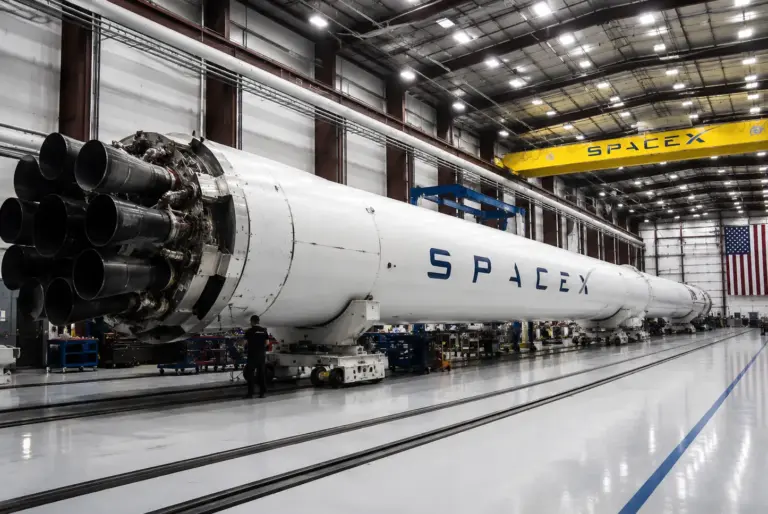
SpaceX stock SPCX fell 4% on Tuesday as federal regulators announced a review of the company’s proposal to significantly expand launch and landing operations at its Starbase facility in South Texas.

The Federal Aviation Administration (FAA) said it would prepare an environmental impact statement and hold public hearings on the proposed expansion.

SpaceX aims to eventually conduct up to 456 launches and 912 landings annually at the facility, a significant increase from its current authorization.

The proposal comes as SpaceX continues to expand its launch operations and develops its Starship rocket, which the company expects to support its broadband and artificial intelligence businesses.

SpaceX proposes hundreds of annual Starship launches

The proposed expansion would take place in two phases. Initially, SpaceX would be allowed to conduct up to 100 Starship launches and 200 landings annually, at any time or on any day.

A second phase, expected within several years as the vehicle’s reliability improves, would increase the annual limit to 456 launches and 912 landings. The second phase would restrict launches to weekdays.

The landing limit covers returns to Starbase regardless of where the vehicles originally launched.

SpaceX plans to recover both the Starship spacecraft and its Super Heavy booster upright and intact, allowing them to be reused more quickly.

The company would also retain the option to splash down rocket components in the Gulf of Mexico or the open ocean.

SpaceX is currently authorized to conduct up to 25 launches and 50 landings annually at Starbase.

The rocket has launched no more than five times in a single year, with three flights completed so far in 2026.

FAA Review to examine environmental and aviation risks

The FAA’s environmental review will assess the potential effects of the expansion on coastal resources, local wildlife, and regional air quality.

Regulators will also examine the impact on commercial aviation.

Airlines sometimes need to adjust flight routes to avoid launch danger zones and potential debris from rocket explosions.

The FAA said a draft environmental study would be published later, giving the public an opportunity to review and comment on the proposal.

The review means the proposed increase in Starship activity remains subject to regulatory assessment.

SpaceX’s plans for hundreds of annual launches and landings would represent a substantial expansion of operations at the Texas facility.

Chief Executive Officer Elon Musk has long pursued a vision of high-frequency Starship flights, with future ambitions of multiple launches per hour.

SpaceX is also planning a separate $100 billion launch complex in southern Louisiana to support its intended launch cadence.

Falcon 9 operations continue as SpaceX develops Starship

Despite the attention on Starship, SpaceX continues to operate its established Falcon 9 launch system.

A Falcon 9 rocket carrying a Dragon capsule departed Cape Canaveral, Florida, early Tuesday on a mission to deliver about three tons of equipment to the International Space Station.

The launch proceeded smoothly, with the capsule scheduled to rendezvous and dock with the station on Thursday.

SpaceX has launched Falcon 9 more than 110 times this year and is on pace for about 150 launches by the end of December, compared with 165 last year.

The rocket accounted for approximately 47% of all launches this year, down from 50% in 2025, reflecting increased competition in the launch market.

SpaceX is developing Starship as a larger, fully reusable launch system.

It is almost twice as tall as Falcon 9 and has roughly six times its payload capacity.

The company expects Starship to support the expansion of its broadband and AI businesses while providing additional services to NASA and other commercial partners.

SpaceX has yet to achieve full reusability for Starship. Company executives hope to land both the spacecraft and its Super Heavy booster back at Starbase before the end of the year.

The post SpceX stock falls 4% today: here’s why appeared first on Invezz

Oil prices were mixed as hopes for increased Russian diesel supplies offset concerns over attacks on Middle East energy infrastructure.

Gold prices edged lower ahead of key US inflation data, while New York Fed President John Williams maintained that another rate hike could be appropriate this year but saw no need for further increases in 2027.

Meanwhile, major US banks reported third-quarter results, with mixed revenue performances and varying investor reactions.

Oil prices mixed as supply risks offset Russian diesel prospects

Oil prices moved in opposite directions on Tuesday as prospects for Russian diesel exports to global markets competed with concerns over supply disruptions in the Middle East.

Brent crude futures fell 0.74% to $105.87 per barrel, while US West Texas Intermediate crude rose 0.69% to $94.39.

WTI was on track to close at its highest level since September 24 for a second consecutive session.

The Kremlin said it saw no direct connection between a potential deal involving Russian diesel exports to the US and Moscow’s position on Ukraine peace negotiations.

US President Donald Trump said the diesel was intended for the rest of the world, rather than the US.

Meanwhile, attacks and escalating tensions involving Saudi Arabia and Yemen’s Iran-aligned Houthi militants heightened concerns over Gulf energy infrastructure and shipping routes.

Disruptions around the Strait of Hormuz remain significant because about 20% of global oil supplies passed through the waterway before the US and Israel attacked Iran in February.

Despite the disruptions, OPEC+ production increased sharply in September, driven by higher output from Saudi Arabia, according to OPEC.

The organisation lowered its forecast for 2026 oil demand growth for a sixth consecutive month but raised its outlook for 2027, citing the need to rebuild inventories depleted by the Iran war.

Gold prices ease ahead of US inflation data

Gold prices slipped as investors awaited US inflation figures and comments from Federal Reserve officials for clues about the central bank’s interest-rate outlook.

Spot gold fell 0.18% to $4,163.72 per ounce, while December US gold futures settled 0.04% lower at $4,188.50.

Investors were focused on Wednesday’s Consumer Price Index report and Thursday’s Producer Price Index figures, alongside remarks from Fed Chair Kevin Warsh.

StoneX senior market strategist Bob Haberkorn said investors were waiting to see how the inflation data would affect market expectations.

Higher interest rates can weigh on gold because the metal does not generate interest income.

However, Commerzbank analysts noted that rate increases can also intensify government debt-sustainability concerns by raising borrowing costs.

Other precious metals also declined. Spot silver fell 1.8% to $59.22 per ounce, platinum slipped 1.22% to $1,672.82, and palladium dropped 1.34% to $1,130.50.

Fed’s Williams sees no need for rate hike in 2027

New York Fed President John Williams said in a Bloomberg News interview that he continued to believe another rate increase could be appropriate this year but did not currently expect further hikes to be necessary in 2027.

Williams said inflation could slow considerably next year as the effects of tariffs and higher energy prices fade.

He also pointed to declining measures of underlying inflation and said the labour market was not showing signs of imbalance that would contribute to broader price pressures.

He supported the Fed’s September rate increase after the outlook for energy prices deteriorated, but maintained that underlying disinflationary forces remained in place.

Williams acknowledged uncertainty surrounding the outlook, particularly the inflationary effects of demand from artificial intelligence infrastructure investment.

He said policymakers would need to continue monitoring incoming economic data.

His comments came ahead of Wednesday’s inflation report, the last consumer inflation reading before the Fed’s October 27-28 meeting.

US banks report mixed third-quarter results

Major US banks reported higher profits, but results and share-price reactions varied.

JPMorgan Chase reported net income of $15.31 billion, or $5.57 per share, and revenue of $50.9 billion, both below analysts’ expectations.

Fixed-income markets revenue fell 4% to $5.4 billion, marking its first decline in more than two years.

Goldman Sachs delivered a stronger result, with earnings of $17.01 per share and revenue of $18.68 billion, exceeding FactSet estimates.

Net profit rose 29% year over year to $5.29 billion, while revenue increased 23%.

Wells Fargo earned $1.87 per share, above consensus, but revenue of $21.87 billion missed expectations. The bank retained its full-year net interest income outlook of $50 billion.

Citigroup reported revenue of $23.85 billion and net income of $5.25 billion, or $2.85 per share. Profit rose 40% from a year earlier, while revenue exceeded analyst estimates.

Despite the varied results, bank shares were mostly lower in afternoon trading.

The post Evening digest: oil prices mixed, bank stocks slip after earnings appeared first on Invezz

US stocks ended mixed on Tuesday as investors assessed third-quarter earnings from major banks and continued selling memory chip stocks following a sharp decline in South Korea’s equity market.

The S&P 500 finished nearly flat, slipping 0.02% to 7,805.83, while the Nasdaq Composite fell 0.15% to 27,203.53.

The Dow Jones Industrial Average declined 0.33%, or 173.10 points, to 51,677.45, giving back gains after rising more than 460 points earlier in the session.

Investors weighed mixed results from JPMorgan Chase, Wells Fargo, Goldman Sachs and Citigroup as the earnings season gathered pace.

Meanwhile, concerns over Chinese competition and chip valuations pressured semiconductor shares.

Bank earnings put investors on alert

JPMorgan Chase reported third-quarter net income and revenue below analysts’ expectations, although it raised its 2026 net interest income guidance. Its shares fluctuated during the session as investors assessed the results.

Wells Fargo shares fell about 2% after the bank reported mixed results. Earnings per share exceeded expectations, but revenue and net interest income came in below analysts’ forecasts.

Goldman Sachs shares edged higher after the bank reported stronger-than-expected third-quarter revenue and profit. Citigroup, which also exceeded profit estimates, saw its shares decline.

The early results from major lenders are drawing attention as investors assess whether companies can meet elevated earnings expectations.

Analysts expect S&P 500 third-quarter earnings to increase by more than 30% from a year earlier, according to LSEG data, with artificial intelligence-related technology companies expected to contribute significantly to growth.

UnitedHealth shares were marginally higher after the health insurer reported results that exceeded analyst expectations. Apple also reached an intraday record high.

Semiconductor stocks extend their decline

Chip stocks remained under pressure after South Korea’s Kospi index dropped 5.5% on Tuesday, reaching its lowest level since July 31.

Concerns over valuations and growing competition from China weighed on the market.

Chinese memory chipmaker CXMT said it planned to release a more powerful chip by the end of the year, adding to concerns about competition in the memory market.

Micron Technology and Applied Materials fell sharply, while Seagate Technology and Western Digital also declined.

SanDisk lost more than 2%, and South Korean chipmaker SK Hynix fell nearly 4%. Broadcom, however, rose.

The PHLX Semiconductor Index fell for a fifth consecutive session and lost more than 8% over the past five trading days. Despite the recent declines, the index remained up more than 70% year to date.

The weakness in semiconductor shares weighed on the Nasdaq, which has benefited from technology and AI-related stocks during the broader market rally.

S&P 500 holds near record levels as earnings take focus

The S&P 500 has gained about 14% in 2026, supported by AI-related technology stocks.

However, gains have not been evenly distributed across the index, with the median stock up less than 5% and more than 200 constituents lower for the year.

The index was trading at less than 19 times expected earnings, its lowest forward valuation since 2023, according to the provided market data.

Investors have also been monitoring elevated Treasury yields, inflation concerns, and the impact of high oil prices amid the US war with Iran.

Strong earnings expectations have helped offset some of these pressures.

Other individual stocks moved on company-specific developments.

Bumble jumped after agreeing to a $1.3 billion deal to go private, while Domino’s Pizza fell after reducing its full-year sales outlook.

Johnson & Johnson shares also declined despite the company reporting better-than-expected profits.

With more corporate results due, investors will continue assessing whether earnings growth can support equity valuations amid pressure on semiconductor stocks and broader economic uncertainty.

The post Dow closes 170 pts lower as chip stock sell off continues appeared first on Invezz

A devastating landslide triggered by heavy rains has forced the closure of the open-pit section of Chile’s El Teniente copper mine, leaving two contract workers dead and another injured. The incident occurred shortly before 2:00 p.m. on Sunday as employees from Aura Ingeniería SA were carrying out routine inspections in the south pit. While rescue teams managed to extract one survivor and rush them to a nearby medical facility, they later recovered the bodies of two men, aged 34 and 53.

Codelco, the state-owned giant that operates the flagship site in the Andes Mountains, quickly moved to suspend activities in the affected area to ensure worker safety. However, this latest tragedy comes at a precarious time for the company, marking the second major disaster at El Teniente in just over a year. It follows a catastrophic rock burst in July 2025 that claimed six lives after a seismic event tore through underground tunnels, an accident that crippled production levels and sent shockwaves through Chile’s economy.

The recurring instability at El Teniente is part of a broader struggle for Codelco, which has seen production plunge nearly thirty percent earlier this year due to mounting geological risks. With additional deaths recently reported at the Radomiro Tomic and Escondida mines, critics are questioning whether safety protocols are keeping pace with increasingly volatile conditions. These internal struggles are now coinciding with external threats from El Niño weather patterns, which risk bringing even more torrential rain to South America’s vital copper belt.

In a move that signals growing confidence in next generation mining tech, lithium startup EnergyX has signed a massive ten year deal with Swiss commodities giant Trafigura. The agreement is valued at approximately two billion dollars and commits Trafigura to purchasing 100,000 metric tons of battery grade lithium. This represents one of the largest supply contracts ever linked to direct lithium extraction technology, providing the startup with critical financial stability as it scales up its operations across two continents.

The materials will be sourced from two primary sites, splitting production between the Black Giant project in Chile and the Lonestar project in Texas. Under the terms of the take or pay contract, Trafigura will claim more than half of the initial output from the Chilean asset and nearly a third from the Texan facility. Beyond just securing a buyer, this partnership unlocks a separate six hundred ninety million dollar debt financing package from the US Export Import Bank, which required long term revenue visibility before finalizing the funds.

Teague Egan, founder and CEO of EnergyX, noted that such a high profile commitment proves there is significant market appetite for their specific extraction method. While much of the lithium is intended to fuel the American automotive and energy storage markets, some reports suggest Trafigura may initially route portions of the supply toward Chinese customers. Meanwhile, EnergyX continues to build momentum through diverse partnerships, including a recent equity injection from Italy’s Eni and a unique arrangement with the US Army to process minerals at a military depot in Texas.

Looking ahead, the company expects commercial scale production to begin at its Chilean site by 2028 and in Texas shortly after in 2029. With several other potential buyers still in talks to fill out remaining capacity, EnergyX appears to be rapidly transitioning from a developmental phase into a global industrial player. The strategic mix of government cooperation and private capital suggests that the race for sustainable battery materials is entering an aggressive new chapter.

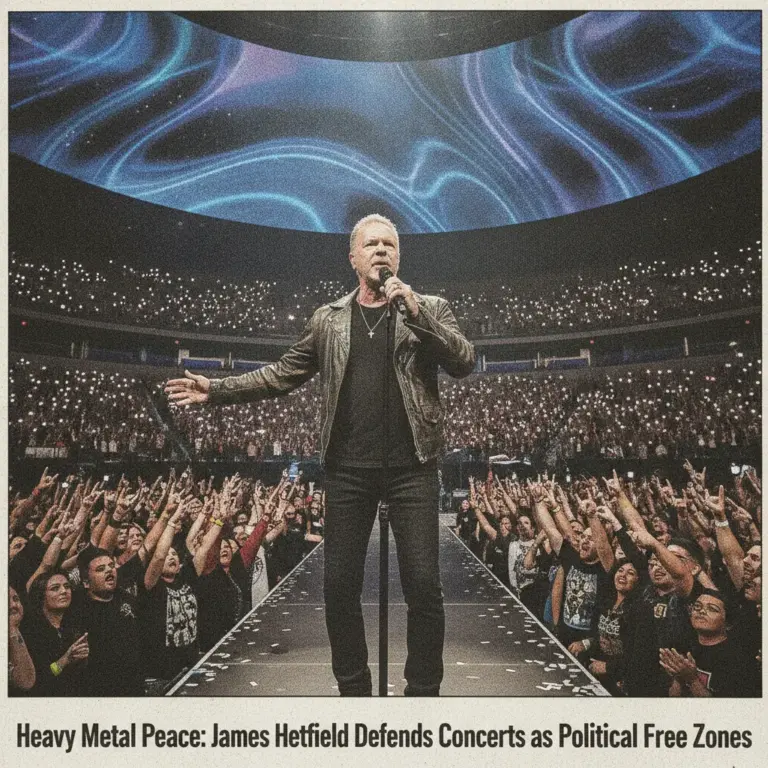
James Hetfield stepped center stage at the Las Vegas Sphere this past Saturday not just to deliver heavy metal hits, but to send a sharp message to the entertainment industry. During a heartfelt thank you to the fans who had traveled great distances and spent significant money to see Metallica, the 63 year old frontman drew a hard line in the sand regarding the role of politics in live performance. He explicitly stated that Metallica is not there to influence audiences with nonsense or lecture them, asserting instead that the band’s true agenda consists of love, energy, and loud music.

The outburst comes amid a growing wave of tension within the touring world where artists are increasingly using their microphones as soapboxes. Most notably, pop star Ed Sheeran recently faced significant turmoil after rapper Macklemore was removed from his tour lineup following controversial anti Israel remarks. That situation spiraled further when several other opening acts withdrew in solidarity with Macklemore, leaving Sheeran to navigate a diplomatic minefield while insisting that his concerts should remain inclusive spaces rather than political forums.

While Hetfield avoided naming specific peers during his set, his comments echo a philosophy he has championed for years. In previous interviews, he has spoken candidly about the deep polarization currently gripping society and argued that leaning into extremes only pushes people further apart. For Hetfield, music serves as the ultimate connective tissue capable of bridging gaps that political discourse often widens. By keeping faith and politics off the setlist, he believes the band creates a sanctuary where fans can simply escape the noise of the outside world.

This stance puts Metallica in company with other veteran performers who view their job as providers of escapism rather than activists. From Mick Jagger’s reluctance to lecture crowds to recent apologies from stars like Sheeran over venue conflicts, there is an ongoing debate about whether a ticket price entitles a fan to an evening free from partisan rhetoric. As social divisions deepen across the globe, Hetfield remains firm in his belief that being a singer and guitar player means knowing when to let the instruments do all the talking.

Elon Musk has cemented his position as the most influential financial force in American politics by pouring 366 million dollars into the current midterm election cycle. According to reports from the New York Times and Reuters, the Tesla and SpaceX chief has accelerated his spending at a historic pace, contributing over 276 million dollars since July alone. This aggressive financial strategy focuses heavily on securing Republican control of the US Senate, marking a significant escalation compared to his contributions during the previous presidential race.

The scale of this investment is distributed across several high profile political action committees, with a massive 158 million dollar injection into the Senate Leadership Fund serving as his largest single donation. Other substantial sums have flowed into his own America Pac and various leadership funds designed to bolster conservative candidates. From backing figures like Texas Republican Ken Paxton to funding governor associations, Musk is leveraging his fortune to reshape the legislative landscape through sheer financial volume.

This surge in activity marks a sharp pivot from earlier last year when Musk suggested he might retreat from large scale political giving following public blowback and friction within the Trump circle. Instead, he has doubled down on his alignment with far right movements, using both his wallet and his ownership of X to amplify anti immigrant rhetoric and attacks on transgender rights. By labeling Democratic opponents as radical socialists and promoting targeted ad campaigns, Musk is blending traditional campaign finance with digital warfare.

Despite these record breaking figures that could sway entire elections, the expenditure remains a negligible drop in the bucket for the world’s wealthiest man. The total sum spent on this cycle represents less than point zero four percent of Musk’s near trillion dollar net worth. As federal filings prepare to make these numbers official on Thursday, it becomes clear that for Musk, influencing the direction of the US government is an affordable venture regardless of its volatility.

James Hetfield made it clear during Metallica’s recent stop at the Las Vegas Sphere that the band has no interest in turning their massive production into a political soapbox. Speaking to the crowd on Saturday night during the Life Burns Faster residency, the frontman emphasized that the venue should serve as an escape from the noise of the outside world. After thanking fans for the time and money they spent to travel to Nevada, Hetfield told the cheering audience that unlike some other entertainers, Metallica isn’t there to influence them with nonsense.

According to Hetfield, the only real agenda for the legendary Bay Area band is love, energy and heavy music. While he didn’t call out any specific artists by name, his remarks come amid a broader cultural debate regarding whether musicians should use their platforms for activism. This stance is consistent with a philosophy Hetfield has championed for years; in past interviews, he has described politics as something that separates people, whereas music possesses the unique power to connect them regardless of their beliefs.

This approach doesn’t mean the band ignores global suffering entirely, but they prefer to handle their contributions quietly behind the scenes. Through their All Within My Hands foundation, Metallica supports everything from community colleges to hunger relief efforts via partners like World Central Kitchen and Feeding America. By directing ticket proceeds toward local food banks in every city they visit, the group manages to address systemic issues without demanding that their listeners adopt a specific partisan viewpoint.

Despite drumming up high energy with these declarations, drummer Lars Ulrich has noted in previous conversations that he and Hetfield rarely sit down specifically to align their political perspectives. For now, that lack of formal coordination seems to work perfectly within their business model of providing a sanctuary for metalheads. As their residency continues through March, fans can expect plenty of volume and spectacle at the Sphere, provided they leave their political grievances at the door.