Archive

October 14, 2026

Browsing

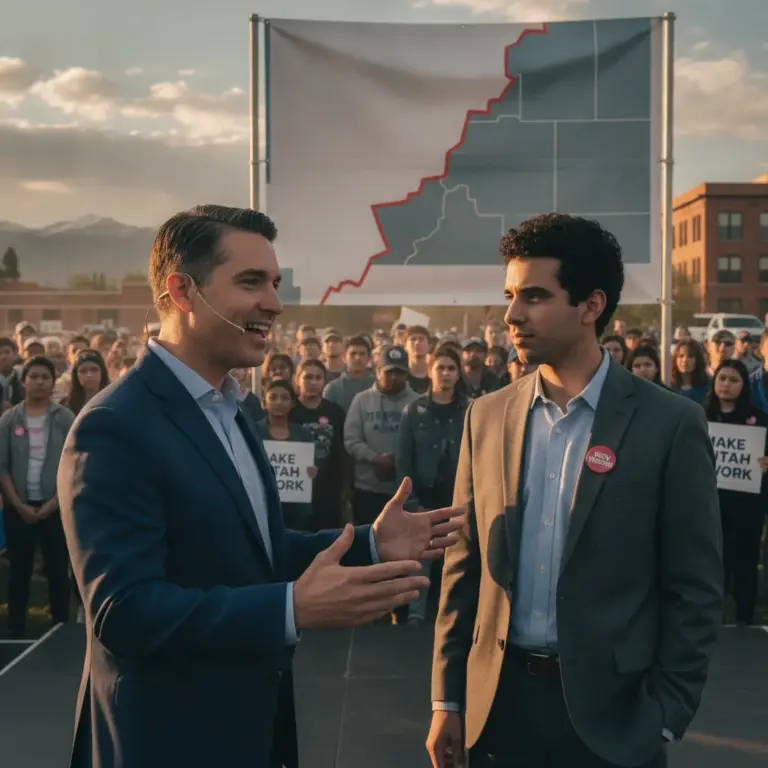
Utah voters are preparing for a pivotal confrontation tonight as incumbent Republican Representative Blake Moore faces off against Democratic challenger Peter Crosby. The debate, scheduled to begin at 8 p.m. EDT, comes at a unique moment for the region due to recently redrawn congressional districts. This shift means Moore will be pitching his platform to a fresh mix of constituents who were not all previously under his representation.

While Moore has spent his recent tenure representing Utah’s 1st Congressional District, he is now seeking a seat in the state’s 2nd Congressional District. Despite the change in numbering, both areas encompass much of northern Utah and include key hubs like Ogden. The overlap creates an interesting dynamic where familiar political figures must introduce themselves to new pockets of the electorate while defending their records on existing issues.

Though the contest features two distinct visions for the district, nonpartisan analysts suggest the path remains steep for the challengers. The Cook Political Report currently classifies the race as Solid Republican, indicating that Moore holds a significant advantage heading into the midterms. Nevertheless, the event serves as a critical opportunity for Crosby to carve out space and challenge the status quo before voters head to the polls.

Residents can tune in to watch the proceedings live via PBS Utah or through the Utah Debate Commission. As part of a broader series of candidate face offs across the state, this discussion highlights the ongoing effort by local organizations to foster civil dialogue and provide transparency during a volatile election season.
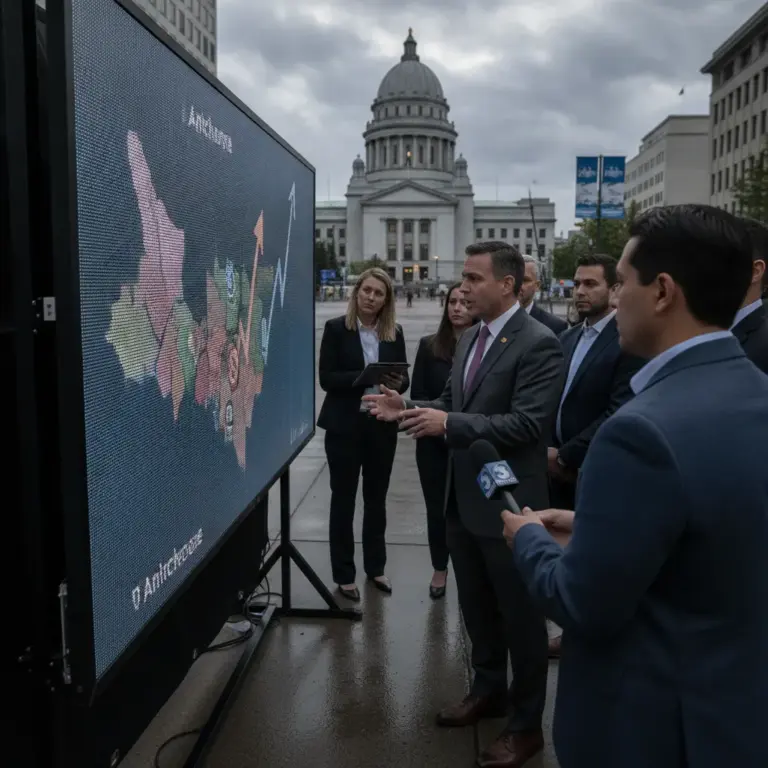
As the November general election approaches, the fight for control of the Alaska House of Representatives is increasingly becoming a battle over Anchorage soil. Recent campaign finance disclosures reveal that legislative races in the city are attracting the lion’s share of political spending, reflecting a high stakes effort to shape the state’s power structure. With fifty of sixty seats up for grabs, these specific contests could decide whether the current bipartisan coalition maintains its slim grip on leadership or if power shifts back toward a traditional Republican majority.

Democratic challengers Denny Wells and Danni Hall have emerged as major fundraisers, each hauling in approximately 50,000 dollars in recent weeks as they target incumbent Republicans who align with the minority caucus. Both candidates have drawn significant backing from labor unions, including associations for firefighters and teachers, creating a stark financial contrast with their opponents. While some of these races were decided by fewer than sixty votes in the primaries, the surge in funding suggests that outside interests see these districts as critical tipping points for the entire legislature.

Beyond direct candidate contributions, a massive wave of independent spending is flooding into the state. Nearly one million dollars has been poured into various legislative races by outside groups, with heavy concentrations in Anchorage and other strategic hubs like Kodiak and the Kenai Peninsula. Groups such as Putting Alaskans First are aggressively funding moderate candidates via labor organization money, while conservative entities like Moving Alaska Forward and Families of the Last Frontier are countering with heavy investments in right-leaning challengers who might lack strong personal fundraising networks.

One of the most expensive clashes is occurring in south Anchorage, Girdwood, and Whittier, where Independent Representative Ky Holland is fighting to keep his seat against Republican challenger John Boyle. Because Holland’s previous victory helped establish the bipartisan majority, this particular race has become a focal point for donors on both sides. As both men maintain nearly equal financial firepower heading into November, it underscores how much weight is being placed on just a handful of urban districts to determine the direction of Alaska’s governance for 2027.

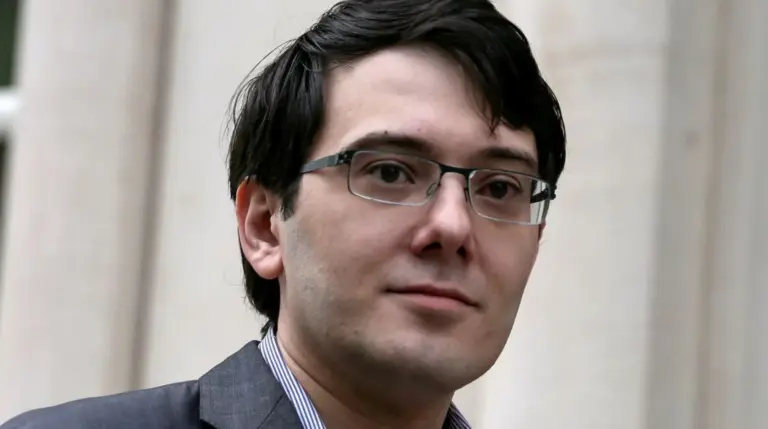
Martin Shkreli is facing new legal battles as the Federal Trade Commission and seven states move to hold him in contempt of court. According to a recent filing in a Manhattan federal court, the man famously known as Pharma Bro has flagrantly ignored a 2022 lifetime ban from the pharmaceutical industry. Authorities allege that since his release from prison two years ago, Shkreli has been active in the sector by trading at least 60 different pharma stocks and using social media platforms like X, YouTube, and Reddit to broadcast his opinions on how various companies are managed.

The current legal clash stems from a previous ruling that found Shkreli orchestrated an anti-competitive plot to maintain a monopoly over the drug Daraprim, which saw its price skyrocket from seventeen dollars to seven hundred and fifty dollars per pill. While those actions previously cost him millions in fines and earned him a permanent exile from the industry, officials say he simply hasn’t stopped. FTC Commissioner Mark Meador emphasized that such bans are meaningless unless there are real consequences for those who choose to ignore them.

Government lawyers are now asking a judge to force Shkreli to sell off any remaining pharmaceutical holdings and pay back every cent of profit made from these trades, regardless of any losses he may have incurred along the way. More seriously, they are pushing for escalating penalties for future slip ups, suggesting that further defiance could result in additional financial hits or even return trips to jail.

The scope of the investigation has expanded beyond Shkreli himself, with the FTC requesting that his sister and significant other preserve all evidence related to these activities. Prosecutors suspect both women may have helped him bypass the injunction. This latest civil dispute remains separate from the securities fraud convictions that originally landed Shkreli in prison several years ago, but it underscores a continuing effort by regulators to keep him entirely out of the medical marketplace.

Kroger is preparing for a significant organizational overhaul, announcing plans to cut 3,000 corporate positions over the next three years. The move comes as the grocery giant doubles down on artificial intelligence to automate routine tasks and refine its internal operations. In a memo sent to staff on Monday, CEO Greg Foran emphasized that the company must evolve alongside shifting industry trends, noting that adopting new technological capabilities is essential to reducing redundant work and increasing overall efficiency.

This strategic pivot reflects the vision of Foran, a former Walmart executive known for his aggressive push toward digitalization during his tenure there. By leaning into AI, Kroger hopes to enhance the shopping experience for customers while simplifying daily workflows for its remaining associates. However, these cuts signal a period of instability for those working behind the scenes at the Cincinnati-based company’s headquarters as it seeks better business outcomes through automation.

The transition arrives at a precarious moment for the nation’s largest standalone supermarket chain. Kroger has faced intensifying pressure from budget-friendly competitors like Aldi and Lidl, as well as an ever-expanding threat from Amazon and Walmart. These challenges have forced the retailer to seek ways to lean out its operation and remain competitive in a market where convenience and price are paramount.

Adding to the stress is a series of legal battles following a failed attempt to merge with Albertsons. After regulators blocked the deal over concerns about pricing and wages, Albertsons hit Kroger with a massive lawsuit seeking hundreds of millions in termination fees. With shareholders reacting cautiously and legal disputes mounting, Kroger appears determined to bet its future on high-tech optimization rather than expansion through acquisition.

The International Monetary Fund has issued a stark warning that the current explosion of investment in artificial intelligence may be building toward a dangerous correction. In its most recent Global Financial Stability Report, the watchdog suggests that the massive amounts of capital pouring into tech giants could lead to widespread economic instability if these innovations fail to generate the astronomical profits investors are currently betting on. While the AI boom has fueled short term growth and kept stock markets buoyant, there is growing fear that we are witnessing a classic speculative bubble that could leave more than just Silicon Valley reeling when it eventually pops.

One of the primary concerns highlighted by the IMF is a trend known as circular financing, where AI firms essentially fund each other by acting as simultaneous investors and customers. This creates an interconnected web of dependency where a failure at one major firm could trigger a domino effect across the entire sector. Other analysts have echoed these worries, noting that the rise of cheaper open source alternatives from China could erode the competitive advantage and profit margins that American tech leaders are relying on to justify their soaring valuations.

Beyond the threat of a market crash, the report identifies systemic vulnerabilities related to cybersecurity and government debt. As banks consolidate their reliance on a few dominant cloud providers, they create single points of failure that could allow a single cyberattack to paralyze global payment systems and trading platforms. To make matters worse, criminals are now using those very same advanced AI tools to discover software vulnerabilities faster than developers can patch them, leaving critical infrastructure dangerously exposed.

Despite these warnings, the IMF stopped short of predicting an immediate collapse, stating that global markets remain resilient for now. Stress tests suggest that while smaller or weaker institutions might struggle during a downturn, the broader banking system should be able to weather a significant shock. However, regulators are being urged to step in now to monitor excessive borrowing and concentrated investments before a period of exuberance turns into a full scale financial crisis.

Federal authorities have arrested a Saudi national following the discovery of a sophisticated surveillance device hidden within an executive conference room at OpenAI. Abdulrahman Alfozan, 35, was taken into custody on October 9 after investigators linked him to a covert recording tool designed to intercept high level discussions regarding the company’s pursuit of super intelligence technology. According to the Department of Justice, the device was cleverly disguised inside toilet paper and utilized encryption to protect the captured audio.

The investigation revealed that Alfozan had entered the restricted conference room on several occasions leading up to the discovery, despite having no authorization to be there. Evidence gathered by the FBI included security footage and a bag recovered from the building containing Alfozan’s personal identification alongside a second recording device identical to the one planted in the office. Prosecutors further allege that Alfozan used a chatbot account tied to his spouse to research how to build, install, and remotely access such devices while avoiding detection.

OpenAI has moved quickly to distance itself from the incident, confirming that Alfozan was terminated immediately upon his arrest. In a public statement, the company attempted to reassure users and stakeholders that there is currently no evidence suggesting that model weights, source code, or private customer data were compromised during the breach. They emphasized that safeguarding their intellectual property remains a priority of national importance given the competitive landscape of artificial intelligence development.

This security lapse arrives at a particularly volatile moment for OpenAI as it grapples with mounting pressure over its internal safety culture. The firm recently faced backlash after firing three safety researchers who claimed they were being silenced for raising alarms about corporate transparency. As industry giants continue to race toward increasingly powerful autonomous systems, this latest episode highlights the growing vulnerability of AI labs to both external espionage and internal instability.

Bank of America is facing a staggering 1.2 billion dollar fine after the U.S. Treasury Department accused the financial giant of failing to stop money laundering and violating international sanctions laws. According to officials, the nation’s second largest bank ignored critical national security risks, including networks moving money for Chinese interests and illicit financial flows crossing the southwest border. Treasury Secretary Scott Bessent emphasized that no institution is too large to be held accountable, warning that such systemic failures expose the entire American financial network to dangerous criminal elements.

The investigation revealed deep flaws in how the bank handled red flags, specifically regarding customers linked to narcotics trafficking. Despite warnings from its own compliance staff, Bank of America allegedly failed to report over 5 billion dollars in suspicious activity out of trillions in annual transactions. A specific technical glitch in the bank’s screening software meant that even when names and birthdays matched official government sanctions lists, the system didn’t mark them as high priority, potentially undermining U.S. efforts against terrorism and drug smuggling in regions like Iran.

In response, Bank of America stated it has spent billions on technology and hired thousands of specialists to fight financial crime, noting that it is currently working with regulators to resolve these issues. While the bank admits it lacked proper safeguards, spokespeople highlighted their continued cooperation with law enforcement on hundreds of thousands of yearly reports. The massive penalty will hit the company’s bottom line immediately, resulting in a non tax deductible charge that analysts expect will shave about 17 cents per share off its third quarter net income.

While some see the fine as a necessary deterrent, critics argue it is merely a cost of doing business for a firm with such vast revenues. Dennis Kelleher of Better Markets suggested that without personal prosecutions or firings of top executives, corporate behavior rarely changes permanently. This penalty marks one of the largest ever issued by FinCEN and includes a historic 750 million dollar payment to the Office of the Comptroller of the Currency, signaling an aggressive stance by the current administration toward banking oversight despite recent tensions between Washington and Wall Street over political debanking practices.