Archive

October 17, 2026

Browsing

Strategy (formerly known as MicroStrategy) stock (MSTR) fell on Friday as investors assessed the potential removal of the Bitcoin treasury company from MSCI’s global equity indexes, despite a rise in Bitcoin prices.

The company also announced plans to maintain a 12% annualised dividend rate on its STRC preferred stock for November, subject to shareholder approval and related amendments taking effect.

Strategy shares declined 6% on Friday, while Bitcoin traded around $82,290, having gained more than 1.3% over the previous 24 hours.

Strategy, led by Michael Saylor, is the world’s largest corporate Bitcoin holder, with 848,250 BTC.

The stock’s decline highlights how factors beyond cryptocurrency prices, including index inclusion and financing costs, can influence investor sentiment towards the company.

MSCI rules put Strategy’s index inclusion at risk

MSCI said on Thursday that non-operating companies would be ineligible for its Global Investable Market Indexes from the close of November 30.

The index provider plans to publish the final list of affected companies on November 11.

Strategy and Japan’s Metaplanet are among the companies potentially facing removal.

SharpLink and several other cryptocurrency treasury companies are on a watchlist for possible exclusion.

The policy follows a review that MSCI began last year into whether digital asset treasury companies resemble investment funds, which are already excluded from its indexes.

MSCI deferred its original proposal in January before broadening the review to cover non-operating companies more generally.

The potential exclusion matters because passive funds tracking MSCI benchmarks are required to hold constituent stocks.

Strategy previously warned that removal could lead to $2.8 billion worth of its shares being liquidated.

Strategy has disputed MSCI’s proposed classification. In a statement on Friday, the company said, “We believe the proposal is misguided.”

Strategy also argued that MSCI’s distinction between operating and non-operating companies was undefined and lacked a basis in US GAAP, IFRS or recognised legal frameworks.

The company said funds tracking MSCI’s Global Investable Market Indexes held just 3.1% of its outstanding shares, potentially limiting the direct impact of an exclusion.

Strategy maintains 12% STRC dividend rate

Separately, Strategy’s board declared daily cash dividends on its STRC preferred stock for each calendar day in November, subject to shareholder approval and the effectiveness of related amendments.

The annualised dividend rate will remain at 12%.

Strategy said management would continue recommending that rate until STRC demonstrates “sustained, healthy trading near $100 per share.”

Payments are scheduled to begin on November 2, with each dividend payable on the business day following its record date, according to a regulatory filing.

STRC is one of Strategy’s key fundraising instruments for Bitcoin purchases.

Daily dividend payments could help make the preferred stock more attractive to investors and support trading around its $100 par value.

STRC was down 0.2% at $99.33.

Bitcoin purchases and financing strategy in focus

Strategy added 250 Bitcoin for $21.5 million last week, bringing its total holdings to 848,250 BTC.

During the week ending October 4, the company repurchased $176 million worth of STRC, spending more than six times as much on the buybacks as on its $28 million in Bitcoin purchases.

The company introduced a capital framework on June 29 that allows it to sell Bitcoin to fund dividend payments.

It also raised STRC’s annual dividend rate to 12% at the time.

Strategy’s business model relies on raising capital through stock and debt sales to acquire Bitcoin.

While that approach has made the company a major proxy for cryptocurrency exposure in equity markets, its shares remain sensitive to financing conditions and index-related developments.

Index-related risks like MSCI’s proposed exclusion are closely watched by traders who follow stock reactions through top online trading platforms.

The post Strategy stock (MSTR) falls as MSCI index exclusion threatens passive investments appeared first on Invezz


Moderna MRNA shares suffered a sharp reversal on Friday, falling close to 10% after a strong October rally had pushed the biotechnology to its 52-week high.

The shares, which reached $242.29 during their recent advance, were trading near $213 at the time of writing. The decline erased a significant portion of this month’s gains, which had exceeded 25% before Friday’s session.

Despite the latest retreat, Moderna has been one of the market’s strongest performers over the past 12 months, with its stock rising close to 700%. Progress in the company’s cancer treatment research has helped fuel investor enthusiasm, but the rapid appreciation has also put its valuation under greater scrutiny.

Analyst targets lag behind the share price

The sell-off mimicked a negative trading day for the broader market. Moderna’s peers recorded more modest moves, with Pfizer gaining 0.42% while BioNTech fell around 2.5%.

The sharp difference in performance suggests that Moderna faced company-specific selling pressure rather than simply following the wider biotechnology sector lower. Profit booking can be explained as one of the reasons but there were other catalysts as well.

One factor drawing attention was Goldman Sachs’ latest assessment of the stock. The investment bank increased its price target to $137 from $120 but kept its Neutral rating unchanged.

With Moderna trading around $212, Goldman’s revised valuation remains considerably below the prevailing share price. The change therefore offered limited support for investors looking for further confirmation that the recent rally could continue.

The cautious stance follows Citigroup’s decision to downgrade Moderna to Sell recently. Together, the analyst views highlight a growing divide between the market’s enthusiasm for the company’s progress and the valuations.

Cancer treatment remains central to the investment story

Much of the interest in Moderna has centred on its efforts to expand beyond vaccines into cancer treatment. The stock had dipped sharply post COVID-19 but has witnessed a dramatic turnaround since last year.

In August, the company reported positive Phase 3 results for its personalized cancer vaccine, strengthening expectations that the treatment could become an important part of its future business.

The therapy, intismeran autogene, is being developed in partnership with Merck. Investors are now awaiting more detailed findings from the late-stage trial to assess the treatment’s potential more closely.

The upcoming data could help clarify whether the clinical progress that has helped drive Moderna’s stock higher can translate into a commercially significant treatment.

For investors, however, the timing creates a difficult balance. Expectations surrounding the cancer vaccine have contributed to the stock’s substantial gains, leaving the market to judge how much potential success is already reflected in the share price.

Can the rally regain momentum?

Friday’s decline illustrates the pressure that can emerge when a stock advances rapidly ahead of further evidence to support its valuation.

Moderna’s progress in cancer treatment has reshaped investor expectations, but analysts’ price targets suggest that confidence in the science does not necessarily translate into agreement about the stock’s current worth.

The next detailed results for intismeran autogene will be an important point of focus as investors evaluate the treatment’s prospects and Moderna’s longer-term growth potential.

The post Why is Moderna down 10% on Friday? appeared first on Invezz

Micron Technology shares MU fell about 4% on Friday, taking the weekly decline to 10% as investors assessed the potential threat from China’s memory-chip industry and concerns about the sustainability of the artificial intelligence boom.

The stock has retreated from its summer peak of more than $1,200, despite having more than tripled this year.

The recent sell-off followed progress reported by Chinese memory maker ChangXin Memory Technologies (CXMT) on a denser dynamic random access memory (DRAM) architecture known as 4F-squared.

The design could allow manufacturers to fit more memory cells into a smaller area, potentially improving production economics.

CXMT has also indicated plans to introduce server-memory products using the technology by the end of 2026, prompting concerns that Chinese suppliers could eventually expand their presence in the market.

However, analysts argue that the development does not necessarily threaten Micron’s position in high-bandwidth memory (HBM), a specialised technology used in AI servers.

CXMT’s breakthrough raises concerns about competition

Micron and South Korea’s SK Hynix both fell sharply after CXMT’s announcement.

By Friday, October 16, Micron had lost around 10% for the week, while SK Hynix was down nearly 15%.

The market reaction reflects concerns that advances in Chinese memory manufacturing could increase supply and put pressure on prices.

However, progress in chip design does not automatically translate into competitive mass production.

Citi analysts said CXMT’s manufacturing process remained several generations behind industry leaders.

They estimated that mass production using the new architecture was unlikely before 2028, potentially giving Micron and SK Hynix time to advance their own technologies.

The possibility of additional supply remains a concern, particularly if Chinese manufacturers eventually expand production enough to affect industry pricing.

Analysts see limited immediate threat to AI memory demand

Fundstrat vice president for market intelligence Kent Fung said CXMT’s new architecture could challenge conventional server DRAM but did not directly compete with the HBM products required for AI servers.

“Investors should consider the possibility that the knee-jerk response to CXMT’s announcement has been a bit of an overreaction,” Fung wrote in a research note on Thursday.

He added that CXMT’s breakthrough had a weaker connection to AI and therefore potentially weaker implications for memory and storage stocks’ growth prospects.

The distinction matters because conventional DRAM serves computers and servers more broadly, while HBM is designed to move data rapidly to AI processors.

CXMT’s progress in conventional memory does not establish that it can immediately challenge the advanced HBM products supplied by Micron and SK Hynix.

Micron’s fiscal 2026 annual report also said AI-driven memory demand was outpacing industry supply, supporting stronger pricing and margins.

Rising memory prices support Micron’s investment case

KeyBanc analyst John Vinh reiterated a $1,750 price target on Micron and described it as one of his favourite investment ideas following a trip to assess Asian supply chains.

Vinh said DRAM prices in the fourth quarter were expected to rise by 15% to 20% from the previous quarter. He also noted that Google was considering extending long-term memory-supply agreements through 2035.

While Vinh said he did not expect the current memory upcycle to last until 2031 or 2035, he argued that the potential agreements suggested customers were concerned about shortages persisting beyond 2028.

These expectations offer support for Micron’s outlook, although the potential for increased competition remains a risk.

If Chinese suppliers add meaningful capacity, additional supply could weaken memory prices and reduce the returns earned on new factories.

Even without an immediate loss of AI customers, investors could become less willing to pay premium valuations for earnings that may be unusually strong near the peak of a memory-chip cycle.

The outlook therefore depends not only on AI demand but also on how quickly supply expands and how that affects pricing.

The post Micron stock continues slump, analysts are saying it’s a buying opportunity appeared first on Invezz

Oil prices climbed above $110 a barrel as escalating geopolitical tensions raised concerns about global supply, while gold headed for a weekly loss amid expectations of further Federal Reserve rate hikes.

Tesla shares fell after the company unveiled its redesigned Roadster, while Apple stock edged higher following strong initial demand for its first foldable iPhone.

Oil prices hit $110 as supply concerns intensify

Brent crude rose 3.7% to $110 a barrel, its highest level since May, as traders grew concerned about the prospect of prolonged supply disruptions and diminishing chances of near-term relief.

WTI crude rose 3.24% to above $101.

Iran-backed Houthi rebels continued missile and drone attacks on Saudi Arabia, while Russia and Ukraine exchanged attacks on energy infrastructure.

Reports of a warning over potential danger in Saudi Arabia’s Khamis Mushait added to concerns surrounding major energy export centres.

Uncertainty also surrounded a proposed Russian diesel release.

US lawmakers introduced a bipartisan bill to block President Donald Trump’s deal with Moscow, which would allow Russia to release several hundred million barrels of diesel.

However, continued exclusion of Russian diesel from global markets could force refineries elsewhere to increase processing to meet demand.

A recent attack on Russia’s Ryazan refinery, which reportedly halted a primary processing unit, further complicated the outlook.

Crude prices have risen more than 70% this year amid disruptions linked to the Middle East and Russia-Ukraine conflicts.

European diesel futures have more than doubled, reflecting tightness in refined-product markets.

Gold heads for weekly loss as rate-hike bets rise

Gold prices were largely steady on Friday but remained on track for a weekly decline as stronger-than-expected US inflation data increased expectations of further monetary tightening.

Spot gold fell 0.04% to $4,168.73 an ounce, leaving it down 0.59% for the week. US gold futures for December delivery settled 0.51% higher at $4,191.10 an ounce, which is at 0.59% weekly decline.

US producer prices recorded their largest increase in four and a half years in September, following data showing consumer prices accelerated during the month.

Federal Reserve officials offered mixed signals on the outlook.

Chair Kevin Warsh expressed optimism about the US economy but did not indicate the likely direction of interest rates.

Chicago Fed President Austan Goolsbee described the inflation data as discouraging, while Cleveland Fed President Beth Hammack warned that worsening inflation expectations could require more aggressive rate increases.

Traders largely expect the Fed to hold rates this month but are pricing in a 90% probability of a December hike, according to CME’s FedWatch Tool.

Higher interest rates tend to weigh on gold because the metal does not pay interest.

Tesla stock falls after Roadster unveiling

Tesla shares fell nearly 3% on Friday after the company showcased a redesigned Roadster featuring thrusters developed in collaboration with SpaceX.

The demonstration included the vehicle performing aerial manoeuvres, jumping over obstacles and accelerating from zero to 60 miles per hour in less than a second, according to Tesla’s presentation.

However, production is now targeted for 2028, compared with the original 2020 delivery goal announced in 2017.

Tesla has not disclosed pricing or specifications for other performance variants.

Analysts questioned the car’s potential financial contribution given its expected low production volumes.

Gary Black of The Future Fund estimated that 3,000 annual deliveries and a $100,000 profit per vehicle could add approximately $0.06 per share to Tesla’s 2029 adjusted earnings.

The Roadster could nevertheless strengthen Tesla’s technology-focused brand as the company prioritises autonomous driving and robotics.

Apple shares rise after foldable iPhone sells out

Apple shares edged up on Friday after its first foldable smartphone, the iPhone Duo, reportedly sold out shortly after preorders opened.

Social media users reported that estimated delivery dates had shifted from October 23 to late January, suggesting initial demand was exceeding available supply.

The device features a 5.4-inch external display and a 7.6-inch foldable internal screen.

Apple expects foldable smartphones to account for roughly 10% of the market by 2029.

Separately, Apple Chairman Tim Cook said Apple Intelligence had received regulatory clearance in China, with a test rollout expected later in October.

The company has partnered with Alibaba to use its Qwen AI models in mainland China.

Apple is also working with Meta to optimise its Muse Spark open-weight AI model for high-end Mac computers.

Despite the developments, some analysts remain cautious about iPhone demand, with UBS maintaining a Neutral rating and KeyBanc retaining an Underweight rating.

The post Evening digest: oil hits $110, Tesla unveils Roadster appeared first on Invezz

Wall Street ended sharply lower on Friday as renewed selling in artificial intelligence-related stocks and rising oil prices weighed on investor sentiment.

The Nasdaq Composite fell more than 2%, while the S&P 500 lost 1.1% as concerns over AI infrastructure debt, persistent inflation and the Federal Reserve’s interest rate outlook prompted investors to reduce risk ahead of the weekend.

The Dow Jones Industrial Average outperformed the broader market but still closed lower, losing 189 points.

Meanwhile, the Cboe Volatility Index (VIX) rose above 22 for the first time in four months, signalling increased market uncertainty.

US stocks fall as AI-related shares extend losses

The Dow fell 189.01 points, or 0.36%, to close at 51,990.05. The S&P 500 declined 85.44 points, or 1.10%, to 7,658.62, while the Nasdaq Composite dropped 572.99 points, or 2.15%, to 26,137.85, according to preliminary data.

Technology stocks remained under pressure as investors reassessed the outlook for companies investing heavily in AI infrastructure.

Nvidia-backed data centre operator CoreWeave fell 13% on Friday, extending its weekly losses to more than 26%.

Its debt has climbed above $51 billion, while yields on its bonds rose above 15% during the week.

Broadcom also declined, while the Philadelphia Semiconductor Index recorded its eighth consecutive daily loss.

The VanEck Semiconductor ETF fell 3% on Friday and was down around 10% for the week, its steepest weekly decline since July.

Micron Technology, Advanced Micro Devices and SanDisk were among the chipmakers weighing on the sector amid concerns about competition from Chinese memory manufacturers.

Investors are also questioning whether AI infrastructure companies can generate sufficient profits to service their growing debt burdens, particularly if borrowing costs rise further.

Oil prices jump as geopolitical tensions fuel inflation concerns

Energy prices added to the pressure on equities as escalating tensions in the Middle East and continued attacks on energy infrastructure involving Russia and Ukraine raised concerns about supply disruptions.

West Texas Intermediate crude futures rose 3.51% to settle at $101.41 a barrel, while Brent crude futures gained 3.72% to $109.86.

Higher oil prices have added to concerns about inflation, following hotter-than-expected US consumer and producer price reports released during the week.

Producer prices recorded their largest increase since 2022, while consumer inflation remained above the Federal Reserve’s 2% target.

Rising energy costs could further complicate the central bank’s efforts to bring inflation under control. Energy stocks, including Chevron, gained as crude prices climbed, helping limit the Dow’s losses.

Fed outlook and earnings season remain in focus

Investors continued to assess the Federal Reserve’s next policy move after Chair Kevin Warsh expressed optimism about the strength of the US economy but offered no clear indication of the interest rate path.

Markets increasingly expect the Fed to leave rates unchanged at its October 27–28 meeting.

The CME FedWatch tool indicated an 82% probability of a hold. However, Barclays now expects the central bank to deliver quarter-point rate hikes in December and January.

The uncertainty comes as investors prepare for a busy week of corporate earnings, with Tesla, Meta Platforms and Procter & Gamble scheduled to report third-quarter results.

Analysts expect quarterly earnings to rise more than 30%, driven largely by major AI-related technology companies.

However, the recent sell-off highlights the market’s reliance on a relatively narrow group of technology stocks.

Although the S&P 500 remains higher for the year, most of its gains have come from AI-related companies, while the median index constituent has advanced by considerably less.

Further pressure on technology shares could therefore weigh on broader market performance if investor concerns over valuations, financing costs, and inflation persist.

The post Dow falls 189 points as AI stocks slide and oil prices surge appeared first on Invezz

Global oil markets are reeling after a series of violent escalations in the Middle East pushed Brent crude prices beyond the 104 dollar mark. Tensions spiked on Tuesday night when Houthi militias, aligned with Iran, launched a ballistic missile strike targeting the administrative headquarters of Saudi Aramco in Dhahran. While the Saudi Energy Ministry reported that the resulting fire was limited and no deaths occurred at the facility, the psychological impact on traders was immediate, sending prices leaping toward 107 dollars per barrel shortly after the blast.

The instability extended beyond land targets as maritime security in one of the world’s most vital chokepoints collapsed. A Singapore flagged container ship known as the GFS Pride was sunk in the Strait of Hormuz after being hit by an unidentified projectile. Although all twenty one crew members were rescued, a second vessel, the GFS Giselle, suffered hull damage in a separate attack the following day. The Maritime and Port Authority of Singapore has since condemned these actions as unprovoked breaches of international law, adding further volatility to an already fragile shipping environment.

These events come at a time when Saudi leadership had been attempting to project strength and stability. Just hours before the Aramco strike, Energy Minister Prince Abdulaziz bin Salman spoke at the WPC Energy Congress, describing Riyadh as the capital of energy security and urging a focus on resilience under pressure. However, those words did little to calm investors as Saudi forces responded with their own retaliatory strikes against Houthi controlled energy sites and ports in Yemen.

Industry experts now fear these disruptions could have long term consequences for global supply chains. The International Energy Agency has cautioned that continued attacks on Saudi infrastructure might derail current supply recoveries and lead to prolonged shortages in diesel markets through next year. In an effort to stave off more dramatic price hikes, reports suggest the Trump administration may look into easing sanctions on shadow fleet vessels carrying Russian oil to keep global volumes steady.

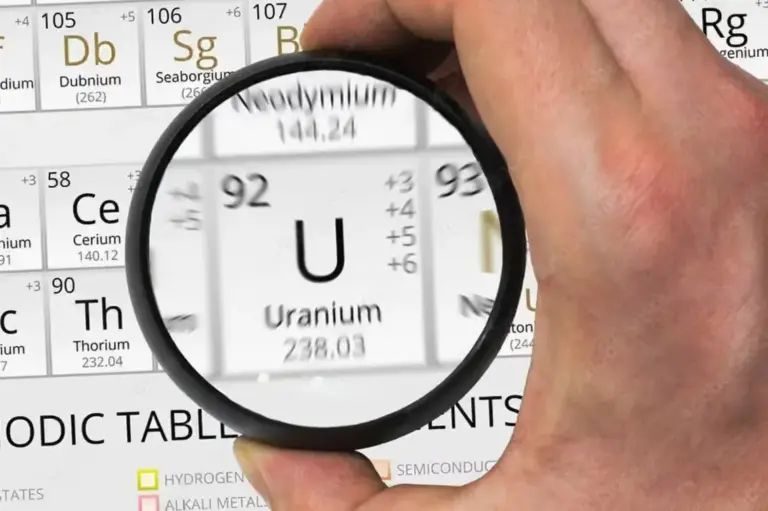
Uranium American Resources is teaming up with Wyoming based DISA Uranium to tackle a lingering environmental headache while boosting domestic mineral supplies. The two companies have entered into an agreement to treat abandoned mine waste at the Stateline Project, a collection of historic high grade mines spanning Montrose County in Colorado and San Juan County in Utah. By utilizing specialized remediation techniques, DISA will clean up surface materials left behind from previous mining operations and extract valuable uranium and other minerals in the process.

The partnership relies on DISAs unique position as the only firm holding a U.S. Nuclear Regulatory Commission license specifically for treating abandoned uranium waste across various locations. Using a patented high pressure slurry ablation technology, DISA will separate fine particle concentrates from the legacy debris. While DISA takes ownership of these concentrates, Uranium American Resources will receive a share of the resulting revenue. According to CEO William Hunter, this arrangement allows the company to turn old waste into something productive without distracting from their primary goal of returning the Stateline project to full production.

This initiative arrives at a critical time for U.S. energy independence, as the country continues to rely heavily on foreign imports for nuclear fuel. Recent data indicates that roughly ninety three percent of the uranium purchased by civilian reactor operators comes from outside the United States. Although domestic production is beginning to climb from historically low levels, there remains a massive gap between what American mines produce and what national reactors require to stay powered.

Beyond the financial incentives, the deal addresses a widespread ecological crisis involving thousands of undocumented abandoned mine sites across fourteen states. In regions like the Navajo Nation, where hundreds of old mines remain an EPA concern, the ability to safely recover minerals from tailings offers a potential path toward both land reclamation and resource security. As Uranium American continues to advance its other interests at Sky and Marysvale, this collaboration serves as a blueprint for cleaning up industrial legacies through modern innovation.

Political historians often point to the 1960 election as the moment aesthetics began to outweigh arguments. While radio listeners believed Richard Nixon had won the first televised debate, TV viewers were captivated by John F. Kennedy’s tanned, rested composure compared to Nixon’s pale and clammy demeanor. Decades later, that superficial edge has evolved into a full scale cultural shift. We have entered an era defined by a new generation of visually striking politicians, ranging from the polished look of Senator Jon Ossoff and Pete Buttigieg to the rugged masculinity of Abdul El Sayed and Chi Osse.

This trend signals more than just a preference for symmetry; it reflects a broader generational handover from aging Boomers to energetic Millennials. According to political strategist Steve Grand, voters aren’t necessarily seeking classical beauty but rather the vitality that youth and fitness communicate. A sharp appearance suggests competence and vigor, offering a stark contrast to leaders who appear frail or disconnected. However, experts like digital strategist Lauren Kapp argue that while looks provide a helpful boost, they cannot replace substantive policy discussions in an electorate focused on core issues.

The rise of social media has accelerated this visual competition, turning every public appearance into a potential viral moment. From candidates leveraging their modeling backgrounds to stylists ensuring garments dont distract from the message, there is a calculated science behind these images. Stylist Bailey Moon emphasizes that modern grooming must support the candidate without creating accidental scandals like Barack Obamas infamous tan suit incident. Yet this gaze remains unevenly distributed, as female politicians continue to face far harsher scrutiny regarding their wardrobes and aging processes than their male colleagues.

There is a tipping point where polish becomes a liability, however. Too much sheen can make a politician seem slick or untrustworthy, a trap Governor Gavin Newsom sometimes flirts with when his presentation feels overly manicured. Ultimately, while being camera ready is essential for surviving in a landscape dominated by ten second clips and algorithmic feeds, looks remain secondary to strategy. Being handsome might be a welcome bonus that opens doors, but winning an election still requires flooding the zone with ideas that resonate beyond the surface level.

Senate races in Alaska and Maine descended into raw, emotional confrontations Thursday night as candidates abandoned traditional policy discourse for sharp personal jabs. These contests, separated by thousands of miles but equally vital to the fight for Senate control, highlighted a growing bitterness in an election cycle defined by deep polarization. From accusations of elitism to questions regarding moral character, the debates shifted from governing philosophies to direct assaults on the opponents’ personalities.

In Maine, the tension peaked during a confrontation between Republican Senator Susan Collins and Democrat Troy Jackson. After a protester interrupted the event to shout about the environmental damage caused by AI data centers, Collins suggested the individual was likely one of Jackson’s supporters. This prompted an immediate and blunt response from Jackson, who told the senator to shut up. The friction continued as Jackson challenged Collins on whether she looked down upon working class citizens, while Collins pressed him over delays in filing financial reports and his ties to billionaire donors.

Meanwhile, in Alaska, Senator Dan Sullivan and challenger Mary Peltola engaged in a similarly caustic exchange that focused heavily on trust and integrity. Sullivan attacked Peltola’s character by bringing up allegations of staff mistreatment reported in the press, leading Peltola to accuse the senator of lying and dishonesty. At one point, she told Sullivan directly that he should be ashamed of himself. Despite their clashes over personality, both candidates attempted to navigate the political minefield created by President Trump’s military actions in Iran, which have driven up local fuel costs.

While the rhetoric turned personal, foreign policy remained a persistent thorn for the Republican incumbents. In Maine, Senator Collins maintained her distance from the White House by insisting that Congress should have been consulted before the escalation in Iran began. Similarly, Senator Sullivan admitted that the current conflict needs to end soon due to its economic toll on Alaskans, though he defended certain strategic goals against nuclear proliferation. As these races head toward decision day, it is clear that policy disagreements have evolved into deeply personal vendettas.

The tension was palpable during the recent Senate debate in Alaska, where incumbent Republican Senator Dan Sullivan and Democratic challenger Mary Peltola went head to head. With the national balance of power in the Senate potentially hanging in the balance, the encounter quickly shifted from policy discussions to deeply personal territory.

Senator Sullivan took an aggressive stance throughout the evening, focusing heavily on what he described as issues regarding Peltola’s character. He specifically brought up allegations concerning her past treatment of staff members, attempting to paint a picture of leadership instability. This approach signaled a strategy centered more on personality and temperament than traditional legislative platforms.

As one of the most competitive races across the United States, this confrontation highlights just how critical the Alaskan seat has become for both parties. Observers noted that the heat of the exchange reflects a broader trend in current political campaigns where personal credibility becomes a primary battleground for voters.