Archive

October 24, 2026

Browsing

American Express (AXP) posted a mixed Q3 and raised its annual profit guidance on Friday morning, but investors aren’t celebrating.

AXP shares came under pressure as the payments giant announced plans of eliminating about 5% of its global workforce.

The restructuring, intended partly to prepare the company for greater use of artificial intelligence, comes despite resilient spending among affluent customers.

For shareholders, the tension is clear: AMEX’s premium business keeps growing, but turning that growth into stronger profitability remains an expensive undertaking.

A key accounting distinction in AMEX’s Q3 earnings

American Express reported a 9% year-over-year increase in revenue to $20.06 billion on $4.68 per share of earnings.

Analysts had called for a lower $4.48 per share of earnings (EPS) but a higher $20.12 billion in revenue.

Investors should distinguish that performance from reported EPS of about $5.42 – which came in up 31% versus the third quarter of last year.

The adjusted figure removes the Global Business Travel Group stake-sale gain and associated restructuring charges, making it a more useful starting point for assessing continuing earnings power.

That said, the underlying demand picture remains rather encouraging. Card spending increased 8% to a whopping $454 billion, suggesting customers are still using their accounts actively.

Still, the revenue shortfall shows why healthy spending alone may struggle to lift AXP stock when expectations already assume considerable resilience.

AI-linked job cuts put premium-service model to test

American Express’ layoffs are part of an effort to simplify management, positioning the company for greater automation.

According to CFO Christophe Le Caillec, the goal includes becoming “leaner, more agile, and also to prepare for AI.” Amex recorded a $336 million restructuring charge in the quarter.

For investors, the potential benefit extends well beyond lower payroll costs – faster decisions and automated routine work could help the company expand without adding staff at the same pace.

But that opportunity carries an “execution risk.” Premium cardholders pay for dependable service, making customer experience a crucial constraint on cost cutting.

The investment case therefore depends on productivity improvements that preserve retention and service quality. A smaller workforce, by itself, does not establish that AI has delivered sustainable savings.

What’s the next catalyst for American Express?

AMEX now expects full-year adjusted EPS of at least $17.60 – and the financial services company remains on track for about 10% revenue growth.

Its credit metrics also offer reassurance: quarterly net write-off rate improved to 1.8% from 1.9% a year earlier.

However, lower credit-loss provisions partly reflected a reserve release, a benefit investors should avoid automatically projecting into future quarters.

That makes the next few quarters particularly revealing.

Investors should watch whether recurring earnings increasingly reflect business expansion and productivity, alongside continued discipline in lending.

Friday’s announcement offers a credible route to better profitability, but the valuation argument needs evidence that those benefits endure.

For prospective buyers, the most persuasive catalyst would be improving earnings quality while Amex protects the customer relationships that support its premium franchise.

The post American Express beats earnings, cuts jobs – still fails to win over Wall Street appeared first on Invezz
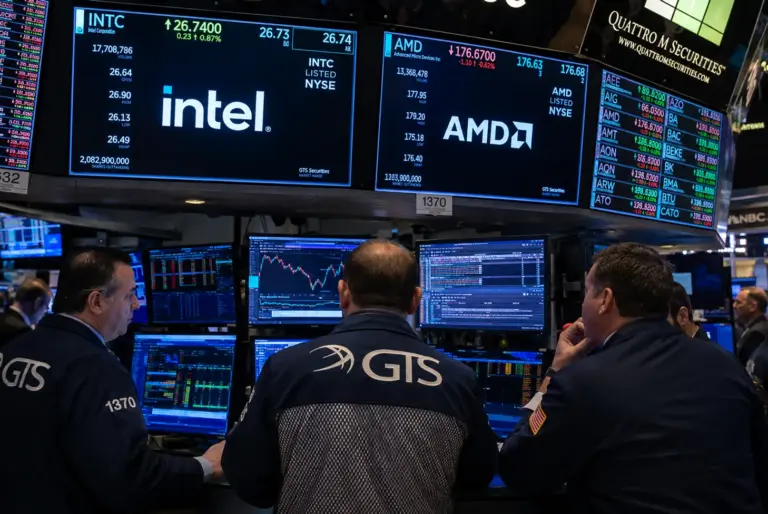
AMD and Intel stocks rose on Friday, rebounding after a sector-wide sell-off a day earlier as investors returned to select technology shares despite weakness across the broader market.

Advanced Micro Devices (AMD) gained 2%, while Intel was up 1.76%. Technology stocks advanced as investors assessed the outlook for artificial intelligence spending and semiconductor demand ahead of the upcoming earnings season.

The Nasdaq Composite fell 0.10%, while the S&P 500 fell 0.42% and the Dow Jones Industrial Average declined 1.09%.

Technology gained 0.43%, making it the second-best-performing S&P 500 sector behind energy, which advanced 2.50%.

Only two of the S&P 500’s 11 sectors traded higher.

Intel’s Arizona Fab expansion draws analyst attention

Intel was also in focus after Wedbush Securities highlighted the potential contribution of additional manufacturing capacity to the company’s revenue growth.

Wedbush analyst Matt Bryson said the installation of equipment at Intel’s Fab 62 facility in Arizona was consistent with expectations that production would begin in 2028.

However, he noted that it remained unclear whether the initial production lines would use Intel’s 18A or 14A process technology.

Bryson said additional capacity was important because existing constraints were limiting Intel’s ability to meet customer demand, particularly for Xeon server processors.

In his view, these constraints were also weighing on revenue growth and the company’s ability to optimise its product mix.

Intel Foundry CTO and COO Naga Chandrasekaran said this week that construction and equipment installation were underway at Fab 62, the company’s sixth high-volume manufacturing facility at its Ocotillo campus in Arizona.

Operations are expected to begin by the end of 2027, although Intel has not disclosed which manufacturing node the facility will use or its planned production capacity.

Intel has also reported progress at other US facilities.

Its plant in New Albany, Ohio, received its first major structural truss, while its Oregon development fab integrated a High-NA extreme ultraviolet lithography machine.

Susquehanna revises Semiconductor price targets

Susquehanna updated its price targets for several semiconductor companies ahead of earnings season, reflecting differing expectations across the sector.

The firm raised its AMD price target to $620 from $550 and increased its Qualcomm target to $185 from $160. However, it lowered Intel’s target to $105 from $115.

AI demand supports server chips as PC market weakens

Susquehanna analyst Christopher Rolland said artificial intelligence would likely drive much of the semiconductor sector’s potential upside, while the broader industry upcycle continued.

Rolland noted that semiconductor lead times had expanded by approximately two weeks for a second consecutive quarter in the firm’s SemiSIGnals data.

He also highlighted increasingly aggressive pricing, including a 12% quarter-on-quarter increase in the third quarter of 2025, with further price increases expected in the fourth quarter of 2026 and into 2027.

However, the PC market outlook has weakened.

Rolland said third-quarter original design manufacturer builds were tracking significantly below previous expectations, pointing to potentially below-seasonal second-half results for AMD and Intel’s client businesses.

Both companies are shifting wafer capacity from PC processors towards server products to address demand associated with agentic AI.

Rolland said the scale of potential server growth would depend on how quickly additional capacity becomes available.

He also noted that Arm-based hyperscale CPUs were expected to gain share as host processors for custom AI accelerators, while memory supply constraints could weigh on smartphone demand.

Meanwhile, expanding hyperscaler capital expenditure plans continued to support data centre demand, although power and infrastructure constraints raised questions about how much planned capacity could be delivered.

The post Why are AMD, Intel stocks gaining today? appeared first on Invezz

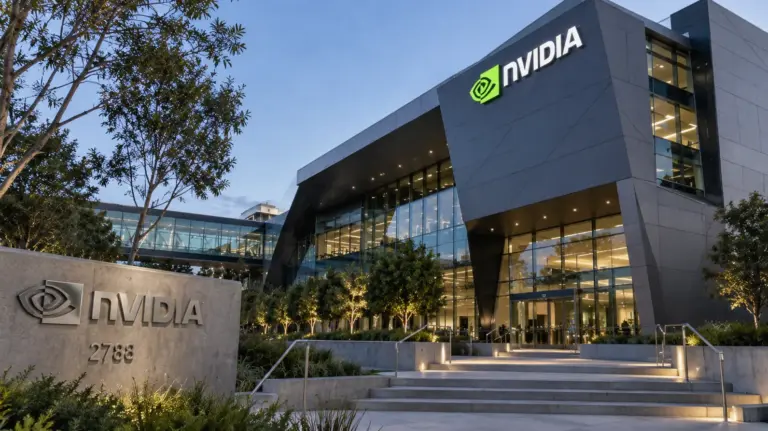
Nvidia stock NVDA traded down 0.2% on Friday after falling 4.4% in the previous session, as investors weighed contrasting views on the chipmaker’s long-term prospects.

Seaport Research Partners reiterated a bearish rating, citing competitive pressures and financial commitments, while Laffer Tengler Investments CEO Nancy Tengler argued that Nvidia could still double in value over the next five to 10 years, even if earnings growth slows.

Jay Goldberg, an analyst at Seaport Research Partners, maintained a Sell rating and a $180 price target, below Nvidia’s Thursday closing price of $212.

He acknowledged that the company was positioned to deliver record sales in the near term but warned that challenges could become more significant over the following year.

Nvidia’s shares have climbed sharply in recent years, making it the world’s most valuable publicly traded company.

However, concerns about the sustainability of artificial intelligence spending have recently weighed on chipmakers and other AI-linked stocks.

Seaport flags competition and financial commitments

Goldberg identified four main risks to Nvidia’s outlook, including data centre construction constraints, financial commitments, circular financing and tensions involving smaller cloud infrastructure providers.

Although around 55 gigawatts of data centre capacity has been announced for the coming year, Goldberg said the industry may struggle to build more than 30 gigawatts because of shortages of electricians, gas turbines and utility connections.

He also warned that Nvidia’s commitments to securing its supply chain and supporting data centre construction total about $250 billion.

That figure excludes obligations connected to a funding initiative being developed with Wall Street, which Goldberg said could expand from $500 billion to $1 trillion.

Nvidia has the financial capacity to support these commitments, according to Goldberg, who expects operating cash flow to reach $200 billion this year.

However, he argued that such obligations could amplify the impact of a downturn.

Goldberg also raised concerns about Nvidia investing in and lending money to suppliers and customers.

He said credit guarantees and other financial support could effectively reduce customers’ costs, raising questions about underlying demand and competitive pressures.

Neocloud exposure creates strategic tension

Goldberg highlighted Nvidia’s relationship with neocloud providers such as CoreWeave and Nebius, which offer computing capacity as a service.

He argued that Nvidia benefits from having numerous smaller customers rather than relying on a few large cloud providers with greater bargaining power.

However, those smaller companies have taken on substantial debt amid uncertainty about the profitability of AI infrastructure.

“If the neoclouds fail to lift off, that doubles back on Nvidia with reduced sales and even more reduced margins,” Goldberg said.

He acknowledged that Nvidia could continue benefiting from strong demand in the near term, adding that the longer-term risks could take time to materialise.

Tengler sees room for further growth

Tengler offered a more optimistic view, arguing that Nvidia could double over five to 10 years even if earnings growth eventually slows to 20% or 30%.

She cited earnings growth of 96% and said she expected it to decelerate to 70% the following year before potentially settling at a slower pace.

These figures represent her outlook rather than company guidance.

Tengler compared Nvidia’s potential trajectory with Microsoft’s Azure cloud business, saying slower growth had not prevented the business from supporting the stock’s performance.

She also said Nvidia traded at a 13.5 earnings multiple when her firm added it to its value portfolio earlier in the summer.

That valuation reference was historical, not current.

The post Why Nvidia stock is in red today: growth case meets bearish warning appeared first on Invezz

Oil prices surged amid fresh Middle East supply concerns, while Anthropic expanded its European AI ambitions, SpaceX explored a nationwide wireless service, and SK Hynix shelved plans for a US listing of its Solidigm unit.

Oil prices rise as Houthi attacks fuel supply concerns

Oil prices climbed on Friday, with Brent crude touching its highest level in nearly six months as Houthi attacks in Saudi Arabia heightened concerns about disruptions to Middle Eastern energy supplies.

Brent crude futures rose 3.7%, to $117.37 a barrel, after reaching an intraday high of $117.45. US West Texas Intermediate crude gained 4.45%, to $103.91.

Brent was on track for a weekly gain of 6%, while WTI was set to finish the week 1.5% higher.

The rally followed attacks by Iranian-backed Houthi rebels across Saudi Arabia, including on energy infrastructure.

Saudi Aramco ordered the evacuation of its headquarters in Dhahran on Thursday, Reuters reported.

Supply concerns were compounded by an oil spill detected off the UAE coast near Umm Al Quwain. Authorities had not identified the tanker involved or disclosed the cause.

Shipping security also remained a concern, with October emerging as the worst month for attacks on commercial vessels in the Strait of Hormuz and nearby waterways, according to data cited by Reuters.

Anthropic launches AI consultancy venture in Europe

Anthropic is expanding its enterprise AI business through a partnership with London-based private equity firm Hg, according to the Financial Times.

The companies plan to establish an independent consultancy that will place AI consultants and engineers within businesses to help integrate artificial intelligence into existing workflows and develop new products.

The venture is expected to begin operations by the end of 2026, with London and Berlin as its main hubs.

Anthropic will contribute capital from its balance sheet, while Hg will invest through the funds it manages.

The arrangement combines Anthropic’s AI technology and engineering expertise with Hg’s experience in software and services businesses.

The move puts Anthropic in more direct competition with traditional IT consultancies.

The company has already entered the US AI implementation market through Ode, an independent AI services company introduced in July.

The European expansion comes as Anthropic prepares for a potential initial public offering.

SpaceX explores nationwide wireless expansion

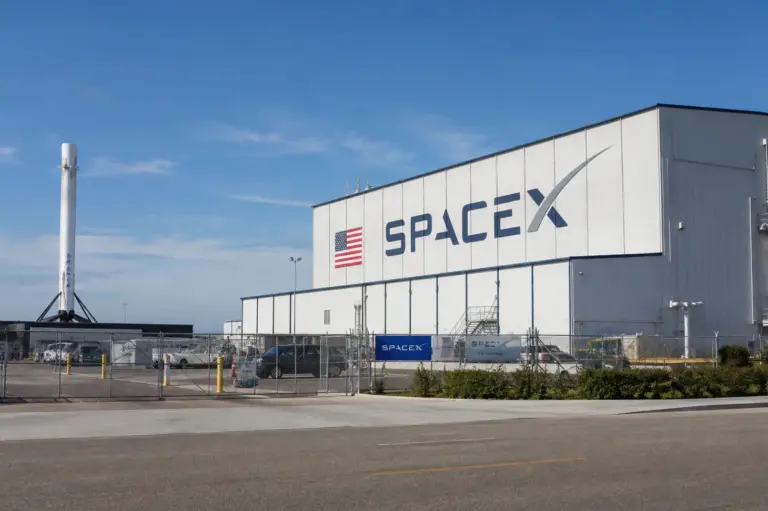
SpaceX shares rose 1.84% on Friday as the company reportedly pursued access to at least 80,000 cellular sites across the United States.

According to Bloomberg, the company is in talks with cellular infrastructure providers as it seeks to combine Starlink’s satellite connectivity with ground-based infrastructure and expand into nationwide wireless services.

Crown Castle is among the companies involved in the discussions, alongside American Tower and Vertical Bridge Holdings. Potential agreements could be worth billions of dollars.

The initiative could help SpaceX move closer to becoming a fourth nationwide wireless carrier.

The company recently received Federal Communications Commission approval to launch 15,000 satellites designed to connect directly to mobile phones.

The report also affected established telecom stocks. AT&T shares fell about 7.9% in trading, while Verizon declined around 1.18% and T-Mobile lost approximately 7.71%.

SK Hynix shelves Solidigm’s potential US IPO

SK Hynix shares rose 4.05% on Friday after the South Korean chipmaker abandoned plans to pursue a potential US IPO of its subsidiary Solidigm.

In a regulatory filing, SK Hynix said it had halted its review of a possible listing and discussions about pre-IPO investment, citing recent capital market conditions.

Solidigm had reportedly been preparing an offering that could raise around $10 billion and value the business at as much as $100 billion.

Goldman Sachs and Morgan Stanley had reportedly been selected to work on the proposed transaction.

Established in 2021 following SK Hynix’s acquisition of Intel’s flash memory business, Solidigm supplies high-capacity solid-state drives used in AI data centres.

The proposed listing also faced scrutiny from South Korean regulators over concerns about minority shareholder dilution and the implications of listing a subsidiary separately in the US.

The decision comes amid wider efforts in South Korea to address the so-called “Korea discount”, in which domestic companies often trade at lower valuations than international peers.

The post Evening digest: oil jumps to $117, SpaceX to enter wireless services appeared first on Invezz

US stocks ended lower on Friday as losses spread beyond technology shares, while rising oil prices and renewed concerns over the US-Iran conflict added pressure to markets.

Investors also looked ahead to a busy week of corporate earnings and the Federal Reserve’s upcoming interest-rate decision.

The Dow Jones Industrial Average fell 1.25%, or about 659 points, to 52,209.16.

The S&P 500 declined 0.52% to 7,623.86, while the Nasdaq Composite lost 0.21% to close at 25,955.34.

Despite Friday’s declines, the Dow gained 0.4% over the week. The S&P 500 fell 0.5%, while the Nasdaq lost 0.7%.

Oil prices rise as Middle East tensions weigh on stocks

Energy prices climbed as renewed concerns about the conflict involving the US, Israel and Iran raised the risk of further disruption to Middle Eastern oil supplies.

West Texas Intermediate crude futures rose 3.8% to settle at $103.34 a barrel, while Brent crude gained 3.25% to $116.85. Brent’s settlement was its highest since April.

The rally followed reports that the US and Israel could be preparing plans for renewed attacks on Iran.

Iran has indicated that it is prepared to retaliate, adding to uncertainty over the conflict’s potential impact on energy markets.

The energy sector reached a record high on Friday, making it a notable exception to the broader market weakness.

However, higher oil prices also raised concerns about inflation and the potential pressure on household spending.

University of Michigan data showed US consumer sentiment slipped close to a record low in October as rising prices linked to the Middle East conflict weakened households’ views of the economy.

Dow stocks fall as weakness spreads beyond technology

Selling pressure extended across several sectors on Friday, including consumer staples, utilities and healthcare.

Financial stocks also weakened, contributing to the Dow’s decline.

American Express fell more than 3% after announcing plans to reduce its global workforce by about 5%, citing preparations for the growing use of artificial intelligence.

Caterpillar declined around 2%, while Goldman Sachs lost more than 1%.

Telecommunications stocks also came under pressure following a report that SpaceX was seeking access to thousands of cellular sites as it explores plans to become a fourth nationwide wireless carrier.

Technology shares were comparatively resilient after the previous session’s sell-off.

Microsoft edged higher, while Micron Technology gained 2.5% and Advanced Micro Devices rose 1.7%.

Investors have been reassessing the outlook for AI-related stocks amid concerns about the scale of borrowing required to finance data centres and the potential impact of higher interest rates.

However, recent corporate earnings have provided some support for the sector.

The 10-year US Treasury yield rose more than four basis points to around 4.999% on Friday, returning above the 5% level after briefly falling below it a day earlier.

Fed decision and Big Tech earnings in focus

Investors are preparing for a significant week of corporate results and monetary policy developments.

About one-third of S&P 500 companies are scheduled to report quarterly earnings next week, including Alphabet, Microsoft and Amazon.

Their capital expenditure forecasts will be closely watched for indications of whether spending on AI infrastructure will continue to expand at its current pace.

LSEG IBES data indicated that S&P 500 companies were on track to increase earnings by more than 32% in the third quarter, supporting the broader market’s gains this year.

The Federal Reserve is widely expected to leave interest rates unchanged at its Wednesday meeting.

Investors will nevertheless look for signals about whether policymakers could raise rates in December.

Markets are also monitoring the November 3 US midterm elections, which will determine control of Congress.

Together, corporate earnings, interest-rate expectations and geopolitical risks could shape the direction of US stocks in the coming week.

The post Dow falls 1.25% as oil tops $117 and investors await Fed, big tech earnings appeared first on Invezz

President Donald Trump took an aggressive step toward stabilizing energy markets on Thursday by invoking the Defense Production Act, designating domestic oil production and refining as vital to national defense. In a presidential memo issued just days before the upcoming midterm elections, the president authorized the Secretary of War to deploy federal financing for everything from exploration and drilling to the construction of pipelines and marine terminals. This move is designed to bypass traditional bureaucratic hurdles such as permitting delays and financing constraints that typically slow down industrial expansion.

The decision comes amid a period of extreme volatility in global energy markets, driven largely by geopolitical instability. Crude and diesel prices have spiked following military actions involving the U.S., Israel, and Iran earlier this year, while ongoing conflicts in Ukraine have further crippled Russian refining capabilities. American consumers have felt the pinch acutely, with average diesel prices surging nearly 80 percent since January, climbing from $3.55 to over six dollars per gallon. Brent crude recently touched $116 a barrel following reports of disrupted tanker traffic near the strategically sensitive Strait of Hormuz.

While the administration frames this action as a matter of national security, critics note the timing coincides closely with November 3rd voters heading to the polls. By utilizing these powers, which include previously allocated billions in funding for critical energy projects, Trump aims to rapidly increase capacity at sites like Texas refineries to lower costs for motorists and businesses alike. Meanwhile, diplomatic tensions remain high; although Saudi Arabia has increased flow through its east-west pipeline to mitigate some risk, officials suggest that regional conflicts could persist for another year unless diplomacy prevails.

For the first time since records began in 1963, the cost of a median priced new home in the United States has fallen below 100 ounces of gold. According to an analysis by MiningVisuals using data from the US Census Bureau and the World Bank, this milestone was maintained throughout several quarters between late 2025 and mid 2026. By the second quarter of 2026, a new home cost just 91 ounces of gold, marking a staggering eighty two percent decrease from the five hundred nine ounces required back in early 1963.

While it might seem like housing is becoming cheaper, the shift is actually being driven by a surge in precious metals rather than a crash in real estate. While the median price of a new home dipped slightly by about one point three percent year over year, gold prices skyrocketed. Quarterly averages for bullion jumped thirty seven percent to reach four thousand five hundred twelve dollars per ounce. Essentially, houses aren’t necessarily getting cheaper in dollar terms, but gold is becoming so valuable that it takes far fewer ounces to purchase a property.

On the ground, homebuyers are seeing some relief thanks to strategic moves by developers. Many builders have been cutting prices or offering aggressive incentives such as mortgage rate buydowns to attract buyers. There has also been a noticeable trend toward constructing smaller, more affordable homes to keep inventory moving. Recent Census Bureau reports indicate that monthly medians have slipped even further, hitting levels not seen since July 2021.

This current dip represents a significant historical pivot compared to previous decades. Back in 1970, when government pegs kept gold artificially cheap at around thirty five dollars an ounce, it took a record six hundred eighty four ounces to buy a house. Even during gold’s famous rally in 1980, the ratio only touched one hundred ounces briefly before climbing again. Today’s landscape reflects a world where commodities are gaining strength relative to traditional brick and mortar assets.

President Donald Trump is traveling to Fort Myers today to throw his significant political weight behind Republican Representative Byron Donalds. The visit comes at a critical juncture in the race for Florida governor, where Donalds is locked in a high stakes battle against Democrat David Jolly. While the rally serves as a primary focus of the trip, the president also confirmed to reporters outside the White House that he and the first lady plan to cast their early ballots in Florida tomorrow.

The campaign stop arrives amid a flurry of legal activity from the administration across several states. In Alaska, the Justice Department has taken the unusual step of suing election officials to prevent the certification of a U.S. Senate race unless incumbent Republican Dan Sullivan emerges victorious. Government attorneys claim that another candidate sharing a similar name on the ballot could confuse voters, creating a potential crisis for the seat. Similar tensions are playing out in California, where the DOJ is attempting to block thousands of mail in ballots over concerns regarding voter citizenship.

Beyond these legal battles, internal friction within GOP circles is becoming more apparent in South Carolina. While Senator Darline Graham seeks to maintain her seat, she faces challenges both from Democrat Annie Andrews and unexpected familial dissent. In a surprising move, Warren Norman announced he intends to vote for Andrews, marking his first ever vote for a Democrat in a partisan contest and citing a need for fresh leadership over traditional party playbooks.

Meanwhile, back at home, the administration continues to push forward with controversial domestic projects and navigate international disputes. Top border officials recently defended plans for an expensive wall project in Texas’ Big Bend region despite court orders and local opposition. Simultaneously, President Trump spent part of his morning denying reports that he had pressured Elon Musk regarding Starlink connectivity issues in Ukraine, though he noted he would be willing to reach out if problems persist.

A gathering of education leaders and policymakers in Detroit recently highlighted a sobering reality for Michigan students, warning that the state’s academic future depends on a shift toward stability and evidence-based learning. Speaking at the Bridge Michigan Issues Summit, panelists emphasized that improving literacy is not just a primary school concern but a lifelong necessity that dictates whether students can successfully transition into the workforce or higher education. With current data showing only one in four high school juniors are college-ready, experts argued that the path forward requires a relentless focus on basic reading skills combined with expanded vocational training.

One of the most pressing obstacles identified by those on the panel was the tendency for educational policy to become a political football. Venessa Keesler, head of Launch Michigan, noted that the state frequently enters cycles of starting and stopping initiatives, allowing partisan competition to override collaborative progress. This instability was evident in previous attempts to raise reading scores through controversial retention policies and grading scales that were quickly repealed. Experts now urge voters and officials to prioritize consistency over optics, advocating for candidates who are willing to work across the aisle to maintain steady improvements rather than chasing short-term political wins.

Hope lies in new legislative mandates requiring teachers to undergo science-based reading training and implementing universal screenings for dyslexia. Educators attending the summit praised these shifts toward phonics and structured literacy, though they cautioned that such intensive training requires proper compensation for teachers to ensure success. Furthermore, administrators stressed that literacy cannot end in elementary school; some districts are already integrating dedicated daily reading time for all students up through high school graduation to bridge the gap between early schooling and adult employment.

Beyond policy changes, there is a growing call for community involvement to support overburdened classrooms. Panelists encouraged citizens to volunteer as reading mentors, noting that having adults engage with advanced learners frees up precious time for teachers to provide targeted intervention for struggling students. By fostering this connection between schools and the public, advocates hope to demystify modern classrooms and build a stronger social safety net for children regardless of their zip code or economic background.

Along the foggy coast of Long Beach, Washington, the economic chill is felt more deeply than the ocean breeze. Local business owners like Melissa Huddleston notice fewer tourists spending money at seafood shops and more beachgoers opting for packed lunches over restaurant meals. For many residents here, the political noise coming from Washington D.C. feels distant compared to the immediate struggle of reviving a stagnant local economy, leaving undecided voters feeling skeptical that either major party holds the cure for their frustrations.

This atmosphere defines Washington’s 3rd Congressional District, one of the few remaining true swing regions in the American West. It is a rural expanse that has voted for Donald Trump three times, yet it currently sends a Democrat, Representative Marie Gluesenkamp Perez, to Congress. Because gerrymandering has eliminated so many competitive seats nationwide, this single district has become a critical piece of the puzzle for whoever hopes to control the U.S. House of Representatives. Republican challengers and aligned donor groups are pouring resources into the area to flip it red, while Democrats view holding onto this seat as essential to their survival in the chamber.

Representative Gluesenkamp Perez is attempting to survive by leaning into her identity as a maverick. A former auto shop owner, she often breaks ranks with her own party on key votes regarding homeland security and legislative agendas to prove she prioritizes her constituents over party leadership. While this independent streak attracts volunteers who are tired of rigid partisanship, it has occasionally alienated progressive leaders within her own party who prefer a more unified front. She argues that bringing working-class perspectives back into rural representation is the only way to break the political monopoly held by conservatives in these areas.

Opposing her is State Senator John Braun, a Republican endorsed by Donald Trump who seeks to reclaim the district for his party. Braun has attempted a delicate balancing act, framing his brand of conservatism as measured and stable while ensuring his base knows he remains firmly aligned with Trump’s vision. With recent polls showing a virtual dead heat between the two candidates, the race serves as a living laboratory for both parties as they test whether moderation or ideological purity is the better path toward victory in purple districts heading into future election cycles.