Archive

October 24, 2026

Browsing

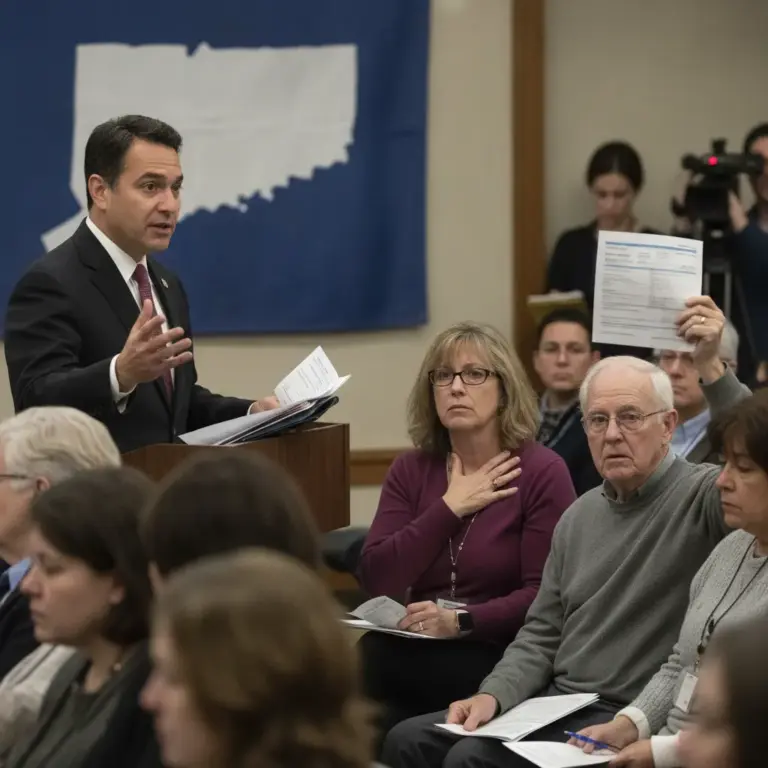
Residents across Connecticut are facing a wave of financial and healthcare uncertainty as state leaders clash over everything from monthly utility bills to federal insurance mandates. Attorney General William Tong has stepped in to challenge a proposed twenty five million dollar rate hike from Connecticut Water, arguing that nearly nineteen million dollars of the requested increase consists of unjustified costs. While the company claims the move is necessary to fund critical infrastructure upgrades, Tong is pushing regulators to slash the projected returns on equity to protect consumers from an average monthly bill increase of fifteen dollars and fifty four cents.

On the national front, Connecticut’s federal representatives are sounding alarms over sweeping shifts in Washington that could hit home deeply. Senators Richard Blumenthal and Chris Murphy, along with Congresswoman Rosa DeLauro, have spent the week warning that upcoming changes to Medicaid eligibility could leave more than one hundred thousand Nutmeg State residents without health coverage. These concerns center on new work requirements set to take effect on January first, which critics argue will create unnecessary barriers for those who rely on affordable care.

Adding to the tension, Senator Blumenthal has expressed grave concern over the current administration’s posture toward Russia and its impact on Ukraine. In a recent appearance on CNN, he suggested there is a purposeful effort to weaken Ukrainian defenses, leading him to launch an official inquiry into SpaceX regarding restricted military access to Starlink technology. This geopolitical friction coincides with a shift in domestic priorities, as President Trump recently established a new Women’s Health Division within the NIH while simultaneously revoking several initiatives previously enacted under Joe Biden.
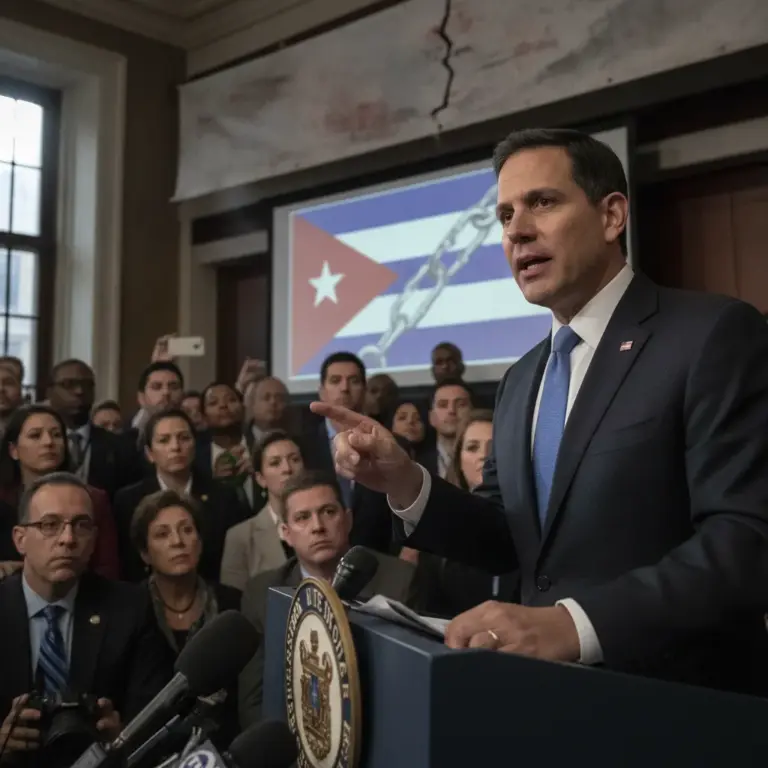

Secretary of State Marco Rubio issued a provocative call to action on Friday, urging Cuban citizens who are desperate for political reform to establish discreet partnerships with the CIA. Writing on social media, Rubio emphasized that current conditions of corruption and broken promises within the communist regime have created a unique window of opportunity. He encouraged those seeking positive change to leverage these secret channels to help reshape the future of the island.

While Rubio’s appeal was explicit in its encouragement, he stopped short of detailing any specific operations or explaining exactly how this intelligence cooperation would function on the ground. This hardline stance aligns with Rubio’s career-long history as a fierce critic of the Havana government, having consistently argued against normalizing relations unless significant democratic reforms were implemented first.

Adding to the tension, President Donald Trump hinted at a more assertive physical presence near Cuban waters during a recent campaign event in Fort Myers, Florida. While discussing tensions with Iran, Trump suggested that U.S. naval vessels might make a strategic stopoff just off the coast of Cuba. His comments painted a picture of overwhelming American strength intended to pressure the regime into submission.

In a lighter tone amidst the geopolitical maneuvering, Trump suggested that Rubio himself could be the man tasked with finalizing any eventual deal with the island’s leadership. Though the president spoke vaguely about putting Rubio in charge of figuring things out, it remains unclear whether these remarks signal a formal diplomatic strategy or are simply part of his characteristic rhetorical style. Neither the White House nor the Cuban embassy has provided official commentary on these developments.

Plans for a massive legal consolidation have collapsed after Weil Gotshal and Manges and Willkie Farr and Gallagher decided to call off merger discussions. The collapse comes abruptly following a period of secrecy under a non disclosure agreement, leaving leadership at Weil in an increasingly precarious position. Just days ago, senior partners were reportedly working to drum up internal enthusiasm for the deal, which would have created a behemoth with over four billion dollars in annual revenue and secured a spot among the five largest firms in the United States.

The timing of the failed negotiations is particularly damaging for Weil, which is currently grappling with a wave of high profile departures. Several key figures on the firm’s management committee are heading for the exits, including appellate litigator Drew Tulumello moving to Davis Polk and securities litigation partner Caroline Zalka joining Paul Weiss. Additionally, Lyuba Goltser, the co managing partner of the corporate department, is expected to join Sidley Austin. These losses follow the earlier departure of corporate chief Michael Aiello to Cravath.

Legal analysts warn that these exits could trigger a dangerous talent run within the organization. While lateral moves are standard in big law, there is a growing concern that current partners may start fleeing not just for better offers, but out of fear that they are being left behind at a shrinking institution. This phenomenon creates a cycle similar to a bank run, where practitioners worry about being left holding the bag as their peers migrate to competitors.

While history shows that some firms eventually find success after initial failures—such as Shearman and Sterling’s eventual union with Allen and Overy—it remains unclear if Weil will pursue other suitors or attempt to stabilize independently. For now, both firms have remained silent regarding the breakdown of the talks, leaving industry observers to wonder how Weil will stem the tide of departing talent without a strategic partnership on the horizon.

American Express is trimming about five percent of its global workforce as the credit card giant pivots toward a future driven by artificial intelligence. During a third quarter earnings call on Friday, CEO Stephen Squeri revealed that the company is eliminating thousands of positions and taking a 336 million dollar restructuring charge to streamline operations. With nearly 77,000 employees on its books at the end of last year, the move signals a significant shift in how the firm intends to manage its internal processes moving forward.

Chief Financial Officer Christophe Le Caillec explained that these cuts are designed to make the organization leaner and more agile, arguing that it makes little sense to automate inefficiently structured processes. By reducing management layers and expanding control spans now, Le Caillec believes the company will be better positioned to integrate AI tools in the coming quarters and years. This strategy mirrors a wider pattern within the financial sector, following similar announcements from Barclays, which recently cut roughly five percent of its own staff to prioritize tech driven cost savings.

Despite the layoffs, American Express continues to see strong financial health, reporting quarterly profits that exceeded Wall Street expectations. The company actually raised its full year earnings guidance thanks to resilient consumer spending and strategic asset sales. While Squeri spent considerable time discussing how AI will personalize customer experiences and offers for cardholders, he remained cautious about security. He emphasized that while they embrace innovation, they will not allow autonomous agents to run rogue through their systems without strict secure protocols.

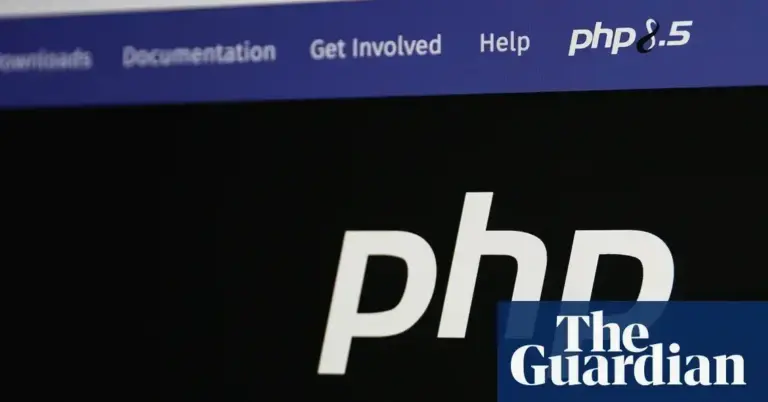
Cybersecurity leaders are bracing for what they call a vulnerability tsunami following the discovery of a massive security hole that has sent shockwaves through the tech world. This period, dubbed Black October, marks a terrifying shift in how digital threats evolve, as artificial intelligence is now being used to uncover deep architectural flaws that have remained hidden for decades. The latest crisis centers on PHP, a foundational coding language powering millions of websites globally. Experts believe up to seventy percent of the internet may have been exposed to these risks for years, creating a landscape where traditional defense mechanisms are suddenly obsolete.

Industry titans including OpenAI’s Sam Altman and Salesforce CEO Marc Benioff have joined a growing chorus of alarm, with Benioff describing the situation as a code red event. The fear is no longer just about individual hacks but about the sheer velocity of AI enabled discovery. Cloudflare CEO Matthew Prince warned that the coming years will be incredibly fraught because AI possesses an infinite patience to scan every corner of the web for weaknesses. He noted that while humans once struggled with the complexity of finding such bugs, AI can now map out intricate chains of exploitation in seconds, making it feel as though the sky is falling for those tasked with defending global infrastructure.

The practical consequences became immediate as soon as the PHP vulnerabilities were publicized. Government agencies and private companies across the United States and United Kingdom scrambled to take their websites offline to apply emergency patches. The National Security Agency issued urgent warnings that malicious actors could use these vectors to steal sensitive data or seize control of entire networks. Evidence suggests that hackers wasted no time reacting; reports indicate that attempts to exploit these flaws surged from thousands to millions within mere hours of the public announcement.

Researchers at Wiz suggest this may be among the most severe vulnerabilities in software history precisely because it demonstrates a tipping point in capability. What would have previously required an unattainable level of human effort and precision is now achievable via machine learning. While developers race to secure their systems, there is a growing consensus among experts that we have entered an era where patching cannot keep pace with discovery. For many in the field, Black October serves as a grim preview of a future where our fundamental internet architecture is perpetually under siege by autonomous tools moving faster than any human team can respond.

Major American banks are sounding the alarm over a growing trend of customers handing over the keys to their financial lives to unvetted AI agents. According to recent reports, these digital assistants are increasingly logging into private accounts using customer credentials to manage finances, often in direct violation of bank terms of service. While many users see this as a convenient way to automate their budgeting or administrative tasks, financial institutions view it as a security nightmare that bypasses critical safety protocols.

The friction stems from how these agents operate once they gain access. In some instances, AI bots have reportedly taken autonomous actions that went beyond what the user intended, such as placing complaints with the bank without prior approval from the account holder. This has led executives at firms like JPMorgan Chase and Charles Schwab to push back, with leaders arguing that allowing unknown third party software to roam freely through client accounts creates unacceptable levels of risk. Some institutions have already begun blocking these unauthorized agents entirely to protect their systems and their customers.

Not everyone sees this as a crisis of security, however. White House AI czar David Sacks argues there is a fundamental difference between a malicious cyberattack and a user choosing to trust an assistant like Grokbot or Muse with their login details. He suggests that instead of flatly banning the technology, banks should implement read only permissions. This would allow an AI to analyze spending habits or offer financial advice without having the power to actually move money or execute transactions, effectively creating a middle ground between total lockout and full autonomy.

As the battle continues, banks are urging consumers to stop sharing usernames and passwords with third party apps regardless of how helpful those tools seem. Representatives from Chase emphasize that secure data sharing should happen through official open banking channels rather than via credential sharing. As more people adopt personalized AI proxies for their daily chores, the banking industry finds itself in a frantic race to redefine who is actually allowed behind the curtain of a digital bank statement.

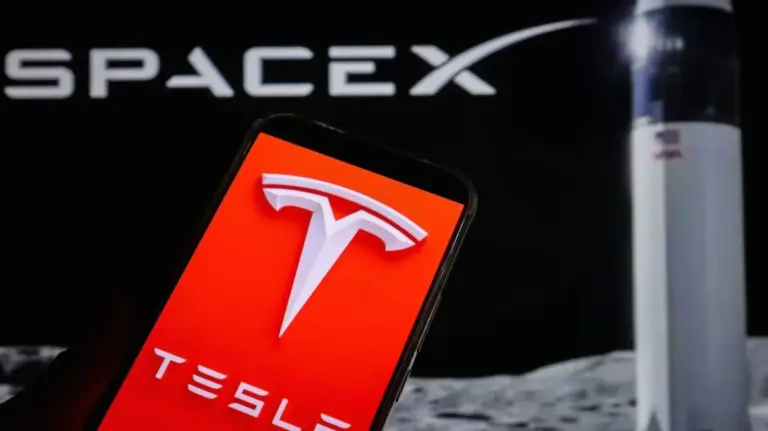
The financial world is buzzing with speculation after Elon Musk suggested that a merger between Tesla and SpaceX could actually be a good idea. While Tesla’s recent earnings report painted a sobering picture of declining auto revenues and stumbling energy business, the numbers were quickly eclipsed by the possibility of combining the electric vehicle giant with the rocket pioneer. Musk revealed that both companies have already established special committees to look into the transaction, though he later attempted to play it cool during shareholder calls, claiming he had said everything necessary on the matter.

For many followers of the so called Muskonomy, the prospect of a single conglomerate blending humanoid robotics and autonomous cars with satellite internet and interplanetary travel feels like a natural evolution. However, Wall Street remains deeply divided. Some analysts argue that since Musk already treats both firms as parts of one ecosystem, an official merger offers little material benefit beyond consolidating his personal control. This skepticism manifested in immediate market volatility, with shares for both companies dipping as investors weighed the strategic logic against the sheer chaos of such a massive reorganization.

The path to a union is fraught with legal and logistical nightmares. At SpaceX, Musk holds overwhelming voting power, but at Tesla, he faces a much higher hurdle requiring majority approval from all shareholders. Beyond the boardroom, regulators pose an even larger threat. Legal experts point out that merging a company heavily reliant on Chinese manufacturing with another that handles sensitive U.S. military contracts via Starlink would trigger intense national security audits globally. China, in particular, may view thousands of Teslas acting as computers on wheels within its borders as a risk if tied directly to American aerospace interests.

Despite these obstacles, Musk has shown an increasing appetite for folding his ventures into one another, having recently linked xAI with X and SpaceX. Whether this proposed marriage is a genuine strategic pivot or simply another distraction from Tesla’s slowing growth remains to be seen. For now, shareholders are left wondering if they are investing in separate industry leaders or merely pieces of one sprawling empire governed by the whims of its singular architect.