Archive

October 15, 2026

Browsing

Skydance (SKYD) shares are seemingly crashing on Wednesday morning, but this headline decline needs careful interpretation.

The sell-off largely reflects the separation of shareholder warrants from the firm’s common stock, rather than an equivalent collapse in the value of investors’ combined holdings.

With those warrants trading around $2.33, eligible shareholders now own “two” separately priced securities.

For prospective buyers of SKYD stock, a more important question is whether the lower share price offers value after accounting for that separation.

Warrant distribution is dragging Skydance stock lower

October 14 marks the ex-distribution date for Skydance’s warrants, which means shares now trade without the entitlement attached.

This adjustment is the principal explanation for today’s massive decline in Skydance stock.

SKYD distributed about 470.7 million warrants on Tuesday – with eligible investors receiving one for each qualifying Class B share.

Each initially allows its holder to purchase one share for $12 and is scheduled to expire on October 13, 2036, subject to provisions permitting earlier expiration.

The distinction matters: an eligible investor’s position now comprises both stock and warrants.

Looking only at the common shares therefore gives an “incomplete picture” of today’s economic impact.

The value has been divided between two instruments, making the price chart more alarming than the combined holding necessarily warrants.

Are SKYD shares available to buy at a discount today?

Using the reported morning prices, one Skydance share plus one warrant was worth about $9.20.

That calculation illustrates why a 26% decline in the stock alone cannot be treated as an equivalent loss for an eligible holder who retained both securities. These are intraday snapshots, however, and both prices can change.

For someone buying today, the analysis is different.

Buying shares after the entitlement separates does not secure the distributed warrant, so comparing today’s stock price directly with yesterday’s bundled position creates a misleading impression of a bargain.

A credible buying case must rest on future earnings, cash generation, and valuation.

The percentage drop alone offers little evidence of undervaluation.

Investors considering an entry should first establish what they’re buying and whether its standalone price adequately compensates them for the business risks.

What will determine Skydance’s broader trajectory?

Beyond today’s trading mechanics, SKYD shares face a “demanding” financial agenda. Following its combination with Warner Bros. Discovery, the company has about $78.9 billion in net debt.

Management is targeting synergies worth roughly $6 billion within three years and over $10 billion in annual free cash flow by the end of this decade.

So the investment case depends on converting operational improvements into cash while managing borrowing costs and integration spending.

Cutting duplicated expenses could improve profitability, but investors also need evidence that the combined business can sustain revenue and protect its content offerings.

Upcoming financial updates will therefore carry more weight than today’s dramatic chart.

Progress on cash flow, debt reduction, and integration will determine whether Skydance’s lower share price becomes an attractive entry point or reflects a turnaround still awaiting proof.

The post Why is Skydance stock crashing today? appeared first on Invezz

Bending Spoons shares (BSP) surged on Wednesday after Berkshire Hathaway invested another $330 million in the Italian technology company, bringing its total investment to $930 million and increasing its stake to approximately 4%.

The stock climbed 42% during Wednesday’s trading.

The rally followed news that Berkshire, the conglomerate formerly led by Warren Buffett and now headed by CEO Greg Abel, had purchased additional shares in the company, which acquires and transforms digital businesses.

Bending Spoons will issue 10 million ordinary shares to Berkshire at $33 apiece through a private placement.

The price represents a discount to Tuesday’s closing price of $37.86, even as the stock rallied sharply following the announcement.

The investment makes Berkshire the Italian company’s sixth-largest investor, according to LSEG data.

Bending Spoons said the funds would strengthen its financial flexibility and support its acquisition strategy.

Berkshire’s investment boosts Bending Spoons stock

Berkshire invested $600 million in Bending Spoons’ initial public offering in July before committing an additional $330 million.

The latest purchase brings its total investment to $930 million.

The market reaction suggests investors view Berkshire’s participation as an endorsement of Bending Spoons’ strategy of acquiring digital businesses and seeking to improve their performance.

The company has assembled a portfolio that includes AOL, Vimeo, Evernote, Brightcove, Eventbrite, productivity software maker Airtable, pet-tracking company Tractive and file-sharing platform WeTransfer.

In September, Bending Spoons also agreed to acquire Miro in a $1.4 billion deal.

The company continues to evaluate merger and acquisition opportunities and has a strong pipeline, according to Francesco Patarnello, its co-founder and head of business acquisitions.

Bending Spoons said the latest investment would provide additional financial flexibility as it pursues further acquisitions.

Valuation raises questions despite the rally

Despite Wednesday’s surge, Bending Spoons trades at a substantial valuation relative to its projected financial performance.

The company has a market value of around $40 billion, based on the share count implied by its announcement, and had approximately $4 billion in debt at the time of its IPO, according to Barron’s.

The stock trades at nearly 10 times forward sales based on enterprise value, which includes market capitalisation and debt. It also trades at around 30 times projected 2027 earnings.

Berkshire’s investment could generate a substantial paper gain following Wednesday’s rally.

Barron’s estimated that the conglomerate was sitting on a profit of approximately $600 million after the stock’s rise.

The $33 placement price also means investors buying after the rally are paying considerably more than Berkshire paid for its latest shares.

Berkshire expands technology exposure under Greg Abel

The investment comes as Berkshire has increased its exposure to technology companies under Abel, who took over as chief executive at the start of the year.

The conglomerate has also built a significant position in Alphabet, Google’s parent company, which became its third-largest common stock holding. Berkshire’s largest stock investments include Apple.

The shift towards technology marks a notable development for a company long associated with Buffett’s value-investing philosophy.

Berkshire has historically favoured businesses trading at attractive valuations, including Japanese trading companies and homebuilder Lennar.

Bending Spoons’ valuation contrasts with some of those traditional investments.

Its shares trade at nearly 10 times forward sales, while Berkshire’s previous investments have often focused on lower earnings multiples or businesses trading below book value.

The latest purchase may therefore raise questions about how Berkshire is balancing its traditional investment approach with opportunities in technology.

The post Bending Spoons stock soars as Berkshire Hathaway adds $330M investment appeared first on Invezz

US financial markets faced renewed pressure on Wednesday as hotter-than-expected underlying inflation reinforced expectations of further Federal Reserve rate increases.

Rising energy prices added to inflation concerns, while Treasury yields and the US dollar climbed, weighing on gold and Bitcoin.

Geopolitical tensions involving Iran, Saudi Arabia and shipping routes in the Middle East also pushed oil prices higher.

US CPI rises 3.7% annually, lifting Fed rate hike expectations

US consumer inflation accelerated in September, with the consumer price index (CPI) rising 0.6% month-on-month and 3.7% year-on-year, according to the Bureau of Labor Statistics.

The annual rate increased from 3.4% in August, while the monthly reading matched economists’ expectations.

Core CPI, which excludes food and energy, rose 0.3% during the month and 2.6% over the year, exceeding forecasts of 0.2% and 2.5%, respectively.

Higher gasoline prices were the primary driver of the monthly increase.

The gasoline index jumped 9.1%, accounting for more than half of the overall CPI rise.

The broader energy index advanced 5.2%, while shelter costs increased 0.4%. Food prices were unchanged.

The data strengthened expectations that the Federal Reserve could raise interest rates again.

Markets increased the probability of an October rate hike to around 42%–43%, from approximately 22% before the report. Expectations for another increase in December also strengthened.

The Fed raised its benchmark rate by 25 basis points in September to a range of 3.75% to 4.00%.

However, policymakers must weigh persistent inflation against signs of weakness in the labour market before deciding on further tightening.

Oil prices rise as Middle East tensions threaten supplies

Oil prices climbed on Wednesday as attacks involving Saudi Arabia and Iran raised concerns about energy supplies and shipping through the Strait of Hormuz.

Brent crude futures rose 0.32% to $106.03 a barrel, while US West Texas Intermediate crude gained 1% to $95.08, reaching a three-week high.

The Houthi movement attacked an administrative building belonging to Saudi Aramco in Dhahran, causing a limited fire, according to Saudi Arabia’s energy ministry.

Meanwhile, Iran indicated it was deploying new tactics to target shipping, while a container ship sank after hitting a naval mine and catching fire in waters south of the Strait of Hormuz.

The developments added to concerns about disruptions along a critical route for global energy shipments.

Although Gulf oil flows excluding Iran recovered to more than 81% of prewar levels in September, the improvement did not necessarily indicate an equivalent increase in production.

Some of the recovery reflected the redistribution of available crude supplies.

The International Energy Agency also warned that limited Russian refinery capacity could restrict the impact of recently eased Russian diesel export restrictions, potentially keeping diesel supplies tight into next year.

Gold falls as dollar and Treasury yields climb

Gold prices declined for a third consecutive session as the stronger inflation report increased expectations of further US interest rate increases.

Spot gold fell 1.3% to $4,100 an ounce. US gold futures for December delivery settled 1.26% lower at $4,124.80 an ounce.

The US dollar index rose 0.5%, while the 10-year Treasury yield climbed more than six basis points to 5.278%. Higher yields increase the opportunity cost of holding gold, which does not generate interest income.

The prospect of tighter monetary policy added to the pressure on bullion, despite its traditional role as an inflation hedge.

Longer-term support could come from continued central-bank purchases and concerns about US government debt.

Bitcoin falls as risk appetite weakens

Bitcoin declined as much as 1.7%, trading around $81,700 as investors reduced exposure to riskier assets following the inflation data.

The move coincided with a broader market retreat.

The Nasdaq 100 fell as much as 2%, while the dollar strengthened to its highest level since May 2025 as traders increased bets on further Federal Reserve rate hikes.

Despite the decline, sentiment among crypto analysts has improved.

A CryptoQuant report showed its 30-day Bitcoin analyst consensus index rising from minus 18.3 in July to plus 49.2, with the share of bullish analysts increasing to 84% from 37%.

However, Bitcoin remains more than 30% below its record high, and attempts to sustain a recovery have repeatedly struggled.

Elevated inflation, high energy prices, and concerns about AI-related investments continue to weigh on broader risk appetite.

The post Evening digest: US CPI lifts Fed bets as oil rises and gold, Bitcoin fall appeared first on Invezz

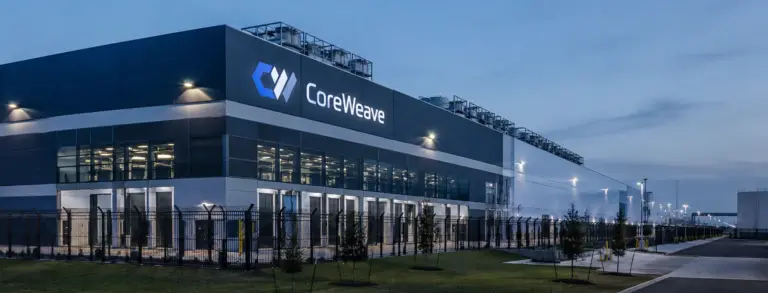
CoreWeave shares CRWV and bonds came under heavy pressure on Wednesday as investors grew increasingly concerned about the scale of borrowing by technology companies to finance the artificial intelligence infrastructure build-out.

Shares of the AI-focused cloud computing provider plunged 16%, while yields on its outstanding debt surged, reflecting a growing demand for compensation for the risks associated with financing the sector.

The yield to maturity on CoreWeave’s 9.625% bond due in 2032 reached 14.8%, while the yield on its 9.75% bond due in 2031 stood at around 14.9%.

Bond yields move inversely to prices, meaning the increase reflects a sharp decline in the market value of the securities.

The sell-off highlights a shift in investor sentiment towards companies that have borrowed heavily to build data centres and expand computing capacity to meet demand from AI developers.

While investors were previously eager to gain exposure to the AI boom, concerns about borrowing costs, future revenues and the ability to generate adequate returns are increasingly influencing investment decisions.

“The era of easy money, which we experienced in the first nine months of the year, is starting to disappear and dissipate,” said Luis Alvarado, co-head of global fixed income strategy at Wells Fargo Investment Institute.

“Now the extra dollar or the marginal dollar is going to be more looked at with a microscope into the concessions that the issuer is giving you back.”

CoreWeave debt draws attention from prominent investors

The sharp increase in CoreWeave’s borrowing costs also attracted attention from prominent technology investors.

Chamath Palihapitiya, founder and chief executive of Social Capital and chief executive of AI company 8090, highlighted the rising yield on CoreWeave’s 2032 bond in a post on X late Tuesday.

https://twitter.com/chamath/status/2110128893680378299

He shared a chart showing that the yield had “touched 15%” before it “closed at a new high”.

Palihapitiya also referred to his analysis of whether the AI infrastructure boom was creating a private credit bubble, highlighting “how little extra lenders appear to charge for AI risk.”

Tesla and SpaceX chief executive Elon Musk responded to the post with a brief assessment: “yikes.”

Heavy borrowing and data centre expansion weigh on outlook

CoreWeave’s balance sheet is “relatively bad” compared with those of its neocloud peers, according to Paul Meeks, head of technology research at Freedom Capital Markets, CNBC reported.

Meeks attributed the difference to CoreWeave’s heavier borrowing and its ongoing construction of additional data centres.

“The yields have blown out because there’s just more and more concern — that I don’t share — about the wherewithal of these guys [being] able to over time pay back their interest expense,” he said.

“It’s definitely not a deteriorating situation,” he added.

“Maybe it’s not improving, and I didn’t really expect it to improve until these data centers get up and running.”

Meeks expects CoreWeave to report flat margins between June and September, followed by a potentially significant improvement between September and December.

The company’s next quarterly results are expected in November.

CoreWeave has raised more than $35 billion this year through chip-backed loans, high-yield bonds, convertible bonds and share sales.

Its debt and lease obligations totalled approximately $52 billion at the end of June, underscoring the scale of its financing commitments.

Chief executive Michael Intrator defended the company’s financial position in an internal memo to employees, viewed by Bloomberg, arguing that the stock’s decline reflected irrational market behaviour.

“When you are building a new type of technology company, there will be periods of time when the market misunderstands and acts irrationally,” he said, according to the report.

“We are confident in our business model, our customers, the extraordinary quality of our execution, and the relentless discipline around the financial engine we have built.”

Gartner warns of pressure on neocloud business models

The pressure on CoreWeave comes also as research and advisory firm Gartner warns that the AI industry’s spending ambitions could prove difficult to justify through revenue generation.

AI providers are on track to invest nearly $1 trillion in hardware and facilities in 2026, followed by another $6 trillion through 2030, Gartner estimates.

However, the firm projects that total AI-attributable revenue during this period will reach only around $3.6 trillion.

“Enterprise and consumer AI revenue will be insufficient to support profitable returns on all planned AI capital expenditures during this period,” said Will Sommer, senior director analyst at Gartner.

The widening gap between projected investment and potential revenue could put considerable pressure on companies providing specialised cloud computing infrastructure.

“By 2030, Gartner predicts that cost pressure and a lack of a differentiating business model will force over 80% of neocloud providers to cease independent operations.”

The post Why is CoreWeave stock crashing 16% on Wednesday? appeared first on Invezz

US stocks closed lower on Wednesday as hotter-than-expected inflation data increased expectations of further Federal Reserve interest rate hikes, weighing on technology shares and other rate-sensitive investments.

The S&P 500 fell 1.08% to 7,721.49, while the Nasdaq Composite dropped 1.85% to 26,701.48.

The Dow Jones Industrial Average declined 0.09%, or 45.23 points, to 51,624.87, with gains in healthcare stocks helping limit its losses.

Investors also assessed quarterly results from major US banks, while concerns about rising borrowing costs and debt-financed artificial intelligence infrastructure spending added pressure to the technology sector.

Hotter US CPI data raises Fed rate hike expectations

The US consumer price index rose 0.6% month-on-month in September, while annual inflation accelerated to 3.7%, above economists’ expectations of 3.6%.

Core CPI, which excludes food and energy, increased 0.3% during the month and 2.6% over the year. Both readings exceeded forecasts of 0.2% and 2.5%, respectively.

Rising gasoline prices accounted for more than half of the monthly increase in headline inflation, while price pressures also broadened beyond energy.

The data increased concerns that the Federal Reserve may need to maintain tighter monetary policy for longer or raise interest rates again.

According to CME’s FedWatch tool, traders priced in a 32.7% probability of an October rate hike, up from 22% on Tuesday.

The prospect of higher borrowing costs weighed on equities, particularly companies whose valuations depend on future growth and continued access to financing.

Despite Wednesday’s decline, the S&P 500 remained more than 12% higher in 2026 after reaching a record high the previous week.

However, the median stock in the index had gained just 4% for the year, while more than 200 components were in negative territory.

AI stocks and chipmakers extend their losses

Technology shares led the market decline as investors reassessed the outlook for artificial intelligence investments amid rising interest rate expectations and concerns about debt-funded infrastructure expansion.

Oracle shares fell around 9%, while CoreWeave plunged more than 16%. Nebius also declined as investors reduced exposure to AI infrastructure companies sensitive to higher borrowing costs.

Chipmakers extended their recent losses. Advanced Micro Devices fell 5%, while Intel and SanDisk each declined 4%. Micron Technology dropped 3%.

The Philadelphia Semiconductor Index fell for a sixth consecutive session, marking its longest losing streak since May 2025.

Dell and Hewlett Packard Enterprise also declined after Barclays downgraded both AI server manufacturers to Equal Weight from Overweight.

The sell-off highlighted growing investor scrutiny of the financing required to support AI infrastructure expansion, particularly among companies outside the largest technology firms.

Bank stocks fall as BofA and Morgan Stanley decline

Financial stocks also weighed on the market following quarterly earnings announcements from major US lenders.

Bank of America shares dropped 5% after its third-quarter revenue missed expectations. The bank’s profit was also hurt by provisions for more than $1.2 billion in regulatory penalties linked to failures in detecting potentially suspicious transactions.

Morgan Stanley shares fell nearly 4% despite reporting quarterly results that exceeded expectations, supported by stronger equity trading performance.

The S&P 500 Banks Index declined to its lowest level in more than four months, reflecting pressure across the sector.

Elsewhere, Bending Spoons shares rallied after Berkshire Hathaway invested another $330 million in the Italian technology company, adding to its previous $600 million investment.

The move brought Berkshire’s total investment to $930 million and its stake to approximately 4%.

The post Nasdaq closes 1.8% lower as as hotter CPI fuels Fed rate hike fears appeared first on Invezz

The European Union has sparked a significant tremor in the global commodities market after announcing a strict annual cap on Chinese hybrid electric vehicle imports. Starting this December, customs officials will limit arrivals to 350,000 units per year, effectively blocking any additional shipments once that ceiling is hit. The move comes after European Trade Commissioner Maros Sefcovic finalized a quota system during talks in Beijing aimed at slashing China’s presence in the regional hybrid market to just three percent and curbing a staggering trade deficit that is costing the bloc roughly one billion euros every day.

The impact was felt almost immediately across financial markets, where lithium futures plummeted to their lowest levels in ten months. On Monday, the primary lithium carbonate contract on the Guangzhou Futures Exchange crashed nearly twelve percent, marking its sharpest daily slide since March. This volatility extended to industry giants like Tianqi Lithium and Ganfeng Lithium, both of which saw their shares tumble as investors braced for a slump in demand for the critical battery metal. These losses add further pressure to a market that has already seen lithium prices lose half their value since reaching peak highs earlier this year.

Brussels is bypassing traditional, slow moving anti dumping investigations by utilizing World Trade Organization safeguard measures to implement these restrictions quickly. The strategy targets hybrids specifically because they had become a loophole for Chinese automakers; while fully electric vehicles were hit with heavy tariffs in 2024, hybrid exports surged as brands pivoted to fill the gap. In recent months, those exports tripled in value to 6.7 billion euros, allowing Chinese brands to capture about twenty five percent of European hybrid sales by August.

To smooth over the friction caused by these caps, Beijing has agreed to several concessions including removing certain tariffs on auto parts and lowering duties on luxury European imports such as olive oil and ice cream. However, tensions remain high as EU leaders prepare to meet this Thursday to consider a proposed kill switch mechanism. If adopted, this tool would grant Brussels the power to instantly sever market access for specific foreign goods whenever external governments introduce trade policies deemed harmful to the union’s economic stability.

Myriad Uranium is making a significant push into South America after agreeing to acquire the Los Altares uranium project located in the heart of Argentina’s Chubut province. Through a share purchase agreement signed on October 9, the company will take full ownership of Buenavida Metales S.A. from Green Shift Commodities. This strategic move grants Myriad control over a massive 55,000 hectare land package situated within the prominent Cerro Solo uranium district, placing them in close proximity to some of the region’s most notable deposits.

The financial terms of the deal include a combination of three hundred thousand dollars in cash and over one point five million common shares. While Myriad takes total control of the assets, Green Shift Commodities will maintain a small stake in future production through a two percent net smelter return royalty, though Myriad retains an option to buy back half of that royalty for one million dollars. The acquired portfolio consists of twenty three separate properties, several of which already have approved environmental impact assessments and active mining concessions.

Chief Executive Officer Thomas Lamb noted that this acquisition fits perfectly into a broader corporate strategy focused on securing high potential projects with manageable upfront costs that can benefit quickly from rising uranium prices. He highlighted that owning such a vast area in Argentina’s premier uranium district provides immense leverage, especially given the location’s relationship to the existing Cerro Solo deposit and the historic Los Adobes mine. However, Lamb cautioned that further technical studies are needed to see if any newly discovered minerals can be extracted using modern in situ recovery methods.

This expansion arrives shortly after Myriad consolidated its position in North America by taking full ownership of the Copper Mountain project in Wyoming earlier this year. By diversifying its holdings between the United States and Argentina, Myriad is positioning itself as an aggressive player in the global energy metals market during a period of renewed interest in nuclear power resources.

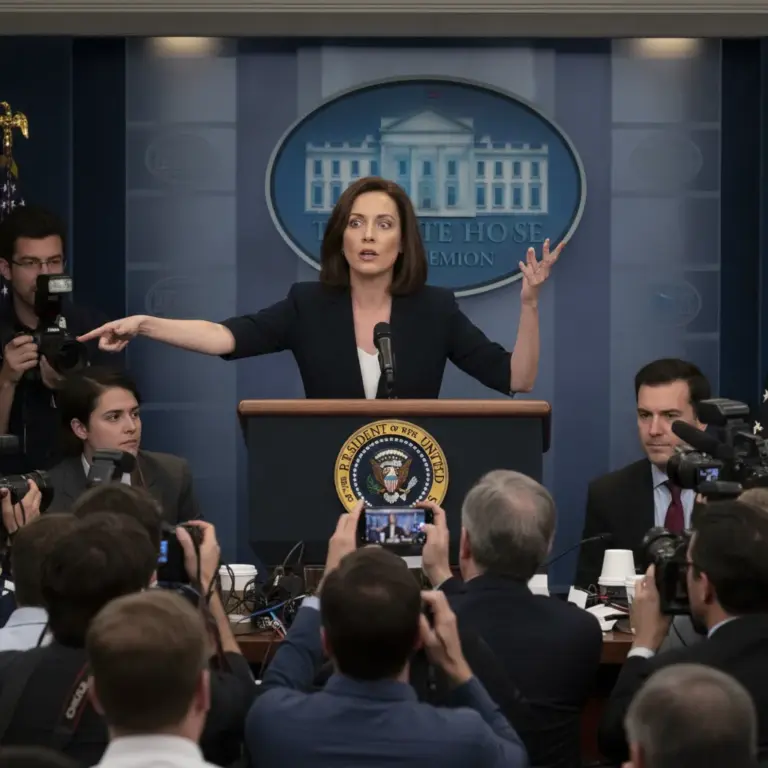
The White House briefing room has seen its fair share of chaos over the years, but Tuesday felt less like a political press conference and more like a scene from a dystopian science fiction movie. Katie Zacharia, the newest addition to the administration’s communication team, stepped onto the podium for her debut with a performance so stiff and devoid of emotion that observers quickly dubbed her the Zachbot. Between the nervous tics, a glaring lack of eye contact, and a stilted delivery that mirrored an early generation AI avatar, Zacharia managed to make fourteen minutes feel like an eternity.

Beyond the unsettling demeanor, the presentation was riddled with technical failures in human form. While reading through prepped notes regarding presidential achievements, Zacharia paused at bizarre intervals and misplaced her emphasis on key phrases, sounding almost mournful while discussing diplomatic relations with Venezuela. Her attempt to echo previous administrations by boasting about record rally attendance drew immediate comparisons to Sean Spicer’s infamous inaugural crowd claims, though current reports suggest those arenas are often far from full.

The confusion deepened when journalists began probing into Zacharia’s own mysterious background. When questioned about when she passed the bar exam to qualify as a lawyer, she offered a vague and unconvincing response involving her time in China. This disorientation continued during the Q&A session, where she appeared to freeze momentarily before delivering canned responses to tough questions about Ukrainian intelligence. In one particularly surreal moment, she accidentally referred to President Trump as her husband mid-sentence before correcting herself with an awkward laugh.

Despite the toe curling nature of the event, Zacharia did manage to deliver one piece of genuine news by announcing that Ambassador Kimberly Guilfoyle had been asked to resign. However, any victory was overshadowed by the general sense that she was malfunctioning under pressure. While Donald Trump praised her performance shortly after the briefing ended, former short lived staffer Anthony Scaramucci was quicker to predict her fate on social media, suggesting that her internal clock is already ticking toward another rapid exit from the West Wing.

Donald Trump returned to his familiar playbook of sweeping boasts and disputed facts during a recent campaign rally in Wasilla, Alaska. Addressing a crowd of supporters, the president insisted that his decision to initiate conflict with Iran was driven by an urgent security threat, claiming the nation was only two weeks away from possessing a nuclear weapon. This assertion stands in direct contradiction to reports provided by U.S. intelligence agencies to Congress in 2025, which indicated that Iran had actually suspended its pursuit of such weaponry back in 2003.

The rhetoric comes as a justification for a series of aggressive military actions taken throughout 2025 and early 2026, beginning with the bombing of Iranian nuclear enrichment facilities and culminating in a full scale war. While Trump has maintained that these strikes obliterated the country’s nuclear capabilities, critics point to the discrepancy between his public warnings and the actual assessments delivered by the intelligence community prior to the escalation.

Beyond foreign policy, Trump spent a significant portion of the event railing against the media over economic pressures facing Americans. He recounted an anecdote involving a supposed confrontation with reporters just twenty four hours after taking office on January 20th, alleging he was interrogated about affordability and inflation immediately upon arrival. However, official transcripts from that first news conference tell a different story; rather than focusing on price hikes, journalists primarily questioned him regarding presidential pardons for those involved in the January 6 Capitol riots.

The Alaskan stop served as more than just a venue for grievance, as Trump concluded the evening by promising financial rewards and government favors should Republicans secure victory in upcoming elections. In a move that legal experts suggest may violate the Hatch Act, he brought his Federal Communications Chair onto the stage to promise millions in expanded high speed internet investments, blending official governance with partisan campaigning in front of an energized base.

The race for the mayor of Los Angeles reached a fever pitch on Tuesday night as candidates Karen Bass and Nithya Raman faced off in their final televised debate. The event served as a high stakes closing argument for both women, characterized by sharp exchanges and direct challenges regarding their visions for the city’s future. Observers noted that the atmosphere was particularly tense, as both candidates sought to solidify their support just days before voters head to the polls.

Following the broadcast, political strategist Matt Klink provided a detailed recap of the encounter, highlighting several key moments where the two opponents traded jabs over policy differences. According to Klink, the chemistry between Bass and Raman shifted from formal discourse to more aggressive confrontations, reflecting the urgency of a tight race. He suggested that these personal clashes may be what sticks in the minds of undecided voters who are weighing which leader is better equipped to handle the city’s pressing crises.

As the campaign enters its final stretch, analysts believe this last public confrontation could influence momentum in critical districts across Los Angeles. While both candidates have focused heavily on systemic issues affecting urban governance, it was the raw energy and tactical maneuvering seen during Tuesday’s debate that defined the evening. With no further debates scheduled, the focus now shifts entirely to get out the vote efforts leading up to election day.