Archive

October 15, 2026

Browsing

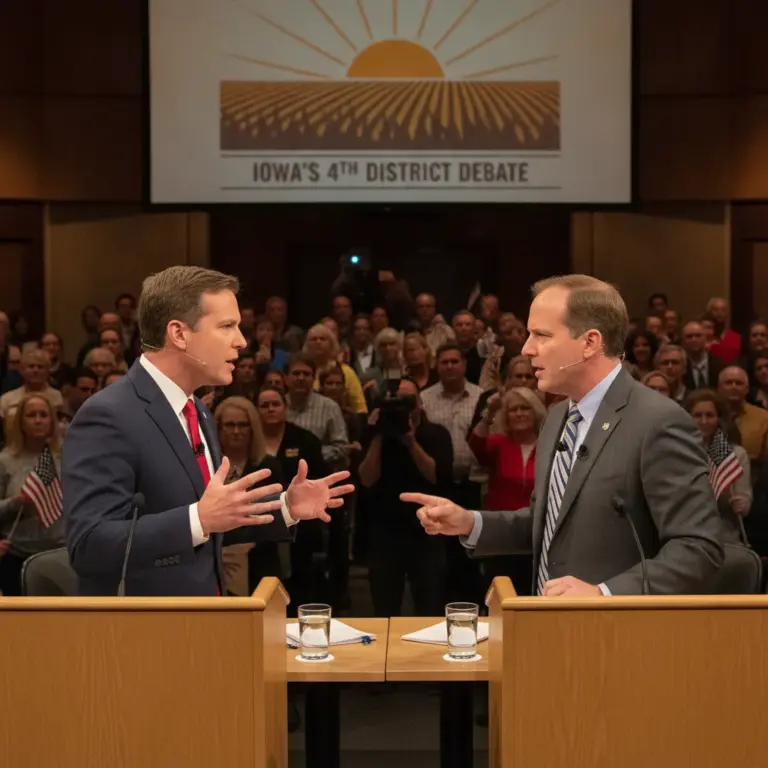
Republican contender Chris McGowan and Democrat Dave Dawson are set to go head-to-head tonight in a highly anticipated debate for the open U.S. House seat in Iowa’s 4th Congressional District. Starting at 8 p.m. EDT, the event will be broadcast live via Iowa PBS, giving voters their first major opportunity to see the candidates clash over policy and vision for the region.

The vacancy comes after a series of political shakeups involving longtime Representative Randy Feenstra. After serving three terms with the backing of Donald Trump, Feenstra opted to leave his congressional post to run for governor following Kim Reynolds’ decision not to seek another term. However, that bid ended in an unexpected loss to businessman Zach Lahn, leaving the door wide open for a new representative in the district.

While both McGowan and Dawson are campaigning hard to capture the seat, nonpartisan analysts suggest the uphill climb may be steeper for the Democrats. The Cook Political Report currently classifies the contest as Solid Republican, indicating that despite the competitive nature of tonight’s debate, the GOP maintains a strong advantage heading into election day.
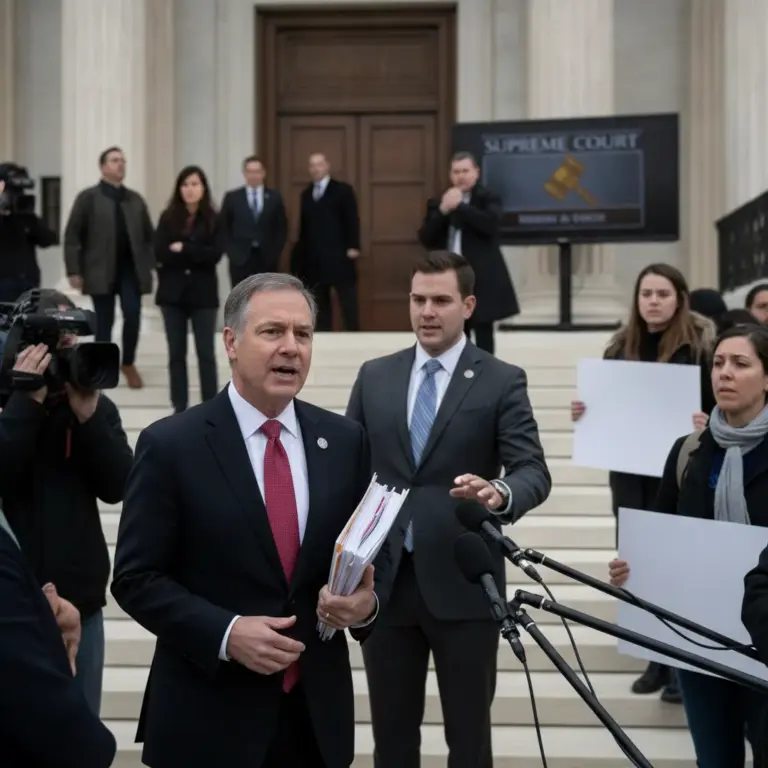

The United States Supreme Court has once again intervened in a brewing battle over campaign finance, siding with Republicans in a dispute regarding discounted television and radio advertising rates. By granting a stay requested by the Federal Communications Commission, the court effectively removed a strict deadline that would have forced the agency to resolve a Democratic legal challenge before the November 3 midterm elections. This move allows the FCC, which is led by Trump ally Brendan Carr, to maintain a policy that extends low cost ad rates to party committees rather than limiting them strictly to individual candidates.

The decision highlights a deepening divide both within the judiciary and across the political spectrum. While the conservative majority favored the stay, liberal justices Sonia Sotomayor and Ketanji Brown Jackson signaled they disagreed with the move. The conflict stems from what Democrats describe as blatant procedural stalling by the FCC. A lower court had previously grown impatient with these delays, accusing the agency of using tactic maneuvers to avoid a ruling while the clock ran out on the current election cycle.

For Republican strategists, this victory ensures that their financial advantages remain intact during a critical stretch of campaigning. Recent filings show that national GOP committees have significantly outperformed their Democratic rivals in fundraising and spending since previous coordination limits were struck down earlier this summer. With hundreds of millions of dollars in cash reserves, Republicans are now positioned to leverage these cheaper airtime rates to saturate markets leading up to Election Day.

An FCC spokesperson defended the action, stating that avoiding a sudden change in rules mid election prevents chaos for broadcasters and campaigns alike. However, Democratic candidates continue to argue that the policy is fundamentally unlawful and designed specifically to give one side an unfair edge. For now, those arguments will likely remain unheard until well after voters have headed to the polls, leaving the status quo firmly in place for the final push toward November.

Millions of Americans are preparing for a bump in their monthly checks after the Social Security Administration announced a 3.6 percent cost-of-living adjustment for 2027. This update, designed to shield retirees and disabled beneficiaries from the eroding power of inflation, will provide an average increase of 75 dollars per month for those receiving retirement benefits. According to Social Security Commissioner Frank Bisignano, the move aims to offer greater financial stability to roughly 76 million people across the country.

The timing of the increase follows fresh government data showing that consumer prices are once again accelerating, driven largely by a spike in gasoline costs. While this represents the largest jump since the massive surge seen in 2023, many advocates argue it still may not go far enough. Myechia Minter-Jordan, CEO of AARP, noted that these adjustments are critical because so many seniors rely on Social Security for at least half of their total income while facing rising costs for basic necessities like healthcare and groceries.

Recipients should keep in mind that the final amount hitting their bank accounts might be slightly dampened by rising Medicare premiums. With Part B premiums projected to climb to nearly 210 dollars a month, some of the gains from the cost-of-living adjustment could be offset by these mandatory deductions. For those looking to plan their budgets, the administration suggests multiplying current monthly benefits by 0.036 to get a rough estimate of the increase.

Official notices detailing exact payment dates and personalized dollar amounts will be sent out in December via mail, though users with online accounts can access their specifics starting in late November. As policymakers debate potential reforms to how these adjustments are calculated—including proposals to switch indices—advocates warn that changing the formula could lead to lower long term benefits for an aging population already feeling financially insecure.

Netflix is undergoing its most significant organizational overhaul in four years, resulting in the departure of Vice President of Film Doug Belgrad. The exit comes as part of a broader cost cutting initiative announced by co-CEOs Ted Sarandos and Greg Peters, who revealed that roughly 1,000 employees representing about six percent of the total workforce will be laid off. While leadership maintains that the company’s financial health remains strong, these cuts signal a strategic pivot toward leaner operations during a volatile period for the entertainment industry.

Belgrad arrived at the streaming platform earlier this year, serving as a critical lieutenant to film chairman Dan Lin. With a deep pedigree that included leading Columbia Pictures at Sony, Belgrad was tasked with managing over thirty production executives across Netflix’s vast array of original live action projects. He played a pivotal role in coordinating heavy hitting productions involving filmmakers like Guillermo del Toro and Greta Gerwig, and he recently celebrated the premiere of Ben Affleck’s latest directorial effort, Animals.

Under current management, Netflix has shifted its movie division into specialized genre silos to streamline development. This structure sees different executives handling specific categories such as thrillers and action films separately. Despite his high standing within this framework, Belgrad became a casualty of the reorganization aimed at improving efficiency amidst an annual content spend estimated at twenty billion dollars.

In a memo to staff, Sarandos and Peters acknowledged the difficulty of the layoffs but urged their teams to remain focused on innovation at the intersection of tech and media. They insisted that aggressive investments in high impact areas would continue even as they trim overhead. As for Belgrad, he continues to lead 2.0 Entertainment, his own venture which currently has several feature films in progress through partnerships with studios like Paramount and Sony.

A former engineer at OpenAI is facing federal charges after authorities say he attempted to spy on highly sensitive company discussions using makeshift surveillance equipment. Abdulrahman Alfozan, a 35 year old Saudi national and legal permanent resident of the United States, was arrested by the FBI following the discovery of a recording device hidden behind a television in one of the company’s most secure meeting rooms. In a detail that seems more like a movie plot than corporate reality, investigators found the bug carefully wrapped in toilet paper to avoid detection.

Court documents suggest that Alfozan may have turned to artificial intelligence to plan his operation. Prosecutors allege that between August and September, he used productivity chatbots to inquire about meeting room schedules and where external partners typically met with company executives. He reportedly went even further, utilizing a chatbot account belonging to his spouse to research how to construct a remote listening device and successfully install it without being noticed.

The stakes were particularly high given the nature of the targeted room, which served as a hub for discussing confidential technical strategies and government partnerships. While Alfozan had no authorization to attend these sessions, CCTV footage reportedly showed him loitering near the area multiple times throughout September. Security eventually uncovered the first device on September 30, and shortly thereafter, another similar recorder was found inside an unattended bag containing Alfozan’s identification.

OpenAI responded to the breach via social media, noting that they utilized their own AI models to analyze the hardware and trace its origin. Despite the intrusion, the company stated there is currently no evidence that proprietary source code or customer data was stolen. For now, Alfozan remains in legal limbo; while his attorney argues that these accusations are entirely out of character for a man who moved to America chasing a dream, the defendant faces up to five years in prison if convicted of intercepting oral communications.

Netflix is feeling the sting of a massive corporate restructuring that has claimed some of its most seasoned creative voices. While co-CEOs Ted Sarandos and Greg Peters initially suggested that the bulk of the thousand job cuts would fall upon technical, legal, and HR departments, the reality has proven far more disruptive for the company’s storytelling engine. Among the highest profile departures is Carolina Garcia, who served as director of original series for a decade. Garcia was a cornerstone of the streaming giant’s growth, managing pivotal relationships with heavy hitters like The Duffer Brothers and overseeing global phenomena such as Stranger Things.

The purge extended deep into the television development ranks, removing several key directors and managers responsible for shaping the platform’s prestige slate. Departing executives include Lisa Lang McMullen, Andrew McQuinn, James Oh, and Jason Pan. These exits represent a significant loss of institutional knowledge and industry connections, as many brought decades of experience from legacy studios like Disney, Fox, and Warner Bros. On the film side, the losses were equally steep with the departure of Vice President Doug Belgrad.

Beyond content creation, Netflix appears to be drastically scaling back its pursuit of industry accolades. The publicity and awards teams took a severe hit, resulting in the exit of senior director Kelly Caton and entertainment communications director Dominic Pagone. Insiders suggest that a substantial portion of the awards strategy team has been eliminated entirely, signaling a potential shift in how the streamer approaches its image during award season.

Despite the scale of these departures—which account for roughly six percent of the total workforce—Netflix has remained tight lipped about the specifics. When pressed for details regarding why so many veteran programmers and strategists were caught in this wave of layoffs, company representatives declined to provide further comment.

Federal authorities have arrested a Saudi national employed as an engineer at OpenAI after he allegedly planted a secret recording device in an executive conference room. According to prosecutors, Abdulrahman Alfozan hid the device behind a television at one of the company’s San Francisco offices around late September. The discovery has sparked immediate concern regarding potential attempts to steal sensitive proprietary information from one of the world’s most prominent artificial intelligence firms.

In a twist of irony, investigators claim that Alfozan turned to the very technology he helped develop to orchestrate the operation. Federal prosecutors allege that the engineer utilized his wife’s ChatGPT account to research the logistics of corporate espionage. In the days leading up to the installation, Alfozan reportedly entered various prompts asking how to construct a continuous audio recorder, how to enable live listening capabilities, and how to effectively download or delete recorded files.

While Alfozan faces serious allegations tied to the assembly and placement of the surveillance equipment, officials have stated that his wife has not been charged in connection with the case. This breach comes at a tumultuous time for OpenAI, which continues to navigate intense scrutiny over safety protocols and internal stability as it leads the global race in generative AI development.