Archive

October 28, 2026

Browsing

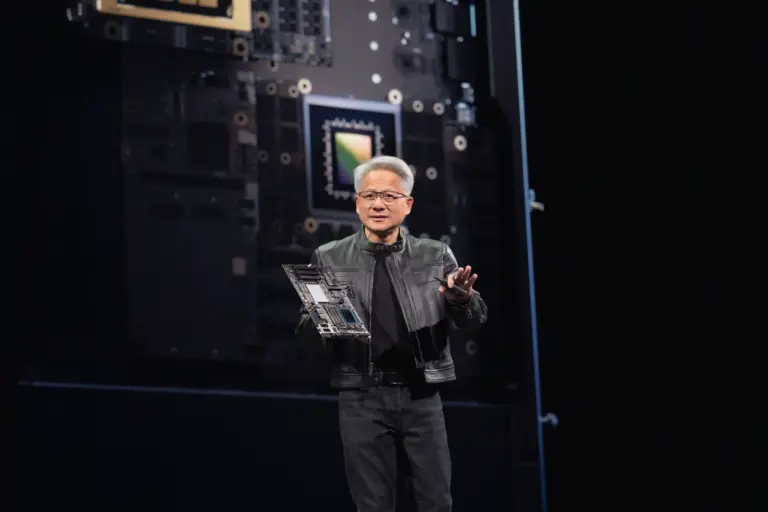
Nvidia stock NVDA rose on Tuesday as the chipmaker announced a $3 billion investment in Meta Platforms’ equity offering, strengthening their partnership as competition in the artificial intelligence infrastructure market intensifies.

Nvidia shares gained around 1%, while Advanced Micro Devices (AMD) climbed more than 5% after announcing a separate $1 billion investment in Meta’s offering.

Meta shares slipped about 1.1%, while Broadcom rose more than 3% in trading.

The investments come as Meta expands its AI infrastructure and develops its own custom chips, raising questions about how Nvidia, AMD and Broadcom will compete to supply the technology powering its services.

Nvidia and AMD invest in Meta’s AI expansion

Nvidia said on Monday that it would invest $3 billion in Meta’s recently announced share offering.

As part of the expanded partnership, Meta will increase its deployment of Nvidia hardware to support its AI agents, while the companies explore further technological collaboration.

AMD announced a separate $1 billion investment in the offering on Tuesday.

The company said its Helios server racks would support Meta’s AI models and services.

The arrangements highlight how major chipmakers are seeking to strengthen relationships with large technology customers investing heavily in AI infrastructure.

Nvidia has previously invested in smaller AI startups and hardware suppliers.

Its investment in Meta, however, involves a major publicly traded customer that already purchases substantial amounts of Nvidia hardware.

Meta is also placing its Muse AI agent at the centre of its AI strategy, increasing the importance of the computing infrastructure needed to develop and operate its models.

Nvidia and AMD may be seeking to maintain their positions as Meta expands its computing capacity and considers alternatives to commercially available AI chips.

Meta’s custom chips pose a challenge for Nvidia

Meta is reportedly planning to begin manufacturing a new in-house AI chip from September, adding another dimension to the competition for its infrastructure spending.

The company has also worked with Broadcom on custom chip development.

Broadcom has indicated interest in participating in Meta’s equity offering, while its CEO, Hock Tan, serves as a strategic adviser to Meta’s board.

The involvement of multiple chipmakers suggests Nvidia’s expanded relationship with Meta will not necessarily translate into an exclusive supply arrangement.

For Nvidia, investing in Meta could help reinforce demand for its hardware while reducing the risk that the customer shifts a larger share of its spending towards internally developed chips.

However, the company faces competition from AMD and Broadcom as Meta evaluates different technologies for its AI systems.

Nvidia’s AI financing strategy draws scrutiny

Nvidia’s investment in Meta also highlights its growing role in financing the broader AI infrastructure build-out.

The company has entered into arrangements with businesses that purchase its chips and has supported financing for data-centre projects.

Earlier this year, Nvidia agreed to guarantee up to $105 billion in conditional lease and power payment obligations tied to an OpenAI data-centre project in Ohio.

The arrangement followed earlier discussions of a guarantee of as much as $250 billion, which was subsequently scaled back.

Nvidia also agreed to invest $1.5 billion in SB Energy, the project’s developer, and supply the facility’s chips.

The guarantee is a contingent financial obligation, rather than a direct $105 billion investment in OpenAI.

Nvidia has also agreed to purchase unsold cloud-computing capacity from CoreWeave and entered into arrangements with cloud-computing companies in Australia.

These deals have raised concerns among some analysts and investors about the potential risks of financing customers that subsequently purchase Nvidia products.

Critics have drawn comparisons with the dot-com era, when equipment suppliers financed customers to support demand for their own products.

Nvidia CEO Jensen Huang has rejected criticism that such arrangements amount to circular financing.

When the OpenAI deal was announced in August, Huang said in an X (formerly known as Twitter) post, “Is this circular financing? No. OpenAI will pay the lease.”

Earnings from major technology companies this week will give investors fresh evidence of whether AI spending is generating sufficient returns to support further investment.

“One of the key catalysts for Nvidia this week will be earnings from major technology companies, including Amazon, Alphabet, and Microsoft. Investors will be looking beyond headline AI spending figures to assess whether these companies are generating sufficient revenue growth and business returns to justify continued investment,” said David Merry, CEO of Kyro.

“For Nvidia, this is particularly important because its growth outlook is closely tied to the sustainability of customer spending. If earnings point to strong monetisation of AI investments, that could reinforce confidence in the current spending cycle”, he added.

Merry noted that if companies’ rising AI spending fails to translate into stronger returns, investors may question whether the current pace of investment can be sustained.

The post Nvidia stock rises after Meta deal, but AI financing risks linger appeared first on Invezz
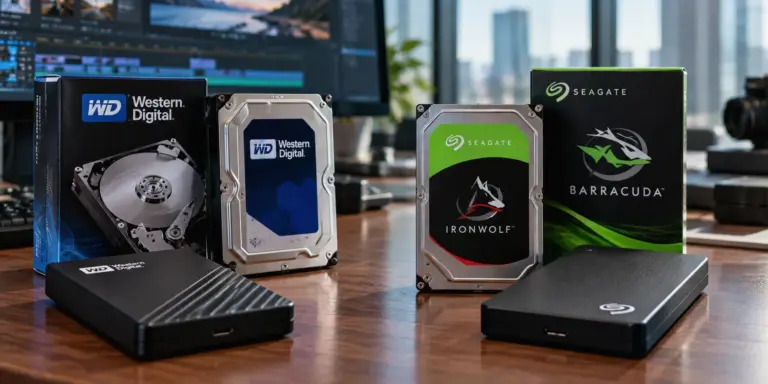
Seagate Technology shares STX rose more than 4% on Tuesday as investors awaited the hard-drive maker’s fiscal first-quarter 2027 earnings report, looking for updates on data-centre storage demand, pricing and its outlook for the coming quarters.

Seagate is scheduled to release its results after Tuesday’s market close.

The report comes as the company navigates a pullback from its recent highs despite benefiting from rising demand for data storage driven by artificial intelligence.

Seagate shares remain up nearly 200% over the past year at $675.18, but have fallen about 40% from their record closing high on June 22, 2026.

Analysts adjust Seagate stock price targets

Ahead of the results, Rosenblatt lowered its price target on Seagate to $1,100 from $1,400 while maintaining a Buy rating.

Analyst Kevin Cassidy attributed the reduction to sector-wide valuation multiple compression.

Rosenblatt favours Western Digital as a relative catch-up opportunity, but sees greater near-term earnings-per-share upside at Seagate as its heat-assisted magnetic recording (HAMR) technology scales.

HAMR allows the company to increase the amount of data stored on hard drives, supporting efforts to meet growing cloud storage demand.

Morgan Stanley raised its Seagate price target to $1,200 from $1,187 last week, maintained an Overweight rating and reinstated the stock on its Top Picks list.

The firm cited improving hard-disk-drive fundamentals and a broadening customer base.

Bank of America also raised its price target to $1,200 from $1,150 and reiterated a Buy rating.

Analyst Wamsi Mohan expects Seagate to increase pricing as its build-to-order contracts for nearline hard drives come up for renewal.

BofA expects prices and margins to continue expanding well into 2028, potentially supporting a recovery in the stock.

According to FactSet, 83% of analysts covering Seagate rate it the equivalent of a Buy, while the average price target remains above $1,100.

Seagate earnings expected to nearly triple

Analysts expect Seagate’s fiscal first-quarter revenue to rise approximately 58% year over year to $4.15 billion, according to Koyfin.

Adjusted earnings per share are projected to increase 185% to $7.43, compared with $2.61 a year earlier.

The forecasts are broadly in line with the company’s July guidance, which called for revenue of $4.1 billion, plus or minus $100 million, and non-GAAP earnings per share of $7.30, plus or minus $0.20.

In the previous quarter, Seagate reported revenue of $3.63 billion and adjusted earnings per share of $5.71, supported by strong demand from cloud data centres.

The upcoming report will give investors an update on whether the company is meeting its forecasts as demand for high-capacity storage grows alongside AI applications.

AI demand supports growth, but supply risks remain

Seagate and Western Digital are the only US hard-disk-drive sellers and have benefited from tight supply by securing long-term customer contracts at high margins.

AI applications generate and process large volumes of data, increasing demand for storage infrastructure.

However, the industry remains sensitive to changes in demand and supply. Western Digital recently beat earnings expectations, but its shares fell later due to concerns about rising capital expenditure and the potential for additional hard-drive supply. Seagate shares also came under pressure.

Earlier this month, Seagate stock dropped following a report that Japan’s Toshiba planned to increase production capacity, highlighting investor concerns about a possible easing of supply constraints.

Seagate CEO Dave Mosley previously said the company expected continued growth in demand for high-capacity storage as AI applications generate increasing volumes of data.

The post Seagate stock rises 4% ahead of earnings as AI storage demand grows appeared first on Invezz

Nvidia and AMD moved to deepen their partnerships with Meta as the Facebook parent expanded its artificial intelligence infrastructure spending, while Microsoft offered voluntary buyouts to eligible employees.

Meanwhile, gold prices recovered as oil eased on hopes of progress in Middle East peace talks, although geopolitical risks continued to cloud the energy market.

Nvidia and AMD invest in Meta as AI spending expands

Nvidia will invest $3 billion in Meta Platforms as the social media company increases its planned equity fundraising to $97.5 billion from $95 billion announced a day earlier.

Meta has launched offerings of about $35 billion in common and preferred stock and plans to raise up to another $60 billion through an at-the-market programme.

Nvidia, AMD and Broadcom had expressed interest in purchasing up to $5 billion in shares, according to Meta’s announcement.

The Nvidia investment accompanies an expanded partnership covering AI models, computing infrastructure and software optimisation.

Meta plans to increase its use of Nvidia infrastructure, including Vera Rubin systems and Vera CPUs, while the companies will collaborate on networking and tools to improve AI agent performance.

AMD separately announced a $1 billion investment in Meta’s equity offering alongside an expansion of their computing partnership.

The collaboration spans CPUs, GPUs, networking and software.

AMD said its Helios rack-scale systems were installed and undergoing testing at Meta, with broader deployment planned.

The agreements highlight Meta’s efforts to secure computing capacity as it develops AI models and services to compete with rivals including OpenAI and Anthropic.

Microsoft offers voluntary buyouts to about 60,000 employees

Microsoft is offering voluntary buyouts to about 60,000 eligible employees in the US, Canada, India and the UK as it adjusts its workforce while investing heavily in AI infrastructure.

The programme covers employees at experience level 70 or below across several divisions, including AI experiences, Copilot, finance, human resources, Xbox and Windows + Devices.

Marketing, commercial business and security teams are excluded.

Microsoft employed 223,000 full-time workers globally as of June 30, 2026.

The initiative follows an earlier voluntary retirement programme introduced in April, which was available to about 9,000 US employees.

Microsoft said more than 30% of those eligible for that programme accepted the offer.

The workforce changes come as Microsoft forecasts $175 billion in capital expenditure for calendar year 2026.

Investors are assessing whether its substantial AI investments can generate sufficient returns, particularly as the company adapts its products and business model around AI services.

Gold rebounds as investors assess Fed outlook

Gold prices rose on Tuesday as lower oil prices eased some inflation concerns ahead of the Federal Reserve’s policy meeting.

Spot gold gained 1.1% to $4,060.80 an ounce, recovering after falling to $3,987.14 earlier in the session. US gold futures for December delivery rose 0.9% to $4,074.90.

Investors are also awaiting US personal consumption expenditures inflation data, due Thursday.

The Fed is expected to leave interest rates unchanged this week, but markets are pricing in an 83% probability of a rate increase in December, according to CME’s FedWatch Tool.

Higher interest rates generally weigh on gold by increasing the opportunity cost of holding a non-yielding asset.

Analysts have also lowered their 2026 gold forecasts amid elevated Treasury yields, a stronger dollar and expectations that rates will remain higher for longer.

Oil falls as traders monitor Middle East negotiations

Oil prices declined on Tuesday as traders monitored diplomatic efforts to ease the Middle East conflict, although prices remained near six-month highs.

Brent crude futures fell 1.78%, to $113.75 a barrel, while West Texas Intermediate declined 2%, to $99.68.

Iranian officials held discussions with representatives from Saudi Arabia, Turkey and Pakistan, with the countries agreeing to continue talks on peace and security.

However, renewed Houthi attacks on Saudi Arabia, including a claimed strike on the Ras Tanura oil refinery, kept supply concerns elevated.

UBS raised its year-end Brent forecast to $110 a barrel from $100, citing geopolitical uncertainty and volatile Middle East supplies.

Meanwhile, SEB analysts said oil prices continued to reflect the risk of further US and Israeli attacks on Iran.

The competing signals from diplomacy and regional attacks kept energy markets volatile, with developments in the conflict remaining central to the outlook for oil prices.

The post Evening digest: Nvidia, AMD invest in Meta, gold prices rebound appeared first on Invezz

Visa Inc (V) delivered another quarter of double-digit growth late on Tuesday, reporting fiscal Q4 revenue of about $12.14 billion and adjusted earnings per share (EPS) of $3.48.

Revenue increased 13% from a year earlier, while adjusted EPS came in up 17% – both ahead of $12.09 billion and $3.44 a share consensus.

The earnings release demonstrate continued strength in digital payments, although investors face a more demanding question after Visa stock’s recent rally – how much of that resilience is already reflected in its price?

Spending held up, but Visa growth moderated in Q4

Visa’s payments volume increased 9% in constant currencies during the September quarter, easing from 10% growth in the preceding quarter.

That suggests spending remained resilient, although the pace moderated after a stronger spring.

For investors, the distinction matters.

Continued expansion supports Visa Inc.’s transaction-driven business – but a modest slowdown makes it harder to build an investment case around accelerating consumer demand.

Revenue nonetheless grew faster than payments volume.

That’s encouraging, but the two measures are not interchangeable: V’s revenue also reflects pricing, transaction characteristics, and services beyond basic payment processing.

The investment takeaway is that healthy spending remains a foundation for earnings.

Sustaining faster revenue growth requires Visa to keep increasing what it earns from its broader network, alongside attracting more payment activity.

Cost discipline offers encouraging signal for Visa stock

Visa’s earnings presentation showed adjusted operating expenses climbing 12%, slightly below its 13% revenue increase.

On an adjusted constant-dollar basis that also removes acquisition effects, revenue increased 12%, and expenses rose 11%.

That indicates modest operating leverage, with sales expanding faster than the costs needed to support them.

The comparison with the previous quarter is constructive. Q3 adjusted expenses had soared 17%, outstripping revenue growth of roughly 14%.

For Visa shares, restoring that relationship matters because sustained cost growth above revenue eventually compresses profitability.

This quarter offers evidence of improvement – although the narrow gap leaves “limited room” for complacency.

Further progress would strengthen the argument that Visa Inc can deliver attractive earnings growth without depending on faster consumer spending.

A solid quarter still needs a sensible purchase price

Valuation remains the hurdle for prospective buyers. Ahead of the release, V stock traded at about 27x forward earnings, compared with roughly 23x in March.

That creates an asymmetric challenge: dependable execution can support the business while still producing an underwhelming share-price return if expectations are already ambitious.

All in all, the quarter strengthens the case for keeping Visa on a long-term watchlist.

It offers less justification for buying at any price.

Investors considering a position should assess subsequent earnings-estimate revisions against the purchase multiple.

A higher profit forecast would provide firmer support for the shares; an unchanged forecast would leave future returns more dependent on an already generous valuation.

The post Visa Q4 profit jumps: can earnings keep pace with the stock? appeared first on Invezz

US stocks closed higher on Tuesday, led by gains in technology and semiconductor shares as investors assessed corporate earnings, falling oil prices and the Federal Reserve’s latest policy meeting.

The Nasdaq Composite gained 1.14% to 26,467.06, while the S&P 500 rose 0.57% to 7,720.63.

The Dow Jones Industrial Average edged up 2.44 points to 52,364.02, leaving it essentially unchanged.

Investors continued to buy AI-related stocks following Anthropic’s public listing plans, while easing crude prices helped reduce inflation concerns.

The Federal Reserve began its two-day meeting, with markets widely expecting interest rates to remain unchanged.

Chip stocks extend gains as AI optimism returns

Semiconductor shares advanced for a third consecutive session as investors responded to developments surrounding Anthropic’s planned initial public offering and continued demand for AI infrastructure.

Broadcom climbed 4% after a group of banks, including Bank of America, Citi and Morgan Stanley, alongside Blackstone, announced $63 billion in financing for the purchase of Broadcom’s technology for Anthropic.

Micron Technology rose more than 3%, while Advanced Micro Devices gained 5%.

The Philadelphia Semiconductor Index has gained 61.6% this year, outperforming the S&P 500’s 12.8% advance over the same period.

However, the index remained more than 20% below its June 22 record closing high.

Meta Platforms’ decision to increase its planned equity fundraising to $97.5 billion to support its AI expansion also drew attention. Its shares fell 1.2%.

Despite the renewed rally, concerns remain over whether companies can sustain their AI spending amid rising borrowing costs and uncertainty surrounding future investment plans.

Economic data showing an increase in new orders for computers and peripheral equipment provided further evidence of demand for AI-related products.

Corporate earnings produce mixed stock reactions

Third-quarter earnings continued to influence individual stocks as reporting season gathered pace.

Nearly half of S&P 500 companies had reported results, with 83% exceeding expectations, according to the latest available LSEG data.

JetBlue shares jumped 18% despite the airline reporting a larger-than-expected third-quarter loss. Investors responded to its outlook for further margin expansion in the fourth quarter.

United Parcel Service gained 5% after reporting better-than-expected third-quarter results.

Boeing fell 9.7% following a larger-than-expected quarterly loss.

Water-management company Xylem dropped 12.4% after lowering its full-year forecasts, while Sherwin-Williams declined 2.3% following a quarterly profit miss.

Royal Caribbean rose 6.5% after raising its full-year profit forecast.

Technology stocks led gains among the S&P 500’s 11 major sectors, while energy shares recorded the steepest percentage decline as crude prices retreated.

Oil falls as markets await Federal Reserve decision

Oil prices declined as investors monitored diplomatic efforts to end the Middle East conflict.

West Texas Intermediate crude settled 1.70% lower at $100.03 a barrel, while Brent crude fell 1.53% to $113.99.

Iranian Supreme Leader Mojtaba Khamenei and senior national security official Mohsen Rezaei discussed conditions for ending the conflict, helping ease concerns about potential supply disruptions.

The Federal Reserve began its October policy meeting on Tuesday, with its decision due Wednesday afternoon.

Markets broadly expect the central bank to keep its benchmark interest rate in the 3.75% to 4% range.

Investors will focus on policymakers’ guidance for the remainder of the year, particularly the possibility of another rate increase in December as the central bank continues to address inflation.

The post Nasdaq rises 1.14% as chip stocks rally ahead of Fed decision appeared first on Invezz

Investors in European Lithium have given an overwhelming thumbs up to a merger that will see the company absorbed into Critical Metals. During meetings held on October 22, shareholders showed nearly unanimous support for the move, with more than ninety seven percent of voters backing the share scheme. This decisive victory clears a major hurdle for the eight hundred thirty five million dollar all stock deal first proposed back in April, effectively paving the way for a streamlined corporate structure focused on high value mineral extraction.

The primary prize of this takeover is total control over the Tanbreez rare earths project located in southern Greenland. While Critical Metals already held a dominant stake in the venture, folding European Lithium into the business removes the final minority holding and simplifies ownership. To make the math work even better, Critical Metals intends to cancel millions of shares previously held by European Lithium, a strategic move designed to limit dilution as new shares are issued to stakeholders during the transition.

Timing is now moving quickly toward a final conclusion. Pending approval from the Supreme Court of Western Australia, European Lithium is expected to trade on the Australian Securities Exchange for the last time around October 27. Shareholders should expect to receive their new Critical Metals shares by early November, marking a shift toward Nasdaq trading and leaving behind their former listing status as they consolidate under one banner.

Beyond the financial paperwork, the operational future looks promising following recent green lights from the Greenlandic government regarding mining and closure plans extending through 2050. Once specific operating permits are secured, Critical Metals will be positioned to extract nineteen different elements, including critical magnet metals like neodymium and praseodymium. For CEO Tony Sage and his team, these milestones represent a definitive leap forward in securing a steady supply of essential materials for modern technology.

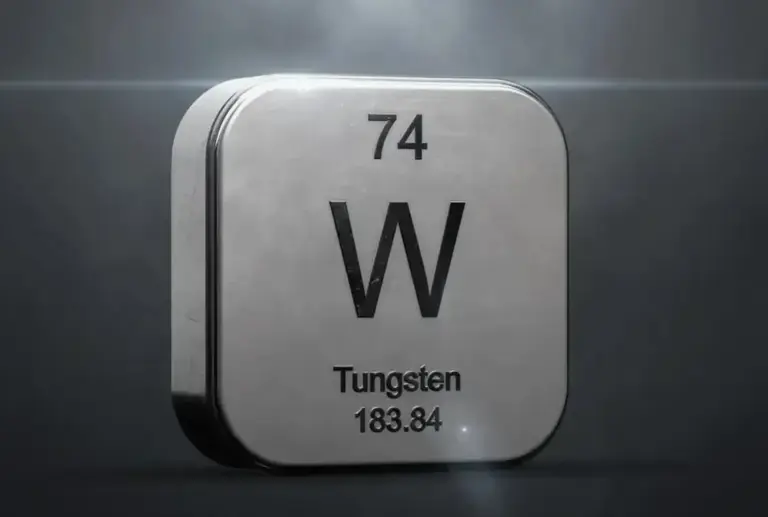
Australian exploration firm Pinnacle Minerals is making a strategic move into the American West, signing a binding agreement to acquire five tungsten projects in Utah. In a deal structured without an upfront cash payment, the company is taking over unlisted APT Tungsten, granting them access to roughly 4,000 acres spread across three counties. This expansion comes at a pivotal moment as the United States prepares to implement stricter defense regulations restricting tungsten sourced from China, Russia, North Korea, and Iran.

The acquisition includes several sites with proven histories of production, most notably the Lone Pine and Super W projects which saw significant output during the early 1940s. While previous rock chip samples have shown promising grades of tungsten trioxide, Pinnacle intends to conduct its own independent sampling to verify these figures. Among its new holdings, the company has identified the Hero project in Millard County as its top priority following reports of extensive outcropping skarn discovered during recent site visits.

CEO William Witham emphasized that securing domestic sources of tungsten is vital for national security given its essential role in aerospace and advanced manufacturing. By establishing a foothold in Utah, Pinnacle aims to help reduce the heavy reliance on foreign imports for this critical mineral. To facilitate future operations, there has been preliminary discussion regarding potential processing options at a facility in Nevada through a separate memorandum of understanding involving Nexus Metals.

Despite the optimism, the path forward involves some logistical hurdles including navigating private surface rights at Lone Pine and resolving claim priorities at Super W. The finalization of the deal remains subject to shareholder approval during an upcoming annual general meeting on November 30. If all approvals are secured, Pinnacle expects to launch full scale exploration efforts starting in January 2027.

Voters are turning out in record numbers across Jerusalem and Tel Aviv as Israel holds an election that many observers believe will define the country’s trajectory for years to come. The atmosphere is tense, with recent polling showing incumbent Benjamin Netanyahu locked in a dead heat with former military chief Gadi Eisenkot. Despite the surge in participation, analysts warn that the result may not provide immediate clarity, as neither candidate appears likely to secure the sixty one seats required to form a government independently, potentially leaving the nation in a period of prolonged political instability.

The contest has evolved into a raw referendum on Netanyahu’s leadership, centered heavily on national security and the survival of democratic norms. Opponents have spent the campaign highlighting the catastrophic intelligence failures surrounding the October 7 attacks and criticizing Netanyahu’s resistance to an independent inquiry. While Netanyahu continues to brand himself as the indispensable guarantor of security and leverages his ties to Donald Trump, critics point to his ongoing corruption trials and controversial judicial reforms as evidence of a leader more concerned with personal survival than public service.

Standing against him is Eisenkot, who leads the Yashar Party and anchors a diverse change bloc designed specifically to remove Netanyahu from power. This coalition brings together unlikely allies, ranging from hardline right wingers like Avigdor Lieberman to left leaning generals. While Eisenkot shares some of Netanyahu’s views on maintaining control over Gaza and supporting West Bank settlements, he has signaled a willingness to curb settler violence and explore limited autonomy for Palestinians, though a traditional two state solution remains largely absent from the mainstream discourse.

Adding further complexity is the role of Arab party blocs, who represent roughly one fifth of the population and could theoretically act as kingmakers in a hung parliament. However, most major Jewish parties have explicitly ruled out partnering with them, narrowing the path toward any stable coalition. As ballots continue to pour in amid sporadic allegations of irregularity, Israel awaits a verdict that will determine whether it maintains its furthest right shift in history or pivots toward a new era of governance under Eisenkot’s lead.

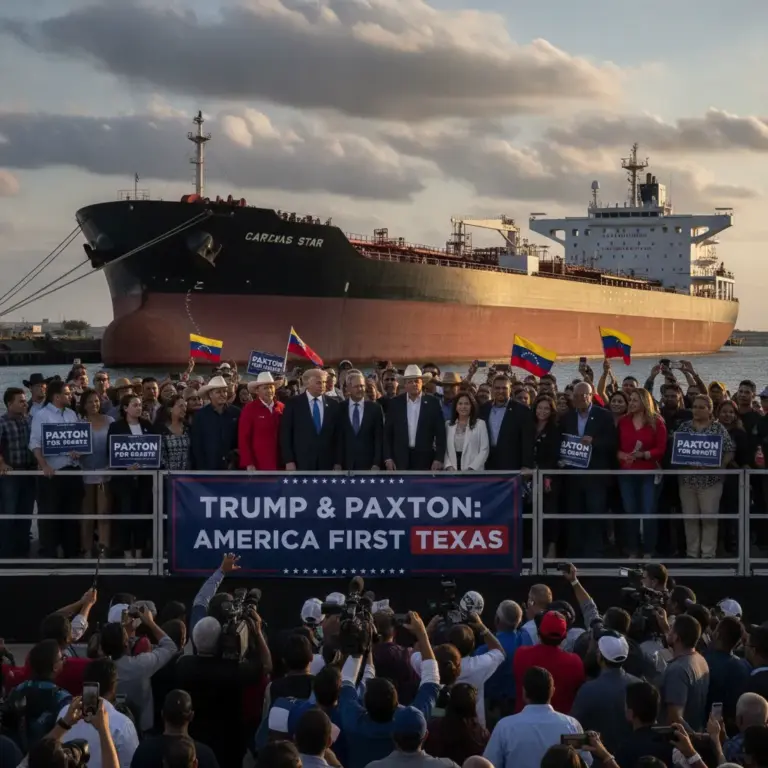
Donald Trump and Senator Marco Rubio have touched down in Texas to throw their full weight behind Ken Paxton in a high stakes bid for the United States Senate. The visit is designed to solidify Republican support for Paxton, with the former president using the trip not only to campaign for his ally but also to showcase a Venezuelan oil tanker he has described as a personal gift from Venezuela. The appearance underscores the deep alignment between Trump and Paxton, framing the race as a critical battle for the future of the party’s direction in the Lone Star State.

However, the campaign surge comes at a moment of surprising internal friction for the Texas Republicans. In a move that has sent shockwaves through the state party, Tom Phillips, a longtime stalwart of the GOP and former chief justice of the Texas Supreme Court, has officially endorsed Democrat James Talarico. Writing in an op-ed for the Austin American-Statesman, Phillips argued that Talarico would be a more dignified representative capable of productive bipartisanship, marking a rare instance of a high ranking conservative official crossing party lines during a general election cycle.

Phillips did not mince words regarding his opposition to Paxton, describing him as an acolyte who would enable presidential excesses and self-dealing. The former chief justice expressed concern that Paxton’s history of scandal would embarrass Texas on the national stage, regardless of how he conducts himself moving forward. While Phillips admitted that he does not agree with all of Talarico’s political positions, he maintained that honor and integrity are paramount, stating that while other candidates on the Republican ticket remain worthy, Paxton is simply not one of them.

The clash between these two narratives sets the stage for a volatile final stretch of the campaign. On one side, Trump seeks to energize the base by painting Paxton as a fighter who embodies the current movement of the MAGA wing. On the other, the endorsement from a judicial heavyweight like Phillips suggests that some traditional conservatives are wary of the baggage accompanying Paxton’s candidacy. As both camps intensify their efforts, the race has become a litmus test for whether loyalty to the top of the ticket can outweigh concerns over personal conduct and institutional stability.

With just one week remaining until the midterms, the political atmosphere surrounding President Donald Trump is growing increasingly suffocating. While pundits are buzzing about a potential Democratic wave that could strip Republicans of their grip on Washington, the actual outcome remains shrouded in volatility. Millions of ballots have already been cast, yet the final verdict depends on a chaotic mix of redrawn districts and massive injections of outside capital, including significant funding from Elon Musk. Despite the noise, the overarching narrative suggests a classic midterm rebuke for a sitting president whose promises to lower the cost of living have failed to materialize for many Americans.

For the GOP, the warning signs are flashing in places they once considered safe. In a telling shift, Trump has spent much of his recent campaign blitz reinforcing deep red territory rather than expanding his reach. A recent stop in Mississippi highlighted this anxiety, as the president felt compelled to personally bolster Senator Cindy Hyde-Smith against an unexpectedly fierce challenge. This defensive posture indicates that Republicans are bracing for impact, while the administration’s preemptive legal moves in states like Alaska and California suggest they are already preparing for contested results.

Adding to the pressure is an economy that feels hostile to the average voter. As gas prices climb and grocery bills soar, Trump continues to insist that the nation is experiencing a golden age—a claim that rings hollow to families struggling with inflation. Rather than addressing these kitchen table issues with empathy, the president has frequently detoured into bizarre personal grievances and eccentric commentary during his rallies, further alienating moderate voters who feel disconnected from his priorities.

While Democrats appear positioned to reclaim the House, victory is not guaranteed due to years of strategic gerrymandering that leaves only a handful of seats truly competitive. The battle for the Senate is even tighter, resembling a series of coin flips across ten key races where small shifts in turnout could determine everything. If Democrats manage to flip traditionally Republican strongholds like Ohio or North Carolina, it would signal a genuine rout; otherwise, Washington may simply trade one form of dysfunction for another as legislative gridlock looms over the next two years.