Archive

October 18, 2026

Browsing

Nike’s (NKE) Jordan brand is gaining ground among sneaker resellers, offering an “encouraging” signal for a business still struggling to regain its footing.

Citi’s tracking showed Nike captured 72.3% of resale volume in September, a 63bps increase from August, with Jordan driving most of the improvement.

That also exceeded the 70.8% average recorded between June and August.

Still, investors should resist treating stronger resale share as proof of a financial recovery. For NKE stock, these latest figures support cautious optimism about brand appeal rather than an immediate buying case.

What Jordan’s resale volume means for Nike stock

The most important distinction is between resale market share and actual sales growth.

Nike could capture a larger portion of secondary-market transactions even if the overall market contracts.

Citi’s reported figures alone therefore cannot establish whether more Nike sneakers changed hands in September, whether resale prices strengthened, or whether sellers earned better returns.

Those details matter since frequent trading doesn’t necessarily showcase stronger pricing power.

A coveted shoe commanding a premium tells investors something different from an oversupplied model changing hands at a discount.

September’s share also remained 4.7 percentage points below the 77.0% peak recorded in October 2023.

The improvement deserves attention, but it falls short of demonstrating that NKE has restored its former secondary-market dominance.

In short, resale transactions themselves don’t really establish an increase in the firm’s reported revenue.

Nike is deliberately accepting pain at Jordan

There is nevertheless a credible bullish interpretation – Jordan retains “consumer relevance” while Nike works to repair its distribution strategy.

On its latest earnings call, management acknowledged oversupplying iconic Jordan retro products and outlined plans to reduce the volume and frequency of selected launches.

Jordan represented 13% of NKE’s global business in Q1, while its sales declined in the mid-teens.

The investment logic is that tighter supply may eventually restore exclusivity, reduce the need for discounts, and improve the economics of future releases.

However, September’s resale share does not prove that this strategy is already succeeding.

Plus, Nike also faces a difficult trade-off: selling fewer pairs can protect a franchise’s desirability while hurting near-term revenue.

Investors buying the turnaround must accept that healthier brand positioning and faster sales growth may arrive on different schedules.

NKE shares need a strong earnings case

All in all, there’s reason to remain cautious on NKE shares; Jordan’s resale improvement is insufficient reason to load up on them today.

There sure are encouraging operating signs. Nike’s performance portfolio grew at a high-single-digit rate in the first quarter, while gross margin expanded 60 basis points to 42.8%.

Yet management still projected a high-single-digit revenue decline for fiscal 2027 – underscoring how heavily the weaker businesses weigh on the recovery.

For shareholders, the decisive issue is how much “sustainable profit” Nike Inc can generate while resetting Jordan, Sportswear and Greater China; and a resale-share gain offers rather limited help in answering that valuation question.

The post Jordan is driving Nike’s resale volume growth: buy NKE stock? appeared first on Invezz

Traders are increasingly betting that billionaire Elon Musk’s Tesla and SpaceX will merge by early 2027, bringing fresh momentum to one of Wall Street’s most ambitious merger theories.

By Friday morning, prediction-market odds of a merger before March had reached 56%, compared with 29% only earlier this week.

The data follows a Barclays’ research note outlining the strategic rationale for a combination.

Why a Tesla-SpaceX merger is gaining credibility

Barclays’ senior analyst Dan Levy sees a possible announcement before Tesla’s annual shareholder meeting, which his team expects to take place no later than December 6.

That creates two distinct timelines: a potential announcement in 2026 and prediction-market bets extending into 2027. Neither establishes when a transaction would actually close.

The investment case centres on artificial intelligence (AI).

Tesla is developing machines that operate in the physical world, including robotaxis and Optimus humanoid robots.

SpaceX’s AI businesses could supply complementary software and computing capabilities.

Barclays argues that bringing these together could accelerate development across both companies.

In practical terms, the proposed advantage will be tighter coordination between teams developing intelligent software and those building products that use it.

Here’s what the two companies would gain

Terafab offers a more concrete explanation for the merger discussion.

Barclays identifies the semiconductor initiative involving “Tesla, SpaceX and xAI” as a potential catalyst, because managing a shared project across separate companies creates governance and approval complexity.

A combination could simplify those decisions and align investment priorities.

For Tesla, the benefits include “closer integration” with AI software and satellite connectivity.

For SpaceX, Tesla’s energy products and production capabilities could complement its infrastructure ambitions.

Reported possibilities include “Grok-enabled” interactions for Optimus, Starlink connectivity for vehicles, and Tesla energy systems supporting SpaceX data centres.

The economic question is whether common ownership would make those projects faster or cheaper than existing commercial partnerships.

Combining businesses only creates shareholder value if the resulting gains justify the acquisition terms, integration costs and additional complexity.

Deal terms will matter more than betting odds

Investors still lack the information needed to judge an actual transaction.

Barclays has explored an all-stock structure in which SpaceX acquires Tesla, but that remains an analyst’s projection only for now.  

For shareholders, the eventual terms would determine how much of the combined business they own and which investment risks they inherit.

Governance would also deserve scrutiny because both companies are led by Musk.

A compelling AI narrative cannot settle those questions. Investors would need formal disclosures explaining valuation, financing, voting rights, and the approval process before assessing whether a merger benefits them.

Note that Wall Street currently rates both of Musk’s companies, SpaceX and Tesla, at Overweight – with mean price targets signaling significant upside potential from here.

The post Prediction Markets are betting on a Tesla, SpaceX merger in 2027 appeared first on Invezz

Apple AAPL shares edged higher after the company’s first foldable smartphone, the iPhone Duo, sold out shortly after preorders opened on Friday.

At 11:05 AM EST, the stock was trading around $346.46, up approximately 1.3% from Thursday’s close, as investors assessed the initial response to Apple’s long-awaited entry into the foldable phone segment.

Users on social media reported that estimated delivery dates for the new device had shifted from October 23 to late January, suggesting that initial demand was running ahead of available supply.

Sentiments were also helped by other company-specific developments.

iPhone Duo marks Apple’s entry into foldables

Apple has entered the foldable smartphone market after lagging behind Samsung and Chinese manufacturers in the category.

The passport-sized iPhone Duo features a 5.4-inch front display and a 7.6-inch foldable internal screen. Apple expects foldable smartphones to account for roughly 10% of the market by 2029.

The initial response to the device could help the company establish a foothold in the segment, although preorder demand alone does not determine the product’s eventual sales performance.

The launch also comes as Apple seeks to diversify its growth drivers beyond its established iPhone lineup.

The reported weakness in demand for the iPhone 18 Pro models had raised concerns about the outlook for its premium smartphones, making the reception of the foldable device an important development for investors.

Apple Intelligence clears regulatory hurdle in China

In another development, Apple Chairman Tim Cook announced during a visit to Shanghai that Apple Intelligence had received regulatory clearance from Chinese authorities.

The software is expected to begin rolling out to users in China as a test version later in October. Planned features include writing assistance, photo cleanup, and live translation.

To comply with local requirements, Apple has partnered with Chinese e-commerce company Alibaba to use its Qwen AI models for users in mainland China.

Apple and Meta collaborate

Apple is also collaborating with Meta to optimize the latter’s new Muse Spark Open AI model for Apple’s high-end Mac computers.

https://twitter.com/finkd/status/2110778025629347999?s=20

Meta CEO Mark Zuckerberg publicly thanked Apple’s engineering team for helping optimize the model to run on M5 Ultra Mac computers.

The collaboration focuses on enabling Meta’s large open-weight AI model to run locally on Apple’s high-end Mac Studio desktop systems.

The partnership signals a potential shift in the relationship between the companies, which have previously clashed over issues including data privacy and App Store fees.

Under Apple CEO John Ternus and Meta CEO Zuckerberg, the work brings the two technology companies together on AI infrastructure and model performance.

Analysts largely bullish but demand concerns weigh

Analysts remain bullish over Apple’s stock prospects, but there are some concerns as well.

UBS maintained its Neutral rating on Apple with a $296 price target, pointing to iPhone availability data showing shorter waiting times than a year earlier.

The firm viewed the decline in wait times, alongside a stable supply backdrop, as a concern for the iPhone maker.

KeyBanc also maintained an Underweight rating on the stock, reflecting a more cautious outlook.

JP Morgan, however, said the reported reductions in iPhone 18 Pro production orders were consistent with the adjustments Apple typically makes each year.

The post Apple shares rise after iPhone Duo pre-orders sell out within minutes appeared first on Invezz

Bank of America sees little reason for investors to rush back into stocks ahead of November.

Strategist Michael Hartnett favours a defensive stance because of a combination of stubbornly high borrowing costs, geopolitical tensions, election uncertainty and cracks in the AI trade.

His warning extends beyond who controls Congress – several forces supporting corporate earnings and stock valuations are coming under pressure simultaneously.

Higher yields leave stocks facing tougher competition

Hartnett expects the Fed to raise interest rates again on October 28, arguing that policymakers need to rebuild confidence in their inflation fight.

High yields create two problems for stocks: they raise financing costs and make bonds much more competitive with equities. That’s significant given businesses dependent on refinancing or distant profits face particular pressure.

Yet Hartnett also sees a potential release valve.

A credible tightening move could lower longer-term Treasury yields by another 20bps, potentially cushioning stocks if investors become more confident that inflation will retreat.

Higher oil prices threaten margins and household spending

Oil is another reason BofA remains cautious, with conflicts involving the Middle East and Ukraine complicating the outlook for energy supplies.

Hartnett identifies these geopolitical pressures as a key threat alongside interest rates and election uncertainty, especially since the economic implications reach well beyond petrol stations.

Persistently expensive energy can significantly squeeze transport and manufacturing margins, while leaving households with less money for discretionary purchases.

For investors, this means a difficult combination: weaker spending power and insufficient inflation relief.

Simply put, companies may struggle to pass higher costs through to customers, while central banks have less room to support demand.

A democratic sweep could unsettle policy expectations

Hartnett also flags the growing possibility of Democrats capturing both chambers of Congress in the November 3 midterms.

His concern centres on a potentially decisive result that could force investors to reassess the policy assumptions embedded in asset prices.

Election probabilities, however, remain market expectations rather than confirmed outcomes, and congressional control alone cannot determine subsequent legislation.

The immediate investment risk is repricing. Businesses and investors could delay decisions while assessing the balance of power and the scope for policy changes.

That uncertainty adds another obstacle for a market already wrestling with expensive capital and uneven confidence.

AI financing worries challenge a major market engine

The fourth concern strikes at a central source of market enthusiasm: artificial intelligence.

Investors are scrutinizing whether heavily financed infrastructure expansion can generate returns quickly enough to justify its costs.

CoreWeave’s shares were heading for a weekly decline exceeding 22% on October 16, as concerns about borrowing and interest rates weighed on the AI infrastructure trade.

The broader implication is that strong demand alone may no longer satisfy shareholders. Financing terms, cash generation and repayment capacity increasingly matter.

Pressure across both AI stocks and credit markets suggests investors are demanding stronger evidence that expansion can become financially sustainable.

Where BofA sees opportunities despite the caution

Hartnett’s defensive stance still leaves room for selective exposure.

He favours potential beneficiaries of peaking bond yields, including small cap stocks, real estate investment trusts (REITs) and the consumer discretionary sector.

These areas could gain breathing room if longer-term borrowing costs decline.

That makes the recommendation more nuanced than a blanket call to abandon equities.

The opportunity depends partly on the source of any yield decline: improving inflation confidence would offer a healthier backdrop than a sharp deterioration in growth.

For November, the key question is whether lower yields can ease financial pressure while confidence in corporate earnings and AI investment holds together.

The post BofA favours ‘risk-off’ for November; reasons go beyond midterm elections appeared first on Invezz

The artificial intelligence trade has faced several headwinds this year, but last week’s sell-off struck at the foundations of the multiyear AI infrastructure boom, revealing a stark shift in investor sentiment as warnings about financing costs and returns become harder to ignore.

The week began with industry leaders highlighting the growing importance of capital availability and the cost of financing AI infrastructure.

Intel and Broadcom executives warned that funding could become a major constraint on the industry’s expansion, reflecting mounting pressure on companies to demonstrate returns on their investments.

“If there’s any challenge in the front, it’s capital and the cost of capital, and then the other part is in the longer run, people want to see the ROI,” said Intel CEO Lip-Bu Tan.

The warnings came as bond yields remained elevated, increasing borrowing costs for companies investing heavily in data centres and computing capacity.

The economics of these investments depend partly on how quickly demand for computing power grows and whether it generates sufficient revenue to justify the spending.

Inflation and competition add to AI concerns

Competition from China also continued to weigh on semiconductor stocks, particularly memory-chip makers, as ChangXin Memory Technologies (CXMT) advances its development of higher-grade memory products.

A hotter-than-expected US consumer price index report added to the pressure by pointing to broader inflationary forces, strengthening concerns that interest rates could remain elevated for longer.

Anthropic’s third-quarter revenue figures provided another reason for investors to reassess expectations.

The AI company reportedly generated $16.8 billion in revenue during the September quarter, an increase of nearly 50% from the previous quarter.

While growth remained substantial, it represented a slowdown from the roughly 140% sequential increase reported between the first and second quarters.

The figures came amid growing questions about whether the revenue generated by AI companies will be sufficient to support the industry’s enormous infrastructure commitments.

Gartner warns of potential infrastructure overspending

A Gartner report added to the concerns, warning that more than $3.5 trillion of AI infrastructure spending could be exposed to impairment by the end of 2030 if providers continue their current pace of investment.

AI providers are projected to spend $7 trillion on infrastructure through 2030, while Gartner estimates they will generate no more than $3.6 trillion in related revenue over the same period.

Neocloud providers, which rent computing capacity to AI developers and other customers, could be particularly vulnerable to the imbalance between spending and revenue.

Gartner predicts that by 2030, cost pressures and a lack of differentiated business models will force more than 80% of neocloud providers to cease independent operations.

The warning follows a report by Bain & Company last month that highlighted the scale of investment required to sustain the AI boom.

By 2031, annual spending on AI infrastructure could reach $1.5 trillion, including new data centres and computing capacity, as well as upgrades to existing GPUs, memory and networking equipment, Bain estimated.

Assuming capital expenditure represents about 25% of industry revenue, sustaining that level of investment would require an AI market approaching $6 trillion annually.

Debt markets signal growing financing pressure

The Gartner report weighed on neocloud companies such as Nebius and CoreWeave, while rising yields on CoreWeave’s outstanding debt reflected investors’ growing demand for compensation for the risks associated with financing the sector.

The yield to maturity on CoreWeave’s 9.625% bond due in 2032 reached 14.8%, while its 9.75% bond due in 2031 yielded around 14.9%.

Financing conditions have also become more challenging across the wider AI ecosystem.

Sources on Wall Street previously told Axios that the AI buildout was less concerning when companies could finance it with cash.

However, around a third of AI capital expenditure is now being funded through debt, the publication reported, while capital markets are showing signs of fatigue.

Global AI-related debt issuance fell to $23 billion in September 2026 from $113 billion in June, the Financial Times reported.

Companies are delaying fundraising plans or paying more to raise capital as investors demand stronger evidence that they can withstand higher interest rates and rising computing costs.

Listings involving Blackstone-backed AirTrunk REIT, Nvidia-backed Firmus and SoftBank-backed SB Energy have been pulled or paused.

“The conversation has shifted from growth at any cost to a much sharper focus on ​quality,” said Harry Evans, a partner at law firm Freshfields, in a Reuters report.

Evans added that deal activity could remain resilient through next year because of a strong pipeline.

Investors advised to be more selective with the AI trade

The mounting concerns have prompted questions about whether the strongest phase of the AI investment trade has passed.

“As we have highlighted previously, we think the AI thematic is entering a more mature phase, where valuations, funding requirements, competitive threats, regulation, and revenue visibility are coming under much greater scrutiny,” a team of strategists at Barclays led by Emmanuel Cau said, MarketWatch reported.

“It is certainly conceivable that the best of the AI thematic trade may be behind us, and therefore we think investors should be far more selective.”

Barclays continues to recommend balanced sector allocations, no longer viewing AI stocks as a “one-way trade”.

The bank advises investors to retain exposure to major technology companies ahead of further third-quarter earnings reports, while favouring businesses with proven business models, strong balance sheets, visible revenue streams and reasonable valuations.

Meta Platforms and Tesla are scheduled to report results after the market closes on October 21, becoming the first of the Magnificent Seven companies to release earnings this reporting season.

The group also includes Alphabet, Amazon, Apple, Microsoft and Nvidia.

Barclays also sees Europe as a potential source of diversification if the AI trade weakens further, as markets less exposed to the investment theme could provide some protection.

The central question for investors is increasingly whether AI demand can translate into sustainable earnings and cash flow at valuations that justify the capital being deployed.

As financing becomes more expensive and scrutiny of returns intensifies, the market may increasingly reward companies with stronger balance sheets and clearer paths to profitability rather than those simply promising rapid growth.

The post The AI trade is changing: here’s how to play it now appeared first on Invezz

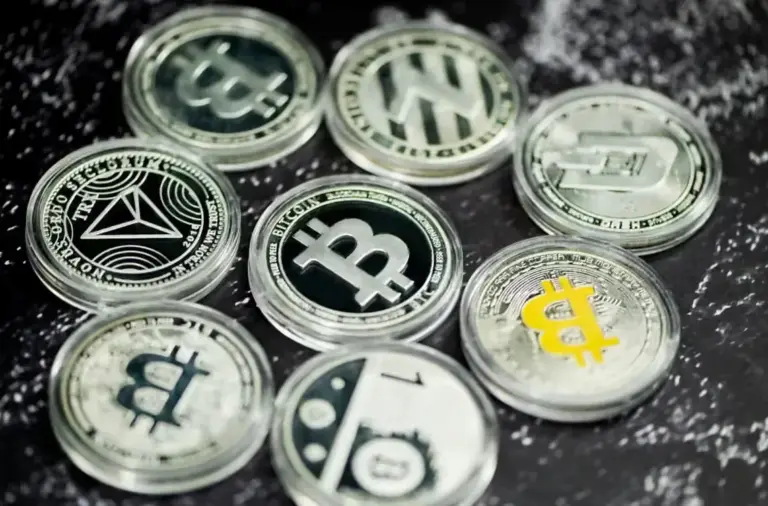
The boundary between traditional finance and the digital asset world continues to blur as Securitize announces plans to launch tokenized versions of some of the most influential stocks in the world. By bringing shares of giants like Apple, Nvidia, and Microsoft onto the Solana blockchain, the firm aims to offer eligible investors in the US and EU a way to trade these assets during extended market hours. Unlike simple derivatives often found in offshore markets, these tokens are designed to maintain full ownership rights and economic benefits, effectively migrating regulated US capital market protections directly onto the chain.

This move comes amid a volatile but generally upward trend for major cryptocurrencies. Bitcoin recently touched levels above 83,000 dollars despite facing headwinds from geopolitical tensions in the Middle East and fluctuations in ETF inflows. Other major players followed suit with modest gains, as Ethereum climbed toward 2,500 dollars and Solana saw its own price rise alongside the announcement of New institutional integrations. Analysts suggest that while macroeconomic pressures persist, the appetite for integrating real world assets into blockchain ecosystems remains strong.

Beyond tokenization, legacy banking is showing increased interest in crypto infrastructure. Reports indicate that Wells Fargo may be exploring a liquidity partnership with Kraken to grant its clients better market access without needing to build an entirely new internal system from scratch. This follows a pattern of established firms seeking lean ways to enter the space, similar to how Chainlink is simplifying cross chain movements with its new vault adapters or how Moody’s has begun assigning formal credit ratings to decentralized protocols like Sky. Together, these developments signal a shift away from speculative trading toward a structured convergence of global finance and distributed ledger technology.

Ivanhoe Mines has reported a significant jump in its third-quarter copper production, driven largely by a thirty percent surge in underground mining rates. With monthly excavation now exceeding seven hundred thousand tons, the company has pushed linear underground development to record highs. This operational momentum helped push quarterly production to seventy six thousand four hundred and one tons, supported by improvements at its concentrators which saw a record eighty nine percent recovery rate following upgrades in July.

However, these short term gains have not been enough to keep the company on track for its most ambitious yearly goals. Despite the recent acceleration, management warned that full year output is likely to land at the lower end of its projected range of two hundred ninety thousand to three hundred ten thousand tons. While processing volume is up, technical hurdles remain, specifically elevated silica levels that have complicated smelting processes and increased slag concentrate production.

There is some silver lining in the form of secondary markets and other minerals. The company’s smelter produced a record amount of high strength sulfuric acid, fetching prices as high as nine hundred dollars per ton, while the Kipushi operation solidified its position as one of the world’s largest zinc mines with another record breaking quarter. These diversifications provide a financial cushion even as copper targets slip slightly.

Looking beyond current operations in the Democratic Republic of Congo, Ivanhoe is aggressively expanding into North America. Its US affiliate recently received preliminary support from the US Export Import Bank for over one billion dollars in debt financing for the Santa Cruz project in Arizona. By utilizing an innovative heap leaching process that skips traditional smelting altogether, the firm hopes to bring new American copper online by 2028.

Defense Secretary Pete Hegseth has long leaned into controversy, but his recent proposal to livestream the execution of a convicted mass shooter may have finally pushed things too far. Even President Donald Trump eventually stepped in to pull the plug on the broadcast following a wave of bipartisan backlash. To many observers, the incident serves as a cautionary tale about Hegseth’s penchant for theatricality and his desire to cater to the most impulsive instincts of the MAGA base. While some view these stunts as calculated moves by a former television personality who understands how to grab attention, others within the administration see it as a dangerous gamble that could alienate moderate voters.

Despite the fallout, there is a concerted effort among Hegseth’s inner circle to position him for a future in elective office. Surrounded by media savvy advisers and former Fox News producers, including his wife Jennifer Hegseth, the Defense Secretary has carefully curated a macho warrior image designed to resonate with populist conservatives. These allies are reportedly eyeing a potential 2028 presidential run, arguing that Hegseth possesses the look and presence of a leader who could succeed Trump if figures like JD Vance or Marco Rubio decline to run. For some of his supporters, pursuing high office is seen as one of his only viable paths forward after his tenure at the Pentagon concludes.

However, the road to the White House is fraught with obstacles for someone who has never held elected office. Beyond his lack of deep ties to major GOP donors, Hegseth faces significant headwinds due to his combative nature and his role in overseeing an unpopular military campaign against Iran. Critics argue that while his crusade against wokeism in the military appeals to a specific slice of the party, his aggressive temperament could prove polarizing during a general election. Furthermore, any realistic path upward depends almost entirely on Trump’s blessing, something that remains uncertain given that Vance currently holds the inside track as the designated successor.

The Pentagon has remained steadfast in denying these rumors, insisting that Hegseth is solely focused on national security rather than personal ambition. Spokespeople for the secretary have dismissed reports of political planning as completely false, emphasizing his commitment to protecting service members over chasing headlines. Yet between trips to early primary states like Iowa and constant flirtations with culture war flashpoints, Hegseth continues to operate less like a traditional cabinet member and more like a candidate in waiting, leaving many to wonder if his thirst for spectacle will ultimately build his brand or break it.

Jewish Americans are watching this month’s high stakes elections in Israel with a mixture of anxiety and intense emotional investment. While they cannot cast ballots, the result is being treated as a critical referendum on Prime Minister Benjamin Netanyahu during a period defined by the lingering trauma of the October 7 attacks and the subsequent war in Gaza. The atmosphere across the United States has become increasingly charged, reflecting a community split along religious, political, and generational fault lines.

For many Orthodox Jews, Netanyahu represents a necessary shield for a nation central to their very identity. These supporters view his hardline stance as essential for survival against persistent regional threats. Conversely, many liberal and younger Jewish Americans fear that his leadership has damaged Israel’s international reputation and fueled domestic tensions within the U.S. This divide is starkly visible among the youth; while older generations often see support for Israel as fundamental to their faith, fewer adults under 45 share that singular conviction, with some feeling increasingly alienated by current Israeli policies.

This internal friction is further complicated by a sharp rise in antisemitism throughout the United States. There is a haunting debate playing out in synagogues and universities over whether a change in Israeli leadership could dampen hatred toward Jews globally. Some argue that moving away from Netanyahu’s administration toward a leader focused on peace would shift public perception, while others insist that those committing hate crimes act independently of any foreign government’s policy.

Ultimately, the upcoming vote highlights a profound struggle for identity among American Jews who find themselves caught between two worlds. From Reform congregations hosting emergency educational seminars to individuals fearing for their safety on American streets, there is a shared sense that whatever happens at the polls in Israel will resonate far beyond its borders. Whether through hope for diplomatic renewal or gratitude for strong defense, the community remains bracing for an outcome that promises to redefine their relationship with the Jewish state.

The revolving door at the White House has spun faster than ever before, as Katie Zacharia departed her role as press secretary after just five days on the job. Senior administration officials confirmed the move on Friday, noting that Zacharia will transition into a new, yet unnamed role. In a parting statement, Zacharia praised President Donald Trump as a hardworking and gracious leader, expressing her gratitude for the opportunity to serve him despite the brevity of her tenure.

The rapid downfall followed a disastrous debut briefing that lasted less than fifteen minutes and left many journalists questioning her competence. Beyond the poor performance, Zacharia found herself embroiled in a scandal regarding her professional credentials. While she had represented herself as a lawyer, it was revealed this week that she failed the California bar exam and holds no license to practice law in any U.S. state. This discrepancy led to a formal complaint from the Campaign for Accountability, which requested an investigation into whether she broke the law by misrepresenting her status.

Before taking the podium, Zacharia was primarily known as a conservative media commentator and an adviser for Trump Media and Technology Group. Her ascent to one of the most visible roles in government happened almost overnight, but her exit proved even swifter. Even Anthony Scaramucci’s infamous eleven day stint as communications director during Trump’s first term now seems long by comparison, prompting Scaramucci himself to remark on social media that records are meant to be broken.

This vacancy comes at a critical moment for the administration, arriving less than three weeks before midterm elections. President Trump has frequently lamented that his team struggles with public relations despite what he describes as record success in governing. However, insiders suggest there is little appetite for another immediate hire given how quickly this latest experiment collapsed. For now, the podium remains empty while Zacharia moves back into the shadows of the West Wing.