Archive

October 19, 2026

Browsing

Netflix shares NFLX fell 3.5% in premarket trading on Friday after the streaming company announced a leadership change aimed at strengthening its film and television programming amid slowing viewer engagement and increased competition.

The company said former Disney and Fox executive Peter Rice would become its chief content officer on October 26, replacing Bela Bajaria, who is leaving after nearly a decade at Netflix.

The announcement came a day after the company revealed plans to cut approximately 6% of its workforce, or around 1,000 jobs.

Netflix shares had already declined 23% this year through Thursday’s close, as concerns about its share of television viewing and ability to produce popular content weighed on investor sentiment.

Netflix replaces Bela Bajaria with Peter Rice

Rice will oversee Netflix’s film and television slate, as well as live events, taking responsibility for a broad range of programming as the company seeks to improve viewer engagement.

He previously managed Disney’s television operations, including ABC, FX, Hulu and its television studios.

Before joining Disney, Rice held senior positions at 21st Century Fox and Fox Searchlight Pictures.

During his tenure at Disney, the company released critically acclaimed programmes such as Modern Family and Abbott Elementary and approved projects including The Bear.

Netflix co-chief executive Ted Sarandos praised Rice’s industry experience and relationships with Hollywood talent, describing him as one of the entertainment industry’s most effective large-scale operators.

Sarandos also thanked Bajaria for helping expand Netflix’s programming into unscripted shows, live events and sports.

Bajaria had overseen the company’s global film and television slate since 2023.

The leadership change comes as Netflix explores new programming formats, including video podcasts and live sports, to compete for audiences against platforms such as YouTube and TikTok.

Viewer engagement and competition weigh on shares

Netflix has faced concerns that its share of television viewing hours is declining, raising questions about whether slowing engagement could eventually affect subscriber growth.

The company has struggled to produce cultural hits on the scale of earlier successes such as Stranger Things and Wednesday.

Finding another globally popular programme could help restore momentum, although the performance of future releases remains uncertain.

Sarandos acknowledged the challenge at a conference last month, saying: “Overall, we’re not growing as fast as I want us to, and we’re working on making that move faster.”

Netflix also drew scrutiny in July when it announced that it would publish its engagement report once a year instead of twice a year, starting in 2027.

Competition for viewers has intensified as established streaming services and digital platforms vie for audiences’ time.

The company had also sought to expand its programming library through a potential acquisition of Warner Bros. Discovery, but Paramount, now called Skydance, ultimately won the bidding contest.

Job cuts and upcoming earnings in focus

The appointment of Rice follows Netflix’s announcement that it would eliminate around 1,000 positions, marking its largest round of layoffs in at least four years.

The combination of job cuts and a leadership transition highlights the pressure on the company to improve operating efficiency while strengthening its content offering.

Rice’s priorities will include Netflix’s film and television productions and live events.

Industry insiders are also watching for his decisions on key leadership roles and the performance of major upcoming projects, including La Bola Negra and Narnia, which are associated with current film chair Dan Lin.

Netflix is scheduled to report earnings on Tuesday, giving investors an opportunity to assess its latest financial performance and management’s outlook.

The company’s ability to improve viewer engagement and deliver successful programming will remain central to its efforts to rebuild investor confidence and reverse its share-price decline.

Wedbush reiterated its buy position on the stock while cutting the target price from $105 to $90.

BMO Capital also maintained its buy position and slashed the target price from $135 to $125.

The post Netflix stock falls 3% as content shake-up fails to ease investor worries appeared first on Invezz

Bank of America has warned that the artificial intelligence investment boom could follow a familiar pattern seen in previous capital cycles, with intensifying competition, falling prices and excess capacity potentially leaving investors disappointed despite the technology’s long-term promise.

The warning comes as billions of dollars continue to flow into AI infrastructure, including data centers, advanced chips and computing capacity. The scale of investment has made AI one of the biggest bets in US industrial history, but questions are mounting over whether companies will generate sufficient returns to justify the spending.

Railways, telecommunications and the internet all created enormous economic value, but investors also lost money when capital flooded into projects whose returns failed to justify their costs.

AI-related stocks are already under pressure. The Philadelphia Semiconductor Index has declined for seven consecutive sessions, leaving it around 13% below its recent high.

Bank of America analyst Sebastian Raedler has cautioned that the industry’s rapid expansion could eventually undermine the profitability that initially attracted so much capital.

Bank of America flags capital cycle risks

Raedler said the AI industry could be repeating a pattern in which strong initial returns encourage companies to invest aggressively, eventually creating excess capacity and putting pressure on prices.

Expert View

“This monetization disappointment in the face of intense competition is precisely the failure mode seen in past capital cycles.”

Bank of America analyst
Sebastian Raedler

“Most major capital cycles of the past have ended in disappointment, even though the underlying technology often lived up to expectations,” Raedler noted.

The concern is that a technology can transform industries and deliver substantial economic benefits without generating attractive returns for every company investing in it.

High profit margins in the early stages of an investment boom typically encourage more companies to enter the market and commit additional capital. As capacity expands and competition intensifies, businesses can lose pricing power, eroding the returns that made the investment attractive in the first place.

AI is already experiencing stronger competition at the model level, particularly from Chinese open-weight models. Average token prices have fallen around 50% since the summer, adding to concerns about whether AI developers can maintain the profitability needed to support their infrastructure spending.

Investors concerned over spending and returns

Interactive Brokers chief market analyst Steve Sosnick told Reuters that investors are increasingly questioning “the speed, the efficacy and the profitability of the rapid build-out in AI”.

Sosnick said a slowdown in data-center construction would eventually reduce demand for hardware, as customers would no longer be racing to buy equipment at almost any price.

Such a shift could affect chipmakers and other suppliers that have benefited from the surge in AI infrastructure investment. If companies scale back their construction plans, equipment purchases could weaken, particularly if falling AI prices make it more difficult to justify additional computing capacity.

As infrastructure spending continues, companies are under pressure to demonstrate that their AI products can generate enough revenue and cash flow to support the investments behind them.

Warsh offers an optimistic view

Despite the concerns over valuations and monetization, Federal Reserve Chair Kevin Warsh struck an optimistic tone about AI’s potential economic benefits on Friday.

“It’s obviously hitting the demand side of the economy before it’s going to hit the supply side of the economy,” Warsh said.

“We don’t know in the next 12 or 18 months its (AI) effect on employment, but if you believe like I believe, which is it will make economies and countries that put it to good use more productive, that it’s going to make it so that we will have more wealth, then that has to be a very ​good thing.”

Federal Reserve Chair
Kevin Warsh

Warsh’s comments point to the potential for AI to improve productivity and generate broader economic gains as businesses adopt the technology.

However, the potential long-term benefits do not eliminate the financial risks associated with the current investment cycle.

The post BofA warns of risks seen in past capital cycles as concerns grow over AI boom appeared first on Invezz

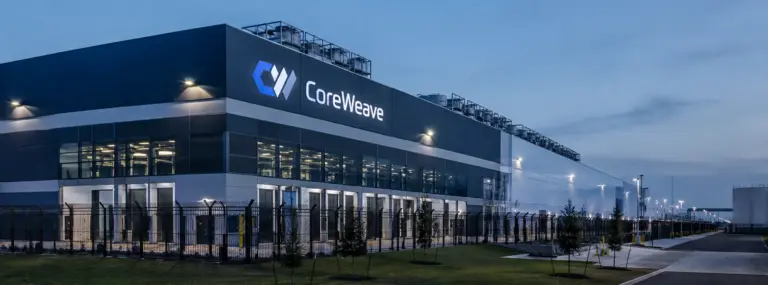
CoreWeave stock CRWV fell again on Friday after recovering in the previous session, putting the AI cloud computing company on track for a steep weekly loss as investors continued to worry about its debt-financed expansion amid rising borrowing costs.

The stock dropped about 7.2% on Friday, even as the S&P 500 edged higher.

Nasdaq Composite opened lower by about 0.4%.

CoreWeave shares have lost nearly 20% this week as concerns over inflation, interest rates and the financing requirements of artificial intelligence infrastructure weighed on sentiment.

In addition, Gartner released research indicating that by 2030, 80% of neocloud providers will most likely cease independent operations.

Rising borrowing costs put debt under scrutiny

For some analysts, CoreWeave has become a symbol of the debt-fuelled AI infrastructure boom, in which companies are committing billions of dollars to data centres and computing capacity before the long-term returns on that investment are fully established.

The sell-off intensified after hotter-than-expected US inflation data on Wednesday heightened concerns that interest rates could remain elevated, increasing the cost of financing capital-intensive AI infrastructure.

Nicholas Mugalli, chief investment officer at World Trade Securities, said CoreWeave short sellers made around $806 million in paper profit on Wednesday when the stock fell 15.5%.

CoreWeave’s $2.8 billion of 9.75% bonds issued in April traded at 79.5 cents on the dollar on Thursday, yielding more than 15%, according to data provided by BondCliQ.

The loss-making cloud computing company has about $50 billion in debt.

“A hot inflation print triggered a ​sharp selloff in CoreWeave because its business model is a highly indebted play on future data center demand,” BCA Research analysts said.

“Although the rest ​of the tech complex is also sensitive to the ​pace and magnitude of AI adoption and use, it is, on average, ‌considerably ⁠less sensitive to interest rates”

CoreWeave rents out Nvidia graphics processing units and supplies computing power to AI laboratories such as OpenAI and major technology companies including Meta Platforms.

It operates data centres across the US and internationally.

The business depends on continued demand for computing capacity, while its expansion requires substantial upfront investment.

That combination has left investors weighing the strength of its contracted revenue against the risks associated with its debt and future capital expenditure.

Why neoclouds face a threat, but CoreWeave is likely to survive

Gartner said in 2026, AI providers are expected to spend nearly $1 trillion on AI infrastructure, and are forecast to invest an additional $6 trillion between 2027 and 2030, but enterprise and consumer AI revenue will be insufficient to support profitable returns on all planned AI capital expenditures during this period.

A cumulative $8.5 trillion in revenue would be required to recover the massive AI spend, according to Gartner; however, total enterprise and consumer AI revenue that can be attributed to AI data centers during this period is forecast to reach no more than $3.6 trillion, it said.

“Failure to achieve sustainable ROIC on rapidly depreciating assets would almost certainly necessitate write-downs,” it said.

Neoclouds will be among the most exposed to the imbalance between revenue and capital spending, and cost pressure and a lack of a differentiating business model will force over 80% of neocloud providers to cease independent operations, it said.

Melvin, Milk Road analyst, agreed but said CoreWeave and Nebius will be the top survivors.

“The majority of neocloud companies will NOT survive. I strongly believe we’re going to see a MASSIVE amount of consolidation across this industry over the next several years, and only a handful of companies will come out on top,” Melvin said.

“Personally, I think $CRWV and $NBIS will be the top 2,” he said.

Nvidia Chief Executive Jensen Huang, whose company is CoreWeave’s second-largest investor with an approximately 10% stake, sought to reassure investors about its financial position.

“CoreWeave’s financial strength is improving every day,” Huang told reporters at an event in Stockholm, adding that he did not see a need for Nvidia to backstop the company.

“I’m optimistic. Their cost of capital is actually decreasing.”

Analysts see buying opportunity

Cantor Fitzgerald reiterated its Overweight rating on CoreWeave, with a $176 price target implying upside of more than 150% from its reference price.

The firm said CoreWeave had public support from Nvidia and had sold nearly all the capacity scheduled to come online in 2027.

Nvidia has an agreement to backstop any unsold capacity.

According to Cantor Fitzgerald, the principal concern is whether CoreWeave can finance the capital expenditure required to meet demand, rather than whether demand for AI computing exists.

The firm described the current period as an attractive opportunity to add to or initiate a position in the shares.

Deutsche Bank also maintained its Buy rating on CoreWeave, with a $150 price target, implying upside of more than 100% from its reference price.

Analyst Brad Zelnick acknowledged that the company’s prospects are closely tied to the performance of the AI sector and demand for computing infrastructure.

He argued, however, that its underlying contracts provide meaningful support.

“The vast majority of CoreWeave’s backlog is associated with long-term take-or-pay contracts where contracted revenue fully covers all capital and operating costs associated with the contract and generates a return for the company,” Zelnick wrote.

He estimated that 60% to 65% of CoreWeave’s backlog was tied to investment-grade customers at the end of the second quarter.

The company has used these contracts to secure project-specific debt at costs at or below its parent company’s borrowing rate.

“A strong customer base, established record of execution, backlog conversion and leading infrastructure performance is all supportive of their issuer profile relative to neocloud peers, in our view,” Zelnick said.

Deutsche Bank also highlighted CoreWeave’s financing arrangements and liquidity position.

“Available liquidity stood at $15.5 billion, and since that time the company: closed a $2.6 billion DDTL 5.5 (backed by shorter 3-yr contracts) at SOFR + 5.50%; closed a $4.2 billion 2.875% Convertible Senior Note and announced a 35 million share ATM equity program,” the bank said.

Capital needs remain a key risk

Despite the positive assessment of its customer contracts, CoreWeave faces substantial funding requirements as it expands its infrastructure.

Deutsche Bank forecasts operating cash flow of about $10 billion over the next 12 months, compared with required capital expenditure of roughly $45 billion.

That gap means the company will need to secure additional funding, although Zelnick argued it could raise capital at a steady pace, supported by its contracted customer backlog.

The central question for investors is whether CoreWeave can convert its substantial order book into cash flow quickly enough to support its expansion without putting further pressure on its balance sheet.

For now, bullish analysts see long-term contracts, investment-grade customers and Nvidia’s support as reasons to look beyond the recent sell-off.

More cautious investors remain focused on the cost of financing the infrastructure boom and the risks of relying on future demand to justify heavy borrowing.

The post CoreWeave stock drops nearly 20% this week. Why analysts say its a buy appeared first on Invezz

US stocks opened mixed on Friday as renewed selling in technology and artificial intelligence-related stocks weighed on sentiment, while gains in Tesla offered some support.

Investors also assessed persistent inflation pressures and the outlook for Federal Reserve interest rates ahead of the central bank’s October policy meeting.

The Dow Jones Industrial Average gained 242 points while the S&P 500 gained 0.11%. The Nasdaq composite fell 0.28%.

The S&P 500 and Nasdaq were on track for weekly losses, while the Dow remained positioned for a weekly advance.

Tesla rises as AI stocks face renewed selling

Tesla shares climbed around 0.8% in trading after the electric vehicle maker unveiled its redesigned Roadster, developed in collaboration with SpaceX and featuring rocket-style thrusters.

The vehicle is not expected to enter production until 2028.

SpaceX shares fell 2.5%.

Gains in Tesla contrasted with continued weakness across several AI-related stocks.

Nvidia-backed data centre operator CoreWeave fell 6.6% in trading, reversing some of Thursday’s rebound, as concerns about its debt burden persisted.

The company’s bonds sold off sharply this week, pushing yields above 15%.

Other neocloud companies, including Nebius Group and Iren, declined more than 5% each. Micron Technology shares fell 3.6%, while Intel dropped 2.18%.

Semiconductor stocks have also faced pressure amid concerns about growing Chinese competition in the memory chip market.

The VanEck Semiconductor ETF fell 1.7% in trading and was down 8.9% for the week.

The declines reflect investor concerns that data centre operators may struggle to generate profits quickly enough to service their debt, particularly if borrowing costs rise.

David Morrison, senior market analyst at Trade Nation, said the pullback in memory chip stocks and concerns over CoreWeave’s debt had given investors a reason to reduce exposure to companies linked to AI.

“There’s still some caution out there,” Morrison said.

“Just a touch of profit-taking after yesterday’s rebound, or something more serious? Time will tell. But it could be argued that investor behaviour since the middle of this week could provide some insight into the future.”, he added.

Inflation and Fed outlook weigh on sentiment

Investors also remained focused on hotter-than-expected inflation data released this week.

US consumer and producer prices have shown persistent pressure, with wholesale inflation recording its biggest increase since 2022 and consumer inflation remaining above the Federal Reserve’s 2% target.

Elevated energy prices following the US-Iran war have added to inflation concerns, complicating the outlook for monetary policy.

Federal Reserve Chair Kevin Warsh, speaking at an International Monetary Fund event in Bangkok, said the US economy remained resilient and was benefiting from an AI-driven investment boom.

He also noted that stronger spending was contributing to inflation, without offering a clear signal on the Fed’s next policy decision.

Markets increasingly expect the central bank to leave interest rates unchanged at its October 27-28 meeting. The CME Group’s FedWatch tool indicated an 85% probability of a hold.

Morrison also pointed to sharp movements in Treasury yields as a potential signal of changing investor sentiment.

The 10-year Treasury yield rose above 5.30% on Wednesday before falling to a three-week low on Thursday.

He said the moves could reflect concerns about a possible unwinding of the AI trade or a shift towards safer assets.

Netflix and other stocks move in trading

Among other individual stocks, Varonis Systems gained 2.7% after Thoma Bravo-owned Proofpoint agreed to acquire the data security company in an all-cash deal valued at $6.3 billion.

Netflix shares declined 1.7% after the streaming company appointed former Disney executive Peter Rice as chief content officer, replacing Bela Bajaria.

Meanwhile, concerns about AI financing costs also extended to private companies.

Reuters reported that some current and prospective investors in Anthropic’s planned initial public offering were considering a lower valuation amid worries about rising AI funding costs.

The post Dow opens 240 pts higher as AI stocks slide and inflation concerns weigh appeared first on Invezz

Anthropic’s potential initial public offering is facing an early test of investor appetite, with some prospective and existing investors reportedly considering a valuation of around $1.5 trillion, below the roughly $2 trillion target previously expected for its November listing. 

The reassessment follows a slowdown in the company’s sequential revenue growth and comes as investors grow increasingly concerned about the cost of financing artificial intelligence infrastructure.

A lower valuation could create pressure across AI-related stocks, particularly companies exposed to the enormous spending commitments of leading AI developers. 

Shares and bonds of Nvidia-backed data centre operator CoreWeave have already come under pressure amid concerns about debt-funded AI expansion.

However, a reduction in Anthropic’s expected IPO valuation does not necessarily mean the AI investment boom is ending. 

Investors must distinguish between concerns about how much leading AI developers are worth and whether demand for AI computing continues to grow.

Anthropic reported third-quarter revenue of $16.8 billion, up 45% from the previous quarter, and said it was profitable on an adjusted basis.

The figures demonstrate substantial growth, even as some investors question whether the company’s valuation adequately reflects its slowing growth rate and significant future spending requirements.

Anthropic’s $2 trillion IPO target faces investor resistance

According to a Reuters report citing people familiar with the matter, some current and prospective Anthropic investors discussed a valuation of approximately $1.5 trillion during the company’s investor day in San Francisco on Wednesday.

That would represent a $500 billion reduction from the roughly $2 trillion valuation investors had previously expected for the planned November share sale.

The discussions followed disclosures that Anthropic’s revenue growth had slowed sequentially in the third quarter.

Revenue more than doubled from the first quarter to $11.6 billion in the second quarter, before rising 45% to $16.8 billion in the third quarter.

Although the latest growth remained substantial, the deceleration disappointed some investors who had expected the company to sustain its earlier momentum.

Anthropic’s financial performance is particularly important because the company has committed to enormous infrastructure spending.

According to the company’s IPO prospectus, it has pledged to spend at least $518 billion over a decade on cloud services, computing and infrastructure, Reuters had reported in September.

The prospectus also showed a loss of $42 billion in 2025 and projected further spending for the upcoming AI buildout.

Last year, revenue surged twelvefold to nearly $4.6 billion, while the company recorded an operating loss exceeding $8 billion, excluding certain liability write-downs.

These figures highlight the challenge facing investors: Anthropic is growing rapidly, but its future value depends partly on its ability to turn that growth into sustainable financial returns while meeting substantial computing costs.

A lower IPO valuation could therefore reflect a reassessment of the price investors are willing to pay for that growth, rather than a rejection of the company’s business altogether.

Slowing growth does not necessarily signal weak AI demand

The central question is whether Anthropic’s slower sequential growth reflects weakening demand for AI or increasing competition from alternative providers.

One possibility is that customers are shifting spending towards competitors, including OpenAI, which launched its Astra model in early September, or other AI services.

Meta Platforms could also capture a larger share of the market.

Such a shift would not necessarily be negative for the broader AI industry.

If overall spending continues to increase, one provider’s slower growth could be offset by stronger demand elsewhere.

The more concerning possibility would be that businesses are reducing their AI investments altogether.

However, available usage data suggests that adoption continues to expand.

OpenRouter, a start-up that helps developers route requests across AI models, reported that weekly token consumption reached 172 trillion as of the previous week, up from 46.7 trillion at the end of June.

Tokens are the basic units of text and other data processed by AI models.

Wedbush Securities analyst Matt Bryson also argued that Anthropic’s results should not automatically be interpreted as evidence of slowing AI spending.

In a note to clients, Bryson said annualising revenue trends over very short periods can be misleading, particularly when based on indirect reports.

He also pointed to increased competition from alternatives to Anthropic, including Muse and Copilot, while noting that Anthropic still achieved 45% sequential revenue growth.

Bryson added that Wedbush had not seen indications of slowing hardware demand.

He cited rising GPU rental prices, including for older systems, and said concerns about financing costs and foundation-model growth did not appear to be affecting AI demand or supply-chain dynamics.

Cheaper AI models could benefit cloud and infrastructure firms

Another explanation for Anthropic’s slower growth is the increasing use of open AI models, which are generally less expensive and can be adapted for more efficient applications.

Improvements in hardware efficiency can also reduce the cost of processing AI tokens.

This creates a potential shift in how value is distributed across the AI industry.

Anthropic and OpenAI spend heavily on developing advanced, or frontier, models.

If customers increasingly turn to cheaper alternatives, these developers could face pressure to justify their spending and valuations.

Cloud providers and companies supplying computing infrastructure, however, could still benefit from rising overall usage.

Amazon, Microsoft and Alphabet’s Google operate cloud businesses that can host a range of AI models.

Greater use of open models could generate additional demand for their computing services without requiring them to share the revenue generated by developing those models.

Gavin Baker, chief investment officer of Atreides Management, said in a post on X on Thursday that

“Open-source growing much faster than either Anthropic or OpenAI. Modal tripled since May and is 15x YoY per yesterday’s announcement. Open-source tokens generate more revenue and profit for the hyperscalers/neoclouds than frontier tokens. *Every* open source inference cloud I am aware of is growing faster both sequentially and YoY than either Anthropic or OpenAI. And their combined compute spend is becoming material.”

https://twitter.com/GavinSBaker/status/2110743424400068790

The argument points to a potential divergence within the AI trade.

Investors may become more selective about which companies capture the financial benefits of growing AI adoption, rather than treating all AI-linked businesses as beneficiaries of the same investment cycle.

Nevertheless, the distinction should not be overstated.

Anthropic and OpenAI remain important sources of spending on cloud computing, chips and networking equipment.

A sharp deterioration in their financial prospects could still affect the companies supplying their infrastructure.

The open AI models also remain heavily influenced by Chinese providers, despite efforts by Meta and Nvidia to strengthen the position of US-developed alternatives.

What a lower Anthropic valuation could mean for AI investors

A scaled-back IPO valuation could weigh on sentiment if investors interpret it as evidence that expectations for AI growth have become excessive.

The concern is particularly relevant amid a broader technology selloff that has hurt chipmakers, AI infrastructure companies and neocloud providers.

CoreWeave’s recent share and bond declines illustrate the market’s sensitivity to the financing requirements of the AI buildout.

A disappointing Anthropic listing could add to concerns about whether the sector’s enormous spending commitments can generate sufficient returns.

Anthropic’s IPO is also important because investors increasingly view the anticipated listing, followed by a potential OpenAI offering, as a test of demand for major AI companies in public markets.

Yet a lower valuation could also represent a more cautious pricing of future growth, rather than the collapse of the AI investment thesis.

At $1.5 trillion, Anthropic would still command an enormous valuation for a company founded in 2021.

The post Anthropic’s IPO Valuation cut: is it bad news for AI bulls? appeared first on Invezz

Maine Democratic Senate candidate Troy Jackson didn’t hold back during a recent exclusive sit-down with CNN’s Dana Bash, offering a candid look at his campaign to unseat Senator Susan Collins. Throughout the conversation, Jackson positioned himself as a champion for the forgotten worker, expressing deep frustration with a political establishment that he believes has abandoned its base. He went so far as to suggest that too few members of the current Senate actually care about the daily struggles facing working-class families.

A central pillar of Jackson’s platform remains his ambitious push for Medicare for All, which he views as essential to ensuring healthcare security for all Mainers. The candidate also expanded his focus to global affairs, arguing that American foreign policy directly impacts the wallets of citizens at home. Specifically, Jackson suggested that ending conflict with Iran could lead to a decrease in energy costs, potentially lowering prices for consumers across the country.

Beyond policy debates, the interview touched upon some of the more volatile moments of the campaign trail. When questioned by Bash about a contentious exchange during a debate where he told an opponent to shut up, Jackson remained defiant. He stated clearly that he had no apologies for the outburst, framing it instead as a reflection of his raw passion and refusal to adhere to traditional political politeness when discussing critical issues.

After half a century of serving the Elmwood neighborhood, Nabolom Bakery and Pizzeria is shutting its doors this Sunday. While the closure marks the end of an era for one of Berkeley’s most storied eateries, co-owners Sabra Stepak and Julia Elliott say the demise wasn’t caused by bad bread, but rather a volatile mix of economic pressure and political friction. According to the owners, the bakery became a target for boycotts following its vocal stances on social issues, including the display of Teach Palestine posters and murals supporting the defunding of police.

The fallout extended into the digital realm when the bakery was removed from Instagram after sharing an image featuring an anti-ICE message. The owners report that this loss of visibility led to a twenty percent drop in sales. Further tension arose locally through WhatsApp groups, Reddit, and email listservs where critics coordinated boycotts over the shop’s opposition to upzoning. Despite these conflicts, Stepak and Elliott maintain that they never intended to enter a popularity contest, choosing instead to prioritize authenticity over broad appeal.

However, ideology was only one piece of a larger financial puzzle. Like many independent businesses in the Bay Area, Nabolom struggled against skyrocketing utility bills, rising ingredient costs, and a brutal labor market. The owners noted that their staff simply could not afford to live in Berkeley while working at a bakery, leading to chronic understaffing and erratic operating hours toward the end. Even attempts to raise prices failed to move the needle on their bottom line.

Founded in 1976 as a worker collective, Nabolom survived various crises over five decades before being revived as a hybrid bakery and pizzeria in 2016. Though there has been a recent surge of nostalgic customers rushing back for one last taste of their famous cinnamon twists and sourdough pizzas, it hasn’t been enough to reverse the decision. As they prepare to lock up for good, Stepak and Elliott expressed hope that another passionate food lover might eventually step in to rescue the space and preserve it for future generations.

The momentum of the No Kings pro-democracy movement hit a digital wall this past Saturday when its official Instagram account vanished mid-protest. As millions of Americans took to the streets to advocate for increased early voter turnout, the organization found itself locked out of its primary communication channel for several hours. This sudden blackout sparked immediate alarms among activists who feared a deliberate attempt to stifle political coordination during a critical window leading up to the midterm elections.

Meta responded quickly to the backlash, issuing an apology and attributing the outage to an automated system designed to flag accounts that post or comment at unusually high frequencies. Company spokesperson Andy Stone admitted via X that the action was taken in error and confirmed that service had been restored. However, these explanations did little to soothe the frustration of organizers, who claimed they had only shared a handful of posts and livestreams despite reaching thousands of followers. The No Kings Coalition maintained on Sunday that restricting voting information during an election cycle remains entirely unacceptable regardless of whether the cause was technical or intentional.

The controversy drew attention from higher political circles, including Senator Bernie Sanders, who suggested that the incident highlighted the dangers of billionaire ownership over global media infrastructure. Despite the social media disruption, the spirit of the demonstrations remained unbroken across major American cities. In Washington D.C., music filled the air at the Lincoln Memorial where crowds danced with signs urging citizens to vote early, while in Atlanta, local officials reminded attendees that voting is the single most potent power granted by the Constitution.

From Los Angeles to Georgia, these rallies represent a growing wave of unrest born from frustrations over immigration enforcement, federal layoffs, and foreign conflicts. With current efforts focused heavily on combating potential election sabotage following Supreme Court rulings on the Voting Rights Act, organizers say they will continue recruiting volunteers to safeguard democratic processes. While Meta has closed the ticket on this specific glitch, those leading the charge against perceived systemic instability remain deeply skeptical of how tech giants manage political speech.

Constitutional law expert Jonathan Turley has sparked a fresh debate over the intersection of law and politics following his recent appearance on Fox News Sunday. During a segment hosted by Shannon Bream, Turley offered a sharp critique of New York Attorney General Letitia James, suggesting that she has become the most political attorney general in the United States. The discussion centered on James’ public commentary regarding an ongoing sexual assault investigation at Cornell University, which critics argue may cross the line from legal oversight into political theater.

Joining Turley in the analysis was criminal defense attorney Donna Rotunno, who helped dissect whether such high profile statements influence the fairness of judicial proceedings. The panel explored how the rhetoric coming from the attorneys general office might impact current cases and set a precedent for how state prosecutors handle sensitive campus investigations. For Turley, the concern lies in maintaining a clear boundary between prosecutorial duties and personal or partisan agendas.

The conversation shifted toward other federal scrutiny as the experts examined an immigration probe involving Congresswoman Ilhan Omar. By weaving together these different threads of government investigation, Turley and Rotunno highlighted what they see as a broader trend of politicization within the American legal system. Their analysis suggests that when top legal officials engage in public sparring or targeted critiques, it risks undermining public confidence in the neutrality of the law.

New national polling suggests a significant shift in momentum heading into the midterms, with Democrats currently holding a commanding lead over Republicans on the generic ballot. According to recent data, voters favor Democratic congressional candidates 54 percent to 45 percent. This trend appears to be driven largely by widespread public frustration over the rising cost of living and consistently low approval ratings for President Donald Trump, creating a difficult climate for GOP candidates attempting to maintain their legislative majorities.

In response to these numbers, President Trump is launching a frenetic series of rallies across several swing states and traditional strongholds including Kansas, North Carolina, and Georgia. While he aims to energize his base by urging supporters to view the midterm as a referendum on his own leadership, the strategy carries inherent risks. Some Republican strategists worry that tying local candidates too closely to the president may alienate moderate and independent voters who are critical of his administration.

The volatility of the current cycle is most evident in traditionally red territory like Kansas, where Senator Roger Marshall finds himself in an unexpectedly tight race against Pastor Adam Hamilton. The surprise competitiveness of this seat has forced national Republican groups to pivot their funding away from other contests, such as the North Carolina Senate race, which many now consider a lost cause. Similarly, in Michigan, the campaign has turned caustic as Democrat Abdul El-Sayed faces attacks regarding his faith while pushing back against the rhetoric coming from the White House.

Beyond domestic friction, economic instability continues to haunt GOP messaging. A spike in oil prices linked to conflicts involving Iran has complicated promises of lower energy costs, leaving many Republican candidates struggling to provide concrete answers on inflation. As early voting begins in key states like Texas, both parties are bracing for a high stakes conclusion to a cycle defined by deep polarization and shifting voter loyalties.